



How to Create an Effective Home Recycling System That Fits Your Family
Creating an effective home recycling system is not about copying a picture-perfect setup from social media or buying a row of expensive matching bins. In most homes, the best system is the one that feels easy enough to use every day and clear enough that everyone in the household can follow it without second guessing. When recycling fits the way your family already moves through the kitchen, entryway, laundry area, or garage, it becomes far more likely to stick.
Table Of Content
- Start With the Most Important Step: Check Local Recycling Rules
- Think Beyond Recycling Alone
- Assess Your Household Before Choosing Bins
- Questions to Ask Before You Set Up Your System
- Choose Bin Types That Match Your Space and Local Program
- Place Bins Where Decisions Happen
- Teach the Household What Belongs In and What Stays Out
- Common Items That Often Cause Confusion
- Keep Recyclables Clean, Dry, and Empty
- Include Organics if Your Area Supports It
- Create a Simple Routine for Collection Day
- Make the System Easy for Kids and Other Family Members
- Plan for Apartments, Small Homes, and Busy Households
- Reduce Waste Upstream to Make Recycling Easier
- Troubleshoot the Most Common Home Recycling Problems
- Quick Fixes That Improve Daily Use
- Use Technology and Local Tools to Stay Current
- Why a Personalized System Matters More Than a Perfect One
- Final Thoughts
That matters because household recycling still plays an important role in reducing the amount of material sent to landfill. The U.S. Environmental Protection Agency notes that recycling and composting rates rose from just over 6 percent of municipal solid waste in 1960 to about 35 percent in 2017. That is meaningful long term progress, but it also shows how much usable material still ends up in disposal streams. In Canada, waste diversion and disposal continue to be tracked as part of broader circular economy and emissions efforts, with the waste sector remaining a serious environmental issue, particularly because solid waste contributes heavily to landfill related emissions.
The reassuring news is that a strong home recycling routine does not need to be complicated. It needs to be local, realistic, and consistent. That means understanding what your municipality actually accepts, setting up bins where waste is created, preventing contamination, and building habits that work whether you live alone in a small apartment or manage a busy household with children, roommates, or multiple generations under one roof.
This guide walks through how to create a personalized recycling system that supports your home, your schedule, and your local collection program. The goal is not perfection. The goal is a setup that reduces waste, encourages responsibility, and makes recycling feel achievable rather than overwhelming.
Start With the Most Important Step: Check Local Recycling Rules
The biggest mistake many households make is assuming recycling works the same way everywhere. It does not. Accepted materials can vary by city, county, province, state, building type, and even collection contractor. Some communities use single-stream recycling, where paper, metal, glass, and certain plastics can go into one cart. Others require multi-stream sorting, which means paper may need to stay separate from containers, or glass may need to be handled differently.
Before you buy bins or print labels, check your local municipal website, waste hauler guide, or official recycling app. Look for a current list of accepted materials, preparation rules, collection days, and information about extras such as organics pickup, electronics drop off, hazardous household waste events, and deposit return systems. This one step saves a great deal of confusion later because it aligns your household habits with the actual system processing your materials.
It is also important to understand what local rules are not saying. A recycling symbol on packaging does not automatically mean the item belongs in your household recycling bin. Resin identification codes on plastics simply identify the plastic type. Whether that plastic is accepted depends on the equipment and markets available in your area. This is why local confirmation matters more than package claims or generic advice found online.
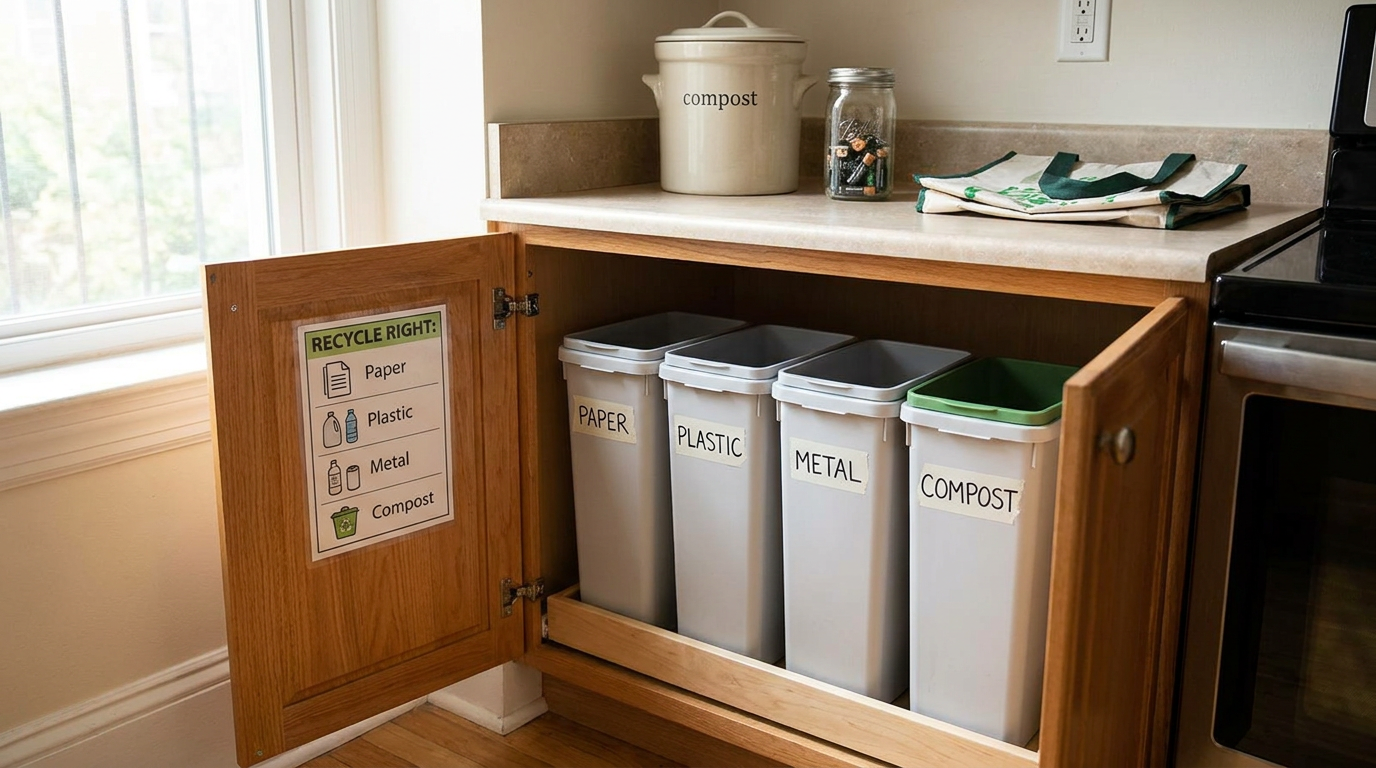
If your municipality offers a searchable tool, keep it bookmarked. If there is a printed guide, place it inside a cabinet door near your sorting area. Families often do better when information is visible at the moment a decision is being made. A system that reduces hesitation is one that gets used correctly.
Simple rule: Build your home recycling routine around local acceptance lists, not assumptions, labels, or habits from a previous city.
Think Beyond Recycling Alone
One of the most common misconceptions about waste management is that recycling solves the problem by itself. It helps, but it is only one part of a healthier household waste strategy. Source reduction, reuse, repair, and composting are just as important, and in many cases more effective. If you can avoid bringing unnecessary packaging into your home in the first place, you reduce the need to sort, store, and process it later.
This broader perspective also takes some pressure off. If your home recycling program feels imperfect, that does not mean your efforts are failing. A family that recycles correctly, composts food scraps, reuses containers, repairs household goods when possible, and buys fewer disposable items is doing meaningful work. Sustainability is strongest when it is woven through daily decisions rather than treated as a single all or nothing task.
That framing reflects a growing shift in how experts talk about waste. Recycling is increasingly presented as one tool within a circular economy, not the entire answer. This is a useful mindset for households because it encourages smarter consumption habits while still valuing proper sorting and disposal.
Assess Your Household Before Choosing Bins
Once you know your local rules, the next step is to design a system around your actual home life. Start by observing where waste is generated. In many homes, the kitchen is the central sorting point because that is where packaging, food scraps, paper towels, bottles, cans, and cardboard appear most often. But secondary zones matter too. Bathrooms produce empty toiletry containers, home offices generate paper and shipping materials, and mudrooms or garages often become the best place for overflow storage before collection day.
Think about who will use the system and how much guidance they need. A household with young children may benefit from picture labels and wide openings that make sorting intuitive. A home with multiple adults may need a compact but highly organized station that handles coffee cups, delivery boxes, and food packaging quickly during busy weekdays. If someone in the home has mobility limitations, bin placement and lid style should support easy use. A good system respects both convenience and accessibility.
It also helps to estimate your waste profile for one typical week. Notice how much paper, cardboard, glass, plastic, metal, food waste, and landfill waste your home creates. Some families discover they need a larger cardboard solution because online shopping boxes pile up quickly. Others realize composting would dramatically reduce the amount of trash leaving the house. The right bin setup becomes much easier to choose when you know what you are actually managing.
Questions to Ask Before You Set Up Your System
- Do you have single-stream or multi-stream recycling collection?
- Which materials appear most often in your household?
- Where does sorting happen naturally during the day?
- How much floor or cabinet space do you really have?
- Will children, guests, or caregivers need very clear labels?
- Do you also have compost pickup or backyard composting?
- Where will overflow items wait until collection day?
These questions may seem basic, but they are what make a system personal. Home recycling works best when it reflects your habits rather than asking everyone to perform extra steps in inconvenient places.
Choose Bin Types That Match Your Space and Local Program
You do not need a large custom cabinet to create an effective home recycling station. What you need is enough separation to support your local program and enough clarity to prevent contamination. For some homes, that means a simple two bin setup in the kitchen, one for recyclables and one for landfill waste, with a small countertop caddy for compost. For other homes, especially in multi-stream areas, it may mean separate bins for paper, containers, glass, organics, and trash.
Size matters more than style. If the recycling bin fills up too quickly, people start placing items in the trash out of convenience. If the compost caddy is too small and awkward to empty, food scraps end up elsewhere. If the bin openings are too narrow, people leave boxes unflattened or avoid using the system entirely. Choose containers based on your household volume and daily rhythm, not just appearance.
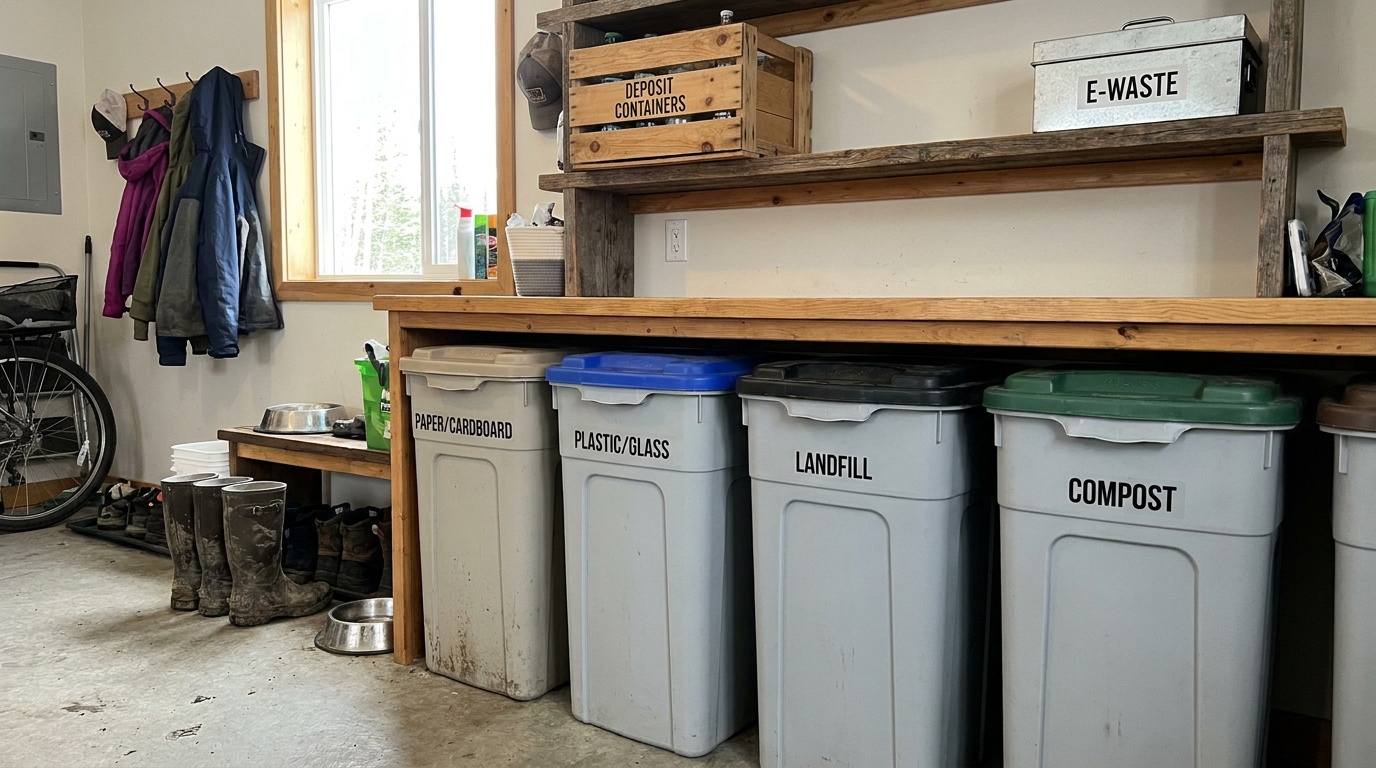
For smaller homes, slim pull out bins, stackable containers, and under sink compartments can work well. In larger homes, a kitchen sorting station paired with larger garage bins often creates the best balance. Many families benefit from a two stage system: a convenient indoor station for daily use and a secondary holding area where materials are consolidated before pickup day.
Labeling is worth doing well. Use large text, simple wording, and if helpful, images of accepted materials. Try labels such as Paper and Cardboard, Cans and Bottles, Compost, and Landfill Only, but always align wording with your local rules. If plastic films, coffee pods, or black plastic are not accepted locally, say so directly on the label. Specific guidance reduces guesswork.
Place Bins Where Decisions Happen
A recycling system is only as effective as its placement. If recyclables need to be carried to another room every time, many people will default to the nearest trash can. Place bins where the waste is created and where the sorting decision naturally occurs. For most households, that means keeping the main station in or beside the kitchen. If you produce lots of delivery packaging, consider adding a flattened cardboard area near the entry or garage. If bathroom toiletry containers often get tossed in the trash, add a small container there too.
The principle is simple: reduce friction. The fewer steps it takes to sort correctly, the more reliable the routine becomes. This is especially true in homes with children, visitors, or exhausted adults trying to clean up after dinner. Convenience supports good environmental behavior in a way that reminders alone usually cannot.
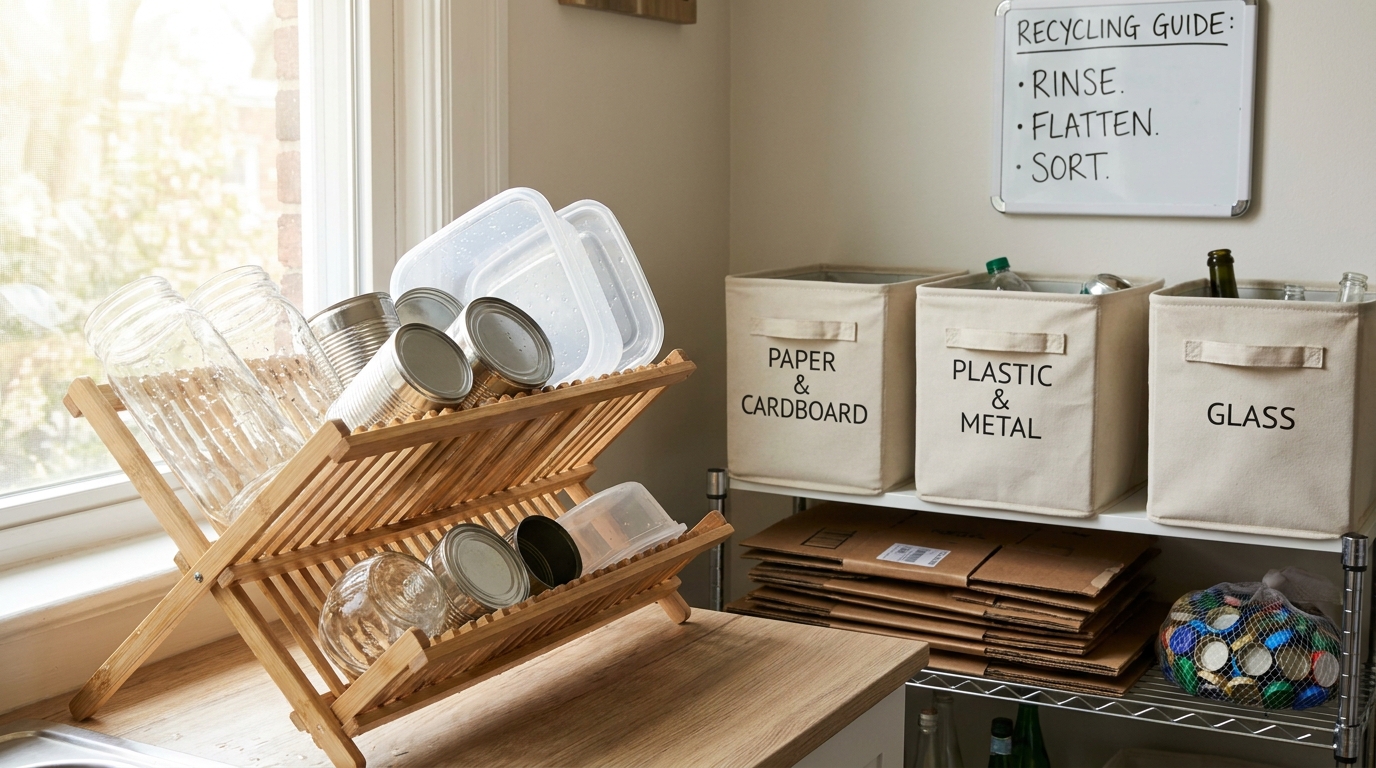
If you have room, think vertically as well as horizontally. Wall mounted label boards, narrow stacking bins, shelf baskets for bottle returns, and dedicated boxes for batteries or e-waste can all help maintain order without taking over your floor space. The most elegant systems often feel calm not because they are hidden, but because they are easy to understand.
Teach the Household What Belongs In and What Stays Out
Clear education inside the home is one of the strongest ways to improve recycling success. National guidance and industry reporting consistently identify contamination as one of the biggest problems in recycling streams. Mixed materials, leftover food, plastic bags placed in curbside carts, and non accepted items thrown in hopefully can reduce the quality and value of collected recyclables. This habit is often called wish-cycling, and while it usually comes from good intentions, it can create real problems at sorting facilities.
A practical household system needs shared rules. Explain what is accepted, what is not, and what to do when someone is unsure. Encourage a simple default: if you cannot confirm it is accepted locally, do not place it in the recycling bin. That approach may feel conservative, but it is often better than contaminating the stream with uncertain items. Over time, your household will learn the recurring materials and sorting decisions will become faster.
Children usually respond well to simple categories and repetition. Adults tend to appreciate concise reminders near the bins. Guests benefit from visible labels rather than verbal instructions. Everyone benefits from consistency. If your local program changes, update the labels and mention the change clearly so old habits do not continue by accident.
Common Items That Often Cause Confusion
- Plastic bags and film wrap, which are frequently not accepted in curbside bins
- Greasy pizza boxes, where the clean lid may be recyclable but the soiled base may not be
- Coffee cups, which often contain mixed materials that are difficult to process
- Black plastic trays, which may not be recognized by some sorting systems
- Shredded paper, which can be too small for certain facilities unless bagged according to local instructions
- Caps, pumps, and triggers, which may have different rules depending on the program
- Electronics, batteries, paint, bulbs, and chemicals, which usually require special disposal
Rather than trying to memorize every possible item at once, focus first on your household’s most common materials. That is where the greatest improvement will happen.
Keep Recyclables Clean, Dry, and Empty
One of the most valuable habits you can build is preparing items properly before they go into the bin. In many programs, containers should be empty and lightly rinsed, paper should stay dry, and cardboard should be flattened. You do not need to use excessive water or wash items to perfection, but visible food residue and pooled liquids can contaminate other materials in the bin. This is particularly important in single-stream systems where paper and containers are collected together.
Think of preparation as protection for the rest of the load. A sticky jar left half full of sauce can leak onto paper and make otherwise recyclable materials less usable. Wet cardboard can become heavy and degrade quickly. Small adjustments at home make a real difference by helping materials arrive at the facility in better condition.
A simple routine can help. Empty containers after use, give them a quick rinse if needed, and let them drain before placing them in the recycling. Flatten boxes as they come in rather than waiting until pickup day. Keep a spot for lids, deposit containers, or other special items if your local system requires different handling. These are small actions, but they create a much smoother overall process.
EPA notes that recycling 10 plastic bottles can save enough energy to power a laptop for more than 25 hours. Household actions may feel small, but repeated consistently, they add up.
Include Organics if Your Area Supports It
For many households, adding compost or organics diversion is the step that most dramatically reduces landfill waste. This matters not just for trash volume, but also for emissions. Canada’s emissions progress reporting has noted that a large share of waste sector emissions comes from solid waste, which highlights why keeping organics out of landfill is so important. When food scraps and yard waste are diverted through composting or organics collection, households can cut down on both garbage output and associated environmental impact.
If your municipality offers green bin pickup, include it as part of your main home system rather than treating it as optional. A small countertop caddy with a washable liner or certified compostable bag can make food scrap collection much more manageable. Place it where meal prep happens so peels, coffee grounds, eggshells, and leftovers can be separated without effort.
If you do not have municipal organics service, you may still be able to compost at home depending on your space and local regulations. Backyard composting, tumblers, and worm composting can all work in different settings. The right option depends on climate, maintenance comfort, and what kinds of food scraps you want to manage. The key is to choose a level of complexity you can sustain.
Adding organics diversion often has another benefit: it helps reveal how much of what looked like trash was actually compostable. Once that stream is separated, recycling and landfill sorting become clearer too.
Create a Simple Routine for Collection Day
Even a well designed indoor setup can become frustrating if collection day feels chaotic. An effective home recycling system includes a transfer routine that is easy to repeat. Decide when indoor bins will be emptied, where full bags or loose materials will be staged, and who is responsible for moving carts to the curb or collection area. Clarity reduces last minute mess and makes the system feel dependable.
Some families do well with a weekly five minute reset. On the evening before pickup, flatten cardboard, empty indoor bins into larger outdoor carts, rinse any last containers, and check whether any special items need to wait for drop off. Others prefer smaller daily resets so materials never accumulate too much inside the home. Neither approach is better by default. What matters is that the routine matches your schedule.
If your home produces occasional special waste, such as batteries, textiles, small electronics, paint, or light bulbs, create a clearly labeled holding box for those items. They should not float around the house because that leads to improper disposal later. A designated spot allows you to collect them safely until a local drop off event or depot visit.
Make the System Easy for Kids and Other Family Members
When recycling depends on one highly informed person doing all the sorting, the system usually becomes fragile. Shared participation makes it more resilient. That does not mean everyone needs an in depth education on materials recovery facilities. It means each person should understand the household rules well enough to act confidently most of the time.
For young children, visual labels can be very effective. Photos or drawings of cans, bottles, paper, and food scraps help them build recognition early. Invite them to flatten cardboard, rinse a jar with supervision, or carry clean paper to the correct bin. These small tasks create ownership and normalize waste sorting as part of home care rather than a special environmental lesson.
Teenagers and adults usually respond better to practical logic. Explain that contamination can cause loads to be downgraded or rejected and that unclear items should be checked before tossing. If your family uses a shared group chat, you can even post occasional reminders when local rules change or after a holiday cleanup. Calm consistency tends to work better than criticism.
It also helps to acknowledge different comfort levels. Some family members will care deeply about proper sorting, while others will simply want the fastest clear rule. A good home system accommodates both by being intuitive, visible, and forgiving of occasional mistakes.
Plan for Apartments, Small Homes, and Busy Households
Many people assume effective recycling requires a large mudroom or garage, but compact homes can still have strong systems. In apartments, the main challenge is usually space. Slim bins, stackable containers, over the door organizers, or a two container setup under the sink can work well when paired with a regular emptying routine. If your building has shared recycling rooms, make transport easy with a handled tote or lightweight bin that can be carried in one trip.
Busy households often struggle less with space and more with speed. If everyone is rushing, materials tend to be dropped into the easiest available bin. In these homes, the answer is usually not more rules. It is clearer labels, larger capacity in the busiest zones, and a faster route from use to disposal. Place the compost caddy where chopping happens, the paper recycling where mail is opened, and the cardboard area near the entry where boxes arrive.
If your household includes older adults or multiple generations, accessibility and communication become especially important. Choose bins that are easy to open, avoid very small text on labels, and keep instructions polite and direct. A graceful system should support the people using it, not ask them to adapt to something awkward for the sake of appearances.
Reduce Waste Upstream to Make Recycling Easier
One of the most effective ways to improve your recycling system is to generate less confusing waste in the first place. This can be done gently, without aiming for perfection. Choose products with simpler packaging when possible, bring reusable bags and containers when practical, buy in quantities your household can actually use, and consider refill systems for items you purchase often. These choices reduce both landfill waste and sorting complexity at home.
This is also where household values become visible in everyday life. Sustainability does not need to look dramatic. It can look like choosing a durable product once instead of replacing a flimsy one repeatedly. It can look like keeping a repair box for basic household fixes or reusing shipping materials for returns and storage. Over time, these habits support the same goal as recycling while often having an even greater impact.
Current trends in waste management increasingly reflect this broader thinking. Extended producer responsibility policies, clearer package labeling, and better product design are all part of a system that asks manufacturers and policymakers to share the work. At home, you do not control all of that, but you do control the choices that enter your kitchen, pantry, bathroom, and closet.
Troubleshoot the Most Common Home Recycling Problems
Every household system runs into a few recurring problems. Sometimes bins overflow too quickly. Sometimes contamination appears because one item category is confusing. Sometimes family members ignore labels when they are tired or distracted. These issues are normal, and they usually indicate that the system needs adjustment rather than that people do not care.
If bins overflow, increase capacity or empty them more often. If contamination keeps showing up, rewrite the label in simpler language and remove ambiguous categories. If cardboard piles up, add a dedicated flattening area and a reminder near the door. If people keep tossing recyclables in the trash, move the recycling bin closer than the trash bin in the problem area. Small design changes often solve what looks like a motivation problem.
Odor is another common concern, particularly with organics and rinsed containers. Compost caddies should be emptied regularly and cleaned often enough that they remain pleasant to use. Recyclables should be empty and not left with food residue. If needed, store organics in the freezer between collections or use a lidded container that is easy to wash. A system that feels hygienic is much easier to maintain.
Quick Fixes That Improve Daily Use
- Make the correct bin the easiest bin to reach.
- Use direct labels with accepted and not accepted examples.
- Flatten cardboard immediately after unpacking.
- Rinse containers lightly and let them drain before sorting.
- Set one weekly reset time tied to your collection schedule.
- Keep a separate box for batteries, bulbs, and e-waste.
- Check municipal updates a few times each year.
Use Technology and Local Tools to Stay Current
As waste systems evolve, households increasingly have access to better tools. Many municipalities and private haulers now offer apps, searchable item databases, collection reminders, and service alerts. Some packaging brands use smarter labels intended to help consumers understand disposal pathways more clearly. Material recovery facilities are also adopting advanced sorting technologies, but those systems still depend on cleaner household inputs to work well.
For your home, the simplest technology may be the most useful. Set a recurring calendar reminder for collection night. Save your local recycling search tool to your phone home screen. Take a photo of the official accepted materials guide and share it with household members. These modest steps support consistency without turning recycling into a project you have to think about constantly.
It is worth revisiting local information periodically because accepted materials can change. Market demand, processing upgrades, contamination concerns, and policy shifts all influence what a program can handle. A system that was correct two years ago may need a few updates today.
Why a Personalized System Matters More Than a Perfect One
The most effective home recycling system is not the one with the prettiest containers or the most detailed labels. It is the one your household can actually maintain. A personalized system respects available space, local program rules, family routines, and the realities of everyday life. It reduces friction, lowers contamination, and makes responsible choices feel normal rather than burdensome.
That approach is especially important because sustainability works best when it is durable. Pressure, guilt, and overcomplication can make environmental habits feel fragile. Practicality keeps them going. A calm, well placed bin, a clear label, a quick rinse at the sink, and a predictable weekly reset may not look dramatic, but these are exactly the kinds of household systems that support long term change.
There is also something valuable about making waste visible in a constructive way. When a family begins sorting materials thoughtfully, it often starts noticing patterns. Which products create too much packaging. Which purchases are easy to recycle. Which leftovers could have been composted. Which reusable options are worth adopting. Recycling can become a quiet teacher, guiding better decisions upstream without demanding perfection.
Final Thoughts
If you want to create an effective home recycling system, begin simply. Confirm your local rules, identify where waste shows up in your home, choose bins that match your real needs, and label them clearly. Add composting or organics diversion if your area supports it, and focus on keeping recyclables clean, dry, and correctly sorted. From there, refine the system based on what your household actually does, not what you think it should do.
Environmental responsibility at home does not have to arrive with pressure. It can begin with one cabinet, one countertop caddy, or one better conversation about what belongs where. A well designed recycling routine helps reduce waste, supports local diversion efforts, and teaches a practical form of care for the place you live. In that sense, it is not just about bins. It is about building a home that makes thoughtful choices easier every day.

No Comment! Be the first one.