



How to Maintain Your Driveway: Essential Seasonal Tips for Long-Term Durability
Your driveway works harder than most parts of your property. It carries vehicle weight every day, handles rain and snow, and sits exposed to sun, salts, freeze thaw cycles, and routine wear. Because it is so familiar, many homeowners stop noticing small signs of trouble until the surface starts breaking down in a way that is expensive to fix. Good driveway maintenance is really about catching those small issues while they are still manageable.
Table Of Content
- Why driveway maintenance matters more than most homeowners think
- Start with the basics: inspection, drainage, and surface cleaning
- A seasonal driveway maintenance calendar that actually works
- Spring: inspect winter damage and restore drainage
- Summer: repair, wash, and seal in dry conditions
- Fall: prepare for water, leaves, and winter stress
- Winter: remove snow promptly and use deicers carefully
- How to maintain an asphalt driveway
- How to maintain a concrete driveway
- How to maintain gravel, paver, and permeable driveways
- Cleaning methods that help instead of harm
- Common homeowner mistakes that shorten driveway life
- When DIY is enough and when to call a professional
- A practical yearly checklist for driveway longevity
- Final thoughts: the driveway lasts longer when you respect the basics
The most practical way to protect a driveway is to think in seasons. Spring is for inspection after winter stress, summer is for cleaning and repairs in dry weather, fall is for drainage and cold weather preparation, and winter is for careful snow and ice control. This seasonal approach matters because water is usually the main enemy. Once water gets into cracks, joints, or weak spots, it expands during freezing weather and starts turning small defects into larger failures.
Different driveway materials also need different treatment. Asphalt benefits from regular crack filling and periodic sealcoating. Concrete depends more on drainage, joint care, and careful deicer use. Gravel needs grading and crown maintenance so water can shed properly. Paver and permeable systems need joint cleaning and protection against clogging. If you use the wrong maintenance method for the wrong material, you can waste time or even make the problem worse.
This guide breaks down the practical maintenance steps homeowners can take through the year to extend the life of their driveway. It also explains where DIY maintenance makes sense and where a contractor is the better call. The goal is simple: keep water moving away, fix small damage early, and avoid unnecessary surface stress.
The cheapest driveway repair is usually the one you do early. Small cracks, clogged drainage edges, and minor low spots are manageable. Ignored for a few seasons, they often turn into potholes, settlement, spalling, or full surface replacement.
Why driveway maintenance matters more than most homeowners think
Driveways fail for practical reasons, not mysterious ones. Water gets in, the base weakens, the surface loses flexibility or bond, and the damage spreads under traffic. In colder climates, this process speeds up because freeze thaw cycling puts repeated pressure on saturated materials. That is why one narrow crack can become a broad split or pothole after a single hard winter.
Drainage is at the center of almost every driveway durability problem. Ontario guidance for access roads links long term usefulness directly to inspection and clean out of drainage features, and that same principle applies at the residential scale. If the edges are buried in soil, if downspouts discharge onto the slab, or if a low spot holds water, the driveway is being asked to fail early. Maintenance is not just about the surface finish. It is about keeping the whole system dry enough to perform.
Winter maintenance has become a bigger issue too. Canada reports average road salt use of about 5 million tonnes per year, which shows how common chloride exposure is in cold regions. On concrete, the American Concrete Institute notes that saturated concrete exposed to freeze thaw cycling and chloride based deicers can suffer joint deterioration and related surface damage. On asphalt, winter water infiltration and repeated freezing can widen cracks and undermine the base. In both cases, more salt is not the same thing as better maintenance.
There is also a cost issue that homeowners often underestimate. Minor crack sealing, edge cleanup, and timely patching are relatively affordable. Rebuilding a failed asphalt section, replacing settled concrete slabs, or correcting major drainage and base failure is not. Consumer guidance has long noted that temporary blacktop patch materials are not as durable as hot asphalt repairs, which is a useful reminder that waiting too long often leads to repeat work instead of permanent repair.
Start with the basics: inspection, drainage, and surface cleaning
Before you seal, patch, or pressure wash anything, inspect the driveway as if you were buying the house today. Look for cracks, puddles, sunken areas, crumbling edges, open joints, flaking concrete, loose pavers, and gravel washouts. Check whether the driveway still slopes away from the garage and whether nearby soil or landscaping is trapping runoff against the edges. If water sits on the driveway for hours after rain, you already know where your maintenance effort should start.
Next, pay attention to everything that can deposit debris or water onto the surface. Overhanging trees drop leaves that trap moisture and stain the driveway. Gutters and downspouts can dump concentrated runoff in one spot. Lawn edging can migrate and create a lip that traps water instead of letting it run off. Small problems around the driveway often create larger problems on the driveway.
Routine cleaning matters because dirt and organic debris hold moisture against the surface and hide defects. On asphalt, that moisture speeds deterioration around cracks and softens weak areas in hot weather. On concrete and pavers, dirt, moss, and mildew can increase staining and make surfaces slippery. A clean surface also lets you judge the real condition of the material before you spend money on repairs.
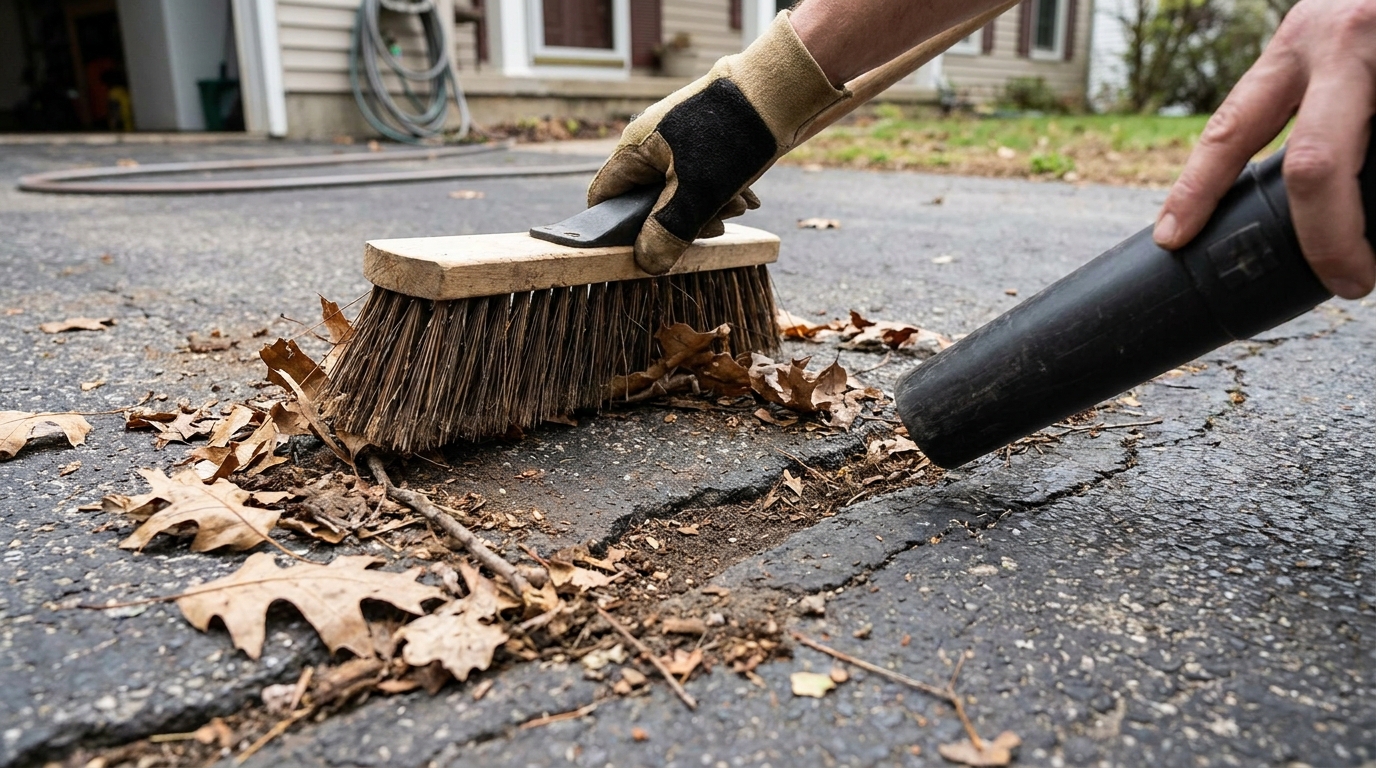
A simple inspection routine works well for most homes. Walk the driveway after heavy rain, then again after a few dry days. Mark cracks that look wider than a hairline, note where water ponds, and photograph areas that seem to be changing. If the same spot looks worse every season, that is where your driveway is telling you it needs help. You do not need special training to notice patterns.
A seasonal driveway maintenance calendar that actually works
Spring: inspect winter damage and restore drainage
Spring is when hidden problems become visible. Snowmelt reveals heaving, settlement, potholes, spalling, and joint damage that may have developed through the winter. It is also the best time to check whether runoff is moving properly after frozen ground and snow piles have shifted water in new directions. If there is standing water near the garage or along a driveway edge, deal with that before anything else.
Start by removing all winter debris, including sand, leaves, branch litter, and compacted edge buildup. Clean out swales, ditch lines, curb cuts, and any drainage path that helps move water away from the driveway. If a downspout empties onto the driveway, extend it to a better discharge point. Water management is never glamorous, but it is one of the highest value tasks you can do.
Then inspect the surface closely. On asphalt, look for fresh cracks, raveling, soft spots, and edge breakdown. On concrete, watch for scaling, pop outs, open joints, and flaking near salt exposed areas. On gravel, look for washboarding, rutting, and thinning aggregate. On pavers, note any settlement, weed growth, or clogged joints that are trapping fine sediment.
Summer: repair, wash, and seal in dry conditions
Summer is usually the best time for active maintenance because surfaces are dry and repair materials cure more reliably. If your driveway needs crack filling, patching, pressure washing, or sealcoating, this is the season to plan it. Dry weather improves adhesion and gives you a much clearer view of what is sound and what is not. It also gives contractors better conditions if the work is beyond DIY range.
This is the season to address defects before the next freeze thaw cycle. Fill asphalt cracks before they widen. Repair concrete joints that are open enough to admit water. Regrade gravel that has lost its crown. Refill paver joints where material has washed out. Summer maintenance does not just improve appearance. It directly reduces winter risk.
Be disciplined about timing and product selection. Not every sealer or patching material works on every surface, and heat can affect application windows. Follow manufacturer instructions, but also use common sense. If a driveway has major structural damage, no coating will solve it. A maintenance product is not a substitute for a failed base or broken slab.
Fall: prepare for water, leaves, and winter stress
Fall maintenance is all about preparation. Clear leaves before they mat down and hold moisture against the surface. Trim edges where turf or soil has crept in and started trapping runoff. Clean gutters and confirm that downspouts are not creating icy spots or repeated saturation near the driveway. If there are low areas that pond water, mark them and decide whether they need patching, leveling, or drainage correction before winter.
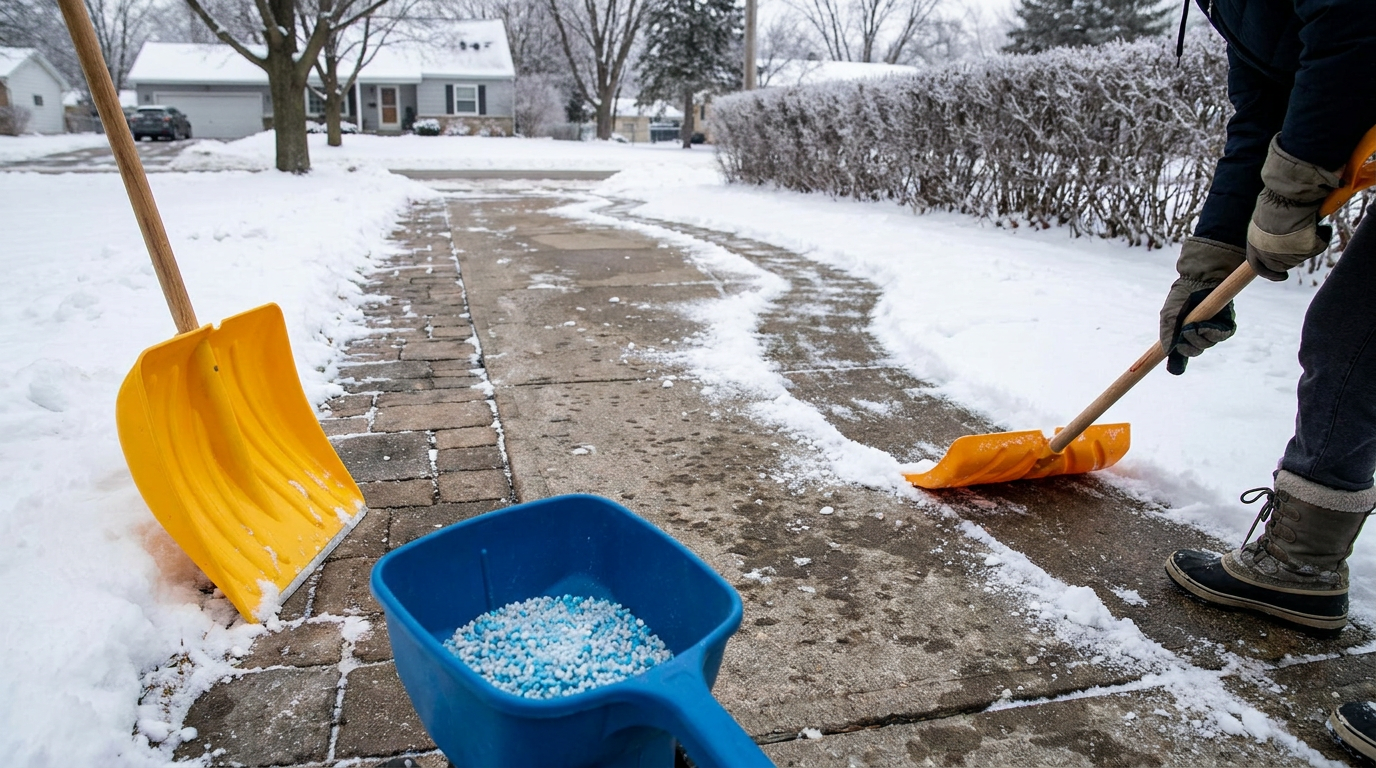
Fall is also when you should get your snow removal setup right. A worn metal edge on a shovel or plow can gouge asphalt, scrape sealers, or chip vulnerable concrete edges. Plastic shovels, rubber edged equipment, or properly adjusted snowblowers are often safer choices for residential surfaces. Homeowners cause a surprising amount of driveway damage with aggressive winter tools.
Stock winter materials carefully. Do not assume the same deicer is suitable for every driveway. Use the minimum effective amount, and consider traction materials where appropriate. Overapplication is wasteful, hard on surfaces, and harder on the environment than most people realize.
Winter: remove snow promptly and use deicers carefully
Winter care is mostly about reducing saturation and limiting surface stress. Remove snow promptly so melting water has less time to soak into cracks and joints. Avoid letting packed snow turn into bonded ice layers. The longer moisture sits on the driveway, the greater the risk of freeze thaw damage, especially on already weakened areas.
Be cautious with chloride based deicers, particularly on concrete. ACI identifies freeze thaw damage of saturated concrete and chloride related chemical attack as major causes of joint deterioration in concrete flatwork and pavements. That does not mean every driveway will fail from one bad winter, but it does mean repeated heavy salt use can shorten service life where drainage is poor or the concrete is already vulnerable. Less product, applied more thoughtfully, is usually the better practice.
For asphalt, winter care still matters even though the material behaves differently than concrete. Salt may not create the same specific chemical issues, but water entry through cracks and repeated freezing still drive deterioration. If the driveway already has open cracks or weak patches, try to avoid turning those areas into collection points for slush and meltwater. Clear them early and keep drainage paths open.
How to maintain an asphalt driveway
Asphalt is popular because it is cost effective, forgiving, and fairly straightforward to maintain. It also has a predictable aging pattern. Over time, sunlight and oxidation dry the binder, the surface loses flexibility, and small cracks begin to form. If water gets through those cracks into the base, damage spreads quickly under wheel loads. That is why crack sealing is one of the most important maintenance steps for asphalt.
The Asphalt Institute treats crack sealing as a standard maintenance practice and a common step before seal coats or overlays. That is worth emphasizing because homeowners sometimes focus too much on the appearance of a fresh black surface and not enough on keeping water out. Sealcoating can help protect the surface, but it does not replace proper crack treatment. If you coat over active cracks without repairing them, the problem usually returns.
Start with surface cleaning. Sweep away loose grit, blow debris out of cracks, and remove organic matter at the edges. Oil spots should be cleaned with a product approved for asphalt so the surface can accept repairs properly. Avoid harsh solvents that may soften or damage the binder. If the driveway is very dirty, wash it and allow it to dry fully before doing any repair work.
Then assess the cracks. Narrow, non structural cracks are often good candidates for homeowner level repair using asphalt crack filler or pourable sealant designed for the width involved. Wider cracks, recurring cracks, or areas with soft edges may need routing, better preparation, or professional evaluation. If the surface has widespread alligator cracking, that usually points to base failure or deep structural weakness, not a simple maintenance issue.
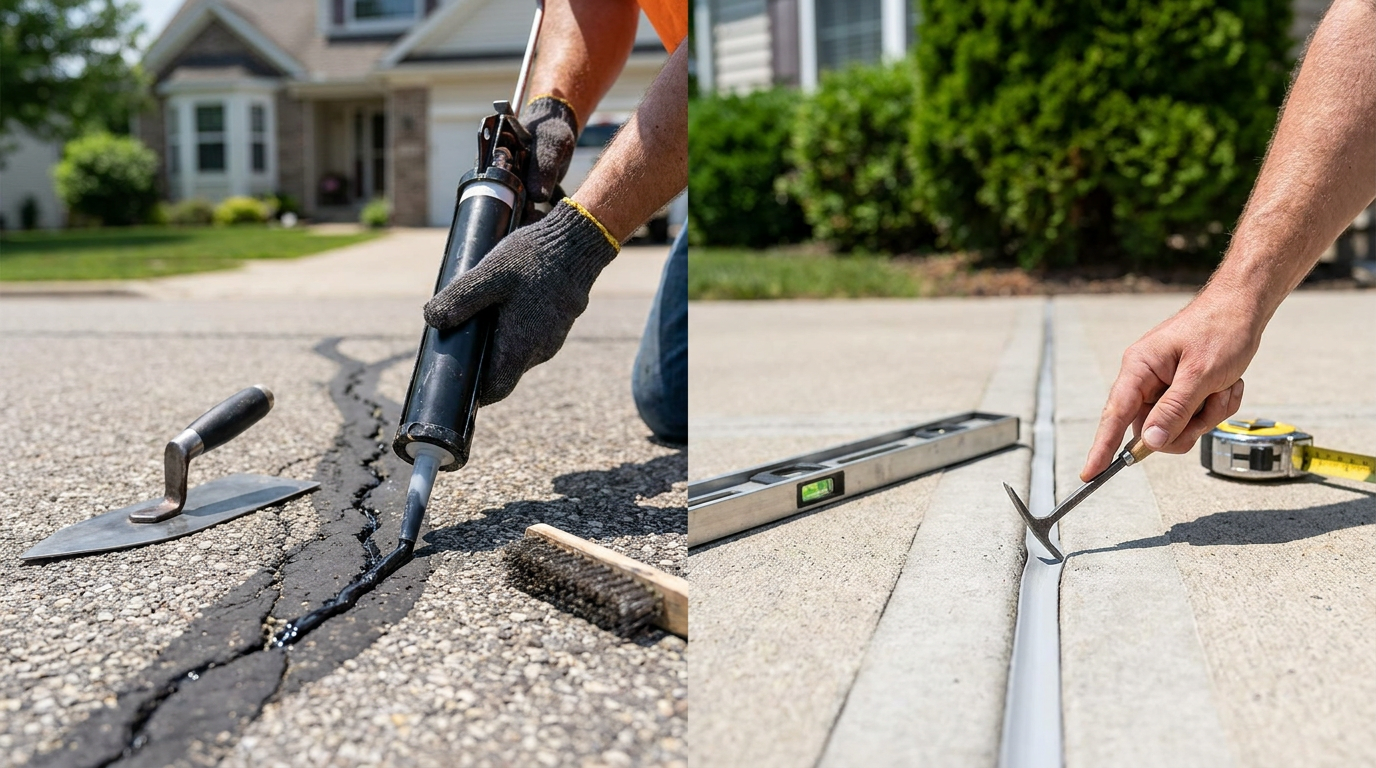
Sealcoating should be based on condition, not habit alone. If the asphalt is fading, oxidizing, and still structurally sound, a quality sealcoat applied under proper conditions can help protect it. If the driveway was recently sealed and still has good surface integrity, more coating is not automatically better. Overly frequent sealing can create build up and does not address underlying defects. Think of sealcoating as one tool in a broader maintenance plan, not a cure all.
Potholes and depressions require honesty. Small, isolated areas may respond to patching if the surrounding pavement and base are stable. But recurring potholes usually mean water is reaching the base or traffic is flexing a weak section. Temporary bagged patch products can help in a pinch, but they are not as durable as hot asphalt repair. If the same hole keeps coming back, professional repair is often cheaper in the long run than repeating temporary fixes every season.
How to maintain a concrete driveway
Concrete has different strengths and different vulnerabilities. It does not need asphalt style sealcoating, and it should not be treated as if it does. Concrete maintenance is more about protecting joints, controlling water, reducing saturation, and limiting damage from deicers and surface contamination. A driveway slab can stay in good shape for many years if it sheds water well and does not stay chronically wet.
Begin with cleaning and drainage checks. Wash away dirt, algae, and winter residue. Make sure joints are visible and not packed with soil or decayed leaves. Watch how water behaves around the slab and whether any edge areas hold moisture against the concrete. A good concrete driveway should dry reasonably evenly, not stay dark and wet in isolated zones long after the rest of the surface dries.
Pay close attention to joints because that is where concrete often starts to show trouble. Open joints and cracks let in water, and if that water remains trapped and freezes, deterioration accelerates. ACI notes that premature joint deterioration is increasingly observed in concrete pavements and flatwork exposed to chloride based deicers, especially where drainage is poor. That means joint care is not optional maintenance. It is part of preserving the slab.
Hairline shrinkage cracks are common in concrete and not always a structural concern, but wider cracks, displaced cracks, and crumbling joint edges deserve action. Use repair materials made for concrete and follow the preparation requirements carefully. If slabs are settling unevenly or joints are breaking apart across large areas, that points to movement or base issues that a surface repair alone will not solve. In that case, call a contractor who understands slab lifting, full depth repair, or replacement options.
Concrete also benefits from protective treatments in the right situations. Penetrating sealers can help reduce water and deicer ingress without creating a heavy surface film. ACI also identifies lower permeability concrete, air entrainment, and supplementary cementitious materials as factors that can improve resistance in chloride exposure. Homeowners are not redesigning the original mix after installation, but they can still use penetrating treatments and better winter practices to reduce future damage.
Be very cautious with deicers on newer concrete as well as older concrete with visible wear. Not all products are equal, and more material does not always produce safer walking conditions. Good snow removal timing often reduces how much chemical help you need in the first place. Remove snow early, improve traction where practical, and apply only what is needed for the conditions.
How to maintain gravel, paver, and permeable driveways
Gravel driveways are often treated as low maintenance, but that is not the same thing as no maintenance. Their biggest issue is water control. Without a proper crown, gravel driveways collect runoff, develop ruts, and begin losing aggregate to the sides or downhill. Once the wheel paths sink and hold water, every storm and freeze cycle makes the problem worse.
Regular grading keeps a gravel driveway functional. The goal is to restore the crown so water sheds to the sides instead of staying in the track. You may also need to add fresh aggregate when the surface gets thin or muddy. If potholes keep forming, the fix is usually to cut out the loose material, restore the base, and recompact, not just dump loose stone into the hole and hope it binds.
Paver driveways need attention to joint condition and surface level. If weeds are growing in the joints or fine sediment is filling the gaps, drainage performance drops and movement can increase. Replenishing joint material, cleaning carefully, and resetting isolated sunken pavers are practical homeowner tasks if the area is small. Broad settlement across larger sections often means the base has shifted or compacted unevenly and should be corrected properly.
Permeable driveways bring a useful drainage benefit, but only if the system stays permeable. Fine sediment can clog joints or void spaces and reduce infiltration over time. Avoid washing surrounding soil onto the surface, keep nearby mulch and loose fines under control, and use cleaning methods that preserve the designed drainage path. A permeable system that clogs becomes a more expensive version of a regular driveway, which defeats the point.
Cleaning methods that help instead of harm
Cleaning is one of the simplest driveway maintenance tasks, but it is worth doing correctly. Sweeping and blowing off debris are the first line of defense and can be done frequently. Pressure washing can be effective on concrete and pavers when used with control, but excessive pressure can etch surfaces, strip joint material, or force water into weak areas. On asphalt, heavy pressure washing and harsh chemicals should be used carefully because they can damage the surface or accelerate wear.
For stains, choose cleaners that match the material. Oil on asphalt should be treated with asphalt safe products. Concrete can often tolerate stronger cleaners, but always test an inconspicuous area and follow product instructions. Avoid household experiments that involve acids, bleach mixtures, or solvents unless they are specifically recommended for the driveway type. Cleaning should remove contamination, not create new surface damage.
If moss or algae are recurring, the problem is often shade, moisture, and poor drying conditions rather than just dirt. Trim overgrowth where appropriate, improve runoff, and help sunlight and air reach the surface. A clean driveway that never dries out will soon look dirty again. Maintenance works best when you fix the source, not only the symptom.
Common homeowner mistakes that shorten driveway life
One common mistake is thinking cracks are only cosmetic. In reality, a small crack is often just a water entry point waiting for a wet winter. Once the base becomes saturated or the slab edges begin to break down, the repair becomes larger and more expensive. What looks like a minor flaw in July can become a serious problem by February.
Another mistake is treating all driveways the same. Asphalt and concrete respond differently to water, salts, and maintenance products. The wrong sealer, the wrong patch, or the wrong cleaning method can waste money and make future repair harder. Material specific maintenance is not overcomplicating the job. It is basic care.
Overusing salt is another problem, especially in northern climates. More product does not always mean faster or safer deicing. It often means more chloride exposure, more runoff, and more risk to concrete joints and nearby landscaping. Canada’s emphasis on salt management reflects a larger shift in winter maintenance toward using the minimum effective amount and making smarter application decisions.
Homeowners also wait too long to correct drainage. They patch the crack but ignore the downspout aimed right at it. They fill the pothole but leave the low spot that keeps feeding it water. Surface repairs without drainage correction rarely hold as long as they should. The driveway will keep telling the same story until the water issue is addressed.
When DIY is enough and when to call a professional
Many routine maintenance tasks are realistic for homeowners. Cleaning, seasonal inspections, minor crack filling, light patching, joint cleanup, reapplying some protective treatments, and gravel touch up are all reasonable DIY work if you follow product instructions and stay within the limits of the repair. These jobs matter because they keep small problems from growing.
Call a professional when the issue suggests structural failure rather than surface wear. For asphalt, that includes widespread alligator cracking, repeated potholes in the same area, large soft spots, and major edge collapse. For concrete, call for help if slabs are settling unevenly, joints are deteriorating broadly, scaling is severe, or cracks show vertical movement. For pavers and gravel, repeated settlement and chronic washout usually point to base or drainage issues that need proper correction.
It is also smart to bring in help if you are unsure whether a problem is cosmetic or structural. A good contractor should be able to explain what failed, why it failed, and whether maintenance, partial repair, or replacement is the right option. The best money you spend may be on an accurate diagnosis before you start layering products over a deeper issue.
A practical yearly checklist for driveway longevity
If you want a simple approach, build your maintenance around a yearly cycle and stick to it. Most driveway life extension comes from consistency, not heroics. Walk the surface several times a year, keep water moving away, and handle small damage before the next season punishes it. That routine is much more effective than waiting for the driveway to look obviously bad.
- Inspect the driveway in spring after snowmelt and note cracks, puddles, heaving, spalling, and edge damage.
- Clean debris from the full surface, joints, and edges, and make sure nearby gutters and downspouts are not dumping water where it should not go.
- Repair small cracks and joints during dry weather before freeze thaw cycles can enlarge them.
- Seal or protect the surface based on material type and actual condition, not on a one size fits all schedule.
- Restore drainage by trimming edges, correcting low spots, regrading gravel, or cleaning runoff paths.
- Prepare for winter with the right snow removal tools and the minimum effective deicer strategy for your driveway type.
- Call a professional when damage repeats or when signs point to base failure, settlement, or widespread deterioration.
Final thoughts: the driveway lasts longer when you respect the basics
Driveway maintenance is not complicated, but it does reward attention. Water control, timely crack repair, seasonal cleaning, and careful winter practices are the basics that make the difference between a driveway that ages gradually and one that fails early. Whether the surface is asphalt, concrete, gravel, or pavers, the principle stays the same: keep water out, keep drainage working, and repair defects while they are still small.
There is also a practical mindset behind good maintenance. You are not trying to make the driveway look perfect every week. You are trying to preserve function, protect the base, and avoid avoidable damage. That means focusing on what actually shortens service life instead of only chasing surface appearance.
For homeowners, that is good news. Extending driveway life does not always require major renovation. In many cases, it comes from a handful of repeated habits done at the right time of year. If you inspect regularly, use the right products for the right material, and stay ahead of drainage and winter stress, your driveway has a much better chance of staying durable for years to come.


No Comment! Be the first one.