
When the Algorithm Edits the View: AI Image Manipulation Is a Data Trust Problem for Real Estate
A listing photo is supposed to be a data point. It tells a buyer or renter what a property actually looks like, how much light it gets, what the view really is. In Australia right now, that data point is being quietly corrupted, and the implications reach well beyond one Potts Point balcony.
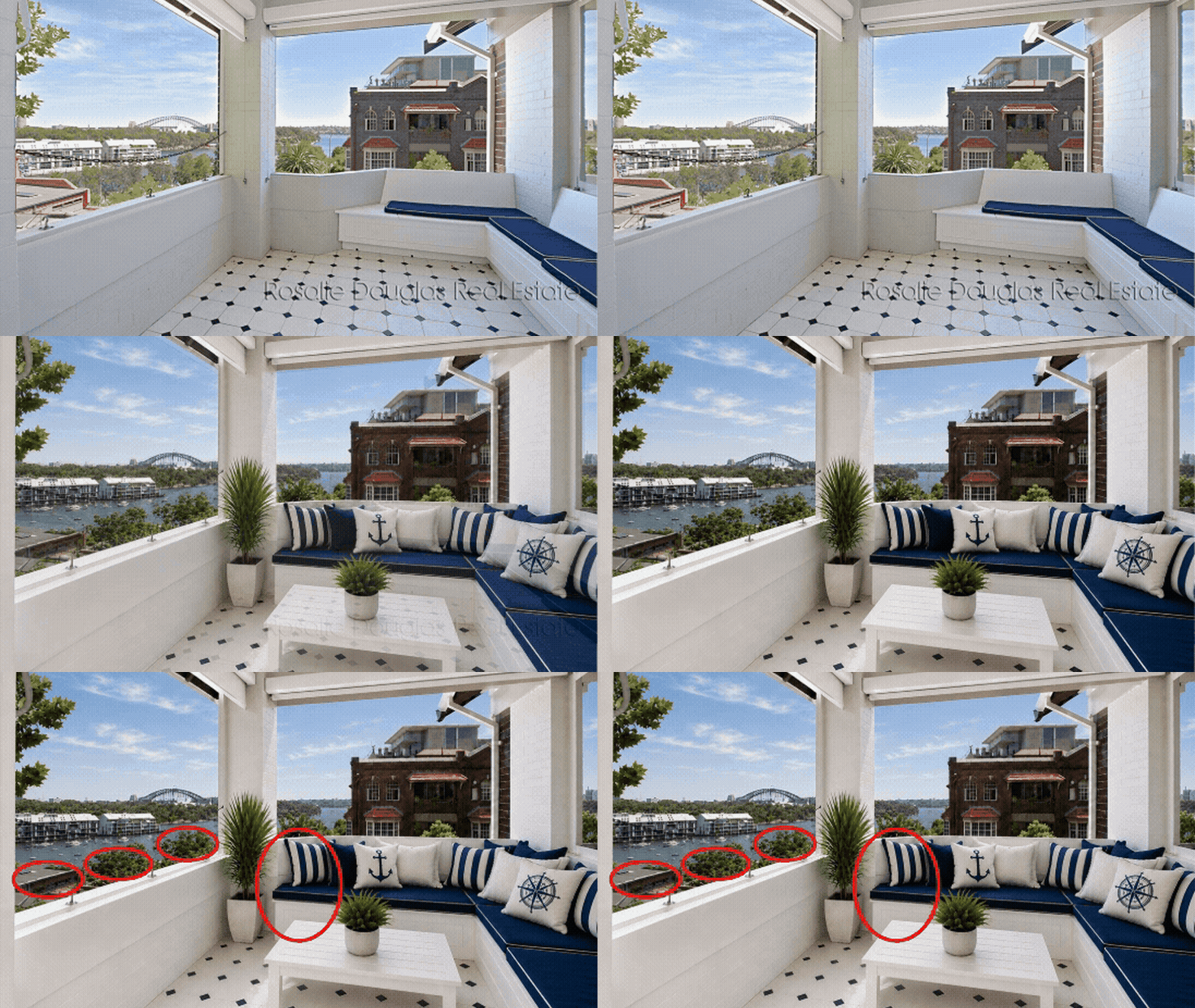
A two-bedroom rental in Potts Point, listed for $1248 a week, recently drew scrutiny after a comparison with a 2024 photo of the same balcony showed trees lowered and buildings shrunk to open up more harbour view. The agency behind the listing said AI had only been asked to generate furnishings, not alter the view, yet a SynthID check on the image returned a positive match for OpenAI’s invisible watermark. That detail matters to me as much as the visual trickery itself. We now have the tools to verify when an image has been synthetically touched, and the industry is barely using them.
This is not an isolated case of one overzealous edit. AI-generated furniture in empty rooms has become so routine that agents like Bernie Crawford of MB Real Estate describe it as no different from staging a home with rented furniture. I understand that logic. But the same models used to stage a living room can just as easily regrade a lawn, repaint an exterior, or erase a tenant’s furniture for privacy, as one Sydney principal noted was done recently. The line between helpful visualization and quiet deception is being drawn image by image, with no consistent standard behind it.
What strikes me from a data integrity standpoint is how uneven the labelling is. Some advertisements flag AI-generated renovation concepts directly on the image, as in a Geraldton, Western Australia listing that digitally repainted a home and landscaped its front yard. Others only mention AI use somewhere in the written description, where a buyer scanning photos first may never see it. That inconsistency is exactly the kind of signal noise that erodes trust in a dataset, and a property listing is, at its core, a dataset of one.
Verification tools already exist. The gap is not technical, it is procedural.
Regulators are beginning to respond. New South Wales has passed legislation, effective early 2027, requiring disclosure when rental images are digitally altered or AI-generated. Queensland already mandates labelling and can fine agents up to $90,000 for so-called house fishing. A Sydney renter’s petition pushing for genuine photographs as the default standard has already gathered more than 8000 signatures. These are early steps toward something the property sector should have built from the start: a verifiable chain of custody for listing imagery, not unlike what watermarking tools such as SynthID already offer.
For anyone building smart dashboards or valuation models on top of listing data, this should be a flag, not a footnote. If the inputs, including the photos buyers use to judge value and condition, can be silently altered, the intelligence layer built on top of them inherits that distortion. Clean data starts with honest images. Until disclosure becomes standard and automatic rather than voluntary, treat every harbour view with a little healthy skepticism.
Source: nine.com.au