



How to Clean and Maintain Your Gutters: A Seasonal Guide for Year Round Protection
Gutters do an unglamorous job, but they protect some of the most expensive parts of your home. When they are working properly, they catch roof runoff and send it away from siding, windows, doors, fascia, soffits, and the foundation. When they clog or fail, water spills over the edge, pools near the house, and starts finding weak points. That can mean stained siding, rotted trim, eroded soil, basement seepage, mold risk, and in colder climates, winter ice problems that get expensive fast.
Table Of Content
- Why gutter maintenance matters more than most homeowners realize
- How gutters fit into whole home water management
- The basic tools and safety setup you need
- How to clean your gutters properly
- Spring gutter maintenance
- Spring checklist
- Summer gutter maintenance
- Fall gutter maintenance
- Fall checklist
- Winter gutter maintenance and ice dam prevention
- Warning signs your gutters need repair, not just cleaning
- Common mistakes homeowners make
- When to call a professional
- A practical year round gutter routine
- Final thoughts
A lot of homeowners think of gutter cleaning as a once a year chore, usually in fall, but that is too narrow. A seasonal routine works better because each part of the year creates different risks. Spring reveals winter damage, summer is the time to catch drainage and alignment issues, fall brings the heavy debris load, and winter puts the whole roof drainage system under stress. If you stay ahead of those changes, gutter maintenance becomes a manageable habit instead of a repair bill.
There is solid public guidance behind that approach. ENERGY STAR recommends cleaning gutters each spring and fall and checking that downspouts direct water away from the home. Canadian government guidance warns that most flood damage caused by clogged eavestroughs and gutters is preventable and advises making sure downspouts discharge at least two metres away from the foundation. FEMA also treats gutters, downspouts, and splash pads as part of broader flood and storm preparedness. In plain terms, clean gutters are not just about appearance. They are part of how a house manages water.
This guide walks through what to do in each season, how to clean gutters safely, what warning signs to look for, and when a problem is bigger than a homeowner should tackle alone. The goal is straightforward. Keep water moving, keep it away from the house, and fix small issues before they turn into leaks, rot, or foundation trouble.
Why gutter maintenance matters more than most homeowners realize
Rain gutters and downspouts are one part of a complete water management system. The roof sheds water, the gutters collect it, the downspouts move it down, and the grading, splash blocks, and extensions move it away. If any one of those steps fails, the water still has to go somewhere. Too often it ends up soaking the edge of the roof, washing down exterior walls, or pooling beside the footing. Repeated exposure is what causes damage, even if each storm seems minor on its own.
Overflowing gutters do not just threaten the basement. They can rot the fascia board behind the gutter, stain masonry, loosen paint, damage soffits, and drown plantings below the eaves. In some homes, they can also contribute to moisture around window and door openings, especially if trim details are already weak. If a downspout dumps water right beside the house, the foundation wall and the soil around it stay wetter than they should, which raises the risk of seepage and movement.
There is also the mold factor. Health Canada notes that functioning eavestroughs, roof gutters, and downspouts help reduce moisture entry and mold risk. That matters because a moisture problem often starts outside long before you notice anything inside. By the time a basement smells musty or drywall shows staining, the drainage issue may have been developing for months or years. Good gutter maintenance is cheap compared with mold cleanup or structural repair.
The practical rule is simple: if roof runoff is not being collected, carried, and discharged well away from the house, the home is at greater risk of avoidable water damage.
How gutters fit into whole home water management
One common mistake is focusing only on the gutter trough itself. A clean gutter will still fail if the downspout is blocked, if the extension is missing, if the splash block is tipped the wrong way, or if the soil slopes back toward the house. Water management only works when all the parts do their job together. That is why inspection should always include the discharge point on the ground, not just the roof edge.
For many homes, the most important upgrade is not a new gutter at all. It is extending the downspout farther from the foundation and correcting drainage at grade. Canadian guidance specifically recommends that downspouts drain at least two metres from the foundation. That distance helps keep large volumes of roof water from dropping directly where the building is most vulnerable. If you can see erosion, splashback on siding, or damp soil at the base of the wall after rain, the runoff is probably not being managed well enough.
You should also think about nearby conditions that affect water flow. Overhanging trees increase debris. Valleys in the roof can dump concentrated runoff into one section of gutter. Short overhangs create more splash on walls. Areas with freeze thaw cycles need extra attention because standing water in a sagging section can freeze, expand, and worsen alignment problems. In other words, gutter maintenance is not only about cleaning leaves. It is about understanding how water moves around your house.
The basic tools and safety setup you need
Before getting into the seasonal schedule, it helps to have the right setup. Gutter work is simple in concept, but ladder work is where people get hurt. Rushing, overreaching, and working in wet or windy conditions are what turn a basic maintenance task into a trip to the emergency room. If the house is tall, the roof is steep, or you are not comfortable working from a ladder, hiring a professional is the right call.
For a typical one or two story home, most homeowners can handle basic cleaning with a stable extension ladder, work gloves, safety glasses, a small gutter scoop or plastic trowel, a bucket or debris bag, a garden hose with a spray nozzle, and optionally a plumber’s snake for stubborn downspout clogs. A ladder stabilizer is a smart add on because it improves footing and helps prevent damage to the gutters. Shoes with good grip matter too, especially if the ground is uneven or damp.
Set the ladder on firm, level ground and reposition it often instead of leaning too far to either side. It is slower, but it is safer and it protects the gutter from bending under side pressure. Avoid cleaning during storms, high winds, icy conditions, or when power lines are nearby. If you see rot at the fascia, loose gutter sections, or unstable brackets, stop and assess the structure before putting weight or pressure on it.
How to clean your gutters properly
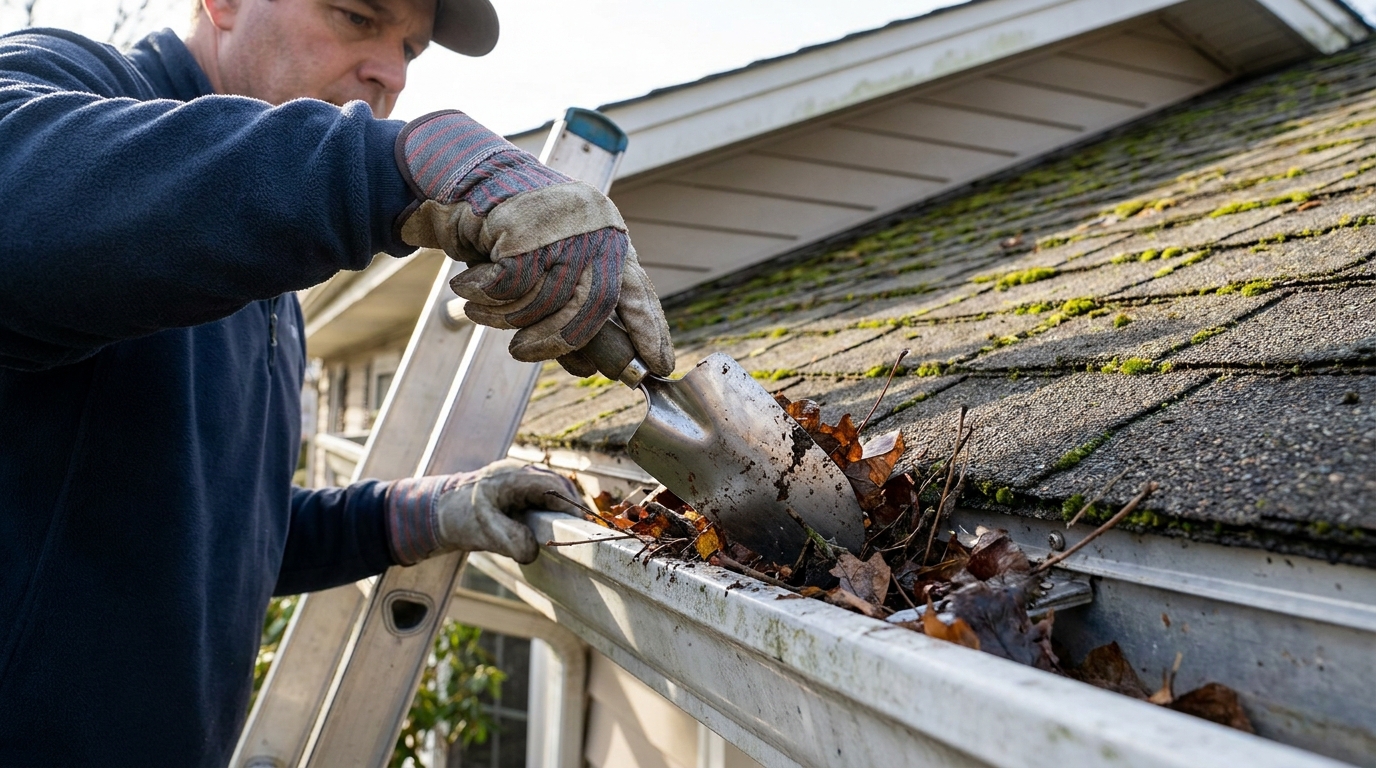
The cleaning process itself is straightforward, but there is a right order that makes it more effective. Start near a downspout and remove large debris by hand or with a scoop, dropping it into a bucket or onto a tarp below for cleanup later. Wet, compacted material is heavier than it looks, so take your time. If plants are growing in the gutter, that usually means debris has been sitting long enough to hold moisture, which is a sign the maintenance cycle has been too long.
Once the trough is cleared of heavy material, flush the gutter with a garden hose. The water should move steadily toward the downspout without pooling. If it sits in one spot, the gutter may be sagging or the slope may be wrong. Most systems need a slight pitch toward the downspout. If the water backs up at the outlet, the downspout is likely blocked and needs to be cleared.
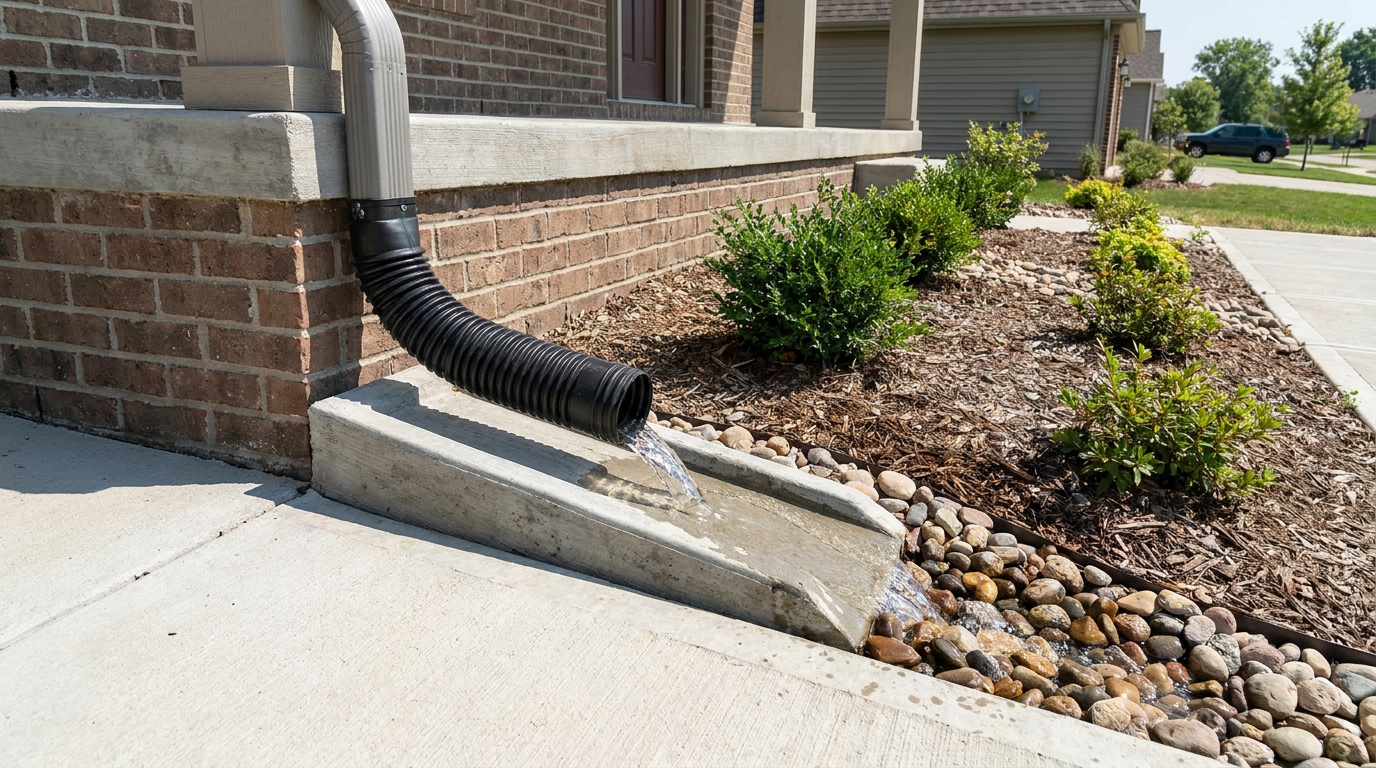
To clear a downspout, start by running the hose from the top. If water does not pass through, disconnect the lower elbow or extension if possible and flush from the bottom upward. A plumber’s snake can help break up compacted debris. Test again once it seems clear. You want a strong, unrestricted flow at the bottom. Finish by checking that discharge is moving away from the house rather than soaking the foundation bed.
As you clean, inspect the system. Look for loose spikes or screws, separated seams, leaking joints, rust, cracks, peeling paint on adjacent wood, and sections that pull away from the fascia. Those are not cosmetic issues. They are early signs that water has already been escaping or that the gutter is no longer carrying its load properly. The earlier you catch them, the cheaper the fix tends to be.
Spring gutter maintenance
Spring is the reset season. Winter can leave behind a surprising amount of damage even if the gutters look acceptable from the ground. Snow loads, freeze thaw cycles, and ice buildup can loosen hangers, open seams, and shift sections out of alignment. Spring is also when seed pods, twigs, roofing grit, and leftover fall debris often show up after storms. Cleaning in spring is not optional if you want the system ready for heavy rain.
Start with a full inspection once freezing conditions are past. Check whether the gutters are still firmly attached to the fascia and whether any sections are visibly sagging. Look for bent areas where ladders, branches, or ice may have caused damage. If you have a basement or crawlspace, this is also a good time to look for signs of moisture and ask whether roof runoff could be contributing.
After cleaning, run water through the entire system and watch the discharge at each downspout. ENERGY STAR recommends confirming that downspouts direct water away from the home based on the local topography. That last part matters. A downspout can be technically extended and still fail if the water runs downhill right back toward the house or into a low spot by the foundation. In spring, when soils are often saturated, that weakness tends to show itself clearly.
Spring is also a good time to trim back branches overhanging the roof. Less debris overhead means less work in the gutters later. If you have gutter guards, inspect them carefully rather than assuming they solved the problem. Guards can reduce the amount of large debris entering the trough, but they do not eliminate maintenance. Fine material can still build up, and guards can hide problems if no one checks underneath them.
Spring checklist
- Remove leaves, twigs, seed pods, and roof granules from all gutter channels.
- Flush every run and confirm water drains without standing.
- Clear and test each downspout from top to bottom.
- Tighten loose fasteners and note damaged hangers or seams.
- Make sure discharge points carry water well away from the foundation.
- Check splash blocks, extensions, and nearby grading for proper drainage.
Summer gutter maintenance
Summer is often when homeowners forget about gutters because the weather is easier and the system seems fine. That is exactly why it is a good inspection season. You can work safely in dry conditions, see how the system performs during thunderstorms, and make repairs before fall debris and winter weather add stress. Summer maintenance is less about major cleaning and more about correction and observation.
Watch the gutters during or right after a heavy rain if you can do so safely from the ground. This tells you more than a dry weather inspection. You may spot overflow at corners, leaking seams, or water shooting over the gutter because the downspout cannot keep up. Those signs point to clogs, poor pitch, insufficient capacity in a trouble area, or a need for repairs at joints and outlets.
Summer is also a sensible time to repair small issues. Reseal leaking seams, replace damaged brackets, tighten hangers, and correct minor slope problems before they get worse. If paint is peeling on fascia boards behind the gutter, investigate whether water has been trapped there. A fresh coat of paint without solving the moisture source is not a repair. It only delays the visible evidence.
If you are considering gutter guards, summer is usually the best time to install them because conditions are dry and you can inspect the existing gutters first. Just keep expectations realistic. Guards are a supplemental tool, not a substitute for maintenance. They can reduce the amount of leaf debris entering the gutter, but they cannot fix poor slope, bad discharge, or neglected downspouts. You still need seasonal checks.
Fall gutter maintenance
For many homes, fall is the most important gutter maintenance season. Leaves, twigs, acorns, needles, and windblown debris can fill a gutter quickly, especially if the house sits under mature trees. If that material stays in place as temperatures drop, the system enters winter already compromised. That is when clogs turn into overflows, ice buildup, sagging sections, and leaks along the roof edge.
Do not assume one fall cleaning is always enough. If your trees drop over several weeks, you may need an early clean and a late clean after most leaves are down. This is one of the biggest misconceptions homeowners have. The idea that gutter cleaning is needed only once a year does not hold up in real conditions. Spring and fall are the baseline, and additional checks after storms or heavy leaf drop are often necessary.
In fall, pay special attention to valleys and inside corners where debris tends to compact. Those spots are notorious for creating blockages just before the outlet. Flush everything thoroughly when you are done. The goal is to go into winter with fully open gutters and downspouts, secure fasteners, and good drainage away from the foundation. This is one of the simplest things you can do to reduce cold weather water problems later.
Canadian guidance and FEMA both emphasize keeping gutters and downspouts clear as part of flood prevention. That is worth remembering because fall maintenance is not just a housekeeping task. It is preventive water control before winter storms arrive. If your downspouts stop short near the wall, now is the time to add or adjust extensions so discharge is moving at least two metres away from the foundation where possible.
Fall checklist
- Clear all leaf and twig buildup from gutters and downspouts.
- Inspect corners, outlets, and valleys for compacted debris.
- Flush the system and verify fast flow at every discharge point.
- Confirm extensions and splash blocks send water away from the house.
- Check for sagging, separated joints, or loose gutter hangers.
- Schedule repairs before freezing weather arrives.
Winter gutter maintenance and ice dam prevention
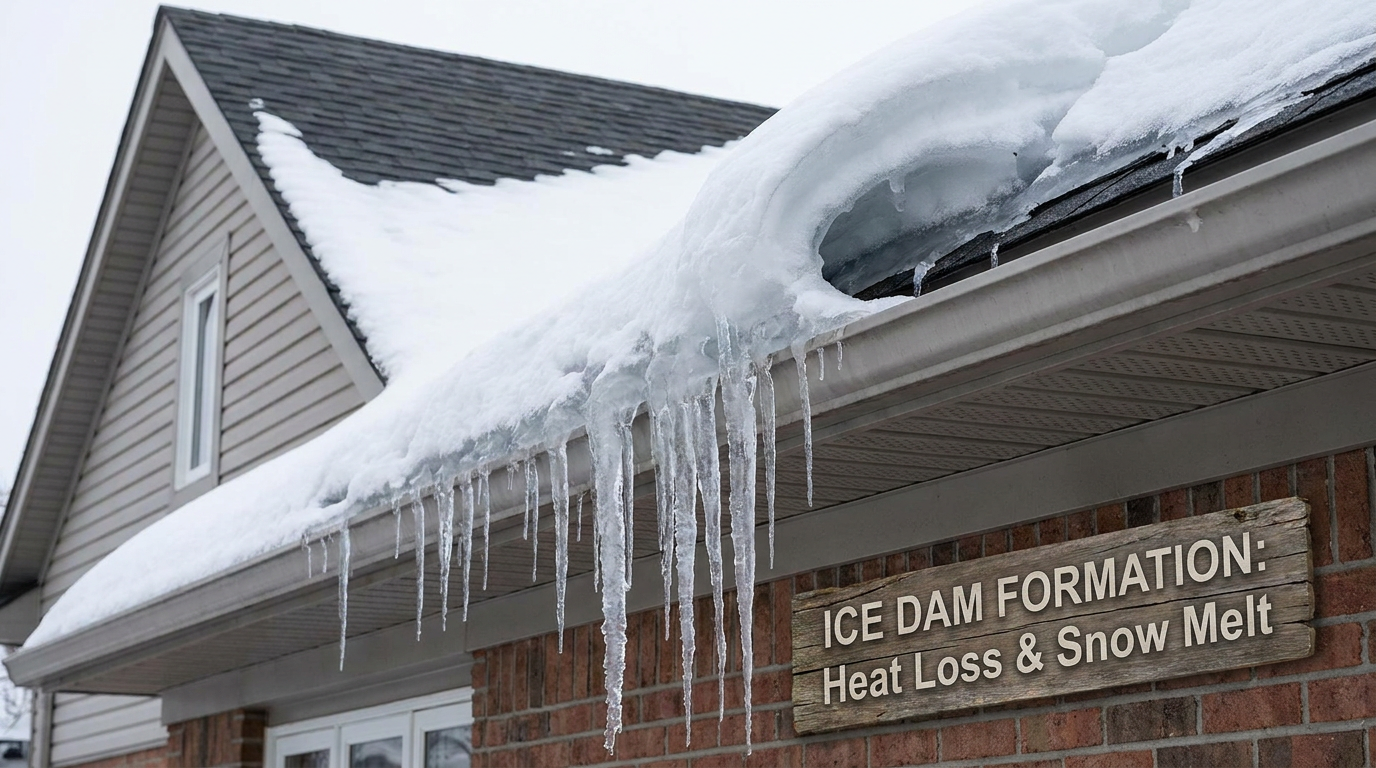
Winter changes the conversation because snow and ice add both risk and complexity. The gutter itself may hold less visible debris than it does in fall, but drainage problems become more serious. If meltwater cannot move off the roof and through the system, it may refreeze near the roof edge. The University of Minnesota Extension explains that ice dams form when snow on the roof melts and refreezes at the edge, blocking drainage. That backed up water can leak into ceilings, walls, and insulation and can contribute to mold growth.
It is important to understand that ice dams are not only a gutter issue. They are mainly a roof heat loss and drainage issue. Warmth escaping from the house melts snow higher on the roof, and that water refreezes at the colder edge. Clogged gutters can make the problem worse by trapping water where it should drain, but even clean gutters can experience ice issues if attic insulation and air sealing are poor. That is why winter prep should include both drainage maintenance and attention to the roof and attic system.
The best winter strategy is preventive. Go into the season with clean gutters, clear downspouts, and secure attachments. Make sure attic insulation and air sealing are adequate so the roof surface stays colder and snow melts more evenly. In some cases, gutter guards or heat cable may help, but they should be treated as supporting tools rather than a cure all. Authoritative guidance consistently emphasizes inspection and cleaning first.
Be careful about winter roof work. Climbing a ladder near snow and ice is dangerous, and hacking at ice with tools can damage roofing and gutters. If you have active ice dam problems, heavy icicles, or signs of water leaking inside, it is usually time to call a qualified professional. Removing snow from the roof edge with a roof rake from the ground may help in some situations, but it has to be done carefully to avoid damaging shingles.
Warning signs your gutters need repair, not just cleaning
Some gutter problems are maintenance issues. Others are signs the system is failing structurally. If you know the difference, you can avoid wasting time on repeated cleaning when the real problem is alignment, age, or poor installation. Gutters should look straight, stay attached, and drain consistently. Anything less deserves a closer look.
- Sagging sections usually mean water has been standing in the gutter, hangers are failing, or the fascia behind it is deteriorating.
- Separated joints and leaking seams indicate that water is escaping before it reaches the downspout.
- Overflow during moderate rain can mean a blockage, incorrect pitch, undersized downspouts, or concentrated roof runoff at one location.
- Peeling paint or staining on fascia and soffits often points to chronic moisture exposure behind or around the gutter.
- Pools of water near the foundation suggest the discharge point is too close to the home or site grading is poor.
- Rust, cracks, or holes are direct signs that sections may need patching or replacement.
If you see multiple warning signs at once, especially on an older system, it may be more practical to replace damaged sections or rehang the gutters properly than to keep patching them. Good workmanship matters here. A gutter that is slightly off in pitch or weak in support can look acceptable from the ground while performing badly during every storm.
Common mistakes homeowners make
The first common mistake is assuming that if the gutters look fine from the yard, they are fine. Hidden slope problems, partial downspout clogs, and loose fasteners are not obvious from below. The second mistake is focusing only on the trough and ignoring where the water ends up. A clean gutter that dumps beside the footing is still creating risk. The third mistake is waiting until there is visible interior water before taking drainage seriously.
Another common misconception is that gutter guards eliminate maintenance. They do not. They can reduce some types of debris, but fine sediment, shingle granules, and small organic material still accumulate. Guards can also create a false sense of security if nobody checks the system through the seasons. You still need to inspect, flush, and verify discharge.
Homeowners also tend to underestimate how much winter problems start in earlier seasons. Ice on the gutter in January often has roots in poor fall cleaning, poor drainage, warm attic conditions, or all three. By the time you see icicles, the issue is already in motion. Prevention is always easier than emergency response once the weather has turned.
Routine upkeep costs time. Water damage costs time, money, and often hidden repair work behind finished surfaces.
When to call a professional
There is no prize for doing every gutter task yourself. If the home is more than one story, if the ground is sloped or uneven, if the roof edge is difficult to access, or if you are dealing with winter ice, professional help may be the safest choice. The same goes for recurring overflow problems that do not improve after cleaning. That usually means the issue is design, pitch, capacity, or hidden damage rather than simple debris.
A good professional can also evaluate related conditions that homeowners may miss, such as rotted fascia boards, inadequate drainage at grade, disconnected underground leaders, or roof details that overload certain gutter runs. Sometimes the right fix is adding a larger downspout, adjusting slope, changing the discharge setup, or addressing attic heat loss. Those are all legitimate parts of gutter performance, even if the problem first showed up as a clog or overflow.
If you are hiring the work out, ask for more than a cleaning. Ask for an inspection report on seams, hangers, pitch, discharge, and visible wood condition behind the gutter. That gives you a clearer picture of whether the system is simply dirty or starting to fail. Good maintenance is not only about removing debris. It is about understanding the condition of the assembly.
A practical year round gutter routine
For most homeowners, the simplest plan is also the best. Clean and inspect in spring. Observe and repair in summer. Clean thoroughly in fall, and prepare the roof drainage system for winter. After major storms, take a quick look from the ground to see whether gutters are pulling away, overflowing, or discharging poorly. Small checks done regularly are more effective than one big annual effort.
If your property has tall trees, pine needles, frequent windblown debris, or a history of drainage problems, adjust the routine to fit that reality. Some homes need extra cleanings. Others need improved extensions or regrading more than they need new gutters. Let the house tell you what it needs by watching where water goes during rain. That is often the most honest inspection you can do.
Keep records if you want to stay organized. Note when you cleaned, what repairs you made, where water pooled, and whether any section keeps clogging. Patterns matter. If the same corner overflows every storm, the solution is probably not another cleaning. It is a design or drainage issue that needs correction. Home maintenance gets easier when you stop treating recurring symptoms as isolated events.
Final thoughts
Gutter maintenance is one of those jobs that seems small until it is neglected. Then it turns into wet basements, rotten trim, mold risk, damaged landscaping, and expensive repair work that could have been avoided. The good news is that the basics are not complicated. Keep the gutters clear, keep the downspouts flowing, send water well away from the foundation, and fix loose or leaking sections early.
The seasonal approach works because it matches the way houses actually deal with weather. Spring reveals damage, summer gives you repair time, fall loads the system with debris, and winter punishes any weakness. If you stay consistent, your gutters will do what they were built to do, which is quietly protect the rest of the house. That is practical maintenance in the best sense. Simple, repeatable work that prevents bigger problems later.
If you only remember one thing, make it this: gutters are not just metal channels at the roof edge. They are a key part of your home’s water control system. Treat them that way, and they will save you trouble for years.


No Comment! Be the first one.