



Creating a Family Craft Station: A Step-by-Step Guide for Creativity, Connection, and Calm
There is something quietly special about a home that makes room for creativity. Not the kind of creativity that waits for a perfect free weekend or a holiday project, but the kind that feels easy to reach for on an ordinary Tuesday afternoon. A family craft station can be that invitation. It gives children, parents, and even grandparents a place to gather, make, talk, and slow down together in a way that feels natural rather than forced.
Table Of Content
- Why a Family Craft Station Matters
- Step 1: Choose the Right Location
- Step 2: Define the Zone Clearly
- Step 3: Start with the Right Surface
- Step 4: Build Storage Around Accessibility
- Step 5: Choose Supplies That Invite Open-Ended Creativity
- Step 6: Prioritize Safety from the Beginning
- Simple Safety Practices for a Family Craft Station
- Step 7: Make the Space Work for Different Ages
- Step 8: Create a Simple Cleanup System
- Step 9: Add Comfort and Beauty
- Step 10: Turn It Into a Family Ritual
- What to Avoid When Setting Up a Family Craft Station
- A Sample Supply List to Get Started
- The Lasting Value of a Shared Creative Space
When families think about setting up a craft area, the focus often lands on storage alone. Bins, drawers, labels, and shelves certainly matter, but the deeper value of a craft station is emotional. It can become a shared ritual space inside the home, one that supports calm, curiosity, imagination, and conversation. Research on arts and crafts participation has found positive associations with life satisfaction, happiness, and a sense that life is worthwhile, and other studies suggest creative leisure may help reduce stress and support mental health during difficult periods. While no single corner of the home can solve everything, a dedicated creative space can absolutely help a family build more ease and more connection into daily life.
For families, crafting is rarely just about the finished object. It is about the child who proudly explains a painted cardboard house, the parent who relaxes enough to stop checking a phone, and the grandparent who passes down a sewing trick or seasonal tradition. Shared craft experiences can support intergenerational connection and memory making, which makes a family craft station especially meaningful in a home that values togetherness. Done well, it becomes one of those quiet home features that helps everyone feel more at ease and more engaged with one another.
This guide will walk you through how to create a family craft station step by step. We will cover where to place it, how to choose furniture and storage, how to organize supplies for different ages, how to keep the area safe, and how to turn the station into a sustainable family routine. The goal is not to create a picture-perfect craft room. The goal is to create a warm, practical space that your family actually uses.
Why a Family Craft Station Matters
A dedicated craft station works best when it is seen as part of your family’s wellness environment, not as an extra zone for clutter. Creative activities invite people to use their hands, focus their attention, and share time without the pressure of a formal plan. In a season of life where screens often fill the quiet moments, having a visible place for making things can gently shift the rhythm of a home. The table is there, the pencils are there, the paper is there, and suddenly creating together feels simpler than turning on another device.
There is also a powerful emotional benefit in making creativity accessible. When supplies are easy to reach and the setup is not complicated, children are more likely to explore independently and adults are more likely to join in without feeling that every craft session requires a full production. This matters because the value of a craft station depends on regular use. A beautiful setup hidden behind difficult storage will not become a family habit. A modest but welcoming area that is easy to reset often will.
Research also supports the idea that crafting can be meaningful across ages. Traditional crafting studies in Canada have found associations with intergenerational cohesion, cultural connectedness, and wellbeing when craft is shared across generations. That makes a craft station useful not only for young children, but for family identity as a whole. It can hold seasonal rituals, handmade gifts, school projects, cultural activities, and simple moments of companionship that are easy to remember years later.
A family craft station is not just a place to store supplies. It is a home ritual space that can support creativity, calm, conversation, and a stronger sense of togetherness.
Step 1: Choose the Right Location
The best location for a family craft station is rarely the most hidden one. While it may seem practical to tuck everything into a basement or spare room, many families get better use from a station placed near daily life. A corner of the dining room, a section of the kitchen, part of a playroom, a wide hallway nook, or an underused area near a family room can work beautifully. The ideal spot feels connected enough to support spontaneous use, but defined enough to keep supplies from drifting all over the house.
Think about your family’s natural routines. If children often draw at the kitchen table while dinner is being prepared, that may be a clue that the best craft station belongs nearby. If weekends naturally gather everyone in a sunroom or den, that might be a better choice. A station works best when it fits how your family already lives, rather than asking everyone to adopt a completely new pattern. You want the space to feel inviting during the moments when people are most likely to use it.
Light matters more than many people realize. Natural light tends to make a creative space feel more uplifting and easier to use, especially for detail work like coloring, cutting, or sewing. If windows are limited, good task lighting can make a dramatic difference. The atmosphere should feel bright enough to be practical, but soft enough to remain comfortable. A craft area that feels pleasant to sit in is much more likely to become part of your routine.
It is also worth thinking about cleanup before you commit to a location. Spaces near a sink have an obvious advantage for paint, glue, and hand washing. If a sink is not nearby, you can still create a highly functional station by keeping wipes, a small water bin, paper towels, and a cleanup caddy within reach. The more easily your family can reset the space, the more often it will be used.
Step 2: Define the Zone Clearly
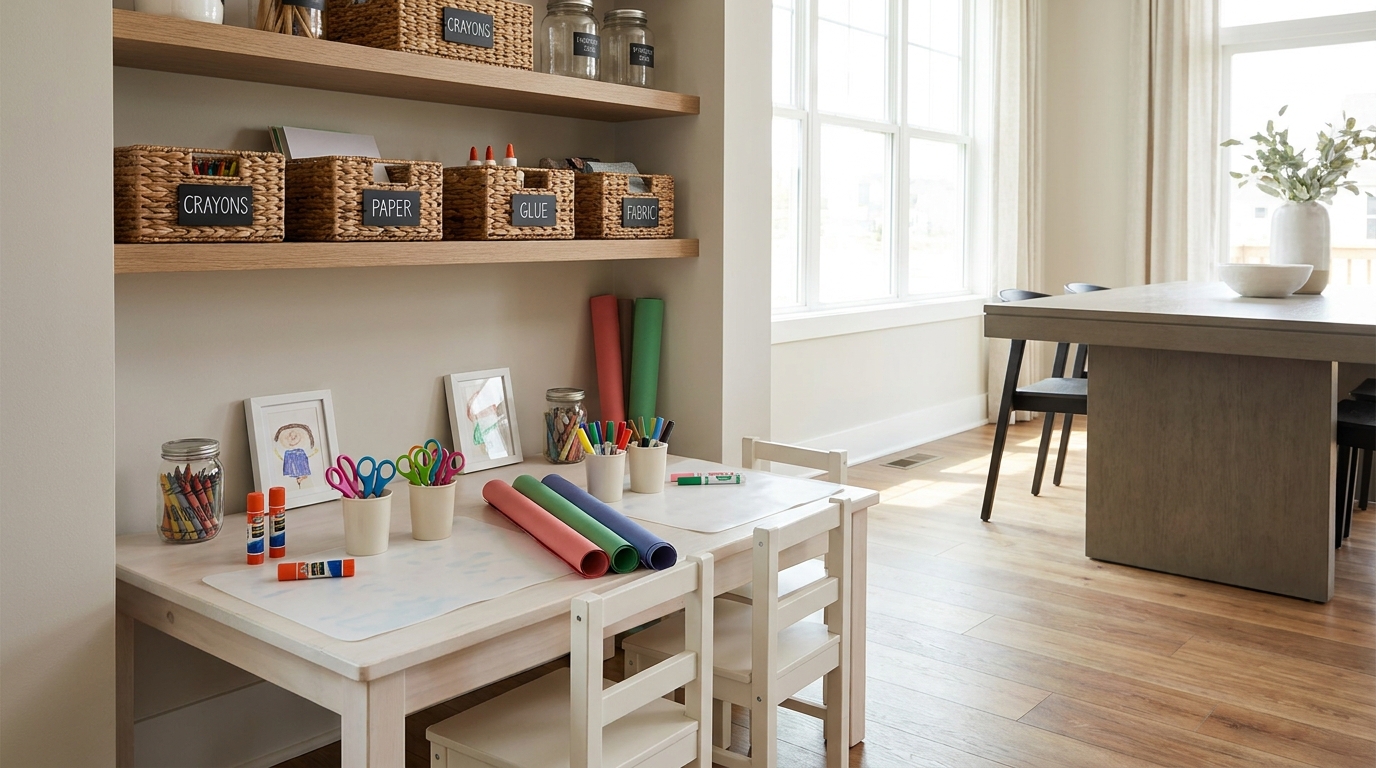
Even when a craft station lives inside a larger room, it helps to visually define it. This creates a sense of place and helps family members understand where supplies belong. You do not need a dedicated craft room to achieve this. A simple table, a rug, a shelving unit, or even a narrow wall with mounted storage can create enough definition to make the space feel intentional.
Defining the zone also supports emotional ease. A well-marked creative corner sends a quiet message that making things is welcome here. Children often respond strongly to this kind of environmental permission. When they see a spot that is clearly designed for hands-on play and creative work, they are more likely to settle in and begin. Adults benefit from this too, because a defined area removes some of the mental friction that can make home activities feel harder than they need to be.
If the station is in a shared room, consider what helps it feel calm instead of chaotic. Matching bins, a limited color palette, a pinboard for display, and closed storage for messier items can all help the area blend with the rest of the home. This is especially important if you care deeply about atmosphere and want the station to feel integrated rather than visually noisy. Family-friendly design does not have to look temporary or cluttered. It can feel polished, warm, and very livable.
Step 3: Start with the Right Surface
The heart of any family craft station is the work surface. In many homes, this will be a table. In others, it might be a desk, a fold-down wall surface, or a section of countertop paired with stools. What matters most is that the surface is sturdy, comfortable, easy to wipe down, and large enough for at least two people to work side by side. Shared creativity often grows from casual proximity, so if space allows, it is worth choosing a surface that encourages togetherness rather than isolation.
Washable materials are especially important. Craft stations tend to support regular use when family members are not worried about ruining furniture. If your current table is not ideal, a wipe-clean mat, acrylic protector, or durable table covering can make a big difference. This simple layer can lower stress for adults and increase freedom for children, which changes the energy of the space right away. People relax more when they know a small spill will not become a problem.
Height matters too. Younger children do best with chairs and surfaces that support good posture and easy reach, while older children and adults may need a more standard table height. If one setup must serve everyone, focus on comfort and adaptability. Chairs with cushions, a stool for younger children, and enough knee room under the table can help the space feel more inclusive for different ages. The ideal family craft station is one that welcomes everyone without requiring constant adjustment.
Step 4: Build Storage Around Accessibility
One of the biggest misconceptions about organizing a craft station is that the goal is simply to fit everything into containers. In reality, the most successful systems are designed around accessibility. If a child cannot see the paper, it may as well not exist. If a parent has to open five drawers to find tape, spontaneous creativity becomes less likely. The best storage makes supplies visible, reachable, and easy to return.
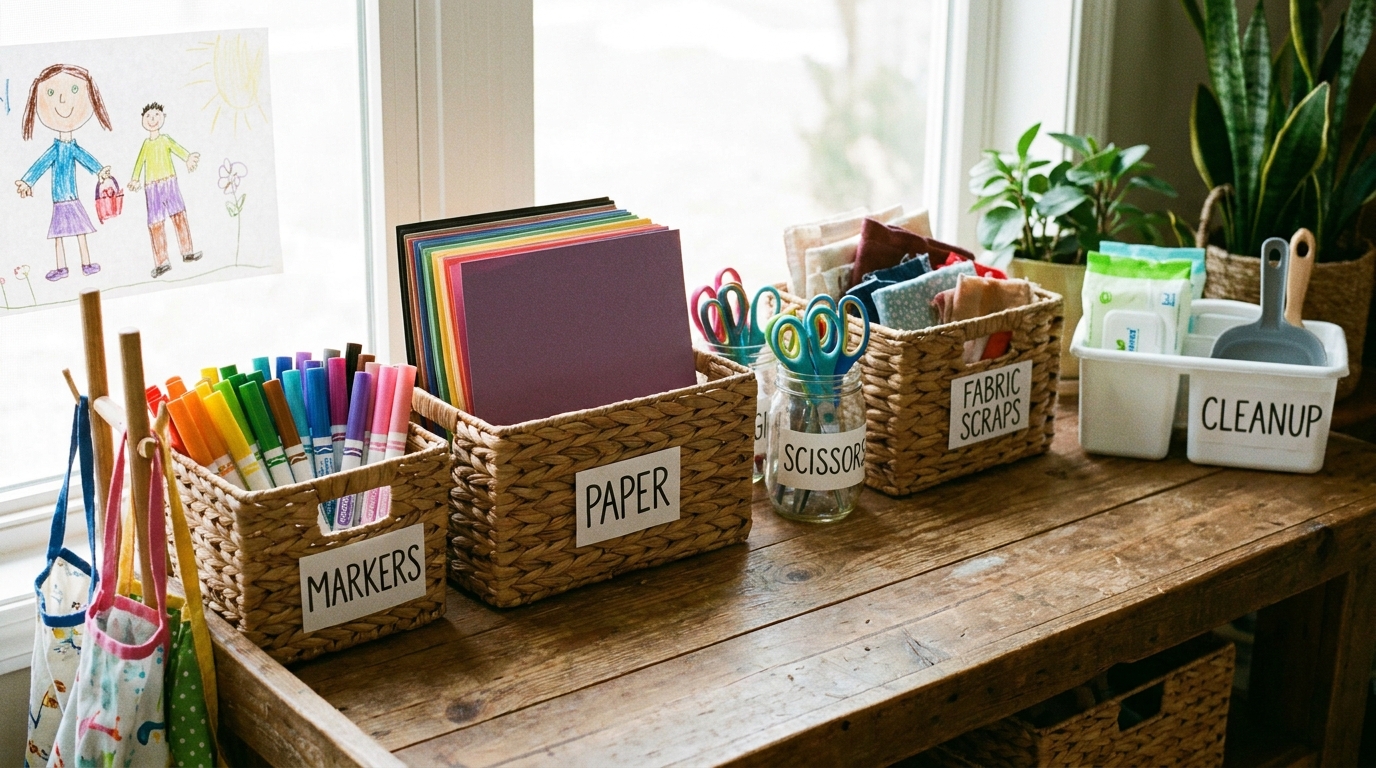
Open bins, clear drawers, low shelves, and labeled baskets are often the easiest solutions for family use. Visibility reduces frustration and helps children develop independence. Labels with words and pictures can be especially helpful for younger children, who may not read fluently but can still recognize visual cues. This turns cleanup into part of the activity rather than a separate battle at the end.
It helps to think in categories rather than by item. Paper can live together, drawing tools together, adhesives together, nature finds together, and sewing or specialty tools together. This gives the station a logic that even young children can learn over time. When everyone knows where supplies belong, the space begins to feel more manageable and more peaceful to maintain.
Keep the most frequently used materials at the easiest level to reach. Crayons, markers, child-safe scissors, paper, stickers, and glue sticks can be front and center for daily making. More advanced materials, refill supplies, and messier items can be stored higher up or in closed containers. This layered approach keeps the station easy to use while still allowing room for more ambitious projects.
Step 5: Choose Supplies That Invite Open-Ended Creativity
A family craft station does not need to be filled with expensive kits to be inspiring. In fact, many of the best materials are simple, flexible, and open-ended. Paper in a few sizes, crayons, colored pencils, washable markers, child-safe glue, tape, stickers, cardboard, pom-poms, pipe cleaners, fabric scraps, stamps, and blunt-tip scissors can support a surprising range of projects. These basic supplies invite imagination because they do not dictate one specific outcome.
Open-ended materials are especially helpful in family spaces because they work across ages. A preschooler may use paper and stickers to make a bright collage, while an older child creates a homemade card and an adult joins in with lettering or scrapbook details. This flexibility encourages shared use without making anyone feel that the space is only meant for one age group. It also keeps the station from becoming overly dependent on one-time novelty items.
Natural and seasonal elements can bring additional warmth to the area. Pinecones, leaves, pressed flowers, smooth stones, ribbon saved from gifts, or scraps from old textiles can all become part of the station when they are clean, age appropriate, and safely stored. These touches help connect creative activities to the rhythms of home life and the outdoors. They also encourage a more thoughtful kind of making that feels grounded rather than overly commercial.
Try to leave a little empty space too. Not every shelf needs to be packed. A craft station that breathes visually often feels more welcoming and less overwhelming, especially for children who are sensitive to clutter. The aim is abundance with calm, not excess.
Step 6: Prioritize Safety from the Beginning
Safety deserves real attention in any family craft station because many people assume craft supplies are automatically harmless. That is not always true. Health Canada notes that arts and crafts materials can pose risks including cuts, poisoning, skin or eye irritation, and exposure to toxic dust or fumes, with greater risks for young children. This does not mean a family craft station should feel tense or restrictive, but it does mean thoughtful choices matter.
Begin by checking product labels carefully. Choose materials clearly labeled for children’s use when stocking supplies for kids, and follow all product instructions. This is especially important because some craft kits and hobby materials are considered general-use products rather than children’s products. A supply sold in the craft aisle is not automatically age-appropriate for a young child, so labeling and age suitability should guide your decisions.
Hand washing after crafting is a smart family habit and an easy one to build into the station. If possible, keep the setup near a sink or place wipes and a reminder nearby. It is also wise to avoid food and drinks at the craft surface when using materials that could irritate skin or be accidentally swallowed. These habits do not need to feel formal. They simply become part of the rhythm of using the space.
For homes with very young children, supervision is essential. Small detachable items can create choking risks, and some popular sensory materials are not safe for toddlers. Health Canada has warned that water beads may pose life-threatening risks to young children and should be kept out of sight and reach. The same logic applies to tiny beads, sequins, sharp tools, and stronger adhesives. A family craft station should feel inclusive, but inclusion often means creating age-specific access rather than leaving everything available to everyone.
Simple Safety Practices for a Family Craft Station
- Read labels and follow age recommendations before bringing supplies home.
- Choose children’s products for children, rather than assuming all craft materials are kid safe.
- Store sharp, tiny, or chemical-heavy materials in higher or locked storage.
- Keep water beads and other high-risk small sensory items away from young children.
- Use the station in a well-ventilated area if any product has fumes or dust.
- Encourage hand washing after each session.
- Replace broken containers and damaged tools promptly.
Taking safety seriously does not make the station less creative. It makes the space more trustworthy, which allows everyone to relax and use it with confidence.
Step 7: Make the Space Work for Different Ages
A truly family-friendly craft station should not feel like it belongs to only one person. One of the most rewarding parts of creating a shared making space is the way it can bring different ages together. To do that well, the setup needs a little flexibility. Younger children need simpler materials and easier access, older children often want more autonomy, and adults may appreciate a few elevated tools or supplies of their own.
One helpful approach is to divide the station into levels. Lower shelves can hold basic, child-safe materials for independent use. Mid-level storage can support school-aged children with slightly more involved supplies like rulers, stamps, hole punches, or project trays. Higher shelves or closed storage can hold adult tools, special scissors, sewing materials, or adhesives that require supervision. This creates a space where everyone belongs, without sacrificing order or safety.
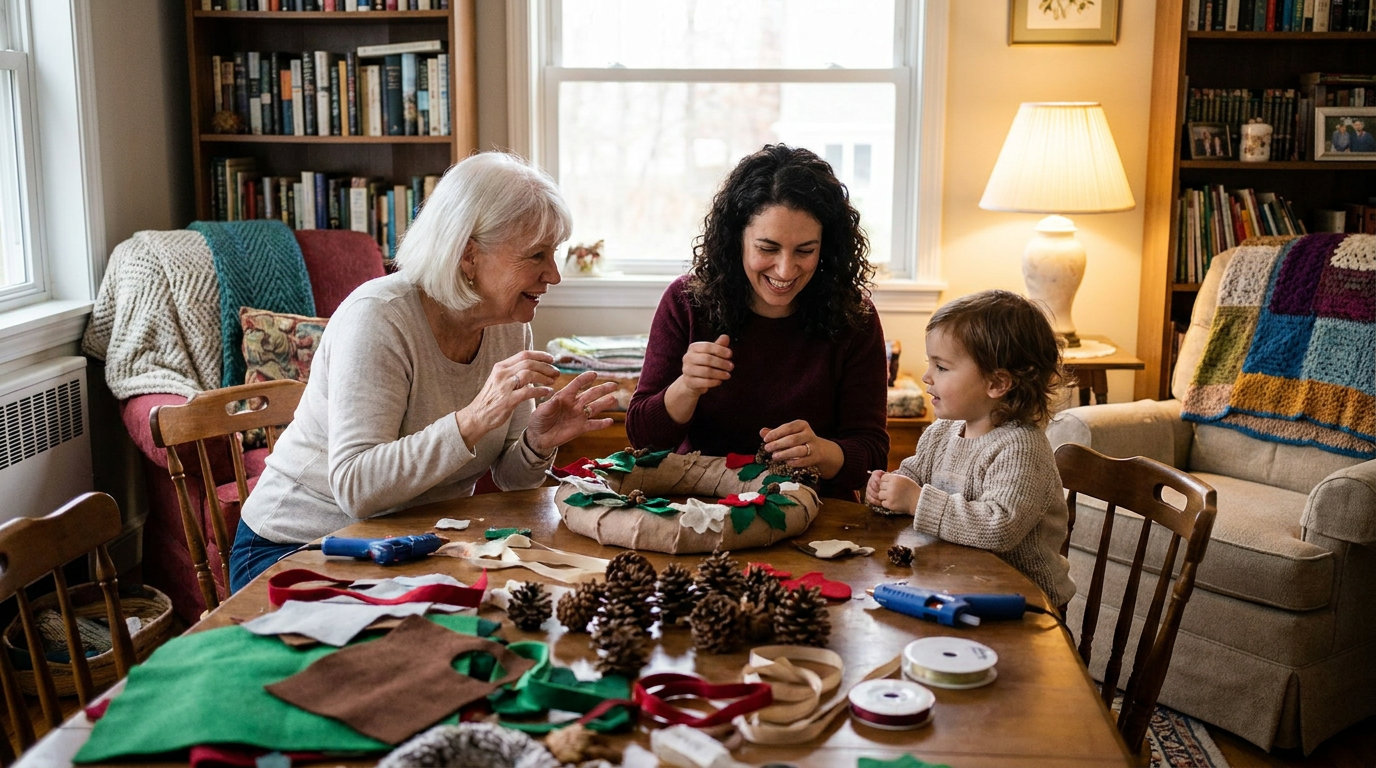
It can also be lovely to include projects that naturally bridge generations. Simple hand sewing, collage, paper garlands, holiday decorations, handmade cards, memory books, and cultural or seasonal crafts often invite conversation across ages. Research on shared crafting points to intergenerational cohesion and wellbeing as meaningful outcomes, and you can feel that in real life when a craft table becomes a place where stories are passed along as easily as glue sticks. In this way, the station becomes not just productive, but deeply relational.
Step 8: Create a Simple Cleanup System
The emotional success of a family craft station depends heavily on what happens after the making. If cleanup feels chaotic or exhausting, the space quickly becomes something adults avoid. The goal is not perfection. The goal is a reset routine so simple that it does not interrupt the pleasure of using the station. This is often the difference between a craft area that remains part of daily life and one that quietly disappears under frustration.
Begin with tools that make tidying easy. A small tabletop bin for scraps, a hand broom, a dustpan, wipes, paper towels, and a tray for unfinished work can do a lot. If your family often pauses projects halfway through, having one dedicated basket for works in progress keeps the table from feeling permanently cluttered. This protects the atmosphere of the room while respecting the creative process.
Children are more likely to help when cleanup is clear and manageable. Instead of saying, “Clean everything up,” try assigning simple rhythms such as paper back into the tray, pencils into the jar, scraps into the bin, and hands washed at the end. Repetition builds familiarity, and familiarity builds independence. Over time, cleanup becomes part of the craft ritual rather than a separate source of tension.
Step 9: Add Comfort and Beauty
Because this craft station lives inside your home, it should feel good to be in. Practicality matters, but comfort is what gives the space staying power. A soft lamp, a pinboard for favorite artwork, a small vase of greenery, aprons hung neatly on hooks, or a shelf with family-made objects can all make the area feel personal and welcoming. These details are not frivolous. They help turn a functional station into a place people are drawn to.
Beauty is especially important in multipurpose family homes, where every area works hard. A craft station can absolutely be efficient and still feel elevated. Consider natural baskets, wood accents, calming wall colors, and storage that complements the surrounding room. The more visually harmonious the station feels, the more likely adults are to support its presence and maintain it with care.
Comfort also includes sensory calm. If the area becomes too visually crowded, too noisy, or too bright in a harsh way, some family members may avoid it. Leaving clear table space, limiting the number of colors on display, and rotating supplies seasonally can help the station remain fresh and appealing without becoming overstimulating. A little editing often makes a creative space more usable, not less.
Step 10: Turn It Into a Family Ritual
Once the station is physically complete, the final step is helping it become part of family life. This does not require strict scheduling, but some gentle ritual helps. A Saturday morning making hour, an after-school drawing window, homemade birthday card nights, or seasonal crafting before holidays can all give the space a natural role in your routines. The station becomes more meaningful when it is tied to moments people can anticipate.
It is also helpful to keep expectations soft. The purpose of family crafting is not to produce perfect projects or to entertain children endlessly. The real value often lies in the mood it creates. When the station is available for ten quiet minutes of drawing while dinner cooks, that counts. When a parent and child sit together in companionable silence cutting paper shapes, that counts too. Small, repeated moments are what give a home its emotional texture.
If you want to deepen the ritual, consider rotating themes through the year. Nature-inspired projects in spring, handmade gifts in winter, travel journals in summer, or heritage crafts connected to family traditions can all add fresh meaning without requiring a complete redesign of the station. This approach keeps creativity alive while reinforcing family identity and shared memory.
What to Avoid When Setting Up a Family Craft Station
It can help to know a few common mistakes before you begin. One is overbuying supplies too quickly. An overcrowded station often feels harder to use, not easier. Starting with a thoughtful core set of materials lets you learn what your family actually reaches for, and that leads to smarter additions over time.
Another mistake is placing everything out of reach for the sake of neatness. While high storage has a role, especially for unsafe or advanced materials, a station that hides all the basics can discourage use. Visibility and independence are part of what makes a family craft station successful. Children are far more likely to begin creating when they can confidently access what they need.
A third mistake is skipping the safety check because the space looks charming. A lovely craft area still needs age-appropriate supplies, supervision when necessary, good labeling, and clear storage boundaries. This is particularly important in homes with babies, toddlers, or visiting younger relatives who may assume that any visible item is meant to be handled. Safety is not separate from good design. It is part of it.
A Sample Supply List to Get Started
If you are building your station from scratch, it can be useful to begin with a simple foundation. You can always refine it later based on your family’s habits and interests. Aim for versatile basics, one or two comfort items, and a few tools that make storage and cleanup easier.
- Washable markers, crayons, and colored pencils for daily drawing and coloring.
- White paper, colored paper, cardstock, and a folder or tray to keep sheets flat and easy to reach.
- Child-safe scissors, glue sticks, tape, and a dispenser that is easy for older children to manage.
- Stickers, stamps, fabric scraps, cardboard pieces, and a few open-ended collage materials.
- Clear bins or baskets with labels, plus one caddy for cleanup supplies.
- A table protector, aprons, and hand wipes or easy sink access for a low-stress finish.
From there, you can add supplies that reflect your household more personally. If someone loves sewing, include a supervised sewing basket. If nature walks are part of your routine, create a tray for leaves and found objects. If grandparents often visit, keep materials on hand for meaningful intergenerational projects that invite story sharing as well as making.
The Lasting Value of a Shared Creative Space
In many homes, the spaces that matter most are not always the grandest ones. They are the corners that quietly hold family life. A breakfast nook where everyone lingers, a window seat where a child reads, a hallway bench where conversations happen, or a small craft station where hands stay busy and minds soften. These are the places that support the emotional life of a home.
A family craft station can be one of those places. It offers a low-cost, low-pressure way to make creativity more accessible and family interaction more natural. The research around crafts and wellbeing is growing and promising, even if it is still developing, and everyday experience already tells many families what the numbers are beginning to support. Making things together can help people slow down, feel capable, and connect more easily across ages.
The beauty of this kind of space is that it does not need to be large or expensive to matter. A small table, a few thoughtful supplies, safe storage, and a welcoming atmosphere can be enough to shift the feeling of a home. What matters is not having every tool. It is creating a corner that says yes to imagination, yes to shared time, and yes to the simple pleasure of making something side by side.
If you approach your craft station with warmth, practicality, and a little intention, it can become much more than an activity zone. It can become a place where your family reconnects after a long day, where traditions are passed on quietly, and where creativity becomes part of your ordinary life. That is a beautiful use of space, and one that tends to give back far more than it asks for.


No Comment! Be the first one.