


10 Simple Steps to Transform Your Closet into an Organized Sanctuary
There is something deeply comforting about opening a closet and seeing calm instead of chaos. A well-organized closet is not only a storage upgrade. It is a quiet support system for your entire day. When clothes are easy to find, shelves feel intentional, and visual clutter is reduced, the simple act of getting dressed can become smoother, faster, and surprisingly more peaceful.
Table Of Content
- Why an Organized Closet Feels So Good
- Step 1: Start with a Clear Intention, Not Just a Cleaning Mood
- Step 2: Empty the Closet and See Everything Clearly
- Step 3: Declutter with Honesty and Compassion
- Step 4: Sort by Category Before You Put Anything Back
- Step 5: Create Zones That Match Your Real Routine
- Step 6: Choose Storage After You Know What You Need
- Smart Storage Ideas That Support Calm
- Step 7: Make Vertical Space Work Harder
- Step 8: Reduce Visual Clutter for a More Restful Bedroom
- Step 9: Build a Simple System for Maintenance
- A Gentle Weekly Closet Reset
- Step 10: Revisit the Closet Seasonally
- How to Organize a Small Closet Without Renovating
- Emotional Benefits You Will Notice Right Away
- Common Closet Organization Mistakes to Avoid
- Creating a Closet That Reflects the Way You Live
- Final Thoughts
Many people think of closet organization as a cosmetic project, but it reaches much further into everyday life. Research and expert guidance have consistently linked cluttered environments with higher stress, reduced sense of well-being, and more difficulty focusing on tasks. That does not mean a messy closet causes serious mental health concerns, but it does support what many of us already feel intuitively: when our environment is easier to navigate, we often feel more settled inside it. In that sense, organizing your closet is not about perfection. It is about creating a supportive backdrop for real life.
For homeowners, renters, busy families, and anyone trying to simplify mornings, the closet can become a powerful reset point. Instead of starting the day with frustration, you can begin with clarity. Instead of treating the bedroom like an overflow storage zone, you can reclaim it as a place of rest and ease. The beauty of this transformation is that it does not require a luxury renovation. Often, the biggest difference comes from a few thoughtful steps, a little honesty about what you use, and storage solutions that match the way you actually live.
In this guide, we will move through 10 simple steps to transform your closet into an organized sanctuary. Each step is practical, approachable, and designed to help you create a space that feels not only tidy, but emotionally lighter. Whether you have a walk-in closet, a narrow reach-in, or a shared apartment wardrobe, these ideas can help you make your space calmer, more functional, and much more enjoyable to use.

Why an Organized Closet Feels So Good
Before diving into the steps, it helps to understand why closet organization has such a noticeable emotional payoff. Visual clutter competes for attention, even when we are not consciously thinking about it. A crowded rod, an avalanche of shoes, or a shelf full of random items can make a room feel noisier than it is. That constant low-level stimulation may increase feelings of overwhelm, especially in the early morning or at the end of a long day.
On the other hand, tidier spaces often support focus and task completion. Public health and medical experts frequently describe decluttering as a helpful way to reduce stress and increase a sense of control. In the bedroom, organized storage can also restore a feeling of rest. Instead of a sleeping space doubling as a visual reminder of unfinished tasks, it begins to feel softer, quieter, and more restorative.
A well-organized closet is not about having less personality. It is about creating less friction, less visual noise, and more room for your real routine to breathe.
That is why this project matters. You are not just lining up hangers or folding sweaters. You are shaping an experience. You are making it easier to care for yourself, easier to leave the house on time, and easier to enjoy the home you already have.
Step 1: Start with a Clear Intention, Not Just a Cleaning Mood
The most successful organizing projects begin with a reason. If you approach your closet only as a mess to fix, the process may feel tiring before it even starts. If you approach it as a way to improve your mornings, reduce decision fatigue, and make your bedroom feel more peaceful, the work gains emotional meaning. That motivation helps you make better choices as you sort.
Take a few moments before pulling everything out. Ask yourself what you want your closet to do for you. Maybe you want quicker mornings before work. Maybe you share the space with a partner and want fewer daily frustrations. Maybe you live in a small apartment and need every shelf to work harder. Your answer will shape the system you create.
This is also the moment to let go of fantasy storage. Many closets become difficult because they are trying to hold a version of life that is no longer current. Clothes from another job, another size, another lifestyle, or another season can blur what the closet truly needs to support right now. A sanctuary begins when the space reflects the present, not the past.
Step 2: Empty the Closet and See Everything Clearly
It is tempting to organize around existing piles, but real transformation comes from seeing the full picture. Remove clothing, shoes, bags, accessories, and everything else from the closet. Place items on a bed, a table, or a clean floor area where you can sort them comfortably. This step creates a visual pause. It allows you to understand what the closet has been carrying and where the pressure points really are.
As you empty the space, you may notice patterns you had stopped seeing. Perhaps you own six black cardigans, three half-used garment bags, or shoes you forgot were even there. Perhaps the top shelf is holding random papers, extra bedding, and a beach bag from two summers ago. Seeing everything at once is often the turning point because it replaces vague overwhelm with specific awareness.
Once the closet is empty, clean it thoroughly. Dust the shelves, vacuum the floor, wipe the walls if needed, and take note of any lighting issues. A freshly cleaned closet instantly feels more inviting, and it becomes easier to imagine as a purposeful part of the room rather than a forgotten storage pocket.
Step 3: Declutter with Honesty and Compassion
Decluttering is the emotional center of closet organization. It is also the part many people find hardest. Clothing can carry memories, guilt, aspirations, and identity. You may be holding onto pieces because they were expensive, because they fit a past version of you, or because you think you should wear them even though you never do. A calm closet requires gentle honesty.
As you sort, group items into clear categories such as keep, donate, repair, and store elsewhere. If an item no longer fits your body, your lifestyle, or your personal style, it may be time to release it. If something is damaged but truly worth keeping, set a specific repair deadline. If you have not worn an item in a long time and it does not serve a real purpose, consider whether it belongs in your daily space.
This process is not about stripping your closet down to the bare minimum unless that truly suits you. It is about reducing the volume that creates friction. Studies on clutter and residential environments suggest that clutter can affect how people experience their homes, including their sense of ease and well-being. When you remove what no longer serves you, you are not being ruthless. You are making room for function and relief.
If you tend to get stuck, try asking simple questions. Do I wear this in my life as it is now. Would I buy this again today. Does this item make getting dressed easier or harder. Those questions often cut through guilt and bring you back to what matters most: supporting the life you live every day.
Step 4: Sort by Category Before You Put Anything Back
Once you have decluttered, resist the urge to immediately refill the closet. First, sort what remains into categories. Group tops together, pants together, dresses together, outerwear together, shoes together, bags together, and accessories together. This gives you a practical map of your wardrobe and helps you see which categories deserve the most accessible space.
Sorting by category is important because it reveals volume. You may discover that you have far more activewear than drawer space, or that scarves and belts are spread across three different places. Categories also reduce the chance of duplicate purchases. When items live together, you can see what you own clearly, which makes shopping and planning outfits much easier.
This is the stage where many people begin to feel mental clarity. The wardrobe becomes less abstract and more understandable. Instead of one crowded closet full of vague disorder, you now have distinct groups that can be assigned homes. That shift alone reduces friction because the brain no longer has to scan a chaotic mix of unrelated items.
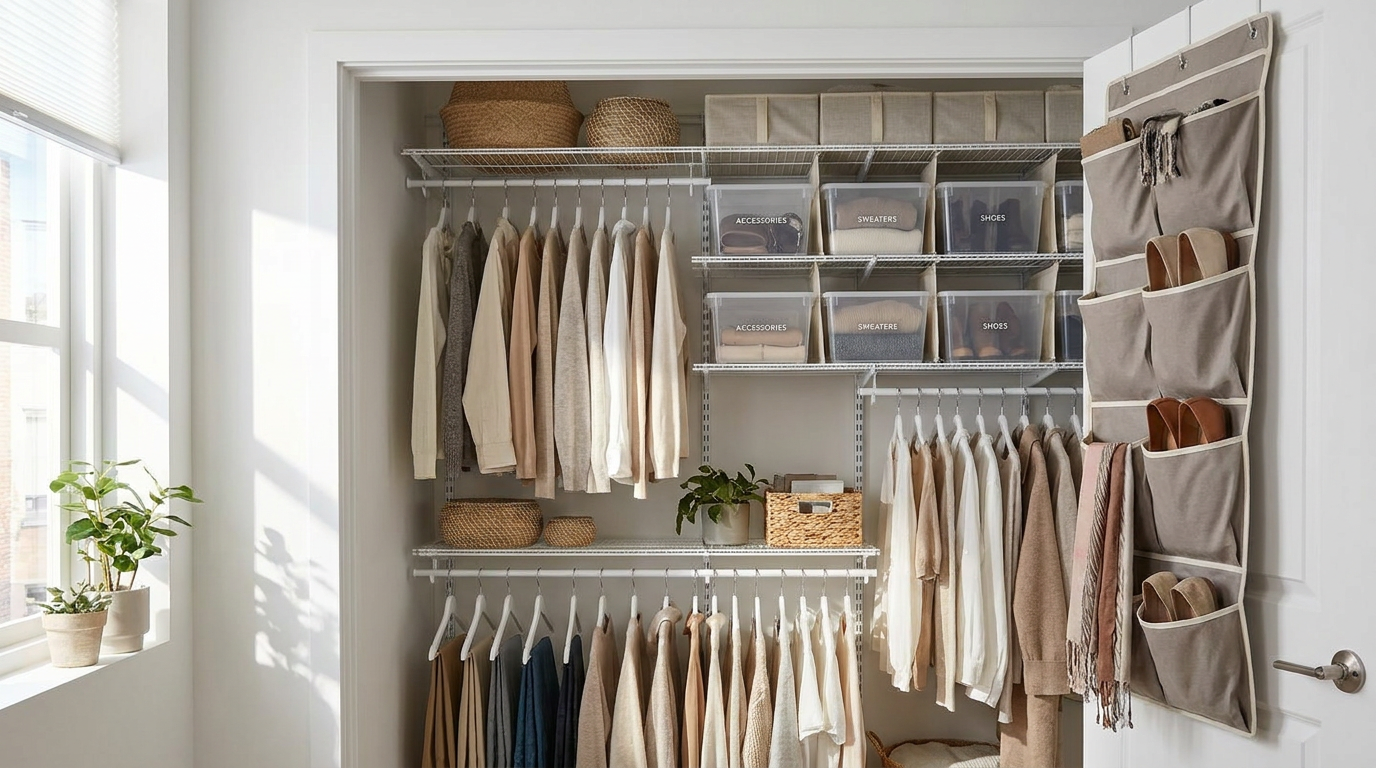
Step 5: Create Zones That Match Your Real Routine
An organized closet works best when it reflects how you actually move through the week. This is where zoning becomes powerful. Think of your closet in terms of daily use. The items you reach for most often should be easiest to access. Occasion wear, travel pieces, or off-season extras can live higher up, lower down, or in more tucked-away storage.
For example, if you wear work clothes five days a week, they should not be buried behind party dresses. If your mornings are rushed, your everyday shoes should be visible and simple to grab. If you get dressed for exercise early in the day, activewear should have a dedicated, easy-to-reach area. These small decisions reduce the number of micro-choices you have to make when time and attention are limited.
Zoning is also helpful in shared closets. One side can belong to one person, one section to another, with common accessory space in the middle. In family homes, children can have lower shelves or bins they can reach independently. Good organization is never only about looks. It is about making routine feel smoother for everyone using the space.
Step 6: Choose Storage After You Know What You Need
One of the most common misconceptions in closet organization is that you should begin by buying bins. In reality, storage should come after decluttering and zoning. Otherwise, you risk purchasing containers that solve the wrong problem or simply hide too much. The goal is not to package clutter more attractively. The goal is to support the wardrobe you intentionally kept.
Now that you know your categories and your zones, choose storage that matches them. Shelves, rods, baskets, drawer dividers, and shoe organizers remain some of the most practical tools because they make use of both vertical and horizontal space. Clear bins can work beautifully for seasonal items or smaller accessories, while opaque bins may be better for reducing visual noise in a bedroom.
Modular and adjustable systems are especially appealing right now because they adapt to changing needs. That matters in smaller urban homes, in guest rooms that do double duty, and in rentals where permanent renovation may not be possible. Freestanding organizers, adjustable rods, over-the-door storage, and stackable bins can create a custom-feeling setup without major installation. The best closet is one that can evolve with your life.
Smart Storage Ideas That Support Calm
- Use matching hangers to create visual consistency and save rod space.
- Add shelf dividers to keep folded stacks from toppling over.
- Choose labeled bins for accessories, sentimental items, and seasonal pieces.
- Install or place a second hanging rod if you need more room for shorter garments.
- Use the back of the closet door for shoes, scarves, or small bags.
- Consider a slim drawer unit or basket system for underused vertical corners.
These solutions do not need to be expensive to be effective. Often, the most peaceful closets are built from simple tools used thoughtfully. What matters is that every item has a home and that the storage feels easy to maintain.
Step 7: Make Vertical Space Work Harder
Many closets waste their best asset: height. Vertical space is especially valuable in smaller homes because it can dramatically expand storage without taking up more floor area. When shelves go unused above eye level or the lower portion of the closet sits empty beneath hanging clothes, the closet feels fuller than it needs to.
Start by looking up and down. The top shelf is ideal for occasional items, seasonal wardrobe rotation, spare linens, or labeled bins containing accessories you do not need every day. The lower area can hold shoes, drawers, baskets, or a second rod depending on the shape of the closet. If you are working with a reach-in closet, even a single extra shelf can make a noticeable difference.
There is also an emotional benefit to vertical organization. When things stack neatly and intentionally, the closet feels quieter. Instead of a crowded jumble at eye level, you create layers of order. This is one reason modular storage is so popular. It turns awkward gaps into useful, beautiful storage that feels realistic for modern homes.
Step 8: Reduce Visual Clutter for a More Restful Bedroom
Not everything needs to be visible. In fact, one of the most calming choices you can make is to decide which items deserve open display and which are better hidden away. Visible storage can be helpful for daily essentials, but too much exposure creates visual clutter and can make the entire room feel busy. Since closets often sit inside bedrooms, this matters more than many people realize.
Try to reserve open space for the wardrobe you use regularly and loves seeing. Folded sweaters, a neat row of favorite shoes, or a tray for frequently worn jewelry can feel curated and pleasing. Less attractive or less frequently used items, such as extra hosiery, backup toiletries, travel pouches, or out-of-season accessories, are often better placed in labeled bins or drawers.
The result is a closet that supports a more restful emotional tone. Canadian home organization guidance often highlights the value of reclaiming the bedroom as a place of relaxation rather than spillover storage. This is a beautiful goal because it moves organization beyond neatness and into atmosphere. Your closet can help the whole room exhale.
Step 9: Build a Simple System for Maintenance
The real secret to an organized closet is not the makeover day. It is the maintenance rhythm that follows. Even the most beautiful system will break down if it asks too much of you. That is why it is important to create habits that are small, forgiving, and easy to repeat. Think less about strict rules and more about gentle reset points.
A weekly five-minute tidy can be enough to prevent the closet from slipping back into disorder. Rehang clothes that were left on a chair. Return shoes to their shelf. Refold anything that has shifted. Put stray accessories back in their bins. These tiny actions preserve calm because they stop mess from gathering momentum.
Maintenance also becomes easier when the closet is not overcrowded. If hangers are packed too tightly or drawers are overstuffed, every routine creates friction. Give each category enough breathing room so that putting things away feels natural. The most lasting systems are the ones that support your behavior instead of requiring constant discipline.
A Gentle Weekly Closet Reset
- Put away anything that does not belong in the closet.
- Return shoes, bags, and accessories to their zones.
- Refold shelf items and check that bins are not overfilled.
- Move laundry or dry cleaning into place promptly.
- Take note of anything you did not wear that week and why.
This final point can be surprisingly useful. If you repeatedly skip certain items, it may be a sign that your wardrobe is ready for another round of editing. Organization is not static. It is a relationship with your space that evolves as your life changes.
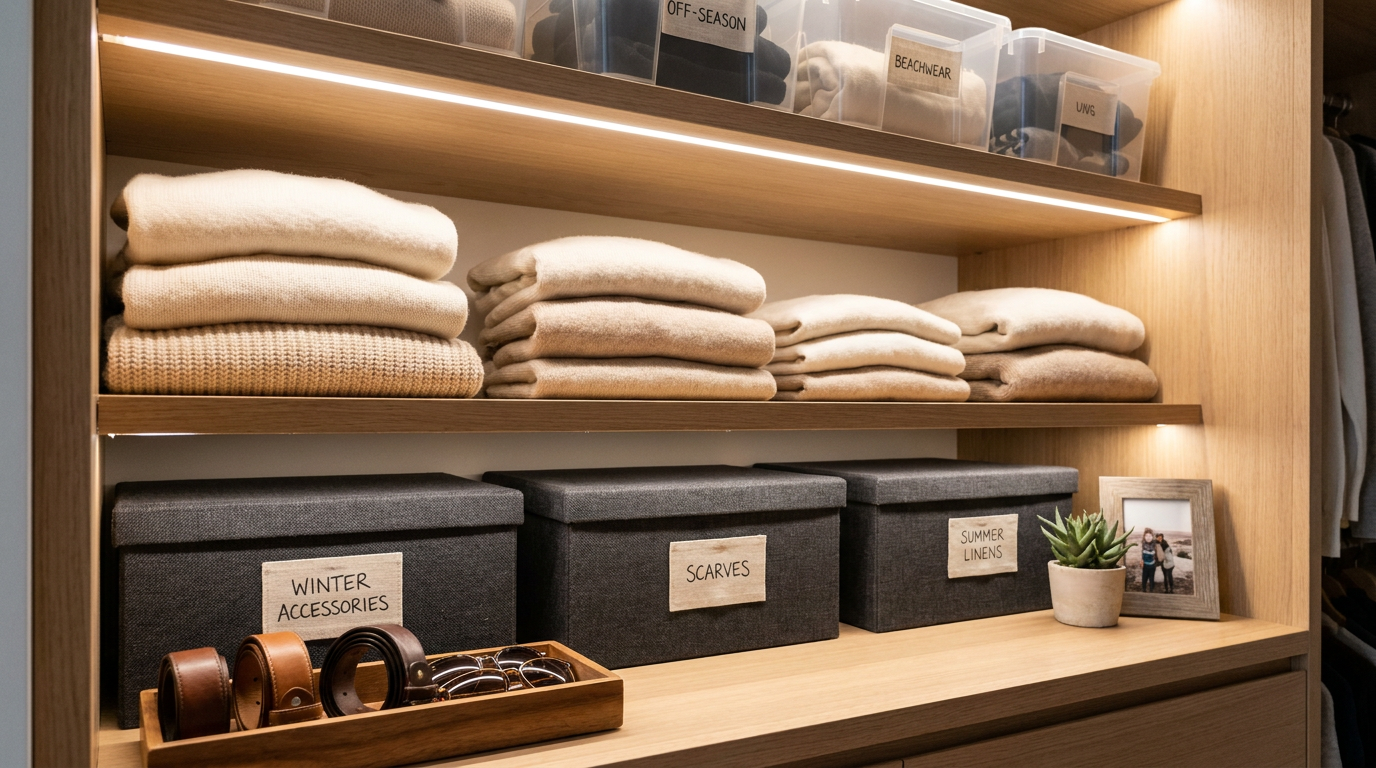
Step 10: Revisit the Closet Seasonally
Closets work best when they change with the seasons. A seasonal reset keeps the space aligned with weather, routine, and wardrobe needs. It also prevents everyday sections from becoming clogged with items you cannot use right now. This is especially helpful in Canada and other North American climates where wardrobes shift significantly throughout the year.
At the start of each new season, rotate clothing thoughtfully. Move heavy knits, boots, and holiday pieces out of prime space when warmer weather arrives. Bring lighter layers, sandals, and active outdoor items forward when you need them. Seasonal wardrobe rotation instantly makes a closet feel more breathable because it limits what is competing for attention.
This is also a wonderful moment to experiment with a capsule mindset. You do not need a strict minimalist wardrobe to benefit from the concept. Simply choosing a smaller, more intentional set of go-to pieces for the current season can reduce decision fatigue and make getting dressed more enjoyable. When fewer options are front and center, the closet feels more curated and your mornings become lighter.
How to Organize a Small Closet Without Renovating
Small closets can absolutely become sanctuaries. In fact, limited space often encourages better decisions because every shelf and rod has to earn its place. The key is to focus on adaptability and avoid trying to force too much into one zone. Small does not have to mean frustrating if the system is clear.
For renters, damage-free solutions are especially useful. Over-the-door organizers, slim shoe racks, shelf risers, tension rods, hanging shelf units, and freestanding drawer towers can all expand function without permanent changes. Adjustable closet systems are another strong option because they can move with you and adapt as your needs shift over time.
It also helps to be realistic about volume. If a small closet is carrying clothing for every season, formalwear, sports equipment, extra bedding, and memorabilia, it may simply be holding too much. Look for nearby overflow options that make sense, such as under-bed bins for off-season pieces or a dresser for folded basics. A peaceful closet does not have to hold everything. It just has to hold the right things well.
Emotional Benefits You Will Notice Right Away
Once your closet is organized, the emotional shift can be immediate. Many people notice that mornings feel less rushed because choices are clearer. You may find that you no longer begin the day irritated by missing shoes or wrinkled clothing hidden in overcrowded sections. Instead, your first interaction with the day becomes more composed.
You may also notice a quieter bedroom overall. When the closet is orderly, the room often feels more restful because one major source of visual noise has been reduced. This can subtly support winding down in the evening and create a stronger sense that the bedroom is meant for comfort, not unfinished tasks. That feeling of being cared for by your environment is one of the loveliest outcomes of home organization.
There are practical benefits as well. You can find what you own more easily, which helps avoid duplicate purchases. Laundry gets simpler because categories are clearer. Seasonal changes feel less overwhelming because the closet already has a system for rotation. In this way, the sanctuary effect is not abstract at all. It is felt in minutes saved, stress reduced, and routines softened.
Organizing a closet will not solve every challenge in life, and it is not a replacement for professional support when deeper mental health concerns are present. But it can absolutely make daily functioning easier, reduce friction, and create a stronger sense of calm at home.
Common Closet Organization Mistakes to Avoid
One of the biggest mistakes is organizing before decluttering. This usually leads to prettier clutter rather than a better system. If the closet still holds too many items, no number of bins or matching boxes will create the feeling of ease you want. Editing first is what allows the rest of the process to work.
Another common mistake is choosing storage that looks attractive but does not suit your habits. Open shelving can be beautiful, but if folded stacks regularly collapse in your household, baskets or drawers may be more realistic. Likewise, clear bins are useful for visibility, but some people feel calmer with less visual exposure. The right choice is the one that supports maintenance, not only appearance.
It is also easy to expect perfection. Life is dynamic, and closets are working spaces. The goal is not a showroom. The goal is a closet that stays functional with ordinary effort. A few items out of place at the end of the week do not mean the system failed. They simply mean you live there.
Creating a Closet That Reflects the Way You Live
The most beautiful closets are not necessarily the most expensive or the largest. They are the ones that feel considered. They anticipate a busy Tuesday morning. They make room for the jacket you reach for every day. They hold your favorite pieces in a way that helps you enjoy them. They reduce little points of stress that used to seem inevitable.
This is why closet organization is worth viewing through a lifestyle lens rather than a purely decorative one. It supports wellness in a practical, grounded way. It respects your time. It softens the edges of routine. It turns an often-overlooked storage space into something that quietly improves home life day after day.
If you have been waiting for the perfect weekend, the perfect products, or the perfect amount of motivation, consider this your reminder that simple changes count. A calmer closet can begin with one shelf, one donation bag, one category at a time. You do not need a full custom renovation to feel the benefits. You just need a system that reflects your home, your habits, and the kind of mornings you want to have.
Final Thoughts
Transforming your closet into an organized sanctuary is not only a home project. It is an act of care toward your future self. It reduces stress in small but meaningful ways, helps reclaim your bedroom as a restful environment, and makes daily life run with more grace. From decluttering with honesty to using smart vertical storage and maintaining seasonal resets, each step builds toward a closet that feels lighter and works better.
Start where you are. Use what you have. Add storage only where it truly helps. Most importantly, let the space become a reflection of how you want home to feel: calm, supportive, and beautifully livable. When your closet is organized with intention, it stops being a hidden source of friction and becomes one of the quietest forms of comfort in your home.


No Comment! Be the first one.