


Creating Effective Labeling Systems for Your Home Organization
There is something deeply comforting about a home where things are easy to find. It is not only about neat shelves or matching containers. It is about the feeling you get when the morning runs more smoothly, when you do not have to search for batteries, school snacks, or extra pillowcases, and when everyone in the house can put things away without asking where they belong. A good labeling system supports that feeling quietly, in the background, turning everyday routines into something simpler and calmer.
Table Of Content
- Why labeling works so well in real homes
- Start with decluttering before you label
- The three kinds of labels every home can use
- How to choose the right labeling style
- Materials that work in different spaces
- Where labels make the biggest difference at home
- The pantry and kitchen
- Linen closets and bathroom storage
- Laundry rooms and cleaning supplies
- Entryways and mudrooms
- Toy storage and children’s spaces
- Home offices and paper zones
- How to build a labeling system that matches the way you live
- A simple process to follow
- Accessible labeling for different household needs
- How to keep your labels from becoming visual clutter
- Creating labels that are both beautiful and practical
- Maintaining your labeling system over time
- When not to label
- The quiet comfort of a home that explains itself
In many homes, clutter is not only a matter of too much stuff. It is also a matter of too many decisions. When a shelf is full but undefined, every item becomes a small question. Where should this go? Does it belong here or somewhere else? Will anyone be able to find it later? Labels help answer those questions before they create friction. They reduce hesitation, save time, and give a space a sense of logic that is easy to follow even on busy days.
Research on household disorder consistently suggests that disorganized environments can contribute to stress, distraction, and a weaker sense that home is restorative. By contrast, orderly spaces are often associated with improved well-being and lower stress indicators in some studies. That does not mean every home needs to look perfect or sparse. It means that a home tends to feel better when it is easier to use. Labeling is one of the simplest ways to make that happen because it creates clear visual cues that support daily life.
This is also why labels have such strong emotional value. A label says, in a small but meaningful way, that this home has a system. It suggests that the people who live here do not have to carry every detail in their heads. The house can help hold some of that mental load. For families, shared households, small apartments, multigenerational homes, and anyone trying to create more ease at home, that is a surprisingly powerful shift.
Why labeling works so well in real homes
At its best, labeling is not decorative. It is practical communication. It shows where something belongs, what a container holds, who it is for, or what part of a routine it supports. This matters because homes are full of repeated actions. We put groceries away, fold laundry, pack lunches, refill toiletries, sort mail, and rotate seasonal items over and over again. Labels reduce the effort required to complete those actions correctly.
One of the biggest benefits of labels is that they reduce cognitive load. That phrase simply refers to how much mental effort is needed to process information and make decisions. In a home that is visually clear, fewer decisions are required. When a basket says winter gloves, you do not need to guess whether gloves belong in the closet, the mudroom, or the hallway chest. When a pantry bin says lunchbox snacks, it instantly narrows the search. That can seem small, but repeated dozens of times a day, it creates meaningful relief.
Labels are especially valuable in shared homes because they make systems visible. A home should not function only because one person remembers everything. When storage is self-explanatory, children can help clean up, partners can restock supplies, guests can find what they need, and caregivers or older adults can move through routines with greater confidence. This is where labels become more than organization tools. They become part of the home’s hospitality and accessibility.
A useful label does not just identify an item. It removes uncertainty.
There is also a practical financial benefit. When you can easily see what you own and where it belongs, you are less likely to buy duplicates or let items expire unseen in the back of a shelf. Pantry staples, medicine, cleaning supplies, office tools, and seasonal decor all become easier to track when categories are named and visible. In that sense, labeling acts as a soft form of inventory management without making your home feel overly formal.
Start with decluttering before you label
One of the most common misconceptions about home labeling systems is that labels will solve disorder on their own. They will not. Labels are most effective after a round of editing and simplification. If a cabinet is overcrowded, labeling every overstuffed bin may make the clutter look more polished, but it will not make the space easier to use. The first step is always to decide what belongs in that zone and how much space it realistically has.
Before creating labels, remove anything expired, broken, rarely used, or stored in the wrong room. Group similar items together and notice whether you have too many micro-categories. A family pantry, for example, may not need separate bins for granola bars, fruit snacks, crackers, and cookies if one broader category called lunch snacks would work better. Simplicity is often what makes a system sustainable.
It also helps to think in terms of boundaries. A shelf, drawer, or basket should communicate a limit. If the category no longer fits within that limit, it is often a sign to reduce or rethink the storage method rather than create more labels. This keeps your system realistic and prevents labels from becoming a decorative layer over a space that still feels frustrating.
The three kinds of labels every home can use
Most effective home labeling systems fall into three main types. Understanding the difference can help you choose labels that actually support the way your household moves through the day. The first type is labels by content. These simply say what is inside a container or zone, such as pasta, extra toiletries, pet supplies, or light bulbs. They are ideal when the main goal is easy identification.
The second type is labels by person or purpose. These are helpful in family homes and shared spaces where ownership or intended use matters. Think of labels like Ella’s art supplies, guest towels, dog walking gear, or weekday lunches. This kind of label reduces mix-ups and can make routines feel more personalized and intuitive.
The third type is labels by workflow. These are often the most transformative because they support the sequence of how tasks happen. In a laundry room, for example, labels might define stages such as stain treatment, air dry, ironing, or items to return upstairs. In a home office, workflow labels might include to file, to sign, to pay, or to shred. These categories make action easier because they mirror the process rather than simply naming objects.
When choosing among these types, ask yourself a simple question. Is this space difficult because I cannot identify what is here, because multiple people use it, or because the task itself has too many steps? Your answer will guide the most useful kind of label.
How to choose the right labeling style
A beautiful label can absolutely elevate a storage space, but style should support function rather than compete with it. The first principle is readability. Labels should be easy to spot and easy to understand at a glance. That means choosing a font size that can be read from the usual viewing distance, using enough contrast between text and background, and avoiding overly decorative scripts in high-use areas.
Placement matters just as much as design. A label should sit where your eye naturally looks when reaching for an item. On bins, that is usually the front. On drawers, it may be the top edge or handle area. On shelves, it may be useful to label both the container and the shelf itself, especially if baskets can move around. If a label is hidden once the container is in place, it is not doing its job.
Consistency is another quiet but powerful ingredient. When labels use similar fonts, sizes, tone, and category logic across the home, they create a visual rhythm that feels calm and trustworthy. That does not mean every room must match perfectly. It means your systems should feel related enough that the household can understand them without relearning new rules in every closet.
Many homeowners now love Bluetooth or app-connected label makers because they make this process much easier. These tools allow you to test fonts, spacing, sizes, and icons from your phone and reprint labels quickly when a category changes. They are especially helpful if you reorganize seasonally or prefer a polished look without the fuss of hand-lettering.
Materials that work in different spaces
The right material depends on the environment. Kitchens, freezers, laundry rooms, garages, and bathrooms often need more durable options because of moisture, temperature changes, or frequent handling. In these areas, water-resistant, freezer-safe, or wipeable labels are worth the investment. A pantry label that smudges or peels after two weeks creates more annoyance than clarity.
For renters or anyone who likes to adjust systems often, removable adhesive labels can be ideal. They allow you to refine your categories without damaging surfaces or committing too early. In decorative spaces such as open shelving, glass jars, or woven baskets, vinyl labels or neatly printed tags can add softness and intention while still being practical.
If you are labeling anything related to safety, clarity is especially important. Medicines, cleaning chemicals, first-aid supplies, and children’s items should be labeled in a way that is direct and unambiguous. Consumer safety guidance warns against false or misleading labeling for safety-related claims, so labels should never create confusion about what something is or how it should be used. In these areas, plain language always wins.
Where labels make the biggest difference at home
Not every item in your house needs a label. In fact, over-labeling can create visual clutter and make a home feel more rigid than restful. The most effective approach is to label the spaces where uncertainty regularly slows you down. These are usually areas with hidden storage, shared use, repeated routines, or items that look similar but serve different purposes.
The pantry and kitchen
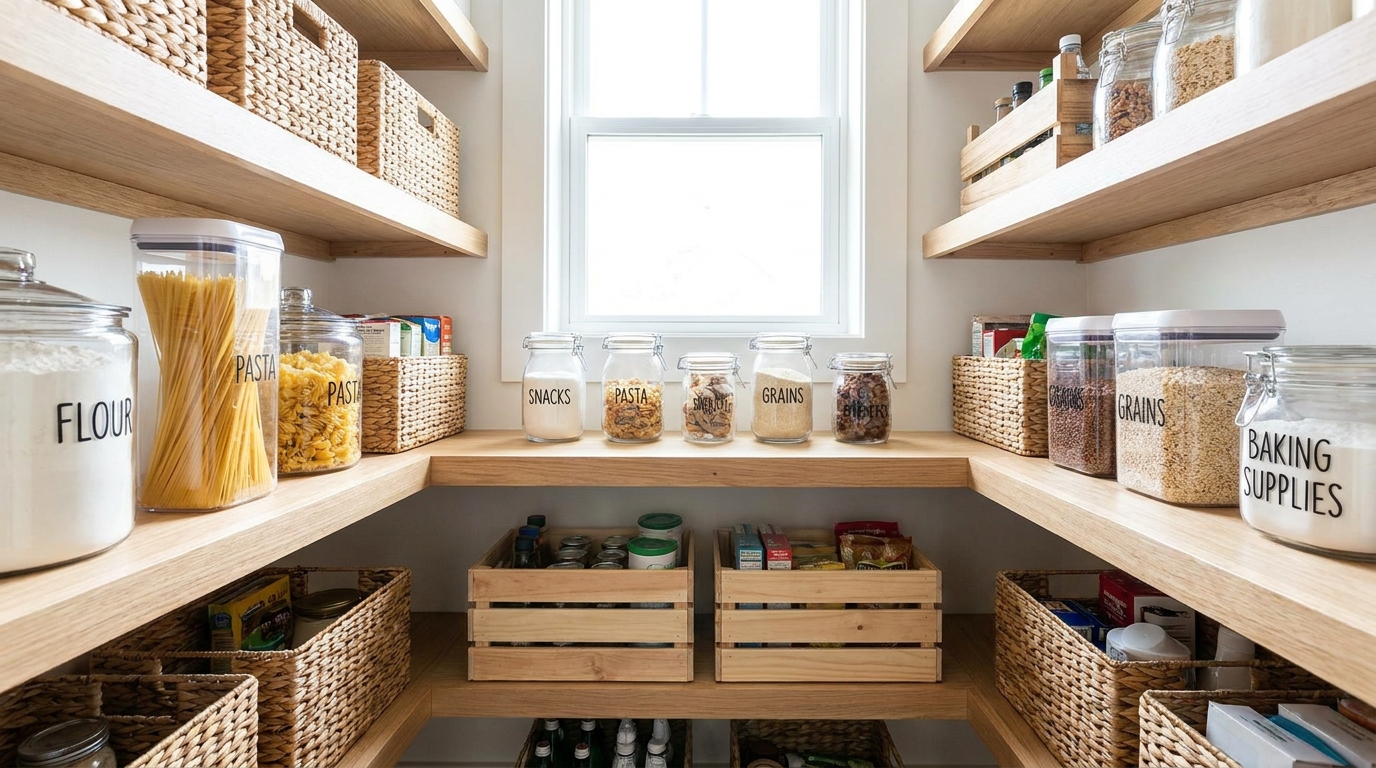
The kitchen is often where labeling delivers the most immediate reward because it is one of the busiest zones in the home. Pantry bins, jars, and shelves benefit from labels when they help everyone see where food belongs and what needs restocking. Instead of creating a separate bin for every tiny snack type, think in broader categories like breakfast, baking, lunch prep, dinner staples, and treats. This keeps the system flexible as grocery habits change.
Labels are also useful in refrigerators and freezers, particularly for leftovers, meal prep, sauces, and bulk items. Date labels can reduce waste and help you rotate food more confidently. In drawers or cabinets, labels work best on pull-out bins, small organizers, and zones that are otherwise easy to forget, such as backstock spices, school bottle parts, or reusable lunch gear.
Open kitchens often benefit from labels that are subtle and design friendly. Clear containers with understated text can look cohesive while still making daily life easier. The goal is not to turn your kitchen into a store display. It is to support the rhythm of cooking, cleanup, and grocery storage in a way that feels natural.
Linen closets and bathroom storage
Linen closets tend to become crowded because they hold a little of everything. Sheets, towels, medicine, travel items, backup toiletries, and cleaning products often compete for the same shelves. Labels help define zones so the space stops becoming a catch-all. Categories such as bath towels, guest bedding, first aid, hair care, and extra toiletries are usually broad enough to stay manageable while still being clear.
Bathrooms also benefit from labels when multiple people share one vanity or cabinet. Person-based labels can work well for skincare bins, medicine baskets, or drawer inserts. If children use the bathroom independently, labels with both words and simple visual cues can make routines easier and reduce the need for constant reminders.
Laundry rooms and cleaning supplies
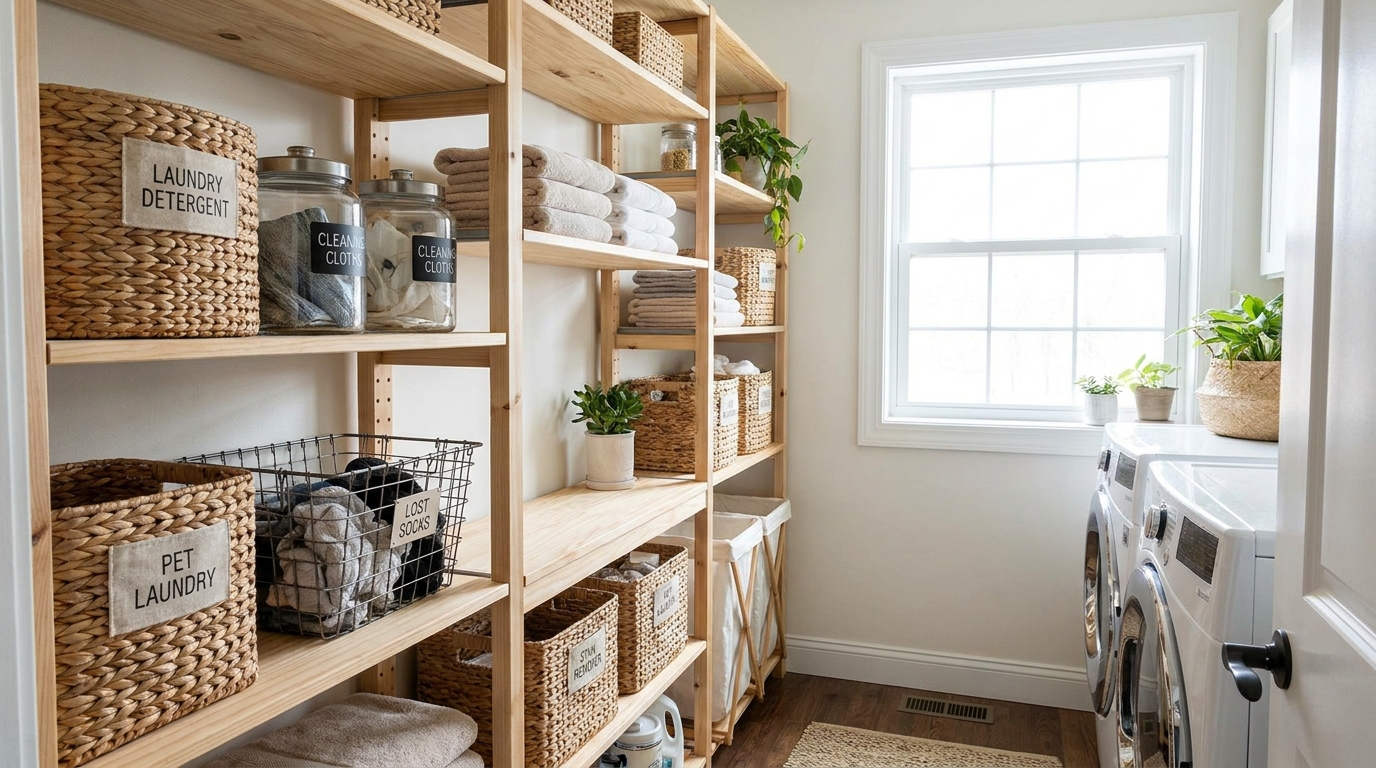
Laundry rooms are perfect places for workflow labeling because laundry is all about sequence. Labels can guide the entire process from sorting to stain treatment to folding and returning items. A basket labeled air dry or missing mates instantly reduces the visual chaos that tends to build around laundry. These little cues can make the room feel more supportive and less draining.
Cleaning supplies also need clear, practical labels, especially in households with children or where supplies are stored in portable caddies. Instead of labeling by product brand, label by purpose where it makes sense, such as kitchen cleaning, bathroom cleaning, floors, or laundry treatment. This makes it easier to grab the right set of supplies and put them back correctly.
Entryways and mudrooms
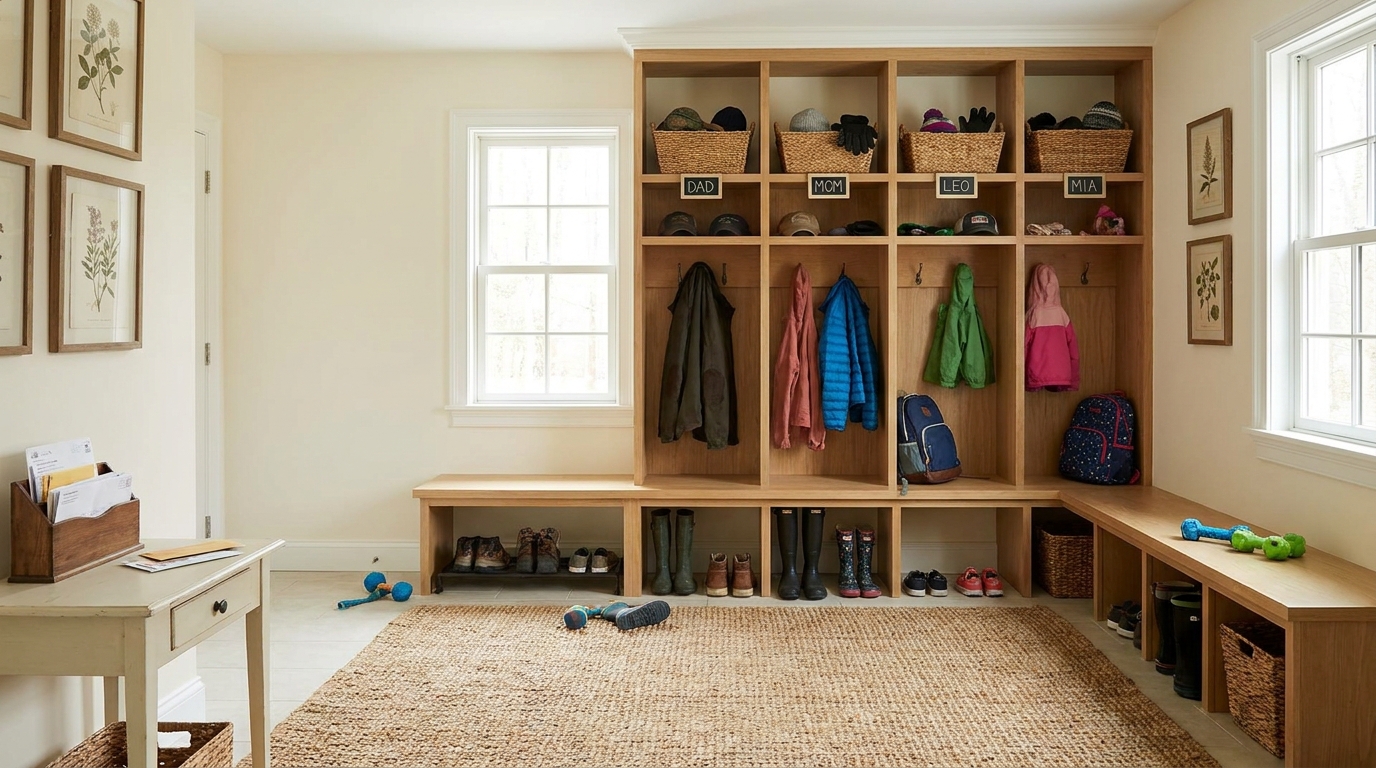
Entry spaces collect the pressure of daily transitions. Shoes, bags, keys, seasonal gear, library books, pet leashes, sports equipment, and mail all tend to land here. Labels can create a visual reset point that helps the whole household come and go with less stress. In family homes, assigning cubbies or baskets by person can be especially effective because it connects cleanup to habit.
Seasonal labels also shine in these areas. A bin labeled sunscreen and hats in summer can later become scarves and gloves in winter. This kind of flexible labeling works beautifully in small homes because it allows one storage area to adapt with the season rather than becoming overloaded all year long.
Toy storage and children’s spaces
Labels can be transformative in children’s rooms and play areas because they make expectations visible. Instead of repeatedly telling a child where blocks, art supplies, dolls, or puzzles belong, the room itself offers that information. This creates more independence and can make cleanup feel more achievable rather than overwhelming.
For younger children, picture labels paired with words are often helpful. For school-age kids, category names may be enough. The key is to keep categories broad enough that cleanup remains quick. If a child has to sort toys into twelve narrow bins, the system may feel more like work than support. A few well-defined labels usually perform better than many tiny ones.
Home offices and paper zones
Paper clutter often carries emotional weight because it represents unfinished decisions. Bills, forms, school notices, receipts, and household documents can create a quiet sense of pressure when they accumulate without a clear system. Labels in this area should focus on action and timing. A simple set of categories like to review, to pay, to file, important records, and school papers can reduce that pressure immediately.
If the household includes more than one adult or multiple children, person-based paper slots can be helpful too. Again, the goal is not to over-engineer the system. It is to create a structure that allows paper to move instead of pile up.
How to build a labeling system that matches the way you live
The best labeling systems reflect real behavior, not idealized behavior. If your family drops reusable water bottles by the back door every day, that is where the labeled basket should go. If mail always enters through the kitchen, creating a beautiful labeled station in another room may not help. Organization works best when it respects the natural flow of the household.
Begin by observing where tasks happen and where frustration shows up. What do people ask for often. What gets misplaced. Which spaces become messy again within days of cleaning. Those recurring pain points are usually where labels can provide the most value. A labeling project is less about making every room uniform and more about relieving daily bottlenecks.
Once you identify the zones that need support, create categories using the words your household already uses. If nobody in your family says shelf-stable proteins, that label may be too formal for a pantry bin of tuna and beans. If everyone says game night, that may be a more intuitive label than entertainment. Familiar language reduces friction and makes the system feel immediately usable.
A simple process to follow
-
Choose one space that causes repeated frustration, such as the pantry, mudroom, or linen closet. Avoid trying to label the whole house at once because systems improve through use and adjustment.
-
Declutter the space first, removing duplicates, expired items, and anything that belongs elsewhere. Group the remaining items into broad categories based on how they are used.
-
Select containers or zones before creating labels. A label should describe a space with a clear purpose, not compensate for an undefined pile.
-
Create labels that are visible, readable, and consistent with the rest of the home. Keep wording short and intuitive.
-
Live with the system for a week or two, then refine. If a category overflows or never gets used, adjust the label or the zone without guilt.
This process matters because organization is not static. Homes evolve with seasons, school schedules, hobbies, children’s ages, and changing routines. Labels should support that flexibility rather than lock you into a system that no longer fits.
Accessible labeling for different household needs
Accessible design is becoming a bigger part of home organization conversations, and for good reason. A home functions better when systems are clear for everyone who uses them. Labels can support children learning independence, older adults navigating memory changes, neurodivergent household members who benefit from visual structure, and caregivers who need quick clarity in shared routines.
Consistency is often more important than complexity in these situations. The same font style, the same color logic, and the same placement patterns across the house can make systems easier to trust and follow. For example, if blue labels always relate to laundry and green labels always relate to cleaning supplies, keep that meaning stable everywhere. Color coding can be helpful, but only when it is used sparingly and consistently.
Large, high-contrast text can make labels more readable for aging eyes. Picture labels can support pre-readers or multilingual households. Labels placed at eye level or on the front edge of shelves are easier to use than those placed too high, too low, or hidden above containers. These details may seem minor, but they can significantly improve ease and independence.
The most welcoming home systems are the ones that explain themselves.
How to keep your labels from becoming visual clutter
One of the easiest mistakes to make is labeling too much. When every basket, drawer, and tray has a title, the home can start to feel crowded by words. Labels should simplify the visual environment, not add noise. If a category is obvious, such as dinner plates in a glass-front cabinet, it probably does not need a label.
Try to reserve labels for places where they solve a real problem. Hidden storage, family systems, utility zones, and repeated routines benefit most. Decorative open shelving may need only a few labels, while an under-sink cabinet might need several. Let usefulness guide visibility.
It also helps to maintain a visual hierarchy. The most important labels should be the easiest to notice. Larger labels can define a shelf or zone, while smaller labels can identify individual bins within it. This layered approach keeps spaces understandable without making them feel overly busy.
Creating labels that are both beautiful and practical
There is no reason functionality and beauty cannot live together. In fact, one of the reasons modern labeling systems are so appealing is that they can be tailored to the mood of the home. Minimalist white-on-clear labels, soft neutral tags, black text on cream labels, or subtle color accents can all feel elegant when used with restraint. The style should fit the room rather than dominate it.
Still, it is worth remembering that pretty labels are not automatically good labels. If the font is too delicate to read, if the adhesive fails in a humid bathroom, or if the words are too vague to guide action, the label is not serving you. The best systems feel lovely because they work so well, not because they are merely decorative.
If you enjoy design, try using texture and material to soften utility spaces. Woven baskets with small tags can warm up a closet. Clear acrylic bins with crisp labels can make a pantry feel bright and intentional. Wooden clips, metal tag holders, or simple card inserts can add charm in mudrooms and laundry rooms. These details can make organization feel like part of the home’s atmosphere rather than a separate project.
Maintaining your labeling system over time
A well-labeled home still needs occasional resets. Labels support maintenance, but they do not replace it. The good news is that once categories are in place, upkeep becomes much easier. A five-minute tidy is more effective when every item has a defined home. A weekly reset in the pantry or mudroom feels lighter because you are restoring a known system rather than starting from scratch.
Consider creating a simple seasonal review rhythm. At the start of each season, check the spaces that shift most often such as entry storage, children’s gear, pantry stock, and holiday decor. Ask whether the labels still reflect what is actually stored there. Updating a few categories is often all it takes to keep the system feeling current and useful.
Be willing to relabel without seeing it as a failure. Homes change. Children grow. New hobbies appear. Someone starts working from home, or a guest room becomes a nursery, or the family buys bulk groceries more often than before. A flexible mindset is part of what makes a labeling system successful. The goal is not perfection. It is ongoing ease.
When not to label
Sometimes the most thoughtful choice is not to add a label at all. If a drawer holds only one obvious category, if the household already uses the space naturally, or if the label would make a room feel more clinical than calm, it may be unnecessary. Good organization is not measured by how many labels you own. It is measured by how easily your home supports your life.
It is also wise to avoid labels that are too narrow or too aspirational. A bin labeled craft embellishments by color might look impressive for one week, then quickly collapse into frustration if nobody can maintain it. Broad, forgiving categories usually last longer because they allow for real life. The system should help you recover from messy days, not demand constant precision.
The quiet comfort of a home that explains itself
Home organization is often presented as a visual transformation, but the deeper reward is emotional. A labeled home can feel calmer because it reduces ambiguity. It tells you where to put things, where to find them, and how to restore order when life gets busy. That sense of control matters, especially in households where time, space, and energy are limited.
Labels are a low-cost way to make your home more supportive. They reduce decision fatigue, improve efficiency, and create shared understanding among the people who live there. They can help children participate more confidently, support aging in place, make caregiving smoother, and simply spare you from the draining experience of searching for everyday essentials.
If you approach labeling with warmth and realism, it becomes less about making your home look managed and more about making it feel gentle to live in. Start with one high-friction space. Choose words that make sense to your household. Keep categories clear, flexible, and visible. Then notice what changes. Often, the first thing you gain is not a prettier shelf. It is a little more breathing room in your day.
- Best places to start: pantry, mudroom, linen closet, laundry room, bathroom storage, and paper management zones.
- Most useful label types: content labels, person or purpose labels, and workflow labels.
- Remember: declutter first, label second, and adjust as your routines evolve.



No Comment! Be the first one.