


Essential Tips for Caring for Your Hardwood Floors with Lasting Elegance
Hardwood floors possess a rare quality in the home. They are practical enough for daily life, yet expressive enough to shape the character of a room with quiet authority. Whether the boards are pale oak, warm walnut, rich maple, or an engineered finish designed to echo a natural grain, wood underfoot brings depth, softness, and permanence. Its beauty, however, does not come from neglect or constant intervention. It comes from measured care, the kind that feels less like scrubbing and more like stewardship.
Table Of Content
- Why Hardwood Floors Need a Different Kind of Care
- The Foundation of Beautiful Floors: Daily and Weekly Habits
- Dry Cleaning Comes First
- What a Gentle Weekly Routine Can Look Like
- Moisture Control: The Most Important Rule of All
- Safe Damp Cleaning Practices
- Humidity and Seasonal Movement: Caring for Wood as a Living Material
- How to Support Stable Humidity
- Preventive Protection: The Quiet Work That Saves the Finish
- The Best Preventive Measures for Everyday Living
- Sunlight and Uneven Color Change
- Choosing the Right Cleaner for Hardwood Floors
- What to Avoid
- Solid Hardwood vs Engineered Hardwood: Why the Difference Matters
- How to Handle Common Hardwood Floor Problems
- Scuffs and Surface Marks
- Sticky Spots and Kitchen Residue
- Water Spots and Small Spills
- Scratches and Dents
- When Your Floor Needs More Than Routine Cleaning
- Creating a Maintenance Rhythm That Feels Effortless
- Design, Air Quality, and the Modern View of Floor Care
- Final Thoughts: Protecting Beauty Through Restraint
One of the most persistent myths about hardwood care is that it requires either elaborate maintenance or frequent heavy cleaning. In truth, the opposite is closer to reality. Wood thrives when its environment is stable, its surface is protected from grit, and moisture is controlled with restraint. The most elegant floors are often maintained through small, intelligent rituals carried out consistently over time.
This is especially important for homes across Canada and North America, where seasonal shifts can be dramatic. Dry winters, humid summers, wet entryways, pets, children, and strong sun exposure all leave their mark if they are not considered in the care plan. The goal is not perfection in the rigid sense, but preservation in the refined sense. A beautiful hardwood floor should age with grace, not with preventable damage.
In this guide, you will learn how to clean hardwood floors safely, how to prevent scratches and dullness, how to manage humidity, and how to adapt care for both solid and engineered hardwood. Above all, you will see that good maintenance is a design habit as much as a housekeeping one. When done properly, it protects the visual calm of a space and allows the material to remain luminous for years.
Hardwood floor care is a quiet luxury practice: remove grit early, control moisture consistently, use the right products sparingly, and protect the surface before damage begins.
Why Hardwood Floors Need a Different Kind of Care
Wood is unlike tile, laminate, or vinyl because it is a natural, hygroscopic material. That means it responds to moisture in the air, expanding and contracting as humidity rises and falls. This movement is normal, but when humidity swings become severe, floors can begin to gap, cup, swell, or shift in ways that compromise both appearance and performance. For homeowners, understanding this one characteristic changes everything about maintenance.
There is also the finish to consider. Most hardwood floors are protected by a surface coating such as polyurethane, while others may use oil or hardwax oil systems. The finish is what gives the floor its sheen and acts as its first line of defense against dirt, moisture, and abrasion. Caring for hardwood is therefore not only about protecting the wood itself, but also about preserving the finish that shields it.
Another reason hardwood deserves special attention is that damage often begins invisibly. Fine dust and grit may seem harmless, yet every step over these particles can produce micro-abrasions that gradually dull the surface. A floor can look clean at a glance and still be accumulating wear. This is one reason frequent, gentle dust removal matters so much.
Environmental agencies and indoor air quality guidance also support the value of routine dust management. Dust settles on floors and becomes easily resuspended into the air through walking, vacuuming, and daily movement. In a home with hardwood, keeping the floor free of settled particles contributes not only to appearance, but also to a cleaner-feeling interior atmosphere.
The Foundation of Beautiful Floors: Daily and Weekly Habits
The most effective hardwood care routine is simple enough to repeat without effort. Instead of waiting for the floor to look visibly dirty, build a rhythm around light, regular attention. This prevents grit from accumulating, preserves the finish, and reduces the need for aggressive cleaning later. A restrained routine is often the most sophisticated one.
For most homes, daily care does not mean washing the floor every day. It means noticing where particles collect and removing them before they can do harm. Entryways, kitchen zones, hallways, and spaces around dining tables tend to gather the most debris. These areas benefit from the lightest touch applied consistently.
Dry Cleaning Comes First
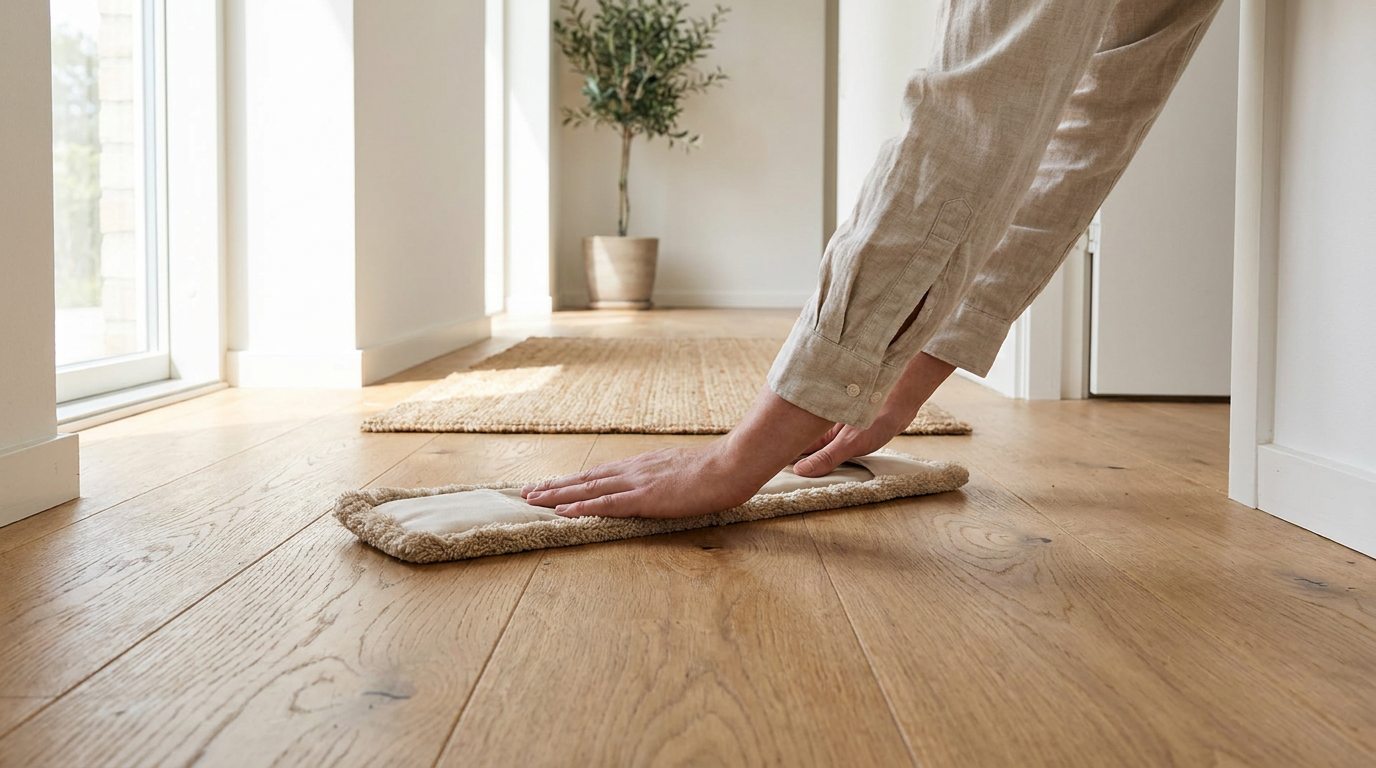
Sweeping, dust mopping, or vacuuming is the backbone of hardwood floor maintenance. A microfiber dust mop is especially effective because it gathers fine particles without scattering them, and it can be used frequently without stress on the finish. In a serene home, this kind of quiet maintenance quickly becomes second nature.
If you prefer vacuuming, choose a machine with a bare-floor setting or one that allows the beater bar to be turned off. Rotating brush rolls designed for carpet can scratch or prematurely wear hardwood surfaces. Using the correct setting transforms vacuuming from a risk into a highly useful maintenance tool, particularly for corners, edges, and spaces beneath furniture.
A practical schedule for many households is a quick dry pass every day or every few days in high-traffic zones, with a more thorough vacuum or dust mop session once a week. Homes with pets, children, or direct outdoor access may need more frequent attention. The point is not frequency for its own sake, but prevention before abrasion occurs.
What a Gentle Weekly Routine Can Look Like
An ideal weekly hardwood floor routine can be both modest and effective. It should remove dust, address marks, and maintain an even visual finish without introducing excess moisture. This approach keeps the room polished while respecting the material.
- Begin with a microfiber dust mop or soft broom to gather loose dust and grit.
- Vacuum edges, corners, and under furniture using bare-floor mode.
- Spot clean footprints or sticky marks with a hardwood-safe cleaner and a soft cloth.
- If needed, use a lightly damp microfiber mop with a cleaner formulated specifically for finished wood floors.
- Allow the floor to dry promptly and avoid walking on any damp areas until fully dry.
This measured method supports both cleanliness and longevity. It also prevents the cycle of residue buildup that can happen when floors are repeatedly washed with the wrong products or too much liquid.
Moisture Control: The Most Important Rule of All
If there is one principle to remember above all others, it is this: hardwood and excess water do not belong together. Moisture is the most common and most destructive threat to hardwood longevity. Water can dull finishes, seep into seams, stain boards, weaken adhesives in some engineered installations, and in more serious cases lead to warping or cupping.
This does not mean hardwood should never be damp cleaned. It means dampness must be minimal, controlled, and followed by prompt drying. A lightly damp microfiber mop is very different from a wet mop, and the distinction matters greatly. The mop should feel barely moist, never saturated enough to leave standing water behind.
Steam mops deserve particular caution. Although marketed as convenient and hygienic, many hardwood manufacturers advise against them because heat and moisture can compromise the finish and force moisture into the wood. What seems efficient in the short term can become expensive in the long term.
Spills should always be addressed immediately. A dropped glass, pet accident, or splash near the sink is not automatically disastrous if it is removed at once. The problem begins when moisture is allowed to linger. Keeping a soft absorbent cloth nearby in kitchens and dining areas is one of the simplest preventive habits a homeowner can adopt.
Safe Damp Cleaning Practices
When your floor needs more than dust removal, choose a wood-floor cleaner formulated for finished hardwood. These products are designed to clean without stripping the finish or leaving a heavy residue. Multipurpose cleaners may seem efficient, but many are too harsh or too oily for this specific surface.
Spray the cleaner onto the mop pad or lightly onto the floor in small sections rather than flooding a wide area. Work methodically and avoid repeated passes over a wet surface. Once cleaned, the area should dry quickly. If it does not, too much liquid was used.
Several substances are commonly discouraged for hardwood floors, including bleach, ammonia, vinegar, oil soap, and waxes not intended for your floor type. These can etch, dull, discolor, or create residue that interferes with future maintenance. The safest philosophy is beautifully simple: the gentler and more floor-specific the product, the better.
Humidity and Seasonal Movement: Caring for Wood as a Living Material
One of the most sophisticated things a homeowner can do for hardwood floors is to stop thinking only about surface cleaning and start thinking about the room itself. Because wood responds so strongly to the surrounding environment, indoor humidity is not a minor technical detail. It is central to how the floor looks, feels, and performs over time.
In dry conditions, boards may shrink and create visible gaps. In very humid conditions, they may absorb moisture and expand, leading to swelling or cupping. Seasonal movement is natural to a degree, but dramatic fluctuations are often what turn normal behavior into visible damage. A floor that appears temperamental is often simply reacting to unstable indoor conditions.
For most homes, the ideal strategy is to keep humidity in a stable, moderate range throughout the year. You do not need to obsess over perfect numbers every hour, but a hygrometer can be a useful, discreet tool. Once you understand how your home behaves through winter heating and summer humidity, you can make better decisions with far less guesswork.
How to Support Stable Humidity
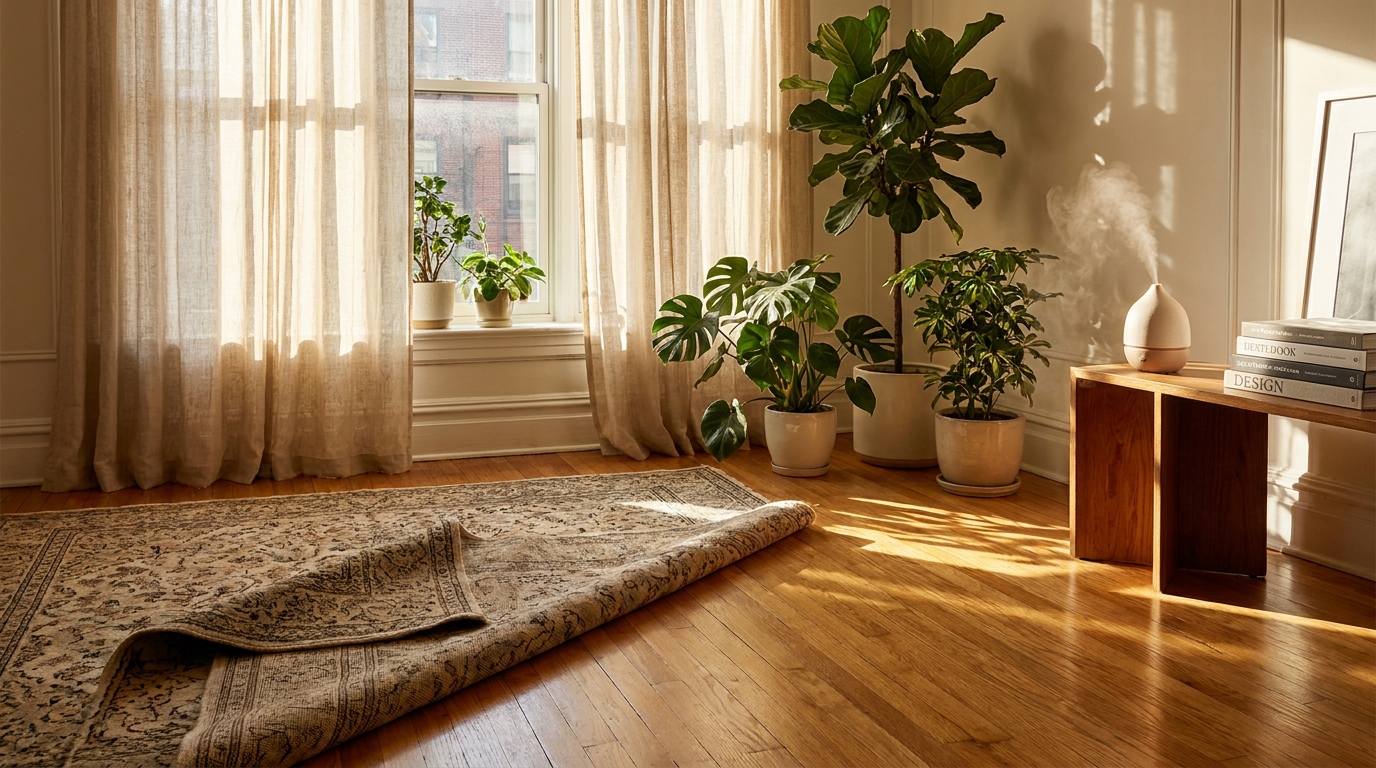
In winter, forced air heating can dry the interior dramatically. A humidifier may help reduce excessive dryness and minimize shrinking or gapping in the boards. In summer, air conditioning and dehumidification can be equally important in preventing excessive moisture buildup.
It is wise to monitor rooms that are naturally more vulnerable, such as basements, homes near water, or spaces with large windows and direct sun exposure. Kitchens and mudrooms may also experience repeated moisture events that affect adjacent flooring over time. The more consistently the interior climate is managed, the more composed the floor will remain.
Humidity control also supports the broader health of the home. Better moisture balance can contribute to comfort, preserve furnishings, and support indoor air quality. Hardwood care, in this sense, becomes part of a more holistic approach to living well in a beautifully maintained space.
Preventive Protection: The Quiet Work That Saves the Finish
The most graceful hardwood floors are often not the ones that are cleaned most aggressively, but the ones that are protected most intelligently. Preventive care reduces the need for restoration later and preserves the visual serenity of the room. This is where design and maintenance meet in the most satisfying way.
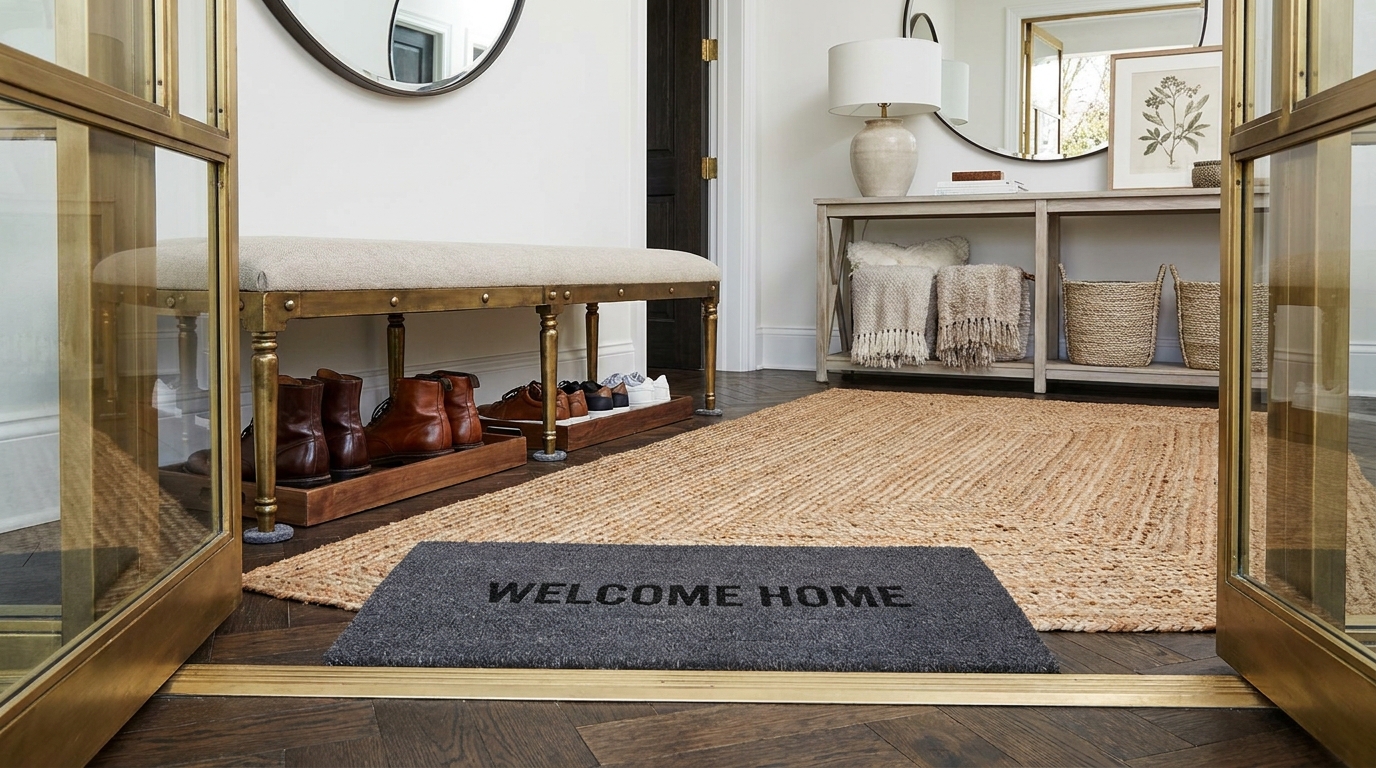
Grit enters the home on shoes, stroller wheels, paws, and daily foot traffic. Once inside, it acts like a fine abrasive under every step. For this reason, entryway planning is one of the most valuable things you can do for hardwood floors. A well-chosen mat system is not merely practical. It is an extension of the home’s visual order.
The Best Preventive Measures for Everyday Living
There are several small interventions that provide remarkable long-term benefits. None of them are difficult, yet together they preserve the floor’s finish, color, and structural integrity with extraordinary efficiency.
- Use entrance mats at exterior doors to catch grit, moisture, and salt before they reach the wood.
- Add felt pads under chairs, tables, and movable furniture to reduce scratches and dents.
- Trim pet nails regularly to minimize repeated surface marking.
- Place area rugs in high-traffic zones such as hallways, kitchens, and beneath dining tables.
- Lift rather than drag furniture whenever pieces are moved or rearranged.
- Create shoe habits that reduce abrasive outdoor debris entering the home.
These measures are especially important for light, natural wood finishes, which remain highly desirable in contemporary interiors but can show scratches and particulate wear more readily. Preventive care allows such finishes to retain their softness and purity without looking overprotected or overly treated.
Sunlight and Uneven Color Change
Hardwood floors also respond to light. Over time, exposure to sunlight can deepen, lighten, or otherwise alter the color of wood and its finish. This is not always damage in the strict sense, but when rugs or furniture remain in one place for too long, the result can be uneven tone across the room.
To reduce this contrast, rotate rugs periodically and shift furnishings slightly when possible. Even subtle changes help the floor age more evenly. Sheer curtains, UV-filtering window treatments, and thoughtful room arrangement can further soften direct exposure without diminishing natural light.
There is something deeply elegant about allowing materials to mature gracefully rather than forcing them to stay frozen in time. The key is to guide that aging so that it remains harmonious across the room.
Choosing the Right Cleaner for Hardwood Floors
One of the most common mistakes in flooring maintenance is assuming that all hard surfaces can be treated the same way. Hardwood demands more precision. The cleaner you choose should match not only the material, but also the floor’s finish and manufacturer guidance whenever available.
Modern floor care has moved toward low-residue, hardwood-specific products for good reason. They remove light soil without leaving films that attract more dust or cloud the surface. This aligns beautifully with a refined aesthetic because the floor remains clean in a natural way, rather than appearing coated or artificially glossy.
When shopping for a cleaner, look for formulations clearly labeled for finished hardwood floors. Avoid experimental homemade mixtures unless your floor manufacturer explicitly approves them. Vinegar, often recommended online as a universal solution, is widely discouraged for many hardwood finishes because its acidity can gradually dull the protective coating.
What to Avoid
These product categories are frequently unsuitable for finished hardwood flooring:
- Steam-based cleaning systems that introduce heat and moisture
- Ammonia and bleach-based cleaners
- Undiluted vinegar solutions
- Oil soaps that can leave residue or affect recoating later
- Wax products on floors not designed to be waxed
- Generic all-purpose cleaners that may streak or soften the finish
If you are ever unsure, test a new product in an inconspicuous area first and review the manufacturer’s care instructions. A cautious approach is not excessive here. It is one of the most cost-effective forms of flooring preservation.
Solid Hardwood vs Engineered Hardwood: Why the Difference Matters
A truly informed approach to hardwood care includes understanding what type of floor you have. Solid hardwood is milled from a single piece of wood, while engineered hardwood has a real wood top layer over a layered core. Both are genuine wood surfaces, yet they can behave differently when it comes to moisture stability and refinishing potential.
Engineered hardwood is often more dimensionally stable than solid hardwood because its layered construction helps reduce movement from humidity changes. This can make it a sensible choice in environments where seasonal fluctuations are more pronounced. However, stability does not mean invincibility. Engineered floors still require careful moisture control and surface protection.
The main long-term difference often lies in refinishing. Solid hardwood can usually be sanded and refinished multiple times over its life, depending on plank thickness. Engineered hardwood may also be refinishable, but that depends on the thickness of the wear layer. Some can handle refinishing well, while others are more limited and should be protected even more diligently from avoidable wear.
For maintenance purposes, both floor types benefit from the same core principles: remove grit, avoid saturation, control humidity, and use appropriate cleaners. The distinction simply helps homeowners make better decisions about restoration, future wear, and expectations over time.
How to Handle Common Hardwood Floor Problems
Even the best-maintained floors encounter daily life. The goal is not to panic at every mark, but to respond appropriately before minor issues develop into lasting damage. Hardwood rewards calm, prompt action.
Scuffs and Surface Marks
Light scuffs often come from shoes, chairs, or rubber contact. These can sometimes be removed with a soft microfiber cloth and a small amount of hardwood-safe cleaner. Gentle rubbing is usually enough. Abrasive scrubbers should be avoided because they may scratch the finish more than the original mark did.
Sticky Spots and Kitchen Residue
In kitchens and dining areas, dried drips and sticky residue should be addressed with a lightly damp cloth and a floor-specific cleaner. Letting these spots remain encourages repeated rubbing from foot traffic, which can wear the finish unevenly in isolated patches. Prompt attention preserves the evenness of the floor’s sheen.
Water Spots and Small Spills
Blot spills immediately rather than wiping them around. Once the liquid is removed, dry the area thoroughly with a soft cloth. If a faint mark remains, consult your flooring manufacturer or a flooring professional before trying stronger remedies, especially on specialty finishes.
Scratches and Dents
Minor surface scratches may be improved with manufacturer-approved repair products, though results vary depending on finish and color. Deeper damage often requires more than cosmetic treatment. In these cases, restraint is wise. Poorly matched repair products can draw more attention to the area than the original scratch.
When Your Floor Needs More Than Routine Cleaning
At some point, a hardwood floor may begin to lose its freshness even when it is clean. This can show up as dull traffic lanes, fine surface scratching, or a general reduction in luster. Not every tired-looking floor needs full sanding and refinishing. Sometimes the finish itself can be professionally recoated, which restores protection without removing significant wood.
Recoating is often most successful when the floor has been maintained without waxes, oily residues, or incompatible products. This is another reason careful product choice matters from the beginning. What you apply during everyday cleaning influences what options remain available later.
For floors with deeper wear, exposed wood, severe staining, or structural issues, professional refinishing may be appropriate. Solid hardwood usually offers more flexibility in this regard, while engineered floors must be assessed according to wear layer thickness. An experienced flooring professional can help determine the right path.
Good maintenance does not eliminate the natural aging of hardwood. It ensures that when age becomes visible, it appears as character rather than neglect.
Creating a Maintenance Rhythm That Feels Effortless
The most successful care plan is not the most ambitious one. It is the one that fits elegantly into your life. If maintenance feels complicated, it is less likely to happen consistently. Hardwood floors benefit from ritual, not intensity.
Think of care in layers. Daily or near-daily attention removes grit. Weekly maintenance refreshes the surface. Seasonal care addresses humidity, rug rotation, and furniture pad checks. Occasional professional assessment protects the floor before wear becomes irreversible. This structure turns hardwood care into something intuitive and sustainable.
A calm maintenance rhythm might look like this:
- Every day or every few days, dust mop high-traffic zones and wipe up spills immediately.
- Once a week, vacuum carefully and damp mop lightly if needed.
- Every month, inspect felt pads, entry mats, and trouble spots near sinks and doors.
- Every season, monitor humidity, rotate rugs, and check for signs of movement or color change.
- As needed, consult a flooring professional about recoating or refinishing before damage deepens.
There is elegance in this kind of attentiveness. It does not overwhelm the household, yet it protects one of the most visually significant surfaces in the home.
Design, Air Quality, and the Modern View of Floor Care
Today, hardwood floor care is no longer viewed purely as a cosmetic concern. It is increasingly connected to healthier interiors, lower-tox cleaning choices, and intentional design living. Dust removal supports air quality. Low-residue cleaners reduce unnecessary chemical load. Humidity management benefits the floor and the comfort of the space alike.
This broader view is especially meaningful in contemporary interiors where materials are expected to be both beautiful and well considered. A floor is not just a backdrop. It is a large living surface that affects acoustics, light reflection, comfort, and the overall composure of the room. Caring for it well is part of caring for the home as a whole.
The renewed appreciation for natural wood tones, matte finishes, and understated luxury makes proper maintenance even more important. These finishes can be breathtaking, but they reveal neglect quickly when dust, scratches, or moisture marks accumulate. Prevention becomes the invisible framework that keeps the design intact.
Final Thoughts: Protecting Beauty Through Restraint
Hardwood floors ask for something wonderfully old-fashioned in a world of quick fixes. They ask for consistency, moderation, and respect for material. They do not respond well to excess, whether that means too much water, too much product, or too much force. Instead, they reward a quieter kind of care.
If you remove grit regularly, keep moisture under control, maintain stable humidity, and protect the floor from daily abrasion, you are already doing the most important work. The surface will hold its sheen longer, its color will age more evenly, and its structure will be better protected through the seasons. In practical terms, this means fewer repairs and a longer lifespan. In aesthetic terms, it means a home that continues to feel composed, polished, and deeply inviting.
There is no need to overcomplicate hardwood floor maintenance. The finest approach is also the simplest. Be observant. Be gentle. Be consistent. In that rhythm, hardwood remains what it was always meant to be: a lasting foundation for beautiful living.


No Comment! Be the first one.