


The Ultimate Guide to Caring for Your Laminate Floors
Laminate flooring has earned its place in modern homes for a reason. It offers the visual warmth of wood, a composed architectural presence, and a practical durability that suits busy daily life. Yet its elegance lasts only when its surface is treated with a certain discipline. The secret to beautiful laminate floors is not aggressive cleaning or heavy maintenance. It is a gentle, consistent rhythm that protects the wear layer, limits moisture, and prevents the sort of small daily damage that quietly dulls a room over time.
Table Of Content
- Why Laminate Floors Need a Different Kind of Care
- The Golden Rule of Laminate Maintenance: Protect the Surface and Keep Water Controlled
- Your Daily and Weekly Laminate Floor Care Routine
- Daily attention in lived-in spaces
- Weekly dry cleaning and controlled damp cleaning
- How to Clean Laminate Floors Without Damaging Them
- What to avoid at all costs
- Understanding Spills, Stains, and Spot Cleaning
- Moisture Management in Canadian and North American Homes
- Simple ways to manage moisture elegantly
- How to Prevent Scratches, Scuffs, and Surface Wear
- The beauty of entryway protection
- Choosing the Right Cleaner for Laminate Flooring
- Warranty Compliance and Why It Matters
- Can Laminate Be Used in Wet Rooms?
- Common Laminate Floor Care Mistakes to Avoid
- A Seasonal Care Plan for Lasting Beauty
- When Your Floor Looks Dull: What to Do
- The Quiet Luxury of a Well Cared For Floor
This guide is designed to bring clarity to laminate floor care in a way that feels both elevated and useful. The most effective routine is rooted in dry soil removal, prompt spill response, cautious damp cleaning, and thoughtful prevention. These principles are not simply stylistic preferences. They align with the way laminate flooring is tested and specified, including international standards that assess wear performance, dimensional stability in humid and dry conditions, and resistance to topical moisture exposure at floor joints. In other words, the floor performs best when your maintenance habits respect what the material is designed to withstand.
For households across Canada and North America, this matters even more. Seasonal humidity shifts, tracked-in snow, rain, road salt, and slush can challenge a floor in subtle but meaningful ways. A laminate floor can remain polished and resilient for years, but only when moisture is controlled and abrasion is minimized. In the sections ahead, you will find a complete approach to cleaning, protecting, and preserving your laminate floors with confidence and sophistication.
Laminate floor care is an exercise in restraint. The less water, residue, abrasion, and harsh chemistry you introduce, the longer the floor is likely to retain its calm, refined finish.
Why Laminate Floors Need a Different Kind of Care
At a glance, laminate appears simple. Its surface often resembles natural hardwood with striking realism, and its day to day upkeep can seem similar to other hard surfaces. But laminate is a layered product, and understanding that structure is the key to caring for it properly. The top wear layer is designed to resist daily traffic, while the decorative layer beneath creates the floor’s visual identity. Under those layers sits a core that is more vulnerable to moisture, particularly if water reaches seams or edges.
This is why so much expert and manufacturer guidance emphasizes low-moisture cleaning. Excessive water is not merely inconvenient. It can seep into joints, lead to swelling, compromise edges, and alter the floor’s visual crispness. Standards such as ISO 4760:2022 recognize topical moisture resistance at assembled joints as a real performance concern, while ISO 24339:2006 addresses dimensional variation after humid and dry climate exposure. These references reinforce a simple truth for homeowners: laminate flooring should be cared for in a way that prioritizes dryness and stability.
Another important distinction is that most laminate flooring is not refinishable in the way solid hardwood can be. A hardwood floor may sometimes be sanded and renewed. Laminate usually cannot. Once the visible surface is deeply scratched, chipped, swollen, or worn through, repair options are limited and replacement becomes more likely. That reality makes prevention more valuable than correction. With laminate, care is not about restoration after neglect. It is about preserving the original finish from the beginning.
The Golden Rule of Laminate Maintenance: Protect the Surface and Keep Water Controlled
If there is one principle to remember above all others, it is this: keep abrasive debris off the floor and keep moisture exposure brief. Dust, grit, sand, and tiny stones act like quiet abrasives beneath shoes, chair legs, and pet paws. They may seem harmless in the moment, but over time they can soften the floor’s clarity and produce a tired appearance in high traffic zones. Meanwhile, standing water, soaked mop heads, and neglected spills threaten the integrity of seams and edges.
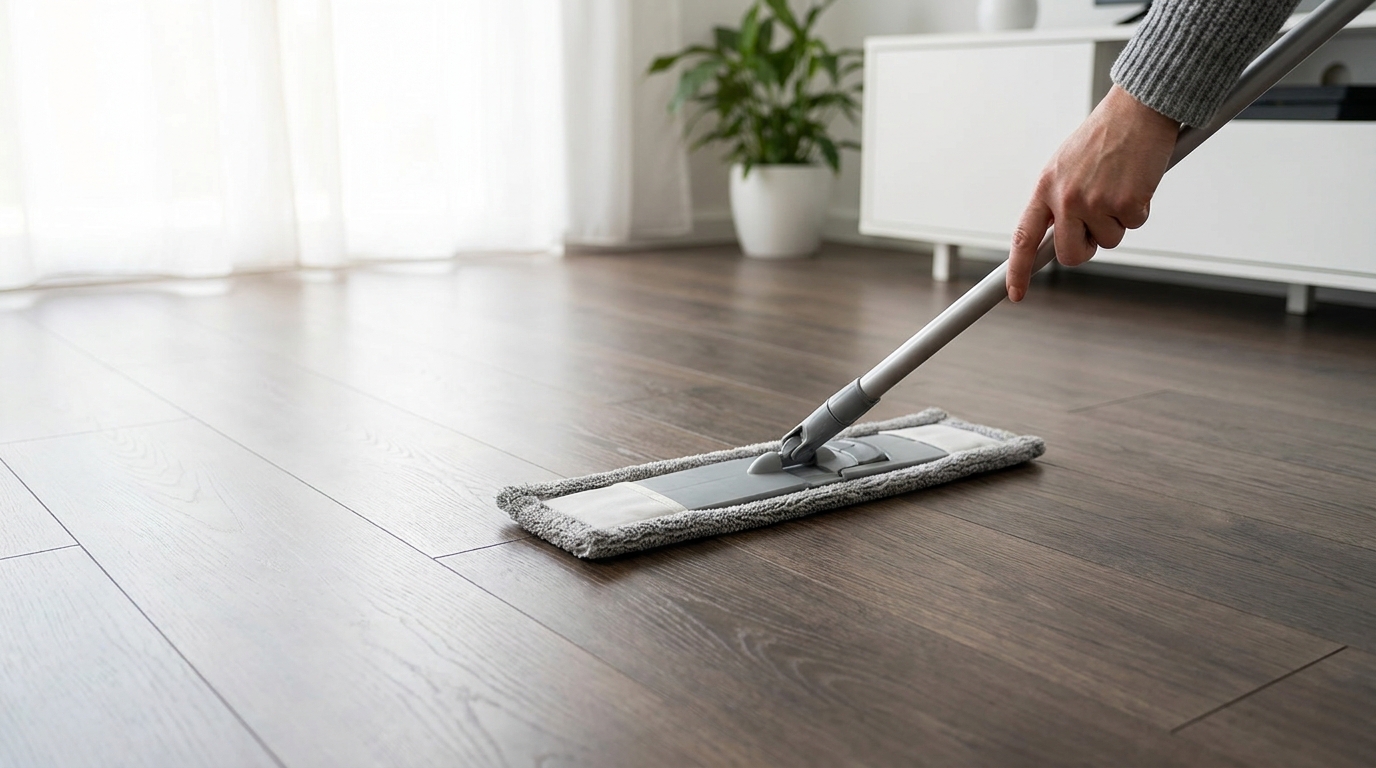
This is why the most polished laminate floors are usually not the result of occasional deep cleaning marathons. They are the result of frequent, light maintenance. A few intentional minutes with a microfiber dust mop, a carefully selected vacuum setting, and immediate attention to spills often delivers far better long term results than infrequent intensive washing. In refined interiors, care is rarely dramatic. It is rhythmic, composed, and preventive.
Many major manufacturers echo this approach in their care guides. They commonly advise homeowners to avoid steam mops, wet mops, wax, polish, scouring products, varnish, and harsh or oily cleaners. These products and methods may create residue, strip the finish, force moisture into the floor, or even void warranty coverage. The most dependable route is always to begin with the product specific care guide for your floor and treat general advice, including this guide, as a framework that should be confirmed against manufacturer instructions.
Your Daily and Weekly Laminate Floor Care Routine
Daily attention in lived-in spaces
Not every home needs daily cleaning in every room, but areas that receive constant use benefit from a light and elegant routine. Entryways, kitchens, family rooms, and hallways tend to collect the most grit. In these spaces, a quick pass with a microfiber dust mop can remove the particles that do the most quiet damage. If you have children, pets, or outdoor footwear moving through the home, this simple habit can significantly reduce surface wear.
Daily care also means observing the floor. A small spill near the sink, a damp paw print trail after a rainy walk, or soil collected under a chair should not be left for later. Immediate spot cleaning with a soft cloth helps preserve both hygiene and finish quality. When approached this way, maintenance becomes less of a chore and more of a refined household rhythm.
Weekly dry cleaning and controlled damp cleaning
Once or twice a week, depending on traffic, perform a more complete cleaning routine. Begin with dry soil removal using one of the methods most often recommended by manufacturers: a microfiber dust mop or a vacuum with the hard floor setting or a soft brush attachment. If you vacuum, make sure any beater bar or rotating brush intended for carpets is turned off. Those more aggressive settings can mark the floor or scatter grit across the surface.
After dry debris is removed, evaluate whether the floor needs a lightly damp clean. If it does, use a microfiber mop that is only slightly damp, never dripping, together with a pH-neutral, manufacturer-approved cleaner. The goal is to lift smudges and light film without leaving visible moisture on the floor. You are not washing the floor in the traditional sense. You are refreshing the surface with minimal water and maximum control.
A practical weekly routine might look like this:
- Remove loose grit and dust with a microfiber dust mop or hard-floor vacuum setting.
- Spot clean any marks, spills, or sticky areas with a soft cloth.
- Use a lightly damp microfiber mop only if needed for residue-free surface cleaning.
- Allow the floor to dry promptly and inspect corners, edges, and joints for lingering moisture.
This sequence is deceptively simple, but it is precisely the sort of low-moisture maintenance that helps laminate retain its crisp visual quality for years. It also aligns with conservative care recommendations seen across many major flooring brands.
How to Clean Laminate Floors Without Damaging Them
One of the most common misconceptions about laminate is that if a floor looks like tile or hardwood, it should be cleaned with a generous amount of water. In reality, laminate responds best to a measured touch. A saturated mop can push moisture into the seams, especially around board edges and locking joints. Even if swelling is not immediate, repeated wet cleaning can gradually compromise the floor’s appearance and performance.
The safest broad method is a lightly damp microfiber mop paired with a residue-free cleaner approved for laminate flooring. Spray the cleaner according to label directions, often onto the mop or in a fine controlled mist rather than soaking the floor. Move section by section, following the grain direction when possible to maintain a visually even finish. If any visible moisture remains on the surface, your mop is too wet or too much product has been used.
It is also wise to avoid homemade cleaning recipes unless your floor manufacturer explicitly permits them. Vinegar, strong degreasers, oil soaps, abrasive powders, and heavily fragranced solutions may seem effective at first, but they can leave haze, alter sheen, or degrade the finish over time. Laminate looks best when it is clean, not coated. A floor should reflect careful maintenance through its clarity rather than through any added film or glossing product.
What to avoid at all costs
Certain cleaning methods appear convenient but are routinely discouraged in care documentation. Steam mops are among the most debated, yet many manufacturer guides clearly advise against them. Heat and vapor can force moisture into joints and edges, potentially causing damage not immediately visible. Wet mops, wax, polish, varnish, scouring pads, and abrasive cleansers are similarly problematic because they either introduce too much water or interfere with the finish itself.
If your goal is a floor that remains quietly luxurious, avoid anything that promises dramatic shine, intense degreasing, or heavy duty stripping unless your flooring brand specifically authorizes it. Laminate is not a surface that rewards aggression. It rewards subtlety and consistency.
Understanding Spills, Stains, and Spot Cleaning
Prompt spill response is one of the defining habits of successful laminate floor maintenance. Water, juice, coffee, wine, cooking splashes, and pet accidents should be addressed as soon as possible, not because laminate is fragile in every moment, but because prolonged moisture exposure at seams is a known risk. A quick response preserves both surface appearance and structural stability.
For ordinary spills, blot first rather than spreading the liquid further. Use a dry or slightly damp soft cloth, then follow with a fresh dry cloth to ensure no moisture remains. If a sticky residue lingers, use a small amount of approved laminate cleaner on a microfiber cloth and wipe the area gently. The final step should always be drying. This is especially important around plank edges, transitions, and trim.
For more stubborn marks, patience is better than force. Rubbing with abrasive pads or scraping with sharp tools can scar the wear layer. If something sticky has hardened, soften it cautiously with a cloth lightly moistened with an approved cleaner, then wipe gently. When in doubt, consult the specific stain guidance from your flooring manufacturer before trying stronger methods.
Moisture Management in Canadian and North American Homes
In colder climates and regions with pronounced seasonal swings, moisture management is not just a cleaning concern. It is a broader indoor environmental issue. Winter heating can dry the air significantly, while spring thaw, summer humidity, and wet autumn weather may introduce more moisture into the home. Laminate flooring responds best when indoor conditions remain relatively stable, which is why standards related to dimensional variation in humid and dry climates are so relevant to real households.
Maintaining a normal indoor humidity range helps support the floor’s stability and appearance. Although the ideal range can vary by manufacturer, the broader principle is consistent: avoid extremes. Excessive dryness and excessive humidity both place stress on a floating floor system that naturally expands and contracts with conditions. A home that feels balanced generally supports flooring that performs beautifully.
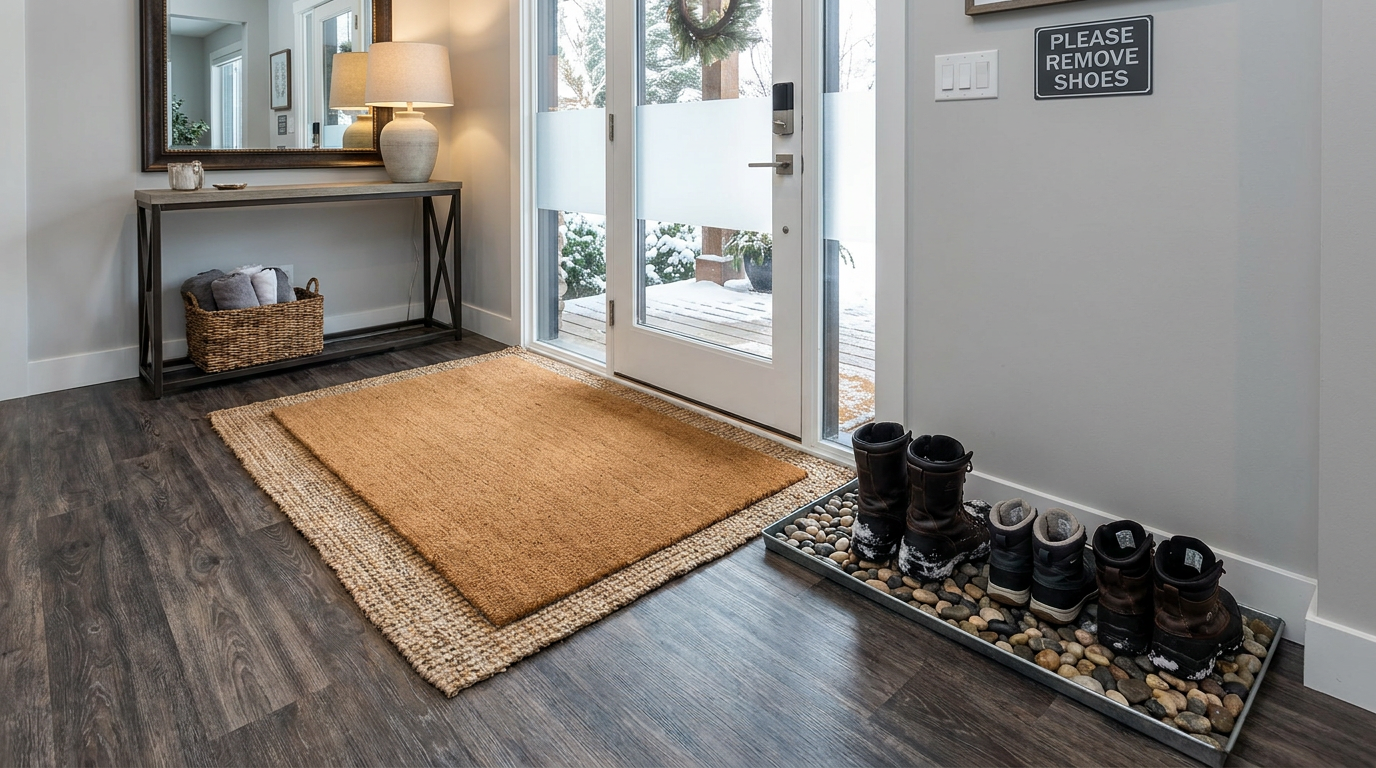
Exterior doors deserve particular attention. Snowmelt, slush, rainwater, and road salt can quietly collect in entry zones and work their way into seams if ignored. Kitchens and areas near sinks also warrant regular observation. The most successful homes treat these zones proactively with mats, trays, and quick cleanups rather than waiting for visible wear to appear.
Simple ways to manage moisture elegantly
- Place absorbent mats at all exterior entry points.
- Use boot trays in winter or rainy seasons to catch snowmelt and water.
- Wipe up tracked-in slush immediately rather than letting it air dry on the floor.
- Monitor indoor humidity with a simple hygrometer if seasonal swings are strong in your home.
- Check around sinks, plant stands, pet bowls, and patio doors for recurring dampness.
These small measures are not excessive. They are part of a composed maintenance strategy that protects the floor where it is most vulnerable.
How to Prevent Scratches, Scuffs, and Surface Wear
The life of a laminate floor is shaped as much by prevention as by cleaning. Fine scratches and loss of visual crispness often come from repeated friction rather than dramatic accidents. A chair pulled out across the same area every day, grit at the front door, or a heavy planter set directly on the floor can slowly erode the polished impression of a room. Fortunately, these risks are among the easiest to control.
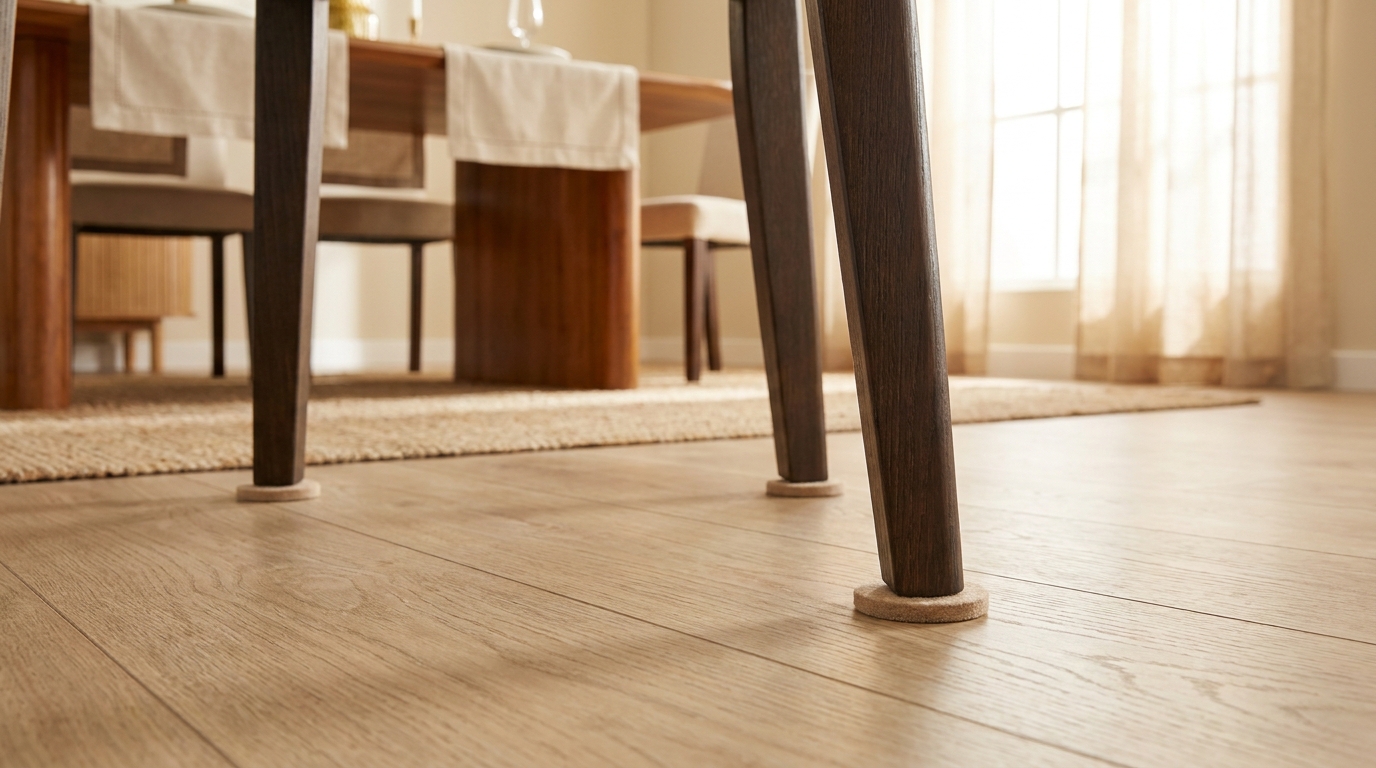
Begin with furniture. Every chair, table, stool, and movable decorative piece should have soft felt pads on its legs. These pads should be checked periodically, because worn, dirty, or missing pads can become abrasive themselves. Heavy items should always be lifted, not dragged, especially during cleaning or rearranging. If you are moving furniture during a seasonal refresh, use proper floor protectors or moving sliders approved for hard surfaces.
Pet owners should also be attentive. Pet accidents need immediate cleanup, but claws can also contribute to surface wear if nails are left too long. Placing mats under food and water bowls helps reduce both moisture exposure and repetitive scratching. In high use households, these understated interventions can preserve the floor’s finish remarkably well.
The beauty of entryway protection
Entry mats are among the most effective tools in laminate floor care, yet they are often treated as a minor accessory. In reality, they serve as the first line of defense against grit and moisture. A well chosen mat outside and another inside the door can dramatically reduce the debris that reaches the floor. In homes where weather shifts are frequent, this single decision can preserve the finish better than many cleaning products ever could.
Choose mats that lie flat, trap dirt effectively, and are easy to clean. Their visual role matters too. In a well designed home, utility can be beautiful. A restrained, textured entry system can support the overall interior while quietly protecting one of its most used surfaces.
Choosing the Right Cleaner for Laminate Flooring
The best cleaner for laminate floors is rarely the strongest one. It is the one your floor manufacturer approves, used exactly as directed. In general, the safest broad category is a pH-neutral, residue-free cleaner made specifically for laminate or suitable hard surface flooring. This type of cleaner is designed to lift ordinary soil without leaving behind a film that attracts more dirt or clouds the finish.
Residue is often underestimated. A floor may not look damaged, but if the wrong product leaves a buildup, the surface can appear dull, streaky, or sticky. Homeowners sometimes respond by cleaning more aggressively, which only compounds the problem. The more elegant solution is to use less product, choose it carefully, and keep the mop only lightly damp.
Be especially cautious with cleaners that contain waxes, oils, strong solvents, bleach, or abrasive particles. These ingredients may be suitable for other surfaces, but laminate usually performs best when its finish is left clear and uncoated. Always remember that product specific care instructions override any general recommendation. If your brand prohibits a cleaner, that prohibition should guide your decision.
Warranty Compliance and Why It Matters
One of the strongest trends in flooring care content today is the emphasis on warranty compliance. This is more than legal language. It reflects an important practical reality. Flooring brands test products under certain assumptions about use, cleaning methods, and environmental conditions. If a homeowner introduces excessive water, steam, harsh chemicals, or unauthorized maintenance products, the floor may perform outside those assumptions, and warranty coverage may be affected.
Reading your care guide may not feel glamorous, but it is one of the most valuable things you can do for a laminate floor. It can clarify which cleaners are approved, whether your product is suited to higher moisture areas, and how the manufacturer expects you to handle routine upkeep. This is especially relevant because not all laminate is identical. Newer moisture-resistant products may offer improved tolerance to incidental water exposure, but that does not mean every laminate floor can be treated as waterproof.
This is also where consumers may encounter confusion around durability language. NALFA’s 2023 white paper explains that AC ratings are a European wear-resistance classification under EN13329, while the North American NALFA-LF-01 standard does not use AC ratings. For homeowners, the takeaway is simple: marketing terminology should not replace product specific documentation. Specifications matter, but so do the instructions tied to the exact floor in your home.
Can Laminate Be Used in Wet Rooms?
This question often arises when homeowners are planning kitchens, powder rooms, laundry spaces, or basement installations. The answer is nuanced. Laminate flooring is generally intended for interior floating installations, but whether it is suitable for areas with frequent wetting depends on the specific product and the manufacturer’s authorization and installation requirements. It should never be assumed that all laminate performs the same way simply because some products are advertised as moisture resistant.
If a room is likely to experience repeated standing water, frequent splashing, or high humidity, consult the product documentation carefully before installation and again when planning maintenance. The more sophisticated approach is not to generalize. It is to respect the tested limits of the material you selected. A moisture-resistant laminate may offer greater confidence in everyday life, but conservative care remains the most beautiful long term strategy.
Common Laminate Floor Care Mistakes to Avoid
Many problems associated with laminate floors are not caused by the material itself. They come from cleaning habits borrowed from other surfaces. Tile floors may tolerate abundant water. Some sealed surfaces may welcome heavier cleaning products. Laminate does not. A floor can look robust and still require a more measured form of care.
The following mistakes are particularly common and worth avoiding:
- Using a steam mop because it seems more sanitary or efficient.
- Washing the floor with a soaked mop or bucket of water.
- Applying wax, polish, or shine-enhancing coatings.
- Using vinegar, abrasive powders, or strong household degreasers without manufacturer approval.
- Dragging furniture instead of lifting it.
- Ignoring small spills, especially near board edges and transitions.
- Skipping entry mats in climates with snow, rain, or tracked debris.
- Assuming laminate can be sanded or refinished later.
Each of these errors may seem minor in isolation, but together they create the conditions under which laminate loses its sharpness. In contrast, a floor that is gently maintained tends to keep its composure remarkably well.
A Seasonal Care Plan for Lasting Beauty
One of the most elegant ways to maintain laminate flooring is to align your routine with the seasons. This approach feels intuitive and prevents damage before it accumulates. In winter, focus on entryway protection, slush removal, and checking mats and boot trays frequently. Salt and grit should be removed promptly because they are both abrasive and visually disruptive.
In spring, inspect the floor after the wet season. Clean transitions, check for moisture exposure near doors, and refresh felt pads under furniture if they have worn down. Summer often brings higher humidity in many regions, so it is a good time to observe indoor comfort levels and ensure the home remains well balanced. In autumn, prepare again for wetter weather by replacing worn mats, organizing shoe storage, and making sure cleaning tools are ready for more frequent entryway maintenance.
This seasonal framework creates a calmer relationship with household care. Rather than reacting to visible wear, you shape conditions that help the floor stay beautiful by design.
When Your Floor Looks Dull: What to Do
If a laminate floor begins to look dull, cloudy, or slightly streaked, the cause is often residue rather than structural damage. Before assuming the finish is worn out, review your cleaning products and methods. Too much cleaner, the wrong cleaner, or a mop that is too wet can all leave behind a film. Start by dry cleaning thoroughly, then lightly damp mop with the approved product in the smallest effective amount. In many cases, visual clarity improves once residue is removed and the surface is allowed to remain truly clean.
If the dullness is concentrated in pathways or under chairs, abrasion may be the issue. Here prevention becomes essential. Add or replace felt pads, improve mat coverage, and increase dust removal frequency in those zones. While laminate cannot usually be refinished like hardwood, its appearance can often be preserved impressively well when the source of wear is identified early.
The Quiet Luxury of a Well Cared For Floor
A beautiful laminate floor does not announce itself through excessive shine or theatrical maintenance. Its luxury is quieter than that. It lies in crisp seams, a clear finish, a calm surface free of residue, and a room that feels gracefully maintained. Laminate rewards homes that understand this language of restraint. The most successful care routine is not complicated. It is simply consistent, informed, and respectful of the material.
To care for laminate well is to adopt a philosophy of prevention. Remove grit before it scratches. Clean spills before they travel into the joints. Use minimal water, approved products, and soft tools. Protect the floor from furniture friction, pet messes, and seasonal moisture. Keep indoor conditions stable, especially in climates shaped by dry heating and wet weather. These are modest acts, but together they preserve the architecture of the surface and the atmosphere of the room.
In the end, laminate floor maintenance is less about effort than about precision. When approached with regularity and good judgment, it becomes one of the easiest flooring materials to live with beautifully. And that is perhaps its greatest appeal. It offers the visual poetry of wood-inspired design with a maintenance ritual that is simple, elegant, and entirely achievable in everyday life.


No Comment! Be the first one.