


The Ultimate Guide to Caring for Your Leather Furniture: Timeless Maintenance for Lasting Beauty
Leather furniture has a presence few materials can rival. It brings warmth without heaviness, elegance without fragility, and character that deepens with time rather than fading from it. A leather sofa, armchair, ottoman, or dining chair does not simply occupy a room. It shapes the mood of the space, reflecting light with softness, absorbing use with grace, and telling a quiet story through texture, grain, and patina.
Table Of Content
- Why Leather Furniture Deserves Thoughtful Care
- Understanding the Nature of Leather
- The Foundations of Routine Leather Furniture Maintenance
- A Simple Ongoing Care Routine
- How to Clean Leather Furniture Safely
- Step by Step Cleaning Process
- How to Respond to Spills and Stains Without Causing Damage
- Conditioning Leather Furniture the Right Way
- Protecting Leather from Sunlight, Heat, and Dry Air
- Indoor Air Quality and the Products You Bring Into the Room
- How Different Leather Finishes Affect Care Needs
- Common Leather Care Mistakes to Avoid
- Mistakes Worth Avoiding
- Sustainability, Traceability, and Responsible Leather Choices
- When to Call a Professional
- Creating a Leather Care Calendar for the Year
- The Beauty of Patina and the Art of Letting Leather Age Well
- Final Thoughts
Yet the enduring beauty of leather is not a matter of chance. It depends on informed care, gentle habits, and a clear understanding of what leather truly is. Unlike synthetic surfaces that aim to remain visually unchanged, leather is a natural material with movement, variation, and sensitivity. It responds to air, light, body oils, spills, heat, and neglect. That responsiveness is part of its beauty, but it also means maintenance should be thoughtful rather than improvised.
This guide offers a comprehensive and artistic approach to leather furniture care. It is designed for anyone who wants practical steps without sacrificing a sense of refinement. Whether you have invested in a full grain statement sofa, a semi aniline club chair, or pigment dyed family seating that sees daily life, the principles remain the same. Protect the material, respect the finish, and allow it to age with dignity.
In the sections that follow, you will learn how to clean leather furniture properly, how often to condition it, how to protect it from sunlight and heat, how to respond to spills without causing more damage, and how to make care decisions based on the kind of leather you own. You will also discover why indoor air quality, warranty instructions, and sustainability credentials matter more than many homeowners realize. When cared for well, leather furniture does not merely last. It becomes more beautiful.
Why Leather Furniture Deserves Thoughtful Care
One of the most common misconceptions about leather is that it is maintenance free. This idea likely comes from its reputation for durability and its relative ease compared with some fabrics. While leather can certainly be practical, especially in homes that value longevity and easy surface cleaning, it still needs regular attention. Dust settles into seams, dry air pulls away moisture, sunlight affects color, and everyday contact leaves traces that accumulate over time.
Another misunderstanding is that all changes in leather indicate damage. In reality, leather is a living looking material, even long after it has been crafted into furniture. Variations in grain, slight shifts in tone, soft creasing, and the gradual formation of patina are not defects. They are part of the visual language of leather. Learning to distinguish between natural aging and preventable deterioration is essential because proper care is not about keeping leather frozen in time. It is about helping it mature beautifully.
Manufacturers and furniture specialists consistently recommend preventive care over aggressive restoration. This is especially true for premium natural finish leathers, where overcleaning, overconditioning, or using the wrong product can disturb the finish and leave permanent marks. The most successful leather care routines are quiet and regular. They rely on dusting, mindful placement, immediate spill response, and occasional conditioning when appropriate.
There is also a more emotional reason to care for leather well. Fine furniture anchors our routines and rituals. It is where we gather, read, rest, host, and retreat. Caring for a leather piece is a way of preserving not only a material, but also the atmosphere it creates in a home. A supple seat with a rich tone and healthy finish makes a room feel composed and deeply lived in. Neglected leather, by contrast, can look tired long before its time.
Understanding the Nature of Leather
Before choosing cleaners or planning a maintenance schedule, it helps to understand the material itself. Leather is not uniform. It can be soft or structured, matte or slightly lustrous, highly absorbent or heavily finished. Its care needs depend on how it was processed and protected. This is why a one size fits all approach often causes problems.
Full grain leather is prized for preserving the natural surface of the hide, including unique markings and variation. It often develops a particularly beautiful patina, but it can also be more sensitive to stains and environmental stress. Top grain leather has been lightly corrected and is still high quality, often offering a balance between refinement and resilience. Aniline leather is dyed without a heavy surface coating, allowing the natural grain to remain visible and touchably soft. It is elegant and luxurious, but also more vulnerable to spills, fading, and marks.
Semi aniline leather receives a light protective finish, making it a practical favorite for many homes because it retains a natural look while gaining some resistance to wear. Pigment dyed leather has a stronger surface coating and tends to be the most durable and easiest to maintain, especially in busy households. Bonded leather, while often marketed under the broad leather category, contains a different composition and does not age or respond to care in quite the same way. Knowing which kind you own can dramatically improve your maintenance decisions.
If you are unsure what type of leather your furniture uses, begin with the manufacturer information, care tag, or purchase documentation. This is more than a technical detail. It affects what cleaner is safe, whether conditioner is recommended, how absorbent the surface may be, and what sort of wear is considered normal. Care begins with reading the material correctly.
The finest leather interiors are not preserved by force. They are preserved by restraint, consistency, and respect for the material’s natural character.
The Foundations of Routine Leather Furniture Maintenance
Routine care is the quiet architecture of longevity. It prevents small issues from becoming visible damage and keeps leather looking polished without unnecessary intervention. Most reputable furniture makers recommend daily or weekly light dusting, depending on how frequently the piece is used and how much dust the room collects. A soft, dry, lint free cloth is usually sufficient for exposed surfaces.
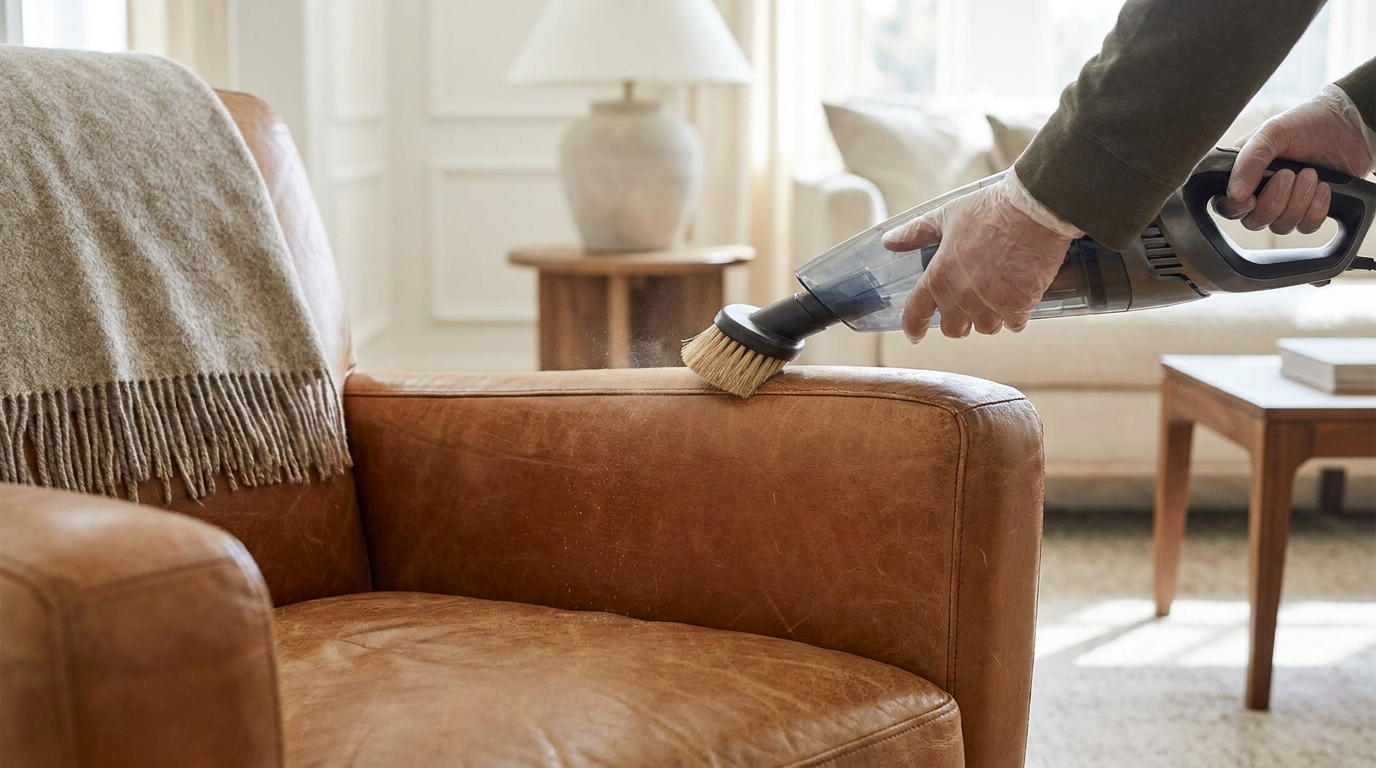
Vacuuming is equally important, especially for seams, creases, and tufted areas where dust and fine debris settle. Use a vacuum with a soft brush attachment and a gentle hand. The goal is not to scrub the surface, but to lift away particles that might otherwise grind into the leather over time. This step is especially useful in family rooms and open plan spaces where airborne particles accumulate more quickly.
It is wise to make leather care part of your broader housekeeping rhythm. When you dust side tables or refresh the room, give your leather furniture a brief visual check. Look for dryness, dull patches, residue, or signs of contact with direct sunlight. Regular observation often catches issues early enough that they can be corrected with minimal effort.
For many households, this simple preventive routine is the heart of leather maintenance. It keeps the surface clean, supports the finish, and reduces the need for stronger cleaning products. Leather responds best when you do a little, often, rather than a lot, all at once.
A Simple Ongoing Care Routine
- Dust exposed surfaces with a soft dry cloth once or twice a week.
- Vacuum seams and crevices using a soft brush attachment every one to two weeks.
- Inspect for spills, dryness, fading, or contact with heat sources during routine cleaning.
- Rotate cushions if the manufacturer allows it to encourage even wear.
- Keep manufacturer care instructions stored nearby for product reference and warranty compliance.
How to Clean Leather Furniture Safely
When more than dusting is needed, gentle cleaning is the next step. The first rule is simple and crucial: use only products specifically designed for leather furniture, and always test them in a hidden area first. This is not merely cautious advice. Some manufacturers note that improper cleaning methods can damage the finish and may even void warranty coverage. Leather should never be treated like wood, vinyl, or fabric upholstery.
Begin by removing loose dust with a cloth or vacuum. Then apply a small amount of leather cleaner to a clean lint free cloth rather than directly to the furniture, unless the product instructions explicitly say otherwise. Wipe in soft, circular or sweeping motions, working in sections. Avoid saturating the material. Leather should be cleaned with control and moderation, not drenched or rubbed aggressively.
Once the surface is cleaned, wipe away any excess product with another dry cloth. Let the piece air dry naturally. Avoid using hairdryers, fans on high heat, or placing the furniture near a heater to speed the process. Rapid drying can stress the material and interfere with the finish. Patience is part of proper leather care.
It is also important to understand what not to use. Household detergents, bleach solutions, ammonia based sprays, abrasive scrubbers, baby wipes, varnish products, silicone polishes, and all purpose cleaning sprays are poor choices for leather. Even if they seem harmless at first, they may alter the sheen, remove protective coatings, leave residues, or contribute to dryness over time. More product does not mean better cleaning. In fact, excess cleaner often creates the very dullness people are trying to remove.
Step by Step Cleaning Process
- Dust or vacuum the leather surface thoroughly with a soft attachment.
- Check the manufacturer care instructions and confirm the cleaner is suitable for your leather type.
- Test the product on an inconspicuous area and allow it to dry fully.
- Apply a small amount of cleaner to a soft cloth.
- Wipe gently across the leather without scrubbing or soaking it.
- Buff lightly with a clean dry cloth to remove residue.
- Allow the furniture to dry naturally away from sunlight and heat.
How to Respond to Spills and Stains Without Causing Damage
The way you respond in the first few minutes after a spill can determine whether the leather remains pristine or develops a lasting mark. The correct instinct is to blot, not rub. Use a clean, absorbent cloth to gently press the spill and lift moisture away. Rubbing drives the liquid deeper into the material and can spread the stain outward, especially on more absorbent leathers like aniline.
For water based spills, continue blotting until the area feels only slightly damp, then allow it to air dry naturally. Avoid excessive water, even when trying to clean a fresh spot. Soaking the area can create tide marks, stiffness, or uneven drying. If your manufacturer permits it, you may use a leather specific cleaner after blotting, but the hidden spot test remains essential.
Oil or grease stains require even more restraint. Water is not the universal answer many people assume it to be. Grease should not be rubbed with a wet cloth in hopes of dissolving it. Instead, blot carefully and consult the furniture care instructions or a leather specific specialist product. In some cases, professional help is the wisest path, especially for premium or lightly finished leather.
If a stain persists, resist the temptation to layer multiple products or internet remedies on top of one another. Leather often suffers more from repeated amateur treatment than from the original stain. A measured response protects both the surface and the color consistency of the piece.
Conditioning Leather Furniture the Right Way
Conditioning is one of the most misunderstood aspects of leather care. Many people believe all leather should be conditioned frequently, but that is not universally true. The need for conditioning depends on the leather type, the finish, the indoor climate, the manufacturer guidance, and the age of the piece. Overconditioning can soften leather excessively, create residue, alter sheen, or interfere with protective finishes.
In general, conditioning is occasional rather than frequent. It is intended to help maintain suppleness and reduce the risk of dryness in leather that is beginning to feel less flexible or visually parched. Some modern protected leathers may need very little conditioning at all. Others, especially natural finish leathers in dry indoor environments, may benefit from periodic treatment. The key is to follow the maker’s instructions rather than applying conditioner by habit.
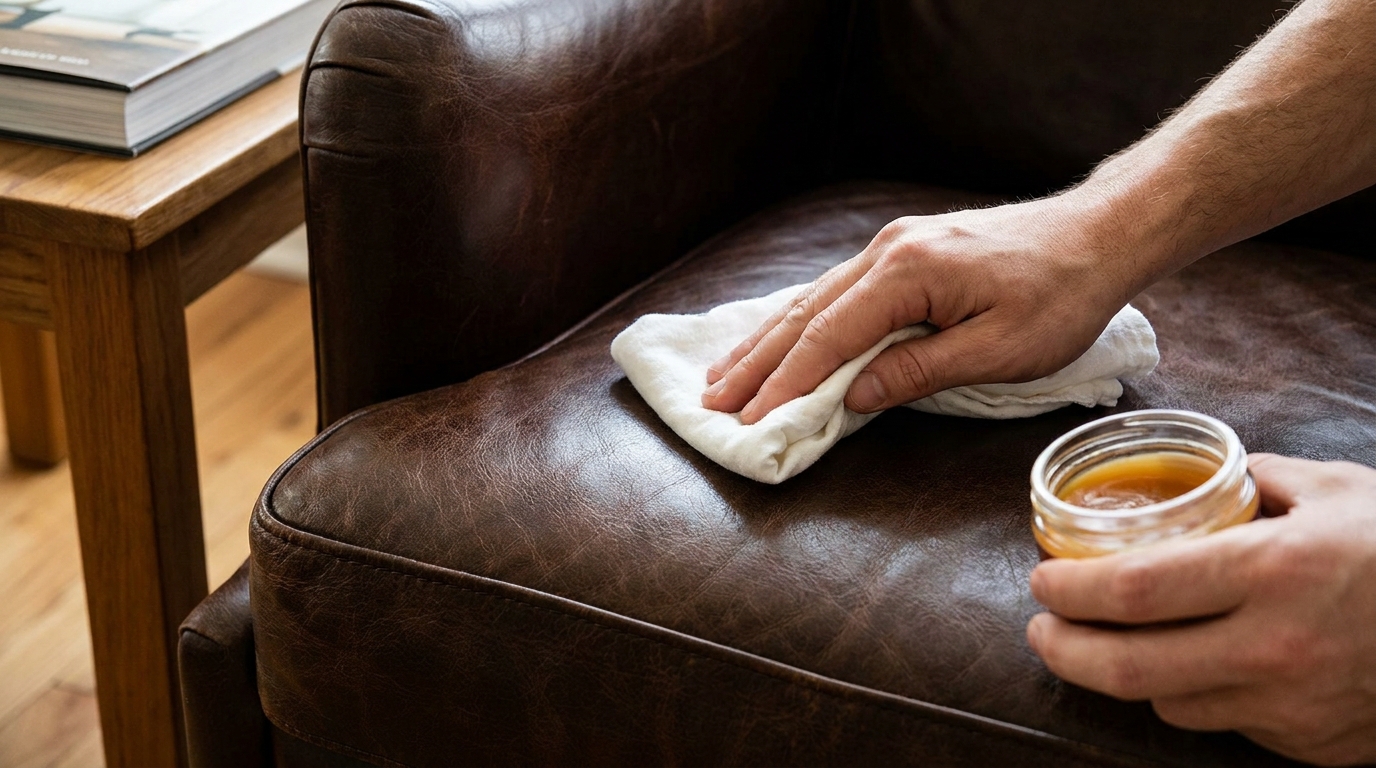
When conditioning is appropriate, choose a product made specifically for furniture leather and test it first in an inconspicuous area. Apply a small amount to a soft cloth, then work it lightly into the leather with gentle, even motions. Avoid thick layers or repeated passes over the same spot. Leather should absorb care with subtlety. Once applied, allow time for the product to settle, then buff lightly if recommended.
The goal of conditioning is not shine. Healthy leather should look rich, balanced, and naturally finished. If a product leaves the surface sticky, overly glossy, or uneven in color, too much may have been used or the formula may not suit your leather type. Good conditioning enhances what is already there. It should never disguise the material beneath it.
Protecting Leather from Sunlight, Heat, and Dry Air
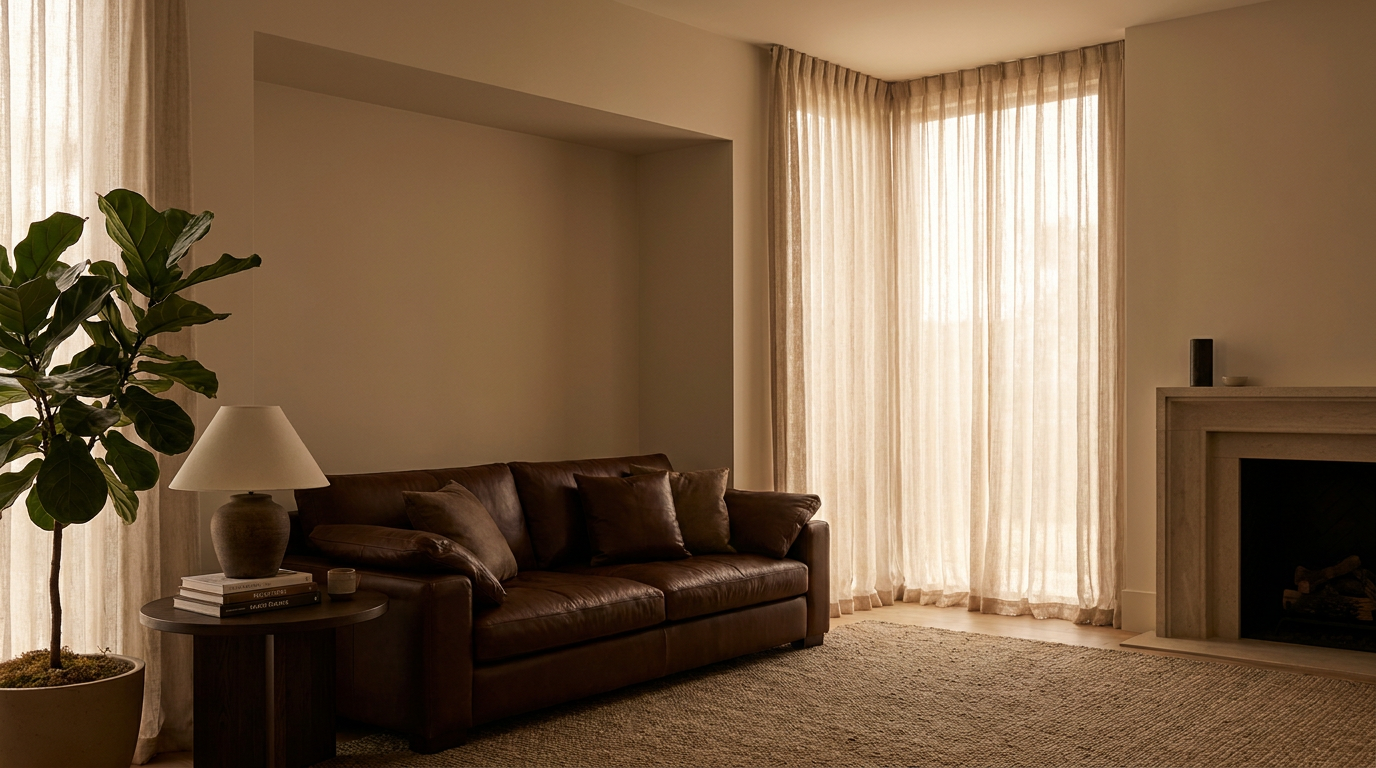
Environmental conditions shape leather every day, often more decisively than cleaning does. Direct sunlight is one of the most common causes of fading, stiffness, and premature aging. Even dark leather can fade over time if placed in strong sun. If your sofa sits beside large windows, use sheer drapery, blinds, or strategic room planning to soften exposure during the brightest hours of the day.
Heat is equally damaging. Radiators, fireplaces, vents, and space heaters can dry leather from the outside in, leading to rigidity and cracking. Several furniture manufacturers recommend keeping leather at least 12 inches away from heat sources, and greater distance is often even better when room layout allows. Leather is at its best in a stable environment, not in zones of temperature stress.
Dry indoor air can also affect the material, particularly in winter or in heavily air conditioned spaces. While leather furniture does not require tropical humidity, it benefits from a balanced indoor climate. Mild humidity control and consistent room temperature help preserve flexibility and reduce stress on seams and panels. Homes with dramatic seasonal dryness may particularly notice the difference when air quality is managed well.
Furniture placement is therefore part of maintenance. Caring for leather begins long before a cloth or conditioner touches the surface. Positioning, window treatment, and climate awareness are some of the most elegant forms of protection because they preserve the furniture quietly, every single day.
Indoor Air Quality and the Products You Bring Into the Room
Leather care is not only about what touches the furniture directly. It is also about the atmosphere around it. Many households use varnishes, aerosols, floor products, paint touch up materials, and general cleaning sprays that release volatile organic compounds, often called VOCs. These chemicals can affect indoor air quality and may settle on surfaces, including leather. Choosing low residue, leather appropriate products supports both the furniture and the environment of the room.
Public health agencies such as the EPA and Health Canada have long advised increasing ventilation when using products that may emit VOCs. This guidance matters in spaces with leather because ventilation helps disperse airborne compounds and maintain fresher indoor conditions. If you are cleaning the room thoroughly, refinishing nearby woodwork, or using spray products, open windows when possible and avoid directing chemicals near the furniture.
There is a growing design awareness that true luxury is inseparable from wellness. A beautiful room should also be breathable, calm, and materially considered. Leather furniture benefits when the surrounding care products are chosen with restraint. In many cases, fewer products, used more intentionally, create the best result.
This principle also applies to fragranced sprays and decorative home products. While they may seem unrelated to furniture care, oily residues and airborne particulates can settle onto leather and alter its feel. A refined interior is often one that avoids excess, including excess chemistry.
How Different Leather Finishes Affect Care Needs
Not all leather furniture should be cared for with the same intensity or schedule. Aniline leather, for example, tends to be more porous and more responsive to touch, moisture, and light. It rewards careful ownership with remarkable softness and visual depth, but it also asks for a gentler lifestyle. Prompt spill response, protected placement, and minimal product use are especially important with this type of finish.
Semi aniline leather offers a middle path that many homeowners find ideal. It preserves much of leather’s natural beauty while adding a light protective layer that improves stain resistance and ease of care. For active living rooms, reading nooks, and family spaces, it can provide the right balance between sophistication and practicality. Maintenance is still necessary, but the finish is generally more forgiving.
Pigment dyed leather is often the easiest to maintain because the protective topcoat offers greater resistance to fading, wear, and surface staining. This does not make it invulnerable, but it does make it a sensible choice for high use environments. If your household includes children, pets, or very frequent entertaining, this type of leather may align best with your lifestyle and maintenance tolerance.
The growing transparency among furniture brands about finish types is a welcome trend. It allows buyers to choose not only based on look, but also on care expectations. A wise purchase considers both aesthetic desire and maintenance reality. The most beautiful leather furniture is the piece whose finish suits the life around it.
Common Leather Care Mistakes to Avoid
Some of the most damaging habits come from good intentions. Rubbing a spill aggressively feels proactive, but it often worsens the problem. Applying conditioner every month may seem diligent, but it can overload the finish. Using generic household cleaner may feel efficient, but leather often pays the price later in dullness, stiffness, or surface breakdown.
Another common mistake is assuming darker leather is safe from fading. While deeper tones may disguise early change more easily, they are not immune to sun exposure. Similarly, many people misread natural creasing and patina as signs of poor quality, when these features may actually indicate a more authentic leather surface. The goal is not to erase every sign of life. The goal is to protect against avoidable harm while welcoming graceful age.
Ignoring the warranty and care codes is also riskier than it appears. Manufacturers design guidance around specific finishes and treatments, and some warranties depend on proper product use. Before trying any stain treatment, homemade remedy, or restoration technique, consult the care literature. In luxury interiors, discipline is often what preserves beauty best.
Mistakes Worth Avoiding
- Placing leather furniture in direct sun for long periods.
- Positioning seating too close to radiators, fireplaces, or vents.
- Using all purpose cleaners, baby wipes, or harsh soaps.
- Rubbing spills instead of blotting them.
- Conditioning too often or with non leather products.
- Skipping hidden area testing before using a new cleaner or conditioner.
- Assuming all changes in texture or color are defects rather than natural patina.
Sustainability, Traceability, and Responsible Leather Choices
Leather care today is increasingly connected to broader conversations about sustainability. Homeowners are asking not only how to preserve what they own, but also where materials come from and how they were processed. In this landscape, traceability and environmental standards are becoming part of the language of good design. Caring for leather is no longer just a maintenance subject. It is also an ethics and longevity subject.
One important reference point in the leather supply chain is Leather Working Group certification, often abbreviated as LWG. This credential relates to audits that assess environmental management, chemical management, water and energy use, waste handling, and traceability practices. While certification does not tell you everything about a finished furniture piece, it can be a meaningful sign that the material comes from a more responsibly managed production context.
There is also a sustainability case for maintenance itself. Well cared for leather furniture can remain beautiful for many years, reducing the impulse to replace rather than restore. This aligns with a growing preference for professional repair, reconditioning, and upholstery restoration instead of disposal. In refined interiors, longevity is the purest form of luxury. A piece that ages well and stays in use is often more valuable than one that merely looks new for a season.
If you are shopping for leather furniture, ask about the finish, the care requirements, the source of the leather, and the availability of long term service. Responsible ownership begins at purchase. The best maintenance plan is often the one chosen before the furniture even arrives.
When to Call a Professional
Even with excellent routine care, some situations deserve expert hands. Large stains, ink marks, oil damage, deep scratches, color transfer, structural seam issues, and significant dryness are all cases where professional assessment can prevent further harm. This is particularly important for aniline and high end natural leathers, where surface correction can be delicate and visually unforgiving.
Professional leather cleaning and restoration services can often address problems that homeowners should not attempt alone. They understand finish compatibility, color matching, and the chemistry of specialized treatments. If a treasured chair or sofa has sentimental or design importance, professional intervention is not an indulgence. It is a prudent form of preservation.
Regular professional care may also make sense for statement pieces in formal rooms, heritage furniture, or heavily used sectional seating in luxury homes. Just as fine rugs and drapery occasionally require expert attention, leather benefits from skilled maintenance when signs of wear move beyond the surface level. Knowing when to stop and call a specialist is part of caring well.
Creating a Leather Care Calendar for the Year
A seasonal rhythm can make leather maintenance feel effortless. In spring, give the furniture a more thorough vacuuming and surface inspection after winter dryness. In summer, monitor sun exposure as daylight intensifies and adjust curtains or furniture placement if needed. In autumn, check that heating systems will not direct dry heat onto seating. In winter, watch humidity levels and be especially attentive to stiffness or dryness in the air.
This annual awareness is more effective than random bursts of effort. Leather responds best to consistency and observation. You do not need a complicated ritual, but you do need attentiveness. A few minutes every week and a more considered review each season can preserve the furniture’s beauty with remarkable success.
If multiple people share the home, consider keeping care instructions in a household binder or digital note. Include the leather type, approved products, purchase date, and warranty details. Practical elegance often rests on small systems that make good habits easier to sustain.
The Beauty of Patina and the Art of Letting Leather Age Well
Perhaps the most sophisticated lesson in leather care is knowing that preservation is not the same as resistance to change. Leather is meant to evolve. It softens where it is loved, deepens where light brushes across it, and develops a visual memory of use. This is what gives it a richness that manufactured perfection rarely achieves. Patina is not neglect. It is the record of life, provided that life has been accompanied by care.
To care for leather well is to find balance. Clean, but do not strip. Protect, but do not suffocate. Maintain, but do not overcorrect. This balance allows leather furniture to remain not only functional, but emotionally resonant. It becomes part of the home’s identity, carrying both craftsmanship and lived experience into every room it inhabits.
When viewed this way, leather furniture maintenance is less a chore than a design practice. It is one of the quiet rituals through which a home stays coherent, graceful, and deeply personal. The sofa in the library corner, the armchair by the window, the bench at the foot of the bed, each one rewards care with presence. And presence, in design, is everything.
Final Thoughts
The ultimate guide to caring for your leather furniture is, in the end, a guide to living beautifully with natural materials. Dust regularly, clean gently, blot spills promptly, condition sparingly when appropriate, protect the furniture from sunlight and heat, and always honor the manufacturer’s guidance. These practices are simple, but together they create the conditions in which leather can age with suppleness, depth, and distinction.
Leather furniture is one of the rare elements in a home that can look better after years of use than it did on the day it arrived. That transformation does not happen through neglect, nor through excessive intervention. It happens through informed restraint. With the right care, your leather pieces will not merely endure daily life. They will absorb it beautifully, becoming more eloquent with every passing season.



No Comment! Be the first one.