


Essential Tips for Caring for Your Kitchen Countertops
The kitchen countertop is one of the hardest-working surfaces in the home, but it is also one of the most visible. It catches the morning light, frames family meals, supports school lunches, and often becomes the place where conversations begin and daily life unfolds. When your counters are clean, cared for, and in good condition, the whole kitchen feels calmer, brighter, and more welcoming.
Table Of Content
- Why Countertop Care Shapes the Feeling of Your Kitchen
- The Golden Rules of Everyday Countertop Care
- Clean spills promptly
- Use warm soapy water for routine cleaning
- Dry the surface after cleaning
- Avoid abrasive pads and harsh chemicals
- A Simple Daily Routine That Keeps Counters Beautiful
- How to Care for Quartz Countertops
- How to Care for Granite and Other Natural Stone
- How to Care for Laminate Countertops
- How to Care for Solid-Surface Countertops
- How to Care for Porcelain Countertops
- Food Safety, Sanitizing, and a Healthier Prep Space
- Protective Habits That Prevent Most Countertop Damage
- Seasonal Countertop Maintenance for a Fresh Start
- Common Countertop Care Mistakes to Avoid
- How to Make Countertop Care Feel Effortless
- When to Call a Professional
- The Lasting Value of Well-Cared-For Countertops
- Quick Reference Care Checklist
That is why countertop care matters so much. It is not only about removing crumbs or preventing a stain. It is about protecting the beauty and function of a space that helps shape your routines and the feeling of your home. A well-maintained countertop makes food preparation easier, entertaining more pleasant, and the kitchen itself more inviting to spend time in.
The good news is that effective countertop care does not need to be complicated. Across Canada and North America, the advice is remarkably consistent. Clean gently, wipe up spills promptly, dry surfaces after washing, and avoid harsh products that can wear down finishes over time. Health Canada advises washing kitchen countertops with warm soapy water after preparing food, and using a bleach solution only when sanitizing food-prep surfaces is necessary for extra protection.
This guide brings those ideas together in a practical and lifestyle-friendly way. You will learn how to build a simple daily routine, how to protect different countertop materials, and how to handle seasonal maintenance without turning it into a major project. Whether you have quartz, granite, laminate, solid surface, porcelain, or a mix of materials throughout your kitchen, these habits can help preserve both style and usability for years to come.
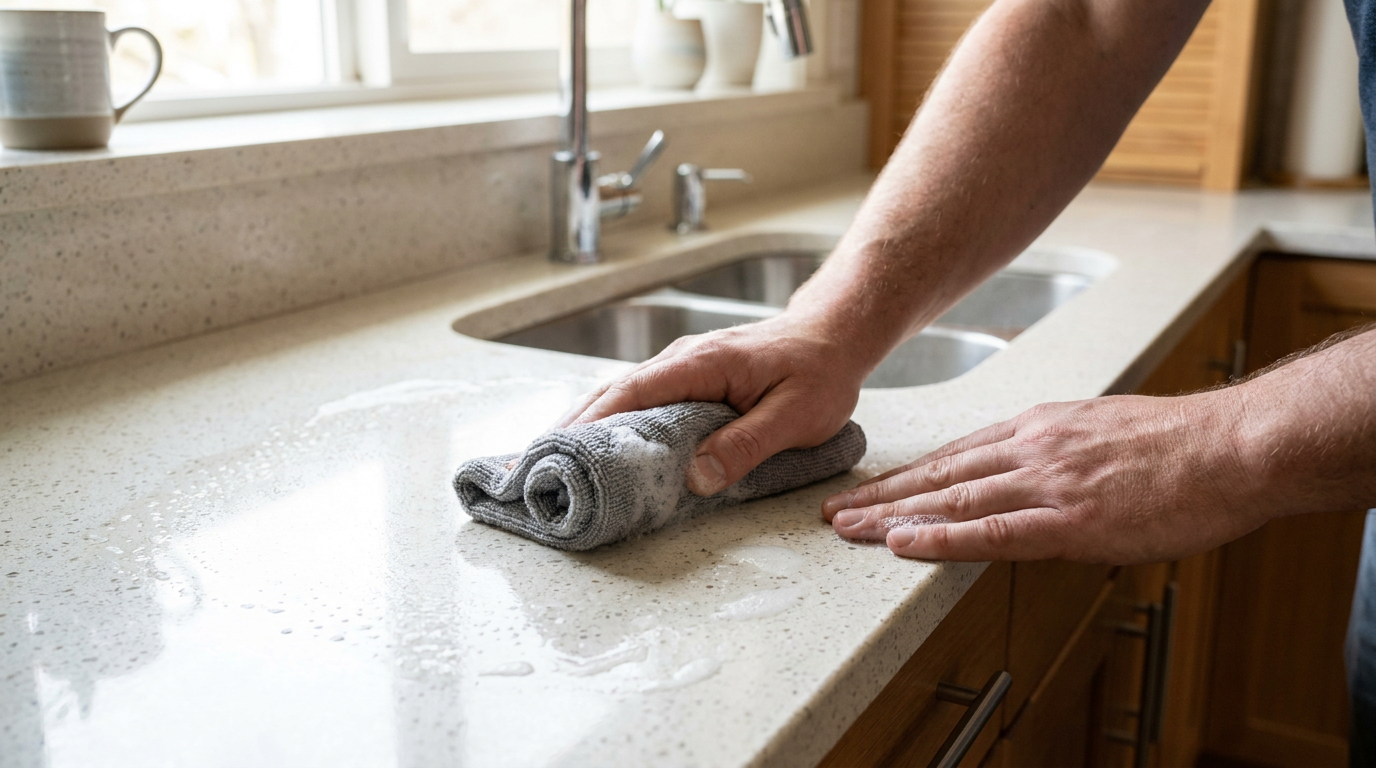
Why Countertop Care Shapes the Feeling of Your Kitchen
We often think about countertops in purely practical terms. They hold appliances, support prep work, and provide landing space for groceries, plates, and coffee cups. Yet they also have a strong visual and emotional impact. Because countertops run through the center of the kitchen, they influence whether the room feels fresh and open or cluttered and tired.
Small signs of wear can change the atmosphere more than we realize. Water marks around the sink, dull patches near the stove, and lingering stains from coffee or oil all make a kitchen feel less polished. On the other hand, counters that are clean, dry, and thoughtfully protected create a sense of order that makes the entire room feel more comfortable.
This is especially important in busy homes where the kitchen doubles as a workspace, homework station, and gathering place. A care routine that preserves your surfaces also supports smoother daily living. It allows the room to remain functional without sacrificing warmth or beauty. In that sense, countertop maintenance becomes part of home wellness. It helps the kitchen feel ready for life as it happens.
A cared-for countertop does more than look good. It quietly supports healthier cooking habits, easier cleanup, and a kitchen that feels welcoming at every hour of the day.
The Golden Rules of Everyday Countertop Care
Before getting into material-specific advice, it helps to start with a few universal principles. These are the habits that apply to nearly every kitchen surface and offer the biggest return for the least effort. They also align with what manufacturers and safety guidance consistently recommend.
Clean spills promptly
One of the simplest ways to protect a countertop is to clean up spills as soon as they happen. This matters not just for dramatic messes like red wine or tomato sauce, but for everyday drips of coffee, citrus juice, salad dressing, cooking oil, and water around the sink. Many substances can leave discoloration, dullness, or moisture damage if they sit too long, especially on seams and edges.
Prompt cleanup also helps keep your kitchen more hygienic. Raw meat juices, produce residue, and sticky spills can encourage bacterial growth or cross-contamination if left on the surface. A quick wipe immediately after meal prep prevents stains and creates a safer, more pleasant kitchen environment.
Use warm soapy water for routine cleaning
For most countertops, your first and best daily cleaner is surprisingly simple. Warm water with a mild dish soap is often enough to remove grease, everyday grime, and food residue without damaging the finish. Health Canada recommends washing kitchen countertops with warm soapy water after preparing each food item, which makes this a smart habit both for cleanliness and food safety.
It can be tempting to reach for stronger products because they feel more powerful, but routine use of harsh chemicals often causes more harm than help. Gentle cleaning keeps surfaces looking polished without slowly wearing them down. In many kitchens, consistency matters far more than intensity.
Dry the surface after cleaning
Drying the countertop may sound like a minor step, but it makes a meaningful difference. Standing water can leave mineral film, encourage streaks, and weaken vulnerable seams over time. On laminate in particular, excess moisture around joints and edges can seep inward and cause the substrate to swell.
A soft microfiber cloth is ideal for this step. It lifts moisture without scratching and leaves behind a cleaner-looking finish. Drying also gives your counters that fresh, cared-for look that instantly improves the appearance of the whole kitchen.
Avoid abrasive pads and harsh chemicals
One of the most common countertop mistakes is assuming that scrubbing harder equals cleaning better. In reality, abrasive pads, scouring powders, and strong chemicals can scratch, dull, or chemically alter many popular surfaces. Quartz and solid-surface manufacturers commonly recommend mild soap or dedicated non-abrasive cleaners instead of harsh solvents, bleach, drain cleaner, or paint stripper.
Even if a product works well somewhere else in the home, it may not belong on your countertops. Vinegar, bleach, and highly acidic cleaners are not universal solutions. Depending on the material, they can etch, discolor, or weaken the finish over time. If you are ever unsure, the safest everyday approach is still a gentle one.
A Simple Daily Routine That Keeps Counters Beautiful
The most effective maintenance plan is one you can actually keep up with. Rather than waiting for counters to look tired and then tackling them with an intense deep clean, it is far easier to build a light daily rhythm. These small acts take only a few minutes, but they preserve both appearance and performance in a noticeable way.
Start in the morning or after breakfast by clearing away crumbs, cups, and anything that traps moisture. Wipe the surface with a soft cloth and warm soapy water, paying attention to the prep zones, sink area, and spots where oils or fingerprints collect. Then dry the counter thoroughly so it feels polished instead of damp.
After lunch or dinner prep, do a second quick pass. If you handled raw meat, eggs, or other higher-risk foods, wash the area well and sanitize when needed according to safe food handling guidance. For most households, this keeps the countertop clean without turning the process into something excessive or intimidating.
At the end of the day, take a final look around the edges, corners, and seams. These overlooked areas often collect moisture or residue. This tiny evening reset helps prevent buildup and allows you to start the next day with a kitchen that feels visually restful and ready to use.
How to Care for Quartz Countertops
Quartz is one of the most popular countertop materials today, and it is easy to understand why. It offers a refined look, dependable durability, and a relatively low-maintenance surface that suits modern family life. It is also favored by many homeowners who want something stylish but straightforward to care for.
Although quartz is often described as low maintenance, it is not maintenance free. Daily care should still include gentle wiping, quick spill cleanup, and drying after washing. Most quartz manufacturers recommend a mild soap and water solution or a non-abrasive cleaner made specifically for stone or engineered surfaces.
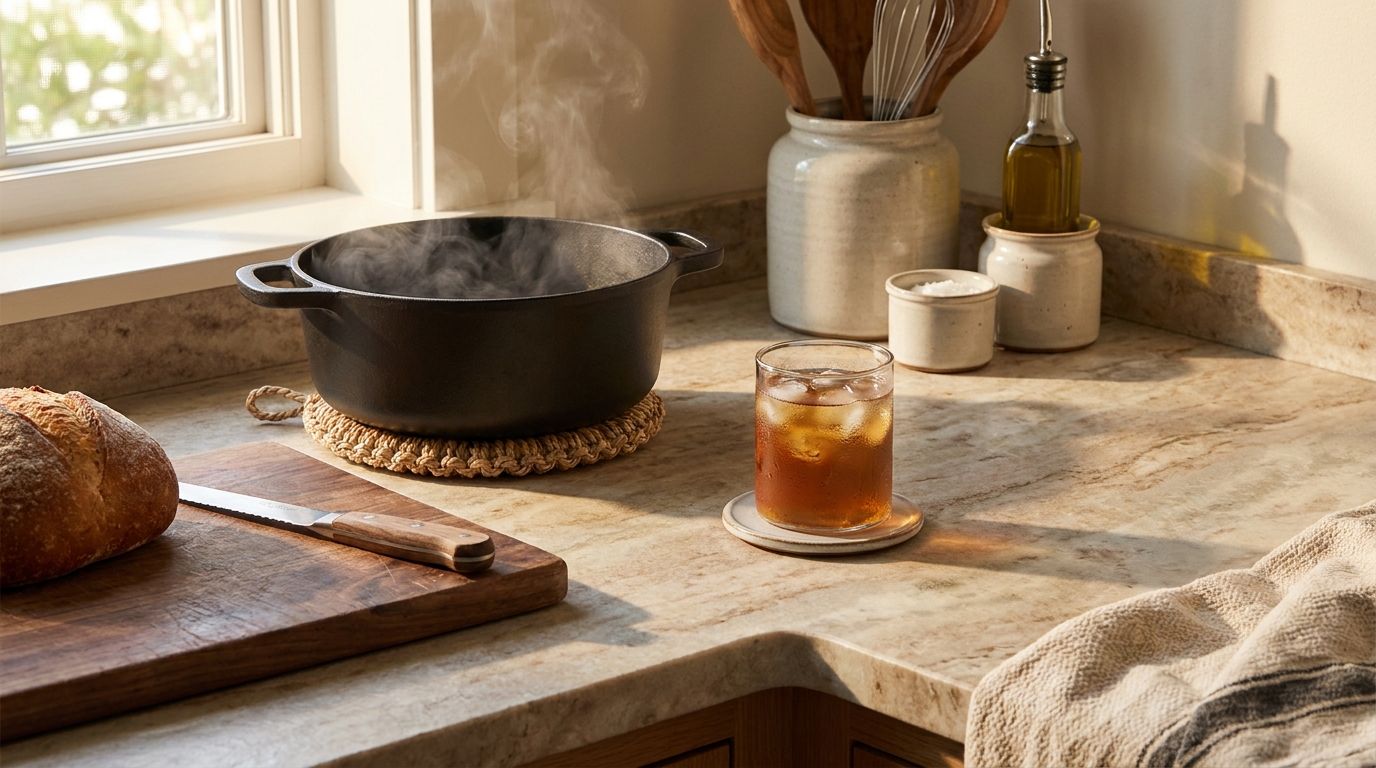
Heat is one of the biggest concerns with quartz. Despite its durability, the resins used in engineered quartz can be vulnerable to thermal shock or discoloration from hot cookware. That means hot pans, baking trays, slow cooker inserts, and air fryer baskets should never be placed directly on the surface. Trivets and hot pads are not optional extras in a quartz kitchen. They are one of the best forms of long-term protection.
You should also avoid abrasive scrubbing pads and aggressive chemicals. Products such as bleach, solvent-based cleaners, oven cleaner, drain cleaner, and paint removers can damage the finish. If something sticky dries onto the surface, let a gentle cleaner soften it first and then wipe it away with a soft cloth rather than scraping forcefully.
Another misconception is that quartz can tolerate every kind of spill indefinitely because it is nonporous. Nonporous surfaces are indeed easier to sanitize and less likely to absorb liquids, which is one reason they are so appealing in food-prep spaces. But strong pigments, oils, and acidic spills can still leave marks if ignored. Prompt attention remains part of good quartz care.
How to Care for Granite and Other Natural Stone
Natural stone brings depth, variation, and a sense of timelessness that many people love. Granite in particular has long been associated with durable, elegant kitchens. Still, stone asks for a more thoughtful care routine because porosity varies from slab to slab and finish to finish.
For day-to-day cleaning, warm water and mild soap are generally enough. The key is to avoid acidic cleaners or homemade formulas that can affect the finish. If you like a particularly polished look, dry the surface right after cleaning to prevent hard-water film and streaks, especially in areas near the faucet.
One of the most important maintenance topics for granite and some other natural stones is sealing. Unlike quartz, natural stone may need periodic sealing depending on how porous it is, what finish it has, and how heavily the kitchen is used. There is no universal schedule that works for every granite countertop, which is why the common advice that all granite must be sealed on the same timeline can be misleading.
If water no longer beads lightly on the surface or if the stone darkens quickly when wet, it may be time to check whether resealing is needed. Sealing helps reduce absorption and supports stain resistance, but it does not make the surface invincible. Oils, wine, coffee, and acidic ingredients should still be wiped up promptly to preserve the stone’s natural beauty.
Natural stone also benefits from sensible heat protection. Granite is more heat tolerant than some other surfaces, but repeated exposure to hot cookware can still stress sealants or create unnecessary risk. In a kitchen that is meant to feel calm and beautiful, using a trivet is simply a better habit than gambling on any one material’s limits.
How to Care for Laminate Countertops
Laminate remains a practical and attractive choice for many kitchens. It is budget-friendly, available in a wide range of styles, and can look fresh and cheerful in both classic and contemporary homes. The care routine is simple, but moisture control is especially important.
Routine cleaning should be gentle. Use a soft cloth with warm soapy water, then wipe dry. Avoid abrasive scrubbers or powdered cleaners, which can scratch the decorative layer and leave the surface looking dull. Once laminate loses that smooth finish, it is harder to restore.
The area to watch most carefully is around seams, joints, and edges. Laminate surfaces can be vulnerable to moisture intrusion, and excess water can cause the substrate underneath to swell. This often happens near the sink, dishwasher, or seams where cleaning water is allowed to sit too long.
That is why flooding the surface when cleaning is not a good idea. A lightly damp cloth works better than a soaking one. Afterward, dry the countertop, especially at corners and along the backsplash line. This one habit can significantly extend the life of laminate counters and keep them looking crisp.
Heat is another weakness for laminate. Hot pots, pans, and baking dishes can scorch or warp the surface surprisingly quickly. If you love a warm, active kitchen with frequent cooking, keep trivets within easy reach so protecting the countertop feels natural rather than inconvenient.
How to Care for Solid-Surface Countertops
Solid-surface countertops, including well-known brands such as Corian, are appreciated for their smooth appearance and practical durability. They are nonporous, easy to wipe down, and often a very good fit for kitchens where both hygiene and ease matter. Many homeowners also appreciate that these surfaces feel quietly elegant without being overly fussy.
For routine care, warm soapy water or a cleaner recommended by the manufacturer is usually enough. Prompt wipe-ups are still important, but one of the advantages of solid surface is that many minor scratches, marks, or signs of wear can often be repaired or renewed. That makes this material especially appealing for households that want beauty with a little forgiveness built in.
As with quartz, heat is a serious concern. Hot pans and heat-producing appliances should not be placed directly on the counter. Repeated exposure can discolor or damage the material. Trivets, cooling racks, and heat pads are important everyday tools, not just occasional accessories.
Because solid surface is repairable in many cases, it is worth checking manufacturer guidance before assuming damage is permanent. A scratch or minor burn mark that would leave another material compromised may be renewable here. That ability to restore the surface can add longevity and make the kitchen feel easier to live in over time.
How to Care for Porcelain Countertops
Porcelain countertops are gaining popularity in North America, especially among homeowners drawn to low-maintenance surfaces with a sleek, modern look. They are often chosen for their durability, resistance to stains, and ease of cleaning. In many ways, porcelain supports the desire for a kitchen that feels both elevated and simple to maintain.
Daily care is similar to other easy-care surfaces. Wipe up spills promptly, clean with mild soap and water, and use a soft cloth rather than abrasive tools. Porcelain generally handles daily life well, but it still benefits from basic good habits rather than neglect.
While porcelain is known for strong heat performance, that does not mean all heat precautions should disappear. Using trivets remains a smart way to reduce stress on any countertop installation and protect surrounding finishes. It also prevents the casual mindset that often leads to accidental chips or thermal surprises elsewhere in the kitchen.
For homeowners who want a calm, contemporary kitchen without a high-maintenance care routine, porcelain can be a very satisfying choice. But like every surface, it looks best when treated with consistency and care rather than assumptions.
Food Safety, Sanitizing, and a Healthier Prep Space
Countertop care is closely linked with food safety, especially in family kitchens where multiple meals are prepared every day. Beautiful surfaces should also be clean surfaces. Health Canada recommends washing kitchen countertops with warm soapy water after preparing food and using a bleach solution when sanitizing food-prep surfaces is needed for extra protection.
This matters most after handling raw meat, poultry, seafood, or eggs, and whenever there is a risk of cross-contamination. If juices or residue are left behind, even an expensive countertop will not support a healthy kitchen environment. A clean prep surface is part of making the room feel genuinely well cared for.
Many homeowners are now more aware of food-contact safety and the appeal of materials that are easy to sanitize. Standards such as NSF/ANSI 51 are part of the wider conversation around materials intended for food or water contact. While certification details vary by product and application, the broader takeaway for home kitchens is simple. Easy-to-clean, non-abrasive, well-maintained surfaces help support a safer cooking environment.
One helpful mindset is to think in layers. First clean away visible residue with warm soapy water. Then sanitize when the task calls for it. Cleaning and sanitizing are not the same thing, and both have their place. This approach protects both the look of your counters and the health of the people gathering around them.
Protective Habits That Prevent Most Countertop Damage
Many countertop problems begin with tiny, repeated moments of carelessness rather than one dramatic accident. A steaming pan set down for just a second, a wet dish towel left crumpled by the seam, or a lemon cut directly on the counter can slowly leave their mark. Protective habits are what keep surfaces beautiful in the long run.
The first protective habit is using cutting boards consistently. Even if your countertop seems durable, slicing directly on the surface can leave scratches, dull knives, and create sanitation concerns. A board creates a defined prep area and helps the counter remain more visually intact over time.
The second habit is using coasters, trays, and trivets. Glasses left on stone or engineered surfaces can leave rings or residue, while hot cookware can damage many materials more quickly than people expect. Keeping these protective tools visible and easy to grab makes them far more likely to be used.
The third habit is moisture awareness. Wipe around the sink after heavy dishwashing, dry under soap dispensers, and avoid leaving wet sponges or towels on seams. These small details matter enormously for laminate and layered surfaces, but they improve cleanliness and appearance in any kitchen.
Finally, pay attention to appliances that generate heat or vibration. Toasters, air fryers, slow cookers, coffee makers, and countertop ovens can affect finishes when used repeatedly in the same spot. A tray, mat, or slight repositioning can go a long way toward preserving the counter beneath them.
Seasonal Countertop Maintenance for a Fresh Start
Seasonal maintenance is a lovely way to keep your kitchen feeling refreshed without waiting for problems to show up. At the change of each season, take a little extra time to look beyond the visible surface. This is when you can catch small issues early and restore that polished feeling that daily wipe-downs alone may not accomplish.
Start by moving small appliances and cleaning underneath them. Crumbs, grease film, and hidden moisture often build up around mixers, coffee makers, blenders, and toaster ovens. Once those spots are clear, wash and dry the area thoroughly so the whole countertop feels brighter and more even.
Next, inspect seams, edges, and sink cutouts. Look for lifting, discoloration, soft spots, or mineral buildup. In laminate kitchens, this is the moment to be especially watchful for moisture damage. In natural stone kitchens, check whether the finish still seems protected or whether resealing may be due.
If you have granite or another natural stone, seasonal check-ins are a practical time to assess sealing needs rather than guessing throughout the year. Quartz generally does not require sealing, but it still benefits from a deeper clean and a review of heat-exposed zones near the cooktop or baking area.
Try to align this seasonal care with your natural household rhythms. Early spring and early fall are particularly good times because they often follow heavier holiday cooking or a more relaxed summer routine. A small reset at these moments helps restore a sense of order and makes the kitchen feel ready for the season ahead.

Common Countertop Care Mistakes to Avoid
Sometimes knowing what not to do is just as helpful as knowing what works. One of the most common mistakes is assuming that a nonporous surface requires almost no attention. Quartz and solid surface are certainly easier to maintain than some materials, but they still benefit from prompt wipe-ups, gentle cleaning, and heat protection.
Another frequent mistake is treating vinegar or bleach as universal solutions. These products can be useful in specific situations, especially when sanitizing is required, but they are not everyday cleaners for every countertop type. Depending on the material, repeated use can dull, etch, or degrade the finish.
Heat misuse is another major issue. Many people believe that a durable countertop should be able to handle any hot pan without a problem. In reality, quartz, laminate, and solid surface are all vulnerable to heat damage, and even more heat-tolerant materials benefit from protection. A trivet is always easier than a repair.
People also tend to overlook water. Because water seems harmless, it often gets ignored when it pools around sinks, faucets, and seams. Yet moisture is one of the most persistent causes of swelling, staining, mineral residue, and subtle surface fatigue. Drying counters after cleaning is one of the most underrated kitchen maintenance habits.
Finally, many homeowners assume scratches or wear mean the entire counter is ruined. That is not always true. Some solid-surface materials can be renewed or repaired, while natural stone and laminate have different limitations. Before panicking, it is worth identifying the material and checking the manufacturer’s care guidance or consulting a professional.
How to Make Countertop Care Feel Effortless
The easiest home routines are the ones that fit naturally into daily life. If countertop care feels like a chore you have to remember, it is more likely to be postponed. If it is woven into how the kitchen already works, it becomes almost automatic.
Keep a soft microfiber cloth and a gentle cleaner or small bowl of soapy water close to the sink so wipe-downs happen in real time. Store trivets where you actually cook, not tucked away in a drawer across the room. Use a tray under oils, soap bottles, or coffee tools to contain drips and make surfaces easier to clean.
You can also reduce wear by styling your counters with intention. A kitchen looks calmer when there are fewer objects interrupting the visual line of the surface. That makes cleaning quicker, but it also lowers the chance of trapped moisture, hidden crumbs, or stains under seldom-moved items.
There is a gentle luxury in having surfaces that are ready to use at any moment. It does not require perfection. It comes from thoughtful rhythms and little choices that support comfort. When your countertops are maintained with care, the whole kitchen feels more gracious and livable.
When to Call a Professional
While many countertop care tasks are simple enough for everyday home maintenance, some situations deserve expert help. If you notice deep cracks, persistent staining that does not respond to approved cleaning methods, lifting seams, or signs of significant water damage, it is wise to consult a professional rather than experimenting with aggressive fixes.
This is particularly true for natural stone sealing, chip repair, and any issue involving structural substrate damage. The wrong repair product can make the problem worse or more visible. A professional can often restore the surface in a way that keeps the kitchen looking cohesive and well finished.
Professional guidance can also be useful if you are unsure what your countertop material actually is. Many care mistakes happen because homeowners apply the wrong cleaning method to the wrong surface. Identifying the material first is one of the smartest ways to protect your investment.
The Lasting Value of Well-Cared-For Countertops
Countertops are not just a design feature. They are part of the rhythm, cleanliness, and emotional tone of the kitchen. Caring for them well means preserving more than a finish. It means protecting a place where meals are made, guests gather, and daily life unfolds in all its beautiful repetition.
Whether your kitchen is sleek and modern or warm and traditional, the same principle applies. Gentle daily cleaning, quick attention to spills, thoughtful heat protection, and material-specific maintenance all help the room function better and feel more inviting. These routines may be simple, but their effect is lasting.
In the end, countertop care is one of those quiet forms of homemaking that pays off every single day. A cleaner, brighter, more durable surface supports not just cooking, but comfort. And when the kitchen feels cared for, the whole home does too.
Quick Reference Care Checklist
If you want a simple way to remember the essentials, this checklist covers the habits that matter most. Think of it as a gentle framework rather than a strict rulebook. What matters most is consistency and matching your routine to your material.
- Daily: Wipe counters with warm soapy water, clean spills promptly, and dry the surface with a soft cloth.
- After food prep: Wash the area thoroughly and sanitize when needed, especially after handling raw meat or other higher-risk foods.
- Always: Use cutting boards, coasters, trivets, and hot pads to reduce scratches, rings, and heat damage.
- For quartz and solid surface: Avoid abrasive pads and harsh chemicals, and never place hot cookware directly on the surface.
- For laminate: Keep seams dry, avoid flooding the surface, and protect carefully from heat.
- For granite and natural stone: Use gentle cleaners, wipe up acidic spills quickly, and check periodically whether resealing may be needed.
- Seasonally: Deep-clean around appliances, inspect seams and sink edges, and address any signs of moisture, dullness, or wear early.
With just a little attention, your countertops can stay beautiful, functional, and welcoming for years. And that kind of everyday ease is one of the best luxuries a home can offer.



No Comment! Be the first one.