


Essential Tips for Effective Moisture Control in Your Green Building Envelope
Moisture control does not always get the same attention as solar panels, insulation upgrades, or efficient windows, yet it is one of the most important parts of maintaining a durable and healthy green home. When moisture is well managed, your building envelope performs better, indoor air quality stays healthier, and materials last longer. When moisture is ignored, even a carefully designed sustainable home can face mold, rot, poor insulation performance, and avoidable repair costs.
Table Of Content
- Why Moisture Control Matters So Much in a Green Home
- The Core Rule: Control Moisture First, Not Just Mold
- Know Your Indoor Humidity Target
- Where Household Moisture Comes From
- Use Exhaust Fans Consistently and Correctly
- Ventilation and Airtight Homes: Why Efficiency Needs Fresh Air
- Condensation: The Quiet Warning Sign
- Basements and Crawlspaces Need Special Attention
- Keep Rainwater Moving Away from the House
- Fix Small Leaks Immediately
- Choose Moisture-Resistant, Low-Impact Materials in Vulnerable Areas
- What to Do After Water Gets In
- Misconceptions That Can Undermine a Healthy Home
- A Practical Seasonal Moisture Control Routine
- In winter
- In spring
- In summer
- In fall
- Moisture Control as a Carbon-Saving Strategy
- When to Call a Professional
- Simple Steps That Make the Biggest Difference
- Final Thoughts
For most homeowners, the encouraging news is that moisture control does not have to be complicated. The basic principle is clear and widely supported by Canadian and U.S. guidance: the key to mold prevention is moisture control. That means focusing on humidity, leaks, condensation, drainage, and ventilation in a practical way. It also means understanding that a dry home is not just more comfortable. It is more energy efficient, more resilient, and better aligned with low impact living.
In green building, moisture control matters because it sits at the intersection of health, durability, and operational performance. Dry insulation works better than damp insulation. Air sealing is easier to optimize when materials are sound and assemblies are not wet. Finishes, trim, subfloors, and framing last longer when they are not repeatedly exposed to hidden moisture. Preventing that damage also avoids the carbon cost of early replacement, remediation work, and waste.
This guide looks at simple, actionable ways to control moisture in your home while staying aligned with eco-friendly practices. Whether you live in a newer airtight house or an older home that has been upgraded over time, these principles can help you protect your investment and create a healthier living environment.
Why Moisture Control Matters So Much in a Green Home
A green building envelope is designed to separate indoor conditions from outdoor weather efficiently and responsibly. Walls, roofs, windows, air barriers, insulation, and drainage details all work together to reduce energy loss and improve comfort. But if moisture gets into those assemblies and stays there, performance can decline quickly. A home may still look fine from the surface while hidden condensation or leaks slowly damage framing, sheathing, drywall, and insulation.
One of the most important things to understand is that visible mold is often only a late-stage symptom. By the time you can see staining, smell mustiness, or notice warped finishes, the moisture problem may have been active for quite a while. Hidden condensation inside walls, persistent dampness in basements, or small roof and plumbing leaks can all create damage long before mold becomes obvious.
There is also an energy efficiency dimension that many people underestimate. Wet insulation does not insulate as effectively, which can make heating and cooling systems work harder. Damp materials can also contribute to air leakage pathways as assemblies shift or deteriorate over time. In that sense, moisture control is not separate from energy performance. It is part of it.
Moisture control is one of the highest-impact maintenance tasks in a green building envelope because it protects structure, indoor air quality, and energy performance at the same time.
For homeowners interested in sustainable living, this is an accessible place to focus. Moisture control rewards consistency more than perfection. Small habits like running exhaust fans, checking humidity, keeping gutters clear, and fixing leaks quickly can prevent expensive and wasteful problems later.
The Core Rule: Control Moisture First, Not Just Mold
A common misconception is that mold itself is the main issue to fight. In reality, mold is usually the result of a moisture problem, not the root cause. Guidance from both Health Canada and the U.S. Environmental Protection Agency consistently emphasizes that mold prevention depends on reducing dampness, leaks, condensation, and excess indoor humidity.
This matters because many homeowners reach for a cleaning product and assume the job is done. Cleaning may be part of the response, but if the source of moisture remains, the mold or staining often returns. The same is true for bleach. It is often treated as a complete solution, yet the more important steps are identifying the water source, cleaning affected materials appropriately, and making sure everything dries thoroughly.
EPA guidance also notes that wet or damp building materials should generally be cleaned and dried within 24 to 48 hours to reduce the chance of mold growth. That short response window is one reason fast action matters so much after a leak, spill, or weather-related water event. Even minor incidents are easier to manage when addressed right away.
For a green homeowner, this approach is reassuring because it is practical. You do not need a complicated philosophy. You need a plan for keeping your home dry, ventilated, and monitored.
Know Your Indoor Humidity Target
One of the simplest and most useful moisture control tools is a small indoor humidity monitor. These low-cost devices help you track relative humidity, often abbreviated as RH, so you can respond before dampness becomes a bigger issue. Many trusted sources in North America recommend keeping indoor relative humidity in the range of about 30 percent to 50 percent. Sustained levels above 60 percent increase the likelihood of condensation and mold growth.
That range matters because it balances comfort with building protection. If humidity climbs too high, moisture can condense on cold windows, corners, wall surfaces, and hidden framing areas. If it drops too low in winter, the air can feel dry and uncomfortable, though from a mold-prevention standpoint, excess humidity is usually the bigger concern.
Humidity is also seasonal. In winter, indoor air that feels comfortable may still hold too much moisture for cold window surfaces or poorly insulated corners. In summer, humid outdoor air can load basements and crawlspaces with moisture, especially if windows are opened at the wrong times or if drainage is weak. The target range stays similar, but the way you maintain it changes with climate and season.
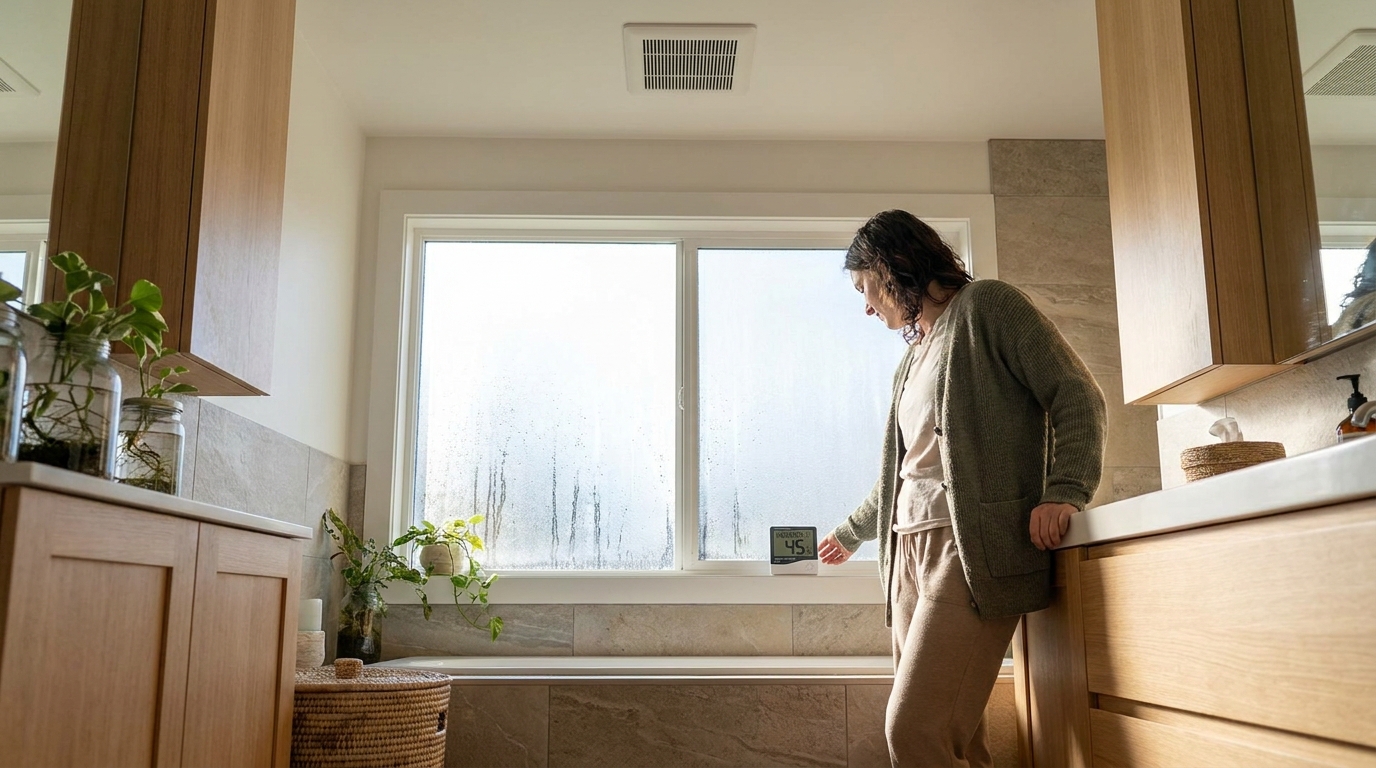
If you have never monitored your home’s humidity, start with the spaces most likely to develop moisture problems. Bathrooms, kitchens, basements, laundry areas, and bedrooms with condensation on windows are good places to begin. Seeing real numbers often turns moisture control from guesswork into a manageable routine.
Where Household Moisture Comes From
Homes generate more moisture than many people realize. Everyday activities like cooking, showering, bathing, and doing laundry all release water vapour into the indoor air. Drying clothes indoors can add especially large amounts of moisture unless it is carefully managed. Even breathing and normal occupancy contribute to indoor humidity, especially in tighter homes.
Some moisture comes from inside, while some comes from outside or from the building itself. Plumbing leaks, roof leaks, and foundation seepage introduce liquid water directly. Rainwater that pools near the house, melting snow against the foundation, and poor drainage around walkways or patios can all increase dampness in basements and lower walls. Condensation also acts like a hidden water source when warm moist air meets a cold surface.
In efficient homes, there is an additional factor to keep in mind. Natural Resources Canada has warned that as homes become tighter through air sealing and weatherization, they can also trap more moisture if ventilation is not upgraded appropriately. This is a key point for sustainable renovations: air sealing and ventilation should be treated as a package, not as separate goals.
That does not mean efficient homes are a problem. It means they need balanced moisture management. A tighter envelope is valuable, but it works best when paired with intentional ventilation and humidity control.
Use Exhaust Fans Consistently and Correctly
Among the most straightforward moisture control habits is using bath and kitchen exhaust fans every time you create steam or humidity. This advice is simple, but it is remarkably effective because it removes moisture close to the source before it spreads through the home. In bathrooms, that means turning on the fan during showers and leaving it running long enough afterward to clear humid air. In kitchens, it means using a vented range hood or exhaust fan while cooking, especially when boiling water or simmering for long periods.
Many people have fans installed but do not use them consistently. Sometimes the fan is noisy, sometimes it seems unnecessary, and sometimes people forget. In practice, this is one of the easiest behavior changes to make. If your fan is loud or underperforming, replacing it with a quieter, more efficient model can be a practical improvement that supports both comfort and moisture control.
It is also worth checking whether the fan is actually vented outdoors. A fan that dumps moist air into an attic, soffit, or wall cavity can create hidden damage. The same principle applies to clothes dryers. Dryers should be vented outdoors, and the vent should be kept clean so humid air can leave the home effectively.
When homeowners ask for the simplest eco-friendly moisture strategy, this is often near the top of the list. Targeted exhaust removes water where it is generated, which is much more efficient than trying to cool or dehumidify the entire home afterward.
Ventilation and Airtight Homes: Why Efficiency Needs Fresh Air
There is a persistent misconception that a very airtight home automatically delivers better indoor air quality. In reality, a tighter building envelope usually needs better mechanical ventilation to avoid trapping humidity and pollutants indoors. Without that ventilation, moisture from daily living can build up surprisingly quickly.
This is especially relevant in newer homes and in older homes that have received retrofit work such as air sealing, new windows, or added insulation. These upgrades can dramatically improve efficiency, but they also reduce the uncontrolled leakage that used to carry some indoor moisture out. While uncontrolled leakage is not a good ventilation strategy, homeowners do need to replace it with something deliberate.
Balanced ventilation systems such as heat recovery ventilators and energy recovery ventilators can help remove stale, moisture-laden air while bringing in fresh air in a more energy-efficient way than simply opening windows indiscriminately. In cold climates, this is especially useful because it supports indoor air quality without discarding as much conditioned air. In humid climates, careful ventilation strategy matters because bringing in outdoor air at the wrong times can actually add moisture.
If your home often feels stuffy, windows fog regularly, or humidity remains high even with spot exhaust, it may be worth having your ventilation approach assessed. Moisture control in a green home is rarely about one single product. It is about how air movement, insulation, sealing, and ventilation all work together.
Condensation: The Quiet Warning Sign
Condensation is one of the clearest signals that indoor humidity and surface temperature are out of balance. You may see it as water droplets on windows in winter, dampness on metal frames, staining near corners, or moisture around uninsulated pipes. It can seem harmless at first, but recurring condensation deserves attention because repeated wetting creates opportunities for mold and material damage.
Cold surfaces are usually the trigger. In winter, warm moist indoor air meets windows, thermal bridges, or poorly insulated sections of the envelope and cools enough for water to form. In summer, the reverse can happen in basements or on air-conditioned surfaces when humid outdoor air enters the house. Thermal bridging, missing insulation, and air leakage can all increase this risk.
To reduce condensation, it helps to approach the issue from both sides. Lower indoor humidity when possible, and improve cold surfaces where practical. Better window performance, targeted insulation upgrades, air sealing, and addressing thermal bridges can all make a meaningful difference. Even simple steps like keeping interior air moving gently and avoiding blocked vents near windows can help some spaces dry more effectively.
If you consistently see condensation, do not treat it as a minor cosmetic issue. It is feedback from the building. Your home is telling you that moisture is accumulating faster than it can safely disperse.
Basements and Crawlspaces Need Special Attention
Basements and crawlspaces are common trouble spots because they sit closest to soil moisture, foundation walls, and cooler temperatures. Even homes that seem dry can have elevated humidity in lower levels, especially in summer. The combination of cooler surfaces and humid air makes basements particularly vulnerable to damp smells, condensation, and hidden mold growth behind stored items or finished walls.
For many homeowners, basement moisture control starts outside. If rainwater is not directed away from the home, foundation walls may absorb or resist more moisture than they should. Gutters, downspouts, grading, splash control, and roof drainage all influence basement conditions. Inside, it helps to keep materials off the floor where possible, avoid overcrowded storage against exterior walls, and monitor humidity closely during humid months.
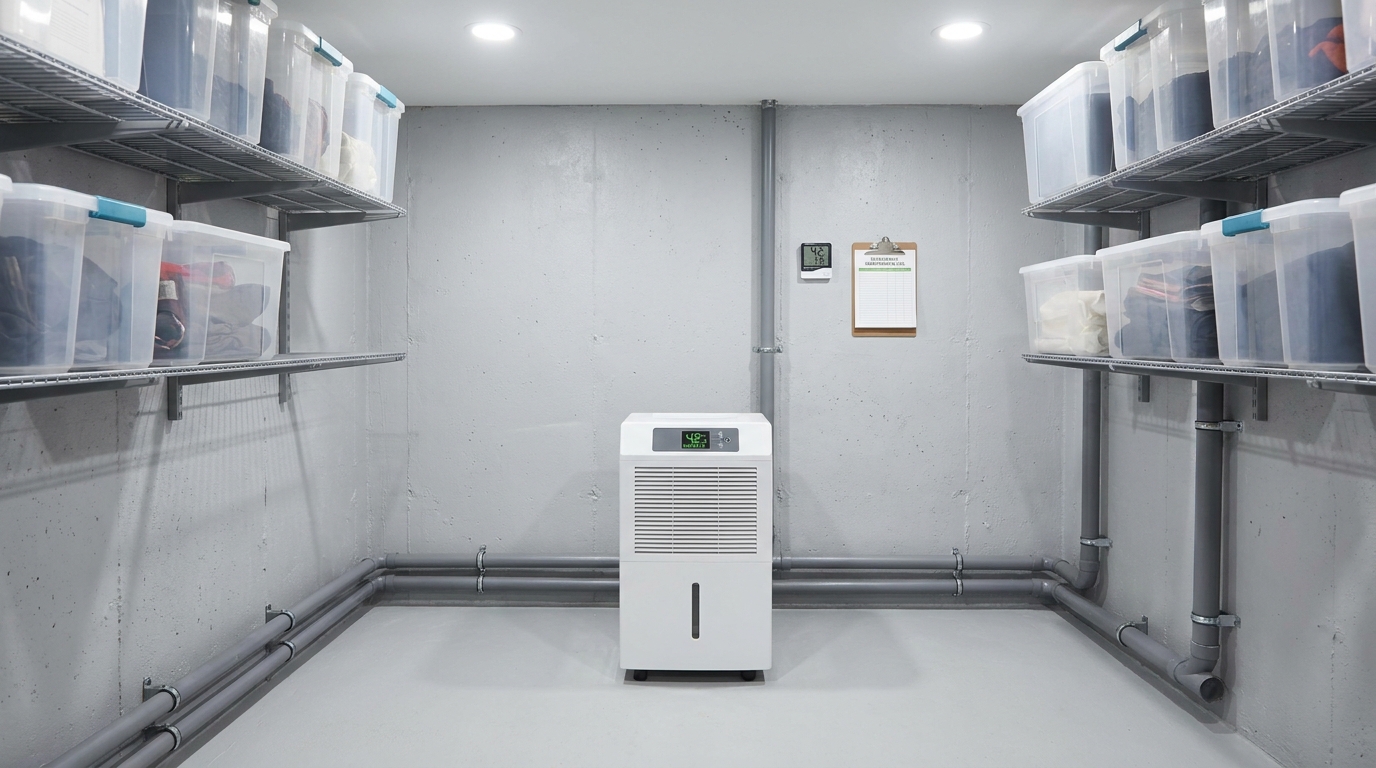
A dehumidifier can be a smart and efficient solution in a basement or crawlspace when humidity remains high. This approach is often more practical than overcooling the whole house just to reduce dampness in one area. The goal is not to run equipment unnecessarily. It is to use dehumidification where it provides the most benefit with the least wasted energy.
Crawlspaces deserve the same level of care. Depending on climate and construction type, the right strategy may involve ground covers, air sealing, insulation improvements, drainage correction, and managed ventilation or conditioning. Because lower-level spaces can affect the air quality of the rooms above them, ignoring them can undermine the performance of the entire home.
Keep Rainwater Moving Away from the House
One of the most sustainable forms of building maintenance is simply preventing water from accumulating where it does not belong. Rainwater management protects foundations, siding, windows, roofs, and basements without relying on heavy remediation later. The basics are familiar, but they are powerful when done consistently.
Start with roof drainage. Gutters and downspouts should be clear, securely attached, and large enough to handle local rainfall. Downspouts should discharge water far enough away from the foundation that it does not immediately return to the base of the wall. Soil should slope away from the house so that rain and snowmelt drain outward rather than pooling beside the foundation.
Flashing also matters. Around roof intersections, chimneys, windows, and doors, flashing is one of the envelope’s first lines of defense against water intrusion. Small failures can allow repeated wetting that remains hidden until damage spreads. Seasonal inspections, especially after major storms, can catch these issues early.
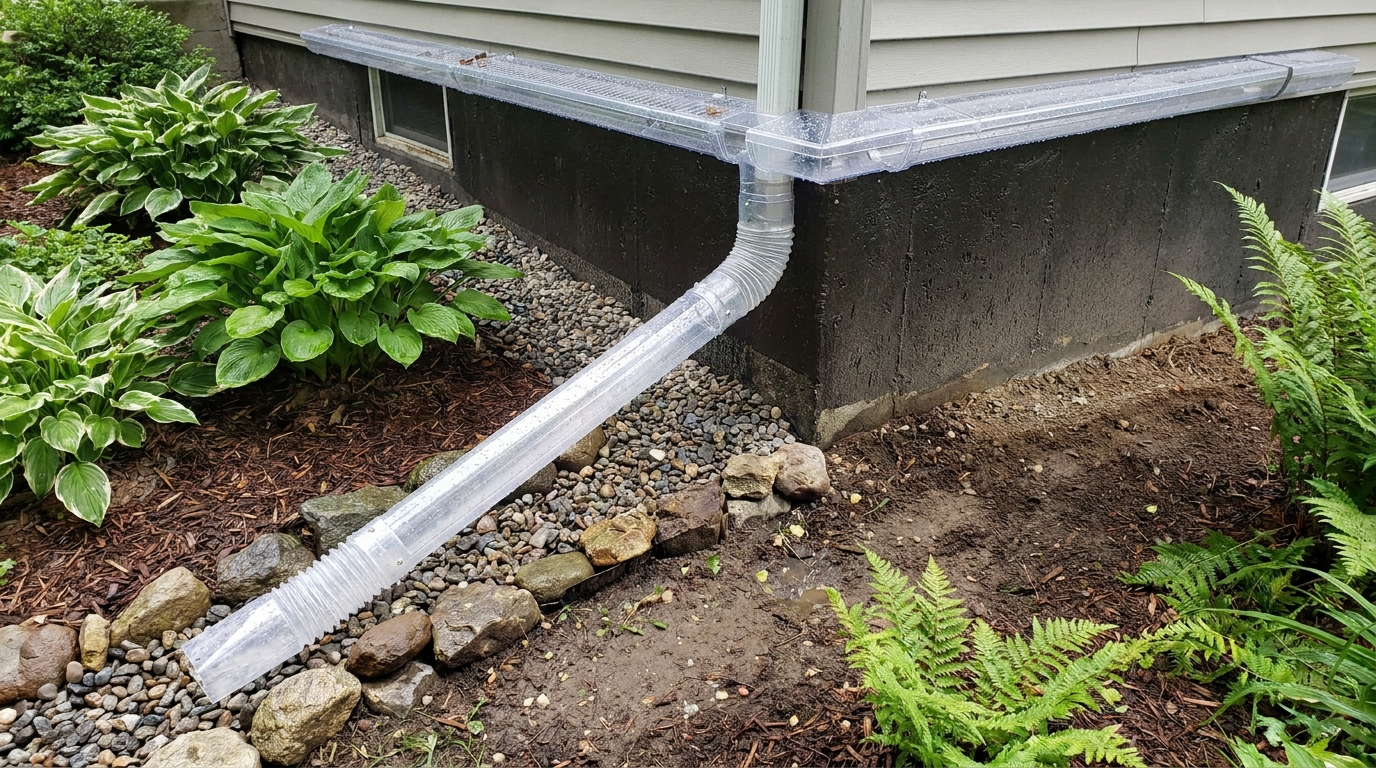
As rainfall events become heavier in many regions, these measures also support climate resilience. Health Canada has noted that climate change can increase indoor moisture and mold exposure through heavier rainfall, storms, flooding, and increased water infiltration. That makes drainage and envelope upkeep not just routine maintenance, but an important resilience strategy.
Fix Small Leaks Immediately
There is a reason authoritative guidance repeatedly advises homeowners to fix moisture problems promptly. Small leaks have a way of becoming larger building issues not because they are dramatic, but because they are persistent. A slow plumbing drip under a sink, a small roof penetration leak, or slight seepage around a window can keep materials damp for long periods.
Persistent wetting is exactly what building materials do not tolerate well. Drywall softens, wood swells, trim stains, insulation loses effectiveness, and hidden mold can begin growing in concealed spaces. By the time the damage becomes obvious, the repair may involve replacing multiple layers of material rather than one gasket, flashing detail, or pipe fitting.
Fast action is also the greener choice. Early repairs usually require fewer materials, less labor, and less disruption. They preserve what you already have rather than forcing major replacement. If something gets wet, drying it thoroughly and correcting the source promptly is often the difference between a manageable repair and a much larger project.
Choose Moisture-Resistant, Low-Impact Materials in Vulnerable Areas
Not every room in a home faces the same moisture load. Bathrooms, laundry rooms, mudrooms, kitchens, basements, and below-grade spaces all benefit from materials chosen with durability in mind. Health Canada guidance supports the use of moisture-resistant materials in wet areas, which aligns well with practical green building goals.
This does not mean every surface needs a specialized product. It means selecting finishes and assemblies appropriate to the location. Flooring that tolerates occasional dampness, paints or finishes suited to bathrooms, well-detailed backer materials in shower areas, and trim that does not readily absorb water can all reduce future maintenance. Low-emitting products can support indoor air quality at the same time.
When making repairs or upgrades, it also helps to think beyond the visible finish. A beautiful surface does not solve a poor assembly. Vapor retarders, air barriers, insulation placement, and drying potential all affect whether a wall or floor will stay healthy over time. Moisture-resistant design is often less about one miracle material and more about how multiple layers work together.
What to Do After Water Gets In
Even careful homeowners sometimes face plumbing leaks, storm-related water entry, appliance failures, or accidental overflows. What matters most is the speed and quality of the response. The earlier you remove water and start drying, the better the odds of preventing mold and preserving materials.
EPA guidance highlights the importance of cleaning and drying wet materials within 24 to 48 hours when possible. That may involve mopping or extracting water, increasing air movement, using dehumidification, removing soaked rugs or contents, and opening assemblies if water is trapped inside them. The exact response depends on the severity and type of materials affected, but waiting rarely improves the outcome.
It is also important to distinguish between a one-time event and an ongoing moisture source. If a basement gets wet during one storm because a downspout failed, the immediate cleanup matters, but so does correcting the drainage detail that caused the problem. If a bathroom wall stains repeatedly, the visible area may need cleaning, but the hidden leak or condensation source is the real issue to solve.
Drying and source control matter more than cosmetic cleanup alone. If the water source stays, the damage usually returns.
Misconceptions That Can Undermine a Healthy Home
Because moisture issues often start quietly, they are easy to misunderstand. A few misconceptions come up again and again in home maintenance, and clearing them up can save homeowners a great deal of stress and expense.
- “If I clean the mold, the problem is solved.” Cleaning is only part of the response. The underlying moisture source must be found and corrected.
- “Bleach is the main answer.” Guidance emphasizes cleaning, drying, and source control rather than relying on chemicals alone.
- “Humidity is just about comfort.” Sustained high humidity can affect durability, energy performance, and health.
- “An airtight home is automatically healthier.” Tighter homes often need better ventilation to manage moisture properly.
- “No visible mold means no moisture problem.” Hidden condensation and leaks can damage the envelope long before mold is obvious.
These misunderstandings are common because moisture problems often hide behind walls, under floors, or in utility spaces. That is why regular observation and a few basic monitoring tools can be so useful. A home does not need to appear dramatically damaged to have a moisture issue worth addressing.
A Practical Seasonal Moisture Control Routine
Homeowners often find it helpful to think about moisture management seasonally rather than as one large project. Small recurring check-ins are easier to maintain and often more effective than sporadic major efforts. A seasonal routine also helps you respond to local weather patterns and changing indoor conditions.
In winter
Watch for window condensation, cold corners, and humidity creeping too high during long stretches of closed-window living. Use bath fans consistently, keep dryer vents clear, and monitor RH so indoor air does not stay above recommended levels. If condensation persists, look at both humidity levels and building performance issues such as thermal bridging or air leakage.
In spring
Inspect roof drainage, gutters, flashing, and grading after snowmelt and heavy rain. Check basements for signs of seepage or musty odors, and respond quickly to any damp materials. Spring is also a good time to make sure exterior water is moving away from the home as intended.
In summer
Pay close attention to basements, crawlspaces, and humid rooms. Avoid assuming that opening windows always helps. In some climates, bringing warm humid air indoors can worsen dampness in cooler lower-level spaces. Use dehumidification strategically where needed and keep an eye on RH.
In fall
Clear gutters, verify downspout discharge, inspect seals and flashing, and prepare ventilation systems for heavier winter use. This is also a good time to test fans, change filters where applicable, and confirm that any HRV or ERV is operating properly before the cold season begins.
These habits are not glamorous, but they are exactly the kind of steady, practical care that supports a truly sustainable home over the long term.
Moisture Control as a Carbon-Saving Strategy
Green building conversations often focus on energy use, but moisture control deserves a place in the sustainability discussion too. When homes stay dry, materials last longer and perform as intended. That means fewer emergency repairs, fewer replacement products, less demolition waste, and fewer carbon emissions tied to manufacturing and transporting new materials.
There is also an operational benefit. Dry insulation, durable air barriers, and stable assemblies help reduce wasted heating and cooling energy. A moisture-damaged wall or wet basement is not just a maintenance concern. It can become an efficiency problem that quietly increases energy demand over time.
From this perspective, moisture control is not an extra task added onto sustainable living. It is one of the most grounded ways to practice it. Caring for what you already have, extending service life, and avoiding preventable damage are all deeply aligned with low-impact housing values.
When to Call a Professional
Many moisture control tasks are homeowner-friendly, but some situations benefit from professional assessment. Repeated condensation in the same area, recurring musty odors, visible staining that returns after cleaning, persistent basement dampness, roof leakage, or signs of hidden damage inside walls all deserve closer attention. If your home has been recently air sealed or weatherized and now feels noticeably more humid, it may also be wise to review ventilation performance.
Professionals can help evaluate drainage, flashing, ventilation, insulation, thermal bridging, and assembly design in a more integrated way. That matters because moisture problems are often interconnected. What looks like a surface issue may actually involve air leakage, cold surfaces, weak exhaust, or poor exterior water management working together.
The goal is not to make homeowners anxious. It is to encourage timely action. Moisture issues are usually most affordable and least disruptive when investigated early.
Simple Steps That Make the Biggest Difference
If you want to focus on the highest-value actions first, there are a handful of steps that consistently offer strong results. Monitor indoor humidity and aim for roughly 30 percent to 50 percent RH. Use kitchen and bathroom exhaust fans every time moisture is generated. Vent dryers outdoors. Fix plumbing, roof, and window leaks promptly. Dry wet materials within 24 to 48 hours when possible. Keep gutters and downspouts clear and direct water away from the foundation. Slope soil away from the house. Use dehumidification strategically in basements or other damp zones instead of overcooling the whole home.
These are not extreme measures. They are practical, approachable, and strongly supported by building science and public health guidance. Most importantly, they make sustainable living feel achievable because they are rooted in everyday habits and sensible maintenance rather than expensive complexity.
Final Thoughts
Effective moisture control is one of the quiet foundations of a healthy green home. It protects indoor air quality, preserves structural integrity, supports energy efficiency, and helps avoid the waste and carbon cost of premature repairs. In a time when climate resilience matters more than ever, it also helps homes better withstand heavier rain, storms, and shifting seasonal conditions.
The good news is that this work is not about perfection. It is about noticing patterns, responding early, and building a few dependable habits into everyday home care. If you control moisture, many other building problems become easier to prevent. If you ignore it, even efficient homes can struggle.
For homeowners committed to practical sustainability, moisture control is one of the smartest places to start. It is calm, preventative, and deeply worthwhile, which is often exactly what good green maintenance should be.



No Comment! Be the first one.