



The Ultimate Guide to Deep Cleaning Your Home for a Healthier, Happier Space
There is something deeply satisfying about a home that feels truly clean. Not just tidy at a glance, but refreshed in the corners, calmer in the air, and easier to live in from morning to night. A deep clean has a way of changing the mood of a space. Rooms feel lighter, routines run more smoothly, and your home begins to support you in a gentler, more comfortable way.
Table Of Content
- Why Deep Cleaning Matters More Than You Might Think
- What Deep Cleaning Really Means
- Before You Start: Set Yourself Up for Success
- A simple whole home order
- Start with Decluttering, Because Breathing Room Matters
- Deep Cleaning the Living Room and Family Spaces
- Living room deep clean priorities
- Deep Cleaning the Kitchen for Daily Ease
- Deep Cleaning the Bathroom with Moisture in Mind
- Deep Cleaning Bedrooms for Better Rest
- Do Not Forget Entryways, Hallways, and Hidden Zones
- Ventilation, Filtration, and Airflow: The Often Missed Part of a Deep Clean
- Managing Moisture and Preventing Mold
- Common Deep Cleaning Mistakes to Avoid
- How Often Should You Deep Clean?
- A Gentle Deep Cleaning Checklist for the Whole Home
- The Emotional Reward of a Sparkling Space
That emotional shift is not just in your imagination. Deep cleaning can reduce dust, grime, clutter, and hidden moisture that quietly build up over time. It can also help support a healthier indoor environment. The U.S. Environmental Protection Agency notes that most people spend about 90% of their time indoors, which makes the quality of the home environment especially important for daily comfort and exposure to pollutants. In practical terms, a deep clean is not only about appearance. It is also about how your home feels to breathe in, move through, and relax in.
This guide will walk you through how to deep clean your home in a thoughtful, room by room way. Along the way, we will focus on the cleaning priorities that matter most, including reducing dust reservoirs, improving ventilation, managing moisture, and refreshing the areas where life collects most quickly. The goal is not perfection. The goal is a home that feels clearer, healthier, and more welcoming for the people who live there.
A good deep clean is not about chasing perfection. It is about removing what weighs a home down so comfort, clarity, and ease can come forward again.
Why Deep Cleaning Matters More Than You Might Think
Many people think of deep cleaning as a seasonal reset or a task reserved for before guests arrive. In reality, it has a much bigger role in everyday wellbeing. Dust, pet dander, cooking residue, clutter, and excess moisture can slowly affect the quality of your home environment. Even when a space looks acceptable on the surface, hidden buildup behind furniture, under beds, around vents, and in damp corners can make a room feel stale and less restful.
Research on clutter and residential environments also suggests that disorder at home is associated with lower subjective wellbeing and more depressive and anxiety symptoms in some groups. That does not mean cleaning solves emotional challenges on its own. It does suggest that our surroundings influence how settled, capable, and at ease we feel in daily life. A home that is easier to care for often becomes a home that feels easier to enjoy.
From a healthy home perspective, deep cleaning also supports the three key indoor air quality strategies highlighted by the EPA: source control, ventilation, and filtration. In simple terms, that means removing what is creating the problem, bringing in cleaner air where possible, and supporting the air with good filters or air cleaners when appropriate. Deep cleaning fits beautifully into that framework because it helps reduce the dust, residue, and moisture that can make a home feel heavy over time.
What Deep Cleaning Really Means
Deep cleaning is not the same as doing a fast surface tidy. It means going beyond the obvious and cleaning the places that affect how a home functions and feels. This includes washing fabrics that hold allergens, vacuuming upholstery and mattresses, wiping baseboards, cleaning under furniture, cutting through kitchen grease, addressing bathroom moisture, and checking for signs of condensation or leaks that could invite mold growth.
It also helps to understand what deep cleaning does not mean. It does not mean disinfecting every inch of your home with harsh chemicals. Guidance from health authorities makes it clear that routine cleaning is often enough in everyday situations, while disinfecting is best reserved for specific needs. It also does not mean paying for unnecessary services. For example, the EPA says air duct cleaning is usually unnecessary unless there is visible contamination, mold, or another clear problem. A dusty vent cover alone does not mean the entire system needs professional cleaning.
When you think of deep cleaning as a healthy home reset rather than a perfection project, it becomes much more manageable. You are not trying to make your home look untouched. You are trying to make it feel fresh, breathable, orderly, and genuinely cared for.
Before You Start: Set Yourself Up for Success
The most effective deep clean begins with a little planning. It helps to walk through your home and notice where buildup is affecting daily life. Maybe the kitchen cabinets feel sticky, the bathroom fan is dusty, the bedroom textiles need washing, or the living room has become a magnet for clutter and pet hair. Once you see the house in zones, the process feels less overwhelming and more purposeful.
Gather your basic supplies before you begin. A vacuum with effective filtration, microfiber cloths, a mop, a gentle all purpose cleaner, dish soap, baking soda, laundry supplies, and gloves will cover most jobs. If you use stronger products for soap scum or grease, open windows when possible and follow product directions carefully. The healthiest clean is one that removes buildup without filling the air with unnecessary fumes.
It also helps to choose a simple order. In most rooms, work from top to bottom so dust falls downward as you go. Declutter first, dust second, then vacuum or sweep, and finish with floors and fabrics. If possible, clean in daylight. Natural light reveals dust, smudges, and overlooked moisture in a way that evening cleaning often does not.
A simple whole home order
- Open windows where weather and outdoor air conditions allow.
- Collect laundry, linens, and washable textiles first.
- Declutter visible surfaces and floors.
- Dust high surfaces, shelves, trim, and vents.
- Clean room specific buildup such as grease, soap scum, and fingerprints.
- Vacuum soft surfaces and floors thoroughly.
- Mop hard floors and let them dry fully.
- Check for moisture, musty smells, and anything that needs repair.
Start with Decluttering, Because Breathing Room Matters
Before you spray or scrub anything, begin by removing what does not belong in each room. This is one of the most emotionally transformative parts of deep cleaning because clutter affects the way a home feels almost instantly. Piles on counters, chairs covered in clothing, and crowded entry tables make spaces look busier and harder to maintain. Once those things are cleared, every cleaning task becomes easier and more effective.
Decluttering during a deep clean does not require an elaborate organizing project. Focus on what is clearly out of place, expired, broken, or no longer useful. Return dishes to the kitchen, gather papers into one basket, clear bathroom counters, and remove extra items from the bedroom floor. If a room has become a storage zone, create one temporary sorting area instead of letting the mess spread.
This step also supports the larger idea of source control. By reducing excess objects and dust collecting surfaces, you are lowering the amount of material that traps dirt, allergens, and visual stress. A less crowded home is often easier to clean well and easier to enjoy every day.
Deep Cleaning the Living Room and Family Spaces
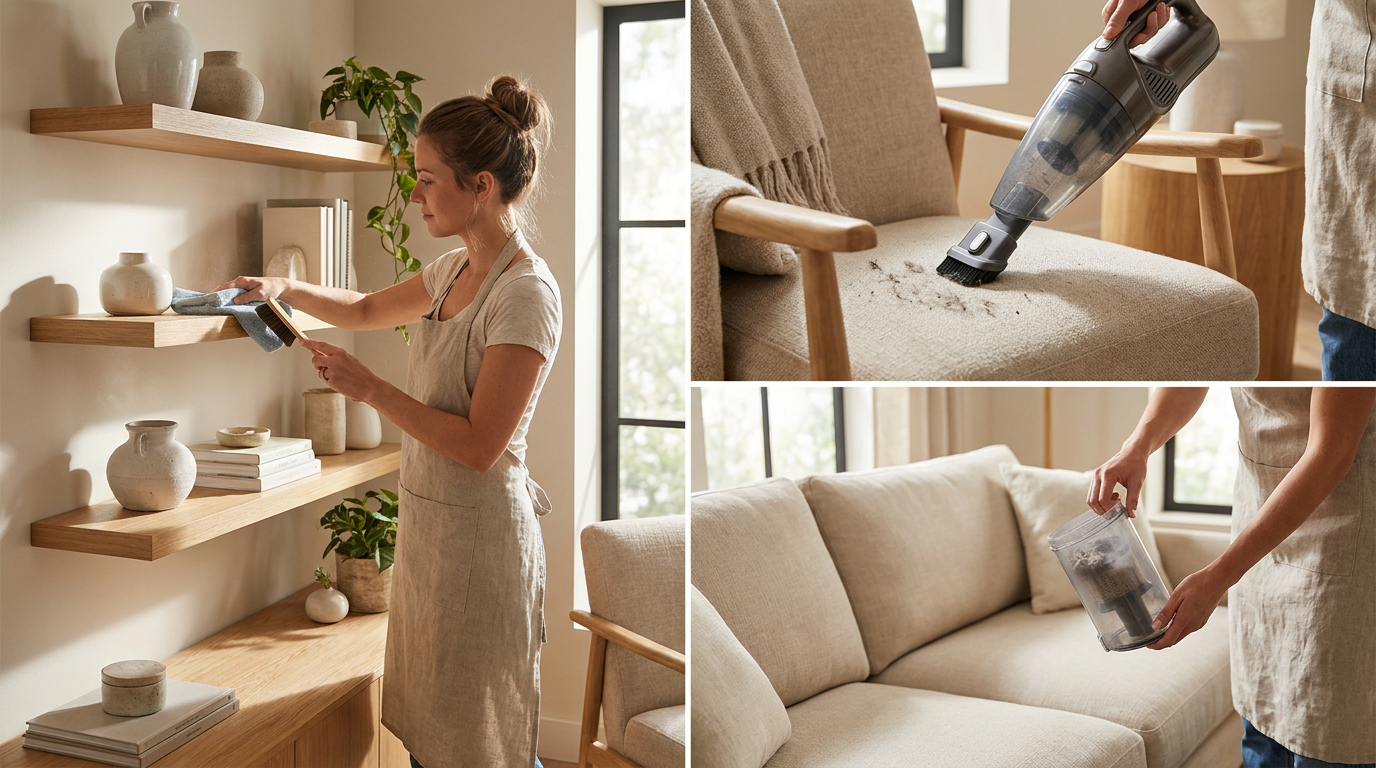
Living rooms carry a surprising amount of hidden buildup because they are where daily life settles in. Dust lands on shelves, fabrics trap dander, remote controls collect fingerprints, and under sofa cushions all kinds of debris quietly gather. Start by removing throws, pillow covers, and washable textiles so they can go into the laundry. Then dust the room from high to low, including curtain rods, frames, lampshades, shelves, baseboards, and electronics.
Upholstery deserves extra attention in a deep clean. Vacuum sofas and chairs carefully, using crevice tools along seams and under cushions. If you have pets, this step can make a major difference in how fresh the room feels. The EPA notes that frequent cleaning helps reduce indoor dust and allergens including animal dander, so soft furnishings are well worth your time.
Move lighter furniture if possible and vacuum underneath. Clean windows and sills, especially if condensation tends to form there. If the room feels stuffy, check whether air returns or vents are blocked by furniture or thick dust. You do not need to assume the ductwork itself is a problem, but keeping vent covers clean and airflow unobstructed can support a fresher feeling space.
Living room deep clean priorities
- Wash throw blankets and removable pillow covers.
- Vacuum upholstered furniture, rugs, and under cushions.
- Dust shelves, books, electronics, and trim.
- Clean windows, sills, and frequently touched surfaces.
- Check for moisture around windows or exterior walls.
Deep Cleaning the Kitchen for Daily Ease
The kitchen is one of the most rewarding spaces to deep clean because the results affect daily life immediately. A fresh kitchen feels easier to cook in, easier to reset at night, and far more welcoming in the morning. Start with the refrigerator by discarding expired foods, wiping shelves, and cleaning drawer interiors. Move on to cabinets and pantry shelves, where crumbs and sticky spots often build up quietly over time.
Grease is one of the main source control issues in kitchens. Residue from cooking can settle on cabinet fronts, backsplashes, vent hoods, and nearby walls. Use a cleaner appropriate for your surfaces and take your time with these areas. Cleaning grease and food residue is not just about sparkle. It removes buildup that holds odor and makes the room feel heavier than it needs to.
Pay close attention to sink areas, small appliances, and floor edges where dust and crumbs gather. Pull out the toaster tray, wipe the microwave inside and out, and clean around the stove carefully. If your kitchen has an exhaust fan or range hood filter, check the manufacturer guidance and clean or replace filters as needed. Since the EPA emphasizes ventilation and filtration as key indoor air quality strategies, your kitchen exhaust setup matters more than many people realize.
Finish by washing the floor thoroughly, especially under the dining table and near the stove. Once counters are cleared and surfaces are dry, notice how much calmer the room feels. A deeply cleaned kitchen often changes the rhythm of the whole home because it supports healthier, less stressful routines every day.
Deep Cleaning the Bathroom with Moisture in Mind
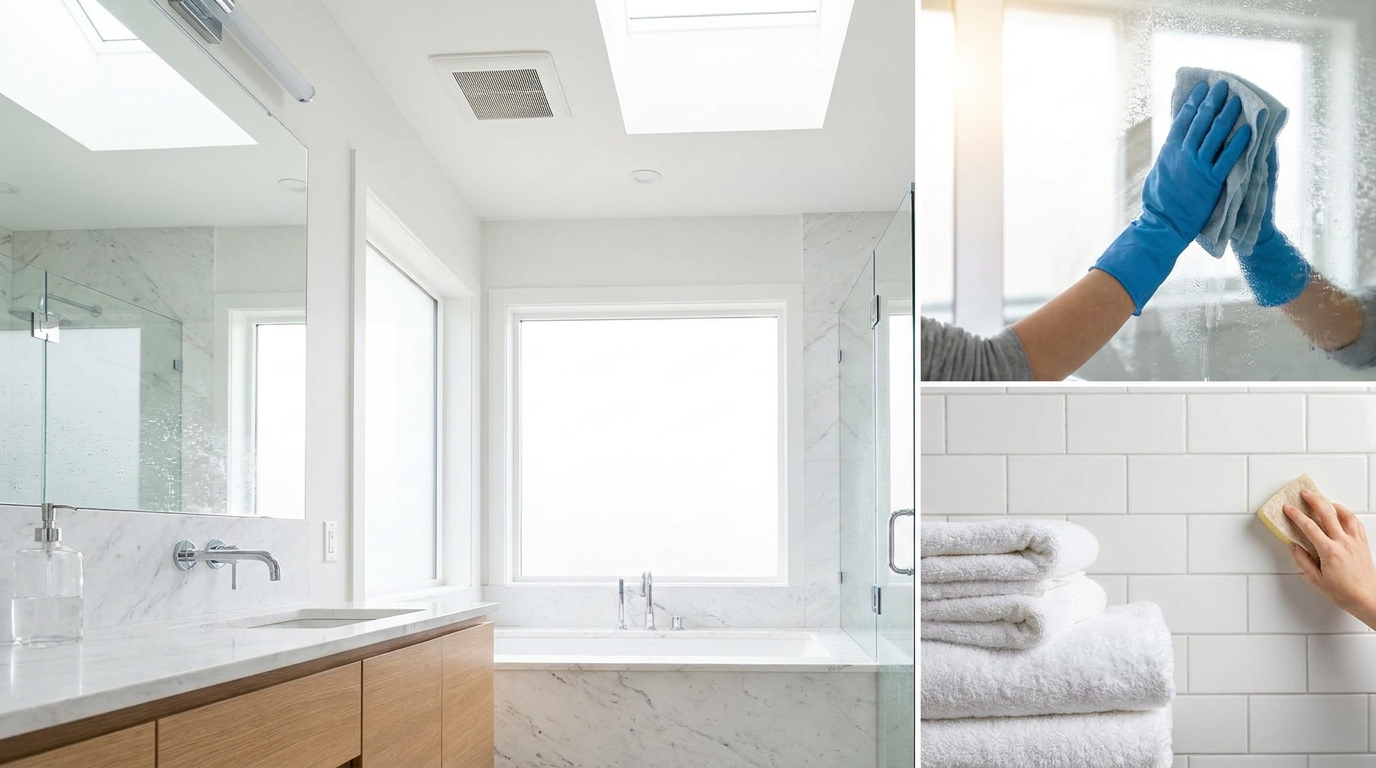
Bathrooms need a slightly different deep cleaning mindset because this is where moisture control matters most. Health Canada says indoor mold growth may pose a health hazard and is associated with eye, nose, and throat irritation, coughing, wheezing, shortness of breath, and worsening asthma symptoms. That is why a bathroom deep clean should do more than brighten tile. It should also help you spot and correct conditions that encourage dampness to linger.
Begin by clearing counters and removing towels, bath mats, and shower curtains or liners for washing if the material allows. Clean mirrors, faucets, sinks, and counters first, then move to the toilet, tub, and shower. Soap scum and product residue can make a bathroom feel dull even when it is technically clean, so this is one room where slow, detailed cleaning makes a visible difference.
As you work, pay attention to grout, caulking, corners, and the area around the base of the toilet or tub. Look for peeling paint, dark spots, musty smells, or dampness that returns quickly. Health guidance stresses that routine mold air testing is not usually recommended. Finding and fixing the moisture source is what matters most. If your bathroom fan is dusty, clean the cover and make sure the fan is used during and after showers when possible.
The EPA recommends keeping indoor humidity below 60%, ideally around 30% to 50%, to help reduce moisture related problems. In bathrooms, that can mean running the exhaust fan, opening a window if conditions allow, drying wet surfaces, and washing damp textiles regularly. These small habits have a very real effect on how fresh and healthy the room stays between deep cleans.
Deep Cleaning Bedrooms for Better Rest
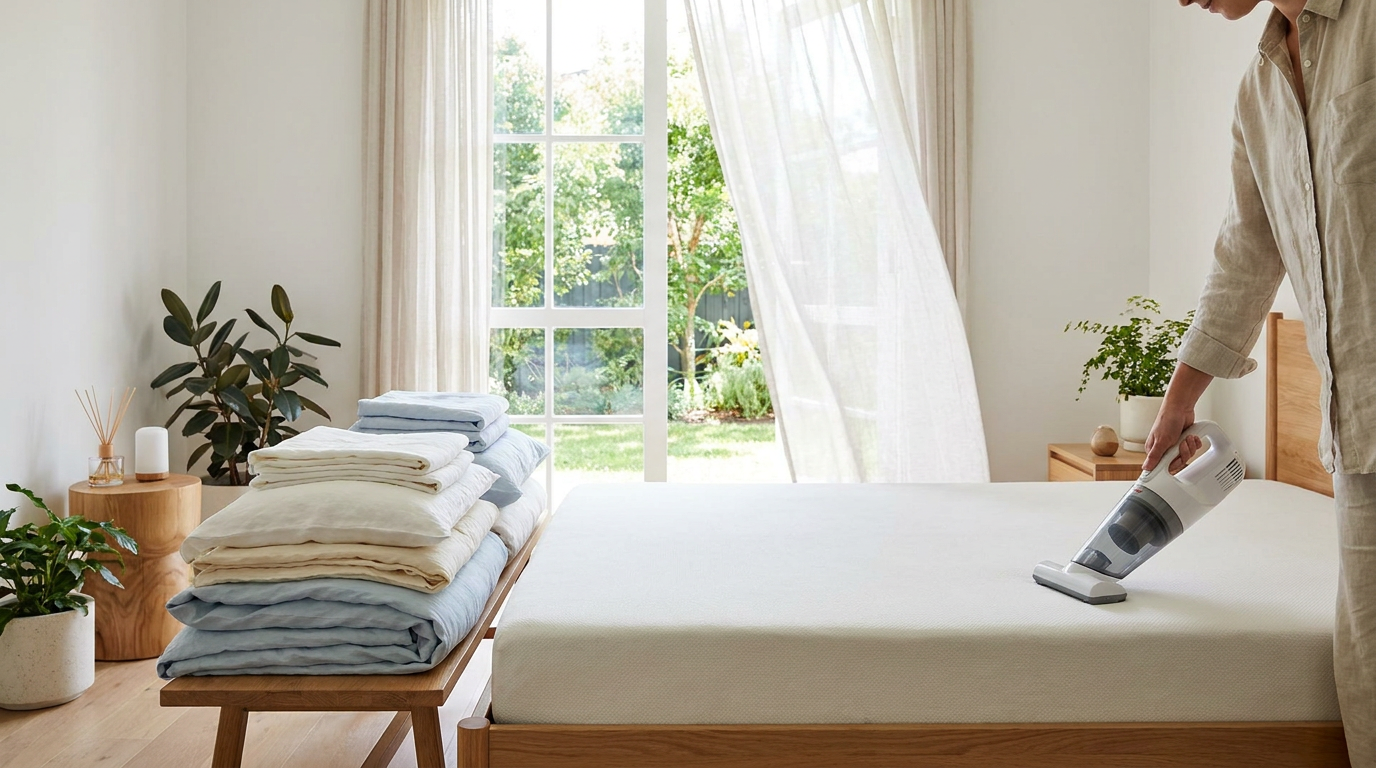
A bedroom should feel restorative, and deep cleaning can help bring that feeling back quickly. Because bedrooms hold so many soft materials, they tend to collect dust in ways that are easy to overlook. Start by stripping the bed completely and washing sheets, pillowcases, and duvet covers. If possible, wash mattress pads and blankets too. Bedding is one of the most useful places to focus because it can hold dust, body oils, and allergens that affect comfort night after night.
Vacuum the mattress surface carefully, then clean or dust the bed frame, headboard, nightstands, lamps, and baseboards. If you have curtains, wash or vacuum them depending on fabric type. Dust often gathers behind and beneath the bed, so this is one area where moving furniture even slightly can be worthwhile. A cleaner bedroom usually feels quieter visually and physically, which can support a more relaxing evening routine.
If allergies are a concern, this room is especially important. The EPA notes that frequent cleaning helps reduce indoor dust and allergens such as dust mites and pet dander. Consider whether your bedroom would benefit from simplifying textiles, washing pillows more regularly, or using mattress and pillow covers designed to reduce allergen exposure. None of these steps need to make the room feel clinical. In fact, a healthy bedroom often feels softer and more luxurious because it is genuinely fresh.
Do Not Forget Entryways, Hallways, and Hidden Zones
Some of the most important deep cleaning areas are the ones people usually rush past. Entryways collect outdoor dirt, pollen, shoes, bags, and random clutter that can set the tone for the whole house. Hallways gather dust along edges and trim. Laundry rooms can become surprisingly damp or dusty. Closets may hide stale textiles and overcrowded storage that make the rest of the home harder to maintain.
In the entry, shake out or wash mats, wipe the door and surrounding trim, and clean the floor thoroughly. If possible, create a simple landing zone for shoes, keys, and bags so dirt and clutter stop at the door instead of spreading. This one change can noticeably reduce how much dust and mess move into the rest of the house.
Utility spaces deserve a close look too. Clean behind the washer and dryer if it is safe to do so, remove lint from accessible areas, and check for any signs of leaks or dampness. If your basement or laundry space feels humid, that may be a clue that moisture control needs more attention. Deep cleaning is often when you discover the small maintenance issues that shape comfort long term.
Ventilation, Filtration, and Airflow: The Often Missed Part of a Deep Clean
One of the most helpful shifts in modern home care is the growing focus on indoor air quality as part of cleaning. The EPA emphasizes three main strategies for improving indoor air quality at home: source control, ventilation, and filtration. Most people naturally focus on the first one by wiping, washing, and vacuuming. But the second and third strategies matter too, especially in homes that stay closed up for much of the year.
Ventilation simply means helping stale indoor air move out and fresh air move in when conditions are appropriate. During a deep clean, opening windows for a period of time can help clear odors and reduce the concentration of indoor pollutants. Kitchen and bathroom exhaust fans also play an important role by moving moisture and cooking byproducts out of the house.
Filtration can be just as meaningful. If your HVAC system uses replaceable filters, changing them on schedule supports the whole home. Portable air cleaners may also be useful in some spaces, especially bedrooms or family rooms where people spend long periods of time. They are not a substitute for cleaning, but they can complement it. Think of cleaning as removing the sources you can see and touch, while filtration helps support what is happening in the air around you.
Managing Moisture and Preventing Mold
If there is one issue that deserves special respect during a deep clean, it is moisture. Mold is not simply a cosmetic nuisance. Health Canada advises that indoor mold growth may pose a health hazard, and both Canadian and U.S. guidance stress that the solution is to find and correct the moisture source rather than just treating the visible patch. In other words, if water keeps coming in or humidity stays too high, the problem often returns.
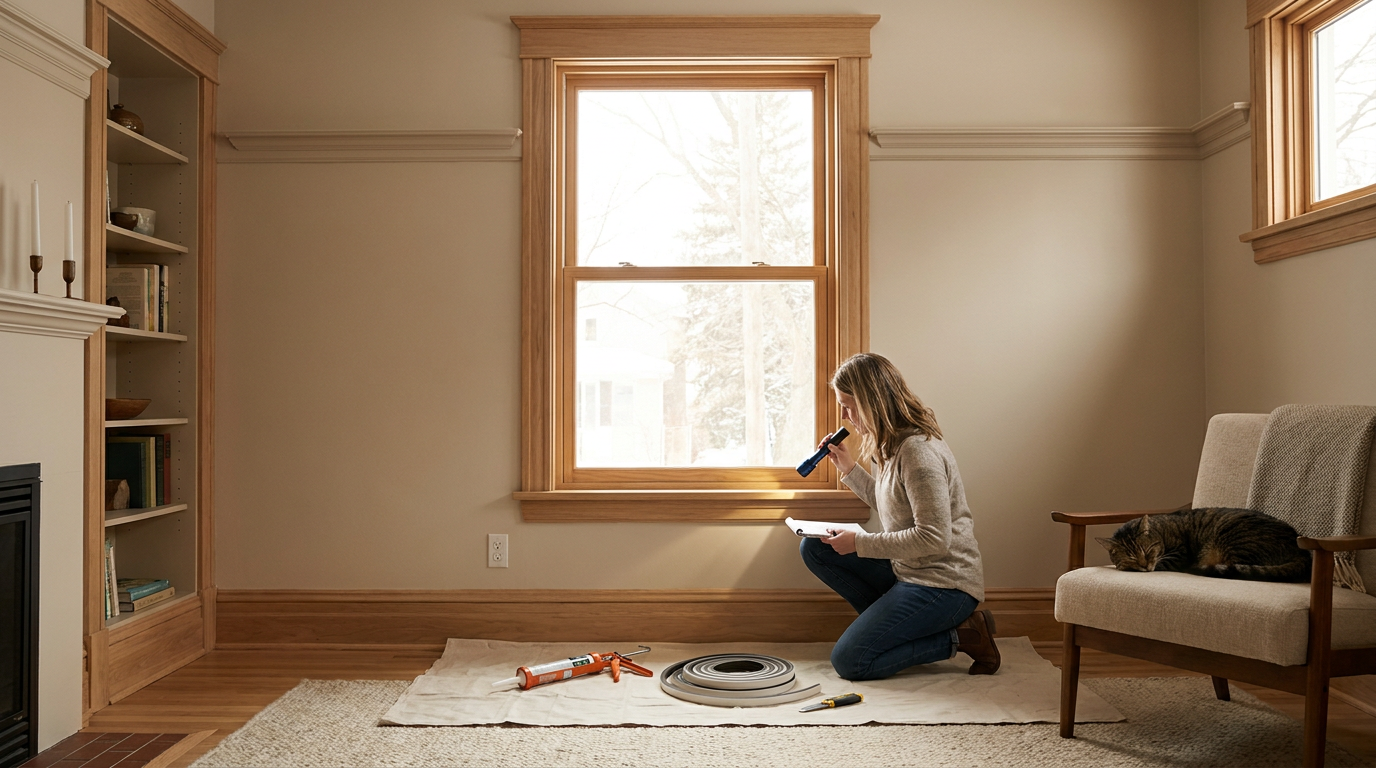
As you clean, watch for clues such as condensation on windows, peeling paint, warped trim, musty smells, or recurring spots around tubs, sinks, and exterior walls. Check under sinks, around toilets, near washing machines, and in basement corners. If something feels persistently damp, that deserves attention beyond ordinary cleaning.
Simple prevention habits make a meaningful difference. Dry wet bathroom and kitchen surfaces when practical, run exhaust fans, keep air moving, and address leaks promptly. If a room tends to stay damp, a dehumidifier may help bring humidity into the EPA’s recommended 30% to 50% range. A deeply cleaned home feels best when it is also dry enough to stay fresh.
Common Deep Cleaning Mistakes to Avoid
Sometimes the biggest obstacle to effective deep cleaning is doing too much of the wrong thing. One common mistake is overusing harsh disinfectants. Cleaning and disinfecting are not interchangeable, and routine cleaning is often enough for everyday household care. Overloading a space with strong chemicals can make the air less pleasant and may irritate sensitive people. Choose products thoughtfully and use stronger options only when there is a clear reason.
Another mistake is focusing only on visible surfaces while ignoring fabrics, floors, and hidden moisture. A shiny countertop matters, but a dusty upholstered chair or a damp bathroom corner may affect comfort more. Deep cleaning works best when it addresses what builds up in real life rather than what looks most dramatic on social media.
It is also easy to get drawn into services or shortcuts that promise a complete reset without evidence. Air duct cleaning is a good example. The EPA says it is usually unnecessary unless there is visible contamination, mold, or another specific issue. In many homes, the better investment is simply thorough cleaning, good filters, moisture control, and practical ventilation habits.
How Often Should You Deep Clean?
There is no single schedule that fits every household. The right rhythm depends on how many people live in the home, whether you have pets, local weather conditions, allergies, and how quickly dust or moisture tends to build up. For many households, a full deep clean once or twice a year works well, paired with smaller seasonal resets in high use areas like kitchens, bathrooms, and bedrooms.
What matters more than the exact calendar is consistency in the habits that preserve your results. Washing bedding regularly, vacuuming soft surfaces, wiping kitchen grease before it hardens, running bathroom fans, and keeping clutter from spreading all help your deep clean last longer. The home feels lighter not because you cleaned once perfectly, but because you care for it in a steady, realistic way.
If a full house deep clean feels overwhelming, divide it across several weekends or even several weeks. You might focus on bedrooms first, then bathrooms, then the kitchen, then common spaces. A slower approach can be especially helpful for busy families because it allows you to be thorough without turning the process into a stressful marathon.
A Gentle Deep Cleaning Checklist for the Whole Home
If you want a simple guide to return to, this checklist covers the essentials without pushing you toward perfection. Use it as a grounding tool rather than a rigid standard. The goal is to create a home that supports your life with more ease, clarity, and comfort.
- Declutter surfaces, floors, and catch all corners.
- Wash bedding, throws, towels, bath mats, and other textiles.
- Dust high to low, including trim, shelves, vents, and light fixtures.
- Vacuum rugs, upholstery, mattresses, and under furniture.
- Clean kitchen grease, pantry crumbs, fridge shelves, and sink areas.
- Remove bathroom soap scum and check for hidden dampness.
- Clean windows, sills, mirrors, and fingerprints on doors or switches.
- Mop floors thoroughly and allow them to dry fully.
- Check humidity, condensation, leaks, and musty smells.
- Replace or clean filters according to manufacturer guidance.
The Emotional Reward of a Sparkling Space
At its best, deep cleaning is an act of care. It is a way of tending to the environment that holds your meals, your sleep, your conversations, your family routines, and your moments of rest. When your home is deeply cleaned, it often becomes easier to think clearly, host casually, and move through the day with less friction. You may not notice every task you completed, but you will likely feel the result.
There is also a quiet confidence that comes from living in a home that supports you well. A cleaner kitchen invites better habits. A fresher bedroom makes rest feel more reachable. A less cluttered living room encourages you to sit down and actually enjoy your evening. These are not dramatic transformations, but they are meaningful ones, and they add up over time.
So if your home has been asking for a reset, consider this your invitation to begin. Open a window, start with one room, and focus on the areas that shape comfort most. Deep cleaning is not about making a house look untouched. It is about helping it feel lived in, loved, and beautifully ready for the life unfolding inside it.


No Comment! Be the first one.