


Essential Indoor Plant Care Tips for a Healthier, Calmer Home Environment
There is something deeply comforting about living with plants. A room with soft green leaves, natural texture, and a little life reaching toward the window simply feels different from a room without them. Indoor plants can make a home feel calmer, more personal, and more beautiful, and for many people they become part of a daily rhythm that encourages slower mornings, gentler routines, and a stronger connection to the space they live in. That emotional value matters just as much as the decorative one.
Table Of Content
- Why indoor plants matter for a healthy home
- Start with the most important factor: light
- How to read the light in your home
- Rethink watering as a response, not a schedule
- The role of drainage in plant health
- A simple watering routine that works
- Humidity and temperature: the quiet influences on plant comfort
- Choose plants that suit your life, not just your wishlist
- Group plants with similar needs
- Leaf cleaning, pest checks, and the beauty of small maintenance
- When to repot and how to tell a plant is root-bound
- Seasonal plant care makes a big difference
- Creating a soothing plant system in your home
- Indoor plants and air quality: what to expect realistically
- Easy habits that help plants and home life thrive
- Final thoughts: a healthier home is one that feels alive and balanced
- Quick reference: indoor plant care essentials
Plants are also often linked to healthier indoor air, and there is some truth in that idea, but it helps to approach the subject with realistic expectations. Public health guidance consistently shows that the biggest drivers of indoor air quality are source control, ventilation, filtration, humidity balance, and moisture management. In other words, houseplants can support a healthier-feeling home and may play a modest role in comfort, but they do not replace opening windows when appropriate, managing pollutants, changing filters, or preventing dampness and mold.
That practical perspective is actually good news because it frees you to enjoy houseplants for everything they genuinely do well. They soften hard corners, add visual warmth, bring color into neutral rooms, and help create a soothing, biophilic atmosphere that many people find restorative. When plants are matched to the right light, watered thoughtfully, and placed with intention, they can become one of the simplest ways to make a home feel more alive.
This guide brings together the essentials of indoor plant care in a way that feels useful for real life. You do not need a greenhouse, a complicated schedule, or a natural talent for gardening. You simply need to understand a few key principles about light, watering, humidity, leaf care, and seasonal changes, then build a small system that works for your home and your routine.
Why indoor plants matter for a healthy home
A healthy home is not only about cleanliness or air systems. It is also about how a space makes you feel when you walk through the door. Indoor plants contribute to that feeling in a quiet but meaningful way. They introduce an organic presence that balances technology, hard finishes, and busy visual clutter, which can make rooms feel softer and more welcoming.
There is also a strong wellness connection in the way people interact with plants. Caring for something living can become a grounding ritual. Watering, checking leaves, turning a pot toward the light, or noticing a new unfurling leaf can encourage attentiveness and calm. These are small acts, but they often create a sense of routine and connection that supports everyday well-being.
When it comes to indoor air quality, it is helpful to be balanced and honest. Houseplants may remove some pollutants under certain controlled conditions, and they can contribute to a fresher feeling environment, especially when they are part of a clean, well-maintained home. Still, the main tools for healthier indoor air remain controlling pollution sources, ensuring ventilation, maintaining HVAC systems, using filtration when needed, and preventing excessive moisture.
A practical way to think about houseplants is this: they are a beautiful, wellness-supporting layer in a healthy home, not the entire air-quality strategy.
That distinction matters because many people were introduced to the idea of plants as air purifiers through the famous NASA research. That study helped spark lasting enthusiasm for indoor greenery, but later reviews found that the dramatic pollutant removal people imagine does not translate neatly to a typical home with a few potted plants. Rather than seeing that as disappointing, it makes more sense to appreciate plants for the full picture they offer, which includes atmosphere, visual comfort, and a subtle sense of freshness that can make home life more enjoyable.
Start with the most important factor: light
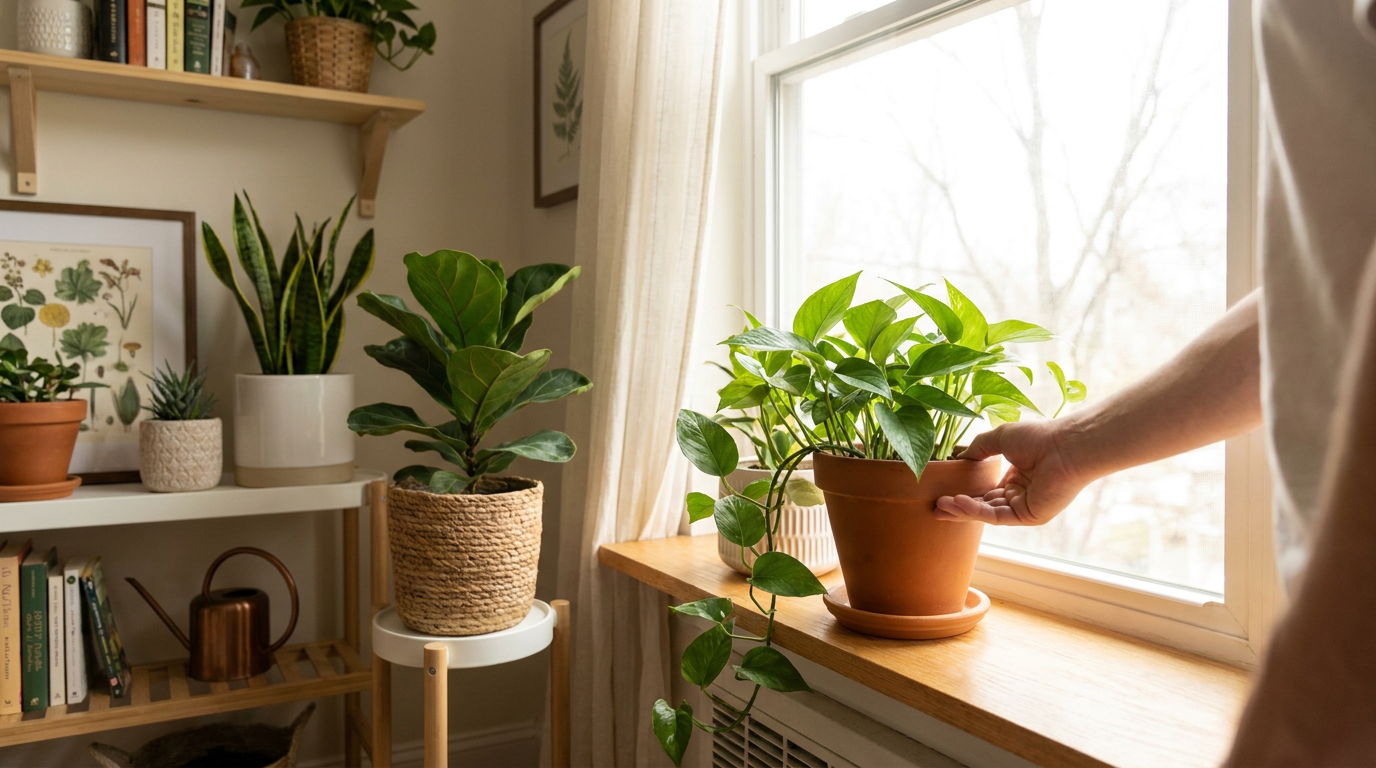
If there is one indoor plant care truth that changes everything, it is this: light is the foundation of plant health. Many struggling houseplants are not failing because of bad intentions. They are simply living in the wrong light. A plant that wants bright light will weaken in a dim corner, and a plant that prefers gentler conditions may scorch in harsh direct sun.
Instead of asking which plant is easiest in general, it is usually better to ask which plant is easiest for your home. Begin by observing your windows and the quality of light throughout the day. South and west exposures often bring stronger light, while north-facing windows may be much softer. East-facing windows often offer a pleasant middle ground with bright but gentler morning sun.
Low light does not mean no light. A room can feel bright to people while still being too dim for many plants to grow well over time. If you notice long, stretched stems, small new leaves, fading variegation, or a plant leaning dramatically toward the window, those can be signs that it wants more light. Matching the plant to the available conditions is far easier than trying to force it to adapt to a place that does not support healthy growth.
For beginners, this is why plant selection matters so much. Pothos, snake plant, and spider plant are often considered forgiving choices because they tolerate a range of conditions better than fussier species. Even these reliable plants, however, will do best when their placement is thoughtful. A pothos in medium to bright indirect light may grow lush and trailing, while the same plant in a dim hallway may survive but never truly thrive.
It is also wise to rotate pots every so often so plants grow more evenly. Most indoor plants will naturally lean toward the strongest light source. Turning them a little each week can encourage a more balanced shape and prevent one side from becoming sparse or stretched. This is a small habit, but it keeps plants looking fuller and helps your displays feel more polished.
How to read the light in your home
You do not need complicated equipment to become better at reading indoor light, though some homeowners enjoy using light meters or phone apps for a more exact sense of brightness. Start by noticing where sunlight actually lands. A windowsill with several hours of direct sun is very different from a table across the room that receives only ambient brightness. Paying attention to these distinctions will help you place plants with more confidence.
If you are decorating a plant shelf or building a small indoor garden, group plants by their light preferences first. This often creates a more successful arrangement because each plant is living in conditions that support it. It also makes care easier, especially if you are styling plants in a living room, kitchen corner, bedroom dresser, or entry console where the light pattern is consistent.
Rethink watering as a response, not a schedule
One of the most common indoor plant mistakes is treating watering like a fixed calendar event. In reality, there is no universal watering schedule that works for every home, every season, and every species. A plant’s water needs change based on light, room temperature, humidity, pot size, pot material, growth stage, and the type of plant itself. That is why the same pothos may need water much more often in summer by a bright window than it does in winter in a cooler room.
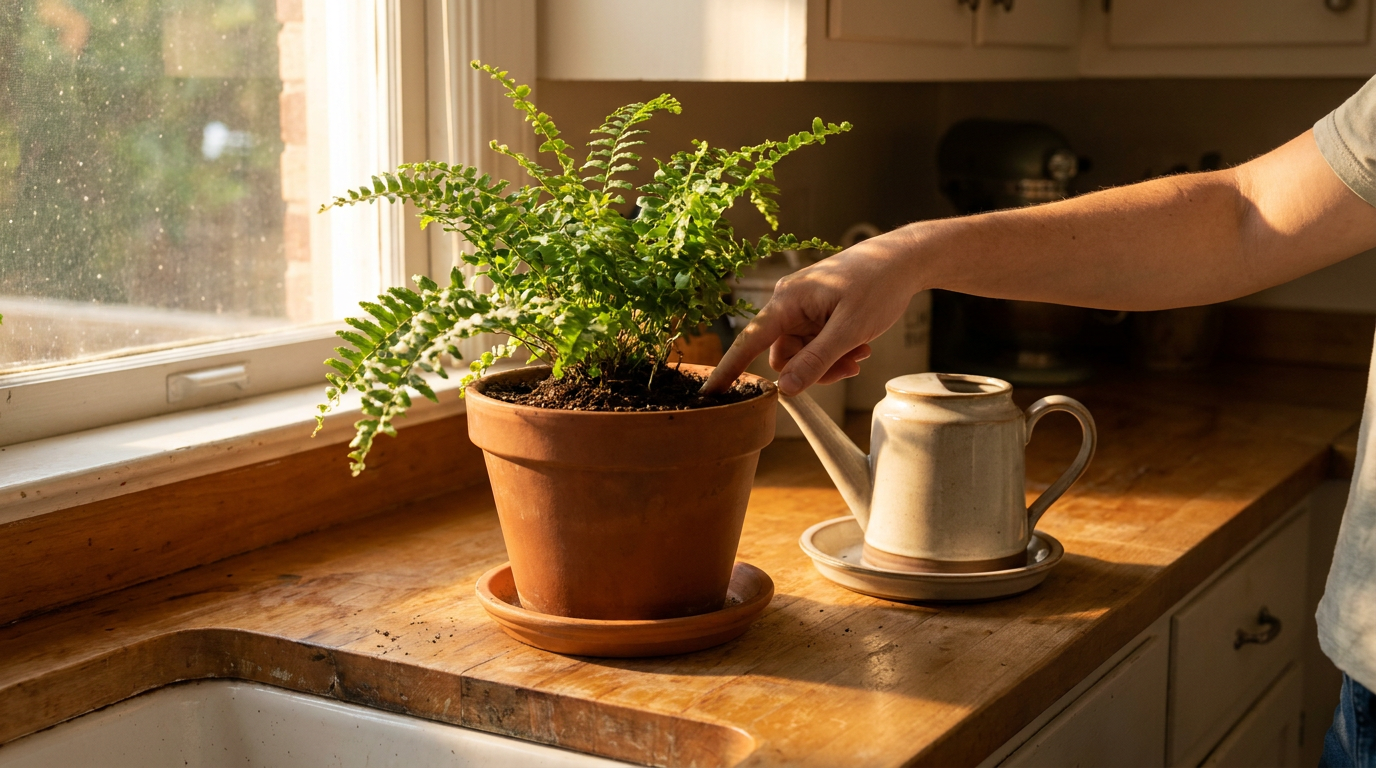
The most useful mindset is to stop asking, “Is it watering day?” and start asking, “Does this plant actually need water right now?” The answer usually comes from observation. Check the top inch or two of soil with your finger, lift the pot to feel whether it has become noticeably lighter, and pay attention to the leaves. Soil that is still damp generally means you should wait. Many houseplants prefer to dry somewhat between waterings rather than remain constantly wet.
Overwatering is one of the biggest reasons houseplants decline indoors. It does not simply mean giving too much water at one time. More often, it means watering too frequently, keeping the roots in wet soil with too little oxygen, and creating conditions where root problems begin. Yellowing leaves, persistent sogginess, fungus gnats, or a stale smell from the pot can all point to excessive moisture around the roots.
At the same time, underwatering can also stress plants, causing wilting, brown crisp edges, slowed growth, and soil that has pulled far away from the edge of the pot. The goal is not to keep all plants equally wet or equally dry. The goal is to understand what each plant prefers and respond to those needs consistently.
The role of drainage in plant health
Good drainage is essential. Pots should ideally have drainage holes so excess water can escape rather than collecting around the roots. Decorative planters without holes can still be used as outer cachepots, but the plant itself should sit in an inner nursery pot that drains properly. After watering, empty saucers or outer containers so the plant is not left standing in water.
This matters for both plant health and home health. Leaving water pooled beneath pots can contribute to moisture problems and invites the sort of damp conditions you do not want indoors. A healthy home is not just one with beautiful plants. It is one where watering habits are careful enough to avoid mold-friendly moisture buildup on sills, floors, and trays.
A simple watering routine that works
Many people do well with a weekly plant check rather than a weekly watering. Walk through your home with a small towel, watering can, and perhaps a moisture meter if you like using one. Touch the soil, inspect the leaves, and water only the plants that actually need it. This routine feels calm and manageable, and it naturally trains you to notice patterns in your home.
Some homeowners now use smart reminders or humidity sensors, which can be helpful, especially for busy routines. These tools work best when they support observation rather than replace it. No app can fully account for a cloudy week, a suddenly warmer room, or the way one clay pot dries faster than another. Plants respond to their environment, so your care should be flexible enough to respond too.
Humidity and temperature: the quiet influences on plant comfort
Indoor gardeners often focus on light and watering first, but humidity and temperature play a major supporting role. This is especially true in northern climates where winter heating can make indoor air extremely dry. Many tropical houseplants come from naturally humid environments, so a heated room with dry air, radiators, and forced air vents can be surprisingly stressful for them.
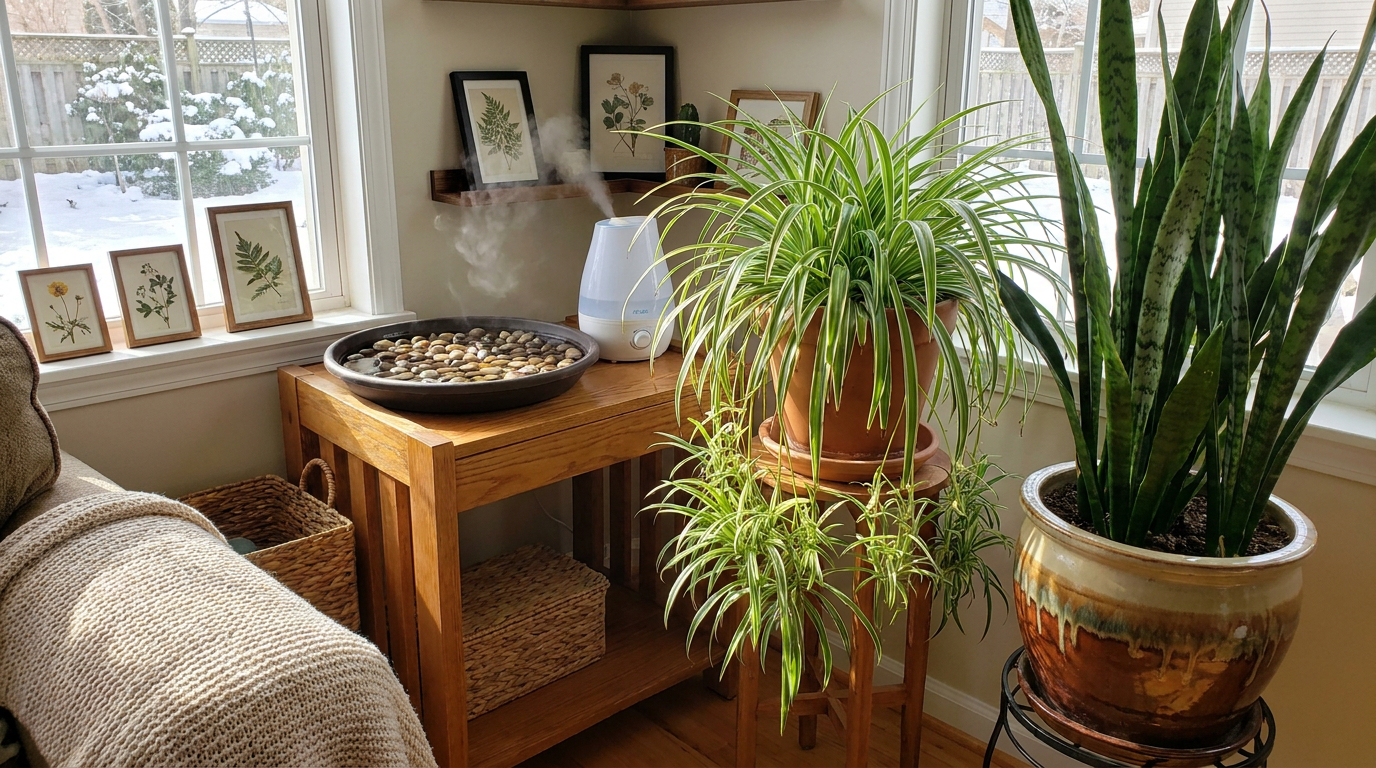
If you notice brown leaf tips, slowed growth, or a general lack of lushness during the colder months, dry air may be part of the story. There are gentle ways to support humidity without creating excessive indoor moisture. A room humidifier, a pebble tray with water placed beneath but not into the pot, and grouping compatible plants together can all help create a more comfortable local microclimate.
Placement matters as much as humidity strategy. Keep plants away from heat vents, fireplaces, radiators, and drafty exterior doors where temperatures swing sharply. A beautiful plant on a windowsill may struggle if the glass is icy cold at night in winter and intensely warm in the afternoon. Stable, moderate conditions usually lead to stronger, healthier growth.
Balance is important here. While plants appreciate some humidity, homes do not benefit from uncontrolled dampness. Excess moisture can encourage condensation, mold, and dust mites, all of which work against healthy indoor air. Empty saucers, wipe spills, and avoid turning plant care into a source of chronic wetness on surfaces. The best plant care supports the whole home, not just the plant.
Choose plants that suit your life, not just your wishlist
One of the kindest things you can do for yourself as a plant owner is choose varieties that fit your space and your routine. A dramatic, high-maintenance plant may look beautiful online, but if your home is low light and your weekdays are packed, it can quickly feel discouraging. There is no shame in loving easy, resilient plants. In fact, a home filled with healthy beginner-friendly greenery often feels more luxurious than one with several declining specimens.
Pothos is beloved for a reason. It adapts well, trails beautifully from shelves, and gives a room instant softness. Spider plants bring an airy, cheerful look and are often satisfying for beginners because they produce baby offshoots over time. Snake plants offer sculptural structure and tolerate lower light better than many other options, making them useful in rooms where sunshine is limited.
When shopping, think beyond appearance alone. Consider whether the plant’s size at maturity suits your room, whether you have the right kind of window nearby, and whether pets or small children interact with the area. Building a thoughtful plant collection is less about impulse and more about creating a little ecosystem that makes sense in your everyday home.
Group plants with similar needs
Grouping plants with similar light and water preferences is one of the easiest ways to simplify care. A cluster of medium-light, moderate-water plants in one area is much easier to manage than a random mix of species with completely different expectations. This also tends to look more intentional from a design perspective. Instead of scattered pots that feel accidental, you create a composed indoor garden that reads as part of the room.
Plant groupings can work beautifully on open shelves, entry benches, sideboards, or sunlit corners. Varying the heights and leaf shapes adds depth, while consistent pot colors or materials create visual calm. This is where plant care and interior style meet in the most natural way. Healthy plants become living decor, and your room gains both texture and softness without feeling cluttered.
Leaf cleaning, pest checks, and the beauty of small maintenance
Healthy houseplants are not only about what happens in the soil. Leaves need attention too. Dust can build up on foliage over time, especially in urban homes or rooms with heating systems running often. A layer of dust dulls the look of the plant and can interfere with normal plant function, which is one reason occasional cleaning is worth doing.
Use a soft, damp cloth to gently wipe larger leaves, supporting them carefully with your hand. Smaller or more delicate foliage can sometimes be rinsed lightly in the sink or shower with lukewarm water if the plant tolerates it. This simple ritual brings back shine in a natural way and makes the plant feel immediately fresher and more vibrant in the room.
While cleaning, take the opportunity to inspect for pests. Look under leaves, along stems, and near new growth for signs of trouble such as sticky residue, tiny webs, pale speckling, or cottony clusters. Catching issues early is the secret to keeping them manageable. A weekly glance is often enough to prevent a small pest problem from spreading to an entire collection.
Plants also benefit from occasional grooming. Remove dead leaves, trim damaged tips neatly if needed, and clear away fallen debris from the soil surface. These little actions help the plant look cared for and keep your displays from appearing tired. In a home environment, visual freshness matters. A well-maintained plant contributes to the mood of a room in a much more powerful way than a neglected one.
When to repot and how to tell a plant is root-bound
Repotting can feel intimidating, but it is simply part of the plant life cycle. Over time, roots fill the available space, potting mix breaks down, and watering behavior changes. A plant that dries out unusually fast, has roots circling tightly inside the pot, or seems to have stalled in growth despite good care may be ready for a fresh container.
Choose a new pot only slightly larger than the current one. Going too big can leave excess soil staying wet for too long, which increases the risk of overwatering problems. Use a quality potting mix suited to houseplants, and make sure drainage remains a priority. After repotting, give the plant a little time to settle rather than expecting instant dramatic growth.
Repotting is also a lovely moment to reassess placement and styling. Sometimes a plant outgrows its original spot and deserves a more prominent place in the room. Other times, refreshing the pot is what helps it blend beautifully with updated decor. In this way, plant care becomes part of the natural evolution of the home itself.
Seasonal plant care makes a big difference
Indoor plants do not experience the same conditions year-round, even though they live inside. Winter is often the biggest shift, especially in North American homes. Days are shorter, light intensity drops, heating systems dry the air, and windows can become cold zones. This usually means plants grow more slowly and need less frequent watering than they do during spring and summer.
One of the most common winter mistakes is continuing a summer watering pattern. If light is reduced and growth slows, roots use water more slowly too. Soil remains damp for longer, which can make overwatering especially easy. During colder months, check plants carefully before watering and be comfortable with longer intervals if the soil is still moist.
Spring is often the season when houseplants begin waking up again. You may notice new growth, faster drying soil, and a need to resume feeding or repotting if a plant has become root-bound. Summer can bring stronger light and warmer temperatures, which can support excellent growth, but it can also increase thirst and occasionally lead to leaf scorch if a plant gets too much direct sun too suddenly.
Autumn is a gentle transition and a good time to reset routines before winter arrives. Clean leaves, inspect for pests, reduce watering gradually where needed, and move light-hungry plants closer to windows if daylight is fading. Seasonal awareness is one of the easiest ways to improve plant health because it encourages you to care for what is actually happening now instead of following a rigid all-year routine.
Creating a soothing plant system in your home
The most successful plant owners are not always the most knowledgeable. Often, they are simply the ones who create small repeatable systems. Rather than treating every plant as an isolated project, try building a home approach that feels elegant and manageable. This might mean keeping a watering can and soft cloth in a nearby cabinet, setting aside ten quiet minutes each weekend for plant checks, and arranging plants by shared needs.
A plant system can be as simple as three zones in your home. One zone may hold brighter-light plants near your best window. Another may contain lower-light, slower-growing plants in a bedroom or hallway. A third could be a kitchen or bathroom grouping where humidity tends to be a little higher. Once your home is organized this way, plant care becomes much less confusing.
This system also supports design harmony. Plants look especially beautiful when they are integrated into the room rather than scattered as afterthoughts. A vine softening open shelving, a sculptural floor plant anchoring a corner, and a small cluster of tabletop plants near a reading chair can change the emotional texture of the home. The effect is not just visual. It is atmospheric.
A well-placed plant does more than fill a space. It softens the energy of a room and reminds us that home should feel alive.
Indoor plants and air quality: what to expect realistically
Because the idea of plants purifying indoor air is so widespread, it is worth being very clear. Houseplants are not a substitute for proper indoor air-quality practices. If you want a healthier home environment, start with the big essentials: reduce indoor pollutant sources where possible, ventilate appropriately, maintain filters and air systems, manage humidity, and prevent dampness and mold. Those steps do far more than adding a few pots to a windowsill.
That said, plants still deserve a place in the conversation. They can enhance the feeling of freshness, contribute gentle humidity in some settings, and create a home atmosphere that supports comfort and calm. In a wellness-oriented interior, those benefits are meaningful. A room that feels cared for, balanced, and connected to nature often encourages better routines overall, from opening windows more often to paying closer attention to cleanliness and seasonal care.
The healthiest perspective is to treat plants as one beautiful layer of a broader home environment strategy. Use them to add life, color, and emotional comfort. Then support that beauty with practical habits that keep the home truly healthy, such as addressing moisture promptly, emptying drainage saucers, and ensuring the room itself is well maintained.
Easy habits that help plants and home life thrive
When people say they are bad with plants, what they usually mean is that they have not yet found a rhythm. Plant care becomes much easier when it is tied to habits you already have. Check soil while making coffee on Sunday morning. Rotate a pot while dusting shelves. Wipe a leaf when you notice fingerprints or dullness. These are not big tasks, but they build consistency.
If you want a practical starting point, focus on a short list of repeatable actions. Observe light before choosing a plant. Use pots with drainage. Water according to soil dryness rather than the calendar. Group plants with similar needs. Clean leaves now and then. Watch for seasonal changes, especially in winter. This is enough to create visible improvement in most homes.
It also helps to let your plant collection grow slowly. A few healthy, well-placed plants are more satisfying than a crowded collection you do not have time to monitor. Start with success, enjoy the confidence it builds, and let your home evolve naturally. Plant care should feel supportive and restorative, not like another source of pressure.
Final thoughts: a healthier home is one that feels alive and balanced
Indoor plants offer one of the loveliest forms of home improvement because their impact is both visual and emotional. They can make a room feel softer, calmer, and more grounded, while also encouraging more attentive daily living. Although they should not be treated as a replacement for ventilation, moisture control, or other core indoor air-quality practices, they absolutely have a meaningful role in creating a healthier-feeling home environment.
The real secret is not perfection. It is attentiveness. Notice the light. Check the soil. Keep drainage simple and effective. Support humidity thoughtfully without inviting dampness. Clean leaves, rotate pots, and choose plants that match your real life. These modest actions create healthier plants, and healthier plants create more beautiful rooms.
In the end, caring for indoor plants is really about caring for the atmosphere of home. It is about making space for beauty, calm, and the small daily rituals that help a house feel deeply lived in. When you approach plant care with warmth, realism, and a little curiosity, you create more than a collection of greenery. You create a home that feels vibrant, balanced, and wonderfully alive.
Quick reference: indoor plant care essentials
- Match plants to your light. Bright windows support different plants than dim corners, and insufficient light is a common cause of decline.
- Water by need, not by schedule. Check soil moisture and adjust for season, temperature, pot size, and species.
- Prioritize drainage. Use pots with drainage holes and never leave excess water sitting in saucers.
- Support humidity carefully. Humidifiers, pebble trays, and grouping can help, especially in winter, but avoid creating damp indoor conditions.
- Keep leaves clean. Gentle dusting or wiping helps plants look better and function more normally.
- Inspect regularly. Watch for pests, yellowing leaves, and signs that a plant may need more light or less water.
- Repot when needed. If roots are crowded or soil dries too quickly, move the plant to a slightly larger pot with fresh mix.
- Remember the big picture. Plants enhance comfort and beauty, but ventilation, filtration, source control, and moisture management remain the foundation of healthy indoor air.



No Comment! Be the first one.