



Branded residences have moved from a niche luxury concept to one of the most closely watched segments in global high end property. For investors, developers, and affluent buyers, the model offers something that traditional luxury real estate does not always provide with the same consistency: a recognizable brand promise tied to service, operations, design standards, and a globally marketable identity. In practical terms, a branded residence is usually a private home such as a condominium or villa developed in partnership with a hotel, fashion house, automotive label, wellness company, chef driven concept, or another premium lifestyle brand. The buyer is not simply purchasing square footage in a desirable location. The buyer is also purchasing a framework of expectations around quality, management, and owner experience.
Table Of Content
- What Are Branded Residences and Why Are They Different?
- Why the Segment Has Gained So Much Momentum
- The Core Appeal for Buyers and Investors
- How Branded Residences Compare With Traditional Luxury Real Estate
- The Financial Case: Where the Premium Can Come From
- Pricing Premium
- Demand Resilience
- Resale Appeal and Liquidity
- Global Reach
- The Costs and Risks Investors Must Not Ignore
- North America and Canada: Why Market Context Matters
- New Trends Shaping the Future of Branded Living
- Common Misconceptions About Branded Residences
- How to Evaluate a Branded Residence Like an Investor
- Conclusion: A Premium Worth Paying Only When It Is Earned
- Key Takeaways for Investors
This distinction matters because luxury real estate has become more competitive, more international, and more experience driven. Prime buyers are no longer evaluating homes only by finishes, view corridors, or tower height. They are comparing convenience, privacy, service levels, amenity ecosystems, and how easily a property can be used, rented, maintained, and resold. In that environment, branded residences have emerged as a hybrid product between real estate and hospitality, and that hybridization is one of the reasons the segment has expanded so quickly across North America and beyond.
Recent market research supports that momentum. Knight Frank projects global branded residence inventory to rise from just over 27,000 units in 2011 to more than 162,000 by 2030, which illustrates the scale of change within a relatively short period. Savills has also pointed to strong pipeline growth, with expected global scheme count rising from 764 at the end of 2024 to 910 by the end of 2025. North America remains the dominant region, especially the United States, although its share of future projects is gradually declining as international markets accelerate. That trend tells investors two things at once: branded residences have already proven themselves in developed luxury markets, and the category is still in an expansion phase rather than a mature plateau.
For investors considering whether branded residences deserve a place in a portfolio, the key question is not whether the concept is fashionable. The more relevant question is whether the premium commanded by these homes is justified by measurable advantages over traditional luxury real estate. In many cases, the answer can be yes, but only when the brand, location, developer, and operational structure align. This is not a segment where a logo alone creates value. The most successful branded residences deliver a real operational advantage, a meaningful level of service consistency, and a market position that appeals to both end users and future buyers.
Branded residences are best understood as a luxury real estate product with hospitality discipline. Their premium is strongest when the brand reduces uncertainty and enhances daily ownership, not when it serves only as a marketing device.
This article examines the appeal of branded residences, how they compare with traditional luxury property investments, where the financial case is strongest, and what risks investors should evaluate before paying a premium. It also looks at why North America, and particularly transparent markets in the United States and Canada, remains highly relevant to this asset class even as global expansion broadens the map.
What Are Branded Residences and Why Are They Different?
At the simplest level, branded residences are privately owned homes affiliated with an established brand that influences design, service, management, or all three. Historically, the model was most closely associated with luxury hotel brands, which used their hospitality expertise to create residential products adjacent to or integrated with a hotel. Buyers could expect concierge services, housekeeping options, valet, dining access, spa privileges, and a standard of operational polish that mirrored the hotel environment. In many projects, this service layer became the core value proposition, particularly for global owners who wanted turnkey living.
Today, the category has widened considerably. Fashion houses, automotive brands, wellness operators, celebrity chefs, and lifestyle companies are now entering the market. This broadening reflects a shift in how luxury is marketed and consumed. A hospitality brand may sell assurance, consistency, and service. A fashion or design brand may sell aesthetic identity and exclusivity. A wellness brand may appeal to buyers who prioritize longevity, health programming, air quality, recovery spaces, and private club style amenities. The modern branded residence can therefore function as both a home and an expression of affiliation.
That evolution is important for investors because it changes the investment thesis. In hotel branded projects, the premium is often linked to service reliability, management systems, and global reservation style marketing to affluent buyers. In non hotel branded projects, the premium may rely more heavily on design differentiation, scarcity, emotional cachet, and cultural relevance. Both can work, but they do not create value in the same way. Investors need to understand whether they are buying into a service platform, a design story, or ideally both.
Traditional luxury real estate, by contrast, can range from exceptional to underwhelming in operational quality even when pricing appears similar. A non branded luxury condominium may have impressive finishes and strong amenities, but long term value often depends more directly on the developer’s execution, the condo board’s governance, and the building’s ability to maintain standards over time. Branded residences attempt to narrow that uncertainty by institutionalizing a level of service and quality control that buyers can recognize before they purchase.

Why the Segment Has Gained So Much Momentum
The rise of branded residences is not just a story about luxury branding. It is also a response to broader shifts in wealth, mobility, and buyer expectations. High net worth and ultra high net worth buyers increasingly own multiple homes, travel internationally, and expect seamless standards across markets. They are often willing to pay more for convenience if that convenience reduces friction around maintenance, staffing, security, and everyday logistics. A branded residence offers a familiar framework in an unfamiliar city, which is valuable to buyers who treat real estate as both lifestyle infrastructure and a store of wealth.
Another factor is transparency and global capital flow. JLL’s 2024 Global Real Estate Transparency Index places the United States and Canada among the more transparent major markets. Transparency supports confidence, especially for cross border buyers and institutional capital that prefer predictable legal systems, clearer valuation benchmarks, and stronger governance. JLL also reports that the most transparent markets attracted more than US$1.2 trillion in direct commercial real estate investment over the last two years. While branded residences are a residential product, they benefit from the broader confidence that transparent markets create.
North America’s role is therefore significant. The region remains one of the deepest and most recognizable luxury residential markets globally, even if future growth is diversifying geographically. Knight Frank’s 2025 survey indicates that North America still leads in scheme count, though its share of pipeline projects is falling from 32.7 percent of live schemes to 26.2 percent of pipeline projects. Investors should view that not as weakness, but as evidence that the concept has matured enough in North America to be exported more aggressively elsewhere.
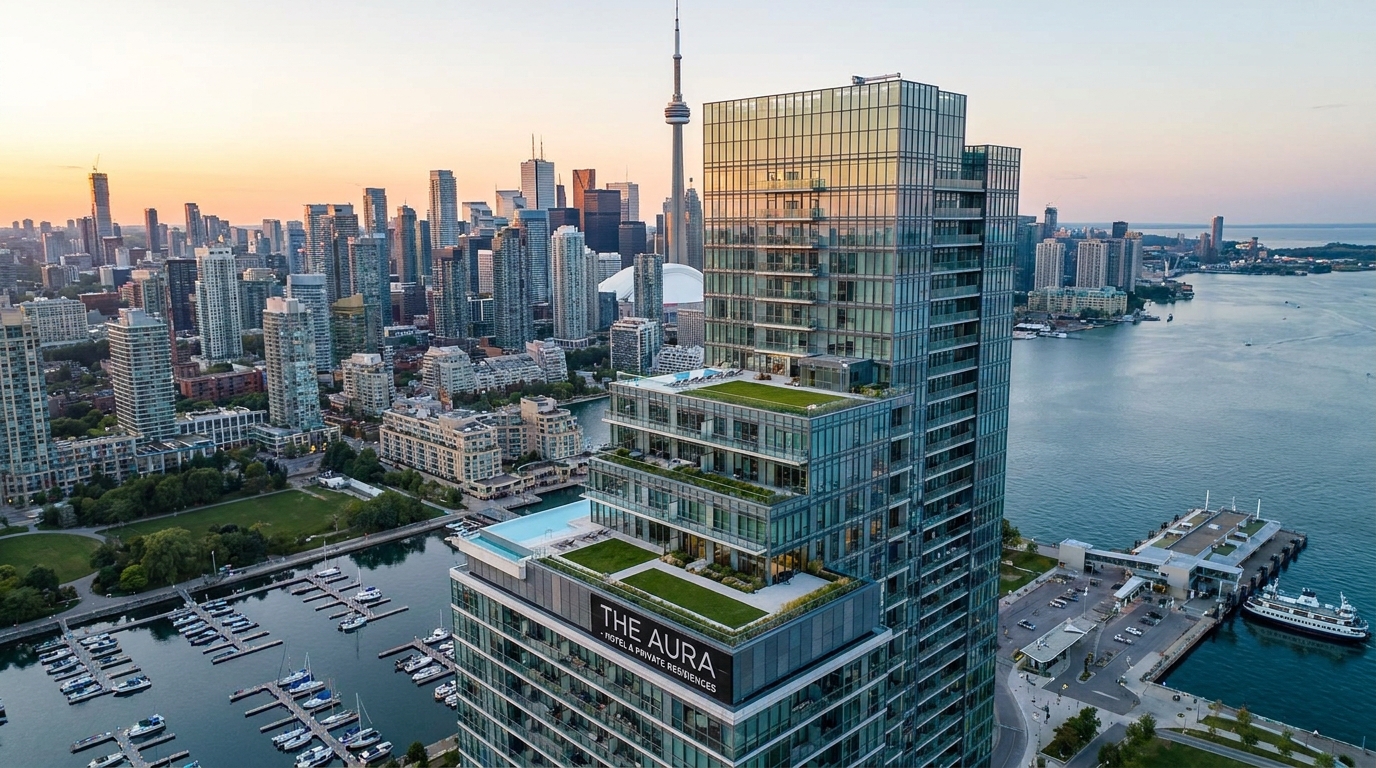
Canada presents an interesting case within this conversation. Branded residence supply remains relatively limited compared with the United States or newer luxury hubs, which makes each launch more visible and potentially more scarcity driven. Toronto’s Four Seasons Private Residences remains the best known Canadian reference point, and its sellout reinforced the idea that strong branding, prime location, and proven service can command exceptional demand. Vancouver has also long helped shape expectations around hotel linked luxury living, even if the branded landscape is still smaller than in many global gateway cities.
The Core Appeal for Buyers and Investors
To understand the investment potential of branded residences, it helps to start with buyer psychology. Luxury real estate buyers are not purely rational in the narrow financial sense, but they are often highly rational in terms of risk perception. A branded residence can reduce perceived execution risk in several ways. The brand may signal better design oversight, stronger property management, more disciplined staff training, and a lifestyle offering that has already been tested in other markets. That perception can matter greatly when a buyer is committing millions of dollars to a home that may be used only part of the year.
From an investor perspective, this reduced uncertainty can translate into a stronger pricing position. Branded residences often command a premium over comparable non branded luxury homes because buyers are willing to pay for status, convenience, and confidence in the operating model. Reports and brokerage commentary consistently suggest that branded homes can outperform in resale appeal and buyer confidence, especially in prime and super prime markets where global wealth is active. The premium is not automatic, but the market often treats the best branded projects as easier to understand and easier to market.
The concept of turnkey ownership is especially powerful here. Many affluent buyers do not want to build a luxury lifestyle from scratch after closing. They want a residence that functions immediately, with curated amenities, security, wellness facilities, dining access, and professional management already in place. A branded residence can satisfy this preference more effectively than many traditional luxury condos, where amenity quality may be high but operational consistency varies. The investment implication is straightforward: properties that are easier to own are often easier to resell.
Another draw is the amenity package itself. Luxury residential amenities have become more sophisticated over the last decade, but branded projects frequently go further in integrating hospitality level services with private ownership. Concierge support, in residence dining, housekeeping, wellness programming, private lounges, chauffeur arrangements, and resident only club spaces all contribute to the perceived value of the asset. Increasingly, wellness, personalization, and community are becoming the differentiators, reflecting a broader market shift toward experiences that feel curated rather than generic.
How Branded Residences Compare With Traditional Luxury Real Estate
Traditional luxury real estate still has clear strengths. In many markets, an unbranded trophy home in a premier location can appreciate significantly and may offer greater privacy, more architectural individuality, or lower ongoing fees. A well chosen non branded luxury property can be an exceptional investment if it benefits from scarcity, superior land value, or outstanding design. Investors should not assume that branded automatically means better.
The key difference lies in what supports value. In traditional luxury assets, value tends to be anchored most heavily in location, build quality, views, scarcity, and the broader reputation of the building or neighborhood. In branded residences, those same fundamentals still matter, but they are supplemented by a branded operating model. The brand can widen the buyer pool because it adds recognition and reassurance, particularly for international purchasers who may know the brand better than they know the local developer.
Resale dynamics are often where the comparison becomes most interesting. In uncertain markets, buyers tend to gravitate toward products that feel easier to evaluate. A branded residence can benefit because the brand supplies a shorthand for quality. That shorthand can enhance liquidity, which in real estate usually means a shorter path to attracting qualified interest rather than immediate exit in all conditions. In premium segments where transaction pools are narrow, that advantage can be meaningful.
There is also a marketing advantage that should not be overlooked. Branded projects often receive stronger global exposure than standalone luxury developments because the brand already has a database, reputation, and storytelling platform that reaches affluent consumers worldwide. This can support absorption in the primary market and visibility in resale. Traditional luxury properties can absolutely compete, especially if they are architecturally iconic or highly scarce, but they may not benefit from the same embedded marketing machine.
The Financial Case: Where the Premium Can Come From
The investment thesis behind branded residences usually centers on four financial ideas: pricing premium, demand resilience, resale liquidity, and global buyer reach. Each of these can contribute to stronger performance relative to a comparable non branded luxury asset, but none should be accepted without project specific analysis.
Pricing Premium
The most visible feature of branded residences is that they often sell at higher prices per square foot than nearby luxury alternatives. Buyers may assign value to the brand’s perceived quality, the service package, and the consistency of management standards. This premium works in much the same way as it does in luxury hospitality. A trusted brand can justify higher pricing because it reduces perceived risk and promises a more predictable experience.
However, investors need to distinguish between supported premium and speculative premium. A supported premium exists when the brand is truly additive, the location is prime, the amenities are superior, and the service model is credible. A speculative premium exists when the project relies on branding without real differentiation in operations or product quality. The former can preserve value. The latter can compress over time if the market decides the branding was cosmetic rather than substantive.
Demand Resilience
Branded residences often attract buyers who are less sensitive to short term market fluctuations and more focused on quality, prestige, and long term asset preservation. In downturns, this can create relatively resilient demand compared with generic luxury inventory. It does not make the asset recession proof, but it can help maintain buyer interest when the broader market slows. The reason is straightforward: affluent buyers still transact in softer periods, but they become more selective.
When selection pressure increases, brand credibility can become more important. Buyers want confidence that the building will be well run, that service will not deteriorate, and that resale interest will remain healthy. A strong branded residence may therefore hold attention better than a non branded property that requires greater due diligence to evaluate management quality or building standards.
Resale Appeal and Liquidity
Liquidity in luxury real estate is relative, not absolute. Even the best properties can require patience. Still, branded residences often enjoy stronger resale appeal because the product is easier to position in the market. The brand can function as a trust signal for brokers and buyers alike, especially when the operator has a strong global reputation. This can widen the audience for the property and reduce some of the friction that typically slows high value transactions.
Liquidity also benefits from consistency. If the building maintains high service levels over time, the resale story remains coherent. Investors should pay close attention to how the brand’s standards are enforced after completion, because the strongest premiums are often sustained by ongoing execution rather than launch marketing.
Global Reach
Luxury property is increasingly global, and branded residences are built for that reality. International buyers may have limited familiarity with local developers, but they often know major luxury brands very well. That recognition can make cross border purchasing decisions easier. For investors in gateway cities or internationally visible markets, this matters because global demand can support values at the top end of the market, particularly when domestic sentiment weakens temporarily.
The Costs and Risks Investors Must Not Ignore
The strongest articles about branded residences are the ones that avoid overselling them. While the upside can be compelling, the structure comes with meaningful costs and limitations. The purchase price is usually higher at entry, and ongoing carrying costs can also be significantly higher than those of comparable non branded luxury properties. Service charges, management fees, reserve contributions, and costs associated with maintaining premium amenity standards all affect net returns.
These costs matter because they can erode the premium if the owner is approaching the asset as an income producing investment rather than a pure lifestyle holding. Investors who focus on rental yield sometimes make the mistake of assuming that a luxury brand guarantees superior rental performance. In reality, rental outcomes depend on local regulations, building rules, operator restrictions, seasonality, and actual demand. Some branded projects limit short term rentals or structure rental participation programs in ways that reduce owner flexibility.
Another risk is overestimating appreciation. A high entry price does not guarantee faster value growth. If too many branded projects enter a market, or if a specific brand loses relevance, the premium may narrow. Appreciation still depends on the same fundamentals that drive all real estate: location, scarcity, land value, economic depth, and ongoing buyer demand. Branding can amplify these strengths, but it cannot replace them.
Governance and legal complexity should also be examined carefully, especially in mixed use projects that combine hotel, residential, and retail components. In Canadian cities, condo structures, zoning considerations, and shared use arrangements can introduce layers of planning and operational complexity. Investors should understand who controls which spaces, how shared expenses are allocated, and what rights the residential component truly has relative to the hotel or commercial elements.
A branded residence should be underwritten like any other premium asset. The brand may improve the story, but disciplined investors still need to analyze fees, governance, restrictions, and realistic exit conditions.
North America and Canada: Why Market Context Matters
North America remains central to the branded residence conversation because it combines deep wealth pools, transparent markets, established luxury hospitality ecosystems, and strong urban gateways. The United States has led much of the segment’s development, but Canada retains strategic importance due to its stability, international appeal, and relative scarcity of branded supply. In markets where branded projects are limited, a well executed launch can attract disproportionate attention and become a reference point for future pricing.
Toronto’s Four Seasons Private Residences is the clearest Canadian example of this dynamic. Its sellout demonstrated that when a project combines an elite location, a globally recognized brand, and a product aligned with local luxury demand, the market can respond decisively. The project also helped establish branded living as a legitimate premium category in Canada rather than a novelty tied only to hotel adjacency.
Vancouver and other major Canadian cities have long supported hotel linked luxury residential formats and mixed use towers, which helped shape buyer expectations for service rich living. Even where projects are not formally branded in the same way, the demand for amenitized, professionally managed, hospitality inspired homes is evident. This is important because it suggests the branded model is tapping into a broader behavioral trend rather than imposing a completely new concept on the market.
For investors, Canada’s smaller branded pipeline can be a strength if it preserves scarcity. At the same time, limited supply does not eliminate execution risk. Each project must still be evaluated on neighborhood quality, developer track record, legal structure, and whether the brand truly enhances the product. Scarcity supports attention, but quality sustains value.
New Trends Shaping the Future of Branded Living
One of the most significant developments in the sector is the rise of non hotel brands. Fashion, automotive, chef led, wellness, and broader lifestyle concepts are increasingly participating in residential projects. This trend expands the addressable buyer base because not every affluent purchaser is seeking traditional hotel privileges. Some are more interested in identity, design authorship, or a highly curated way of living that feels more personal than institutional.
Wellness is becoming especially important. Buyers at the luxury end are placing greater emphasis on health centered amenities, including air purification, circadian lighting, spa and recovery facilities, movement studios, nutrition programming, and spaces that support privacy and restoration. In many new projects, wellness is not an accessory but part of the brand proposition itself. That can strengthen long term relevance because wellness aligns with structural shifts in consumer priorities rather than a passing design trend.
Another important theme is community as luxury. In the past, luxury real estate often emphasized separation and exclusivity above all else. Today, many affluent buyers still want privacy, but they also value carefully curated social environments, private club style spaces, dining experiences, and service ecosystems that facilitate connection without sacrificing discretion. Branded residences are well positioned to serve this demand because hospitality has long understood how to program spaces that feel both exclusive and active.
Personalization is also becoming a sharper differentiator. Premium brands increasingly recognize that affluent buyers do not want a standardized experience that feels generic. They want tailored service, flexible use patterns, and residences that accommodate how they actually live. Projects that can combine brand consistency with individualized delivery are likely to outperform those that feel rigid or overly scripted.
Common Misconceptions About Branded Residences
A common misconception is that every branded residence is automatically a superior investment. This is not true. The premium depends on whether the brand adds real differentiation, whether the location is genuinely prime, and whether the developer and operator can maintain standards over time. A weak project with a strong logo can still underperform a better located, better designed non branded luxury property.
Another misconception is that branded residences always generate stronger rental income. In practice, rental returns can be constrained by building rules, local legislation, or the economics of luxury leasing itself. Some owners prioritize occasional use and capital preservation rather than maximizing yield, which means the building’s policies may not be designed around aggressive rental turnover. Investors should verify the actual rental framework rather than assume hotel style flexibility exists.
Some buyers also believe branded residences are simply hotel condos under a new name. While that was once closer to the truth, the market has evolved. The segment now includes a broad range of partnerships beyond hospitality, each with different operational and financial implications. Understanding the type of brand involved is essential, because a design driven brand creates value differently from a service driven hotel operator.
Finally, there is a tendency to treat high fees as evidence of quality. Fees may reflect quality, but they can also dilute returns if the service package does not materially improve market positioning or owner experience. Investors should ask whether the fee structure is justified by tangible value creation, both during ownership and at resale.
How to Evaluate a Branded Residence Like an Investor
Investors considering a branded residence should approach the asset with a disciplined framework. The first step is to test the location independently of the brand. If the project were unbranded, would the neighborhood, views, access, and local demand still support premium pricing? If the answer is no, the investment case is probably too dependent on marketing.
The second step is to evaluate the brand’s relevance and fit. Not every luxury brand belongs in every market. A strong fit means the brand enhances buyer appeal in a way that is credible for that location and demographic. A weak fit means the brand is decorative rather than strategic. Investors should also examine the developer’s track record, because service promises cannot compensate for poor execution in construction, planning, or governance.
The third step is to review the operating model in detail. This includes service standards, staffing, amenity commitments, management agreements, usage restrictions, fee escalations, and how the brand relationship is structured over time. The durability of the premium depends heavily on whether the branded promise survives beyond the initial sales cycle. If the project has no clear framework for maintaining standards, the long term value case weakens considerably.
The fourth step is to compare resale positioning against local alternatives. Investors should ask whether the branded project has a clear advantage over the best non branded luxury inventory in the same market. That advantage could be location, service, design, scarcity, or international recognition. What matters is that the edge is concrete rather than theoretical.
Finally, investors should define the purpose of the acquisition. A buyer seeking capital preservation and frictionless lifestyle ownership may find a branded residence highly compelling even with lower rental efficiency. A buyer focused mainly on income may conclude that the fees and restrictions reduce overall attractiveness. The right decision depends on strategy, not just on the appeal of the concept.
Conclusion: A Premium Worth Paying Only When It Is Earned
Branded residences represent one of the most sophisticated intersections of luxury real estate, hospitality, and global consumer branding. Their rise is not accidental. They address a real demand among affluent buyers for confidence, service, and a more turnkey form of ownership. In the strongest projects, that combination can support pricing power, enhance resale appeal, and create a more resilient product during volatile market conditions.
At the same time, branded residences are not a shortcut to guaranteed performance. The premium only makes sense when it is supported by prime location, operational excellence, meaningful amenities, and a brand that genuinely strengthens the asset. Investors who approach the segment carefully may find attractive opportunities, particularly in transparent North American markets where branded supply remains selective and globally marketable. Investors who rely on branding alone may end up paying for cachet without receiving equivalent long term value.
For modern luxury portfolios, branded residences can serve as a compelling hybrid asset: part home, part hospitality platform, part reputation play. That hybrid quality is exactly what makes them attractive in an era when wealth preservation and lifestyle quality increasingly overlap. The strategic takeaway is clear. Treat the brand as an enhancer of real estate fundamentals, not a replacement for them, and the segment becomes much easier to evaluate with precision.
Key Takeaways for Investors
- Branded residences combine property ownership with a defined service and management model, which can reduce perceived risk compared with some traditional luxury projects.
- The segment is expanding rapidly, with Knight Frank projecting more than 162,000 branded residence units globally by 2030 and Savills pointing to strong near term pipeline growth.
- North America remains highly relevant, supported by market depth, transparency, and global buyer recognition, even as future growth becomes more international.
- Premium pricing can be justified when the brand meaningfully enhances service, design, and marketability, but not when branding is superficial.
- Higher costs are part of the equation, including service charges, management fees, and possible usage restrictions that affect net returns and flexibility.
- Canada offers a scarcity angle, with relatively limited branded supply and Toronto standing out as a notable benchmark market.
- The best opportunities are selective, and investors should underwrite location, brand fit, governance, and exit potential with the same rigor applied to any premium asset.



No Comment! Be the first one.