Toronto’s $2.7 Billion Rental Bet: What 18 Stalled Projects Tell Us About Getting Housing Built
Land, entitlements, and design are only the beginning of a development story. The real test is whether a project ever breaks ground, and Toronto just offered a blunt lesson in why so many well planned projects stall out before that point. A new $2.7 billion partnership between the Government of Canada and the City of Toronto is set to unlock 18 rental developments and more than 5,600 homes, with construction expected to start on roughly 4,500 units before the year is out.
What stands out to anyone who studies development feasibility is not the ambition of the numbers, it is the diagnosis behind them. Prime Minister Mark Carney put it plainly: thousands of Toronto homes have already cleared planning and permitting, but lacked the financing to move to construction. That is the part of the pipeline development professionals know best. Approvals are hard won, but capital is what actually turns a permit into a building.
The structure of this deal is worth studying closely. Nine non-profit led projects will draw $310 million from Build Canada Homes, delivering 1,885 units including 739 affordable homes. Nine privately led projects will draw $1.8 billion in low-interest financing from CMHC, delivering 3,720 units including 1,079 affordable homes. Layered on top, the City is contributing land at nominal value, more than $530 million in capital funding and incentives, and property tax exemptions running as long as 99 years. This is a coordinated capital stack, not a single grant, and it reflects how large scale rental delivery increasingly depends on governments absorbing risk that private capital alone will not carry at today’s rates.
The portfolio itself reads like a map of where Toronto is willing to intensify. Projects like 158 Borough Drive, a 425 unit transit-oriented build beside Scarborough Town Centre, and 3326 Bloor Street West, the first tower in a four-building complex integrated with a new Islington TTC station, show a clear preference for stacking density onto transit infrastructure that already exists. The redevelopment of the decommissioned Toronto Coach Terminal into two towers with 827 combined units, one of which will include a medical facility for organ transplant preparation, shows how obsolete civic land is being converted into both housing and public capacity in the same move.
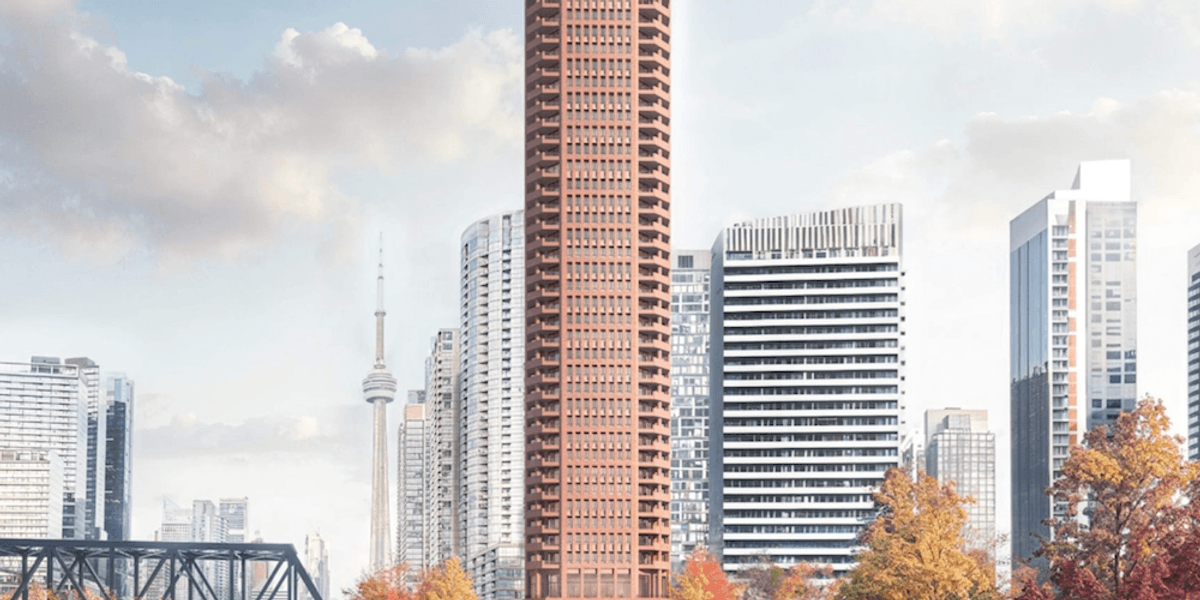
Together with the City of Toronto, we are getting thousands of new rental homes built, across every part of the housing system, in strong, safe communities that people can afford.
For anyone tracking urban growth strategy, the deeper signal here is about sequencing. Zoning reform and faster approvals get most of the political attention, but this partnership shows that financing gaps are just as capable of freezing a housing pipeline. Even developers with a joint venture pedigree, like Dream and CentreCourt on their twin towers at 49 Ontario Street, or Menkes on Brownlow Avenue after converting a planned condo into purpose-built rental, needed this kind of backstop to move forward. If Toronto’s approach proves replicable, the model may matter more than any single tower in the portfolio, offering other cities a template for converting entitled land into occupied buildings rather than stalled files.
Source: Storeys.com