Toronto’s Harbour Gets Its Green Back: Inside the Naturalized Shoreline at Biidaasige Park
For most of the last century, Toronto’s waterfront was defined by concrete, steel, and industry. It was a working edge, built to move goods, not to welcome people. So it is worth pausing on what is happening right now at Biidaasige Park, where a new harbourside extension is quietly reversing that legacy, one native planting bed and one water’s edge promenade at a time.
The hardened edges of Toronto Bay have not disappeared entirely, and they should not be expected to. Concrete seawalls still frame much of the harbour, a reminder of decades when function outweighed ecology. But what is changing is what happens on top of and alongside that infrastructure. Lush native plantings now line the new promenade, softening the transition between city and water, and giving people a reason to linger rather than simply pass through.
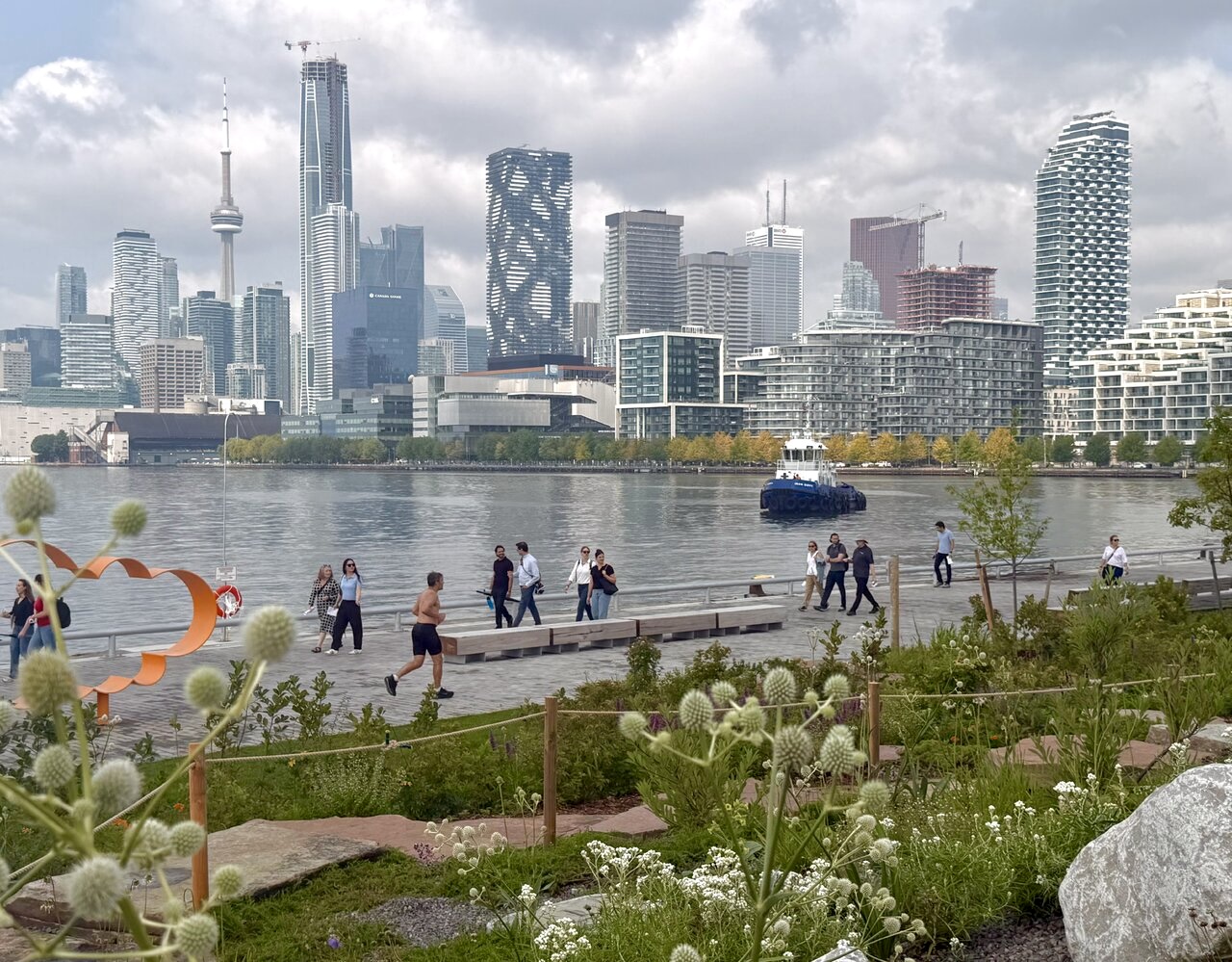
This matters more than it might first appear. Naturalized shorelines are not just aesthetic upgrades. Native plant communities support pollinators and shoreline wildlife, help manage stormwater runoff, and reduce the urban heat that concrete-heavy waterfronts tend to trap and radiate. A line of maples now grows where there was once only hardscape, and that kind of tree canopy does real, measurable work: shading pathways, filtering air, and slowing water before it reaches the harbour itself.
There is also a quieter benefit that tends to get overlooked in conversations about green infrastructure: comfort and drawing power. A waterfront that feels alive, with plantings that change through the seasons and paths that invite walking rather than rushing, becomes a place people actually choose to visit. That is not incidental to sustainability. Spaces people care about are spaces communities protect and maintain over the long term.
A greener harbour edge is not a departure from the city rising behind it. It is what allows that skyline to feel livable rather than merely dense.
None of this requires pretending the industrial history of the bay away. The concrete is still there, and it should be, because it tells the truth about how this waterfront was built. What is encouraging is the willingness to layer something more ecologically generous on top of that history, rather than starting over or leaving it untouched. It is a practical model for how mature cities can green their existing infrastructure instead of waiting for a clean slate that will never come.
For a city that continues to grow upward along its harbour, projects like this show that density and ecological repair are not opposing goals. A well planted, walkable water’s edge can do as much for a neighbourhood’s long term resilience as any single building can, and it costs far less to maintain than it does to ignore.
Source: UrbanToronto, “Bay Sublime”