Ottawa’s $2.7B Toronto Bet Signals a New Model for Unlocking Stalled Housing Supply
Every major city eventually runs into the same wall: approved projects that simply cannot move because the financing is not there. Toronto has been living inside that wall for years. This week, the federal government announced a $2.7 billion commitment over three years to push 18 housing projects across the city from paper to construction, and the structure behind that money tells us more about the future of urban development than the headline number does.
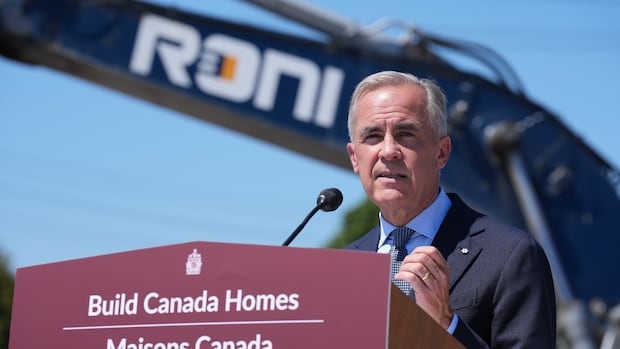
Prime Minister Mark Carney framed the announcement around 5,600 rental homes, with 1,800 falling into deeply affordable, supportive, or rent-controlled categories. What stands out to anyone who studies development feasibility is his own admission: all of these projects had already cleared approvals. They were stalled purely on financing. That is the real story here. Toronto does not have a shortage of shovel-ready plans. It has had a shortage of capital willing to move at the right terms.
The two-channel structure deserves attention from anyone thinking about how large scale housing gets built going forward. The first channel runs through Build Canada Homes, directing more than $310 million toward nine projects on city-owned land, expected to produce 1,900 homes. The city is layering in its own contribution of $530 million, including 99-year property tax exemptions, a tool that quietly does as much work as direct grants by improving long term project economics. The second channel is market-rate housing built by private developers, backed by over $1.8 billion in low-cost federal financing across nine additional projects, projected to deliver 3,700 homes. This is a deliberate blending of non-market and private capital rather than a bet on either one alone.
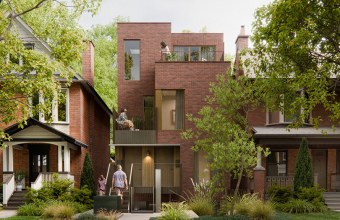
Location strategy matters as much as the financing mechanics. The projects target neighbourhoods that have absorbed the sharpest rent increases and eviction pressure, including a 16-storey tower in Parkdale and another at 158 Borough Drive in Scarborough. There is also a signal about how development identity is evolving: an Indigenous-led 100-unit project at 15 Denison Avenue, and a build at 1113-1125 Dundas Street West using timber, geothermal energy, and low-carbon design. Large scale housing vision now routinely folds sustainability and community ownership into the feasibility conversation, not as an afterthought but as part of the pitch.
All of these projects had been approved in the past, and all of them were stalled for want of financing, until today.
Context matters too. Ontario is falling behind its own stated goal of 1.5 million new homes by 2031, and critics like Conservative housing critic Scott Aitchison have dismissed the announcement as a repackaging of existing commitments. For developers and planners, the more useful lesson is not the political framing but the mechanism: when governments treat financing gaps as the central bottleneck rather than approvals or land, previously frozen pipelines can move quickly. That is a model worth watching well beyond Toronto’s borders, especially in other cities carrying their own backlog of approved but unfunded housing.
Source: CBC News