Scarborough’s Quiet Approval Wave Signals Toronto’s Next Growth Corridor
While attention in this city tends to gravitate toward the downtown core, the real story of Toronto’s housing future is being written on its eastern edge. At its July meeting, Toronto City Council moved through ten Scarborough development items with a speed and consensus that should not be mistaken for a lack of significance. Together, these approvals account for 7,316 residential units, 5,731 of them condominiums, 1,369 market-rate rental homes, and 216 seniors’ residence units, alongside 512 long-term-care beds. That is not incremental infill. That is the shape of a district being redefined.
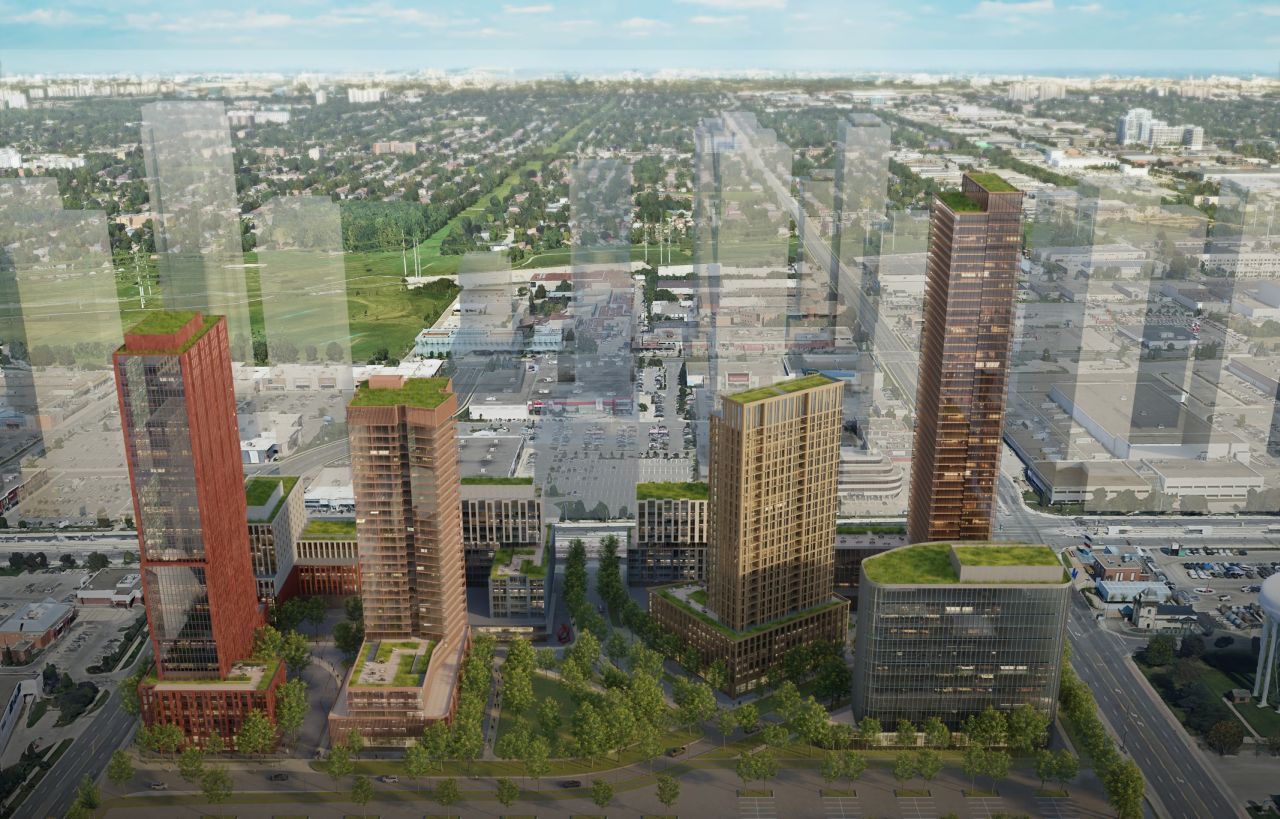
What stands out to me as a strategist is not any single tower, it is the pattern. The largest piece, 1911-1921 Eglinton East in the Golden Mile, pairs 2,243 condominium units with office space, retail, community space, and a new public park, the kind of mixed-use density that only makes sense once a corridor has crossed a threshold of transit confidence and land value. The Woodside Square Redevelopment, converting an aging mall site at McCowan and Finch into nine buildings with 2,339 condos and 216 seniors’ units, tells the same story from a different angle: retail land that has outlived its original format is being repositioned as housing stock, which is exactly the kind of adaptive land strategy this city needs more of.
Rental supply deserves particular attention here. Projects like 507-513 Victoria Park Avenue, 9940 Sheppard East, 4139 Lawrence Avenue East, and 2240 Birchmount Road collectively bring well over a thousand purpose-built rental units into the pipeline. That matters because rental development has historically lagged condominium development in this market, and a cluster of approvals this size signals that developers see enough long-term demand certainty in Scarborough to commit capital to the slower-yielding rental model rather than the quicker condo turnover.
Strong projects are built from a wider understanding of timing, access, infrastructure, policy, and demand, and Scarborough’s July docket touches every one of those levers at once.
Then there is the piece that rarely makes headlines but shapes everything downstream: the new Official Plan Amendment for the Coronation Drive Employment Area. Land use planning at the district level, stretching from Thornton Creek to Lake Ontario, is the scaffolding that determines whether future housing growth has the jobs, services, and infrastructure to support it. Council also directing staff to actively market that employment area to compatible business sectors tells me this is not a passive rezoning, it is an intentional bet on Scarborough’s long-term economic identity.
For anyone tracking where Toronto’s next decade of housing supply will actually land, Scarborough’s July approvals are worth watching closely. The volume, the mix of tenures, the long-term-care capacity, and the employment land strategy all point toward a district transitioning from Toronto’s periphery to one of its primary growth engines. Land value in these corridors is likely to reflect that shift well before the cranes appear.
Source: UrbanToronto, “City Council July, 2026: Scarborough Quick Approvals”