Eglinton Station’s Next Chapter Shows How Private Capital Is Reshaping Transit Nodes
Toronto riders who just watched a decade of Crosstown LRT construction wrap up at Yonge and Eglinton are about to see the cranes return. But this time, the story is not about transit delivery. It is about who pays for the next generation of transit infrastructure, and why that matters for how our cities grow.
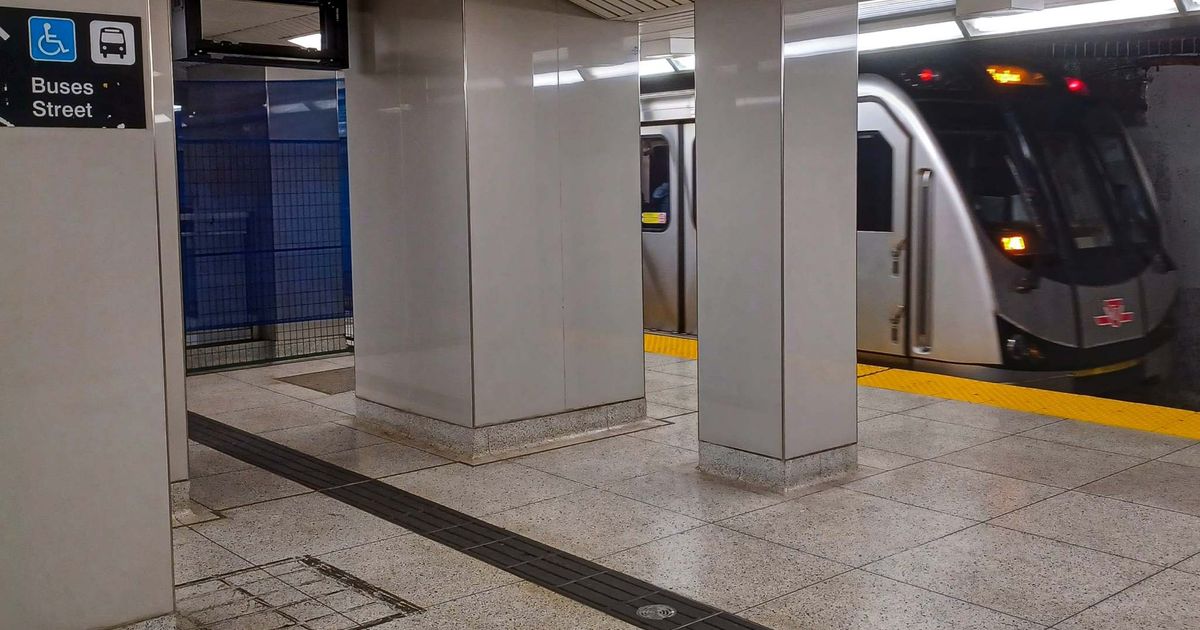
A report heading to the TTC Board outlines a plan to reconfigure the entrance connection at Eglinton Station as part of a broader retrofit of the Canada Square complex at the southwest corner of Yonge and Eglinton. The Bank of Montreal glass pavilion at 2210 Yonge Street, which currently houses one of the station’s escalator connections, will be demolished as phase one. The entrance itself will eventually be rebuilt and folded directly into the renovated 2200 Yonge Street tower.
What stands out to me as a development story is not the demolition. It is the financing structure. This project, like the Spadina Station entrance rebuild before it, is being paid for by the property owner rather than the TTC. In this case, that owner is a partnership between CT REIT and OPG Investments Holdings. When private capital takes on the cost of rebuilding public transit infrastructure as a condition of redeveloping the land above and around it, that is a meaningful shift in how our densest intersections get built.
Yonge and Eglinton has long been treated as a proof point for transit-oriented intensification. Layering a full tower retrofit on top of a working subway station, without shutting the corridor down, requires the kind of phased sequencing that only comes from serious project feasibility work. The plan keeps the existing escalators running until they can be relocated into a standalone structure the owner will build, and it limits disruption largely to the elevator connecting the concourse to the platform level, which will be out of service while its shaft is extended up to street level.
When a developer absorbs the cost of rebuilding a subway entrance to unlock a tower retrofit, that is the market pricing in the long term value of transit access.
Construction is expected to begin in late 2026 and finish in early 2028, with the new entrance bringing accessibility upgrades including a new elevator running from street level to the concourse and platform, two additional fare lines, and a new staircase. During construction, riders will be routed to the other station entrances at 15 Eglinton Avenue West, 2 Eglinton Avenue East, and 2190 Yonge Street.
For anyone tracking how mid-town Toronto continues to intensify, this is worth watching closely. It is a signal that owners of aging retail and office assets around legacy transit stations increasingly see infrastructure upgrades as part of the cost of unlocking density, not an obstacle to it. That is exactly the kind of long term thinking that reshapes a neighbourhood’s identity over the next decade.
Source: blogTO