Why Toronto’s Budget Overhaul Matters More to Builders Than Voters
Municipal budgets rarely make headlines outside election season, but the structure behind them shapes whether a city can actually build. Mayoral candidate Brad Bradford’s pledge to separate Toronto’s operating and capital budgets is being framed as a tax and governance story. For anyone tracking land development and infrastructure delivery in this region, it is something more consequential: a proposal that touches the financial plumbing behind every major project the city hopes to greenlight over the next decade.
Here is the core of it. Bradford wants to end what he calls a cross subsidy, where hundreds of millions of dollars move each year from the operating budget to pre-pay capital spending. His argument is that the two should be treated differently because they serve different purposes. The operating budget keeps the city running day to day and must balance annually by law. The capital budget funds the infrastructure that a growing city depends on, and he argues it should be financed over the life of the asset, much like a mortgage on a home. Toronto faces a $1.6 million shortfall that the next mayor will inherit in 2027, which is the backdrop against which this entire proposal is being pitched.
From a development strategy standpoint, this distinction is not cosmetic. Capital budgets are where transit extensions, water systems, road upgrades, and the servicing capacity that unlocks new housing supply actually live. When a city blends capital financing with operating pressures, infrastructure projects can get delayed, deferred, or quietly scaled back whenever the annual books get tight. A genuine separation, if implemented with real financial discipline rather than, in Bradford’s words, “on paper or in a slide deck,” could give long term infrastructure planning more insulation from short term political and fiscal cycles. That matters enormously to developers who need predictable timelines for servicing and approvals before land can move from zoned potential to shovels in the ground.
The companion proposal, a municipally owned utility called Toronto Water, is worth watching for the same reason. Bradford frames it as a $300 annual savings for households, but the more interesting piece is his claim that it would generate savings redirected toward future infrastructure projects. Water and wastewater capacity is one of the quiet gatekeepers of new housing development. Projects stall not because land is unavailable but because the pipes underneath it cannot support added density. A dedicated utility structure, done well, could create a more direct funding pathway for the kind of unglamorous infrastructure that makes growth possible.
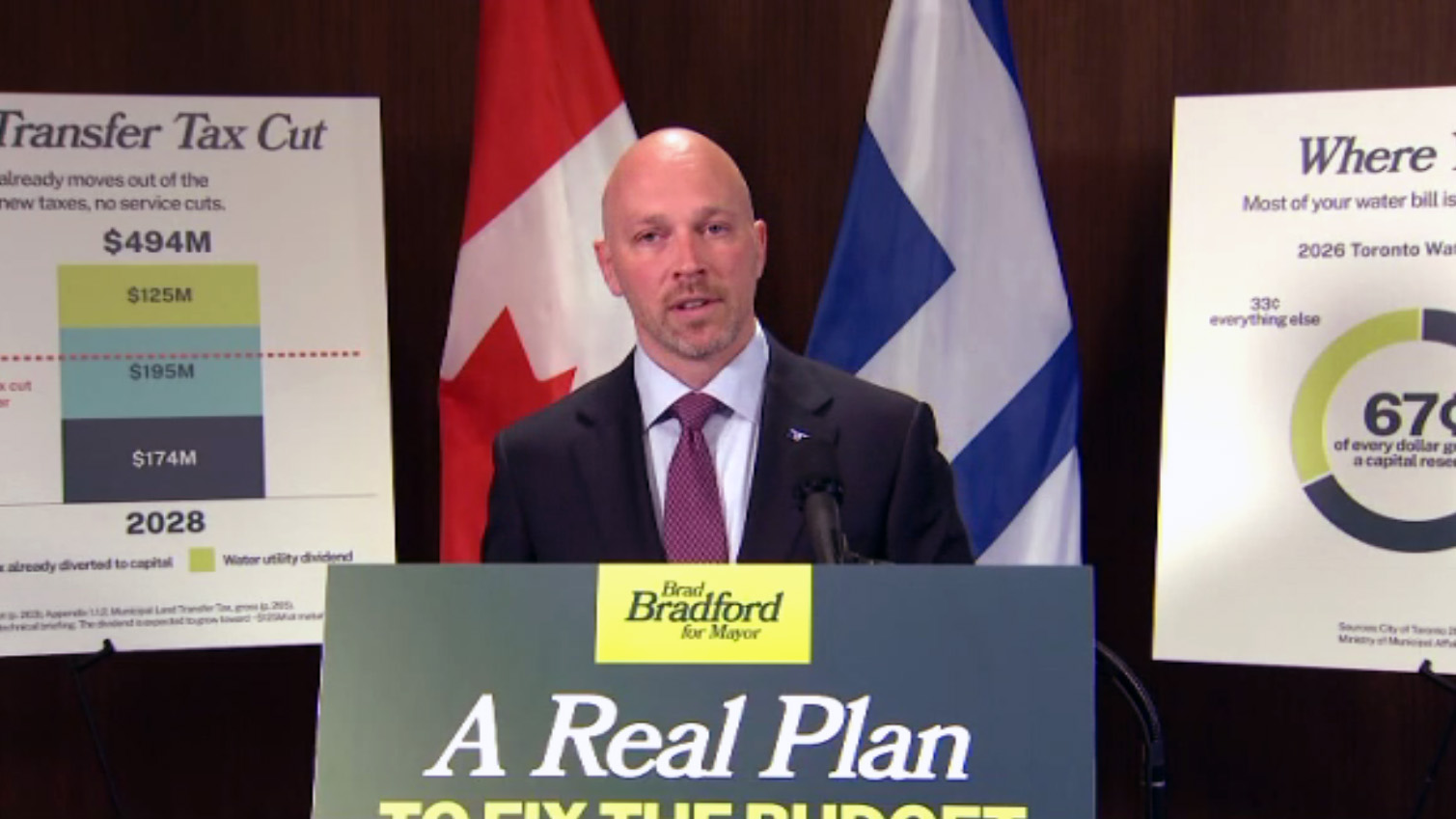
The operating budget runs the city, the capital budget builds it.
Incumbent mayor Olivia Chow has pushed back hard, calling the plan “reckless” and comparing it to financing promises on a credit card, while warning that Bradford has not specified which services might be cut to make the math work. That tension is worth noting for anyone evaluating project feasibility in Toronto over the next term. Debt structured against long term assets can be sound policy or it can be a deferral of hard choices, and the difference comes down entirely to execution and transparency, not the framing used on the campaign trail.
Whoever wins when Torontonians vote on October 26 will inherit a city where budget structure, not just budget size, determines how much gets built. That is the lens worth keeping on this race.
Source: CityNews Toronto