The Rehearsal Layer: How AI Role-Play Is Quietly Upgrading Agent Performance
Every industry built on conversation eventually asks the same question: how do you practice a conversation that matters before it actually happens. A Florida brokerage, PBP Real Estate, has built an answer for real estate agents. Its new AI simulator lets agents rehearse prospecting and listing calls against a synthetic prospect, then hands them a scorecard on what worked and what did not. This is not a flashy feature. It is a data layer applied to one of the oldest, least measured parts of the business: the human voice on the other end of the phone.
What makes this interesting from an intelligence standpoint is not the novelty of talking to a chatbot. It is the structure underneath it. A simulated call is repeatable, scoreable, and comparable across agents and across time in a way that a real call never is. Real conversations vanish the moment they end, leaving only a manager’s memory or a vague sense of how it went. A simulated one produces a record: tone, objection handling, pacing, and outcome, all rendered into something a brokerage can actually analyze at scale.
That shift matters more than it first appears. Training in this industry has historically been anecdotal, built on shadowing, scripts, and gut feel from a broker who has seen a lot of calls. An AI prospect that generates a consistent, structured scorecard turns coaching into something closer to a performance dataset. Once you have that data, you can ask sharper questions. Which objections cause the most agents to lose momentum. Which opening lines correlate with better scores. Where does confidence break down, and does that predict how someone performs once the lead is real.
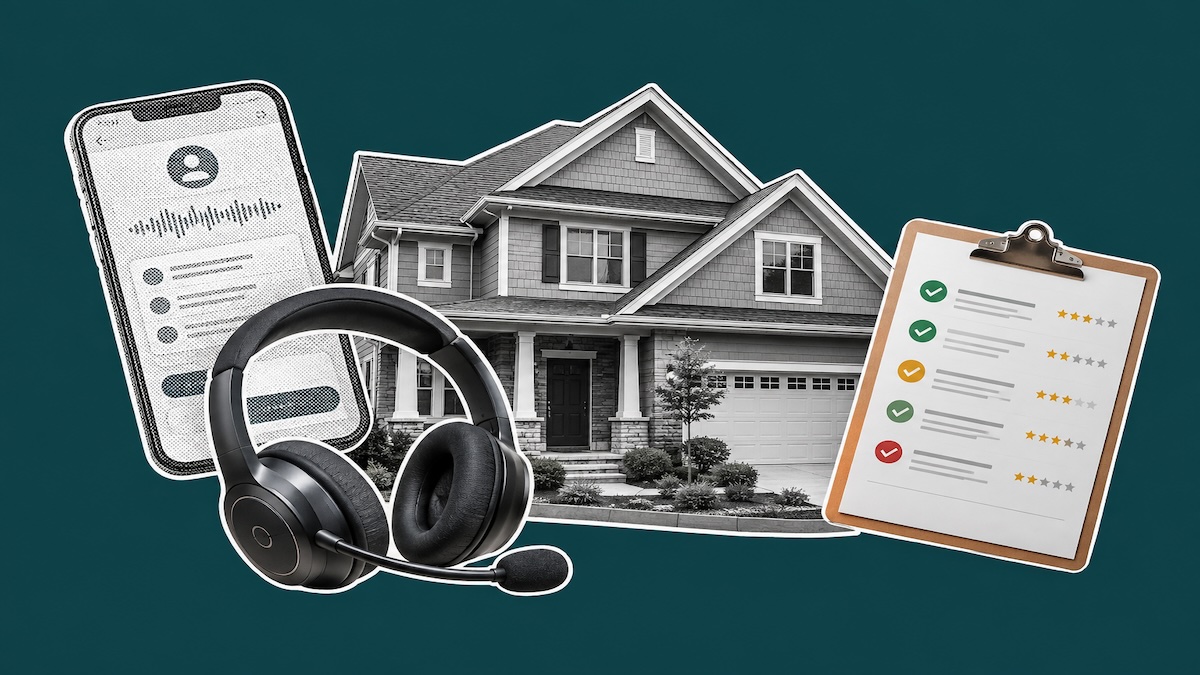
There is also a signal here about where AI is actually landing in real estate right now. Much of the public conversation about artificial intelligence in this industry has focused on valuation models, forecasting tools, and market dashboards, the visible, numbers-facing side of the business. Tools like this one point to a quieter application: using AI to improve the humans who still do the closing. The technology is not replacing the agent on the call. It is instrumenting the practice that happens before the call, and instrumentation is exactly the kind of thing that compounds in value over time.
A conversation that can be measured is a conversation that can be improved. That is the quiet premise behind bringing AI into agent training.
For brokerages watching this space, the interesting question is not whether one company built a clever simulator. It is what happens once enough of these interactions accumulate. A large enough library of scored practice calls becomes a benchmark, a way to identify which coaching interventions actually move the needle rather than which ones simply feel productive. That is the same logic that drives every other analytics tool now reshaping housing decisions: better organized signals lead to better judgment, whether the subject is a property valuation or a person’s ability to convert a cold lead into a listing appointment.
Tools like this will not show up in a market forecast or a pricing model. But they are part of the same broader trend worth tracking: real estate slowly becoming a more measured, more instrumented business, one conversation at a time.
Source: HousingWire