
Public Benches That Store Power: A Small Ontario Town Rethinks the Grid
In Cannington, Ontario, a renovated public square now doubles as a piece of civic infrastructure that most residents will simply sit on. A prototype built by the Toronto startup Civic Grid, designed with architects Jack Self and Josh Harskamp and industrial designer Max Fine, folds a 60 kWh battery system into public seating and charging. It is a small object with a large idea behind it: energy storage does not have to hide in a windowless utility box on the edge of town. It can be part of daily life, sat on, walked past, and understood.
That idea matters more than the wattage. Electrification of homes, vehicles, and heating is moving faster than most grids were built to handle, and the places where storage is needed most, dense urban and small town cores, are exactly where conventional battery hardware is expensive and awkward to site. Civic Grid’s answer charges overnight when electricity is cheapest and discharges through the day, easing peak demand on the local grid while quietly supporting the town’s broader energy transition. It also provides power to charitable foundations in Cannington and can act as backup during outages, which turns a piece of street furniture into genuine community resilience.
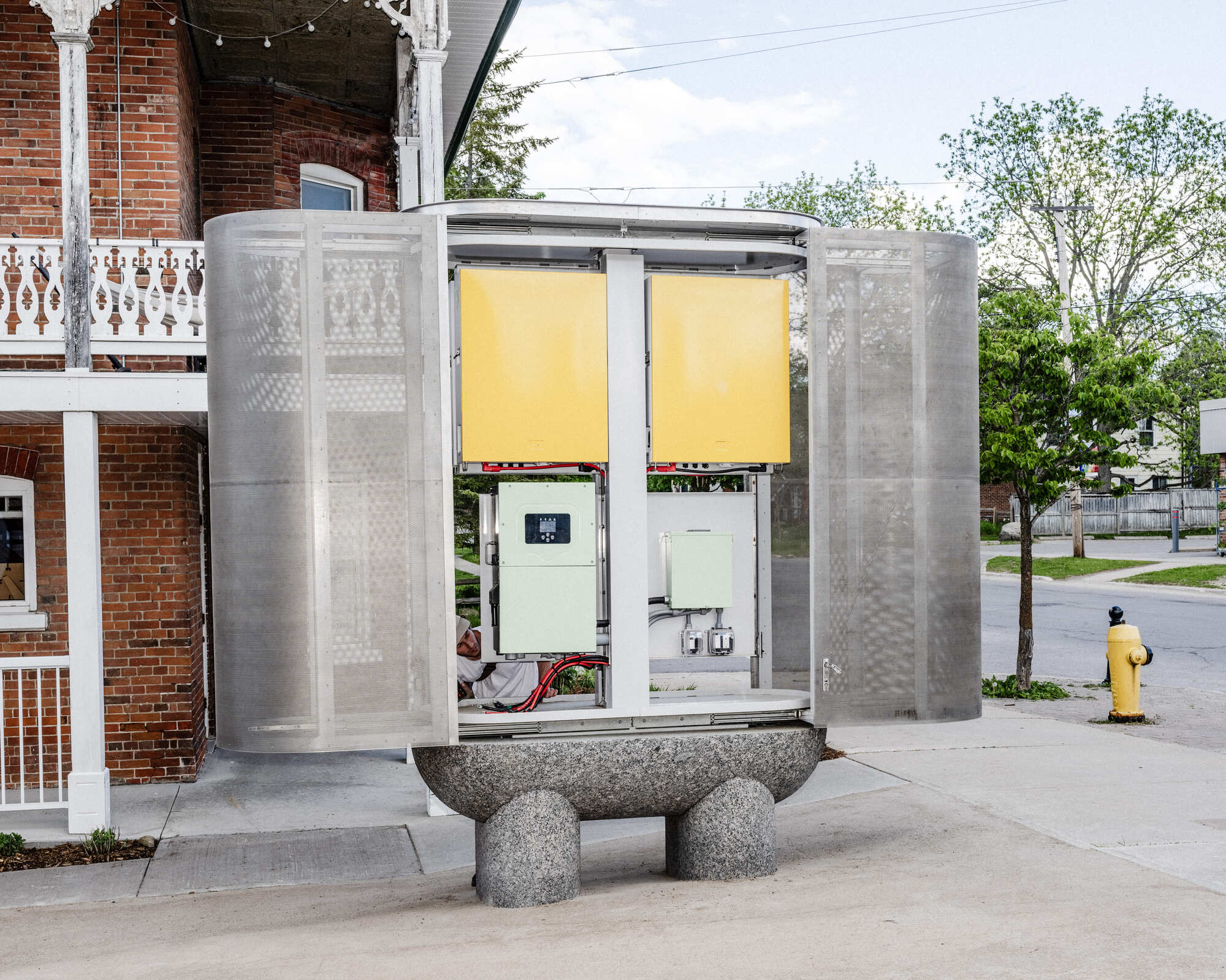
What I find most encouraging here is not the technology itself, batteries are not new, but the decision to make it legible. Grid-scale storage is usually designed to be forgotten, tucked away and fenced off. This prototype does the opposite. It puts the energy system where people gather, which changes the relationship a community has with the power behind its everyday life. That shift in visibility is quietly important. When residents can see where their electricity is being managed, sustainability stops being an abstract policy goal and starts feeling like part of the neighbourhood.
When energy systems live in shared, everyday spaces, sustainability stops being something that happens elsewhere and becomes something a community can actually see and use.
For homeowners and small municipalities watching the cost and complexity of grid upgrades, this kind of project offers a useful lesson even at a modest scale. Shifting energy use through time, storing it when it is cheap and abundant, releasing it when demand peaks, is one of the more practical tools available for lowering both cost and strain on aging infrastructure. It does not require reinventing the grid. It requires rethinking where storage lives and who gets to interact with it. Cannington’s square, built from a system first tested with Lisbon Civil Defence at the Lisbon Architecture Triennale 2025, suggests that public space and energy infrastructure do not have to be separate categories. They can be the same civic project, built to serve people twice over, once as a place to sit, and once as a quiet piece of the clean energy transition.