The Unsung Machines Behind Every Toronto Tower: A Look at Construction Hoists
Long before a resident ever steps into a finished elevator, there is another vertical transportation system doing the real work. Construction hoists, the temporary lifts that run up the exterior of a building site, are the machines that make tall construction possible in the first place. A recent site photo from the Rushden Station towers in Toronto’s East End, showing two hoists projecting off the coloured exterior walls, is a good reminder of just how much infrastructure exists behind a rising skyline before anyone sees a finished facade.
I have spent enough time around job sites to know that a hoist is not a minor detail. It is one of the most important pieces of temporary equipment on any mid to high rise project. Once a building climbs past a few storeys, you cannot rely on stairs or a single freight elevator to move workers, tools, and materials efficiently. A hoist solves that problem. It runs on the outside of the structure, attached to the building as it grows, and it gets rebuilt and extended floor by floor right alongside the concrete pour or steel erection schedule.
What people do not always appreciate is how much planning goes into placing these systems correctly. Site logistics teams have to decide where a hoist attaches, how it interacts with the building’s structural sequencing, and how it will eventually be removed once permanent elevators are ready. Get that wrong, and you create bottlenecks that slow down every trade working above grade. Get it right, and workers move safely and efficiently, which keeps a schedule on track and keeps costs from creeping upward.
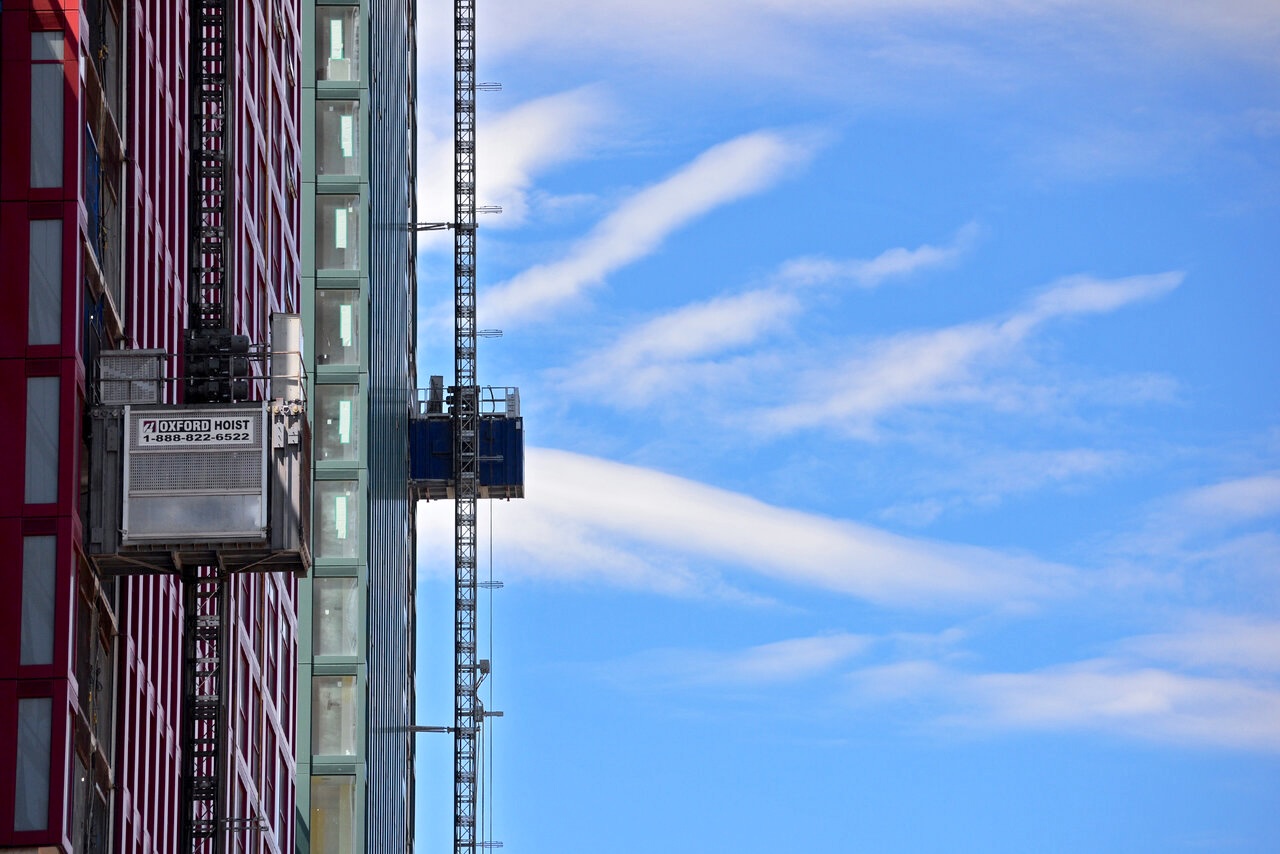
At Rushden Station, where multiple towers are being completed at once, the presence of two active hoists tells you the project is deep into its vertical construction phase. That is typically the busiest and most labour intensive stretch of a build. Crews are moving in both directions at once, finishing lower floors while framing continues higher up, and a hoist is the artery that keeps that dual pace functioning without gridlock.
A strong build depends on systems most people never notice, and the hoist is one of the best examples of that.
For homeowners and future residents, none of this is visible in the marketing renderings or the finished lobby photos. But it matters. The care taken with temporary systems like hoists is often a quiet indicator of how a site is being managed overall. Projects that respect logistics, sequencing, and worker safety during construction tend to carry that same discipline through to final quality. It is one more reason why understanding what happens behind the walls, and outside them, gives buyers a better sense of what they are actually purchasing.
Source: UrbanToronto, “Rushden Hoists”