San Francisco’s Cash Buyers Are Telling Investors Something
When wealthy buyers stop asking what a mortgage will cost and start competing with cash, the market is sending a clear signal. In San Francisco, that signal is not simply about luxury homes. It is about renewed confidence, concentrated wealth, and the return of urgency in select neighbourhoods.
According to a New York Post report citing Redfin data, 30% of home sales across the San Francisco Bay Area between April and June were all-cash purchases. That is a sharp rise from 2021, when fewer than 20% of transactions were completed without financing. The Bay Area now sits slightly above the national average for cash purchases, a notable shift in a market already defined by high barriers to entry.
For investors, the key point is not that affluent buyers exist. San Francisco has always had them. The more important development is that liquidity is returning to the top end of the market at the same time supply remains constrained. When cash buyers compete for limited prime inventory, pricing becomes less sensitive to mortgage rates and more sensitive to scarcity, location quality, and wealth creation cycles.

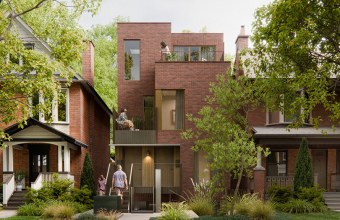
Noe Valley illustrates the pattern. Agents cited in the report said homes priced between $5 million and $6 million are being absorbed quickly by cash buyers. That matters because Noe Valley is not a speculative frontier. It is an established family neighbourhood with strong school appeal, limited land, and enduring lifestyle demand. In investment terms, this is core residential real estate being repriced by a fresh wave of balance-sheet strength.
The obvious driver is artificial intelligence wealth. San Francisco has reasserted itself as a central hub for AI companies, founders, engineers, and venture capital. As liquidity events, stock compensation, and private-market gains filter into personal balance sheets, residential property becomes both a consumption asset and a capital preservation vehicle.
But the buyer pool is broader than newly minted technology fortunes. The report also points to family wealth, including parents purchasing homes outright for adult children. That detail is important. Intergenerational capital tends to be patient, less rate-sensitive, and more focused on securing location than achieving immediate yield. It can keep competition elevated even when traditional affordability metrics look stretched.
Cash buying at this scale is less about avoiding debt and more about securing position in a market where prime supply remains structurally tight.
There is also a migration reversal component. Some buyers who left for Texas and Florida during the pandemic are now returning as San Francisco’s technology economy regains momentum. For investors, this is a reminder that outmigration narratives can overshoot. Cities with deep talent pools, venture ecosystems, and global brand value rarely move in a straight line.
The risk is concentration. A market supported by AI wealth can move quickly, but it can also become vulnerable to changes in technology valuations, equity market corrections, or slower startup funding. Luxury price growth tied to one dominant industry deserves careful underwriting. Investors should distinguish between neighbourhoods with broad, durable demand and submarkets rising mainly on momentum.
There are practical implications for buyers using financing. Cash offers often win because they reduce execution risk, shorten timelines, and remove appraisal uncertainty. Financed buyers may need stronger deposits, cleaner contingencies, faster lender coordination, or a willingness to target properties with less obvious competition.
The wider California context reinforces the theme. Southern California agents are also watching for luxury demand linked to SpaceX wealth, while the state’s median single-family home price remains above $930,000. In high-income coastal markets, new wealth creation can quickly collide with limited inventory.
The takeaway for investors is simple: follow liquidity, but do not ignore discipline. San Francisco’s cash surge suggests confidence is returning to prime residential assets. The best opportunities will be in locations where demand is not only wealthy, but durable.
Source: New York Post