What stands out to me about this phase is the sequencing. Two tunnel boring machines already completed the 6.3km western tunnels between 2022 and 2024, and now the shorter twin tunnels toward Mount Dennis are done as well. Station box excavation is underway simultaneously at four intersections. That kind of parallel execution shortens the runway between “infrastructure announced” and “infrastructure open,” which is exactly the variable that developers watch most closely when deciding how aggressively to assemble land or advance rezoning applications along a future line.
Table Of Content
- Tunnelling Wraps on Eglinton Crosstown West: What It Signals for Toronto’s Growth Corridors
- Tunnelling Wraps on Eglinton Crosstown West: What It Signals for Toronto’s Growth Corridors
- Tunnelling Wraps on Eglinton Crosstown West: What It Signals for Toronto’s Growth Corridors
- Tunnelling Wraps on Eglinton Crosstown West: What It Signals for Toronto’s Growth Corridors
- Tunnelling Wraps on Eglinton Crosstown West: What It Signals for Toronto’s Growth Corridors
- Tunnelling Wraps on Eglinton Crosstown West: What It Signals for Toronto’s Growth Corridors
- Tunnelling Wraps on Eglinton Crosstown West: What It Signals for Toronto’s Growth Corridors
Development is never just about land. It is about timing, access, infrastructure, policy, demand, and the future identity of a community.
None of this means transformation happens overnight. Transit construction and the housing intensification that follows it typically move on different clocks, and municipal planning processes will still determine how much density these corridors ultimately absorb. But for those of us thinking in decade long horizons, tunnelling completion is a credible signal, not a speculative one. It tells us Metrolinx and its partners are past the highest risk phase of construction and into the more predictable work of station building and systems integration. For west Toronto and Mississauga’s growth corridors, that is when the real planning conversations, about zoning, density, and community identity, tend to accelerate.
Source: GE Plus
I have spent my career watching how transit lines rewrite the value equation for the neighbourhoods around them, and this is a textbook case. The work, part of a C$255M design-build-finance contract awarded to a Strabag-led team in 2024, used sequential excavation through clayey fill and sandy soils, conditions that required careful face support given the site’s history as farmland. That kind of technical patience matters less to most readers than what it unlocks: seven new stations added to Line 5 Eglinton’s existing 25 stops, extending service from Scarborough through midtown Toronto into Mississauga.
Metrolinx puts the numbers plainly. The extension is expected to bring rapid transit closer to 37,500 more residents and 23,600 more jobs. For anyone tracking land development strategy, those figures are the real headline. Transit proximity is one of the most reliable long term drivers of density permissions, mixed use zoning appetite, and eventual housing supply. Corridors along Jane Street, Kipling, Islington, and Royal York, where construction has just begun on four new underground stations, are precisely the kind of intersections that shift from car dependent suburban blocks into candidates for mid rise and transit oriented development over the next decade.
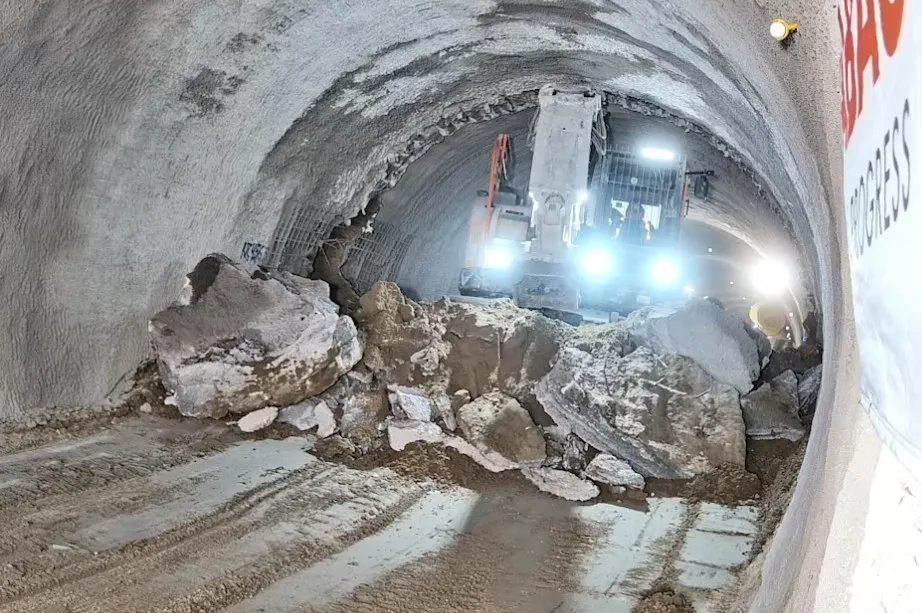
What stands out to me about this phase is the sequencing. Two tunnel boring machines already completed the 6.3km western tunnels between 2022 and 2024, and now the shorter twin tunnels toward Mount Dennis are done as well. Station box excavation is underway simultaneously at four intersections. That kind of parallel execution shortens the runway between “infrastructure announced” and “infrastructure open,” which is exactly the variable that developers watch most closely when deciding how aggressively to assemble land or advance rezoning applications along a future line.
Development is never just about land. It is about timing, access, infrastructure, policy, demand, and the future identity of a community.
None of this means transformation happens overnight. Transit construction and the housing intensification that follows it typically move on different clocks, and municipal planning processes will still determine how much density these corridors ultimately absorb. But for those of us thinking in decade long horizons, tunnelling completion is a credible signal, not a speculative one. It tells us Metrolinx and its partners are past the highest risk phase of construction and into the more predictable work of station building and systems integration. For west Toronto and Mississauga’s growth corridors, that is when the real planning conversations, about zoning, density, and community identity, tend to accelerate.
Source: GE Plus
Every major infrastructure milestone is really a milestone for land value, and the completion of tunnelling on the Eglinton Crosstown West extension is no exception. Strabag, the Vienna-headquartered contractor, has finished the final twin 500m tunnels between Jane Street and Mount Dennis Station, closing out the underground portion of a project that will eventually reshape how west Toronto connects to the rest of the region.
I have spent my career watching how transit lines rewrite the value equation for the neighbourhoods around them, and this is a textbook case. The work, part of a C$255M design-build-finance contract awarded to a Strabag-led team in 2024, used sequential excavation through clayey fill and sandy soils, conditions that required careful face support given the site’s history as farmland. That kind of technical patience matters less to most readers than what it unlocks: seven new stations added to Line 5 Eglinton’s existing 25 stops, extending service from Scarborough through midtown Toronto into Mississauga.
Metrolinx puts the numbers plainly. The extension is expected to bring rapid transit closer to 37,500 more residents and 23,600 more jobs. For anyone tracking land development strategy, those figures are the real headline. Transit proximity is one of the most reliable long term drivers of density permissions, mixed use zoning appetite, and eventual housing supply. Corridors along Jane Street, Kipling, Islington, and Royal York, where construction has just begun on four new underground stations, are precisely the kind of intersections that shift from car dependent suburban blocks into candidates for mid rise and transit oriented development over the next decade.
What stands out to me about this phase is the sequencing. Two tunnel boring machines already completed the 6.3km western tunnels between 2022 and 2024, and now the shorter twin tunnels toward Mount Dennis are done as well. Station box excavation is underway simultaneously at four intersections. That kind of parallel execution shortens the runway between “infrastructure announced” and “infrastructure open,” which is exactly the variable that developers watch most closely when deciding how aggressively to assemble land or advance rezoning applications along a future line.
Development is never just about land. It is about timing, access, infrastructure, policy, demand, and the future identity of a community.
None of this means transformation happens overnight. Transit construction and the housing intensification that follows it typically move on different clocks, and municipal planning processes will still determine how much density these corridors ultimately absorb. But for those of us thinking in decade long horizons, tunnelling completion is a credible signal, not a speculative one. It tells us Metrolinx and its partners are past the highest risk phase of construction and into the more predictable work of station building and systems integration. For west Toronto and Mississauga’s growth corridors, that is when the real planning conversations, about zoning, density, and community identity, tend to accelerate.
Source: GE Plus
Every major infrastructure milestone is really a milestone for land value, and the completion of tunnelling on the Eglinton Crosstown West extension is no exception. Strabag, the Vienna-headquartered contractor, has finished the final twin 500m tunnels between Jane Street and Mount Dennis Station, closing out the underground portion of a project that will eventually reshape how west Toronto connects to the rest of the region.
I have spent my career watching how transit lines rewrite the value equation for the neighbourhoods around them, and this is a textbook case. The work, part of a C$255M design-build-finance contract awarded to a Strabag-led team in 2024, used sequential excavation through clayey fill and sandy soils, conditions that required careful face support given the site’s history as farmland. That kind of technical patience matters less to most readers than what it unlocks: seven new stations added to Line 5 Eglinton’s existing 25 stops, extending service from Scarborough through midtown Toronto into Mississauga.
Metrolinx puts the numbers plainly. The extension is expected to bring rapid transit closer to 37,500 more residents and 23,600 more jobs. For anyone tracking land development strategy, those figures are the real headline. Transit proximity is one of the most reliable long term drivers of density permissions, mixed use zoning appetite, and eventual housing supply. Corridors along Jane Street, Kipling, Islington, and Royal York, where construction has just begun on four new underground stations, are precisely the kind of intersections that shift from car dependent suburban blocks into candidates for mid rise and transit oriented development over the next decade.
What stands out to me about this phase is the sequencing. Two tunnel boring machines already completed the 6.3km western tunnels between 2022 and 2024, and now the shorter twin tunnels toward Mount Dennis are done as well. Station box excavation is underway simultaneously at four intersections. That kind of parallel execution shortens the runway between “infrastructure announced” and “infrastructure open,” which is exactly the variable that developers watch most closely when deciding how aggressively to assemble land or advance rezoning applications along a future line.
Development is never just about land. It is about timing, access, infrastructure, policy, demand, and the future identity of a community.
None of this means transformation happens overnight. Transit construction and the housing intensification that follows it typically move on different clocks, and municipal planning processes will still determine how much density these corridors ultimately absorb. But for those of us thinking in decade long horizons, tunnelling completion is a credible signal, not a speculative one. It tells us Metrolinx and its partners are past the highest risk phase of construction and into the more predictable work of station building and systems integration. For west Toronto and Mississauga’s growth corridors, that is when the real planning conversations, about zoning, density, and community identity, tend to accelerate.
Source: GE Plus
Tunnelling Wraps on Eglinton Crosstown West: What It Signals for Toronto’s Growth Corridors
Every major infrastructure milestone is really a milestone for land value, and the completion of tunnelling on the Eglinton Crosstown West extension is no exception. Strabag, the Vienna-headquartered contractor, has finished the final twin 500m tunnels between Jane Street and Mount Dennis Station, closing out the underground portion of a project that will eventually reshape how west Toronto connects to the rest of the region.
I have spent my career watching how transit lines rewrite the value equation for the neighbourhoods around them, and this is a textbook case. The work, part of a C$255M design-build-finance contract awarded to a Strabag-led team in 2024, used sequential excavation through clayey fill and sandy soils, conditions that required careful face support given the site’s history as farmland. That kind of technical patience matters less to most readers than what it unlocks: seven new stations added to Line 5 Eglinton’s existing 25 stops, extending service from Scarborough through midtown Toronto into Mississauga.
Metrolinx puts the numbers plainly. The extension is expected to bring rapid transit closer to 37,500 more residents and 23,600 more jobs. For anyone tracking land development strategy, those figures are the real headline. Transit proximity is one of the most reliable long term drivers of density permissions, mixed use zoning appetite, and eventual housing supply. Corridors along Jane Street, Kipling, Islington, and Royal York, where construction has just begun on four new underground stations, are precisely the kind of intersections that shift from car dependent suburban blocks into candidates for mid rise and transit oriented development over the next decade.
What stands out to me about this phase is the sequencing. Two tunnel boring machines already completed the 6.3km western tunnels between 2022 and 2024, and now the shorter twin tunnels toward Mount Dennis are done as well. Station box excavation is underway simultaneously at four intersections. That kind of parallel execution shortens the runway between “infrastructure announced” and “infrastructure open,” which is exactly the variable that developers watch most closely when deciding how aggressively to assemble land or advance rezoning applications along a future line.
Development is never just about land. It is about timing, access, infrastructure, policy, demand, and the future identity of a community.
None of this means transformation happens overnight. Transit construction and the housing intensification that follows it typically move on different clocks, and municipal planning processes will still determine how much density these corridors ultimately absorb. But for those of us thinking in decade long horizons, tunnelling completion is a credible signal, not a speculative one. It tells us Metrolinx and its partners are past the highest risk phase of construction and into the more predictable work of station building and systems integration. For west Toronto and Mississauga’s growth corridors, that is when the real planning conversations, about zoning, density, and community identity, tend to accelerate.
Source: GE Plus
I have spent my career watching how transit lines rewrite the value equation for the neighbourhoods around them, and this is a textbook case. The work, part of a C$255M design-build-finance contract awarded to a Strabag-led team in 2024, used sequential excavation through clayey fill and sandy soils, conditions that required careful face support given the site’s history as farmland. That kind of technical patience matters less to most readers than what it unlocks: seven new stations added to Line 5 Eglinton’s existing 25 stops, extending service from Scarborough through midtown Toronto into Mississauga.
Metrolinx puts the numbers plainly. The extension is expected to bring rapid transit closer to 37,500 more residents and 23,600 more jobs. For anyone tracking land development strategy, those figures are the real headline. Transit proximity is one of the most reliable long term drivers of density permissions, mixed use zoning appetite, and eventual housing supply. Corridors along Jane Street, Kipling, Islington, and Royal York, where construction has just begun on four new underground stations, are precisely the kind of intersections that shift from car dependent suburban blocks into candidates for mid rise and transit oriented development over the next decade.
What stands out to me about this phase is the sequencing. Two tunnel boring machines already completed the 6.3km western tunnels between 2022 and 2024, and now the shorter twin tunnels toward Mount Dennis are done as well. Station box excavation is underway simultaneously at four intersections. That kind of parallel execution shortens the runway between “infrastructure announced” and “infrastructure open,” which is exactly the variable that developers watch most closely when deciding how aggressively to assemble land or advance rezoning applications along a future line.
Development is never just about land. It is about timing, access, infrastructure, policy, demand, and the future identity of a community.
None of this means transformation happens overnight. Transit construction and the housing intensification that follows it typically move on different clocks, and municipal planning processes will still determine how much density these corridors ultimately absorb. But for those of us thinking in decade long horizons, tunnelling completion is a credible signal, not a speculative one. It tells us Metrolinx and its partners are past the highest risk phase of construction and into the more predictable work of station building and systems integration. For west Toronto and Mississauga’s growth corridors, that is when the real planning conversations, about zoning, density, and community identity, tend to accelerate.
Source: GE Plus
Tunnelling Wraps on Eglinton Crosstown West: What It Signals for Toronto’s Growth Corridors
Every major infrastructure milestone is really a milestone for land value, and the completion of tunnelling on the Eglinton Crosstown West extension is no exception. Strabag, the Vienna-headquartered contractor, has finished the final twin 500m tunnels between Jane Street and Mount Dennis Station, closing out the underground portion of a project that will eventually reshape how west Toronto connects to the rest of the region.
I have spent my career watching how transit lines rewrite the value equation for the neighbourhoods around them, and this is a textbook case. The work, part of a C$255M design-build-finance contract awarded to a Strabag-led team in 2024, used sequential excavation through clayey fill and sandy soils, conditions that required careful face support given the site’s history as farmland. That kind of technical patience matters less to most readers than what it unlocks: seven new stations added to Line 5 Eglinton’s existing 25 stops, extending service from Scarborough through midtown Toronto into Mississauga.
Metrolinx puts the numbers plainly. The extension is expected to bring rapid transit closer to 37,500 more residents and 23,600 more jobs. For anyone tracking land development strategy, those figures are the real headline. Transit proximity is one of the most reliable long term drivers of density permissions, mixed use zoning appetite, and eventual housing supply. Corridors along Jane Street, Kipling, Islington, and Royal York, where construction has just begun on four new underground stations, are precisely the kind of intersections that shift from car dependent suburban blocks into candidates for mid rise and transit oriented development over the next decade.
What stands out to me about this phase is the sequencing. Two tunnel boring machines already completed the 6.3km western tunnels between 2022 and 2024, and now the shorter twin tunnels toward Mount Dennis are done as well. Station box excavation is underway simultaneously at four intersections. That kind of parallel execution shortens the runway between “infrastructure announced” and “infrastructure open,” which is exactly the variable that developers watch most closely when deciding how aggressively to assemble land or advance rezoning applications along a future line.
Development is never just about land. It is about timing, access, infrastructure, policy, demand, and the future identity of a community.
None of this means transformation happens overnight. Transit construction and the housing intensification that follows it typically move on different clocks, and municipal planning processes will still determine how much density these corridors ultimately absorb. But for those of us thinking in decade long horizons, tunnelling completion is a credible signal, not a speculative one. It tells us Metrolinx and its partners are past the highest risk phase of construction and into the more predictable work of station building and systems integration. For west Toronto and Mississauga’s growth corridors, that is when the real planning conversations, about zoning, density, and community identity, tend to accelerate.
Source: GE Plus
Every major infrastructure milestone is really a milestone for land value, and the completion of tunnelling on the Eglinton Crosstown West extension is no exception. Strabag, the Vienna-headquartered contractor, has finished the final twin 500m tunnels between Jane Street and Mount Dennis Station, closing out the underground portion of a project that will eventually reshape how west Toronto connects to the rest of the region.
I have spent my career watching how transit lines rewrite the value equation for the neighbourhoods around them, and this is a textbook case. The work, part of a C$255M design-build-finance contract awarded to a Strabag-led team in 2024, used sequential excavation through clayey fill and sandy soils, conditions that required careful face support given the site’s history as farmland. That kind of technical patience matters less to most readers than what it unlocks: seven new stations added to Line 5 Eglinton’s existing 25 stops, extending service from Scarborough through midtown Toronto into Mississauga.
Metrolinx puts the numbers plainly. The extension is expected to bring rapid transit closer to 37,500 more residents and 23,600 more jobs. For anyone tracking land development strategy, those figures are the real headline. Transit proximity is one of the most reliable long term drivers of density permissions, mixed use zoning appetite, and eventual housing supply. Corridors along Jane Street, Kipling, Islington, and Royal York, where construction has just begun on four new underground stations, are precisely the kind of intersections that shift from car dependent suburban blocks into candidates for mid rise and transit oriented development over the next decade.
What stands out to me about this phase is the sequencing. Two tunnel boring machines already completed the 6.3km western tunnels between 2022 and 2024, and now the shorter twin tunnels toward Mount Dennis are done as well. Station box excavation is underway simultaneously at four intersections. That kind of parallel execution shortens the runway between “infrastructure announced” and “infrastructure open,” which is exactly the variable that developers watch most closely when deciding how aggressively to assemble land or advance rezoning applications along a future line.
Development is never just about land. It is about timing, access, infrastructure, policy, demand, and the future identity of a community.
None of this means transformation happens overnight. Transit construction and the housing intensification that follows it typically move on different clocks, and municipal planning processes will still determine how much density these corridors ultimately absorb. But for those of us thinking in decade long horizons, tunnelling completion is a credible signal, not a speculative one. It tells us Metrolinx and its partners are past the highest risk phase of construction and into the more predictable work of station building and systems integration. For west Toronto and Mississauga’s growth corridors, that is when the real planning conversations, about zoning, density, and community identity, tend to accelerate.
Source: GE Plus
Tunnelling Wraps on Eglinton Crosstown West: What It Signals for Toronto’s Growth Corridors
Every major infrastructure milestone is really a milestone for land value, and the completion of tunnelling on the Eglinton Crosstown West extension is no exception. Strabag, the Vienna-headquartered contractor, has finished the final twin 500m tunnels between Jane Street and Mount Dennis Station, closing out the underground portion of a project that will eventually reshape how west Toronto connects to the rest of the region.
I have spent my career watching how transit lines rewrite the value equation for the neighbourhoods around them, and this is a textbook case. The work, part of a C$255M design-build-finance contract awarded to a Strabag-led team in 2024, used sequential excavation through clayey fill and sandy soils, conditions that required careful face support given the site’s history as farmland. That kind of technical patience matters less to most readers than what it unlocks: seven new stations added to Line 5 Eglinton’s existing 25 stops, extending service from Scarborough through midtown Toronto into Mississauga.
Metrolinx puts the numbers plainly. The extension is expected to bring rapid transit closer to 37,500 more residents and 23,600 more jobs. For anyone tracking land development strategy, those figures are the real headline. Transit proximity is one of the most reliable long term drivers of density permissions, mixed use zoning appetite, and eventual housing supply. Corridors along Jane Street, Kipling, Islington, and Royal York, where construction has just begun on four new underground stations, are precisely the kind of intersections that shift from car dependent suburban blocks into candidates for mid rise and transit oriented development over the next decade.
What stands out to me about this phase is the sequencing. Two tunnel boring machines already completed the 6.3km western tunnels between 2022 and 2024, and now the shorter twin tunnels toward Mount Dennis are done as well. Station box excavation is underway simultaneously at four intersections. That kind of parallel execution shortens the runway between “infrastructure announced” and “infrastructure open,” which is exactly the variable that developers watch most closely when deciding how aggressively to assemble land or advance rezoning applications along a future line.
Development is never just about land. It is about timing, access, infrastructure, policy, demand, and the future identity of a community.
None of this means transformation happens overnight. Transit construction and the housing intensification that follows it typically move on different clocks, and municipal planning processes will still determine how much density these corridors ultimately absorb. But for those of us thinking in decade long horizons, tunnelling completion is a credible signal, not a speculative one. It tells us Metrolinx and its partners are past the highest risk phase of construction and into the more predictable work of station building and systems integration. For west Toronto and Mississauga’s growth corridors, that is when the real planning conversations, about zoning, density, and community identity, tend to accelerate.
Source: GE Plus
Every major infrastructure milestone is really a milestone for land value, and the completion of tunnelling on the Eglinton Crosstown West extension is no exception. Strabag, the Vienna-headquartered contractor, has finished the final twin 500m tunnels between Jane Street and Mount Dennis Station, closing out the underground portion of a project that will eventually reshape how west Toronto connects to the rest of the region.
I have spent my career watching how transit lines rewrite the value equation for the neighbourhoods around them, and this is a textbook case. The work, part of a C$255M design-build-finance contract awarded to a Strabag-led team in 2024, used sequential excavation through clayey fill and sandy soils, conditions that required careful face support given the site’s history as farmland. That kind of technical patience matters less to most readers than what it unlocks: seven new stations added to Line 5 Eglinton’s existing 25 stops, extending service from Scarborough through midtown Toronto into Mississauga.
Metrolinx puts the numbers plainly. The extension is expected to bring rapid transit closer to 37,500 more residents and 23,600 more jobs. For anyone tracking land development strategy, those figures are the real headline. Transit proximity is one of the most reliable long term drivers of density permissions, mixed use zoning appetite, and eventual housing supply. Corridors along Jane Street, Kipling, Islington, and Royal York, where construction has just begun on four new underground stations, are precisely the kind of intersections that shift from car dependent suburban blocks into candidates for mid rise and transit oriented development over the next decade.
What stands out to me about this phase is the sequencing. Two tunnel boring machines already completed the 6.3km western tunnels between 2022 and 2024, and now the shorter twin tunnels toward Mount Dennis are done as well. Station box excavation is underway simultaneously at four intersections. That kind of parallel execution shortens the runway between “infrastructure announced” and “infrastructure open,” which is exactly the variable that developers watch most closely when deciding how aggressively to assemble land or advance rezoning applications along a future line.
Development is never just about land. It is about timing, access, infrastructure, policy, demand, and the future identity of a community.
None of this means transformation happens overnight. Transit construction and the housing intensification that follows it typically move on different clocks, and municipal planning processes will still determine how much density these corridors ultimately absorb. But for those of us thinking in decade long horizons, tunnelling completion is a credible signal, not a speculative one. It tells us Metrolinx and its partners are past the highest risk phase of construction and into the more predictable work of station building and systems integration. For west Toronto and Mississauga’s growth corridors, that is when the real planning conversations, about zoning, density, and community identity, tend to accelerate.
Source: GE Plus
Tunnelling Wraps on Eglinton Crosstown West: What It Signals for Toronto’s Growth Corridors
Every major infrastructure milestone is really a milestone for land value, and the completion of tunnelling on the Eglinton Crosstown West extension is no exception. Strabag, the Vienna-headquartered contractor, has finished the final twin 500m tunnels between Jane Street and Mount Dennis Station, closing out the underground portion of a project that will eventually reshape how west Toronto connects to the rest of the region.
I have spent my career watching how transit lines rewrite the value equation for the neighbourhoods around them, and this is a textbook case. The work, part of a C$255M design-build-finance contract awarded to a Strabag-led team in 2024, used sequential excavation through clayey fill and sandy soils, conditions that required careful face support given the site’s history as farmland. That kind of technical patience matters less to most readers than what it unlocks: seven new stations added to Line 5 Eglinton’s existing 25 stops, extending service from Scarborough through midtown Toronto into Mississauga.
Metrolinx puts the numbers plainly. The extension is expected to bring rapid transit closer to 37,500 more residents and 23,600 more jobs. For anyone tracking land development strategy, those figures are the real headline. Transit proximity is one of the most reliable long term drivers of density permissions, mixed use zoning appetite, and eventual housing supply. Corridors along Jane Street, Kipling, Islington, and Royal York, where construction has just begun on four new underground stations, are precisely the kind of intersections that shift from car dependent suburban blocks into candidates for mid rise and transit oriented development over the next decade.
What stands out to me about this phase is the sequencing. Two tunnel boring machines already completed the 6.3km western tunnels between 2022 and 2024, and now the shorter twin tunnels toward Mount Dennis are done as well. Station box excavation is underway simultaneously at four intersections. That kind of parallel execution shortens the runway between “infrastructure announced” and “infrastructure open,” which is exactly the variable that developers watch most closely when deciding how aggressively to assemble land or advance rezoning applications along a future line.
Development is never just about land. It is about timing, access, infrastructure, policy, demand, and the future identity of a community.
None of this means transformation happens overnight. Transit construction and the housing intensification that follows it typically move on different clocks, and municipal planning processes will still determine how much density these corridors ultimately absorb. But for those of us thinking in decade long horizons, tunnelling completion is a credible signal, not a speculative one. It tells us Metrolinx and its partners are past the highest risk phase of construction and into the more predictable work of station building and systems integration. For west Toronto and Mississauga’s growth corridors, that is when the real planning conversations, about zoning, density, and community identity, tend to accelerate.
Source: GE Plus
I have spent my career watching how transit lines rewrite the value equation for the neighbourhoods around them, and this is a textbook case. The work, part of a C$255M design-build-finance contract awarded to a Strabag-led team in 2024, used sequential excavation through clayey fill and sandy soils, conditions that required careful face support given the site’s history as farmland. That kind of technical patience matters less to most readers than what it unlocks: seven new stations added to Line 5 Eglinton’s existing 25 stops, extending service from Scarborough through midtown Toronto into Mississauga.
Metrolinx puts the numbers plainly. The extension is expected to bring rapid transit closer to 37,500 more residents and 23,600 more jobs. For anyone tracking land development strategy, those figures are the real headline. Transit proximity is one of the most reliable long term drivers of density permissions, mixed use zoning appetite, and eventual housing supply. Corridors along Jane Street, Kipling, Islington, and Royal York, where construction has just begun on four new underground stations, are precisely the kind of intersections that shift from car dependent suburban blocks into candidates for mid rise and transit oriented development over the next decade.
What stands out to me about this phase is the sequencing. Two tunnel boring machines already completed the 6.3km western tunnels between 2022 and 2024, and now the shorter twin tunnels toward Mount Dennis are done as well. Station box excavation is underway simultaneously at four intersections. That kind of parallel execution shortens the runway between “infrastructure announced” and “infrastructure open,” which is exactly the variable that developers watch most closely when deciding how aggressively to assemble land or advance rezoning applications along a future line.
Development is never just about land. It is about timing, access, infrastructure, policy, demand, and the future identity of a community.
None of this means transformation happens overnight. Transit construction and the housing intensification that follows it typically move on different clocks, and municipal planning processes will still determine how much density these corridors ultimately absorb. But for those of us thinking in decade long horizons, tunnelling completion is a credible signal, not a speculative one. It tells us Metrolinx and its partners are past the highest risk phase of construction and into the more predictable work of station building and systems integration. For west Toronto and Mississauga’s growth corridors, that is when the real planning conversations, about zoning, density, and community identity, tend to accelerate.
Source: GE Plus
Every major infrastructure milestone is really a milestone for land value, and the completion of tunnelling on the Eglinton Crosstown West extension is no exception. Strabag, the Vienna-headquartered contractor, has finished the final twin 500m tunnels between Jane Street and Mount Dennis Station, closing out the underground portion of a project that will eventually reshape how west Toronto connects to the rest of the region.
I have spent my career watching how transit lines rewrite the value equation for the neighbourhoods around them, and this is a textbook case. The work, part of a C$255M design-build-finance contract awarded to a Strabag-led team in 2024, used sequential excavation through clayey fill and sandy soils, conditions that required careful face support given the site’s history as farmland. That kind of technical patience matters less to most readers than what it unlocks: seven new stations added to Line 5 Eglinton’s existing 25 stops, extending service from Scarborough through midtown Toronto into Mississauga.
Metrolinx puts the numbers plainly. The extension is expected to bring rapid transit closer to 37,500 more residents and 23,600 more jobs. For anyone tracking land development strategy, those figures are the real headline. Transit proximity is one of the most reliable long term drivers of density permissions, mixed use zoning appetite, and eventual housing supply. Corridors along Jane Street, Kipling, Islington, and Royal York, where construction has just begun on four new underground stations, are precisely the kind of intersections that shift from car dependent suburban blocks into candidates for mid rise and transit oriented development over the next decade.
What stands out to me about this phase is the sequencing. Two tunnel boring machines already completed the 6.3km western tunnels between 2022 and 2024, and now the shorter twin tunnels toward Mount Dennis are done as well. Station box excavation is underway simultaneously at four intersections. That kind of parallel execution shortens the runway between “infrastructure announced” and “infrastructure open,” which is exactly the variable that developers watch most closely when deciding how aggressively to assemble land or advance rezoning applications along a future line.
Development is never just about land. It is about timing, access, infrastructure, policy, demand, and the future identity of a community.
None of this means transformation happens overnight. Transit construction and the housing intensification that follows it typically move on different clocks, and municipal planning processes will still determine how much density these corridors ultimately absorb. But for those of us thinking in decade long horizons, tunnelling completion is a credible signal, not a speculative one. It tells us Metrolinx and its partners are past the highest risk phase of construction and into the more predictable work of station building and systems integration. For west Toronto and Mississauga’s growth corridors, that is when the real planning conversations, about zoning, density, and community identity, tend to accelerate.
Source: GE Plus
Tunnelling Wraps on Eglinton Crosstown West: What It Signals for Toronto’s Growth Corridors
Every major infrastructure milestone is really a milestone for land value, and the completion of tunnelling on the Eglinton Crosstown West extension is no exception. Strabag, the Vienna-headquartered contractor, has finished the final twin 500m tunnels between Jane Street and Mount Dennis Station, closing out the underground portion of a project that will eventually reshape how west Toronto connects to the rest of the region.
I have spent my career watching how transit lines rewrite the value equation for the neighbourhoods around them, and this is a textbook case. The work, part of a C$255M design-build-finance contract awarded to a Strabag-led team in 2024, used sequential excavation through clayey fill and sandy soils, conditions that required careful face support given the site’s history as farmland. That kind of technical patience matters less to most readers than what it unlocks: seven new stations added to Line 5 Eglinton’s existing 25 stops, extending service from Scarborough through midtown Toronto into Mississauga.
Metrolinx puts the numbers plainly. The extension is expected to bring rapid transit closer to 37,500 more residents and 23,600 more jobs. For anyone tracking land development strategy, those figures are the real headline. Transit proximity is one of the most reliable long term drivers of density permissions, mixed use zoning appetite, and eventual housing supply. Corridors along Jane Street, Kipling, Islington, and Royal York, where construction has just begun on four new underground stations, are precisely the kind of intersections that shift from car dependent suburban blocks into candidates for mid rise and transit oriented development over the next decade.
What stands out to me about this phase is the sequencing. Two tunnel boring machines already completed the 6.3km western tunnels between 2022 and 2024, and now the shorter twin tunnels toward Mount Dennis are done as well. Station box excavation is underway simultaneously at four intersections. That kind of parallel execution shortens the runway between “infrastructure announced” and “infrastructure open,” which is exactly the variable that developers watch most closely when deciding how aggressively to assemble land or advance rezoning applications along a future line.
Development is never just about land. It is about timing, access, infrastructure, policy, demand, and the future identity of a community.
None of this means transformation happens overnight. Transit construction and the housing intensification that follows it typically move on different clocks, and municipal planning processes will still determine how much density these corridors ultimately absorb. But for those of us thinking in decade long horizons, tunnelling completion is a credible signal, not a speculative one. It tells us Metrolinx and its partners are past the highest risk phase of construction and into the more predictable work of station building and systems integration. For west Toronto and Mississauga’s growth corridors, that is when the real planning conversations, about zoning, density, and community identity, tend to accelerate.
Source: GE Plus
Every major infrastructure milestone is really a milestone for land value, and the completion of tunnelling on the Eglinton Crosstown West extension is no exception. Strabag, the Vienna-headquartered contractor, has finished the final twin 500m tunnels between Jane Street and Mount Dennis Station, closing out the underground portion of a project that will eventually reshape how west Toronto connects to the rest of the region.
I have spent my career watching how transit lines rewrite the value equation for the neighbourhoods around them, and this is a textbook case. The work, part of a C$255M design-build-finance contract awarded to a Strabag-led team in 2024, used sequential excavation through clayey fill and sandy soils, conditions that required careful face support given the site’s history as farmland. That kind of technical patience matters less to most readers than what it unlocks: seven new stations added to Line 5 Eglinton’s existing 25 stops, extending service from Scarborough through midtown Toronto into Mississauga.
Metrolinx puts the numbers plainly. The extension is expected to bring rapid transit closer to 37,500 more residents and 23,600 more jobs. For anyone tracking land development strategy, those figures are the real headline. Transit proximity is one of the most reliable long term drivers of density permissions, mixed use zoning appetite, and eventual housing supply. Corridors along Jane Street, Kipling, Islington, and Royal York, where construction has just begun on four new underground stations, are precisely the kind of intersections that shift from car dependent suburban blocks into candidates for mid rise and transit oriented development over the next decade.
What stands out to me about this phase is the sequencing. Two tunnel boring machines already completed the 6.3km western tunnels between 2022 and 2024, and now the shorter twin tunnels toward Mount Dennis are done as well. Station box excavation is underway simultaneously at four intersections. That kind of parallel execution shortens the runway between “infrastructure announced” and “infrastructure open,” which is exactly the variable that developers watch most closely when deciding how aggressively to assemble land or advance rezoning applications along a future line.
Development is never just about land. It is about timing, access, infrastructure, policy, demand, and the future identity of a community.
None of this means transformation happens overnight. Transit construction and the housing intensification that follows it typically move on different clocks, and municipal planning processes will still determine how much density these corridors ultimately absorb. But for those of us thinking in decade long horizons, tunnelling completion is a credible signal, not a speculative one. It tells us Metrolinx and its partners are past the highest risk phase of construction and into the more predictable work of station building and systems integration. For west Toronto and Mississauga’s growth corridors, that is when the real planning conversations, about zoning, density, and community identity, tend to accelerate.
Source: GE Plus
Every major infrastructure milestone is really a milestone for land value, and the completion of tunnelling on the Eglinton Crosstown West extension is no exception. Strabag, the Vienna-headquartered contractor, has finished the final twin 500m tunnels between Jane Street and Mount Dennis Station, closing out the underground portion of a project that will eventually reshape how west Toronto connects to the rest of the region.
I have spent my career watching how transit lines rewrite the value equation for the neighbourhoods around them, and this is a textbook case. The work, part of a C$255M design-build-finance contract awarded to a Strabag-led team in 2024, used sequential excavation through clayey fill and sandy soils, conditions that required careful face support given the site’s history as farmland. That kind of technical patience matters less to most readers than what it unlocks: seven new stations added to Line 5 Eglinton’s existing 25 stops, extending service from Scarborough through midtown Toronto into Mississauga.
Metrolinx puts the numbers plainly. The extension is expected to bring rapid transit closer to 37,500 more residents and 23,600 more jobs. For anyone tracking land development strategy, those figures are the real headline. Transit proximity is one of the most reliable long term drivers of density permissions, mixed use zoning appetite, and eventual housing supply. Corridors along Jane Street, Kipling, Islington, and Royal York, where construction has just begun on four new underground stations, are precisely the kind of intersections that shift from car dependent suburban blocks into candidates for mid rise and transit oriented development over the next decade.
What stands out to me about this phase is the sequencing. Two tunnel boring machines already completed the 6.3km western tunnels between 2022 and 2024, and now the shorter twin tunnels toward Mount Dennis are done as well. Station box excavation is underway simultaneously at four intersections. That kind of parallel execution shortens the runway between “infrastructure announced” and “infrastructure open,” which is exactly the variable that developers watch most closely when deciding how aggressively to assemble land or advance rezoning applications along a future line.
Development is never just about land. It is about timing, access, infrastructure, policy, demand, and the future identity of a community.
None of this means transformation happens overnight. Transit construction and the housing intensification that follows it typically move on different clocks, and municipal planning processes will still determine how much density these corridors ultimately absorb. But for those of us thinking in decade long horizons, tunnelling completion is a credible signal, not a speculative one. It tells us Metrolinx and its partners are past the highest risk phase of construction and into the more predictable work of station building and systems integration. For west Toronto and Mississauga’s growth corridors, that is when the real planning conversations, about zoning, density, and community identity, tend to accelerate.
Source: GE Plus
Tunnelling Wraps on Eglinton Crosstown West: What It Signals for Toronto’s Growth Corridors
Every major infrastructure milestone is really a milestone for land value, and the completion of tunnelling on the Eglinton Crosstown West extension is no exception. Strabag, the Vienna-headquartered contractor, has finished the final twin 500m tunnels between Jane Street and Mount Dennis Station, closing out the underground portion of a project that will eventually reshape how west Toronto connects to the rest of the region.
I have spent my career watching how transit lines rewrite the value equation for the neighbourhoods around them, and this is a textbook case. The work, part of a C$255M design-build-finance contract awarded to a Strabag-led team in 2024, used sequential excavation through clayey fill and sandy soils, conditions that required careful face support given the site’s history as farmland. That kind of technical patience matters less to most readers than what it unlocks: seven new stations added to Line 5 Eglinton’s existing 25 stops, extending service from Scarborough through midtown Toronto into Mississauga.
Metrolinx puts the numbers plainly. The extension is expected to bring rapid transit closer to 37,500 more residents and 23,600 more jobs. For anyone tracking land development strategy, those figures are the real headline. Transit proximity is one of the most reliable long term drivers of density permissions, mixed use zoning appetite, and eventual housing supply. Corridors along Jane Street, Kipling, Islington, and Royal York, where construction has just begun on four new underground stations, are precisely the kind of intersections that shift from car dependent suburban blocks into candidates for mid rise and transit oriented development over the next decade.
What stands out to me about this phase is the sequencing. Two tunnel boring machines already completed the 6.3km western tunnels between 2022 and 2024, and now the shorter twin tunnels toward Mount Dennis are done as well. Station box excavation is underway simultaneously at four intersections. That kind of parallel execution shortens the runway between “infrastructure announced” and “infrastructure open,” which is exactly the variable that developers watch most closely when deciding how aggressively to assemble land or advance rezoning applications along a future line.
Development is never just about land. It is about timing, access, infrastructure, policy, demand, and the future identity of a community.
None of this means transformation happens overnight. Transit construction and the housing intensification that follows it typically move on different clocks, and municipal planning processes will still determine how much density these corridors ultimately absorb. But for those of us thinking in decade long horizons, tunnelling completion is a credible signal, not a speculative one. It tells us Metrolinx and its partners are past the highest risk phase of construction and into the more predictable work of station building and systems integration. For west Toronto and Mississauga’s growth corridors, that is when the real planning conversations, about zoning, density, and community identity, tend to accelerate.
Source: GE Plus
I have spent my career watching how transit lines rewrite the value equation for the neighbourhoods around them, and this is a textbook case. The work, part of a C$255M design-build-finance contract awarded to a Strabag-led team in 2024, used sequential excavation through clayey fill and sandy soils, conditions that required careful face support given the site’s history as farmland. That kind of technical patience matters less to most readers than what it unlocks: seven new stations added to Line 5 Eglinton’s existing 25 stops, extending service from Scarborough through midtown Toronto into Mississauga.
Metrolinx puts the numbers plainly. The extension is expected to bring rapid transit closer to 37,500 more residents and 23,600 more jobs. For anyone tracking land development strategy, those figures are the real headline. Transit proximity is one of the most reliable long term drivers of density permissions, mixed use zoning appetite, and eventual housing supply. Corridors along Jane Street, Kipling, Islington, and Royal York, where construction has just begun on four new underground stations, are precisely the kind of intersections that shift from car dependent suburban blocks into candidates for mid rise and transit oriented development over the next decade.
What stands out to me about this phase is the sequencing. Two tunnel boring machines already completed the 6.3km western tunnels between 2022 and 2024, and now the shorter twin tunnels toward Mount Dennis are done as well. Station box excavation is underway simultaneously at four intersections. That kind of parallel execution shortens the runway between “infrastructure announced” and “infrastructure open,” which is exactly the variable that developers watch most closely when deciding how aggressively to assemble land or advance rezoning applications along a future line.
Development is never just about land. It is about timing, access, infrastructure, policy, demand, and the future identity of a community.
None of this means transformation happens overnight. Transit construction and the housing intensification that follows it typically move on different clocks, and municipal planning processes will still determine how much density these corridors ultimately absorb. But for those of us thinking in decade long horizons, tunnelling completion is a credible signal, not a speculative one. It tells us Metrolinx and its partners are past the highest risk phase of construction and into the more predictable work of station building and systems integration. For west Toronto and Mississauga’s growth corridors, that is when the real planning conversations, about zoning, density, and community identity, tend to accelerate.
Source: GE Plus
Every major infrastructure milestone is really a milestone for land value, and the completion of tunnelling on the Eglinton Crosstown West extension is no exception. Strabag, the Vienna-headquartered contractor, has finished the final twin 500m tunnels between Jane Street and Mount Dennis Station, closing out the underground portion of a project that will eventually reshape how west Toronto connects to the rest of the region.
I have spent my career watching how transit lines rewrite the value equation for the neighbourhoods around them, and this is a textbook case. The work, part of a C$255M design-build-finance contract awarded to a Strabag-led team in 2024, used sequential excavation through clayey fill and sandy soils, conditions that required careful face support given the site’s history as farmland. That kind of technical patience matters less to most readers than what it unlocks: seven new stations added to Line 5 Eglinton’s existing 25 stops, extending service from Scarborough through midtown Toronto into Mississauga.
Metrolinx puts the numbers plainly. The extension is expected to bring rapid transit closer to 37,500 more residents and 23,600 more jobs. For anyone tracking land development strategy, those figures are the real headline. Transit proximity is one of the most reliable long term drivers of density permissions, mixed use zoning appetite, and eventual housing supply. Corridors along Jane Street, Kipling, Islington, and Royal York, where construction has just begun on four new underground stations, are precisely the kind of intersections that shift from car dependent suburban blocks into candidates for mid rise and transit oriented development over the next decade.
What stands out to me about this phase is the sequencing. Two tunnel boring machines already completed the 6.3km western tunnels between 2022 and 2024, and now the shorter twin tunnels toward Mount Dennis are done as well. Station box excavation is underway simultaneously at four intersections. That kind of parallel execution shortens the runway between “infrastructure announced” and “infrastructure open,” which is exactly the variable that developers watch most closely when deciding how aggressively to assemble land or advance rezoning applications along a future line.
Development is never just about land. It is about timing, access, infrastructure, policy, demand, and the future identity of a community.
None of this means transformation happens overnight. Transit construction and the housing intensification that follows it typically move on different clocks, and municipal planning processes will still determine how much density these corridors ultimately absorb. But for those of us thinking in decade long horizons, tunnelling completion is a credible signal, not a speculative one. It tells us Metrolinx and its partners are past the highest risk phase of construction and into the more predictable work of station building and systems integration. For west Toronto and Mississauga’s growth corridors, that is when the real planning conversations, about zoning, density, and community identity, tend to accelerate.
Source: GE Plus
Every major infrastructure milestone is really a milestone for land value, and the completion of tunnelling on the Eglinton Crosstown West extension is no exception. Strabag, the Vienna-headquartered contractor, has finished the final twin 500m tunnels between Jane Street and Mount Dennis Station, closing out the underground portion of a project that will eventually reshape how west Toronto connects to the rest of the region.
I have spent my career watching how transit lines rewrite the value equation for the neighbourhoods around them, and this is a textbook case. The work, part of a C$255M design-build-finance contract awarded to a Strabag-led team in 2024, used sequential excavation through clayey fill and sandy soils, conditions that required careful face support given the site’s history as farmland. That kind of technical patience matters less to most readers than what it unlocks: seven new stations added to Line 5 Eglinton’s existing 25 stops, extending service from Scarborough through midtown Toronto into Mississauga.
Metrolinx puts the numbers plainly. The extension is expected to bring rapid transit closer to 37,500 more residents and 23,600 more jobs. For anyone tracking land development strategy, those figures are the real headline. Transit proximity is one of the most reliable long term drivers of density permissions, mixed use zoning appetite, and eventual housing supply. Corridors along Jane Street, Kipling, Islington, and Royal York, where construction has just begun on four new underground stations, are precisely the kind of intersections that shift from car dependent suburban blocks into candidates for mid rise and transit oriented development over the next decade.
What stands out to me about this phase is the sequencing. Two tunnel boring machines already completed the 6.3km western tunnels between 2022 and 2024, and now the shorter twin tunnels toward Mount Dennis are done as well. Station box excavation is underway simultaneously at four intersections. That kind of parallel execution shortens the runway between “infrastructure announced” and “infrastructure open,” which is exactly the variable that developers watch most closely when deciding how aggressively to assemble land or advance rezoning applications along a future line.
Development is never just about land. It is about timing, access, infrastructure, policy, demand, and the future identity of a community.
None of this means transformation happens overnight. Transit construction and the housing intensification that follows it typically move on different clocks, and municipal planning processes will still determine how much density these corridors ultimately absorb. But for those of us thinking in decade long horizons, tunnelling completion is a credible signal, not a speculative one. It tells us Metrolinx and its partners are past the highest risk phase of construction and into the more predictable work of station building and systems integration. For west Toronto and Mississauga’s growth corridors, that is when the real planning conversations, about zoning, density, and community identity, tend to accelerate.
Source: GE Plus
Tunnelling Wraps on Eglinton Crosstown West: What It Signals for Toronto’s Growth Corridors
Every major infrastructure milestone is really a milestone for land value, and the completion of tunnelling on the Eglinton Crosstown West extension is no exception. Strabag, the Vienna-headquartered contractor, has finished the final twin 500m tunnels between Jane Street and Mount Dennis Station, closing out the underground portion of a project that will eventually reshape how west Toronto connects to the rest of the region.
I have spent my career watching how transit lines rewrite the value equation for the neighbourhoods around them, and this is a textbook case. The work, part of a C$255M design-build-finance contract awarded to a Strabag-led team in 2024, used sequential excavation through clayey fill and sandy soils, conditions that required careful face support given the site’s history as farmland. That kind of technical patience matters less to most readers than what it unlocks: seven new stations added to Line 5 Eglinton’s existing 25 stops, extending service from Scarborough through midtown Toronto into Mississauga.
Metrolinx puts the numbers plainly. The extension is expected to bring rapid transit closer to 37,500 more residents and 23,600 more jobs. For anyone tracking land development strategy, those figures are the real headline. Transit proximity is one of the most reliable long term drivers of density permissions, mixed use zoning appetite, and eventual housing supply. Corridors along Jane Street, Kipling, Islington, and Royal York, where construction has just begun on four new underground stations, are precisely the kind of intersections that shift from car dependent suburban blocks into candidates for mid rise and transit oriented development over the next decade.
What stands out to me about this phase is the sequencing. Two tunnel boring machines already completed the 6.3km western tunnels between 2022 and 2024, and now the shorter twin tunnels toward Mount Dennis are done as well. Station box excavation is underway simultaneously at four intersections. That kind of parallel execution shortens the runway between “infrastructure announced” and “infrastructure open,” which is exactly the variable that developers watch most closely when deciding how aggressively to assemble land or advance rezoning applications along a future line.
Development is never just about land. It is about timing, access, infrastructure, policy, demand, and the future identity of a community.
None of this means transformation happens overnight. Transit construction and the housing intensification that follows it typically move on different clocks, and municipal planning processes will still determine how much density these corridors ultimately absorb. But for those of us thinking in decade long horizons, tunnelling completion is a credible signal, not a speculative one. It tells us Metrolinx and its partners are past the highest risk phase of construction and into the more predictable work of station building and systems integration. For west Toronto and Mississauga’s growth corridors, that is when the real planning conversations, about zoning, density, and community identity, tend to accelerate.
Source: GE Plus