Toronto Capital Is Moving Again, But Only Toward Assets That Can Defend Income
The Greater Toronto Area commercial market is no longer waiting for perfect conditions. Capital is returning, but it is doing so with discipline. For investors, the message is clear: liquidity is improving, yet the market is rewarding certainty more than ambition.
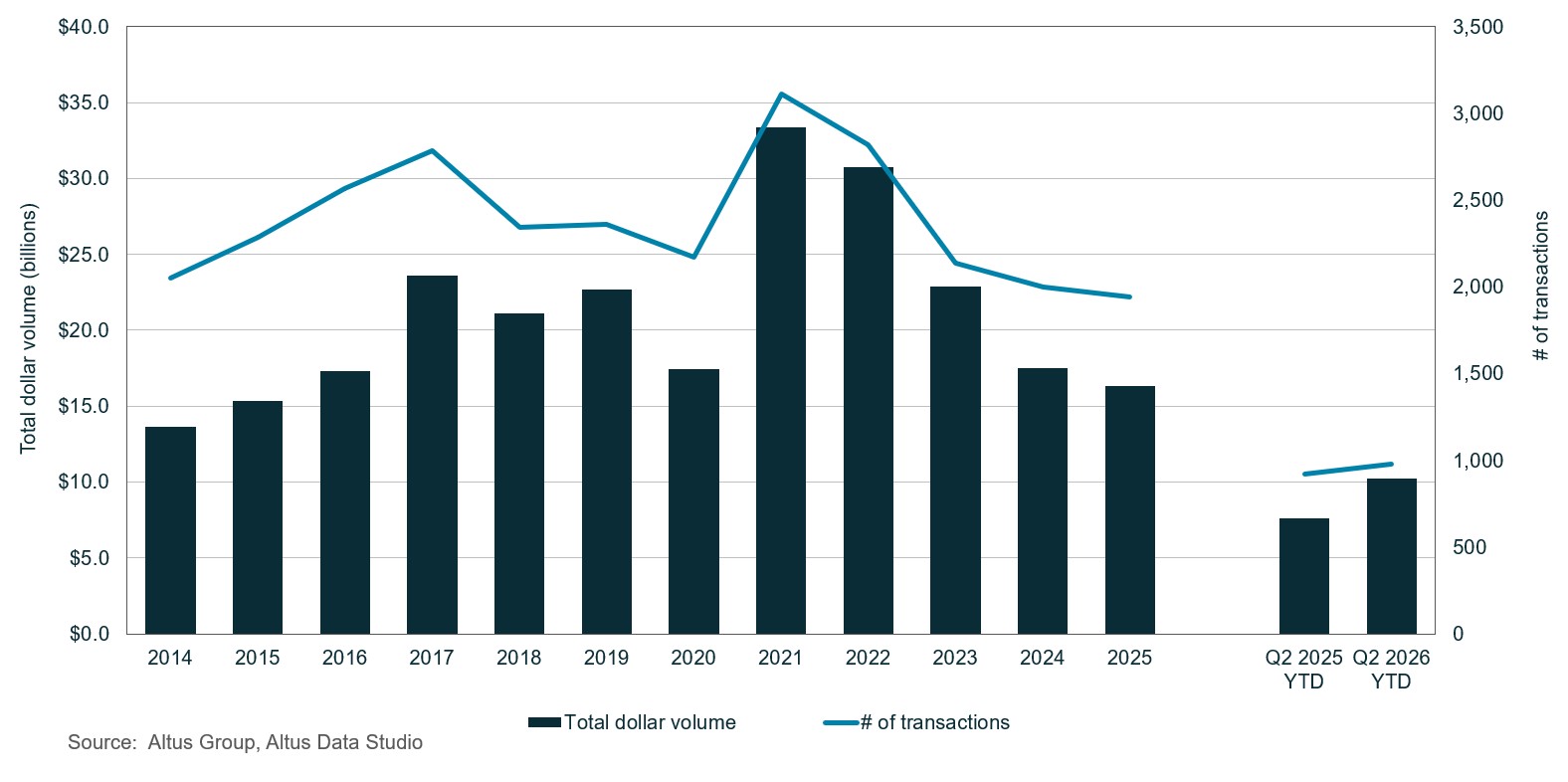
According to Altus Group’s Q2 2026 Toronto commercial real estate market update, total GTA commercial investment volume reached $10.2 billion in the first half of 2026, up nearly 35% year-over-year. That is not a broad speculative rebound. It is a selective reallocation toward assets with durable cash flow, stronger tenant demand and better long-term positioning.
The strongest signal came from multi-family. Transaction volume approached $2.4 billion, a 244% annual increase. Investors continue to treat rental housing as an inflation hedge and a long-term demographic play. But underwriting has changed. Buyers are no longer assuming rapid rent acceleration or quick refinancing relief. Elevated debt costs, new rental supply and a heavily supplied condo rental market mean returns must be supported by conservative assumptions.
Office is also showing signs of investable life, but only at the top end of the market. Volume rose 125% year-over-year to nearly $1.2 billion, driven by Class AAA and A assets. Toronto’s office availability rate fell 200 basis points to 15.7%, while downtown Class A availability in the Financial District compressed to 9.6%. That is the flight-to-quality trade in numbers. Older buildings without location, transit access or modern workplace features remain structurally challenged.
The GTA rebound is not about buying everything. It is about buying assets whose income can survive a tougher cost-of-capital environment.
Industrial remains the largest capital magnet, with nearly $3.6 billion in transaction volume, up 38%. The sector is still supported by logistics demand, e-commerce infrastructure and Toronto’s population density. Yet investors should watch supply carefully. Altus reported 39 industrial projects under construction totalling 11.3 million square feet, with 64% still available. This does not erase the long-term case, but it does require sharper leasing assumptions and more caution around speculative product.
Retail tells a different story. Investment volume fell 30% to just over $925 million, not because demand has disappeared, but because prime product is scarce. Owners of grocery-anchored centres, dominant malls and high-street assets are holding. For investors, that scarcity supports valuations in the best corridors, but it also limits entry points. Secondary retail remains more exposed to weaker discretionary spending and higher household debt servicing costs.
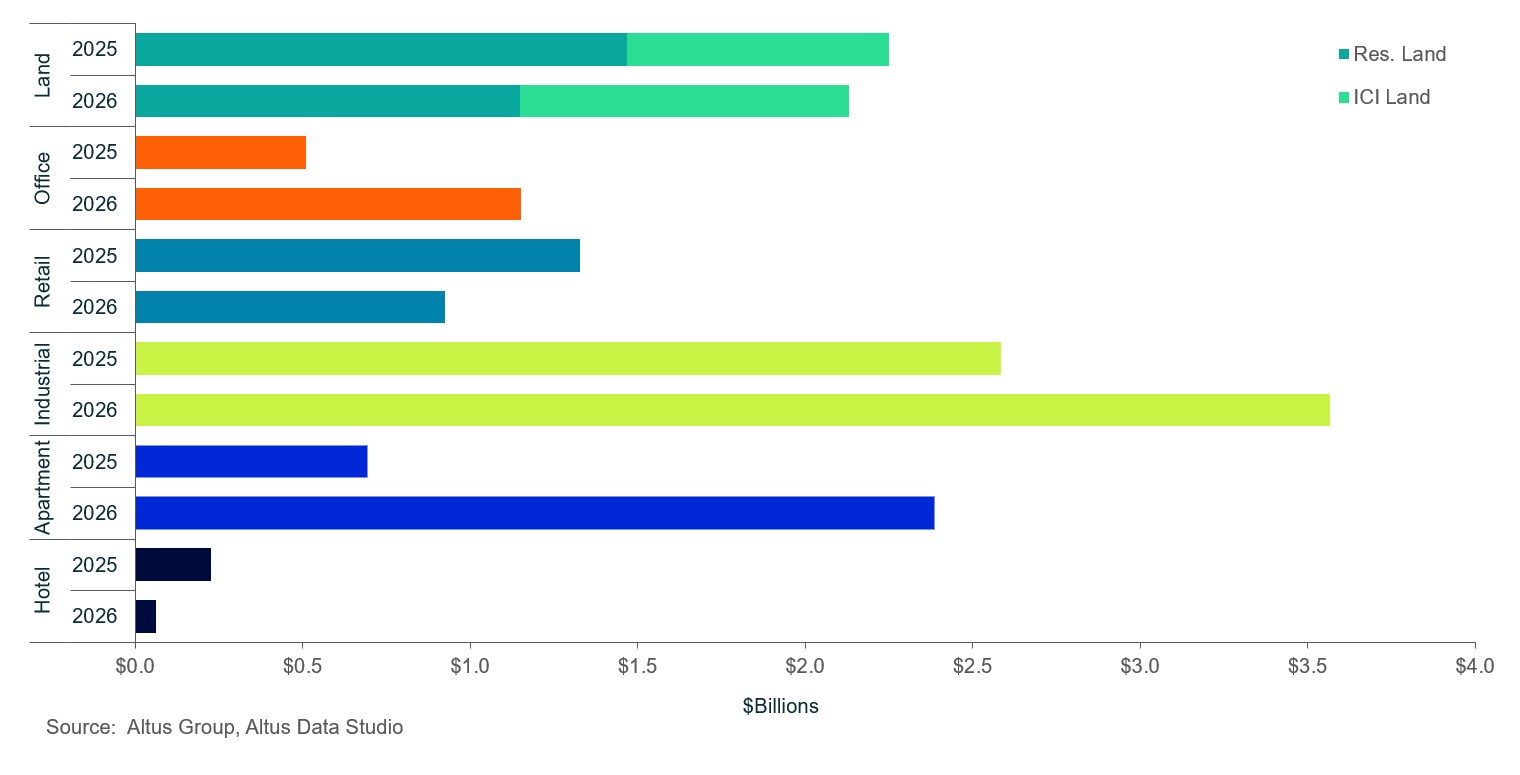
Land remains the most exposed part of the cycle. Total land volume slipped 5% to nearly $2.1 billion, with residential land down 22%. Entitlement delays, development charges, construction inflation and financing pressure continue to weigh on builders. By contrast, industrial, commercial and institutional land rose 26%, supported by logistics demand and strategic employment-site acquisitions.
The Bank of Canada’s 2.25% rate hold has helped establish a valuation floor, but it has not returned the market to the cheap-money era. That distinction matters. Investors should expect narrower bid-ask spreads, not easy leverage. The best opportunities are likely to sit where motivated sellers, strong locations and realistic income assumptions intersect.
For portfolio strategy, the takeaway is disciplined optimism. The GTA remains Canada’s deepest commercial market, but capital is becoming more precise. Investors who prioritize income durability, replacement-cost logic, tenant quality and submarket liquidity will be better positioned than those simply chasing the rebound.
Source: Altus Group