Pearson’s $1.5B Terminal Upgrade Is a Growth Signal for the Western GTA
Toronto Pearson’s next modernization phase is not just an airport construction story. It is a regional growth signal. A $1.5 billion investment into Terminal 1 and Terminal 3 tells developers, municipalities, and infrastructure planners that the western GTA’s primary mobility hub is being positioned for higher passenger volumes, greater operational resilience, and a larger economic role over the next decade.
According to Construction Review Online, the Greater Toronto Airports Authority has launched the second phase of the Pearson LIFT program, focused on brighter terminals, improved wayfinding, expanded common areas, upgraded customs and immigration facilities, enhanced security screening, gate improvements, and baggage system upgrades. This follows an earlier $3 billion phase tied to airfield and baggage infrastructure. Together, the investment profile points to a long-term capacity and reliability strategy rather than a cosmetic terminal refresh.
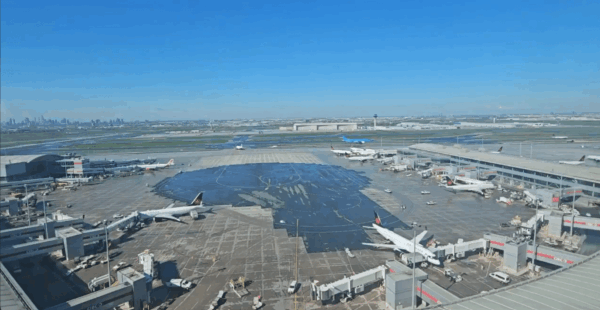
For land development, the most important implication is not inside the terminal. It is the pressure this places on the airport employment district around Mississauga, Etobicoke, Brampton, and the broader Highway 401, 427, and 409 corridor. Airports of Pearson’s scale shape hotel demand, logistics intensity, business travel patterns, labour mobility, and the value of nearby employment lands. When passenger capacity rises, the surrounding land economy tends to reorganize around that throughput.
Pearson already functions as one of Canada’s most important employment anchors. A terminal program aimed at passenger flow, customs processing, screening technology, and baggage speed is effectively an investment in reducing friction across the region’s global access point. That matters for commercial real estate, advanced logistics, convention and hospitality uses, and corporate location decisions. The easier the airport is to use, the stronger its surrounding land market becomes.
The modernization also lands at a time when western GTA municipalities are under competing pressures. They need more housing, more employment capacity, stronger transit connections, and better use of already serviced land. Airport-adjacent districts are difficult planning environments because they involve noise contours, height restrictions, traffic management, industrial protection, and regional infrastructure coordination. But they are also among the most strategically valuable urban lands in the province.
When an airport expands capacity, the development question is not only how many passengers it can move, but what kind of urban economy forms around that movement.
For planners, Pearson’s investment should sharpen the conversation around ground access. Terminal upgrades can improve processing inside the airport, but regional competitiveness depends on how workers, visitors, and goods reach the site. Road congestion around the airport district is already a material constraint. Future planning decisions around transit integration, bus priority, regional rail access, airport employment shuttles, and last-mile movement will have direct consequences for land value and development feasibility.
For developers, the near-term opportunities are likely to cluster around hospitality renewal, logistics support, business services, and mixed employment intensification where zoning allows. Housing demand will also continue to build in surrounding communities, but airport-related constraints mean residential feasibility will depend heavily on location, approvals, mitigation standards, and municipal policy direction. Not every parcel near Pearson should become housing, but every parcel near Pearson will be affected by the airport’s next phase of growth.
The selection of Ontario-based design and construction partners also matters. Large infrastructure programs of this scale create procurement momentum, local construction capacity, and specialized delivery expertise. For investors watching the GTA, Pearson’s modernization reinforces a simple point: the region is still preparing for growth, even as housing, congestion, and infrastructure deficits test its ability to absorb it. The next signal to watch is whether surrounding land use planning, transit investment, and employment district policy move with the same urgency as the airport itself.
Source: Construction Review Online