Toronto’s $2.7 Billion Bet: What the Federal Rental Push Means for Urban Growth
Every major city eventually reaches a point where the gap between demand and supply becomes a policy problem rather than a market one. Toronto has been sitting in that gap for years. This week, the federal government moved to close a piece of it, committing $2.7 billion toward 18 rental housing projects across the city, a package expected to produce more than 5,600 homes, with nearly 2,000 designated affordable or deeply affordable.
Prime Minister Mark Carney announced the funding alongside Minister of Housing and Infrastructure Gregor Robertson and Toronto Mayor Olivia Chow. What stands out to anyone who tracks development feasibility is not just the dollar figure, but the structure behind it. This is not a single grant. It is two distinct financing streams working in parallel, which tells you something about how the city is trying to unlock stalled supply from multiple directions at once.
The first stream sends more than $310 million through Build Canada Homes, the federal affordable housing agency, into nine projects built on city-owned land in downtown Toronto, Scarborough, Etobicoke, Parkdale and the waterfront. That land ownership detail matters. When a municipality already controls the site, it removes one of the largest variables in any development pro forma: land acquisition cost and timeline risk. These nine projects are projected to deliver 1,885 units, with 740 affordable.
The second stream is larger and more revealing about where the real bottleneck has been. More than $1.8 billion is flowing through CMHC’s Apartment Construction Loan Program into another nine projects across downtown, Leaside, Flemingdon Park, the Junction Triangle, Scarborough and Weston, expected to create 3,720 units. Carney was direct about the cause of the delay, saying these projects had already been approved and were ready to build, but were stalled for lack of financing. That is a familiar story in large scale housing development. Approvals are rarely the hardest part. Capital is.
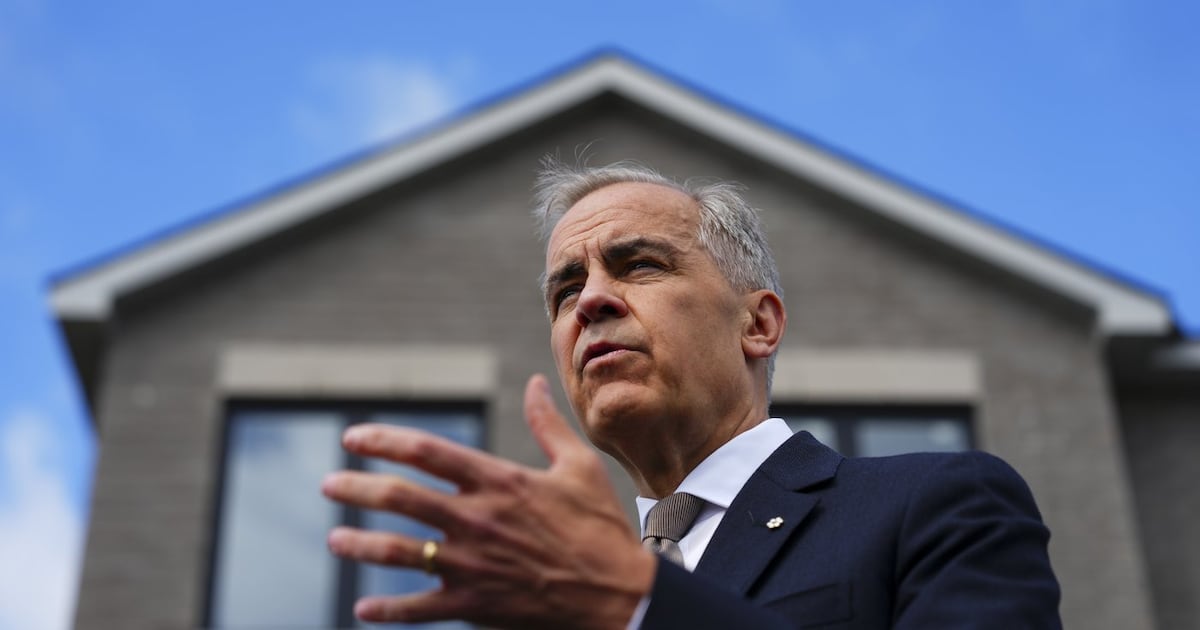
All of these projects were ready to build. Many of them for a long period of time. All of them were stalled for want of financing until today.
One project worth watching closely for anyone thinking about long term neighbourhood value is the redevelopment of the former Toronto Coach Terminal site downtown, a large parcel that has sat underused for years despite its transit proximity. Officials expect construction to begin on more than 4,500 of the total units before the end of this year, with the full portfolio reaching substantial completion by March 2031. That five year horizon is the kind of timeline serious development strategy is built around, not quarterly headlines.
What this announcement really signals is a shift in how Toronto plans to solve its supply problem: less reliance on the private market alone, more coordinated capital across every order of government, and a deliberate targeting of neighbourhoods near transit, schools and grocery access rather than isolated luxury towers. For a city that has struggled to convert approved projects into completed ones, unlocking financing at this scale could be the difference between a plan on paper and a functioning neighbourhood by the early 2030s.
Source: BNN Bloomberg