


Why Canada’s Next Wave of Infrastructure Needs Better Leaders, Not Just Bigger Budgets
Every major infrastructure project I have studied succeeds or fails long before the first piece of equipment arrives on site. It fails on the org chart. It fails in procurement decisions made eighteen months earlier. It fails because the person holding the project together was never trained to hold a project together. That is why the University of Toronto’s new Canadian Infrastructure Leadership Academy caught my attention, and it should catch yours too if you care about how this country builds.
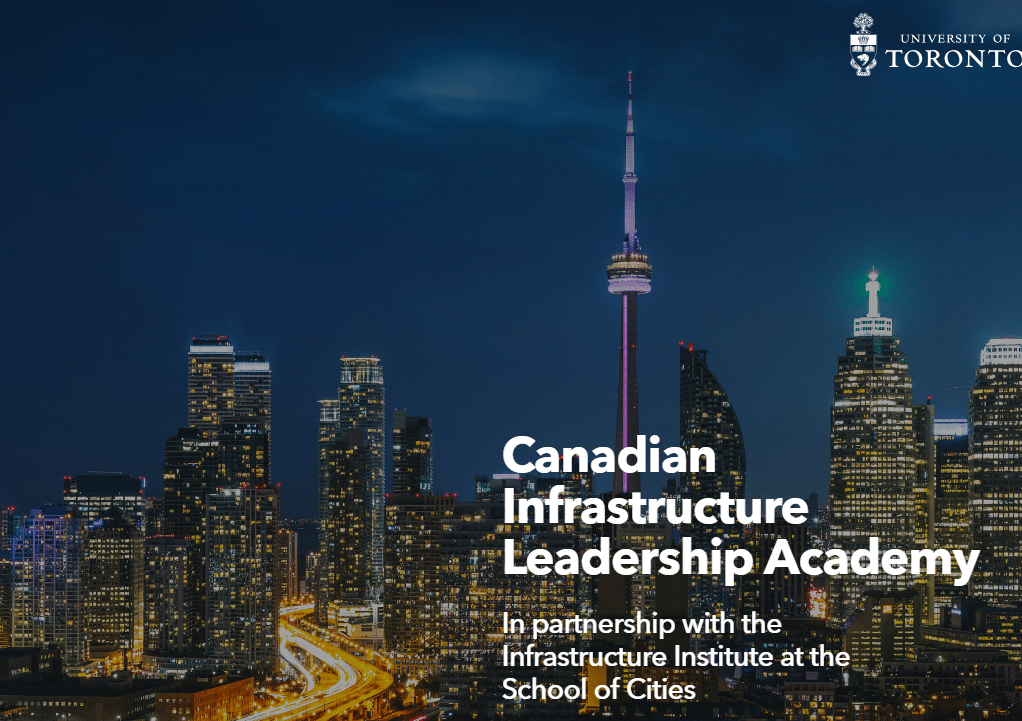
The program, a joint effort between the university’s Infrastructure Institute at the School of Cities and the Rotman School of Management, is a six-month hybrid course built for professionals with ten to fifteen years of experience who are stepping into senior leadership on major builds. The curriculum covers project leadership, negotiation, procurement, contract management and the kind of multi-stakeholder coordination that defines large-scale development today. None of that is glamorous. All of it is the difference between a project that lands on time and one that becomes a cautionary tale in a council meeting.
I think about land development as a layered problem. Timing, access, infrastructure capacity, policy, financing and community demand all have to align, and someone has to hold that alignment together over years, not months. Matti Siemiatycki, the academy’s academic co-director, put it well when he described modern major projects as “an IT project wrapped in steel.” That line captures something I see constantly in this sector. The physical build is almost the easy part now. The real complexity is technological integration, data systems, stakeholder management across public and private partners, and risk that shows up long before concrete is poured.
For developers and municipal partners, this matters beyond the classroom. Housing supply in Canada is constrained as much by execution capacity as by zoning or financing. We have no shortage of ambitious projects on paper. What we have been short on is a deep enough bench of leaders who can manage the civil infrastructure, energy and industrial complexity that large housing-adjacent projects now demand. An academy built specifically to train that leadership layer is, in effect, an investment in the delivery side of the housing pipeline, not just the planning side.
Providing leaders with current techniques to manage complex projects is a risk mitigation strategy.
Siemiatycki’s framing of leadership training as risk mitigation is exactly how I would pitch it to any investment committee or city planning office. Cost overruns and timeline slippage on major infrastructure rarely trace back to a single bad decision. They trace back to a leadership gap, someone who understood engineering but not negotiation, or understood contracts but not the stakeholder map. A structured academy that brings public and private sector professionals into the same room, working through mentorship and a final project tied to a real challenge in their own portfolio, builds exactly the kind of cross-sector fluency that large developments depend on.
This is a small program in terms of enrollment, but it signals something larger about where the industry is heading. As cities intensify and infrastructure projects grow more technically and financially complex, the organizations that invest in developing their people will outperform those that simply hope their next hire has the right instincts. Applications for the first cohort are under rolling review, with a tuition discount for those submitted by November 30. Worth watching for anyone building the next generation of leadership behind Canada’s growth.
Source: Ontario Construction News