One Delisle and the Architecture of a Turning Skyline
Some towers rise by repetition. One Delisle rises by rotation. At Yonge Street and Delisle Avenue in Toronto’s Deer Park neighbourhood, Studio Gang’s first Canadian commission is nearing completion with a form that treats height not as a simple vertical gesture, but as a slow spatial turning. As reported by UrbanToronto, the 44-storey condominium, developed by Slate Asset Management with WZMH Architects as Architect of Record, has topped off at 155 metres and is now revealing the intelligence of its structure from podium to crown.
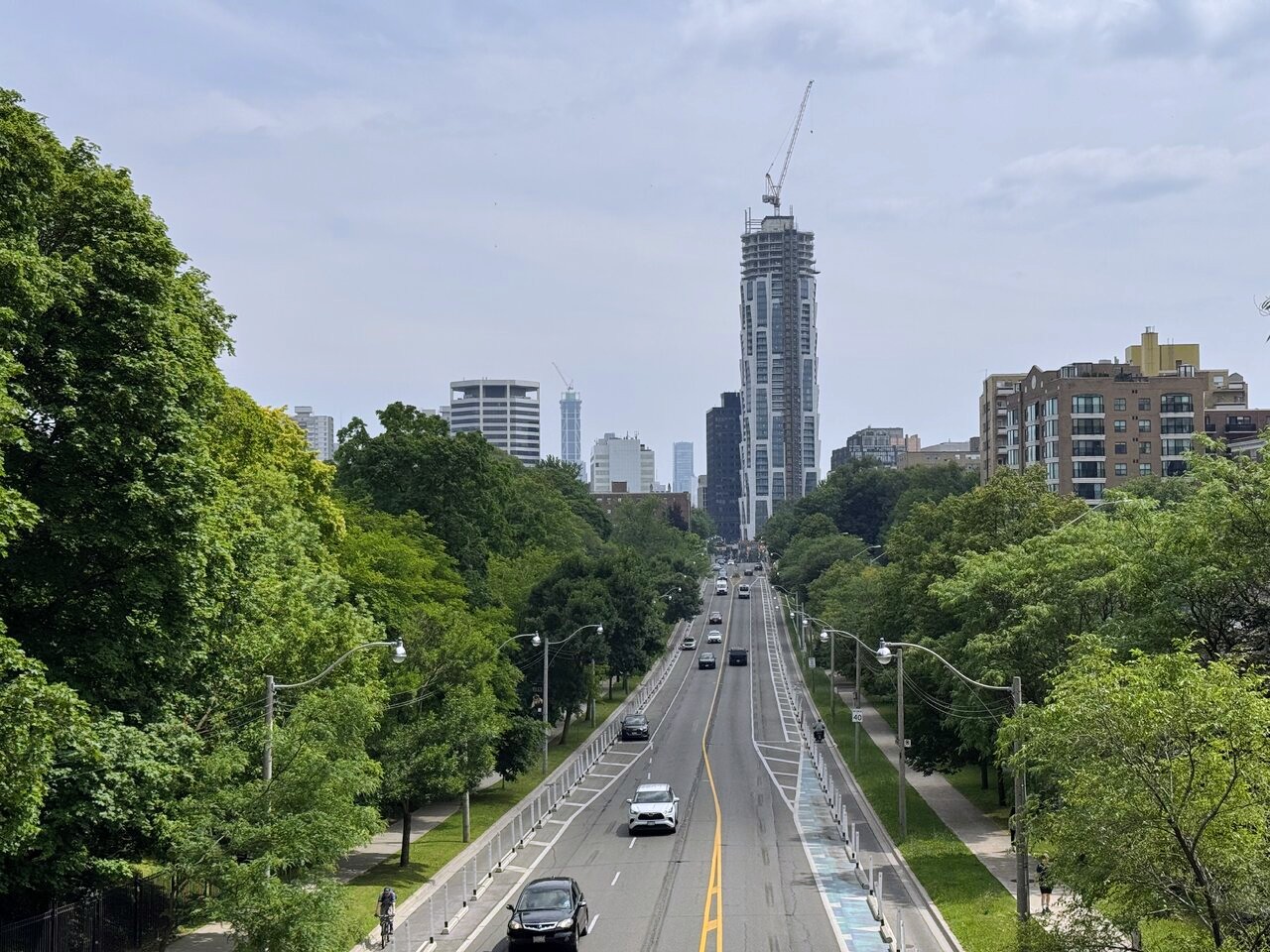
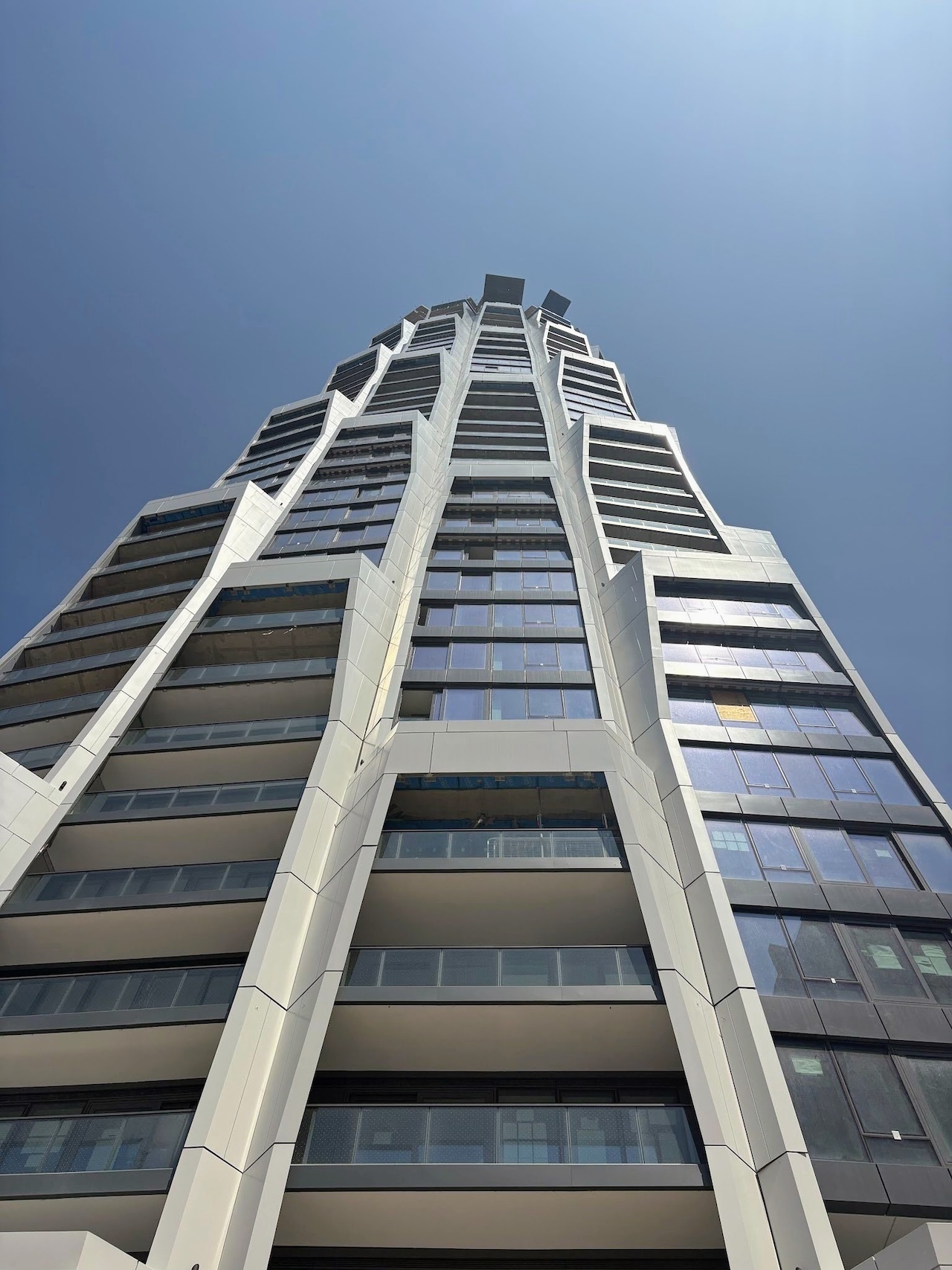
The building’s most compelling design idea is its refusal to be static. Eight-storey volumetric modules pivot as they ascend, transforming a rectilinear base into a near-cylindrical crown. This is not ornament applied to a conventional tower. It is massing as movement. At four-storey intervals, the floor plates contract and shift inward, producing a sequence of terraces, recesses, and changing shadow lines. The result is a façade that appears differently from each approach, more like an object shaped by light than a fixed urban slab.
Materially, One Delisle is working with a restrained but expressive palette. White powder-coated aluminum-clad piers trace the shifting slab edges, giving the tower its crisp architectural rhythm. Between them, dark curtain wall glazing and recessed balconies create depth, allowing the building to read as layered rather than flat. The contrast is precise: pale vertical structure, dark reflective glass, and the intermittent relief of outdoor rooms carved into the elevation.
At street level, the design becomes a negotiation between memory and contemporary transparency. A limestone façade from a previous building on the site, not formally heritage-designated but considered to have character, will be reconstructed with new punched, period-accurate windows. Beside it, approximately 6,000 square feet of retail frontage is enclosed in full-height glass and dark aluminum framing. This pairing matters. It suggests a more nuanced model for urban development, where a new building does not erase the texture of its site entirely, but absorbs certain fragments into a larger architectural composition.
The unfinished construction images are especially revealing because they show design before polish. Exposed concrete columns, soffits, insulated ductwork, mechanical services, galvanized steel, and temporary timber protection disclose the anatomy of refinement. In a finished condominium, these elements often disappear behind seamless surfaces. Here, they remind us that elegance is built through sequencing, tolerance, coordination, and restraint.
One Delisle’s elegance comes not from decoration, but from the discipline of its turning geometry.
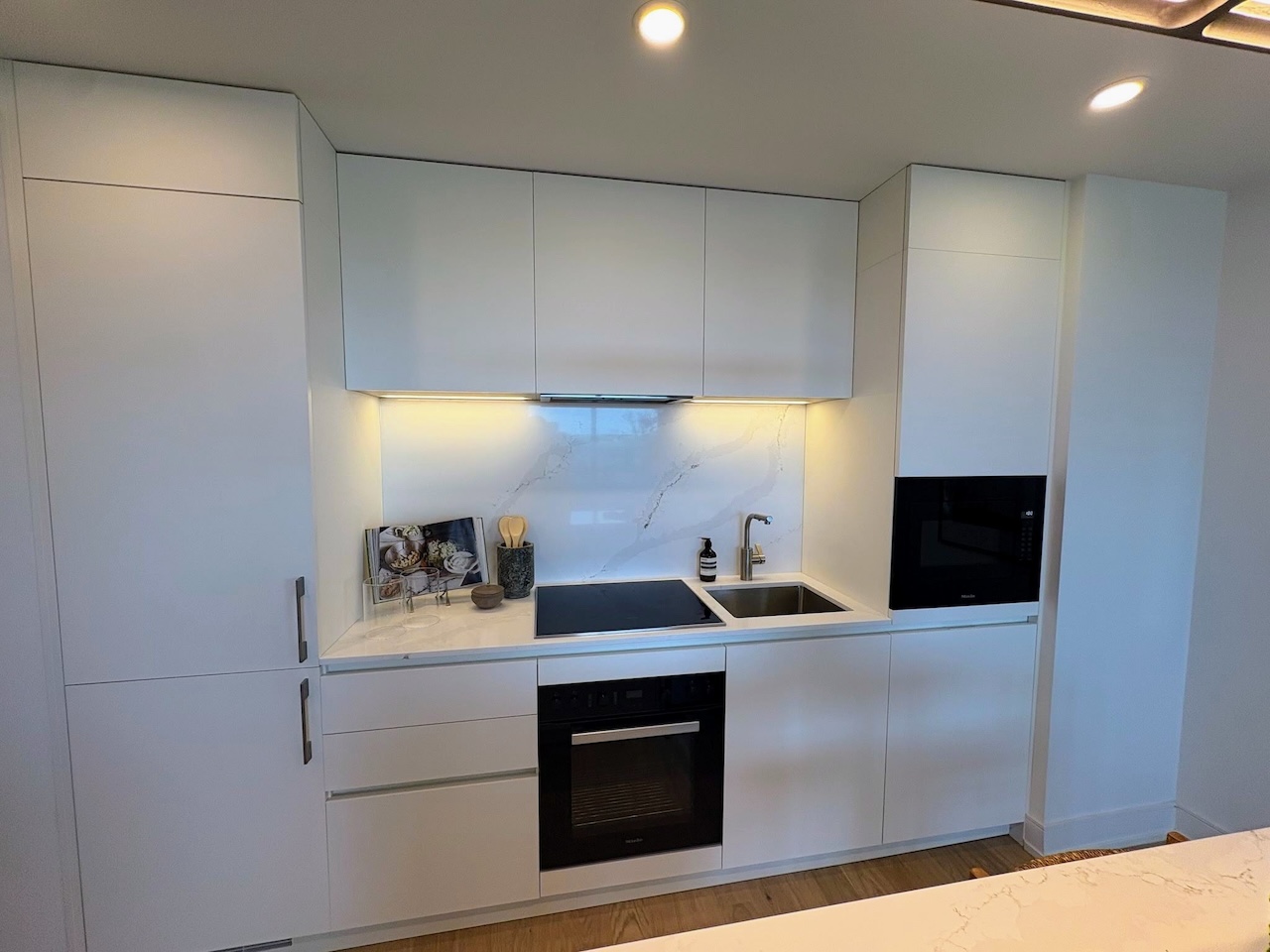
Inside the residential levels, the design direction appears equally controlled. A model suite on the fourth floor includes an Italian-manufactured kitchen with full-height flat-panel cabinetry and integrated appliances, a familiar language of contemporary luxury, but one that suits the tower’s exterior discipline. The emphasis is on plane, alignment, and quiet finish rather than visible embellishment. Even the demising wall assembly, with metal studs and mineral-wool insulation, speaks to a less visible but essential luxury: acoustic privacy and atmospheric calm.
The penthouse level, still raw beneath the crown, offers perhaps the clearest reading of the building’s promise. Exposed slabs, perimeter columns, and broad façade openings frame expansive views before the final finishes arrive. Above, galvanized steel members form the crown’s perimeter support, a structural halo that completes the tower’s spiral gesture. It is architecture as choreography, where podium, terrace, suite, and skyline are all part of the same movement.
For design-minded observers, One Delisle is a reminder that urban luxury is evolving. The most persuasive buildings now combine sculptural identity with material restraint, public interface with private atmosphere, and visual drama with technical clarity. Its lesson for the home is similar: beauty is strongest when form, structure, and feeling are allowed to belong to one another.
Source: UrbanToronto