How an AI Safety Network Is Turning Transaction Risk Into Readable Data for Korean Agents
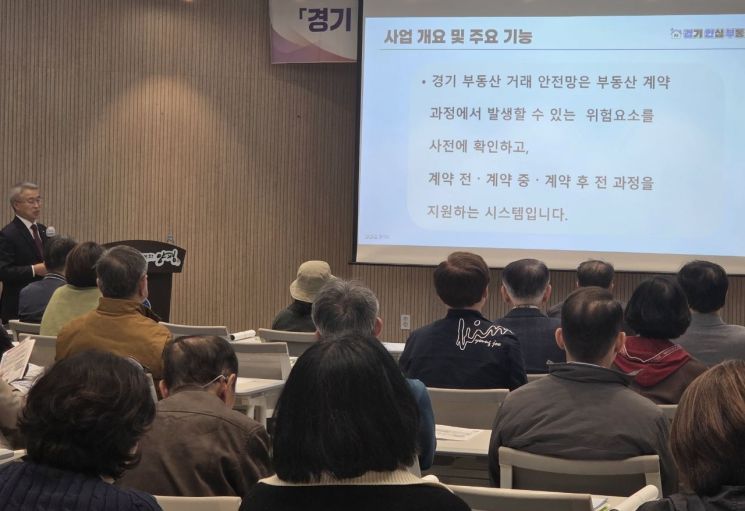
Fraud in housing rarely announces itself. It hides in mismatched registrations, overlapping liens, and contracts signed before anyone has checked who actually holds the rights to a property. In Yangpyeong County, Gyeonggi Province, 47 licensed real estate agents spent a recent session learning how to let an AI system do that checking for them, and the story is less about one training day than about what happens when risk becomes something you can see on a screen before it becomes something you live through.
The platform in question is the Gyeonggi Real Estate Transaction Safety Network, or GRTS, a provincial tool built specifically to counter jeonse fraud, the scheme where tenants hand over large lump sum deposits under Korea’s lease system only to discover the property was never clear to lend against in the first place. What makes GRTS interesting from a data perspective is its structure. It does not intervene at a single point. It layers intelligence across the entire transaction timeline, from pre-contract rights analysis and public record access through a property safety map, into contract stage tools like audio transcription and compliance verification, and finally into post-contract monitoring that flags changes to property registration after the ink is dry.
That full lifecycle approach is what separates a genuine intelligence layer from a simple checklist app. A single verification at signing tells you a property looked clean on one day. A system that keeps watching the registry afterward tells you whether it stays that way. For an analyst, that distinction matters enormously, because fraud often happens in the gap between those two moments, when a bad actor executes a new transaction on paper that the original tenant never sees coming.
As jeonse fraud continues to cause harm, I hope this training will help foster a sound real estate brokerage culture in which residents can feel secure.
That line from Governor Jeon Jinseon captures something worth noting for anyone watching how property technology is adopted at scale. Tools like GRTS only create value once the people on the ground actually use them well, which is exactly why Gyeonggi Province paired the platform with hands on instruction rather than simply releasing it and hoping agents figured it out. The session, led by instructor Lee Jaekyung of the Safe Jeonse Project Academy, treated the software as a professional skill rather than an optional add-on, and the county’s plan to extend a joint promotional campaign with the Safe Jeonse Management Group across cities and counties through late November suggests this is meant to become standard practice rather than a pilot.
For markets outside Korea, the underlying signal is the more transferable part. Jurisdictions everywhere are sitting on public registry and rights data that could be structured into early warning systems long before a dispute reaches a courtroom. GRTS is a working example of what that looks like when a government actually builds the dashboard and then trains the professionals who touch it daily. Data does not remove the risk from a housing transaction entirely, but organized correctly, it narrows the space where fraud can quietly operate, and that is a meaningful shift for any market still relying mostly on trust and paperwork.
Source: The Asia Business Daily