

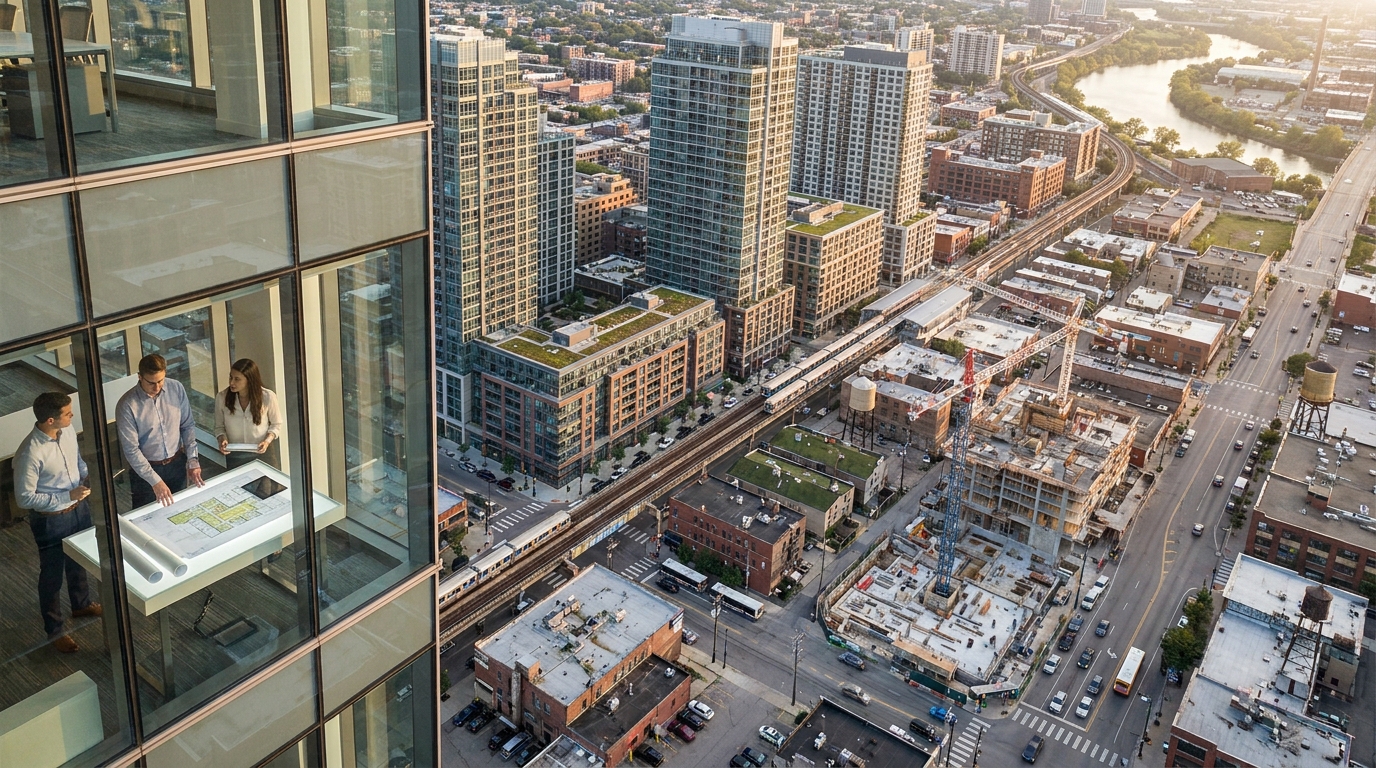

Construction risk is one of the most important and most underestimated issues in real estate investment. Investors often spend substantial time modeling rents, exit pricing, cap rates, and financing structures, yet the physical process of getting a project built can alter every one of those assumptions. If a development runs over budget, misses key deadlines, faces permit delays, or opens into a weaker market than expected, the investment case can deteriorate quickly. In practical terms, construction risk is not a narrow operational problem. It is a capital preservation issue that affects returns, debt service, leasing performance, and asset value at the same time.
Table Of Content
- Why construction risk matters more than many investors expect
- The main categories of construction risk in real estate investment
- Pre development and site acquisition risk
- Entitlement and permitting risk
- Design risk
- General contractor and subcontractor performance risk
- Supply chain and procurement risk
- Labour risk
- Weather and force majeure risk
- Change order risk
- Safety and environmental risk
- Financing and refinancing risk
- Post completion defect and warranty risk
- How construction risks combine and magnify losses
- Core strategies to manage construction risk proactively
- Start with conservative underwriting
- Use the right contract structure
- Prequalify contractors and consultants rigorously
- Strengthen draw controls and progress verification
- Protect the project with the right insurance and completion security
- Manage schedule risk through critical path discipline
- Plan for market absorption before completion
- Common misconceptions that expose investors to unnecessary losses
- A practical due diligence framework for investors
- Construction risk management as a long term investment advantage
- Final thoughts
That is especially relevant in the current market. Statistics Canada reported that in Q2 2025 residential building construction costs rose 1.0% quarter over quarter and non residential costs rose 1.6%. On a year over year basis, the 15 CMA composite increased 3.7% for residential and 4.0% for non residential projects. Statistics Canada also noted that tariff actions and countermeasures were adding volatility to the pricing and availability of some materials, while skilled labour shortages continued to put upward pressure on labour costs in several regions. Those figures matter because they confirm that construction risk remains active and measurable, not hypothetical.
For investors, the central question is straightforward. Will the project be delivered on time, on budget, and at the quality required to support the original business plan. A schedule delay can increase carrying costs, defer revenue, and raise interest during construction. A cost overrun can lead to additional equity requirements, tighter loan covenant pressure, or last minute scope reductions that weaken the finished asset. If weaker market demand appears at the same time, the result can be a painful combination of construction stress and absorption risk. The largest losses in development are rarely caused by one isolated problem. They are usually the result of several manageable issues compounding at once.
This article breaks down the major categories of construction risk in real estate investment and explains how disciplined investors can identify, assess, and mitigate them. The goal is not to eliminate uncertainty, because that is impossible in development. The goal is to build a layered risk management system that protects capital before acquisition, during construction, and through the stabilization period after completion. In a more volatile market, that discipline is not only defensive. It is a competitive advantage.

Why construction risk matters more than many investors expect
Real estate investors often focus on location, market timing, rent growth, and financing terms, and those variables are clearly important. However, a construction project sits at the intersection of physical execution and financial exposure. Every week of delay can increase loan interest, general conditions, insurance costs, and overhead. Every price increase in materials or labour can push the total development cost above the original budget. Every unresolved defect can affect tenant move ins, lender signoff, and the reputation of the finished asset in the market.
Construction risk also matters because it can create downstream issues that do not look like construction problems at first glance. A delayed building permit can push completion into a weaker leasing season. A shortage of a key trade can force resequencing that slows the critical path. A late mechanical delivery can postpone occupancy, which then delays rent commencement and puts more pressure on debt service. If the project was financed with assumptions built around a narrow delivery window, these setbacks can quickly become financing risk rather than merely execution risk.
Current Canadian housing conditions add another layer of caution. CMHC’s 2026 housing outlook says homebuilders are facing higher costs, weaker demand, and more unsold homes, especially in the condominium segment, and expects new home construction to decline through 2028. At the same time, CMHC reported that total housing starts in Canada reached 259,000 units in 2025, up 6% year over year. That combination is important. It suggests activity remains substantial, but the margin for error is tightening in some product types and markets. In other words, a project can still get built in a market where absorption is less forgiving than it was at underwriting.
From an investor perspective, this changes the risk profile from simple build risk to build and absorption risk. Completing the physical structure is only one part of the outcome. The asset must also lease or sell at the level assumed in the pro forma. If construction takes longer than expected and market conditions soften before completion, the project may face lower sale velocity, higher concessions, slower lease up, or refinancing pressure. That is why sophisticated investors underwrite construction risk as part of the full capital stack and exit strategy, not as a separate technical issue left entirely to the contractor.
The main categories of construction risk in real estate investment
One of the best ways to understand construction risk is to separate it into categories. That does not mean each risk occurs independently. In reality, they often overlap. Still, breaking them down helps investors create better due diligence checklists, clearer reporting standards, and more realistic downside scenarios. The following categories are among the most material in real estate development and value add projects.
Pre development and site acquisition risk
Risk begins before a shovel hits the ground. Pre development risk includes land acquisition errors, inaccurate site assumptions, poor environmental review, geotechnical surprises, incomplete utility assessments, title issues, and unrealistic budgeting based on early concept drawings. If an investor acquires a site with unresolved contamination, unstable soil, hidden easements, or utility constraints, the financial effect can be severe and immediate. These issues can trigger redesign, remediation expense, and schedule delays before full construction even starts.
This phase is also where many business plans become overly optimistic. Sponsors may rely on preliminary pricing, generic density assumptions, or informal municipal guidance that has not yet translated into approvals. Investors should be careful when project returns are highly sensitive to assumptions that remain unconfirmed. Conservative pre development underwriting requires independent review of site conditions, entitlement status, probable servicing costs, and realistic timelines. Paying more attention in this phase can prevent much larger losses later.
Entitlement and permitting risk
Entitlement and permitting risk is often underestimated because it does not always look expensive at first. Yet time is capital in development. Delays in zoning approvals, site plan approvals, development permits, utility signoffs, heritage reviews, or building permits can stall a project long enough to damage projected returns. Holding costs continue during these periods, and market conditions can shift while the project is waiting for approvals.
Investors should be especially cautious when underwriting land or redevelopment opportunities that assume aggressive approval schedules. Municipal processes can move slowly, and public consultation, design revisions, or infrastructure conditions can add months to the timeline. In some cases, lender commitments expire or must be renegotiated during these delays, introducing additional financing risk. A well located site is not enough. Investors need a credible entitlement path, realistic timing assumptions, and legal review of use rights and title restrictions.
Design risk
Design risk covers problems arising from incomplete, inaccurate, or poorly coordinated plans and specifications. If the design documents are not sufficiently developed before procurement and construction, the project becomes more vulnerable to change orders, field conflicts, and interpretation disputes. Mechanical, structural, architectural, and civil systems must work together cleanly. When they do not, costs rise and progress slows.
This category also includes professional liability exposure. A project can suffer because of design omissions, code compliance issues, inadequate detailing, or performance shortfalls discovered after installation. In complex buildings, the cost of correcting design related issues can be substantial and may trigger delays that affect multiple trades. Investors should not assume design risk is fully transferred simply because architects and engineers were engaged. Professional teams matter, but document quality, coordination, and review discipline matter just as much.
General contractor and subcontractor performance risk
Contractor performance is one of the most visible construction risks, but it is often misunderstood. A strong brand name or low bid does not guarantee successful delivery. Investors need to understand whether the general contractor has the right experience for the specific asset type, project size, union environment, trade complexity, and local market conditions. A contractor that performs well on warehouse projects may not be the right fit for a high rise residential development with significant finishing detail and occupancy coordination.
Subcontractor quality is equally important. Even a capable general contractor can struggle if critical trades are undercapitalized, overbooked, or dependent on unstable supply channels. If a key subcontractor defaults, replacement may cost more and cause schedule disruption. Investors should look at contractor backlog, safety history, litigation record, claims patterns, trade coverage plans, and project management depth. Execution capacity is a material part of underwriting, not merely an operational detail.
Supply chain and procurement risk
Supply chain risk remains a major issue in the current environment. Statistics Canada has pointed directly to tariff related volatility in pricing and availability for some materials. That means procurement assumptions can become outdated quickly, especially on items with global sourcing exposure, long manufacturing lead times, or freight sensitivity. Electrical equipment, mechanical components, elevators, glazing systems, and specialty finishes can all create schedule pressure if procurement is delayed or market conditions shift.
From an investment standpoint, procurement risk is not only about cost. It is about sequencing and certainty. If critical materials arrive late, trades cannot complete dependent work and the project may lose momentum on the critical path. The cost impact then spreads beyond the delayed item itself, because labour scheduling, equipment rentals, and turnover milestones are affected as well. Investors should ask whether long lead items were identified early, whether purchase orders are locked, and whether substitutions have been evaluated in advance.
Labour risk
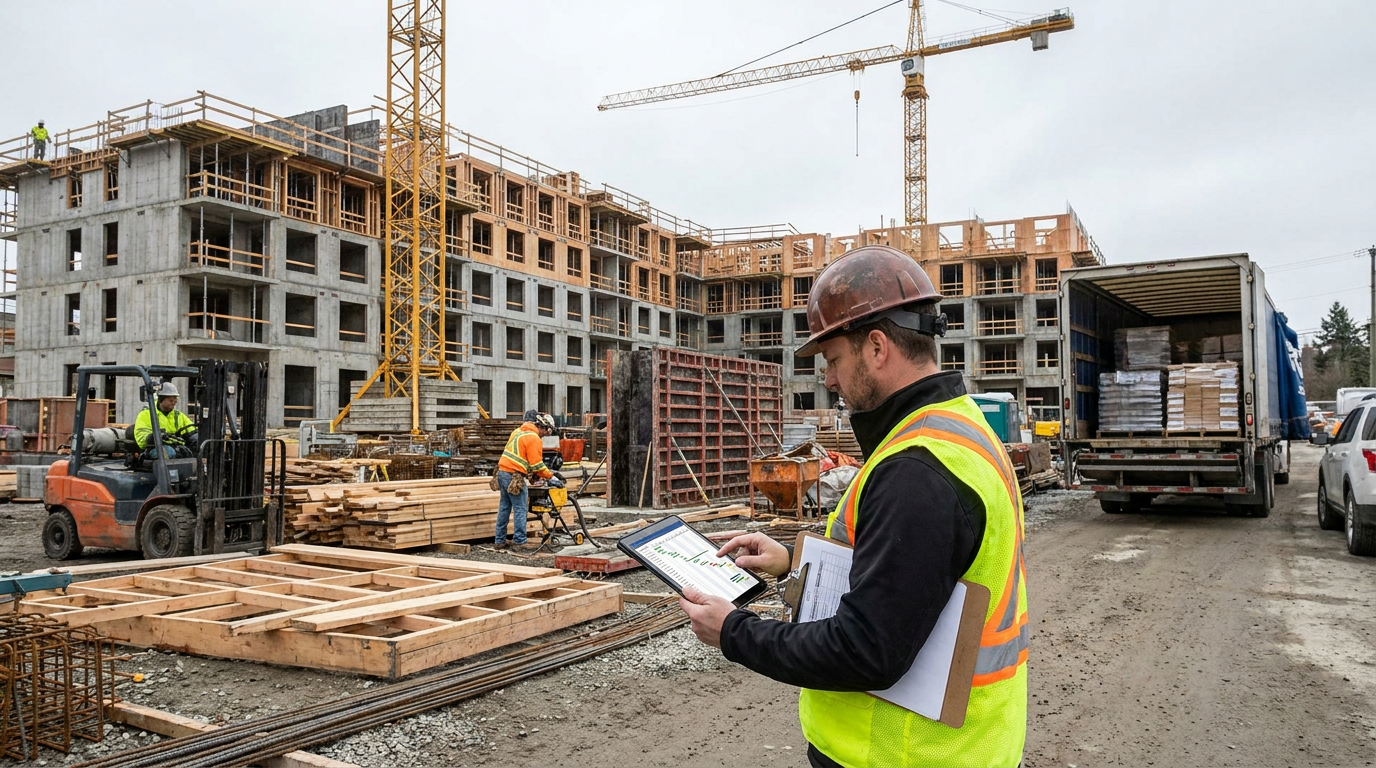
Skilled labour shortages continue to shape project performance in many regions. When qualified trades are scarce, wages rise and schedule reliability declines. This is not simply a matter of paying more. In a tight labour market, even well funded projects can face workforce gaps if too many developments are competing for the same electricians, plumbers, concrete crews, or finishing trades. Labour shortage risk often becomes visible through missed milestones, lower productivity, and greater turnover in site staffing.
Investors should also remember that labour risk can vary by geography and building type. A market may have enough general labour but insufficient experienced supervisors or specialty crews. A project may be well staffed during structural work and then struggle later during interior fit out. Strong sponsors monitor labour planning closely and evaluate whether the contractor has credible trade commitments, realistic productivity assumptions, and enough site leadership to maintain control as the project moves through different phases.
Weather and force majeure risk
Weather remains a classic construction risk, but it should not be treated as an afterthought. Severe rain, cold weather, wind, flooding, wildfire conditions, and storm related disruptions can slow or stop work, interfere with deliveries, and increase site protection costs. Some risks are seasonal and predictable, while others are sudden and harder to forecast. Investors who assume a straight line construction schedule often understate these interruptions.
Force majeure events create further complexity because the contract may excuse certain delays without fully protecting the owner from cost consequences. Even when legal responsibility is limited, the economic effect can still be meaningful. Carrying costs continue, absorption timing shifts, and replacement procurement may become necessary. Investors should understand how force majeure is defined in project documents, what schedule relief applies, and whether insurance and contingency reserves are adequate for plausible disruption scenarios.
Change order risk
Change orders are among the most common sources of budget drift. Some are driven by owner decisions, some by design clarification, and some by unforeseen site conditions or code requirements. While individual changes may appear modest, the cumulative effect can be substantial. A pattern of frequent changes also disrupts field productivity and increases the chance of rework, disputes, and delayed inspections.
A fixed price contract or guaranteed maximum price contract can reduce some cost uncertainty, but neither structure eliminates change order risk. That is a common misconception. If the scope evolves, if hidden conditions emerge, or if delays alter labour and material requirements, the owner can still face additional cost exposure. Investors should insist on disciplined change order reporting, approval thresholds, and forecast updates that show both committed costs and projected final cost. Waiting until the end of the project to understand cumulative change exposure is a costly mistake.
Safety and environmental risk
Construction safety failures can lead to injuries, work stoppages, legal exposure, regulatory scrutiny, and reputational damage. Even when the owner is not directly managing labour on site, serious safety incidents can still affect financing, schedule, and public perception. Investors should review the contractor’s safety program, training standards, incident rates, and site supervision approach as part of prequalification.
Environmental risk extends beyond initial due diligence. It can include hazardous materials, stormwater issues, dust and noise compliance, contamination discovered during excavation, or improper handling of regulated substances. In redevelopment projects, these risks can be especially significant. A well structured environmental review process, supported by qualified consultants and clear remediation planning, can reduce uncertainty and protect the investment from later surprises.
Financing and refinancing risk
Construction projects are highly sensitive to capital structure. If budget overruns, delays, or weaker market conditions emerge, financing pressure can intensify quickly. Higher interest rates increase debt service and interest during construction. If a project misses lender milestones or covenant tests, the borrower may need to inject additional equity or seek amendments under less favorable terms. This is why construction risk and credit risk are inseparable in serious underwriting.
Regulators recognize this connection. OSFI identifies real estate secured lending, including construction related exposures, as an area where lenders must manage credit risk carefully because financial loss can arise if borrowers fail to meet obligations. For investors, that means lender discipline is not red tape. It is often a useful signal of project risk. Draw controls, inspections, reserve requirements, and completion conditions are all part of the framework that protects capital when execution becomes more difficult than expected.
Post completion defect and warranty risk
Construction risk does not end when the building opens. Post completion defects can affect occupancy, tenant satisfaction, repair costs, legal claims, and asset reputation. Water intrusion, envelope failures, HVAC performance issues, elevator problems, acoustic deficiencies, and finishing defects can all reduce the value of the finished property. In rental and mixed use assets, early operational problems may also increase turnover and weaken leasing momentum.
Investors should evaluate warranty coverage, closeout discipline, commissioning quality, and reserve planning for post completion issues. A project that technically reaches substantial completion but is burdened by unresolved deficiencies may still fail to deliver the expected investment outcome. Final completion, turnover quality, and defect management are all part of protecting long term returns.
How construction risks combine and magnify losses
The most damaging projects are usually those where risks overlap. Consider a condominium development that experiences a delayed permit, then encounters labour shortages during concrete work, then faces material price escalation on mechanical equipment, and finally completes into a softer pre sale or resale market. Each issue may look manageable on its own. Together, they can create a serious equity impairment.
This compounding effect is why investors should avoid looking at construction risk through a single lens. A contractor may still be competent even if the project is financially stressed. A lender may still be supportive even if timelines are slipping. Demand may still exist even if incentives need to increase. What matters is how multiple pressures interact within the same business plan. Strategic underwriting should test downside scenarios where schedule, budget, financing, and absorption all move against the project at once.
Key investor insight: The biggest construction losses rarely come from one dramatic event. They usually result from a chain of smaller issues that gradually weaken the project’s budget, timing, financing, and market position.
Core strategies to manage construction risk proactively
Effective risk management is layered. No single contract clause or insurance policy can solve every problem. The strongest approach combines underwriting discipline, contractual protections, third party verification, conservative budgeting, and active monitoring throughout the life of the project. Investors who take this process seriously are not being overly cautious. They are increasing the probability that the original business plan survives contact with real world conditions.
Start with conservative underwriting
Every risk management process begins with realistic assumptions. Investors should stress test land cost, hard cost, soft cost, financing cost, leasing pace, and exit value under less favorable scenarios. This includes modeling slower approvals, later delivery, higher rates, lower take out proceeds, and slower absorption after completion. If returns disappear under moderate stress, the project may be too fragile for the current environment.
Conservative underwriting also means avoiding the temptation to rely on best case pricing from early contractor discussions. Independent cost consulting can help validate assumptions before capital is committed. Investors should also review whether contingencies are sufficient for the specific project type, stage of design, and market volatility. Contingency budgets are not optional. They are one of the most important shock absorbers in a construction capital plan.
Use the right contract structure
Contracting strategy matters. Depending on the project, investors may consider fixed price arrangements, guaranteed maximum price structures, cost plus contracts with open book transparency, or phased procurement approaches. Each has strengths and tradeoffs. A guaranteed maximum price can create cost discipline, but it does not remove risks tied to change orders, exclusions, force majeure events, and contractor solvency. The right structure depends on design completion, project complexity, market competition, and sponsor experience.
Beyond price structure, the contract should clearly address scope, allowances, contingency ownership, schedule milestones, delay damages where appropriate, insurance requirements, reporting obligations, closeout standards, and default remedies. The investor’s objective is not merely to transfer blame. It is to create a framework that improves execution quality and clarifies how problems will be handled if they arise.
Prequalify contractors and consultants rigorously
Choosing the right team is one of the highest impact decisions an investor can make. Contractor and consultant selection should include financial strength review, relevant project experience, staffing depth, references, claims history, safety performance, and local execution capability. The lowest bid can be the most expensive choice if the contractor lacks the balance sheet, trade relationships, or management systems needed to deliver.
Investors should apply the same discipline to architects, engineers, cost consultants, project managers, and environmental advisors. Construction risk often grows when owners assemble teams based on convenience rather than fit. A polished investor approach means treating team quality as an underwriting variable, not an administrative afterthought.
Strengthen draw controls and progress verification
Construction lending controls exist for a reason. Draw schedules, lender inspections, quantity surveyor reviews, statutory declaration checks, lien management, and progress verification all help limit the chance that capital is deployed ahead of actual work in place. These controls are particularly important when projects face cost pressure or schedule slippage, because reporting quality tends to matter most precisely when conditions become more difficult.
Investors should ensure that project reporting includes updated cost to complete analysis, schedule variance, contingency drawdown, approved and pending change orders, procurement status for long lead items, and key milestone tracking. Looking only at percentage complete is not enough. The right reporting should reveal whether the project is advancing in a way that still supports the original business plan and financing structure.
Protect the project with the right insurance and completion security
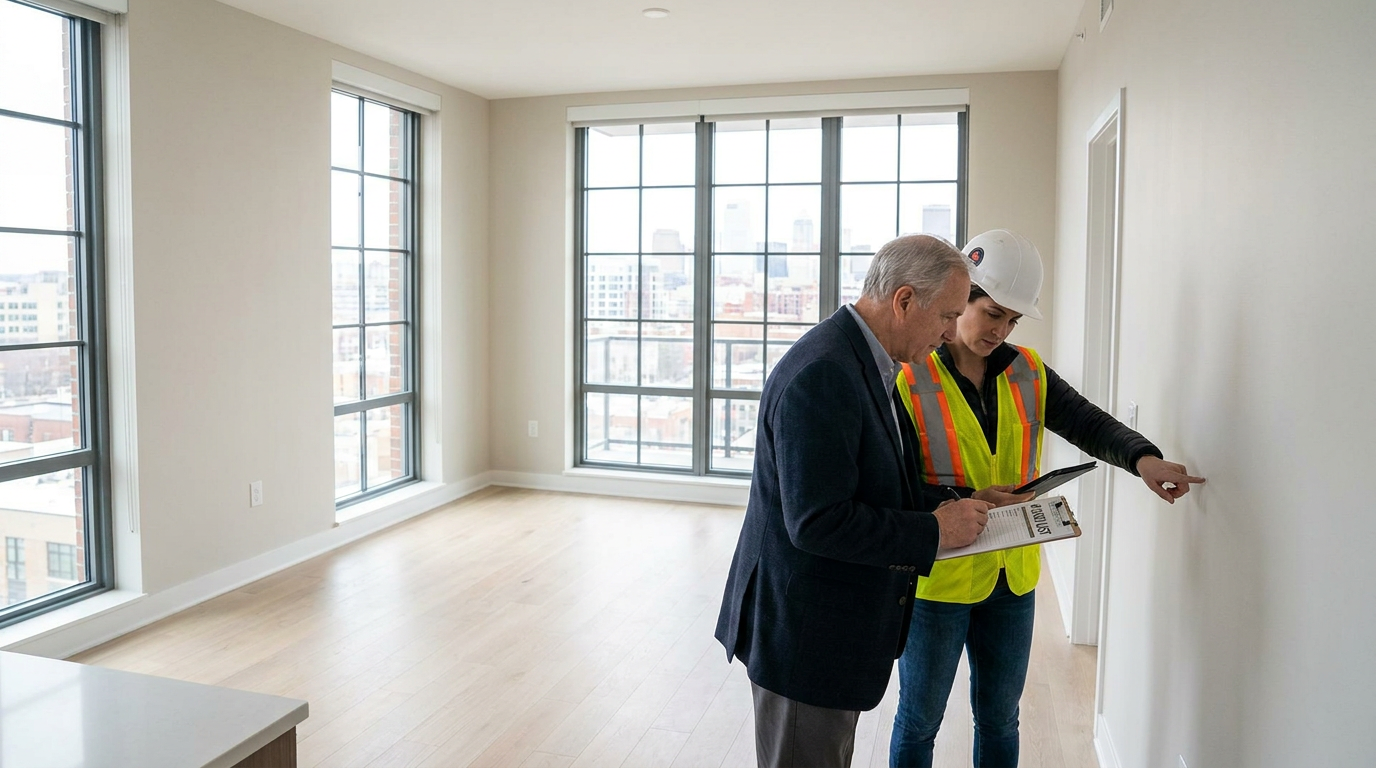
Insurance is frequently misunderstood in construction. One of the clearest examples is the difference between general liability coverage and builders risk insurance. According to the Insurance Bureau of Canada, builders risk insurance covers property under construction, including buildings, machinery, equipment, materials, and supplies used to complete the project. General liability insurance, by contrast, typically addresses third party bodily injury or property damage and does not cover damage to the work itself. Investors who assume a standard liability policy covers all project losses may discover the gap too late.
In addition to builders risk coverage, investors should assess general liability, professional liability or design errors and omissions coverage, environmental insurance where relevant, and surety bonds or other completion security. Insurance should be reviewed not only for existence, but for limits, exclusions, deductibles, named insured structure, and claims procedures. Premium quality risk management means understanding exactly what is covered, what is not, and what events could still require direct capital support from the owner.
Manage schedule risk through critical path discipline
Good schedules do more than show target dates. They identify the activities that control delivery and reveal where float exists and where it does not. Investors should understand the critical path well enough to know which delays are merely inconvenient and which ones threaten occupancy, lease commencement, or refinancing milestones. This is particularly important in projects with seasonal constraints, phased turnover requirements, or debt structures tied to completion tests.
Schedule buffers are also essential. Ambitious timelines may look attractive in an investment memo, but unrealistic schedules create false confidence. A more credible plan allows room for permitting delays, weather interruptions, procurement variability, and coordination friction. Serious investors prefer a forecast they can trust over one that simply looks better on paper.
Plan for market absorption before completion
In a softer market, build risk cannot be separated from exit risk. Investors should update leasing and sales assumptions during construction rather than waiting until completion. If demand has weakened, product positioning, incentives, unit mix, or financing strategy may need adjustment before the building opens. This is especially important in segments where unsold inventory has increased, such as parts of the condo market referenced in CMHC’s outlook.
Monitoring absorption trends, competing supply, tenant demand, resale pricing, and concession levels allows investors to react earlier. A project delivered exactly on budget can still underperform if the leasing or sales strategy remains anchored to outdated assumptions. Risk management therefore includes active market intelligence throughout the development cycle, not only at acquisition.
Common misconceptions that expose investors to unnecessary losses
Several misconceptions continue to create avoidable risk in construction oriented real estate investments. One of the most common is the belief that construction risk is only a contractor problem. In reality, the owner and investor remain exposed through cost overruns, financing pressure, lease up delays, and potential value erosion at completion. Delegating construction management does not eliminate economic exposure.
Another misconception is that a fixed price contract removes uncertainty. It can reduce certain pricing risks, but it does not eliminate change orders, delayed approvals, labour shortages, supply disruptions, or contractor default. Investors also sometimes believe that strong pre sales or healthy demand guarantee success. That view ignores the possibility that market conditions can change during the build period, turning what looked like a straightforward development into a build and absorption challenge. Finally, some investors still treat contingency budgets as optional. In practice, contingency is one of the most important defenses against unforeseen conditions, scope refinement, and market volatility.
A practical due diligence framework for investors
Investors need a repeatable framework for evaluating construction risk before committing capital. The exact checklist will vary by project type, but the discipline should remain consistent. A structured review process improves underwriting quality and reduces the chance that enthusiasm for a site or market theme overshadows execution concerns.
- Validate the site. Review title, zoning, entitlement status, environmental reports, geotechnical data, servicing capacity, and access constraints before finalizing assumptions.
- Test the budget independently. Use an experienced cost consultant to review hard costs, soft costs, contingencies, escalation allowances, and probable change exposure based on design stage.
- Review the schedule critically. Confirm permit assumptions, procurement lead times, seasonal constraints, and critical path logic rather than relying on high level target dates.
- Underwrite the team. Assess developer capability, contractor strength, consultant quality, and subcontractor strategy with the same rigor used for tenant or market analysis.
- Examine the capital stack. Understand loan terms, reserve requirements, equity funding obligations, draw mechanics, covenant tests, and refinance assumptions under delayed delivery scenarios.
- Confirm insurance and security. Review builders risk coverage, liability policies, professional liability, surety bonding, and any completion guarantees or support agreements.
- Update market assumptions continuously. Track leasing, pre sale velocity, competing supply, incentives, and absorption trends during construction rather than only at acquisition.
Construction risk management as a long term investment advantage
The most sophisticated investors do not treat risk management as a compliance exercise. They treat it as part of the return strategy. A project that stays under control during volatile conditions preserves optionality. It can hold through a softer market, refinance from a position of strength, or capture leasing upside without being forced into defensive decisions. That is what separates resilient real estate capital from speculative capital.
Current market signals reinforce this point. Construction costs remain elevated relative to prior years, material pricing can still move unevenly due to tariffs and countermeasures, labour shortages continue to affect productivity and wages, and certain housing segments face weaker absorption conditions. At the same time, lenders and regulators are paying close attention to construction related credit exposure and underwriting discipline. In that environment, proactive execution oversight is not just about preventing losses. It is also about improving financing credibility, preserving timelines, and protecting terminal value.
For investors building or buying into development projects, the message is clear. Do not rely on optimism, simple cost assumptions, or broad market narratives. Underwrite downside scenarios. Demand transparency from contractors and consultants. Put the right insurance and contractual protections in place. Monitor progress from acquisition through stabilization. Construction risk will never disappear, but with the right systems, it can be measured, managed, and priced intelligently.
Final thoughts
Real estate development creates value by transforming land, design, and capital into income producing assets. That value creation process is attractive because it can generate outsized returns, but it also introduces execution risk that can impair equity quickly if not handled with precision. Understanding construction risk means looking beyond the building itself and seeing the full chain of budget, schedule, financing, legal, and market exposure attached to the project.
The investors who perform best over time are usually not the ones who avoid all risk. They are the ones who understand where risk sits, how it can compound, and what controls are required at each stage of the investment. In a market shaped by cost pressure, labour constraints, regulatory scrutiny, and uneven demand, that level of discipline is increasingly valuable. Protecting capital in construction is not about pessimism. It is about professional underwriting, active oversight, and making sure the finished asset delivers the return profile that justified the investment in the first place.


No Comment! Be the first one.