



Environmental monitoring has become one of the most practical upgrades a property owner can make, but only when it is approached as an operational system rather than a shopping list of disconnected devices. In smart properties, the goal is not to collect more data for its own sake. The goal is to understand which environmental conditions affect occupant health, comfort, maintenance risk, and operating cost, then build a response process around those signals. That shift matters because a sensor without a workflow is just a number on a screen.
Table Of Content
- Why Environmental Monitoring Matters More in Smart Properties
- Start With Use Cases, Not Devices
- Choose the Right Metrics for Everyday Operations
- Temperature and Relative Humidity
- CO2 as a Ventilation Proxy
- Particulate Matter and VOCs
- Radon
- Moisture Intrusion and Leak Detection
- Energy Use Signals and Submetering
- Map Sensors to Real Building Zones
- Integrate Monitoring With HVAC, Ventilation, and Moisture Control
- Set Thresholds and Response Rules Before Problems Happen
- Build a Maintenance Workflow Around the Data
- Verify Sensor Accuracy and System Reliability
- A Practical Rollout Plan for Property Owners
- Common Misconceptions That Undermine Good Monitoring
- How Environmental Monitoring Supports Better Resident Experience
- From Monitoring to a Broader Indoor Environmental Quality Strategy
- Final Thoughts
For most owners across Canada and North America, the most valuable conditions to monitor are indoor air quality, temperature, relative humidity, ventilation effectiveness, moisture intrusion, radon, and energy related signals. Public guidance from the U.S. EPA, Health Canada, and ASHRAE all points in the same direction. Strong environmental performance comes from combining source control, ventilation, filtration, moisture management, and ongoing verification. Sensors support these actions, but they do not replace them.
The business case is stronger than many owners realize. The EPA notes that people spend about 90 percent of their time indoors and that indoor pollutant levels are often several times higher than outdoor levels. That means better monitoring is not just a sustainability or compliance idea. It can reduce complaints, support healthier living conditions, improve HVAC efficiency, and prevent expensive repairs tied to dampness, hidden leaks, or unmanaged ventilation.
This guide focuses on practical implementation. If you own or manage a home, rental portfolio, condo, mixed use property, or small multifamily building, the smartest path is to start with risks, define measurable goals, choose the right sensors, connect them to response workflows, and review trends over time. That is how environmental monitoring becomes part of everyday property management rather than an isolated tech experiment.
Core principle: Effective environmental monitoring is not a one-time hardware install. It is a continuous operations program that turns building conditions into maintenance decisions, automation rules, and healthier spaces.
Why Environmental Monitoring Matters More in Smart Properties
Smart properties already generate operational data from thermostats, access systems, water meters, smart panels, and maintenance apps. Environmental monitoring extends that intelligence layer into the parts of building performance that occupants feel most directly. Air that feels stale, humidity that quietly damages finishes, or a basement with fluctuating radon levels can all affect property value and resident trust long before they become obvious emergencies.
What makes smart properties different is integration. A traditional building may have a thermostat, a standalone smoke detector, and periodic inspections. A smart property can connect indoor sensors to a building automation system, ventilation equipment, dehumidifiers, leak detection, and analytics dashboards. That means an elevated humidity reading can trigger an alert, prompt a maintenance task, and increase dehumidification automatically. The value comes from that chain of action.
There is also a growing market expectation around transparency and building performance. Owners increasingly want the same dashboards used for energy management to support preventive maintenance, resident communication, and ESG reporting. As indoor environmental quality becomes a more prominent topic, environmental monitoring is shifting from a reactive alarm model to a more predictive and occupant centric one.
In colder regions, especially in Canada, the case becomes even more specific. Winter ventilation behavior, sealed building envelopes, and basement occupancy patterns create unique monitoring needs. Radon, moisture accumulation, and seasonal humidity swings are not edge cases. They are common operational realities that deserve structured measurement and response planning.
Start With Use Cases, Not Devices
The most common mistake in smart property monitoring is beginning with technology selection before defining what problem the system needs to solve. Owners often buy a few air quality devices, place them around the property, and assume insight will follow. In practice, that usually creates scattered readings without context. A better approach is to define use cases by property type, occupancy pattern, and risk profile.
For a single family rental, you may care most about basement moisture, winter humidity, HVAC runtime efficiency, and radon exposure in lower occupied levels. In a small multifamily building, your priorities may include ventilation performance in shared corridors, overheating complaints, leak detection near risers, and submetering for common area systems. In mixed use properties, cooking emissions, occupancy peaks, and after hours ventilation schedules may matter more than in a detached home.
Once those use cases are clear, environmental monitoring becomes easier to design. You are no longer asking, Which sensor package should I buy? You are asking, What conditions create health, comfort, or cost risk in this building, and how will we respond when those conditions drift? That framing prevents overspending on vanity metrics while missing the variables that truly affect operations.
A simple first step is to document the top five environmental risks for each property you manage. Include where they are most likely to occur, what the likely causes are, which occupants are affected, and what action should be taken if readings move out of range. That document becomes the foundation of your monitoring plan and your maintenance workflow.
Choose the Right Metrics for Everyday Operations
Not every environmental signal deserves equal attention. The strongest smart property programs focus on data that is actionable, meaningful over time, and tied to a clear operational response. In most residential and small commercial settings, that means prioritizing indoor air quality and moisture related conditions first, then layering in energy and occupancy analytics.
Temperature and Relative Humidity
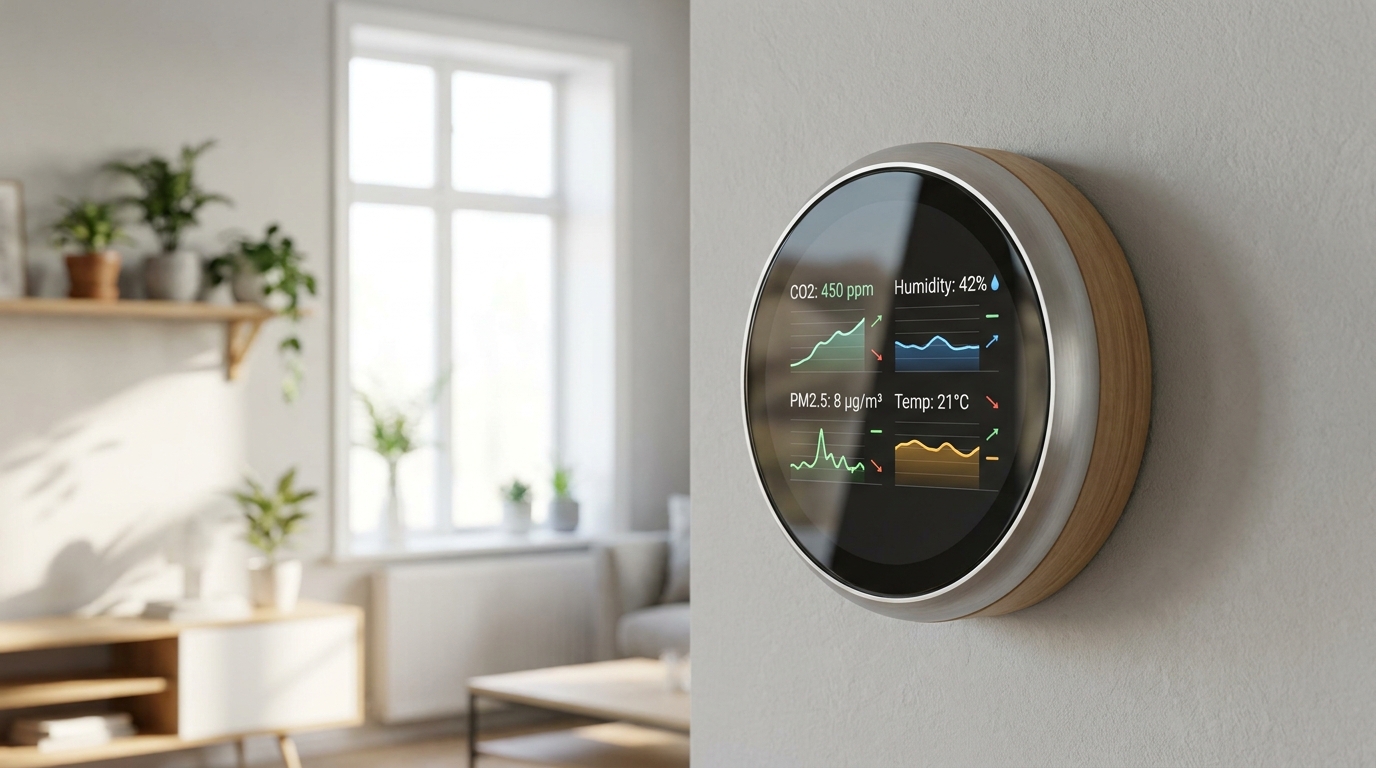
Temperature is basic, but it gains operational value when paired with humidity and trend analysis. Relative humidity affects comfort, mold risk, condensation, and even how efficiently HVAC equipment performs. EPA guidance advises controlling moisture and keeping indoor humidity below 60 percent, ideally between 30 and 50 percent, to help reduce mold and other indoor air quality issues. For property owners, this metric is one of the clearest examples of a number that directly connects to action.
High humidity may indicate inadequate ventilation, oversized cooling equipment, hidden leaks, or poor basement moisture control. Low humidity in winter may point to excessive dryness and comfort issues, although in very cold climates owners also need to balance humidification against window condensation and envelope performance. Monitoring humidity over time reveals patterns that a seasonal complaint log rarely captures.
CO2 as a Ventilation Proxy
Carbon dioxide is useful, but it should be understood correctly. CO2 is not a complete measure of indoor air quality. It is best used as a proxy for occupancy driven ventilation demand and space freshness. If CO2 levels repeatedly rise during occupied periods, that can suggest that outdoor air delivery or air exchange is not keeping pace with actual use.
This makes CO2 particularly helpful in conference rooms, classrooms, amenity spaces, home offices, and densely occupied suites. However, a space with acceptable CO2 can still have problems with particulates, VOCs, radon, or moisture. Owners who treat CO2 as the entire air quality story usually miss the bigger picture.
Particulate Matter and VOCs
Particulate matter and volatile organic compounds help identify pollution events that temperature or CO2 will never explain. Cooking, smoke, cleaning products, renovations, traffic exposure, and off gassing from furnishings can all affect indoor pollutant levels. EPA guidance identifies smoke, radon, mold, particulate matter, carbon monoxide, and VOCs among common indoor pollutants, while also emphasizing source control, ventilation, and filtration as the three core strategies.
For owners, PM and VOC monitoring is especially valuable in urban settings, mixed use buildings, newly renovated units, and properties near traffic corridors. These sensors can reveal when filtration is underperforming, when occupant behavior is creating spikes, or when building schedules should be adjusted to purge indoor air after high emission activities. Their value grows when readings are visible in a dashboard rather than treated as isolated snapshots.
Radon
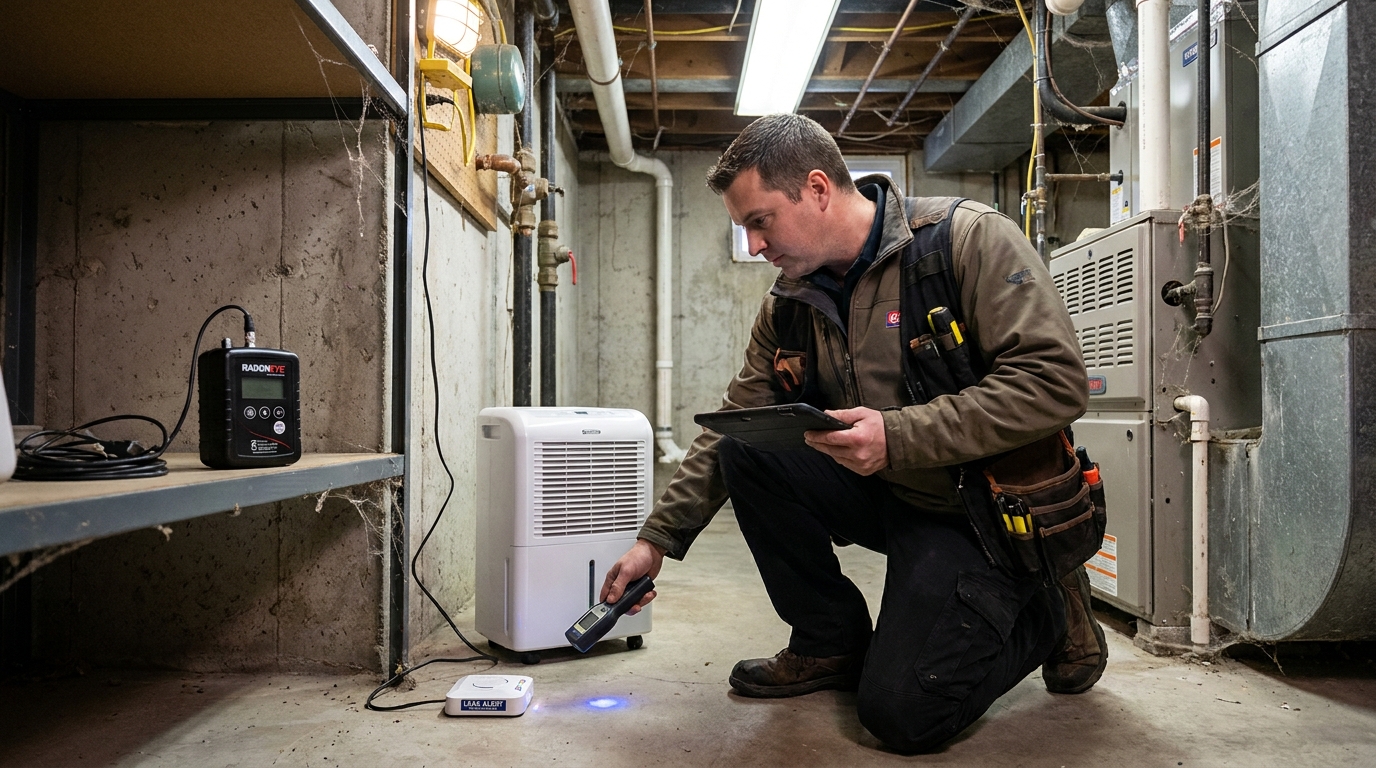
Radon deserves special attention in Canada and other cold climate markets with occupied lower levels. Health Canada’s guideline is 200 Bq/m³, and corrective action is recommended if the annual average exceeds that level. The guideline applies to homes, public buildings, and workplaces occupied more than four hours per day. Health Canada also recommends long term radon testing over three to twelve months for a more accurate annual estimate, ideally in the normal occupancy area of the lowest lived in level.
This matters because radon levels fluctuate with weather, ventilation behavior, and building conditions. A short term reading might be useful for screening, but it is not enough for annual risk decisions. In smart properties, radon monitoring should be integrated into the broader environmental plan, especially for basements, ground contact suites, schools, and workplaces. It is one of the clearest examples of why long term trend data matters more than a one day reading.
Moisture Intrusion and Leak Detection
Visible mold is not the only moisture problem, and often it appears late in the failure sequence. Hidden moisture behind finishes, around foundation walls, below sinks, near water heaters, or under appliances can develop long before occupants notice staining or odor. The CDC notes that there are no health based standards for mold in indoor air and does not recommend routine air sampling for mold during building evaluations. The practical response is to fix the moisture source and remediate affected materials.
That is exactly why leak detection and humidity monitoring belong together. Moisture sensing should be treated as an early warning system tied to physical inspection, drying protocols, and repair dispatch. If your monitoring stack tells you where water is likely to accumulate and how long humidity remains elevated after an event, you can prevent both indoor air problems and costly restoration work.
Energy Use Signals and Submetering
Environmental monitoring becomes more powerful when paired with energy data. The U.S. Department of Energy has highlighted wireless sensor networks, submetering, analytics, adaptive controls, and occupant centric strategies as key building capabilities. In practice, this means owners should compare environmental conditions with equipment runtime, electricity demand, and ventilation schedules.
If humidity stays high even while cooling energy increases, the system may be poorly configured. If certain units show repeated overheating while energy use spikes overnight, setpoints or balancing may need attention. Energy and environmental data together create a more complete diagnostic picture than either category can provide alone.
Map Sensors to Real Building Zones
Sensor placement is one of the least glamorous parts of implementation, but it strongly affects data quality. A great dashboard built on poor placement will still produce poor decisions. Owners should think in terms of building zones and risk points rather than evenly distributing devices across floor plans for symmetry.
Start with occupied rooms where people spend substantial time, then add known risk areas such as basements, utility rooms, mechanical spaces, bathrooms with weak exhaust, laundry areas, and any location with a history of dampness or complaints. In multifamily settings, corridors, lobbies, and amenity areas may need their own readings if occupancy and ventilation differ significantly from private suites. The idea is to monitor where conditions are likely to change meaningfully, not where installation happens to be easiest.
Placement details also matter. Air quality sensors should generally be away from direct supply vents, open windows, kitchens with immediate cooking emissions, and bathrooms where steam can distort broader room readings. Leak sensors should sit at low points near probable water pathways. Radon monitors should be located in the normal occupancy area of the lowest lived in level, consistent with Health Canada guidance.
Before deploying at scale, test a small pilot layout and compare readings across rooms. This often reveals that one or two sensors need relocation to avoid misleading spikes or false stability. A brief pilot saves far more time than months of trying to interpret noisy data later.
Integrate Monitoring With HVAC, Ventilation, and Moisture Control
The real step change in performance happens when monitoring is connected to building systems. A property that merely displays environmental data will improve awareness. A property that uses that data to control ventilation, filtration, humidity management, and maintenance dispatch will improve outcomes.
ASHRAE guidance on high performance operations and maintenance emphasizes continuous processes that support energy efficiency, water consumption, indoor air quality, functionality, and productivity. That mindset applies directly here. Monitoring should not live in a separate silo from HVAC operations. If CO2 rises in an occupied meeting room, ventilation may need to increase. If basement humidity remains elevated after rainfall, a dehumidifier or exhaust strategy may need to activate. If a leak sensor trips, maintenance should be notified immediately and the response should be logged.
In homes and small properties, this integration does not need to be overly complex. Smart thermostats, connected IAQ sensors, dehumidifiers, ERVs or HRVs, and water shutoff systems can already communicate through common automation platforms. In larger properties, integration may occur through a building automation system, cloud dashboard, or middleware layer that converts readings into alerts and work orders.
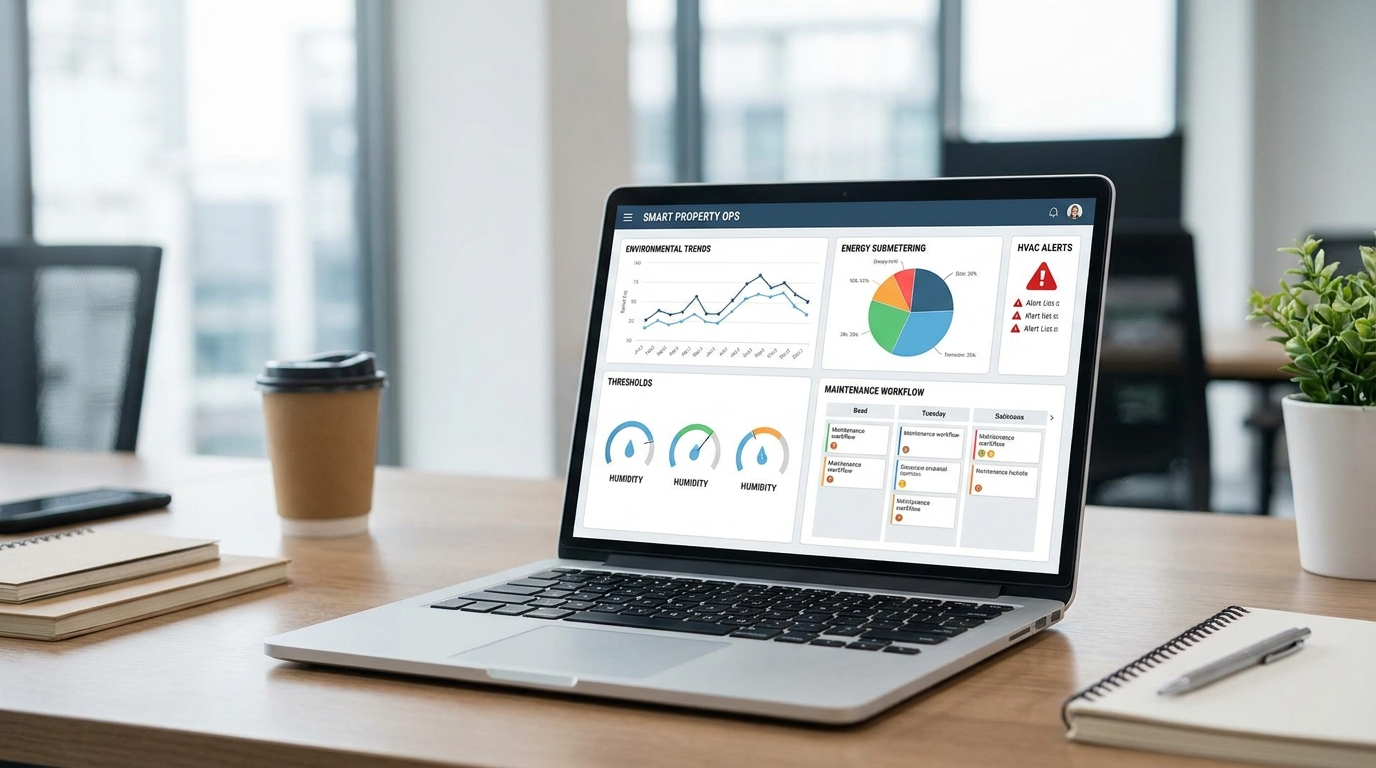
The key is to define what happens when thresholds are crossed. Without that, data becomes interesting but operationally weak. A smart property should know whether an elevated signal requires automation, notification, inspection, or simple observation.
Set Thresholds and Response Rules Before Problems Happen
A high functioning environmental monitoring system depends on response design. Owners often install sensors first and decide later what counts as a problem. That sequence usually creates either alert fatigue or indecision. It is much better to define thresholds, escalation paths, and time windows in advance.
Some thresholds can follow public guidance directly. For example, indoor humidity should generally stay below 60 percent and ideally in the 30 to 50 percent range. Radon above the annual average guideline of 200 Bq/m³ should trigger corrective planning. Other thresholds need to be building specific. A recurring overnight humidity rise in one basement may be more important than a brief daytime spike in another location, depending on building history and use.
Response rules should also distinguish between short duration events and sustained conditions. A brief VOC increase after cleaning may only require temporary ventilation. Repeated PM spikes in a corridor every evening may indicate a source problem or inadequate filtration. A single leak alert under a dishwasher deserves immediate inspection even if it stops quickly. Long term trends and contextual action matter more than any individual number viewed in isolation.
One useful framework is to classify signals into three categories: observe, intervene, and escalate. Observe means the system logs the trend and watches for recurrence. Intervene means an operational action is required, such as changing ventilation settings, checking filters, or running dehumidification. Escalate means a health, safety, or building damage risk is high enough to require specialist support, remediation, or mitigation planning.
Build a Maintenance Workflow Around the Data
Sensors are most valuable when they improve maintenance timing and precision. This is where many environmental monitoring programs either become operationally strong or quietly lose momentum. If alerts arrive without ownership, properties end up with a sophisticated dashboard and the same old maintenance blind spots.
Each major environmental signal should tie to a documented workflow. Elevated humidity should prompt an inspection of exhaust function, envelope conditions, drainage, and dehumidification performance. Repeated CO2 increases should trigger a review of occupancy patterns, outdoor air settings, and fan schedules. A radon result above guideline should lead to long term verification and qualified mitigation planning rather than casual observation. Water alerts should be linked to emergency inspection and drying protocols.
Maintenance teams also need notes on what not to do. For example, routine mold air sampling is not generally recommended for building evaluation because the more useful action is to find and correct the moisture source. Similarly, replacing a filter may reduce symptoms but should not end the investigation if PM spikes continue. The best workflows treat data as the first clue, not the final answer.
Over time, environmental monitoring can support preventive maintenance rather than purely reactive service. If a property shows seasonal humidity creep each autumn, owners can inspect drainage, sump systems, and dehumidifiers before complaints begin. If a specific air handler consistently aligns with occupant discomfort or high particulates, service can be scheduled before tenant trust erodes. Data helps maintenance become earlier, not just faster.
Verify Sensor Accuracy and System Reliability
Another common implementation mistake is assuming that environmental sensors remain accurate indefinitely. In reality, devices drift, batteries fail, firmware becomes outdated, and placement conditions change. A monitoring system that is never checked will slowly lose credibility, and once teams stop trusting the readings, adoption drops.
That is why calibration, verification, and periodic review should be built into the program from the beginning. The exact process depends on sensor type and manufacturer guidance, but every owner should maintain an inventory of devices, installation dates, battery schedules, firmware versions, and verification intervals. If one room suddenly appears perfect year round while adjacent zones fluctuate normally, that can be a sign of sensor failure rather than environmental stability.
Verification also applies to system logic. If alerts are set so narrowly that normal occupancy creates constant warnings, teams will begin ignoring them. If thresholds are too broad, actionable issues may be missed. Review your alert history every quarter and ask a simple question: did these notifications lead to useful actions, or did they create noise?
Environmental monitoring should feel dependable to both operators and occupants. Reliability is not only a hardware issue. It is the combination of sensor health, reasonable thresholds, validated integrations, and human follow through.
A Practical Rollout Plan for Property Owners
For owners who want a straightforward implementation path, the smartest approach is phased deployment. This keeps costs manageable, improves data quality, and allows the monitoring system to evolve with the property rather than forcing all decisions up front.
- Assess the property risk profile. Review complaints, moisture history, basement conditions, ventilation patterns, occupancy density, and any known air quality concerns. Identify which risks are health related, which are comfort related, and which affect maintenance cost.
- Define the priority metrics. In most cases, begin with temperature, relative humidity, CO2, particulate matter, leak detection, and radon where relevant. Add VOCs and submetering where building use justifies deeper diagnostics.
- Pilot in the highest value zones. Install sensors in representative units, basements, amenity areas, or problem spaces before scaling portfolio wide. Use the pilot to refine placement and threshold logic.
- Connect to response systems. Integrate with HVAC controls, dehumidifiers, ventilation equipment, water shutoff devices, and maintenance software where possible. Decide which events trigger automation and which require inspection.
- Create written workflows. Build simple response playbooks for humidity events, air quality spikes, leak alerts, and radon follow up. Assign ownership clearly.
- Review trends monthly and seasonally. Compare environmental conditions with energy use, complaint logs, and maintenance tickets. Look for repeat patterns rather than chasing isolated events.
- Expand gradually. Once the pilot proves useful, roll the system out to additional properties or zones, using the lessons from phase one to improve consistency.
This phased structure prevents the most common waste pattern in proptech. Owners avoid overbuying, underusing, and then abandoning a system that never fully entered daily operations.
Common Misconceptions That Undermine Good Monitoring
Several misconceptions continue to weaken otherwise promising environmental programs. The first is treating CO2 as a complete air quality metric. It is not. CO2 is a useful occupancy and ventilation signal, but good indoor environmental quality requires a broader view that includes particulates, moisture, source control, and ventilation effectiveness.
The second misconception is assuming visible mold is the only sign of moisture trouble. By the time mold becomes obvious, building materials may already be damaged and occupant concerns may already be justified. Hidden moisture, elevated humidity, and chronic condensation are often the earlier signals worth monitoring.
A third issue is making annual risk decisions from short term readings. Radon is the clearest example. Because levels vary over time, long term measurement is preferred for meaningful interpretation. The same logic often applies to building humidity and ventilation patterns. A reading taken on one pleasant day says very little about how a property behaves in deep winter, summer peaks, or shoulder seasons.
Finally, some owners assume environmental monitoring replaces maintenance. In reality, it only improves maintenance if the system has thresholds, workflows, and follow up actions. Sensors reveal conditions. People and controls still solve them.
How Environmental Monitoring Supports Better Resident Experience
Property owners sometimes frame environmental monitoring only in terms of mechanical performance, but residents experience it much more personally. They feel whether a suite is stuffy, whether a basement smells damp, whether dust returns quickly after cleaning, and whether the property manager seems informed when a complaint arrives. A data driven environmental program improves that experience because it changes how quickly and confidently owners can respond.
Instead of answering air quality complaints with guesswork, owners can review trend data. Instead of waiting for leaks to become visible, they can intervene earlier. Instead of managing humidity by season based on habit, they can tune ventilation and moisture control to actual conditions. This creates a quieter kind of building quality, one that residents may not describe in technical language but notice through comfort and trust.
There is also a retention angle. In competitive housing markets, occupants increasingly value wellness, energy efficiency, and transparency. A smart property that monitors and manages environmental quality is better positioned to communicate building stewardship clearly. That does not mean overwhelming residents with raw metrics. It means being able to say, with evidence, that the property is actively maintained for healthy indoor conditions and operational resilience.
From Monitoring to a Broader Indoor Environmental Quality Strategy
The future direction of this field is clear. Industry guidance is moving toward more integrated indoor environmental quality frameworks that consider air quality, thermal conditions, and other building characteristics as a system. Owners do not need to wait for every future standard to mature before acting. The operational lesson is already useful today: single metric monitoring is less powerful than a whole building view.
That whole building view aligns with current trends in smart property management. Occupant centric controls, real time dashboards, predictive maintenance, submetering, and ESG reporting all depend on turning environmental data into operational intelligence. When done well, monitoring becomes part of the same platform ecosystem that supports asset performance, not a separate health gadget attached to the side of the building.
For many owners, the first meaningful win will be modest. It may be reducing winter humidity issues in a problematic lower level. It may be identifying which suites regularly need ventilation adjustments. It may be proving that a filtration upgrade lowered particulates near a busy road. These practical gains matter because they show the organization how environmental data can improve decisions. From there, the system can scale into a broader strategy.
Final Thoughts
Implementing effective environmental monitoring in smart properties is less about buying the most advanced sensors and more about building a clear operating model. Measure the conditions that matter most, place sensors where risks actually exist, connect readings to HVAC and moisture control systems, define response thresholds, and verify the whole setup regularly. That is the formula that turns environmental monitoring into everyday property intelligence.
For owners in Canada and North America, the priorities are especially clear. Monitor humidity and ventilation to reduce mold and comfort issues. Track pollutants that reveal real indoor air events. Treat radon as a serious long term metric in lower occupied areas. Pair all of that with maintenance workflows, trend review, and energy analytics so the building can respond, not just observe.
The smartest properties are moving beyond reactive alarms toward predictive, occupant aware operations. Environmental monitoring sits at the center of that shift because it connects human wellbeing with the way buildings actually perform. When property owners treat it as an ongoing program, the payoff is measurable in healthier spaces, fewer preventable repairs, better HVAC efficiency, and stronger confidence in every housing decision made from the data.



No Comment! Be the first one.