


Essential Guide to Annual Solar System Inspections for Homeowners
Solar power has a reputation for being wonderfully low maintenance, and in many ways that reputation is deserved. Photovoltaic modules have no moving parts, they are built to tolerate years of sun and weather, and they often operate quietly in the background with very little day to day attention. That simplicity is one of the reasons so many homeowners feel confident investing in rooftop solar. At the same time, a solar array is not just a set of panels. It is a complete energy system that includes wiring, mounting hardware, roof penetrations, inverter equipment, monitoring technology, and in many homes, battery storage as well.
Table Of Content
- Why annual solar inspections matter
- The practical benefits homeowners gain from a yearly inspection
- What an annual solar inspection should include
- 1. Visual inspection of the panels and array area
- 2. Review of roof condition and mounting areas
- 3. Inspection of visible wiring, conduit, and hardware
- 4. Monitoring and production data review
- 5. Inverter and electrical equipment check
- 6. Battery storage review, if your home has it
- When to schedule your annual solar inspection
- A safe annual solar inspection checklist for homeowners
- What homeowners can do themselves and when to call a professional
- How to interpret performance changes without overreacting
- Why record keeping is part of good solar maintenance
- Common misconceptions about annual solar inspections
- How annual inspections fit into the future of home energy
- Creating a repeatable annual routine
- Final thoughts
An annual solar inspection is the practical middle ground between ignoring the system and overcomplicating it. It is a straightforward maintenance habit that helps you notice changes before they become larger problems. The goal is not to turn every homeowner into a solar technician. The goal is to help you observe the condition of your system, review performance trends, and know when a professional service call is worth making.
That approach aligns well with current guidance from the U.S. Department of Energy and Natural Resources Canada. Both emphasize that solar systems usually need little routine maintenance, but periodic checks still matter. Preventive maintenance, performance monitoring, post storm review, and record keeping all help protect energy output, safety, equipment life, and roof integrity over time. For homeowners, that makes an annual inspection one of the most efficient things you can do.
This guide explains why yearly inspections matter, what a homeowner can safely check, what warning signs deserve attention, and how to create a repeatable inspection routine that feels manageable. If you want a calm, organized way to take control of your home energy system, this is an excellent place to start.
Why annual solar inspections matter
The phrase low maintenance sometimes creates the impression that solar systems never need attention at all. That is one of the most common misconceptions among new system owners. The panels themselves are durable and generally reliable, but the broader system still ages and responds to weather, temperature swings, moisture, debris, and time. Annual inspections are important because they focus on the entire installation rather than the modules alone.
One of the clearest reasons to inspect annually is that small issues often develop gradually. A little new shading from a growing tree might reduce production month after month. A loose piece of conduit or a worn seal around a roof penetration might not be obvious until a storm or freeze thaw cycle makes it worse. An inverter can continue operating while beginning to show occasional faults or efficiency loss. When homeowners check once a year and compare notes, these changes are much easier to catch early.
Performance is another major reason. According to DOE guidance, solar modules often degrade at an average rate of around 0.5 percent per year. That means a slight reduction in output over time is expected. But a year over year production drop greater than 10 percent can indicate a maintenance issue. Without annual review, it is difficult to tell the difference between normal aging and a system problem that deserves closer attention.
Safety also matters. Solar systems are installed under electrical, building, and fire codes, and they are inspected before being allowed to operate on the grid. That commissioning inspection confirms the system met code requirements at the time of installation. It does not replace ongoing maintenance. Annual checks help identify issues that can develop later, including weather damage, water intrusion, animal activity, damaged wiring, equipment corrosion, or signs of ground faults.
There is also a very practical financial reason to inspect. Solar is a long term investment. A yearly review helps protect the return on that investment by preserving production, catching warranty issues while they are easier to document, and helping you plan ahead for equipment replacement. String inverters, for example, commonly last about 10 to 15 years, which means many homeowners will face at least one inverter replacement during the life of their array. Knowing where your system stands makes future decisions much smoother.
Annual solar inspections are not about expecting failure. They are about making sure a stable, productive system stays that way through observation, documentation, and timely action when needed.
The practical benefits homeowners gain from a yearly inspection
For most households, the biggest benefit of an annual inspection is peace of mind grounded in evidence. Instead of assuming everything is fine because the lights are on, you can confirm that your system still looks healthy and is performing close to expectations. That confidence is especially valuable after harsh weather seasons, after nearby tree growth, or as equipment gets older.
Annual inspections also support better roof care. Rooftop solar systems interact with shingles, flashing, mounting points, and drainage paths. If there is a roof issue developing near the array, a visual inspection may help you notice staining, lifting materials, or other changes before they become a leak. Solar does not automatically create roof problems, but roof penetrations and mounting hardware should be part of a responsible long term review.
Another benefit is better communication with installers, service providers, or home buyers. When you keep a simple annual log with photos, production notes, and any maintenance actions, troubleshooting becomes more efficient. If you ever need warranty service, a record of what changed and when it changed can be extremely useful. If you decide to sell your home, documented maintenance helps demonstrate that the solar system has been cared for thoughtfully.
Finally, annual inspections fit well with modern monitoring tools. Many homeowners now have app based access to hourly, daily, monthly, and annual production. That data makes it easier than ever to pair a visual inspection with a performance review. Instead of maintenance feeling technical or abstract, it becomes a simple annual habit, much like checking gutters, scheduling HVAC service, or reviewing your home insurance coverage.
What an annual solar inspection should include
The most useful annual inspection for homeowners combines three things. First, there is a safe visual review of the array and surrounding conditions. Second, there is a performance check using monitoring data and inverter information. Third, there is documentation of anything unusual, along with a decision about whether professional service is needed. This structure keeps the process focused and manageable.
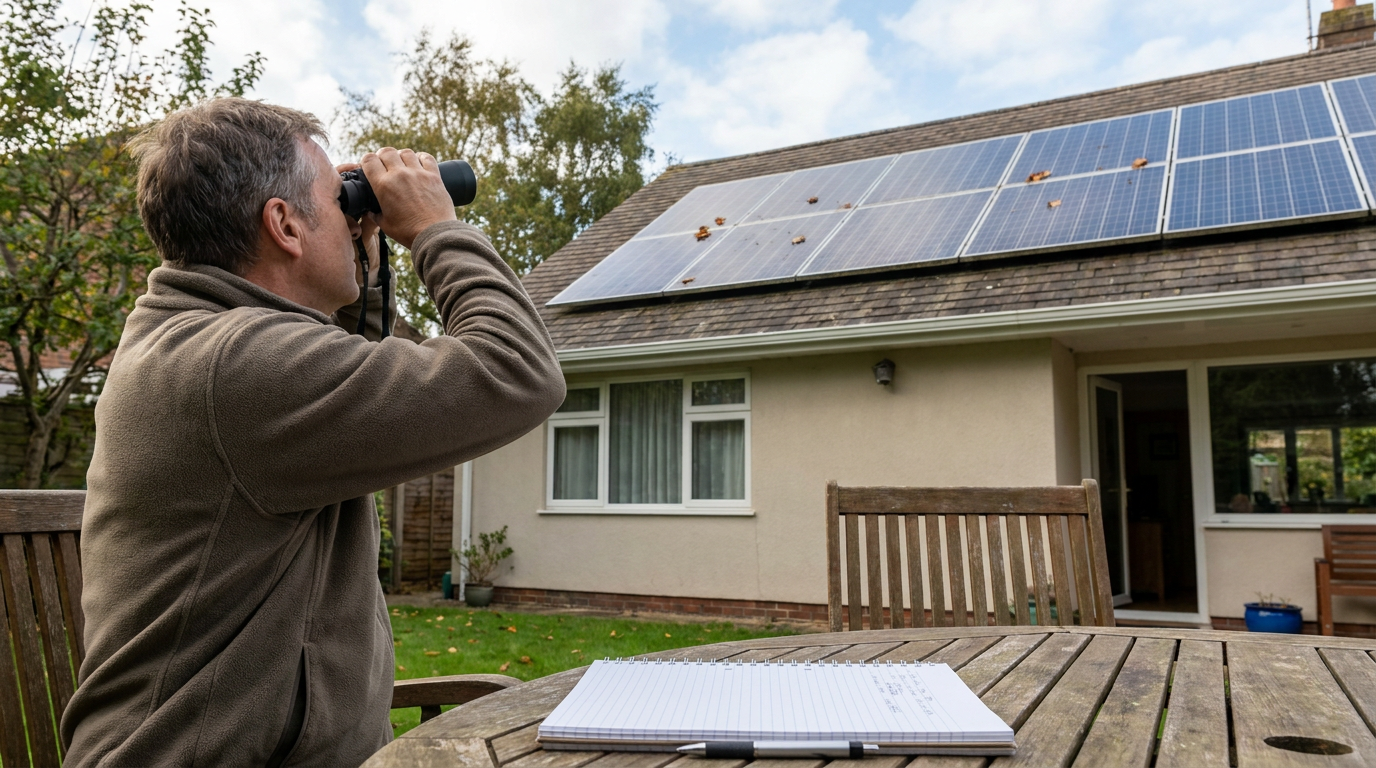
It is helpful to think of the inspection as a non invasive condition review rather than a hands on repair session. In most cases, you do not need to climb onto the roof, open electrical enclosures, or touch system wiring. A careful look from the ground, from accessible windows, and at safely reachable equipment can reveal a surprising amount. If your observations suggest damage or electrical issues, that is the moment to involve a qualified solar technician or electrician.
1. Visual inspection of the panels and array area
Begin with what you can see from the ground. Look for obvious panel damage such as cracked glass, discoloration, delamination, broken frames, or modules that appear shifted out of alignment. You are not trying to diagnose every cosmetic detail. You are simply noting changes that look unusual compared with previous years or with neighboring modules in the same array.
Next, observe the general cleanliness of the array. Rain does remove some dirt, but it does not always keep panels fully clean. In some climates and locations, dust, pollen, bird droppings, leaves, salt spray, and smoke residue can accumulate enough to affect output. If soiling appears patchy, heavy, or persistent, it may be worth consulting your installer about appropriate cleaning methods. Avoid assuming that more cleaning is always better. Improper cleaning can damage modules or create safety risks.
Shading should be part of this review as well. Trees grow, nearby construction changes sight lines, and even a new vent or chimney obstruction can influence production. If one part of the array now receives more shade than it used to, your annual comparison is the best chance to notice it. New shading often causes gradual underperformance rather than an immediate system failure.
Debris and animal activity are also worth noting. Leaves trapped around modules, nesting birds, squirrels near wiring, or signs of chewing can all affect the broader system. The issue is not just panel output. Animals can damage insulation, dislodge components, and create maintenance challenges that are much easier to address early.
2. Review of roof condition and mounting areas
Homeowners should also pay attention to the roof areas around the solar installation. From a safe vantage point, look for missing shingles, unusual staining, lifted flashing, pooled debris, or any visual clue that water may not be draining normally. If you can access the attic safely, it may also be helpful to look for signs of moisture or staining beneath array sections, especially after heavy rain or snow melt.
This does not mean every roof concern is caused by solar. Roofs age in their own way, and weather can affect them with or without an array. Still, annual review of the roof and solar mounting relationship is sensible. The point is to notice any condition that deserves a roofer or solar professional’s attention before it leads to larger damage.
In colder parts of North America, this roof review is especially valuable because snow loads, ice, wind, and freeze thaw cycles can affect materials over time. Homeowners in storm prone or snowy regions may benefit from scheduling the inspection in late spring or early summer, once winter conditions have fully passed and any damage is easier to see.
3. Inspection of visible wiring, conduit, and hardware
From accessible locations, inspect visible conduit runs, cable pathways, junction areas, and mounting hardware. You are looking for loose sections, sagging conduit, corrosion, cracked seals, exposed wiring, or anything that appears physically out of place. Most of these details remain stable year after year, which makes unusual changes easier to spot once you know what your system normally looks like.
Because this is an electrical system, visible wear should always be taken seriously. Do not touch exposed wires or attempt to tighten electrical components yourself unless you are specifically qualified to do so. A visual inspection is enough to determine whether professional service is needed.
If your system includes critter guards, screens, or protective mesh beneath the panels, check whether they remain secure. These accessories are simple but useful because they reduce the chance of animal nesting under the array. When they loosen or fail, the risk of wiring damage tends to rise.

4. Monitoring and production data review
This is where the annual inspection becomes especially powerful. A visual review tells you how the system looks. Monitoring data tells you how it is behaving. Log into your monitoring app or portal and compare current performance with prior months and prior years. If available, review hourly, daily, monthly, and annual production trends since installation.
Try to compare similar periods rather than random dates. Looking at this June versus last June is often more useful than comparing June to January. Weather variation matters, of course, but broad changes are still revealing. If your annual output has dipped only slightly, normal module degradation may explain part of the difference. If the decline is notably larger, especially above the 10 percent range flagged by DOE, it is worth investigating.
Look for irregular production patterns too. Sudden drops, repeated outages, an inverter that disconnects periodically, or one segment of the array underperforming can all show up in monitoring software before they become obvious elsewhere. In many homes, the monitoring platform is the single most useful maintenance tool because it turns the system’s long term story into something visible.
If your app has alert settings, confirm they are active and going to the right email address or phone number. It is surprisingly common for notifications to get lost after a device change, app update, or ownership transition. An annual inspection is a good time to verify that your digital maintenance tools still work as intended.
5. Inverter and electrical equipment check
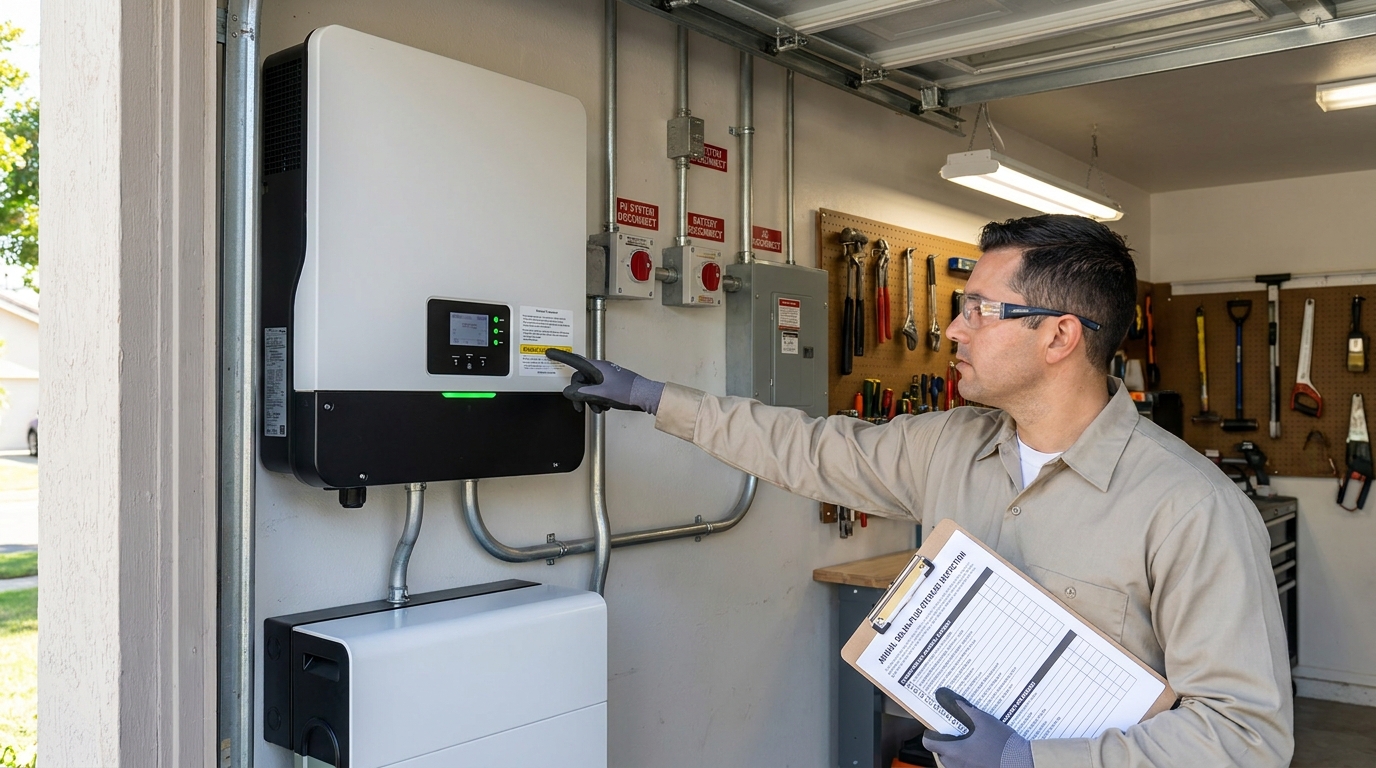
The inverter is the heart of many residential solar systems because it converts the electricity generated by the panels into usable power for the home and grid. During your annual inspection, check the inverter display or status lights for normal operation. Review any stored alerts, fault codes, or warning messages. Even if the system is still producing energy, repeated error history can be a clue that service is needed.
Pay attention to the age of the inverter as well. DOE notes that string inverters commonly last about 10 to 15 years. If your system is approaching that range, the annual inspection is an ideal time to review warranty terms, ask your installer about replacement planning, and consider the possibility that future service may be routine rather than surprising. Planning ahead can make the cost and timing much easier to manage.
Also inspect accessible electrical areas for cleanliness, moisture, corrosion, insect intrusion, or unusual noise. Inverter fans, if present, should not sound strained. Equipment areas should remain clear and ventilated according to manufacturer guidance. Never open panels or enclosures that are not meant for homeowner access. Your role is observation, not internal electrical service.
6. Battery storage review, if your home has it
As solar plus storage becomes more common, annual inspections need to include battery systems too. A battery adds resilience and energy management benefits, but it also introduces another important piece of equipment with its own operating conditions, software, and warranty terms. During your annual review, check the battery status in the monitoring platform and look for any alerts, operating limitations, or unusual charging and discharging behavior.
Visually inspect the battery area for signs of moisture, corrosion, impact, blocked ventilation, or surrounding clutter. Confirm that labels and shutoff access remain clear. If your system was installed in a garage, utility room, or exterior cabinet, make sure the space still matches the installation requirements and has not gradually become obstructed by storage items or seasonal equipment.
Battery systems can be more software driven than earlier solar setups, so the inspection is also a good time to confirm firmware updates, installer access, and documentation. If you rely on the battery for backup power during outages, test procedures and emergency contacts should be easy to find.
When to schedule your annual solar inspection
The best time for an annual inspection depends somewhat on climate, but many homeowners find that late spring through early fall works well. The roof is easier to observe, snow is gone, and winter related wear is more visible. In regions with heavy summer dust or pollen, an early fall check can also make sense because it captures seasonal soiling and storm effects.
Consistency matters more than perfection. Choose roughly the same time each year so your production comparisons remain useful and the habit becomes routine. Some homeowners pair the inspection with another annual home maintenance task such as gutter cleaning, roof review, or HVAC service scheduling. That can make the process easier to remember.
In addition to the yearly review, you should perform a simpler visual check after major weather events. High winds, hail, heavy snow, wildfire smoke, or intense freeze thaw conditions can all justify an extra look. Post storm checks do not need to be complicated. They simply help confirm that nothing obvious has changed.
A safe annual solar inspection checklist for homeowners
The most effective checklist is one you can actually repeat. You do not need dozens of technical line items. You need a practical routine that covers the condition of the array, the health of the equipment, and the performance of the system over time. The list below is designed for homeowners who want a clear annual process without taking unnecessary safety risks.
- Start with safety. Inspect from the ground, from windows, or from safely accessible equipment areas. Do not walk on the roof unless specifically trained and equipped to do so.
- Look at the panels. Note cracks, shifting, discoloration, heavy soiling, debris buildup, or anything visibly different from the prior year.
- Check for new shade. Observe tree growth, nearby construction, or other obstructions that may now affect sun exposure.
- Review roof condition. Watch for missing shingles, staining, damaged flashing, drainage issues, or signs of leaks below the array.
- Inspect visible conduit and hardware. Look for sagging, corrosion, looseness, chewing damage, or exposed wiring.
- Check for animal activity. Look for nests, droppings, sounds beneath the array, or damaged protective mesh.
- Review inverter status. Confirm normal operation, check error messages, and note the inverter age relative to expected service life.
- Review monitoring data. Compare monthly and annual production trends with prior years and investigate unusual drops.
- Check battery status if applicable. Review alerts, space conditions, and backup readiness.
- Document everything. Save photos, screenshots, notes, service receipts, and any changes to the system.
What homeowners can do themselves and when to call a professional
One of the most helpful shifts in solar ownership is recognizing that annual inspections do not need to be all or nothing. Homeowners can absolutely perform a basic visual and monitoring review. In fact, owner observation is often the most practical first line of maintenance because you are the person most likely to notice gradual changes over time.
That said, there is a clear line between observation and technical service. If you see cracked panels, exposed wiring, water intrusion, recurring inverter faults, loose mounting components, pest related damage, or a significant drop in production, it is time to contact a qualified professional. The same is true if your system has gone offline or if roof conditions near the array look compromised.
Cleaning is another area where caution matters. Some arrays never need more than rain and occasional observation. Others in dusty, dry, or coastal environments may benefit from periodic cleaning. But rooftop access, electrical proximity, and the risk of using the wrong tools or chemicals make DIY cleaning less straightforward than many people assume. If panels are heavily soiled or hard to reach safely, professional guidance is often the better choice.
A good rule of thumb is simple: homeowners should inspect, document, and monitor. Professionals should repair, diagnose electrical faults, access high risk roof areas, and handle specialized cleaning or equipment replacement.
How to interpret performance changes without overreacting
It is normal for solar output to fluctuate. Seasonal sun angles, weather, snow cover, smoke, heat, and local shading all influence production. That is why a calm year over year comparison is more useful than reacting to a single low day or cloudy week. The goal of annual review is not to chase perfect consistency. It is to spot patterns that suggest the system needs attention.
Keep expected module degradation in mind. If output is gradually trending lower over many years, some reduction may simply reflect normal aging. DOE guidance often cites average module degradation around 0.5 percent per year. That number is useful because it helps frame what a modest long term decline can look like.
What should get your attention is a sharper change. If annual output drops by more than 10 percent compared with a comparable prior period, DOE notes that a maintenance issue may be involved. That does not automatically mean a major failure. It could be soiling, a shading change, inverter trouble, or a disconnected string. But it does mean the system deserves closer review rather than assumption.
Why record keeping is part of good solar maintenance
Record keeping may not sound exciting, but it is one of the most useful habits a solar owner can build. Natural Resources Canada guidance encourages homeowners to keep records of maintenance and modifications, and that advice is easy to appreciate once a system has been operating for several years. Memory fades, ownership changes, installers merge, warranties vary, and service history becomes more valuable with time.
Your annual file can be very simple. Save a few photos of the array and equipment, note the inspection date, record annual production, and write down anything unusual you observed. If a technician visits, keep the invoice and service summary. If trees were trimmed, roof work was done, or firmware was updated, note that too.
These records help in several ways. They make troubleshooting more precise, support warranty discussions, create continuity if you switch service providers, and make it easier for future homeowners to understand the system. Just as importantly, they turn annual inspection into a consistent process rather than a vague memory of having looked at the panels once in a while.
Common misconceptions about annual solar inspections
Several misconceptions keep homeowners from doing useful maintenance. The first is that solar panels are completely maintenance free. In reality, the modules need little upkeep, but the overall system still includes electrical and structural components that benefit from periodic inspection. Low maintenance does not mean no inspection.
Another misconception is that if the system is producing any power at all, everything must be fine. Production can decline gradually, and performance losses may not be obvious on your utility bill right away. Monitoring data often reveals issues before a full failure occurs. That is exactly why annual review matters.
Many homeowners also assume rain always keeps panels clean enough. Sometimes it does. Sometimes it does not. Soiling depends heavily on local conditions such as dust, pollen, bird activity, smoke, salt, and roof pitch. Observation is more reliable than assumption.
There is also the belief that annual inspections are only for professionals. A professional inspection can be valuable, especially for older systems or after severe weather, but homeowners can safely do a non invasive visual and data review every year. That simple act of ownership is often enough to catch the kinds of changes that lead to a targeted service call.
How annual inspections fit into the future of home energy
Residential solar is becoming more connected, more software based, and more integrated with the rest of the home. Monitoring platforms are better than they were a decade ago. Battery systems are becoming more common. Homeowners are increasingly managing not just solar generation, but backup power, self consumption, time of use optimization, and broader resilience planning.
In that context, annual solar inspections are becoming even more practical. They are no longer just about staring at panels on the roof. They are about understanding your home energy ecosystem. A yearly check can include app settings, alert preferences, battery readiness, outage history, and planned equipment replacement. That broader view makes solar ownership feel more intentional and less reactive.
North American policy and industry trends also support this direction. Streamlined permitting and inspection initiatives such as SolarAPP+ and SolSmart reflect a wider effort to make solar more accessible and easier to manage. For homeowners, that same philosophy translates into simple, repeatable maintenance habits rather than complicated technical routines.
Creating a repeatable annual routine
If you want your inspection process to last, keep it simple. Pick a month each year. Open your monitoring app. Walk the property. Look at the roofline, the panels, the visible equipment, and the battery if you have one. Compare production with last year. Take photos. Write down anything that has changed. If something seems off, call a professional.
This rhythm is calm, manageable, and effective. It respects the fact that solar is designed to operate quietly most of the time, while still acknowledging that every long lived home system benefits from periodic attention. Homeownership is full of maintenance decisions, and the best ones are often the least dramatic. They are the habits that keep small problems small.
Annual solar inspections belong in that category. They do not require constant effort. They simply ask for one thoughtful check each year, plus extra awareness after major weather events. In return, you gain better performance insight, stronger documentation, improved safety awareness, and more confidence in the energy system on your roof.
Final thoughts
For homeowners, an annual solar inspection is one of the most practical forms of preventive maintenance available. It protects energy production, supports roof preservation, improves safety awareness, and helps you plan for equipment aging without unnecessary stress. Most importantly, it gives you a clear way to stay connected to a system that is easy to overlook when it is working well.
You do not need to overcomplicate the process. Start with safe observation, review your monitoring data, keep good records, and bring in a qualified professional when warning signs appear. That balanced approach reflects the best of sustainable homeownership. It is practical, informed, and built around the idea that good systems last longer when we pay attention to them at the right moments.
In a home powered partly by the sun, an annual inspection is a small act of stewardship. It is also a smart habit. And for most households, it is one of the easiest ways to take confident, informed control of a valuable energy investment.



No Comment! Be the first one.