


How to Optimize Your Solar Panel System for Maximum Efficiency
Solar panels are often described as low maintenance, and that is largely true. Once a system is installed well, it can quietly produce electricity for years with only modest attention from the homeowner. Still, low maintenance does not mean no maintenance. If you want your solar investment to perform as well as it can, the goal is not to do more work than necessary, but to reduce avoidable losses and notice problems before they become expensive.
Table Of Content
- What “maximum efficiency” really means for a home solar system
- Start with monitoring, because data makes everything easier
- Clean smarter, not harder
- Understand the real impact of snow, winter, and northern climates
- Shading is often gradual, which makes it easy to miss
- Pay attention to the equipment around the panels, not just the panels themselves
- Know what normal aging looks like so you can spot what is not normal
- A simple seasonal maintenance rhythm that feels manageable
- Common solar optimization myths worth letting go of
- When to call a professional
- The long-term view: efficiency, resilience, and everyday sustainability
- Quick reference: the easiest ways to improve solar panel performance
That approach is especially useful for households in Canada and across North America, where weather, pollen, dust, smoke, snow, and seasonal light conditions can all affect output. In many cases, the biggest improvements come from very practical actions like checking your production app, trimming back nearby vegetation, watching for debris, and cleaning only when it is actually needed. These steps may sound small, but over a year they can preserve meaningful energy production.
Research from the National Renewable Energy Laboratory, or NREL, helps frame why this matters. Its soiling map uses an insolation-weighted soiling ratio where 0.95 corresponds to about 5 percent annual energy loss. That number is a good reminder that even modest inefficiencies deserve attention. Five percent may not feel dramatic on a single day, but over the course of a year it can mean a noticeable amount of lost electricity.
This guide takes a user-friendly view of solar panel system optimization. You do not need to become an engineer or build a rigid maintenance schedule. What you do need is a simple routine for observation, a realistic understanding of seasonal performance, and a willingness to respond when your system shows signs of underperformance. Done well, that keeps your panels efficient, protects the equipment, and supports a cleaner home energy profile without adding stress.
What “maximum efficiency” really means for a home solar system
When people talk about maximizing solar efficiency, they sometimes imagine squeezing every possible watt from the system every hour of the day. In real life, home solar performance is shaped by weather, roof angle, panel design, inverter behavior, and the changing seasons. You cannot control all of those variables, and you do not need to. A practical definition of maximum efficiency is simply this: helping the system perform as close as possible to its intended design by minimizing losses you can reasonably prevent.
Those preventable losses tend to come from a small set of familiar issues. Soiling from dust, pollen, bird droppings, smoke residue, or nearby construction can block sunlight from reaching the cells. Snow can temporarily cover modules in winter. Tree growth can create new shading that was not present when the system was installed. Equipment issues such as inverter faults, loose connections, blocked ventilation, or damaged modules can also drag performance down.
There is also the question of time. Solar systems naturally age, but the good news is that modern photovoltaic degradation is usually gradual rather than sudden. NREL has found median performance loss rates in the U.S. fleet around 0.75 percent per year, and most systems lose less than 2 percent annually. Other cold-climate research suggests degradation can be relatively slow on average. That means dramatic drops in output often point to a specific issue rather than normal aging alone.
For homeowners, this is reassuring. You are not trying to fight normal seasonal change or reverse natural aging. You are simply trying to keep the system from giving away energy because of neglect, buildup, or an overlooked equipment problem. In most homes, that is a manageable task.
Start with monitoring, because data makes everything easier
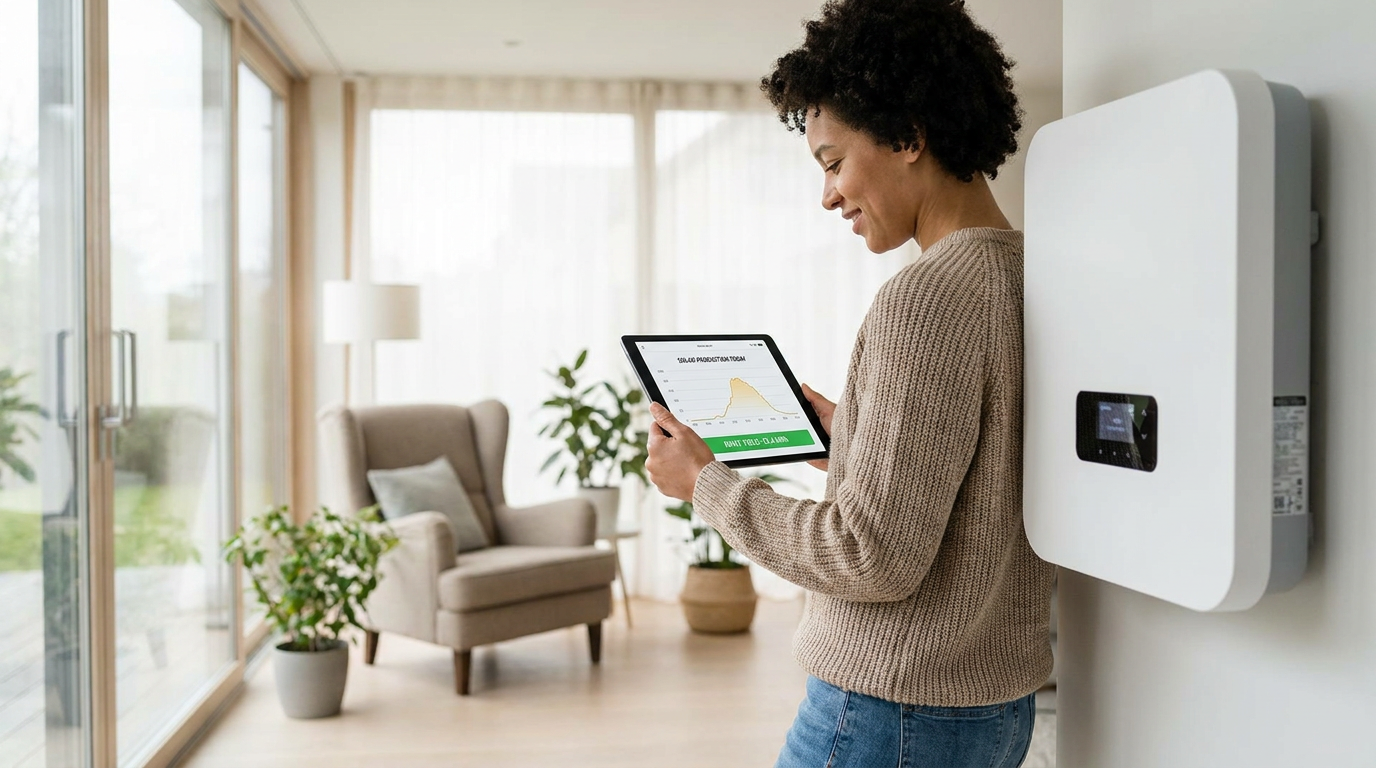
If there is one optimization habit that delivers the most value for the least effort, it is regular monitoring. Most modern solar systems include an inverter portal, mobile app, or web dashboard that shows how much energy the system is producing each day, month, and year. Some people set this up once and rarely return to it. In practice, checking it periodically is one of the simplest ways to protect performance.
Monitoring helps you distinguish between normal variation and a true problem. A cloudy week is not a concern. Shorter winter days are not a concern. A sudden drop on bright days that should be productive is worth attention. If your output seems lower than it was during similar weather conditions in the past, or lower than seasonal expectations, that is your signal to investigate.
A calm, practical routine works best here. Check your production weekly if you enjoy the data, or at least monthly if you prefer a lighter touch. Compare sunny days with other sunny days rather than comparing winter to summer. Look for sudden dips, flatlined production, unusual error codes, or stretches where one part of the day seems weaker than it should be. Those patterns can tell you a great deal before you ever climb a ladder or call a technician.
Monitoring also keeps small losses from becoming invisible. NREL and other research groups continue to refine soiling maps and cleaning interval models because even modest losses can accumulate over time. If your system is quietly underproducing by 5 percent or more for months, the cost is not just lower electricity generation. It can also delay the return on your investment.
One common misconception is that if your inverter is clipped or slightly undersized, cleaning and optimization no longer matter. That is not quite right. Inverter clipping may limit output during peak production windows, but it does not erase the effect of soiling or shading during the rest of the day. A system can still lose meaningful energy from avoidable surface buildup or obstruction.
As a general practice, keep a short record of what you notice. If there was a wildfire smoke event, a long dry spell, a snowstorm, or nearby construction, make a note of the date and any visible performance change. Over time, those observations help you understand your system’s unique behavior, which is often more useful than following a generic maintenance rule.
Clean smarter, not harder
Many homeowners assume solar panels need frequent routine washing. In most cases, they do not. The better approach is to treat cleaning as a targeted response to visible buildup or measured underperformance. This is increasingly supported by research, especially as experts pay more attention to local climate and site-specific soiling behavior instead of one-size-fits-all schedules.
NREL has reported that pollen can reduce photovoltaic performance and that rain does not always restore output completely. In one study, wet brush cleaning increased performance by 5 to 11 percent. That is a meaningful gain, but it does not mean every system should be washed often. It means there are situations where cleaning is clearly worth doing, particularly after visible buildup has accumulated or output has drifted lower than expected.
Look for practical triggers rather than strict calendar dates. Long dry spells can allow dust to settle and remain. Spring pollen seasons can leave a film that rain only partly removes. Bird droppings can create localized blockage. Wildfire smoke can leave residue, especially if smoke has been heavy and prolonged. Construction nearby can increase dust levels beyond what your system normally sees.
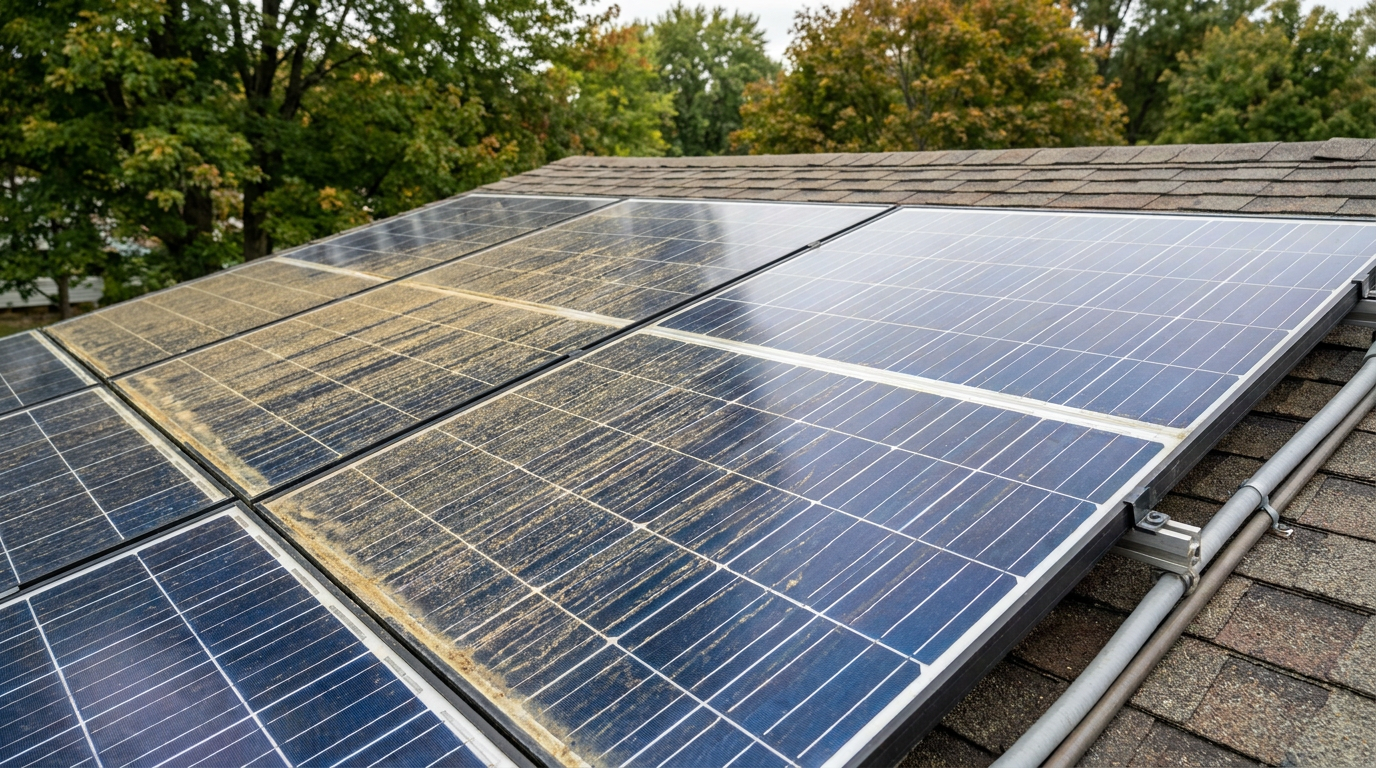
If you decide cleaning is needed, safety comes first. In many homes, the safest choice is to inspect from the ground and hire a professional if roof access is difficult or risky. If your array is safely accessible and your installer’s guidance permits homeowner cleaning, use gentle methods. Soft brushes, plain water, and non-abrasive tools are generally preferred. Avoid harsh chemicals, abrasive pads, pressure washing, or anything that could scratch the glass, damage seals, or void a warranty.
The timing of cleaning matters too. Early morning or late evening is often gentler than midday, when panels may be hot. Cleaning hot glass with much colder water can create stress, and working on a roof in strong sun is simply less comfortable and more hazardous. A careful, calm approach protects both the equipment and the person doing the work.
It also helps to be realistic about what you are trying to remove. A thin layer of ordinary dust may not justify immediate action in a wetter climate. Thick pollen film, bird droppings, or concentrated grime often does. This is where monitoring and visual inspection work together. If you can see buildup and your output has slipped during otherwise favorable weather, cleaning is easier to justify.
Practical rule of thumb: if the panels look reasonably clear and production is tracking with seasonal expectations, leave them alone. If visible buildup coincides with lower-than-expected output, clean selectively or book a service visit.
Understand the real impact of snow, winter, and northern climates
For homeowners in Canada and colder parts of North America, winter performance can be a source of unnecessary worry. Solar systems do tend to produce less in winter, and that is not automatically a sign that something is wrong. Shorter days, lower sun angles, more cloud cover in some regions, and snow cover all influence seasonal output. It is completely normal for winter production to sit below summer levels.
NREL’s cold-climate fleet research found that winter performance was on average 5 to 10 percent below summer performance in one analysis, and months with snowfall showed losses ranging roughly from 6 to 40 percent depending on climate. That is a wide range because local conditions matter so much. Roof pitch, panel tilt, mounting height, panel temperature, orientation, and the type of snowfall all affect how quickly snow slides off and how much generation is blocked.
One of the most useful things a homeowner can do is adjust expectations. A winter dip is often seasonal, not mechanical. If snow sits on the panels after a storm, reduced output is logical. If the snow clears and sunny day production returns to a familiar pattern, the system is likely behaving normally. The key is not to panic over every seasonal decline, but to notice when winter losses persist beyond what local weather explains.
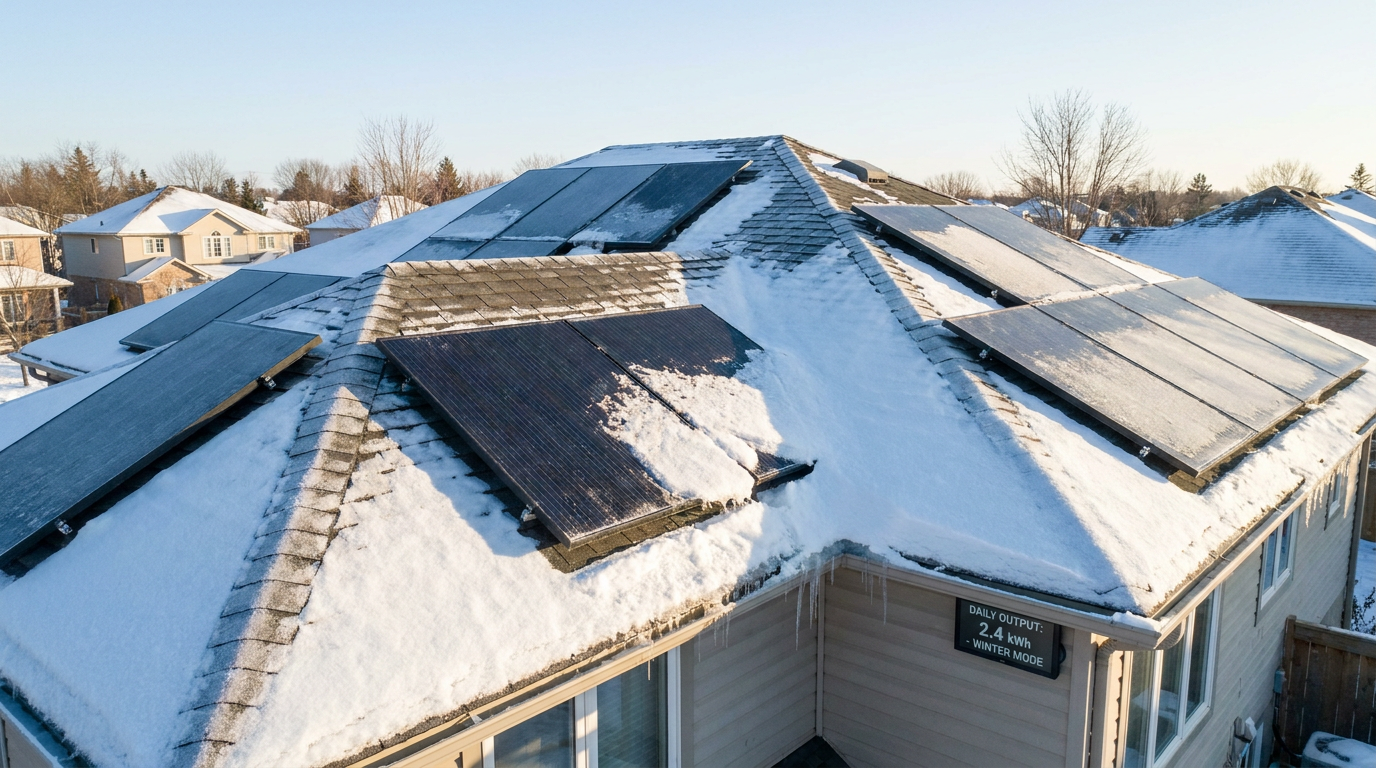
Snow removal deserves caution. In some situations, homeowners are tempted to clear roof panels with rakes or hard tools. That can create safety risks and potentially scratch the surface. If the roof is steep, icy, or difficult to access, it is better to let the snow shed naturally or consult a professional. A little patience often goes further than aggressive intervention. Many systems resume production as exposed sections warm and the snow slides off.
There is also an upside to snowy climates that is worth noting. Natural Resources Canada has highlighted that bifacial solar panels can capture reflected light from snow-covered ground. This reflected-light gain does not eliminate the challenges of snow cover, but it does show that northern conditions are not only a disadvantage. In the right design, bright winter surfaces can actually contribute to generation.
If you are planning a new system or upgrading an existing one, ask your installer about tilt, mounting style, and snow shedding behavior. A system designed with local winter conditions in mind is easier to optimize over the long term than one that looks good on paper but struggles in the real climate of the site.
Shading is often gradual, which makes it easy to miss
Shading has a reputation as an installation-stage issue, but in many homes it is really a maintenance issue over time. A tree that was harmless five years ago may now cast a shadow across part of the array in the morning or late afternoon. A new structure, fence extension, rooftop feature, or neighboring renovation can also change the light environment around your system.
This is one reason monitoring is so valuable. Shading losses often develop gradually, which means they can be missed if you only think about the system when there is a total failure. If output slowly drifts lower during certain hours or months, shading should be part of your checklist. Even modest obstruction can cut generation more than many homeowners expect, especially if it affects multiple modules or key parts of the array.
A visual review a few times each year can help. Walk around your property at different times of day and notice where shadows fall. Compare what you see in spring and summer with what you remember from earlier years. If trees are beginning to overhang the roof or cast broader shadows, trimming may be one of the most cost-effective optimization steps available to you.
This is also where professional shading analysis can be useful. If your system seems healthy but underperforms consistently, an installer or service technician can often identify shadow patterns, module-level performance issues, or layout imbalances more precisely than a homeowner can. You do not need professional analysis for every home, but it is valuable when the cause of underperformance is not obvious.
Pay attention to the equipment around the panels, not just the panels themselves
When homeowners think about solar efficiency, they often picture the modules on the roof. In reality, the system’s supporting components deserve attention too. Inverters, disconnects, conduits, mounting hardware, and ventilation clearances all influence reliability and long-term performance. A solar array can be perfectly clean and still underperform if the electrical side of the system has a fault or if heat is building around an inverter that needs airflow.
Start with the simplest checks. Make sure the inverter area is unobstructed and well ventilated according to manufacturer guidance. Look for warning lights or error notifications in the monitoring app. After severe weather, visually inspect any accessible exterior components for obvious signs of damage, loose hardware, or shifted conduit. You are not trying to diagnose electrical systems yourself. You are just scanning for changes that merit professional review.
NREL’s work on durability and operations and maintenance underscores that photovoltaic systems face long-term exposure to hail, snow, heat, ultraviolet radiation, and wind. Over many years, those exposures can affect seals, backsheets, racking, or electrical connections. Preventive awareness matters because catching a problem early is usually easier and less costly than discovering it after a sustained production drop.
Recent fleet analysis has also linked more severe annual performance losses with certain extreme weather thresholds, such as hail larger than 25 millimeters, winds above 90 kilometers per hour, or snow depths greater than 1 meter. That does not mean every storm causes hidden damage. It means weather events should prompt a little extra attention. If your area has experienced unusual hail, wind, or heavy snow loading, consider a post-event inspection, especially if production changes afterward.
Know what normal aging looks like so you can spot what is not normal
One of the most helpful perspectives in solar maintenance is understanding the difference between gradual degradation and sudden underperformance. All solar panels lose a little output over time. That is part of the technology. But in most well-built residential systems, the process is slow enough that you are unlikely to notice it month to month without data.
Because the pace is usually modest, a sharp drop is often a clue that something specific has happened. Common culprits include a failed inverter, a tripped breaker, a wiring issue, new shade, heavy soiling, storm-related damage, or persistent snow cover. The more familiar you are with your system’s normal seasonal rhythm, the faster you can separate expected aging from a problem worth investigating.
There is a practical comfort in this. You do not need to obsess over every fractional change. A calm monthly review and a few seasonal checks are usually enough to catch meaningful issues. Solar optimization is often less about chasing perfection and more about responding intelligently when the evidence suggests your system is leaving energy on the table.
A simple seasonal maintenance rhythm that feels manageable
Many homeowners delay solar maintenance because they imagine it has to become another complicated household calendar. It does not. A light seasonal rhythm is often enough to keep the system on track while fitting naturally into normal home care.
In spring, review your system after the winter season. Look for pollen accumulation, check production against returning sunnier weather, and assess whether nearby trees are beginning to cast new shade. If you live in a region with heavy pollen, this may be the season when targeted cleaning has the most value.
In summer, focus on dust, wildfire smoke residue, and vegetation growth. Long dry periods can allow surface grime to build, and hot weather makes good inverter ventilation especially important. If production appears weaker during otherwise bright weather, compare your data with earlier sunny periods to see whether soiling or shading could be the cause.
In autumn, remove leaves and debris around accessible components and observe how lower sun angles change nearby shading. This is also a good time to think ahead to winter access and safety. If your area commonly sees severe storms or snow, make sure you know how you will monitor the system without feeling pressured to do risky roof work later.
In winter, accept that output will generally be lower and watch how quickly snow sheds from the array. If your system remains underperforming after snow clears and bright conditions return, then it makes sense to investigate further. Seasonal awareness makes winter monitoring calmer and more accurate.
- Check your monitoring app or portal at least monthly.
- Do a visual ground-level inspection after major storms and during seasonal transitions.
- Clean only when visible buildup and production data suggest it is worth doing.
- Keep vegetation, debris, and obstructions under control.
- Call a professional when the cause of underperformance is unclear or roof access is unsafe.
Common solar optimization myths worth letting go of
Solar maintenance is surrounded by a few persistent myths that can either create unnecessary work or lead to missed issues. The first is that panels need constant washing. Most residential systems do not. Frequent cleaning can be wasteful, inconvenient, and in some cases harder on the equipment than a more selective strategy. Climate, visible buildup, and measured performance are better guides than a generic schedule.
The second myth is that rain cleans everything. It certainly helps in many climates, but it is not always enough. Research into pollen and soiling has shown that rain may only partly remove residues, leaving losses that still affect output. That is why a system can look mostly fine from the street yet still benefit from occasional targeted cleaning.
The third myth is that winter underperformance means equipment failure. In northern climates, winter losses are often completely normal because of snow, lower sun angle, and shorter daylight hours. What matters is whether production is consistent with those conditions, not whether it matches summer output.
A final myth is that small drops are not worth tracking. In reality, modest efficiency losses can become meaningful over a full year. A five percent loss to soiling, shade, or lingering issues is not dramatic enough to trigger panic, but it is large enough to affect your savings and clean energy contribution over time.
When to call a professional
There is a lot homeowners can do themselves, but not every optimization issue belongs in the DIY category. If your monitoring platform shows persistent underperformance with no obvious visual cause, if the inverter displays recurring errors, or if a storm may have damaged the system, professional help is the right next step. The same applies if your roof is steep, high, icy, or otherwise unsafe to access.
A qualified solar technician can perform more advanced diagnostics, including electrical testing, module-level analysis, and in some cases infrared inspection to identify hot spots or hidden faults. These tools are especially useful when the panels appear intact but the system still underdelivers. A professional can also check whether mounting hardware, wiring, and inverter settings are behaving properly.
Bringing in an expert does not mean you have failed at maintenance. It means you have handled the first and most valuable part of the job, which is noticing that something may be off. Good solar ownership is not about doing everything yourself. It is about creating a smart handoff between everyday observation and technical service when needed.
The long-term view: efficiency, resilience, and everyday sustainability
At its best, solar optimization is not a rigid checklist. It is a mindset of paying attention. A home solar system is already doing something meaningful for your household and for the larger energy transition. Keeping it efficient is less about chasing an abstract ideal and more about respecting the equipment enough to help it do its job well.
That means watching for avoidable losses, understanding your local climate, and responding to real conditions rather than generic advice. It means knowing that soiling can matter, that rain is helpful but not perfect, that snow is often seasonal rather than alarming, and that monitoring data is one of the most useful tools available to any homeowner.
It also means embracing a version of sustainability that feels practical. You do not need to wash panels every week or hover over production graphs every day. What matters is building a calm routine that catches the obvious issues and supports the system over its full life. In most homes, that routine is simple, affordable, and entirely manageable.
If you remember only one takeaway, let it be this: the most effective way to optimize your solar panel system is to clean smarter, monitor regularly, and act early when something changes. That approach protects energy production, supports system longevity, and makes solar ownership feel as straightforward as it should.
Quick reference: the easiest ways to improve solar panel performance
- Monitor output regularly so you can spot unusual drops early.
- Inspect visually from the ground after storms, long dry spells, and pollen-heavy periods.
- Clean selectively when visible buildup and lower production appear together.
- Trim vegetation before gradual shading becomes a larger issue.
- Keep inverter areas clear so equipment can ventilate properly.
- Adjust winter expectations and watch for snow-related losses that persist longer than usual.
- Book professional service when roof access is unsafe or system behavior does not make sense.
Solar systems reward attention more than effort. A few thoughtful habits can preserve efficiency, extend useful life, and help your home continue producing clean electricity with very little friction. That is a good result for both practicality and sustainability, which is often where the best housing decisions meet.


No Comment! Be the first one.