


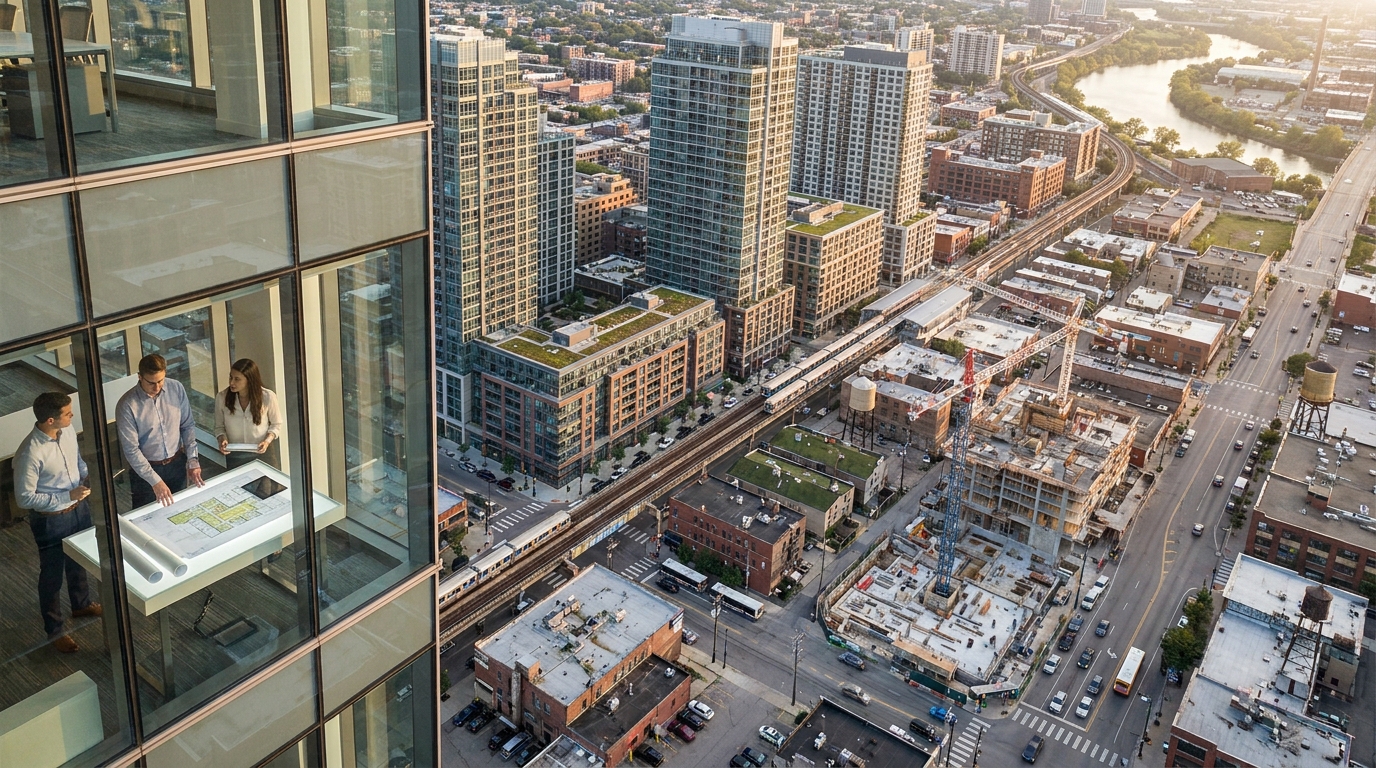
Cities do not succeed on private buildings alone. They succeed when the spaces between buildings are planned with as much care, discipline, and long term vision as the projects that frame them. Public space planning is the practice of shaping those shared environments, from parks and plazas to sidewalks, squares, civic gathering areas, and green corridors, so they support everyday life, community connection, and future growth. In an era defined by housing shortages, rising density, climate pressure, and infrastructure strain, public space has moved from a secondary design consideration to a central urban development priority.
Table Of Content
- What Public Space Planning Really Means in Urban Development
- Why Public Space Matters More as Cities Grow Denser
- Public Space as Social Infrastructure
- The Economic Value of Well Planned Public Spaces
- Public Space Planning and Urban Sustainability
- The Relationship Between Public Space and Housing Success
- Common Challenges in Public Space Planning
- Strategies for Integrating Effective Public Spaces into Large Scale Housing Projects
- Core Planning Principles for Better Public Realm Outcomes
- What Municipalities and Developers Must Get Right
- The Future of Public Space Planning in Growing Cities
- Conclusion
The most successful urban districts are not simply places where people live. They are places where people can gather, move comfortably, rest, play, interact, and participate in public life. Strong public spaces make density more livable, increase the usefulness of new housing supply, and create the social and economic conditions that allow communities to thrive. When city building focuses only on unit counts, parcel yield, or building height, it often misses the broader systems that determine whether a neighbourhood will actually perform well over time.
Strategic public space planning helps cities absorb growth without losing quality of life. It supports healthier streets, stronger local businesses, safer neighbourhoods, and more resilient infrastructure outcomes. It also improves the long term feasibility of large scale housing and mixed use projects by making them more attractive to residents, investors, and municipalities. In practical terms, well planned public space is not a decorative add on. It is core urban infrastructure.
This article explores why public space planning matters so deeply in urban development, how it influences community engagement, economic growth, and sustainability, and what developers, planners, and municipalities should do to integrate effective public spaces into large scale housing strategies. The cities that will perform best in the decades ahead are the ones that understand a simple but powerful principle: growth works better when shared space works better.
What Public Space Planning Really Means in Urban Development
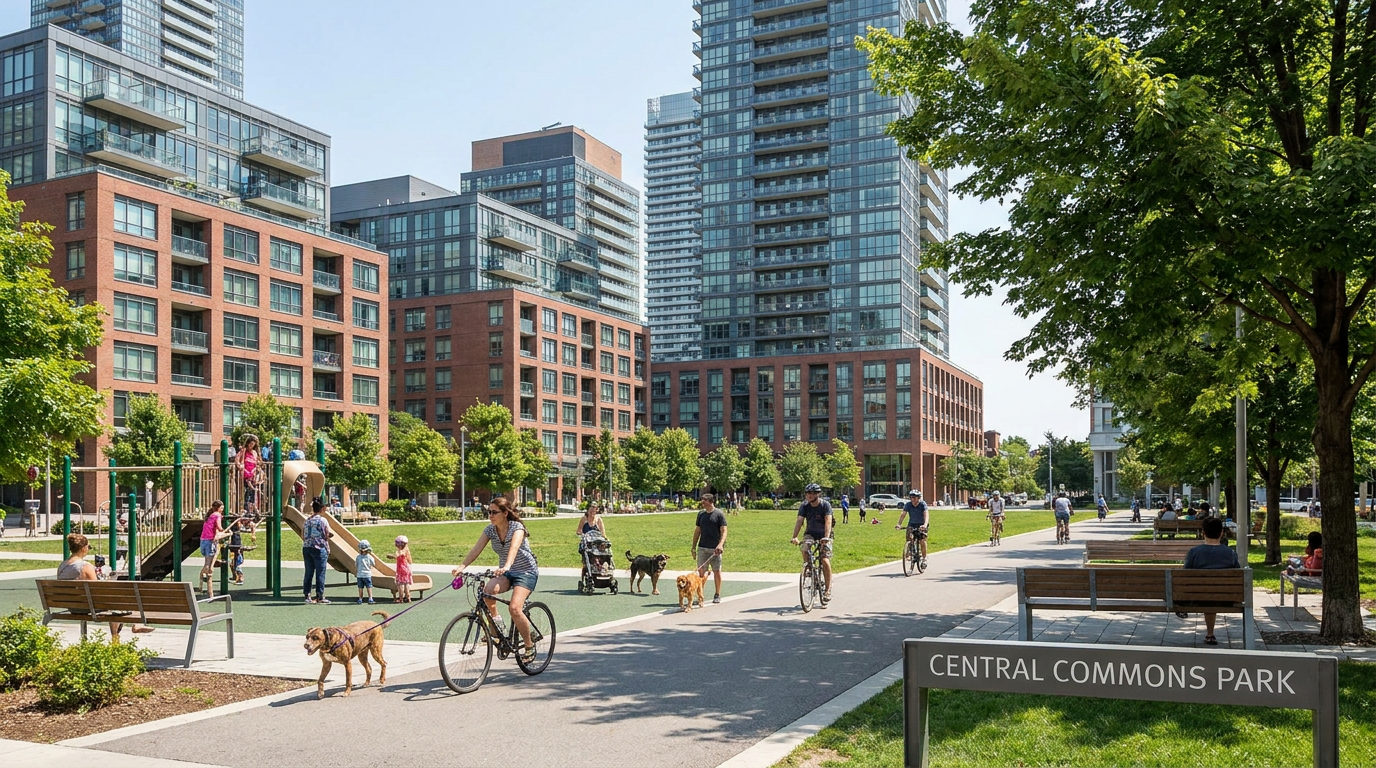
Public space planning is often misunderstood as park design or beautification. In reality, it is a strategic discipline that sits at the intersection of land use, mobility, infrastructure, social policy, environmental performance, and real estate value. It asks how people will use shared space across the full life of a community and how that space can support both immediate needs and long term urban change. It includes visible amenities, but it also includes circulation, accessibility, safety, shade, flexibility, stormwater management, and the subtle patterns of human activity that define successful places.
In urban development, public space planning begins with a bigger question than what to build. It starts with how a neighbourhood should function. That means understanding the role of streets as social and movement corridors, the role of parks as civic and ecological assets, the role of plazas as gathering points, and the role of public realm design in linking homes to schools, transit, jobs, and services. A strong public realm creates continuity between these components, allowing development to feel integrated rather than fragmented.
At a strategic level, public space planning should shape development patterns from the earliest stages of site assembly, master planning, and entitlement. If it is delayed until after density, parking, servicing, and building envelopes have already been fixed, it becomes reactive and compromised. The best outcomes emerge when public space is treated as a framework condition for growth rather than leftover land after private program has been maximized. That shift in mindset is one of the clearest differences between transactional development and city building.
Good public spaces are also context specific. A transit oriented growth corridor, a suburban intensification node, and a downtown redevelopment precinct each require different forms of public realm investment. The core principle remains the same, however. Public space should support how people actually live in a place while strengthening the capacity of the broader urban system. It should not merely satisfy minimum requirements. It should create lasting value.
Why Public Space Matters More as Cities Grow Denser
As cities intensify, the need for high quality public space increases rather than declines. Higher density means more residents sharing less private outdoor area, smaller dwelling sizes, and greater pressure on streets, parks, and civic amenities. In this context, public spaces become extensions of the home, the workplace, and the social life of the neighbourhood. They absorb uses that private buildings cannot fully accommodate, especially in vertical communities where access to open space is limited.
Density without public realm quality often produces frustration. Residents may accept compact living if the surrounding neighbourhood offers walkability, greenery, recreation, comfort, and social energy. They become much less tolerant when intensification results in congestion, hard surfaces, poor pedestrian experience, and a visible shortage of shared amenities. This is why debates about growth are often not really debates about growth itself. They are debates about whether growth is being matched with thoughtful public investment and design.
From a planning perspective, public space plays a stabilizing role in dense urban environments. It relieves pressure, distributes activity, and gives structure to areas experiencing rapid change. A well positioned park can anchor thousands of new units. A connected network of sidewalks, bike routes, and public plazas can reduce reliance on cars while improving local access. A successful main street can transform density from an abstract planning metric into a lived experience that feels convenient and vibrant.
There is also an important political dimension. Communities are more likely to support intensification when they can see how growth will improve collective life rather than simply add massing and traffic. Public spaces make that benefit visible. They show that development can create something shared, durable, and civic. In that sense, public space planning is not only a design tool. It is also a growth management tool and a trust building mechanism.
Public Space as Social Infrastructure
When people think about infrastructure, they often think first about roads, pipes, power systems, and transit lines. Those systems are essential, but cities also depend on social infrastructure, the places that allow people to encounter one another, build belonging, and participate in community life. Public spaces are among the most important forms of social infrastructure because they are open, shared, and visible. They help transform a collection of buildings into a community.
Well planned public spaces support social inclusion by creating environments that can be used by people across income levels, age groups, and cultural backgrounds. A park, plaza, or generous sidewalk does not require ownership, membership, or a transaction to enter. That openness matters in growing cities where inequality can become physically embedded in the built environment. The more urban life is mediated by private space, the more important accessible public space becomes as a democratic counterbalance.
Public spaces also support informal forms of community engagement that formal institutions cannot replicate. They enable chance encounters between neighbours, visible family activity, civic events, cultural expression, and everyday routines that make a neighbourhood feel familiar and safe. These interactions may appear small, but over time they produce social trust and attachment to place. Communities with stronger social bonds are often more resilient in the face of economic stress, public health challenges, and rapid demographic change.
Public space is where density becomes community. Without it, urban growth can feel efficient on paper but incomplete in practice.
For families, seniors, youth, and newcomers, the quality of public space often shapes whether a neighbourhood feels usable. Parents need parks and safe walking routes. Older adults need seating, shade, accessibility, and places to remain connected to local life. Young people need room for recreation and unstructured gathering. New residents need common ground where they can build familiarity with the area. Planning for these needs is not sentimental. It is fundamental to inclusive urban development.
The Economic Value of Well Planned Public Spaces
Public space planning is sometimes framed as a cost centre, especially in development discussions focused on land efficiency and entitlement complexity. That is a narrow view. In reality, high quality public spaces generate measurable economic value at multiple scales. They support stronger property performance, increase local commercial activity, attract talent and investment, and improve the long term competitiveness of urban districts. The market consistently rewards places that function well for people.
At the project level, residential and mixed use developments benefit when they are located near attractive parks, active streets, and well designed gathering spaces. Buyers and renters place value on access to public amenities, even when they may not describe that preference in technical planning language. They respond to walkability, beauty, convenience, and the feeling that a neighbourhood offers more than private floor area. Public realm quality can improve absorption, support pricing, and reduce the friction that often accompanies high density projects.
At the district level, public spaces increase dwell time and foot traffic, both of which are essential to retail health and local economic vitality. Cafes, small businesses, service uses, and cultural venues perform better in places where people want to spend time rather than merely pass through. Streetscapes that prioritize pedestrians, shade, visibility, and comfort can strengthen the daily economy as effectively as major anchor investments. The best commercial streets in any city are rarely just corridors. They are public spaces in their own right.
There is also a long term fiscal argument. Strong public spaces can help municipalities protect and grow the tax base by improving neighbourhood desirability and supporting more sustainable patterns of development. They can reduce downstream costs linked to social isolation, heat stress, low active transportation uptake, and poorly performing urban environments. While the returns are distributed across agencies and time horizons, they are real. Strategic public space planning should therefore be viewed as value creation, not value sacrifice.
Public Space Planning and Urban Sustainability
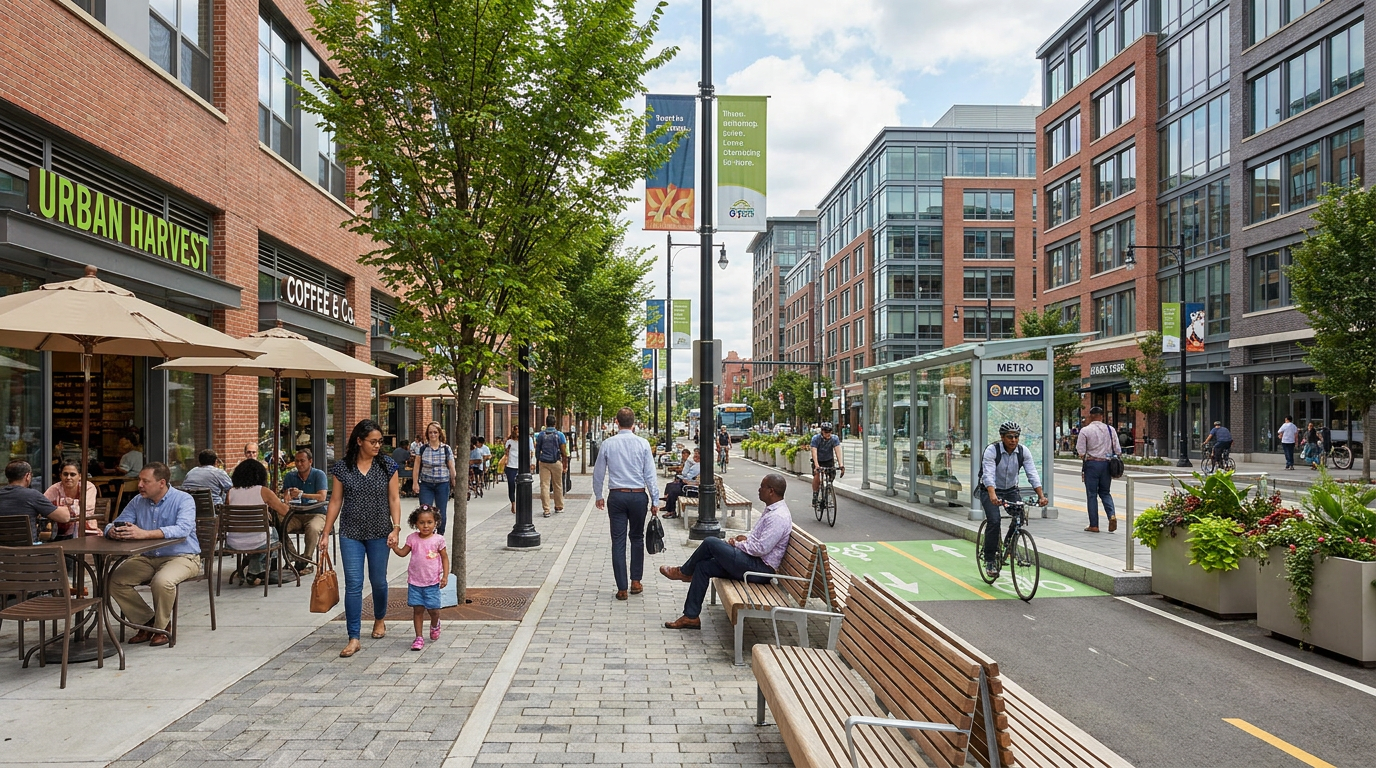
Sustainability in urban development is often discussed through energy systems, building performance, and transit investment. Those areas matter, but public space planning is equally important to environmental performance. Streets, parks, plazas, and open space networks influence microclimate, stormwater management, biodiversity, mobility patterns, and public health. When designed strategically, public spaces can help cities respond to climate challenges while making daily life more comfortable and resilient.
Green public spaces reduce urban heat island effects by increasing tree canopy, shade, and evapotranspiration. In warming cities, this is no longer a secondary landscape consideration. It is a public health imperative. Neighbourhoods with limited shade and excessive hardscape become less usable during heat events, especially for vulnerable populations. Public space planning must therefore integrate climate adaptation directly into urban form, using planting, material choice, and water sensitive design to improve thermal comfort.
Public spaces are also critical to water management. Parks, bioswales, permeable surfaces, and green corridors can help absorb rainfall, reduce runoff, and ease pressure on aging drainage systems. As extreme weather becomes more common, multifunctional landscapes will play a larger role in urban resilience. The strongest planning strategies do not separate recreation, ecology, and infrastructure into isolated categories. They combine them, allowing one public space to serve environmental, social, and mobility functions at the same time.
In transportation terms, public realm quality has a direct effect on mode choice. People are more likely to walk, cycle, and use transit when routes feel safe, attractive, and connected. Sidewalk width, crossing quality, lighting, weather protection, and active edges all influence whether sustainable transportation is viable in practice. That means public space planning is central to reducing car dependence and creating more efficient cities. Housing growth without mobility quality simply relocates pressure instead of solving it.
The Relationship Between Public Space and Housing Success
Large scale housing projects are often evaluated through density, affordability, construction delivery, and financial feasibility. Those are important metrics, but they are not enough. The long term success of housing also depends on whether the surrounding public environment supports daily life. A housing project can achieve its unit targets and still underperform as a community if residents lack access to meaningful open space, social gathering areas, safe walking routes, and local services connected by a strong public realm.
This is particularly true in master planned communities, transit oriented developments, and major infill sites where thousands of residents may be introduced within a short period. In these contexts, public spaces must be conceived as foundational infrastructure that arrives early, not amenities postponed until later phases. Early delivery matters because public space helps establish identity, supports initial occupancy, and creates visible evidence that a new district is becoming a real neighbourhood rather than just a construction program.
Public space planning is also essential to making smaller units more livable. As housing affordability pressures lead to more compact homes, residents rely more heavily on nearby parks, squares, play areas, and pedestrian friendly streets. Shared space becomes part of the functional living environment. Developers and municipalities that recognize this reality can design communities that feel generous even when private interiors are constrained. Those that ignore it often produce projects that meet numerical goals while undermining resident satisfaction.
From a social perspective, public spaces can reduce the isolation that sometimes accompanies high rise or high turnover housing environments. They create opportunities for routine visibility and low barrier social contact, which can help people feel anchored in place. For mixed income communities, this role is even more important. Shared public spaces can encourage integration and common use in ways that private amenity systems cannot. In that sense, public realm quality directly supports healthier housing outcomes.
Common Challenges in Public Space Planning
Despite its importance, public space planning is often compromised by fragmented decision making. Different agencies may control parks, roads, utilities, transit, and development approvals, each with separate timelines and performance measures. Without coordinated governance, public space can fall between institutional boundaries. The result is often a collection of technically compliant spaces that do not function as a coherent network. City building requires integration, but development systems frequently reward compartmentalization.
Land economics can also create tension. In high value urban areas, every square metre allocated to public use is often viewed through the lens of foregone private development yield. This can lead to undersized, residual, or poorly located public spaces that satisfy formal requirements without delivering real value. The solution is not to ignore economics. It is to understand that well planned public realm can increase district wide performance and improve long term returns, even if it reduces immediate building footprint in specific locations.
Maintenance and management present another challenge. A public space may be beautifully designed at opening and still decline if programming, stewardship, cleaning, safety, and repair are not addressed. This is why successful public space planning extends beyond capital design into operational strategy. Cities and development partners need to ask who will manage the space, how it will be activated, and what resources are required to keep it useful over time. A durable public realm depends on governance as much as geometry.
There is also the challenge of equity. Not all neighbourhoods receive the same quality of public investment, and growth areas can produce uneven outcomes if amenities are concentrated only where market demand is strongest. Strategic urban planning should use public space investment to close gaps in access, health, and quality of life rather than reinforce them. That means aligning growth strategies with broader civic goals and ensuring that public space planning is embedded in inclusive city building, not isolated from it.
Strategies for Integrating Effective Public Spaces into Large Scale Housing Projects
To create successful urban communities, public space planning must begin early and remain central throughout project delivery. This requires a shift in sequencing. Too often, development teams determine unit counts, road alignments, servicing footprints, and building envelopes first, then try to insert public spaces into what remains. A stronger model starts with movement networks, open space structure, and civic destinations, then aligns development parcels around that framework. In large projects, the public realm should organize the community rather than decorate it.
The most effective housing developments treat public spaces as a network rather than isolated amenities. A major park may serve as an anchor, but smaller plazas, green links, widened sidewalks, playgrounds, and community gathering nodes should reinforce one another. This network approach improves accessibility and spreads activity across the site. It also allows different public spaces to serve different users and times of day, increasing overall neighbourhood performance.
Programming matters as much as physical form. A public square that is empty most of the year is not achieving its potential. Developers and municipalities should consider how spaces will support seasonal events, daily informal use, children’s play, outdoor work, food activity, cultural programming, and passive enjoyment. Flexibility is key because community needs change over time. Spaces that can adapt tend to remain relevant longer than those designed around a single narrow use.
Accessibility should be built into every decision. That includes universal design, but it also includes intuitive circulation, visible entrances, safe crossings, seating options, lighting, and comfort for people with different mobility levels. In practical terms, good public space should be easy to enter, easy to understand, and easy to use without special effort. The most inclusive spaces are often the ones that remove friction so effectively that users barely notice the design choices shaping their experience.
Core Planning Principles for Better Public Realm Outcomes
- Plan public space first, not last. The public realm should shape the development structure from the outset rather than inherit leftover land after private program decisions are complete.
- Create connected networks. Parks, plazas, sidewalks, cycling routes, and civic spaces should function together as a system that supports movement and social activity.
- Design for all users. Families, seniors, youth, workers, visitors, and people with disabilities should all be considered in layout, amenities, and access.
- Make spaces flexible. Public spaces that can host informal daily use as well as programmed events provide greater long term value.
- Integrate climate resilience. Shade, planting, stormwater features, and durable materials should be core planning components, not optional enhancements.
- Link public space to transit and mixed use activity. The strongest urban spaces are connected to mobility, services, and active ground floors.
- Plan for stewardship. Maintenance, programming, governance, and funding should be established early to protect long term performance.
These principles are especially important in high growth areas where new housing is expected to carry major population increases. Without a strategic public realm structure, even well financed projects can produce disconnected urban environments. With the right framework, however, housing growth can become a catalyst for stronger, more complete communities.
What Municipalities and Developers Must Get Right
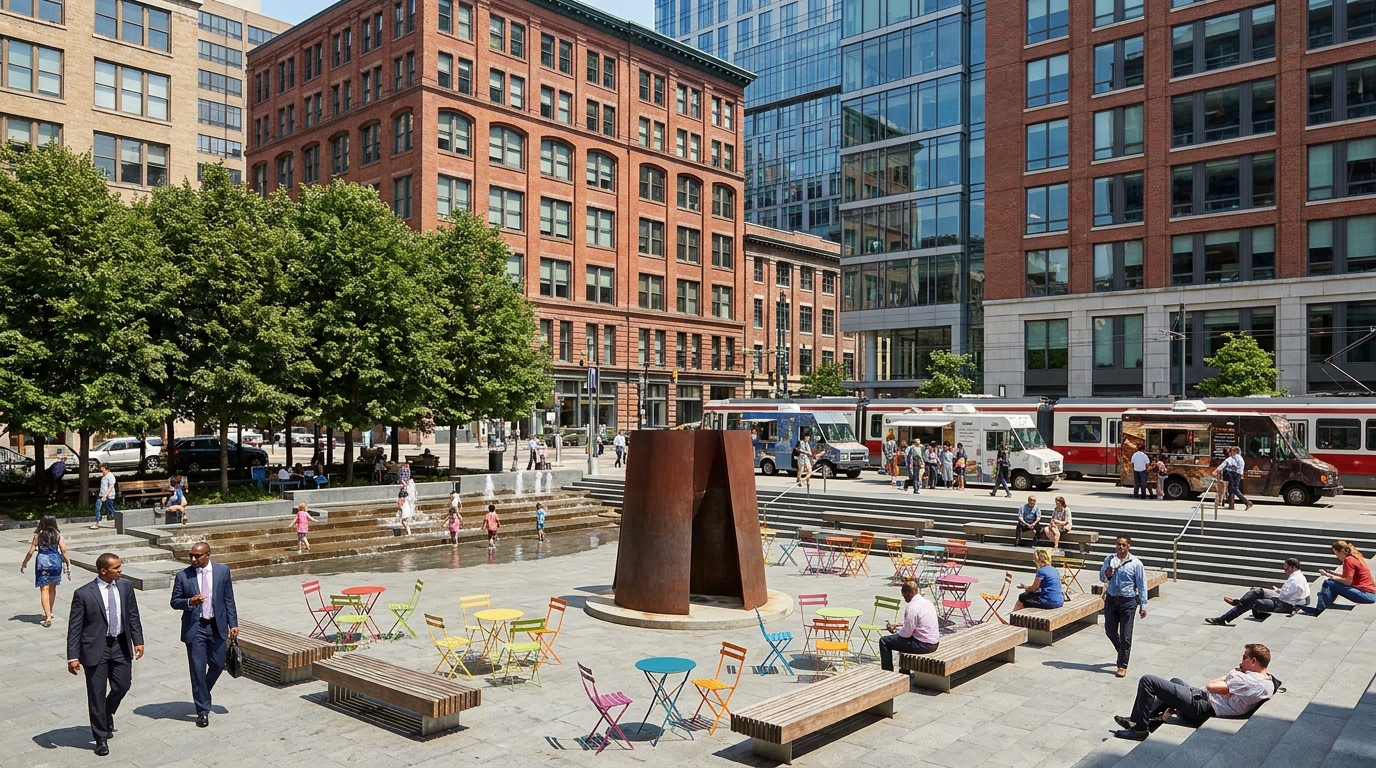
Public space planning works best when municipalities and developers operate with a shared understanding of value. Municipalities must provide clear policy direction, realistic design expectations, and coordinated infrastructure planning. Developers must recognize that public realm quality is not simply a concession to the approval process. It is a factor that strengthens marketability, project identity, and long term district performance. When both sides focus only on short term leverage, the outcome is usually mediocre space and avoidable conflict.
Policy clarity matters. If municipal plans articulate where growth is expected, what forms of public space are needed, and how those spaces connect to transit, schools, community facilities, and environmental systems, development outcomes improve. Unclear policy creates negotiation by exception, which often weakens spatial quality. Strong urban growth frameworks allow public and private actors to invest with greater confidence because the structure of the future neighbourhood is more legible.
Timing matters as well. Public spaces should be delivered in phases that align with resident need, not delayed until the end of multi year buildouts. Early public realm investment helps establish momentum, supports leasing and sales, and builds trust that community promises will be realized. In many projects, the first visible sign of neighbourhood quality is not a tower. It is a park edge, a widened sidewalk, a planted street, or a lively plaza that invites people to stay.
Finally, success requires discipline in design review and implementation. Too many projects lose public realm quality through value engineering, fragmented approvals, or weak follow through at the construction stage. Details such as tree soil volumes, seating placement, active frontages, lighting, and curb design have major impacts on actual usability. Strategic intent must survive delivery. Otherwise, even a strong master plan can degrade into a less functional reality.
The Future of Public Space Planning in Growing Cities
The future of urban development will be shaped by how cities manage growth under increasing pressure. Housing demand will remain intense. Infrastructure funding will remain constrained. Climate risks will intensify. Demographic patterns will continue to evolve. In this environment, public space planning will become even more important because it offers one of the clearest ways to improve urban performance across multiple dimensions at once. It can support health, mobility, social cohesion, land value, environmental resilience, and development acceptance in a single integrated framework.
We should expect the role of public space to expand beyond conventional parks and plazas. Streets will increasingly be designed as multipurpose civic corridors. School grounds and institutional lands may play a greater role in shared community access. Stormwater landscapes may double as recreational systems. Privately delivered but publicly accessible spaces may become more common in dense mixed use districts, though they will require careful governance to ensure openness and quality. The public realm of the future will be more layered, multifunctional, and performance driven.
Technology may inform planning decisions through better data on usage, heat, mobility, and maintenance needs, but the underlying principle will remain human. Public spaces must work for daily life. They must feel welcoming, legible, safe, and adaptable. The best cities will not be the ones that simply add density fastest. They will be the ones that convert growth into a richer shared urban experience.
That is why public space planning deserves serious attention from anyone involved in city building. It is where strategic planning becomes tangible. It is where residents measure whether development has improved their lives. And it is where the long term credibility of urban growth is often decided. If we want cities that are not only larger but better, then public space cannot be treated as secondary. It must be planned as essential urban infrastructure.
Conclusion
The importance of public space planning in urban development is difficult to overstate. It shapes whether density feels livable, whether housing functions as community, whether streets support movement and commerce, and whether growth strengthens or weakens the urban fabric. Strong public spaces produce social, economic, and environmental returns that extend far beyond their footprints. They are among the most effective tools available for creating vibrant communities in an era of rapid city growth.
For planners, developers, and municipalities, the lesson is clear. Public realm strategy should not be postponed until after the core decisions are made because it is one of the core decisions. The most successful projects and neighbourhoods are those that organize growth around shared spaces that people can use, value, and identify with. In practical terms, that means planning early, designing for connection, integrating resilience, and committing to long term stewardship.
Urban development is ultimately about more than adding buildings. It is about shaping how people live together over time. Public space is where that collective urban life becomes visible. When planned strategically, it can help cities grow with more dignity, more resilience, and more opportunity. That is not just good design. It is good city strategy.


No Comment! Be the first one.