

What Toronto’s Pandemic Bidding Wars Still Teach Investors About Timing
Every market cycle leaves behind a few transactions that become case studies, and Toronto’s 2020 to early 2022 frenzy produced more than its share. A tiny house in Little Italy selling for $1.8 million. A rundown garage in the Danforth area trading hands for $700,000 with no bedrooms or bathrooms attached to it. These are not quirky footnotes. They are data points about what happens to pricing discipline when capital is cheap and inventory is scarce.
Looking back at these sales with an investor’s eye tells a sharper story than nostalgia alone. Historically low interest rates and a shortage of listings did more than push prices up. They compressed the time buyers had to evaluate risk. Properties that would ordinarily sit on the market were gone in a day, and offers were going in without financing or inspection conditions. That is not a market functioning efficiently. That is a market where fear of missing out has replaced underwriting.
Take 7 Rosedale Rd., which sold for $6.6 million against a $4.5 million ask, a premium of roughly 47 per cent. At the time, that looked almost defensible against a neighbourhood average near $6.7 million. Rosedale averages have since pulled back toward $4.8 million. That does not mean the buyer lost money on that specific asset, but it is a reminder that paying a frenzy-era premium against a frenzy-era benchmark carries real downside if the benchmark itself was inflated.
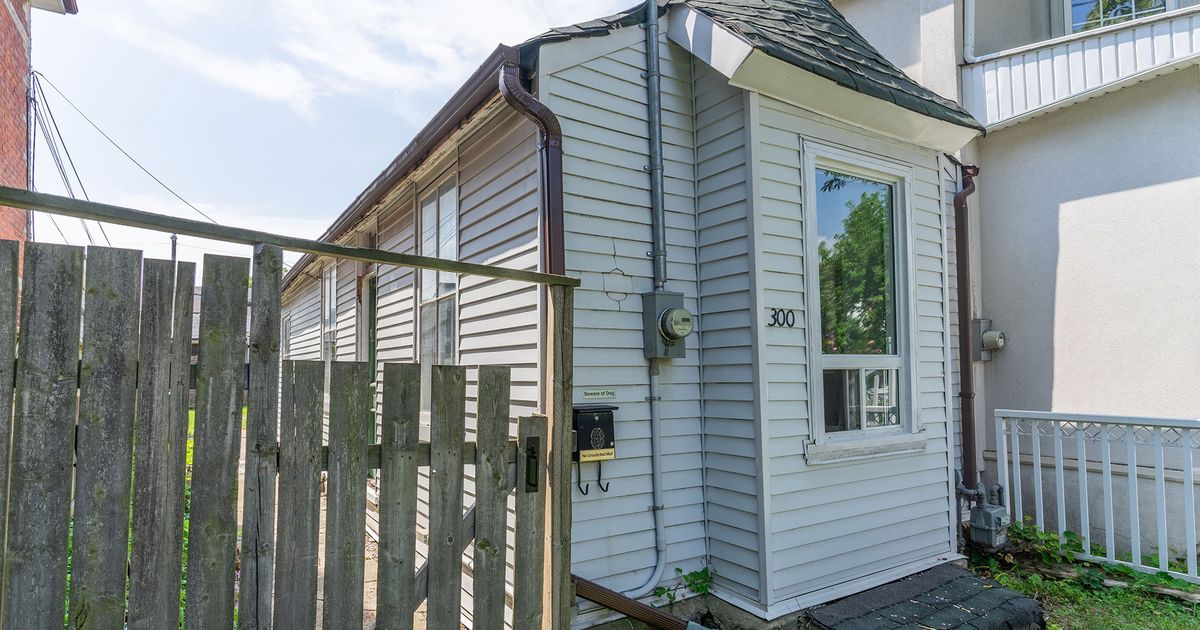
The Greenwood Avenue garage is perhaps the cleanest lesson of all. Bought for $700,000 as raw land value in 2021, it was redeveloped into a three-bedroom, three-bathroom home, then sat on the market for roughly a year before finally selling in 2025 for $1,560,750. More than double the original purchase price sounds like a win on paper, but factor in demolition, construction, carrying costs, and a full year of holding risk, and the actual return looks far thinner. That gap between headline price and realized profit is exactly where disciplined investors earn their keep, by running the full cost stack rather than just the before and after sale numbers.
Paying a premium during a frenzy only works if the underlying value holds once the frenzy ends.
There is also the matter of resale timing. 37 West Lynn Ave. sold in a single day in the pandemic market, then returned to market in 2025 and needed 11 days to sell below asking. Same property, same bones, a completely different negotiating position depending on which cycle a seller happened to list in. For investors, that is the core argument for underwriting on fundamentals rather than momentum. Interest rates, inventory levels, and financing conditions move in cycles, and the properties that looked like genius buys at the peak of a frenzy are the same ones that test an investor’s patience once rates and sentiment normalize.
The frenzy years are unlikely to repeat in exactly the same form, but the underlying mechanics, cheap money, tight supply, and compressed decision windows, are always worth watching for. Spotting those conditions early is worth more to a portfolio than any single bidding war story.
Source: blogTO