

Construction’s AI Reckoning Has a Lesson for Every Property Data Team
A summit about construction technology might seem like an odd place to look for signals about the future of property intelligence, but that is exactly where one of the clearest AI lessons of the year surfaced. At the AI & Data Transformation in Construction Summit Canada 2026 in Toronto, the takeaway was not about a flashy new model. It was about the unglamorous infrastructure sitting underneath every impressive demo: the data.
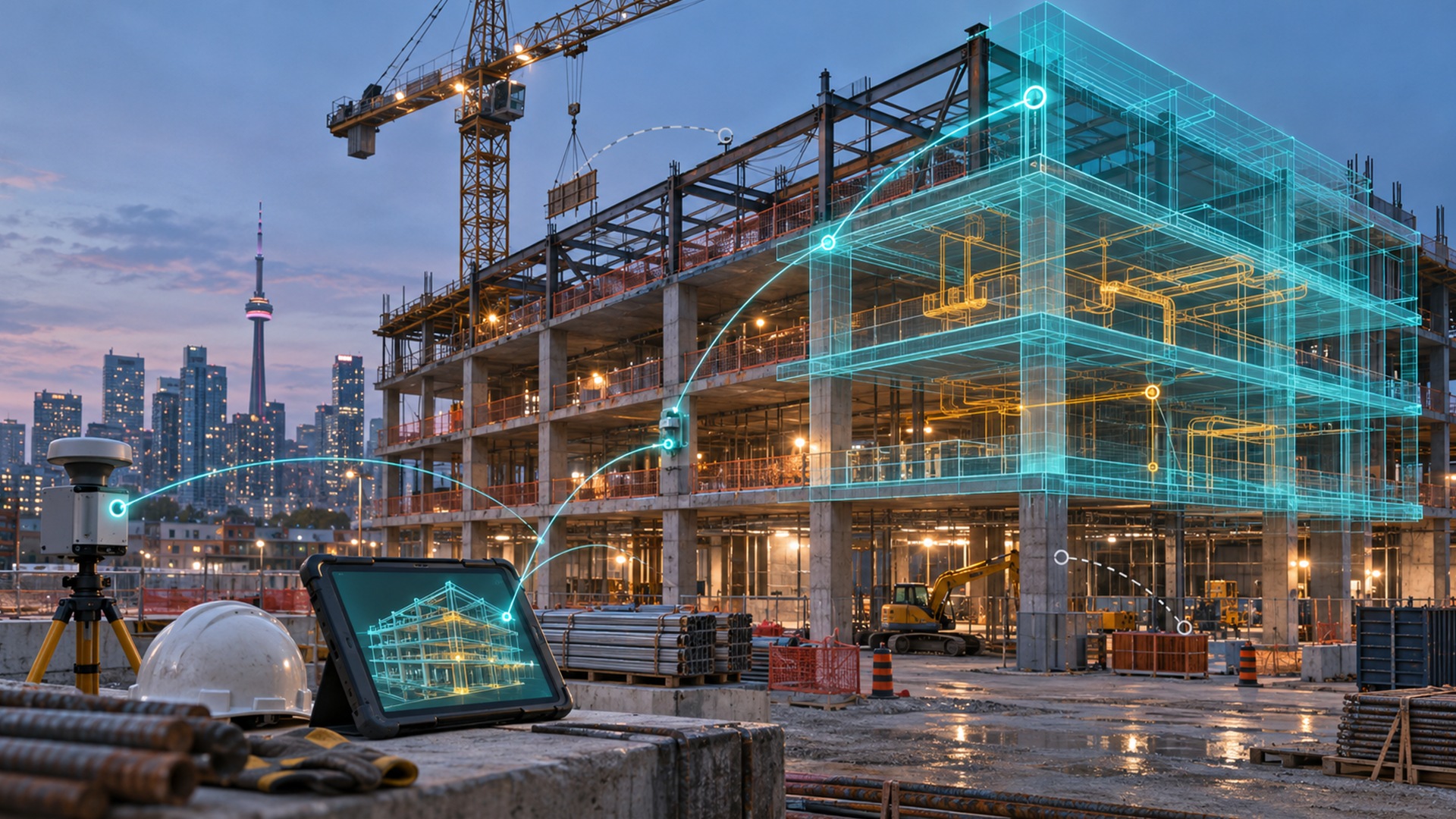
I read a lot of conference recaps that treat AI adoption as a procurement decision. This one was different. Attendees at the Toronto event kept circling back to a point that will feel familiar to anyone who has tried to build a forecasting model on messy housing data: a powerful model cannot rescue an organization from incomplete, inconsistent, or simply missing information. Digital twins were the clearest example discussed. A digital twin is only as current as the data feeding it, and if a contractor skips an update or an employee leaves without transferring what they knew, the model quietly drifts away from reality while still looking polished on screen.
That drift is the real risk in any data driven system, property analytics included. A dashboard that looks authoritative is not the same as a dashboard that is accurate, and the gap between the two rarely announces itself. It shows up later, in a decision that was made with confidence on top of a number that was never quite right.
Two other points from the summit translate directly into property technology. First, the model layer is getting less attention than it used to. One large language model, Claude, was reportedly the only general purpose system named repeatedly across the sessions, which suggests enterprise buyers are consolidating around tools that have already cleared internal trust and security reviews rather than shopping the open market. Second, the people doing the on the ground data entry, in construction’s case project managers, were described as part of the AI infrastructure itself, whether their job title says so or not. In property analytics, the equivalent is every agent, appraiser, and operations staffer whose manual inputs quietly determine whether a market model is tracking reality or tracking a stale approximation of it.
Data readiness is not a cleanup project finished before launch. It is an ongoing operational discipline, and that discipline is what separates a convincing demo from a dependable system.
There was also a sharper tone around return on investment. Capital that went into open ended AI experimentation is now expected to attach to a specific, measurable problem, whether that is cutting administrative work or catching schedule risk earlier. Property technology teams should read that as a preview of their own next budget cycle. The housing data tools that earn renewed funding will be the ones tied to a concrete decision, not the ones described only as innovation for its own sake.
The construction industry is, in effect, running the stress test the rest of real estate technology will eventually face: fragmented inputs, cautious buyers, and real consequences when a model is wrong. Property intelligence teams that take the data foundation seriously now will be the ones whose forecasts still hold up when the easy enthusiasm fades.
Source: Unite.AI, coverage of the AI & Data Transformation in Construction Summit Canada 2026