

Niagara’s Power Station Rebirth Shows How Heritage Sites Become Development Capital
Ground has broken on the $350-million transformation of the former Toronto Power Generating Station on the upper Niagara River, and for anyone who studies how cities put underused land to work, this is a textbook case worth watching closely. A decommissioned hydro plant, dormant since 1974, is being converted into a five-star boutique hotel, restaurants, event venues, an art gallery, and a museum, all while remaining in public ownership. That structure, not just the architecture, is the real story here.
Niagara Parks did not sell this asset. It ran a three-stage search for a private partner starting in 2021, selected Pearle Hospitality in 2023, pushed through technical studies and heritage assessments, and secured provincial authorization for a long-term lease by order-in-council in late 2024. Niagara Parks keeps the land and collects annual rent, while Pearle Hospitality and Society Developments carry the construction and operating risk. That is a financing model developers should take note of. It lets a public steward of heritage land unlock capital and private expertise without giving up the underlying asset, and it gives the private partners a defined, de-risked path to operate a premium hospitality product on a site they could never otherwise acquire.
The timeline matters too. Site preparation, including a cofferdam in the river, began in the summer of 2025, and Deltera Contracting, part of the Tridel Group, is now leading construction toward substantial completion in 2029. A four-year build on a National Historic Site with active waterfront conditions is not a small undertaking, and the sequencing from feasibility to lease authorization to groundbreaking shows the kind of patient, phased approach that large heritage conversions demand.
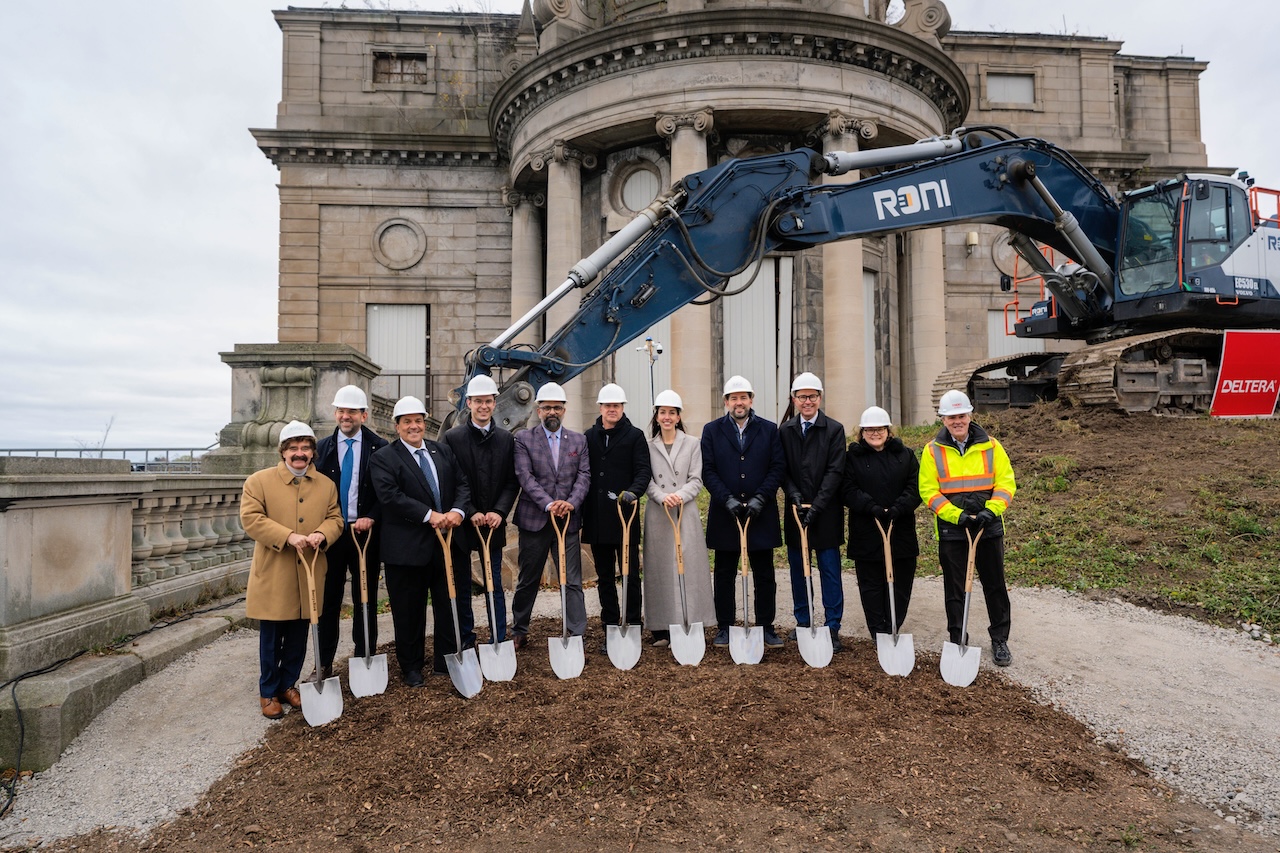
There is also a precedent at work. This is the second former hydroelectric station near Horseshoe Falls to be converted into a visitor attraction, following the Canadian Niagara generating station, which Niagara Parks opened to the public in 2021. One successful adaptive reuse appears to have built the confidence, and the regulatory comfort, to attempt a second, larger one. That is how development pipelines mature in a region: an early project proves the model, and the next one is bigger and more ambitious.
Niagara Parks will retain ownership of the property and receive annual rent, while private partners carry the construction and operating risk.
Ontario’s tourism minister framed the project around job creation, with Niagara Parks projecting up to 900 positions tied to the development. For a mid-size tourism economy like Niagara Falls, that kind of employment impact, layered on top of a hospitality asset with a built-in heritage story, is exactly the sort of project that justifies the complexity of a long-term public-private lease. Readers tracking where large-scale capital is heading in Ontario should treat this as a signal that heritage assets along the Niagara corridor are far from finished being unlocked.
Source: UrbanToronto, “Toronto Generating Station Redevelopment Breaks Ground in Niagara Falls”