


Hitachi’s $30M Toronto Signalling Hub Signals a New Phase for Transit-Led Growth
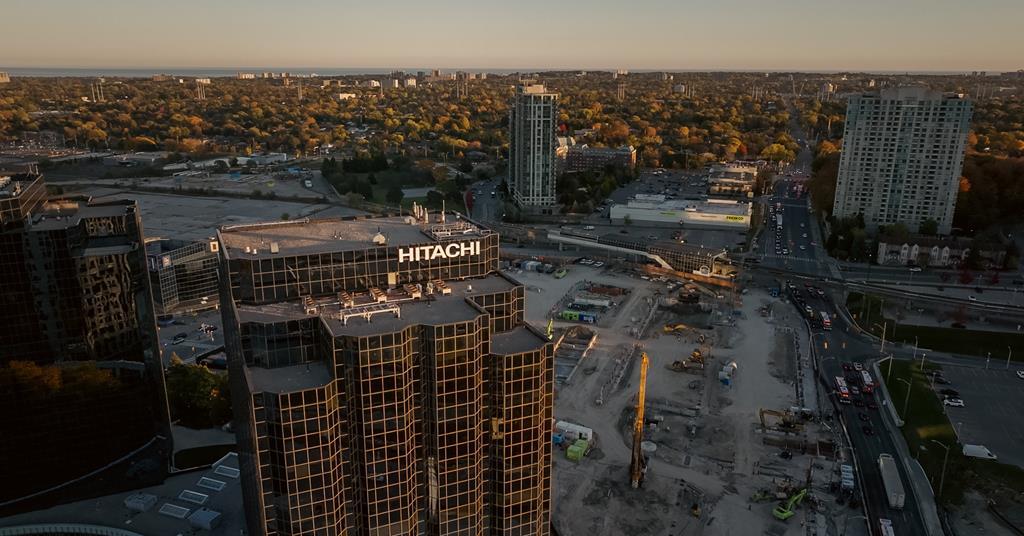
When a global rail technology firm commits $30 million and more than 1,100 jobs to a single Canadian address, the story is never just about the building. It is about what that investment tells us regarding where growth is heading next, and Hitachi Rail’s new Toronto technology centre, planted firmly in Scarborough, is a signal worth reading closely.
The new headquarters is the operational home for Hitachi Rail’s signalling work on the Ontario Line and the modernisation of TTC Line 2, two of the transit projects that will shape how Toronto densifies over the next generation. That is the part urban strategists should not skip past. Transit infrastructure and land value are never separate conversations. Every signalling upgrade, every new line, every modernised corridor changes the development math for the neighbourhoods it touches, raising feasibility for housing near stations that previously could not support the density.
Scarborough’s selection as the site is itself a strategic marker. Mayor Olivia Chow put it plainly when she noted that Hitachi chose Toronto, and specifically chose Scarborough, at a moment of global economic uncertainty. That kind of long term capital commitment, 125,000 square feet across 5.5 floors with over a third of the space dedicated to engineering simulation, does not happen on a short term bet. It happens where a company expects transit demand, population growth, and public investment to keep compounding for decades.
The $105 million programme behind the next generation of SelTrac digital signalling, now being engineered in Toronto with AI, 5G, and edge computing, also matters to anyone thinking about long term development feasibility. SelTrac already runs on more than 150 lines across 70 cities. Having the next version of that technology developed locally means Toronto’s transit backbone gets priority access to capacity improvements that directly affect how many people a line can move, and therefore how much density planners can justify around its stations.
Almost 50 years after we established our Canadian signalling business in Toronto, Hitachi Rail is demonstrating its continued ambition to lead the industry with investment in the new HQ and technology centre.
Premier Doug Ford framed the announcement around jobs and the scale of North America’s largest public transit expansion, and that framing matters for development planning too. Over 1,100 permanent roles, around 100 paid internships annually, and partnerships with Ontario Tech University and McMaster University are building a local talent pipeline that supports not just rail, but the broader engineering workforce that large scale housing and infrastructure projects depend on.
For anyone tracking where Toronto’s next wave of transit oriented development will concentrate, this is a data point worth filing away. Signalling capacity, government backing, and sustained private investment are converging on the same corridors that will determine land value and housing opportunity for the next decade.
Source: Global Railway Review