



Designing a room for a teenager is about so much more than choosing a paint color or keeping up with trends. A teen living space becomes the backdrop to everyday life during a period that is full of growth, self-discovery, emotional change, and new independence. It is where homework happens, where music plays through headphones after a long day, where private thoughts settle, and where a young person begins to shape a stronger sense of who they are. When a room feels supportive, personal, and calming, it can quietly help a teenager feel more grounded at home.
Table Of Content
- Why Teen Living Spaces Matter More Than We Often Realize
- Start with Conversation, Not Decoration
- Designing for Identity and Self-Expression
- Creating Zones in a Room That Has to Do Everything
- How to Make a Study Zone Feel Inviting
- Sleep-Friendly Design Is One of the Kindest Choices You Can Make
- Rethinking Screens in the Bedroom
- Why Organization Feels Emotional, Not Just Practical
- Storage That Supports Real Life
- Designing for Privacy Without Losing Family Connection
- Color, Texture, and Atmosphere: The Emotional Language of a Room
- Small Rooms, Shared Rooms, and Rental Homes Can Still Feel Special
- Budget-Friendly Ways to Make a Teen Room Feel Better Fast
- Common Mistakes That Can Undermine Comfort
- A Gentle Process for Refreshing a Teen Room
- Final Thoughts: The Best Teen Rooms Feel Respectful
- Quick Design Priorities for Teen Living Spaces
That emotional side of design matters deeply. Adolescence is one of the key periods for identity formation, and daily environments play a meaningful role in how that identity is explored and expressed. A teen’s room can function as a small personal world inside the larger household, a place where they feel known, respected, and able to make choices. Even simple updates can communicate something powerful to a young person: you belong here, your needs matter, and your comfort is worth creating space for.
At the same time, teen spaces need to work hard. In many homes, a bedroom has to support sleeping, studying, relaxing, socializing, and storing a growing number of belongings all within one footprint. Research consistently points to the importance of bedroom conditions like light, noise, temperature, clutter, and screen habits in shaping sleep and well-being. That means the most successful teen room is not necessarily the most expensive or the most styled. It is the one that feels calm enough to rest in, flexible enough to live in, and personal enough to grow with.
This guide looks at how to create that kind of room with warmth, practicality, and emotional intelligence. Whether you are a homeowner redesigning a bedroom from scratch or a renter looking for reversible changes, the goal is the same: to create a living space that helps a teenager feel comfortable, capable, and at home.
A well-designed teen living space supports five core needs: restorative sleep, a personal sense of identity, everyday organization, meaningful privacy, and room to grow. In practice, that means a room with light control and comfortable bedding for sleep; a few personal touches like art, photos, or a themed shelf for self-expression; simple, habit-based storage so belongings have a home; boundaries — even modest ones — that respect a teen’s need for a personal retreat; and a flexible, neutral base that can evolve as interests change. The most successful teen rooms are not the most expensive or trend-driven ones. They are the ones that feel calm enough to rest in, organized enough to use daily, and personal enough for a teenager to recognize as truly their own space within the family home. That kind of design does more than look nice — it gives a teenager a stable base to return to during a period of rapid change.
A well-designed teen room does not need to be perfect. It simply needs to feel safe, personal, and supportive of the life happening inside it.
Why Teen Living Spaces Matter More Than We Often Realize
Teen years are marked by constant movement between dependence and independence. Young people are figuring out what they like, how they want to present themselves, what helps them feel calm, and where they fit within the family and the wider world. Because of that, a bedroom is not just another room. It can become a private retreat, a creative zone, a study area, and a place to recover from the emotional intensity of school, friendships, family expectations, and social media.
Developmental research suggests that identity formation is one of adolescence’s central tasks. Daily contexts, including close relationships and home life, shape how that identity develops. When a teen has some control over their environment, even in small ways, the room can help support autonomy and confidence. A pinboard filled with concert tickets, a shelf of favorite books, a carefully chosen lamp, or a desk arranged in a way that feels right to them can all become subtle acts of self-definition.
Privacy also becomes more important during this life stage. That does not mean teens want to disconnect from family or shut the world out. More often, it means they benefit from a personal retreat where they can regulate their emotions, think quietly, and feel ownership over a part of the home. In smaller homes and shared rooms, that sense of retreat may need to be created through design rather than square footage, but it still matters just as much.
There is also a practical health side to all of this. Bedroom factors like noise, poor lighting control, uncomfortable temperature, and screens are linked with poorer sleep outcomes for adolescents. Because sleep affects mood, concentration, resilience, and daily functioning, thoughtful room design becomes part of a family’s overall wellness strategy. Comfort is not a luxury in this context. It is part of helping a teen feel and function better.
Start with Conversation, Not Decoration
Before buying furniture or choosing wall art, it helps to begin with listening. The most emotionally supportive teen rooms are usually the ones shaped around the person living in them rather than around a fixed design idea. Ask how they use the room now and how they wish it felt. Some teens want a cocoon-like space that feels quiet and soft. Others want something brighter and more energetic that reflects hobbies, music, creativity, or sport. Most want a mix of comfort and self-expression.
These early conversations can reveal the true needs of the room. One teen may be struggling to stay organized and need easier storage systems. Another may be overwhelmed by visual clutter and need fewer open surfaces. Someone who shares a room may crave stronger boundaries, while a teen with a demanding school load may want a desk area that feels separate from the bed. When the design process starts with daily routines and emotions rather than objects, the final room feels more personal and far more useful.
It can also be helpful to talk about the atmosphere they want to come home to. Ask what makes them feel settled. Is it softness, color, privacy, order, light, music, or a place to sit that is not the bed? These answers often guide better decisions than trend forecasts do. A room that matches a teen’s real habits and preferences is far more likely to support well-being over time.
Designing for Identity and Self-Expression
One of the most meaningful things a teen room can offer is evidence of identity. Teenagers are in a constant process of becoming, and their room can help them try out, refine, and display parts of who they are. Personalization is not simply decorative. It can be emotionally affirming, especially when it tells a young person that they are trusted to shape their own surroundings.
That does not mean every surface has to be filled. In fact, too much visual stimulation can make a room feel restless instead of expressive. The key is to make room for meaningful details while still protecting a sense of calm. A few larger pieces, such as framed art, a removable mural, a gallery wall of photography, or a dedicated shelf for treasured objects, often feel stronger and more intentional than a cluttered mix of everything at once.
Consider choosing one or two clear channels for self-expression. That could be a magnetic wall strip for swapping art and photos, a bulletin board above the desk, a display ledge for books and ceramics, or bedding in colors that feel distinctly theirs. Removable wallpaper, peel-and-stick murals, and renter-friendly decals are especially useful for families who need flexibility. These details allow a room to evolve without requiring a full redesign every year.
It is also wise to leave some open-ended space. Teens change quickly, and their room should be able to change with them. A neutral foundation with a few easy-to-update layers often works beautifully. Think of the larger pieces, like the bed, desk, rug, and curtains, as the calm base. Then let personality come through in art, linens, lighting, storage accessories, and small decorative choices that can shift over time.
Creating Zones in a Room That Has to Do Everything
Modern teen bedrooms often serve many purposes at once. They are sleeping spaces, homework stations, video call backgrounds, reading corners, social hangouts, creative studios, and quiet retreats. In smaller homes, this can feel like a challenge, but thoughtful zoning can make even one room feel more manageable and emotionally balanced.
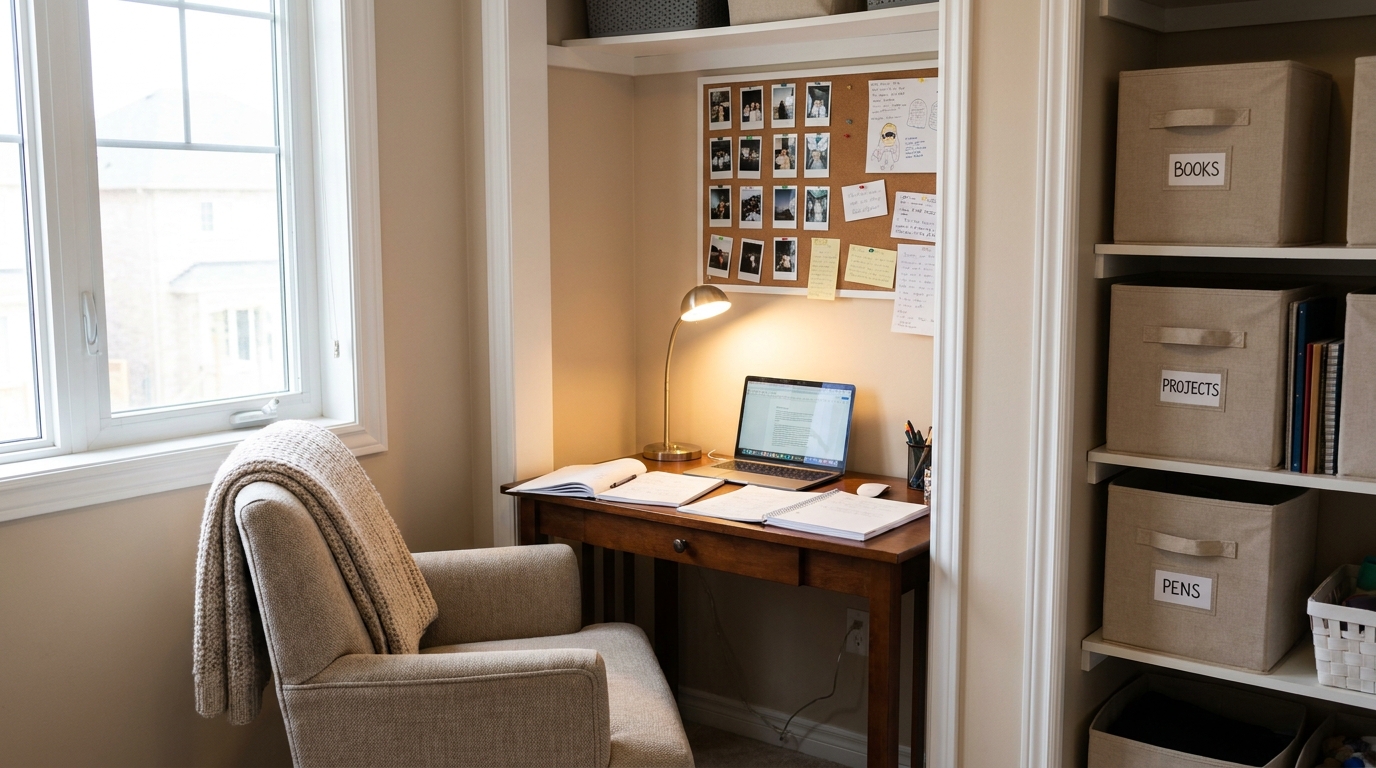
Start by identifying the room’s main functions. Most teens need at least a sleep zone, a study zone, and a decompression zone. These do not require separate rooms or a lot of extra furniture. They simply need enough visual distinction that each activity feels supported. A desk placed near natural light can define a study area. A chair and floor lamp can suggest a reading or music-listening corner. Layered bedding and softer lighting can help the bed feel dedicated to rest rather than to everything all at once.
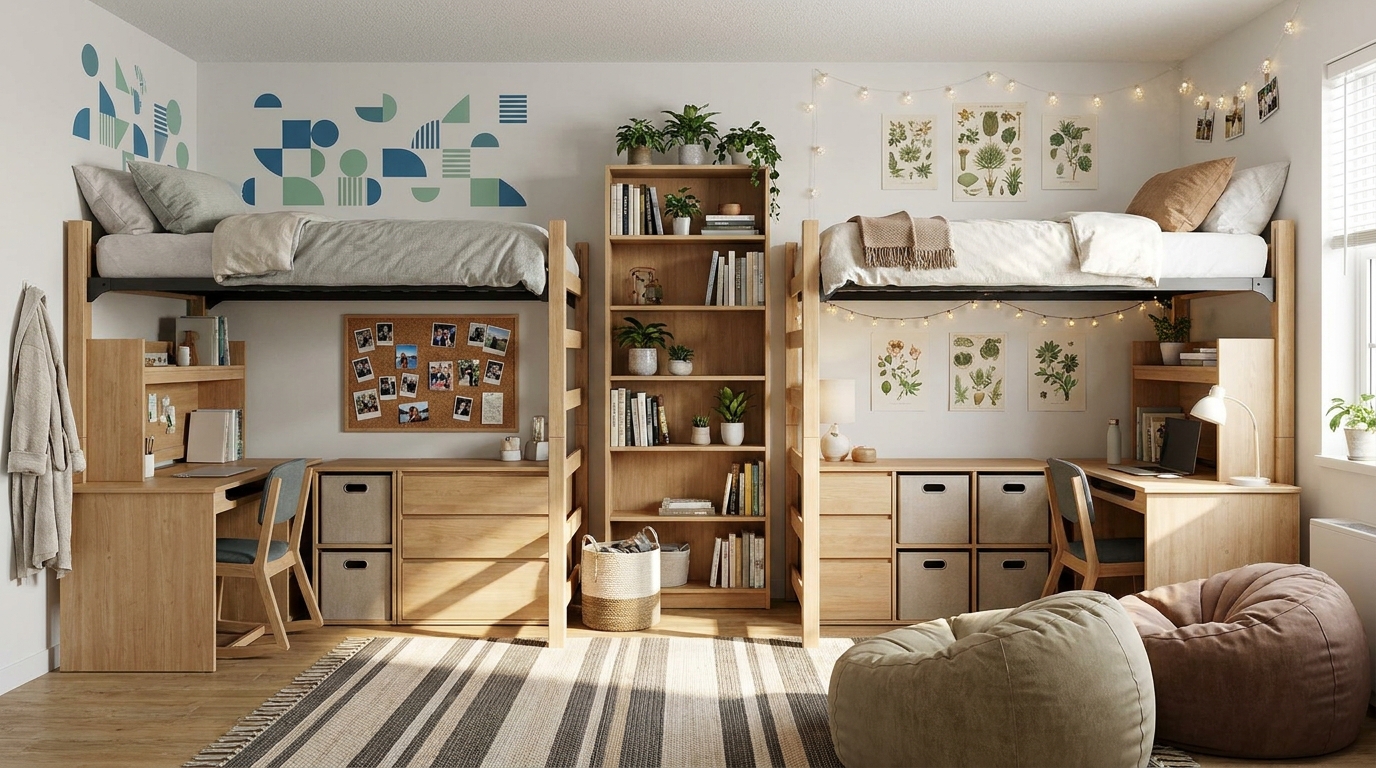
Rugs, lighting, shelving, and furniture placement can all create subtle boundaries. A small bookcase can divide space in a shared room. Curtains or fabric panels can help soften and separate areas without making the room feel closed in. Even changing wall color slightly within one zone, or using a different texture behind a desk, can make the room feel more intentionally organized.
This kind of zoning supports emotional ease because it reduces the feeling that everything is happening everywhere at once. When there is a place to focus, a place to rest, and a place to unwind, the room begins to support transitions between school stress, free time, and sleep. That gentle structure can make daily life feel smoother for both teens and parents.
How to Make a Study Zone Feel Inviting
A study area should feel practical, but it should not feel punishing. Teens are more likely to use a workspace consistently when it feels comfortable, attractive, and easy to maintain. Choose a desk that fits the room without crowding it, and prioritize a chair with real support if possible. Good task lighting matters too, especially in darker winter months or homes where bedrooms do not get strong daylight.
Try to keep the desk visually calm. A small tray for school supplies, a drawer unit, or a couple of baskets can keep essentials close without letting papers spread everywhere. If your teen likes visual inspiration, a pinboard or framed collage above the desk can add energy and personality without creating clutter on the work surface itself. The goal is a workspace that encourages focus but still feels like part of a home.
Charging solutions matter here as well. Rather than letting cords collect across the bed and floor, create a simple charging station at the desk or on a nearby shelf. This supports better organization and can also help with digital boundaries later in the evening. A study zone that is functional, pleasant, and clearly defined often lowers friction around homework and gives teens a little more ownership over their routines.
Sleep-Friendly Design Is One of the Kindest Choices You Can Make
Teenagers need restorative sleep, yet many struggle to get enough of it. Bedroom design cannot solve every sleep issue, but it can absolutely make a difference. Research consistently links factors such as noise, light, temperature, uncomfortable conditions, and screens with poorer sleep outcomes for adolescents. That means sleep-friendly design is not just a nice extra. It is part of creating a room that truly supports health and everyday resilience.
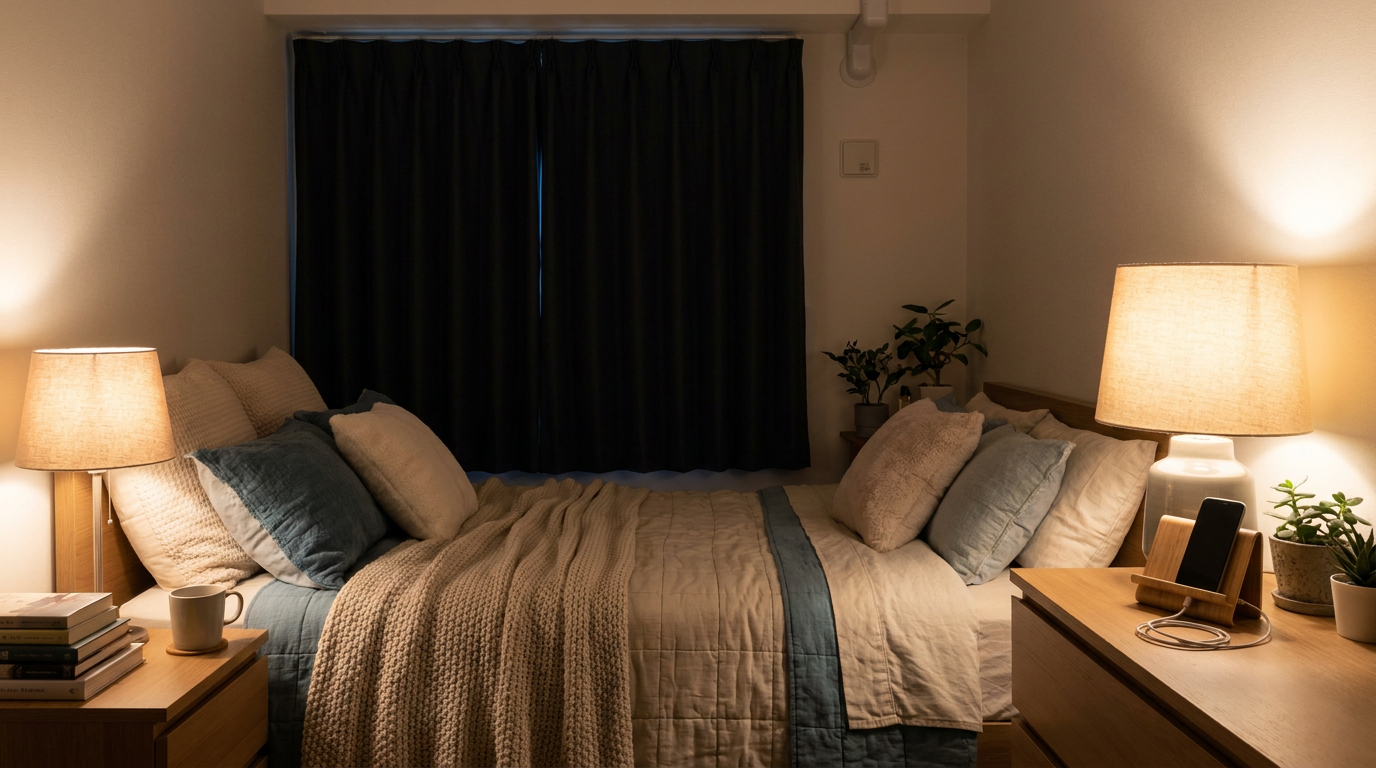
Begin with the bed itself. Supportive mattresses, breathable bedding, and pillows that suit the sleeper’s needs are worth prioritizing because they affect comfort every single night. Layered bedding can also make the room feel emotionally comforting. There is something deeply regulating about a bed that looks inviting at the end of the day, with soft sheets, a textured throw, and enough warmth without overheating.
Light control is another major factor. Blackout curtains or lined drapes can be especially helpful for teens who are sensitive to early morning light or who need support winding down in the evening. Soft bedside lighting is preferable to harsh overheads at night because it helps create a quieter atmosphere. Dimmable lamps, warm bulbs, and a small reading light can make the room feel gentle and restful.
Temperature and airflow deserve attention too. A room that is stuffy or too hot often feels uncomfortable before a teen even realizes why. Good ventilation, a fan, breathable window treatments, and uncluttered air pathways can improve comfort in a simple, noticeable way. If outside noise is a problem, rugs, heavier curtains, upholstered pieces, and even a white-noise solution can help soften the room acoustically.
Rethinking Screens in the Bedroom
Digital well-being has become a growing part of teen room design, and for good reason. Screens in bedrooms are linked to sleep disruption, overstimulation, and irregular routines. That does not mean families need perfection or total restriction. It simply means the room should support better habits where possible, especially at night.
One of the easiest shifts is to create a charging area away from the bed. A shelf, desk, or small station near the door can act as a device parking spot in the evening. This creates some distance between sleep and scrolling without making technology feel forbidden. It also reduces tangled cords, lost chargers, and devices heating under pillows or blankets.
Lighting choices can support this effort too. If a teen likes LED accents, choose warm, dimmable versions and keep them subtle rather than intense. The room should still be able to transition into a quiet, darker mode at night. Sleep-friendly design is less about strict rules and more about giving the body cues that rest is allowed to happen here.
Why Organization Feels Emotional, Not Just Practical
Adults often think about organization in terms of tidiness, but for teens it is closely tied to stress, overwhelm, and daily ease. Research on household chaos and bedroom clutter suggests that disorganization can be associated with higher stress, emotional exhaustion, and worse mental-health-related outcomes. That does not mean every messy room is cause for alarm. It does mean that a room without workable systems can quietly make life harder.
A common misconception is that a messy room automatically reflects laziness or defiance. In reality, clutter can be a sign that the storage plan does not match the person using it. If there is nowhere easy to put laundry, school papers, sports gear, chargers, cosmetics, art supplies, or books, things will naturally collect in piles. The solution is often less about discipline and more about designing for actual habits.
Good organization for teens should be simple, visible when needed, and easy to reset. Deep bins that swallow everything rarely help unless they are clearly labeled and genuinely convenient. Open baskets for everyday items, a hamper where clothes actually come off, hooks near the door, trays for small objects, and under-bed drawers can all reduce friction. Closed storage is useful for visual calm, while a few open shelves can hold the things a teen wants to see and reach often.
It also helps to think in daily routines rather than categories alone. Where does the backpack land after school? Where do headphones go at night? Where do half-worn clothes sit? Where is the best place for water bottles, books, or skin care? When the answers are built into the room, organization starts to feel natural instead of nagging.
Storage That Supports Real Life
The best storage systems are the ones that make a room easier to live in, not just nicer to photograph. A nightstand with a drawer can hide charging cords and journals while keeping essentials nearby. A bed with storage underneath can make a small room feel far less cramped. Slim wall shelves can add function without taking floor space, and over-door organizers are particularly useful in rental homes where every inch matters.
Try to give each major category a home: school items, clothing, laundry, hobbies, keepsakes, and tech. This does not need to look rigid. It simply means the room has a little structure beneath its personality. Once that structure exists, the room feels calmer because objects are no longer competing for the same surfaces.
Visual quiet is especially important if a teen feels easily overstimulated. In that case, choose storage that conceals more than it displays, and keep decorative surfaces intentional rather than crowded. A calmer room can support bedtime routines, make morning starts smoother, and reduce the background stress that clutter often creates.
Designing for Privacy Without Losing Family Connection
As teenagers grow, they often become more sensitive to personal space and control. This is a healthy part of development. Privacy is not the same as isolation. In many cases, having a room that feels like a personal retreat actually makes it easier for a teen to stay connected to family because they know they have a place to decompress when they need it.
Respect for privacy can be built into design in subtle ways. A room with a lock-free but knock-respected door policy, clear storage ownership, and designated personal surfaces sends a message of trust. In shared rooms, privacy can be supported with room dividers, separate task lights, headphones, storage zones, and distinct wall areas for each person’s style. These details help reduce conflict because each teen feels seen within the shared arrangement.
If a bedroom doubles as a guest room or play space for younger siblings, it becomes even more important to preserve one area that is clearly the teen’s own. This might be a desk, a display shelf, a corner chair, or a bedside zone that others are expected to respect. Even a modest boundary can help a young person feel that their individuality has a secure place in the home.
Privacy during adolescence is not about pushing family away. It is often about having enough personal space to return to family life feeling calmer and more like oneself.
Color, Texture, and Atmosphere: The Emotional Language of a Room
Every room communicates something before a single word is spoken. Color, texture, and lighting shape how a space feels in the body, and teens are often especially sensitive to atmosphere even if they cannot always describe it directly. A room that feels too stark can seem cold. One that is too busy can feel agitating. The goal is to strike a balance between expression and ease.
Calm palettes are popular for a reason. Soft neutrals, muted greens, dusty blues, warm terracottas, gentle mauves, and natural wood tones often create a grounding effect that makes a room feel restful. That does not mean teen rooms need to be beige or restrained. Stronger colors can still work beautifully when they are used with intention, perhaps as accents through art, bedding, one painted wall, or decorative accessories rather than on every surface at once.
Texture adds warmth in a way that is often more emotionally satisfying than extra decor. A tufted rug, washed cotton bedding, a chunky knit throw, linen curtains, woven baskets, and upholstered seating all help a room feel layered and inviting. These tactile elements matter because comfort is physical as well as visual. They encourage the room to feel lived in, not staged.
Lighting may be the most underrated comfort tool of all. A single overhead light rarely creates the atmosphere a teen room needs. Layering bedside lamps, desk lighting, and perhaps one soft ambient light allows the room to adapt throughout the day. Morning study, afternoon hobbies, and bedtime reading all ask for something slightly different. The right lighting gives a room emotional range.
Small Rooms, Shared Rooms, and Rental Homes Can Still Feel Special
Not every family has a large bedroom to work with, and not every home allows permanent changes. The good news is that emotional comfort does not depend on square footage or custom millwork. In fact, some of the most successful teen spaces are the ones that use thoughtful, flexible ideas to create a strong sense of ownership within practical limits.
In small rooms, choose furniture that does more than one job. A bed with drawers, a desk that doubles as a vanity, a bench with storage inside, or nesting tables can all save precious space. Vertical storage is especially helpful because it keeps the floor area more open, which makes the room feel less crowded. Mirrors can also increase the sense of light and space when placed thoughtfully.
For renters, reversible design tools are invaluable. Removable wallpaper, peel-and-stick borders, plug-in sconces, framed fabric panels, temporary hooks, and decorative lighting can all add personality without risking a security deposit. Textiles do a lot of emotional work in rental spaces because they are easy to change and instantly soften a room. Curtains, bedding, rugs, and cushion covers can transform the mood more than many people expect.
Shared rooms require an extra layer of care. In these spaces, comfort often comes from creating fairness and distinction. Give each teen a defined zone, separate storage where possible, and opportunities to personalize their own side. Matching everything is not always necessary. Sometimes the room feels more harmonious when each person has their own color accent or wall area within a coordinated overall palette.
Budget-Friendly Ways to Make a Teen Room Feel Better Fast
It is easy to assume that a meaningful room update requires a full makeover, but many of the most effective changes are relatively affordable. A new duvet cover, better blackout curtains, improved lighting, a larger laundry hamper, a second shelf, or a desk reconfiguration can have a real impact on how a room feels day to day. Comfort tends to come from the cumulative effect of practical choices rather than from one dramatic purchase.
If you are working with a budget, focus first on what influences daily experience most. Sleep comfort, lighting, storage, and privacy are often better investments than purely decorative additions. Once those foundations are in place, small personal details can go much further. A room feels special when it works well and reflects the person who lives in it.
Secondhand furniture can be especially useful in teen rooms because it often offers better quality at a lower price and can be customized with paint, new knobs, or styling. A vintage nightstand, a simple bookshelf, or an older desk can feel fresh when paired with modern textiles and personal accessories. This approach also supports a room that feels layered and individual rather than mass-produced.
Common Mistakes That Can Undermine Comfort
One of the most common mistakes in teen room design is focusing so heavily on appearance that the room stops supporting real life. A beautiful room that has nowhere for laundry, no comfortable study chair, and too much visual stimulation can quickly become frustrating. Style matters, but it works best when it sits on top of comfort and function.
Another frequent misstep is assuming more decor automatically creates more personality. In reality, overstimulation can chip away at the calm a teen needs for sleep and decompression. Visual clutter, intense lighting, too many open shelves, and constant device glow can make a room feel tiring rather than expressive. Editing often creates a more emotionally supportive result.
It is also easy to overlook the importance of a teen’s own preferences. Rooms designed entirely by adults may look polished, but they can fall flat if the teen does not feel represented in the result. Collaboration is key. Even when parents are guiding the budget and the broader design direction, allowing a teenager to make meaningful choices helps the room feel like theirs.
A Gentle Process for Refreshing a Teen Room
If the idea of redesigning a teen space feels overwhelming, it helps to move in stages. Start by observing what is not working. Is sleep disrupted? Is clutter building up on every surface? Does the room feel childish, impersonal, or too crowded? Then think about what a better daily experience would look like. This creates a more grounded plan than shopping first and hoping the pieces solve the problem.
A useful order is to begin with clearing and rearranging, then improve comfort, then add storage, and finally layer in personality. Rearranging furniture alone can open better pathways, improve natural light at the desk, or separate the bed from the homework zone. From there, better bedding, curtains, lighting, or a chair may have a bigger effect than expected. Once the room functions more smoothly, personal details become the finishing touch rather than a distraction from the basics.
It is also important to leave room for change. A teen room should not feel frozen in time. Interests shift, schedules evolve, and what feels comforting at fourteen may feel different at seventeen. Design with enough flexibility that the room can grow along with the person using it. That adaptability is part of what makes a space emotionally supportive in the long term.
Final Thoughts: The Best Teen Rooms Feel Respectful
At its heart, designing a teen living space is an act of care. It is not about producing a perfect room or proving a certain style sensibility. It is about recognizing that home can shape how a young person feels in subtle but lasting ways. A room that supports sleep, self-expression, organization, privacy, and everyday comfort tells a teenager that their inner world matters.
The most successful teen spaces usually share one quality above all else: respect. They respect a young person’s changing identity, need for retreat, desire for ownership, and very real need for a room that functions across many parts of life. Whether the space is large or small, owned or rented, shared or private, that respect can be expressed through thoughtful choices that make the room easier and nicer to live in.
In the end, comfort is not just softness or style. It is the feeling of being able to exhale in your own space. For a teenager moving through one of life’s most formative chapters, that feeling can be quietly transformative. And for families, creating it is one of the most meaningful design projects a home can hold.
Quick Design Priorities for Teen Living Spaces
- Support sleep first with comfortable bedding, better light control, airflow, and reduced device clutter near the bed.
- Create simple zones for rest, schoolwork, and downtime so the room feels easier to use.
- Build organization around habits with storage that fits real daily routines.
- Protect privacy and ownership through personal surfaces, clear boundaries, and respectful design choices.
- Let personality show through flexible, renter-friendly layers that can evolve over time.
- Choose atmosphere intentionally with warm lighting, tactile materials, and a palette that feels calming and personal.
A teen room does not need to impress everyone who sees it. It only needs to truly support the person who comes home to it each day. When that happens, the room becomes more than a place to sleep. It becomes a steady, comforting part of growing up.



No Comment! Be the first one.