



Subdivision investments occupy a distinct place in real estate because they sit at the intersection of land strategy, planning, infrastructure, and market timing. At their core, these projects involve acquiring land, securing the legal and planning approvals to divide it into multiple lots, and then capturing the value created through lot sales, new housing delivery, or long-term holds. For investors, the appeal is straightforward: when subdivision is executed well, the value of the finished lots can materially exceed the cost of the raw or underutilized land plus the cost of approvals and servicing. That spread is where wealth can be created, but it is never automatic.
Table Of Content
- What does subdivision investing really mean?
- Why are subdivision investments such a powerful wealth-building tool?
- The market forces making subdivision strategy more relevant
- What are the core economics of a subdivision deal?
- Approvals, entitlements, and why local knowledge is a competitive advantage
- How to evaluate a potential subdivision site
- What subdivision strategies can investors use?
- What are the biggest risks in subdivision investing?
- Best practices that separate strong subdivision investors from speculative buyers
- Subdivision investments in Canada: why policy and fees matter so much
- A practical roadmap for getting started
- Final thoughts: unlocking value through strategy, not speculation
In today’s market, subdivision investing has become both more attractive and more complex. Housing shortages, scarce serviced land, and sustained demand in many growth corridors have increased interest in land development strategies. At the same time, tighter regulations, development charges, infrastructure obligations, and longer approval timelines have made poor underwriting far more expensive. Investors who approach subdivision as a disciplined development business can uncover significant opportunity, while those who treat it like passive land flipping often underestimate the real drivers of return.
This article provides a practical and strategic guide to subdivision investments, with a focus on how sophisticated investors assess potential, control risk, and improve execution. The goal is not simply to explain what subdivision is, but to show why approvals, servicing, municipal policy, and end-demand matter just as much as the land itself. In a market where policy reform and housing supply pressures are reshaping the economics of development, subdivision remains one of the clearest ways to create value through planning and intelligent capital allocation.
What does subdivision investing really mean?
Subdivision investing is the process of acquiring a parcel of land and navigating a regulated approval pathway to split it into smaller legal lots that can be sold or developed independently. The concept is often misunderstood because it sounds simpler than the process actually is. The resulting lots may be intended for detached homes, townhomes, missing-middle housing, mixed-use product, or future development phases depending on zoning, servicing capacity, and local planning objectives. The value uplift comes from transforming a single lower-utility asset into multiple more marketable assets.
In Canada, subdivision is not just a surveying exercise. It is a formal land-use and development process governed by provincial legislation, municipal bylaws, planning frameworks, and approval authorities. Ontario’s planning guidance makes clear that subdivision approval is a formal process, and British Columbia notes that approving officers are statutory decision-makers who must ensure compliance with legislation and local bylaws. Saskatchewan guidance also illustrates that servicing obligations such as roads can materially affect cost and feasibility, reinforcing a central truth for investors: land value is deeply connected to what can legally and physically be done with the site.
That is why subdivision investing should be viewed as an entitlement and infrastructure business as much as a land acquisition business. The investor is not simply buying dirt. The investor is buying a set of possibilities, each of which depends on local planning policy, engineering realities, utility access, environmental conditions, financing structure, and final market absorption. The spread between purchase price and exit value only becomes meaningful if those variables are understood early and managed well throughout the project lifecycle.
Why are subdivision investments such a powerful wealth-building tool?
The strategic strength of subdivision investing lies in value creation rather than pure speculation. A standard property investment may rely heavily on market appreciation, rental growth, or operational improvements. A subdivision project can create equity through a deliberate process of rezoning, planning, lot design, servicing, and legal registration. In other words, investors are not waiting passively for value to appear. They are actively manufacturing a more valuable end product from a less efficient starting point.
This distinction matters because active value creation can outperform in markets where existing built assets are priced aggressively. When developed lots are scarce and housing demand is supported by population growth, employment, and infrastructure expansion, a well-located subdivision can meet a real market need. CMHC’s research has shown that acquisition of raw land remains a top strategy across Canada, which reflects the continued investor belief that land development offers meaningful upside when there is a clear path to product delivery. In many regions, the scarcity of serviced lots has become an opportunity in itself.
Subdivision investing also offers flexibility in exit strategy. An investor may choose to sell approved lots to builders, build homes for sale, partner with an operator, or hold completed lots for future appreciation if market timing supports that decision. That optionality can be powerful because it allows capital to respond to changing conditions rather than being locked into one path. However, flexibility only adds value when the original project has been structured correctly and the approvals, servicing, and financing assumptions are realistic.
Perhaps most importantly, subdivision can compound wealth because it converts a single acquisition into multiple monetizable outcomes. A parcel purchased at one basis can eventually become ten, twenty, or one hundred marketable lots, depending on site size and local regulations. That multiplication effect is why experienced investors pay close attention to lot yield, frontage requirements, road layout, utility access, and entitlement probability. Small changes in yield and cost assumptions can have a disproportionate effect on project returns.

The market forces making subdivision strategy more relevant
Several market forces are pushing subdivision investments into sharper focus. Housing affordability pressure remains intense across many Canadian markets, and supply constraints continue to shape both rental and ownership sectors. CMHC’s recent housing supply reporting has noted that although housing starts have increased, land scarcity and high costs are weighing on certain forms of construction and limiting supply growth in important segments. For investors, this creates a clear signal: deliverable land and approved lots have become more strategic, not less.
At the same time, public policy is increasingly focused on unlocking housing supply. Efforts such as the Housing Accelerator Fund and broader municipal reform initiatives are encouraging faster approvals, intensification, and more efficient land use. While policy does not remove development risk, it can improve project viability where approval bottlenecks or outdated planning frameworks have constrained supply. Investors who understand local policy direction can sometimes identify opportunity before pricing fully adjusts.
There is also a growing shift away from viewing subdivision solely as large-scale greenfield expansion. In many markets, especially where serviced land is limited, the more interesting opportunities may be infill parcels, edge-of-neighbourhood sites, or underutilized properties suitable for modest lot creation and missing-middle housing. This trend is important because it broadens the definition of subdivision investing. The strategy is no longer restricted to major master-planned communities. It can include urban splits, small-lot redevelopment, and phased intensification plays that align with municipal housing objectives.
North American data points reinforce the broader cost reality. In the United States, the NAHB reports that regulatory costs add a substantial amount to the cost of a new single-family home, including a significant portion tied specifically to land development. In Canada, the same principle is visible through development charges, planning obligations, and servicing requirements. The lesson is consistent across markets: returns in subdivision projects are shaped less by simple land appreciation and more by execution inside a complex regulatory and infrastructure cost environment.
What are the core economics of a subdivision deal?
Every subdivision investment comes down to a simple question wrapped inside a complicated process: after all costs, delays, and risk adjustments, will the finished lots or completed homes be worth enough to justify the project? That means investors need to build feasibility from the end backward. Start with realistic sale prices or lot values based on current and future demand, then subtract development charges, servicing, infrastructure work, professional fees, financing carry, contingency, taxes, and acquisition costs. What remains is the margin available to compensate for risk and deliver a return.
Development charges are especially important in the Canadian context. CMHC reports that these charges can add roughly $40,000 to more than $100,000 to a new home in some municipalities, and in certain cases account for approximately 8 percent to 16 percent of total home prices. CMHC also notes that development charges influence whether projects move forward at all because they affect pricing, rents, and overall feasibility. For investors, this means a subdivision model that ignores local charge schedules is not a model at all. It is an assumption exercise disconnected from reality.
But development charges are only one line item. Servicing costs can include roads, curbs, stormwater systems, sewer and water connections, utility upgrades, grading, street lighting, and off-site improvements. Municipalities may require works-and-services agreements, reserve or parkland dedication, engineering studies, or specific infrastructure contributions before final endorsement. Saskatchewan’s guidance highlights that applicants may be required to build or pay for new roads needed to service a development, which is a strong reminder that infrastructure costs can redefine a project very quickly.
Financing carry is equally critical. Subdivision returns are highly sensitive to time because land usually generates limited interim income during approvals and servicing. Interest expense, property taxes, consultant fees, and opportunity cost continue while the site moves through planning, engineering, and municipal review. A six-month delay in registration can meaningfully reduce annualized returns, particularly in higher-rate environments. That is why experienced investors underwrite not only to total profit, but to duration risk and capital efficiency.
Approvals, entitlements, and why local knowledge is a competitive advantage
One of the biggest misconceptions in real estate is that owning land gives an investor broad freedom to divide and develop it. In reality, the right to subdivide is conditional on a range of planning, zoning, environmental, and engineering requirements. Entitlements are the engine of value creation, and they are also the point where many projects stall. Local policy, neighbourhood opposition, servicing constraints, and incomplete applications can all slow progress or reduce yield.
Provincial and municipal frameworks vary significantly. Alberta, for example, generally requires subdivision authorities to render a decision within 60 days after accepting a complete application unless an extension is agreed to. That sounds efficient, but the practical timeline still depends on application quality, referral comments, servicing issues, and whether related planning approvals are already in place. In other provinces and municipalities, timelines, review stages, and conditions can differ substantially. This is why investors should never apply one city’s process assumptions to another municipality without verification.
Entitlement strategy begins before acquisition. The investor needs to understand current zoning, official plan designations, minimum lot sizes, frontage rules, density permissions, road access requirements, utility capacity, environmental setbacks, and any history of planning refusals or political sensitivity on the site. A parcel that looks oversized on paper may be constrained by topography, easements, wetlands, or servicing limitations that sharply reduce practical yield. Conversely, a site in the path of policy change may offer hidden upside if new density permissions or approval reform are likely.
Strong local teams can materially improve outcomes. Land use planners, civil engineers, surveyors, development lawyers, environmental consultants, geotechnical specialists, and experienced municipal advisors all contribute to risk reduction. Their value is not just technical. It is strategic. They help investors identify red flags early, sequence applications properly, anticipate municipal concerns, and present a development concept that is easier to support. In subdivision investing, expertise shortens the distance between concept and consent.
Key investor insight: In subdivision deals, entitlement quality often matters more than the land story itself. A well-located parcel with no practical path to approvals is not an opportunity. It is a hold cost.
How to evaluate a potential subdivision site
Site selection is where disciplined subdivision investing begins. A good parcel is not simply large enough to split. It must sit within a market where end-demand is measurable, approvals are plausible, and servicing can be delivered at a cost the final product can absorb. Investors should focus on the relationship between physical potential and commercial reality. The best sites combine location strength with planning clarity and manageable infrastructure obligations.
Demand analysis should be grounded in actual buyer or builder behaviour. Is there proven absorption for detached lots, townhome sites, or small infill product in the immediate area? Are local builders actively searching for finished lots? Are nearby communities pricing homes at levels that support land and servicing costs? If the market cannot absorb the finished product at a profitable pace, even an approved subdivision can underperform.
Lot yield analysis is central to underwriting. This means testing not only how many lots fit conceptually, but how many are likely after accounting for roads, setbacks, stormwater requirements, reserve dedication, environmental buffers, and irregular site conditions. The difference between a conceptual yield of 18 lots and a practical yield of 14 lots can make or break a deal. Investors should also test multiple layout scenarios rather than relying on a single optimistic sketch.
Due diligence should extend to environmental and geotechnical realities. Contamination, poor soil conditions, floodplain issues, slope instability, or water management constraints can add major cost or reduce buildable area. Utility easements and off-site upgrade requirements can have a similar effect. These are not minor technical issues. They are often direct hits to margin. The right time to discover them is before closing, not after the capital is committed.
At a minimum, investors should examine the following before moving forward:
- Current zoning and future land use policy alignment.
- Frontage, access, and road dedication requirements.
- Water, sewer, stormwater, power, and gas servicing availability.
- Estimated development charges, levies, and municipal contributions.
- Environmental, geotechnical, and topographical constraints.
- Comparable lot values, finished home values, and local absorption rates.
- Approval timeline risk and capital carry implications.
Each of these items influences feasibility, but the real advantage comes from studying how they interact. A strong market can justify higher servicing costs. A low-cost site may still fail if entitlement risk is high. A parcel in a premium location may have enough value cushion to support policy complexity that would destroy returns elsewhere. Subdivision investing is ultimately about seeing the full system, not just the land parcel in isolation.
What subdivision strategies can investors use?
Not all subdivision investments follow the same business model. The most straightforward strategy is the approval-and-sell approach, where the investor acquires land, secures subdivision approvals, completes required servicing, and then sells finished lots to builders or other developers. This can be attractive for investors who want to monetize the value uplift without taking vertical construction risk. It also shortens exposure to labour volatility, homebuilding margins, and retail buyer execution.
Another strategy is subdivision followed by build-to-sell. In this model, the investor either acts as developer-builder or partners with a builder to construct homes on the new lots. The advantage is that value capture extends beyond lot creation into the housing product itself. The drawback is that the investor now takes on construction management, sales execution, and greater working capital exposure. This strategy can produce stronger margins, but only when the market and operating platform support it.
Some investors use subdivision as part of a longer-term hold strategy. They may secure approvals and basic servicing, then retain some or all of the lots for future appreciation, phased development, or rental-oriented housing delivery. This can work well in growth markets where infrastructure expansion and population gains are likely to continue lifting land values. However, it requires patience and a financing structure that can tolerate carry over time. Holding finished lots is not passive if taxes, debt service, and market timing become unfavourable.
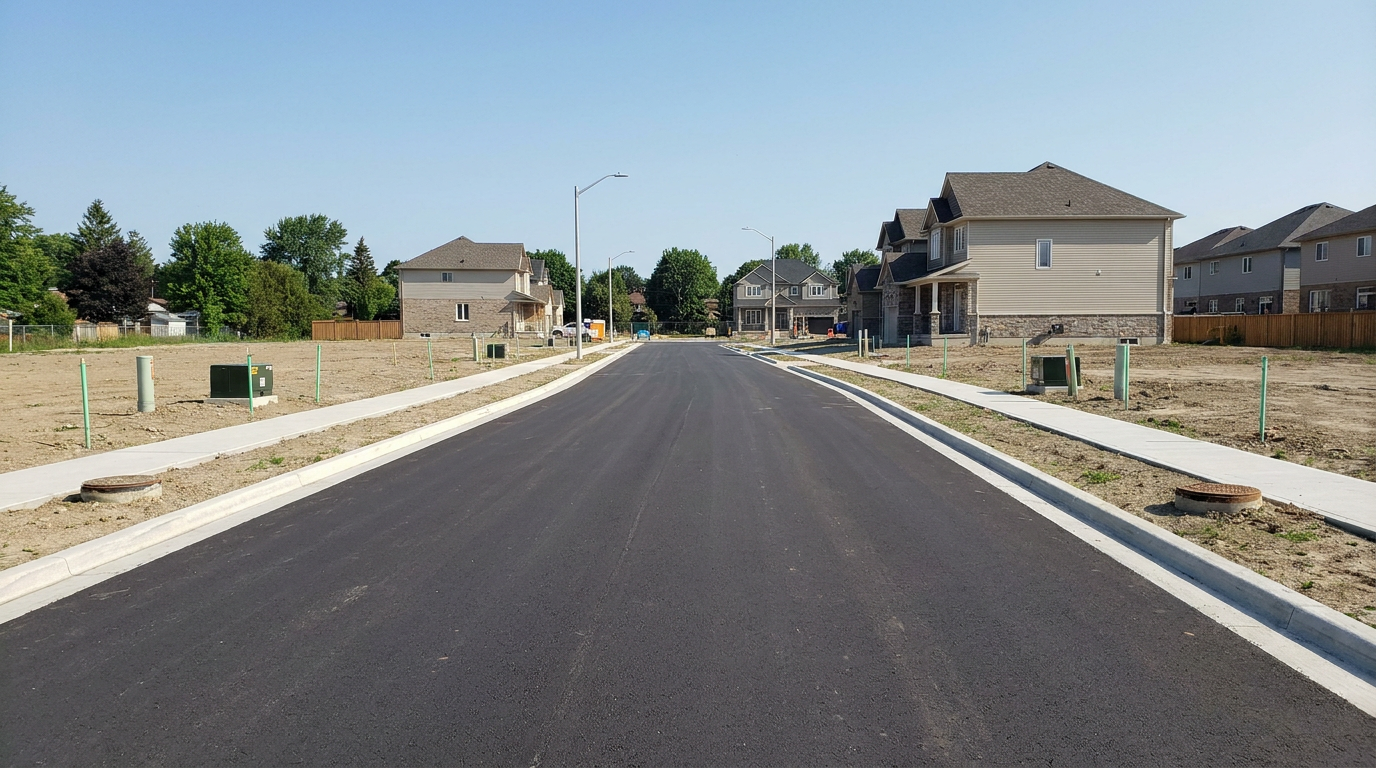
Infill subdivision deserves special attention in current markets. Where large greenfield tracts are scarce or politically difficult, smaller urban or suburban parcels can offer excellent opportunities for lot splits, severances, or compact housing formats that align with intensification goals. These projects can be faster and smaller in scale, but they still require rigorous planning and servicing analysis. In many cases, infill subdivisions benefit from existing infrastructure, which can reduce some costs while introducing other complexities such as neighbour compatibility and constrained site access.
What are the biggest risks in subdivision investing?
Subdivision projects can be profitable, but they are not forgiving of weak assumptions. Approval risk is one of the most obvious concerns. A municipality may impose conditions that reduce lot count, require additional studies, or increase infrastructure obligations. Even where policy is supportive, processing delays can extend carrying costs and reduce annualized returns. For this reason, timing should never be treated as a cosmetic variable in the model.
Cost escalation is another major risk. Infrastructure pricing, utility work, consultant fees, labour costs, and municipal charges can all move during the life of a project. Investors who underwrite too tightly may discover that a viable deal becomes marginal before registration or servicing is complete. Conservative contingency planning is not optional in land development. It is one of the few ways to protect profitability against uncertainty that cannot be fully controlled.
Market risk also matters more than many first-time developers expect. A subdivision may receive approval in a strong market but launch in a softer one. Mortgage rate shifts, builder caution, affordability pressure, and local inventory increases can slow lot sales or lower achievable pricing. This is where absorption analysis becomes essential. A profitable project on paper is not always a good deal if the market cannot absorb the finished lots at the pace required by the financing structure.
There is also strategic risk tied to project size and complexity. Smaller projects may seem safer, but they can have less margin to absorb fixed professional costs. Larger projects may offer scale benefits, but they expose investors to more phases, more municipal conditions, and more market timing uncertainty. The right size is not universal. It depends on the team’s experience, capital capacity, and ability to manage entitlement and servicing execution.
Best practices that separate strong subdivision investors from speculative buyers
The best subdivision investors are disciplined in three areas: due diligence, underwriting, and execution. They start with a conservative view of what can be approved, how long it may take, and what servicing is likely to cost. They do not build a deal around best-case assumptions, and they are comfortable walking away when the entitlement path is unclear. This restraint is often what preserves capital and allows them to act decisively on better opportunities.
They also treat local knowledge as an asset class in itself. Because subdivision rules vary by province and municipality, successful investors spend time understanding not just policy documents but how approvals actually move through the local system. They know which areas are being targeted for growth, where infrastructure constraints are tightening, and how planning staff or councils are responding to intensification pressure. In many cases, this knowledge creates a stronger edge than broad macro optimism.
Another best practice is aligning the exit strategy with the market before the project begins. If local builders are the likely buyers, the lot product should match what builders want in terms of frontage, depth, servicing, and timing. If the plan is build-to-sell, the housing format should fit affordability thresholds and buyer demand. Too many subdivision projects fail to connect the approval strategy with the real exit market. Product-market fit matters just as much in land development as it does in any operating business.
Strong investors also maintain contingency at multiple levels. That means financial contingency in the budget, timeline contingency in the project schedule, and strategic contingency in the exit plan. If approvals slow, can the financing hold? If lot count drops modestly, is the deal still viable? If home prices flatten, does selling lots still preserve an acceptable return? Projects that survive stress testing before acquisition are more likely to survive uncertainty after closing.
Subdivision investments in Canada: why policy and fees matter so much
Canada offers meaningful subdivision opportunity, but it also makes one lesson impossible to ignore: regulation and local fees are central to project economics. CMHC’s research repeatedly points to land-use regulation, approval delays, and development charges as major determinants of supply and affordability. For investors, that means policy is not background noise. It is a core underwriting input. A market with strong demand but difficult approvals and heavy charges may be less attractive than a secondary market with better process efficiency and lower infrastructure burden.
This helps explain why development charges have come under increasing scrutiny. If charges can add tens of thousands of dollars or more to the cost of each new home, they affect not only affordability for buyers but also the developer’s willingness to proceed. CMHC notes that these charges can influence whether projects move forward at all. In practical terms, every added fee reduces flexibility elsewhere in the capital stack and leaves less room for error if timelines extend or pricing softens.
Policy reform creates both opportunity and uncertainty. Municipal efforts to speed approvals, support missing-middle housing, improve transparency, and coordinate infrastructure investment can enhance viability for some subdivision projects. Yet reforms often take time to translate into practical on-the-ground changes. Investors should be careful not to underwrite based solely on policy headlines. The key is to distinguish between announced intent and implemented process change.
That said, the long-term direction is clear. Housing supply has become a national economic issue, and unlocking more developable land and more efficient approvals is a growing priority. Investors who understand this shift, and who can identify locations where policy, infrastructure, and demand are moving into alignment, may find that subdivision remains one of the more compelling development investment strategies available.
A practical roadmap for getting started
For investors considering subdivision as a new strategy, the best starting point is not buying land. It is building a framework. That framework should define target markets, preferred project size, lot product type, capital limits, expected hold period, and minimum return thresholds. Once those filters are established, site evaluation becomes more efficient because opportunities can be judged against a disciplined investment mandate rather than the excitement of the parcel itself.
The next step is assembling the right team. At a minimum, that usually includes a land use planner, civil engineer, surveyor, municipal lawyer, lender familiar with development projects, and a local market advisor or broker who understands lot demand. Their input should feed into an initial concept plan and a preliminary feasibility model. If the concept survives early stress testing, then deeper due diligence on servicing, environmental conditions, geotechnical issues, and entitlement pathways can begin.
Before committing capital, investors should model multiple scenarios. A base case may assume moderate pricing, standard timelines, and expected charges. A downside case should assume longer approvals, higher servicing costs, and slower absorption. An upside case can test value if lot yield improves or pricing strengthens. The goal is not prediction. The goal is decision quality. Investors who see how returns shift under different conditions make better choices about land basis, financing structure, and negotiation strategy.
Finally, stay close to execution after acquisition. Subdivision investing rewards active management. Follow the approval process carefully, maintain communication with consultants and municipal stakeholders, update the budget as new information emerges, and revisit the exit strategy as market conditions change. Value in land development is created over time through many decisions, not just one purchase. The more deliberate the process, the more likely the investment is to deliver the result originally envisioned.
Final thoughts: unlocking value through strategy, not speculation
Subdivision investments can be an exceptional wealth-building tool because they allow investors to create value through planning, entitlement, and infrastructure rather than relying solely on passive appreciation. The right project can transform underutilized land into a set of high-demand, marketable lots or finished homes, generating returns that are difficult to replicate with more conventional property plays. But those returns are earned through discipline. They come from understanding local regulations, pricing in charges and servicing, structuring capital carefully, and matching the final product to real demand.
The most important takeaway is that subdivision is a development business. It is not simply land ownership with a better story attached. Approvals, timelines, fees, environmental realities, and municipal conditions can either unlock value or erase it. Investors who treat these variables as central to the deal thesis are far more likely to succeed than those who focus only on acreage and asking price.
In the current environment, where housing supply constraints, policy reform, and serviced land scarcity are reshaping real estate markets, subdivision investing remains highly relevant. For capable investors, it offers a chance to participate directly in the creation of new housing opportunities while building capital through strategic execution. The potential is real, but it belongs to those who approach the process with patience, precision, and a clear understanding that in subdivision, value is not found. It is built.



No Comment! Be the first one.