



There is something deeply comforting about an outdoor space that feels both beautiful and easy to live with. A smart landscape is not simply a yard with a few gadgets tucked behind shrubs, and it is not a strict, spare version of gardening that asks you to give up softness or charm. It is a thoughtful approach to outdoor living that balances appearance, comfort, maintenance, and environmental responsibility in a way that supports real daily life.
Table Of Content
- What Smart Landscaping Really Means
- Start with the Site, Not the Shopping List
- The Beauty of Water-Wise Design
- Hydrozoning Brings Practical Elegance
- Why Plant Choice Shapes Everything
- Comfort Matters: Shade, Cooling, and the Feel of the Space
- Smart Irrigation Without the Waste
- Why Microirrigation Makes So Much Sense
- Soil Health Is the Quiet Luxury of a Great Yard
- Rethinking Lawn in a More Flexible Way
- Stormwater, Runoff, and the Beauty of Letting Water Soak In
- Designing for Family Life and Daily Use
- Aesthetic Harmony and the Emotional Value of Restraint
- Common Misconceptions That Deserve a Softer, Smarter Answer
- How to Begin Your Smart Landscape Transformation
- The Future of Outdoor Living Is Thoughtful
- Smart Landscaping Checklist for a More Beautiful and Practical Yard
For many homeowners, the dream backyard or front yard has changed. People still want color, texture, privacy, and a sense of welcome, but they also want lower water bills, less waste, fewer weekend chores, and a yard that can handle hotter summers and changing weather. Smart landscaping answers that shift beautifully because it begins with the idea that the most successful outdoor spaces are designed around how a property actually works, how a family actually lives, and what the local climate naturally supports.
This is why smart landscaping feels so current and so lasting at the same time. It speaks to sustainability, but it also speaks to comfort. It can make a home feel cooler, calmer, easier to maintain, and more enjoyable to spend time in. It can also make a yard more resilient through dry spells, storms, and seasonal changes, all while creating an outdoor setting that looks rich and welcoming rather than stripped back.
Research supports this practical, whole-yard approach. The U.S. Environmental Protection Agency says converting to a water-smart landscape through careful plant selection and design can reduce outdoor water use by 20 percent to 50 percent. That is a meaningful difference for homeowners who want a more responsible and lower-maintenance way to care for their property without giving up visual appeal.
The smartest landscape is not the one with the most technology. It is the one where plants, soil, shade, water, and daily routines all work together naturally.
In this guide, we will look at how to transform an outdoor space through smart landscaping, with a focus on sustainability, smart technology, visual harmony, and the little design choices that make a yard feel easier and more enjoyable to use. The goal is not perfection. The goal is a landscape that feels lovely to come home to and sensible to care for.
What Smart Landscaping Really Means
Smart landscaping is often misunderstood as a purely technological upgrade, but the technology is only one layer. At its heart, smart landscaping is about designing outdoor areas so they use resources wisely while still looking and feeling beautiful. It considers climate, sun exposure, soil conditions, drainage, water needs, shade, maintenance habits, and how people move through and use the space.
That means a truly smart landscape might include a smaller lawn, but it does not have to eliminate grass completely. It might include drip irrigation, but that system works best when it is paired with healthy soil, appropriate plants, and a sensible layout. It might involve native plants, but not in a way that suggests every native species is automatically right for every yard. Smart landscaping is not about rigid rules. It is about better alignment.
This is especially important because traditional landscaping habits can waste an enormous amount of water and effort. The EPA notes that turfgrass receives the highest percentage of irrigation water in traditional landscaping. Large lawns can be lovely in the right place, but when turf dominates a property without considering climate, shade, slope, or lifestyle, it often becomes one of the highest-maintenance and highest-water portions of the yard.
Smart landscaping offers a more nuanced alternative. Instead of asking whether a homeowner should keep or remove lawn entirely, it asks better questions. Where is lawn genuinely useful for play, gathering, or visual openness. Where could planting beds, gravel paths, groundcovers, shrubs, or pollinator gardens offer more beauty with less upkeep. Where would shade improve comfort. Where does water naturally move after rain. These are the questions that turn a basic yard into a thoughtful outdoor environment.
Start with the Site, Not the Shopping List
One of the most common mistakes in outdoor design is choosing plants or materials first and trying to force them into a site later. A smart landscape begins the other way around. Before selecting flowers, trees, furniture, or smart devices, it helps to understand the conditions already shaping the property every day.
Look at how sunlight moves through the space in the morning, afternoon, and evening. Notice where the ground stays damp after rain and where it dries quickly. Pay attention to windy corners, hot reflective surfaces, and areas where people naturally want privacy or shade. If a side yard is narrow and intensely sunny, it may not want the same planting approach as a front garden that receives dappled light. A backyard used by children and pets will have different needs than a formal entertaining space or a quiet wellness-oriented garden.
Working with these conditions is one of the most powerful things you can do for both beauty and ease. A landscape that matches its site tends to look more settled, more abundant, and less strained. It also tends to need less intervention in the form of extra watering, frequent replacements, chemical inputs, and constant correction.
When homeowners take the time to understand their site, the outdoor space begins to feel more intentional. Paths go where they make sense. Shade appears where it is most needed. Plants thrive where they are naturally suited. Even maintenance becomes gentler because the design itself is doing some of the heavy lifting.
The Beauty of Water-Wise Design
Water-wise landscaping is one of the strongest foundations of a smart yard, and it is far more elegant than many people imagine. It does not mean building a dry, austere landscape unless that aesthetic truly suits the home and region. It means using water where it matters most, reducing waste, and selecting a planting style that still feels generous and inviting.
The EPA says that careful plant selection and design can reduce outdoor water use by 20 percent to 50 percent. That kind of reduction matters financially, environmentally, and practically. It can ease the pressure of summer watering, help homeowners respond more gracefully to local drought restrictions, and reduce the sense that the yard is constantly asking for rescue.
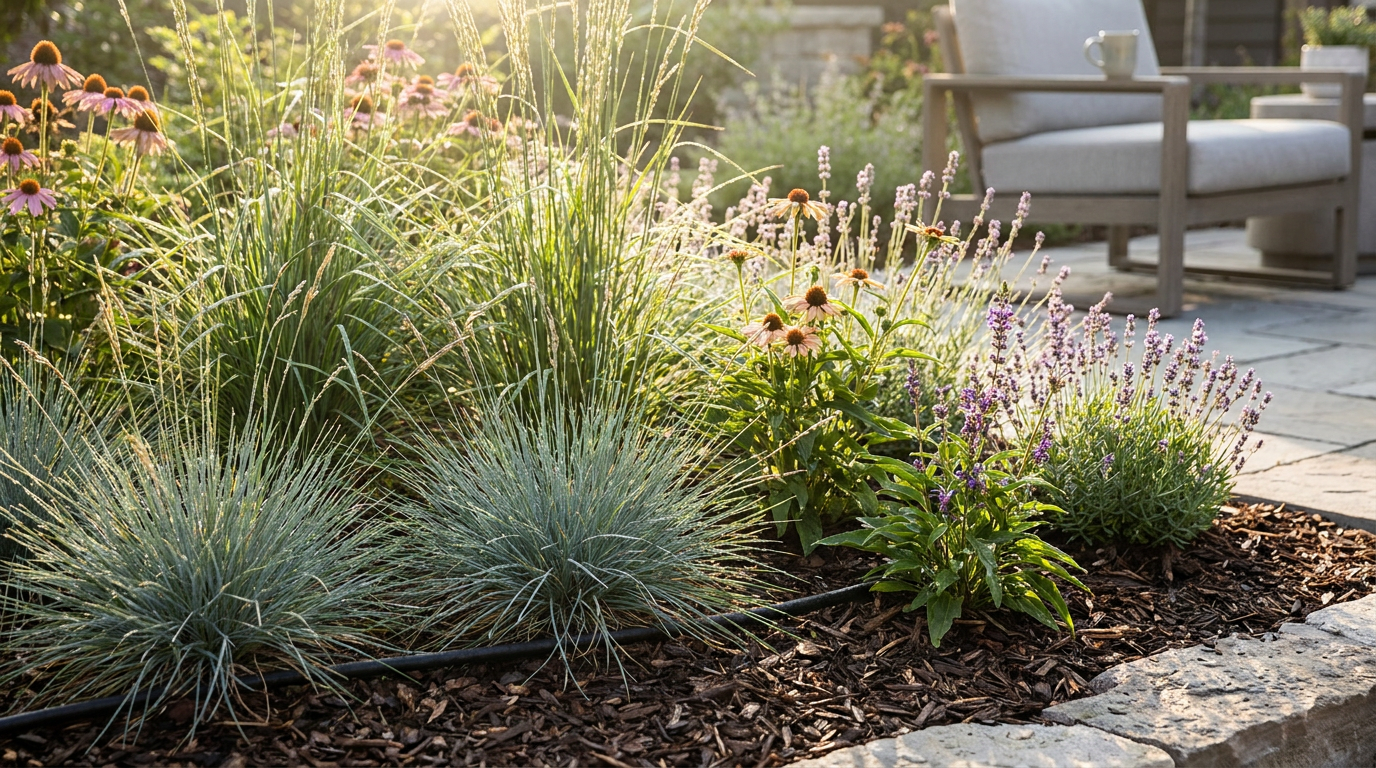
A water-wise landscape usually includes a mix of strategies rather than a single dramatic change. Some turf areas are reduced or moved to places where they are truly useful. Mulch is used to help soil retain moisture. Beds are shaped to support root health and drainage. Plants are grouped according to water needs. Irrigation is targeted instead of broad and automatic. The result is often a garden that feels richer in texture and more layered in character than a yard dominated by lawn.
Perhaps most importantly, water-wise design allows beauty to become more site-specific. Instead of trying to recreate the same generic look in every region, it encourages homeowners to discover what looks lush and graceful in their own climate. That sense of belonging can make a landscape feel more authentic and more relaxing.
Hydrozoning Brings Practical Elegance
One of the most useful smart landscaping concepts is hydrozoning, which means grouping plants with similar water needs together. It sounds technical, but the idea is simple and incredibly effective. Instead of watering an entire yard as though every plant wanted the same amount of moisture, you create zones that reflect real needs.
This approach reduces both overwatering and underwatering. Plants that like moderate moisture are not forced to compete with drought-tolerant species on the same irrigation schedule. Trees, shrubs, perennials, and accent plants can each be placed more thoughtfully, making care easier and more consistent. Over time, hydrozoning supports healthier growth because plants are not constantly being pushed outside their comfort range.
From a design perspective, hydrozoning can also improve visual coherence. Beds become more intentional because plants are chosen in relationship to one another, not just for isolated appearance. A low-water sunny border can develop its own rhythm of grasses, flowering perennials, and sculptural shrubs. A shadier, slightly moister area can feel lush and layered in a different way. The yard still feels harmonious, but each area functions more honestly.
Why Plant Choice Shapes Everything
Plant selection has an emotional impact on outdoor living. The right plants make a space feel soft, alive, sheltering, and seasonal in the best sense. They create movement in the wind, support pollinators, frame views, and help a house feel rooted in its setting. In a smart landscape, plant choice also does something quieter and equally important. It reduces friction.
Regionally appropriate plants, including many native and drought-tolerant options, often require less ongoing correction once they are established. Canadian municipal guidance and federal resources frequently highlight native, deep-rooted, and climate-resilient plants for this reason. These plants are often better adapted to local weather patterns, soil conditions, and seasonal swings, which can make them more reliable and less demanding over time.
That said, it helps to let go of a few common myths. Native plants do not always require zero watering, especially during establishment. Some native species prefer moisture and are best suited to particular conditions. Likewise, not every non-native plant is automatically a poor choice. The better question is whether a plant is appropriate, non-invasive, suited to the site, and reasonable in its water and maintenance needs.
A smart planting palette often includes a layered combination of trees, shrubs, grasses, and flowering perennials. Trees provide shade and structure. Shrubs give shape and year-round presence. Perennials add seasonal color. Grasses contribute softness and movement. Groundcovers can reduce bare soil and suppress weeds. Together, these layers create a fuller, more composed landscape that feels generous without requiring endless maintenance.
Comfort Matters: Shade, Cooling, and the Feel of the Space
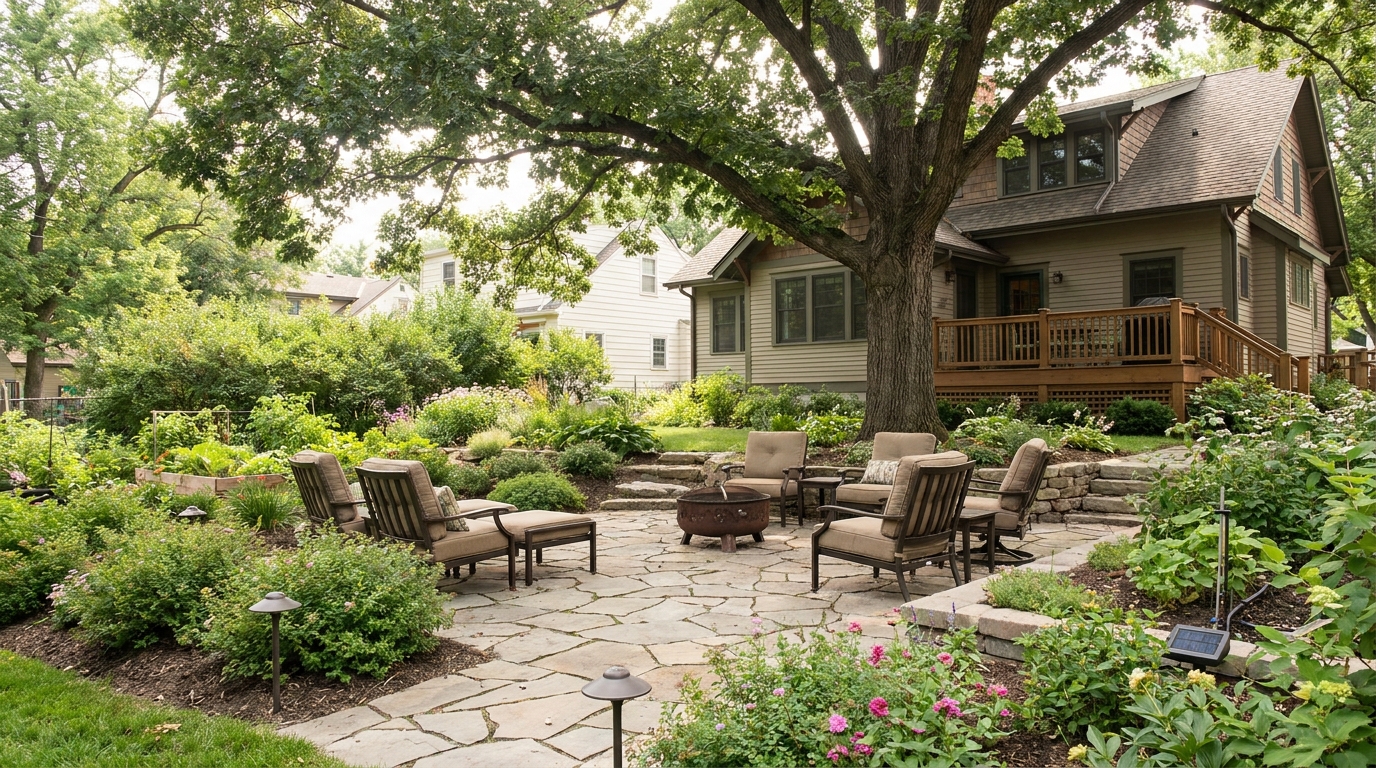
The most successful outdoor areas are not only sustainable. They are comfortable. They invite people to linger for coffee, dinner, playtime, reading, or simply a quiet pause at the end of the day. In a warming climate, comfort has become a more serious part of design, especially as hotter summers increase stress on both people and plants.
Urban vegetation plays an important role here. Public health guidance in Canada notes that expanding urban vegetation, including trees, climbing plants, and green roofs, can reduce outdoor temperatures and help address urban heat island effects. For homeowners, that translates into a very practical idea. More thoughtful planting can make an outdoor space feel cooler and more usable while also helping a home absorb less heat.
Shade trees are one of the most powerful long-term investments in outdoor comfort. They cool seating areas, protect west-facing exposures, soften harsh afternoon light, and create an atmosphere that simply feels more settled and restorative. Climbing plants on pergolas or screens can provide layered shade and privacy without making a yard feel heavy. Even well-placed shrubs and taller plantings can reduce glare and improve the sensory experience of a patio or garden path.
These choices contribute to emotional comfort as much as physical comfort. A shady, planted yard feels kinder in summer. It allows outdoor routines to happen more naturally. It makes entertaining easier and family time more pleasant. Smart landscaping is often described in terms of efficiency, but comfort is the reason many homeowners end up loving it.
Smart Irrigation Without the Waste
Technology is a valuable part of smart landscaping when it supports the design instead of compensating for poor planning. Irrigation is where this becomes especially important. Many homeowners assume that adding an automatic system is the ultimate sign of convenience, but the research suggests caution. The EPA says homes with automatic irrigation systems can use about 50 percent more water than homes without them. The issue is not automation itself. It is automation without intelligence.
Fixed watering schedules can continue running during cool weather, after rainfall, or when specific beds do not actually need more moisture. That is how a supposedly convenient system turns into waste. A better approach is to use technology that responds to real conditions rather than a rigid calendar.
Weather-based controllers and soil moisture-based irrigation controllers are increasingly valuable because they adjust watering based on actual site needs. The EPA says WaterSense-labeled soil moisture-based irrigation controllers can save an average home with an automatic landscape irrigation system more than 15,000 gallons of water per year. That is a meaningful number, but it also points to something larger. Smart technology works best when it is part of a thoughtful whole, not when it is expected to solve everything by itself.
Why Microirrigation Makes So Much Sense
Microirrigation, often referred to as drip irrigation, is another cornerstone of a smart landscape. Instead of spraying water broadly across paths, sidewalks, or empty soil, it delivers water directly to the root zone where plants need it most. The EPA notes that microirrigation systems can use 20 percent to 50 percent less water than conventional sprinklers.
For planting beds, shrubs, vegetable gardens, and many perennial borders, this can be a wonderful solution. It keeps foliage drier, reduces overspray, limits evaporation, and supports a more targeted watering routine. In practical terms, it can also make the landscape feel cleaner and more intentional because there is less of that familiar sight of sprinklers watering everything at once.
Like all good design choices, microirrigation is not a one-size-fits-all answer. Some areas may still require other irrigation methods depending on layout and plant type. The real point is not to assume one tool is perfect for every situation. The point is to match the watering method to the landscape itself.
Soil Health Is the Quiet Luxury of a Great Yard
Healthy soil does not usually get the same attention as flowering plants, outdoor furniture, or new hardscaping, yet it may be one of the most important features in a smart landscape. Good soil supports stronger roots, better drainage, improved moisture retention, and more resilient plants. It can reduce the amount of irrigation a yard needs and create a more stable foundation for everything growing above it.
When soil is compacted, depleted, or poorly matched to the site, homeowners often end up fighting the same issues repeatedly. Plants struggle, water runs off instead of soaking in, and maintenance becomes frustrating. By contrast, building soil health through organic matter, thoughtful grading, and mulch can make a visible difference in the appearance and ease of the landscape.
Mulch is especially helpful in water-wise design because it reduces evaporation, moderates soil temperature, and suppresses weeds. It also gives planting beds a polished, finished look that helps a landscape feel cared for even in simpler designs. This is a lovely example of practicality supporting aesthetics rather than competing with it.
There is something deeply satisfying about a yard that holds moisture better, supports healthy roots, and simply feels more alive. It is one of those invisible improvements that changes everything over time.
Rethinking Lawn in a More Flexible Way
Smart landscaping does not have to mean removing all lawn, and that misconception can make the concept feel more intimidating than it really is. The more useful perspective is to think about lawn as one element of the yard rather than the unquestioned default. Where grass provides play space, visual relief, or room for gatherings, it may be worth keeping. Where it functions mainly as a thirsty filler, it may be a good candidate for change.
Replacing some turf with planting beds, native borders, or mixed low-maintenance zones can dramatically improve both water use and visual interest. The result is often a yard with more structure, more seasonal character, and more ecological value. Pollinator-friendly plantings can invite birds and butterflies. Shrub borders can offer privacy. Tree canopies can cool the space and make patios feel more intimate.
This does not need to happen all at once. In fact, gradual transitions are often easier and more successful. A homeowner might begin by reducing a difficult strip of grass along a fence line, converting a front slope into a deep-rooted planting area, or reshaping a backyard corner into a mulched garden bed. Each change teaches you more about how the yard wants to function.
Seen this way, reducing lawn is not about sacrifice. It is about making room for more useful, resilient, and visually meaningful parts of the landscape.
Stormwater, Runoff, and the Beauty of Letting Water Soak In
Another important part of smart landscaping is managing rain in a way that supports the property rather than sending water rushing away. Across North America, homeowners are becoming more interested in rain gardens, permeable features, and other subtle ways to handle runoff attractively. This matters not only for sustainability but also for the long-term health of the landscape.
Deep-rooted plantings, healthy soils, and infiltration-friendly design can help water soak into the ground more effectively. This can reduce puddling, erosion, and pressure on drainage systems. It can also support a more resilient yard during both wet and dry periods because the landscape becomes better at holding and using moisture.
Rain gardens are a particularly appealing example because they combine practical stormwater management with beauty. Designed well, they can look like elegant planted features rather than technical installations. They often include moisture-tolerant species, varied textures, and a naturalistic softness that suits many homes beautifully.
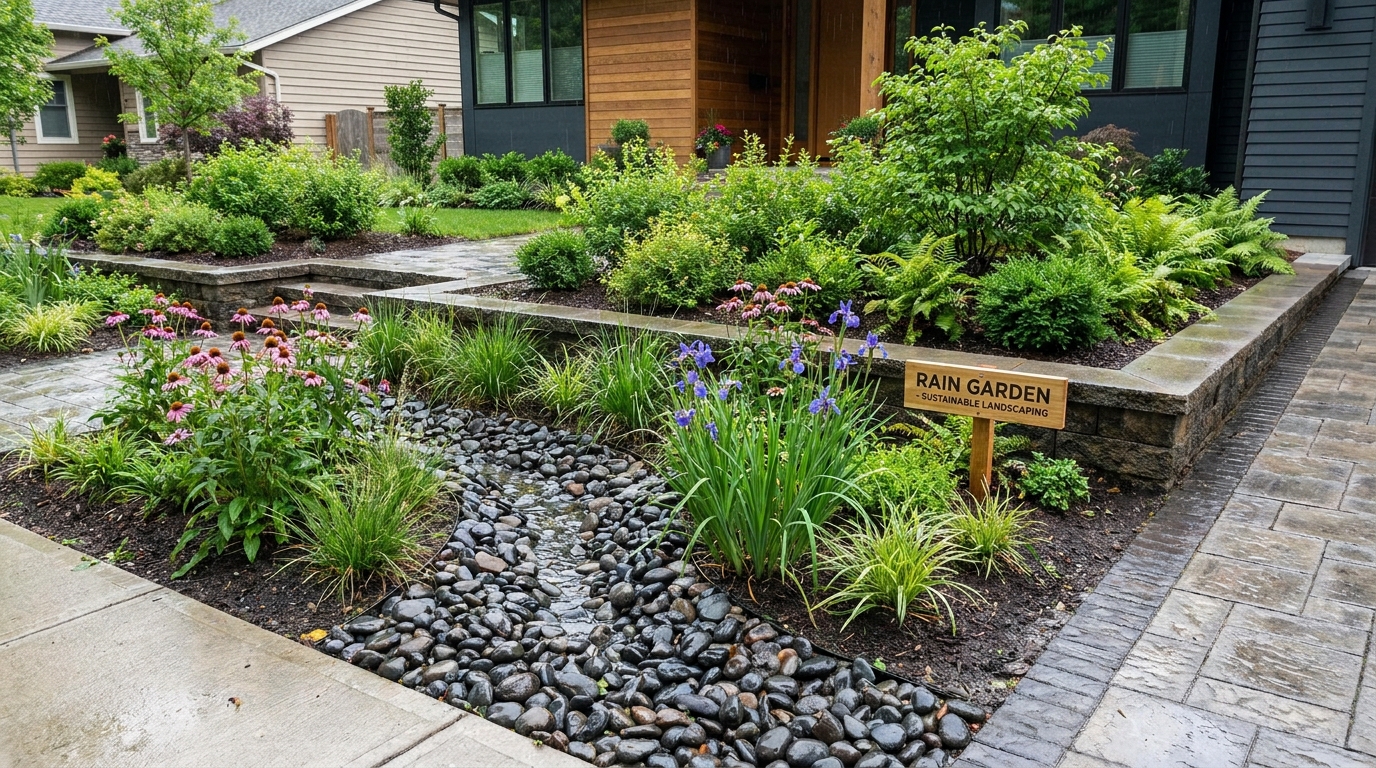
Permeable paving can also support this whole-yard approach. Paths, patios, and drive surfaces that allow some infiltration can help reduce runoff while keeping the yard visually refined. These choices add up to a landscape that feels calmer after rain and more integrated with the natural patterns of the site.
Designing for Family Life and Daily Use
A truly smart landscape fits the rhythms of everyday living. It is not just attractive from the kitchen window. It supports the way people actually spend time outdoors. This might mean creating a shaded spot for morning coffee, an open patch of lawn where children can play, a pathway that keeps feet dry after rain, or a planting scheme that remains attractive even when life gets busy.
When thinking about transformation, it helps to divide the yard into emotional and functional zones. There may be an arrival zone in the front yard that focuses on curb appeal and welcome. A social zone in the backyard might support dining and conversation. A retreat zone could be quieter and greener, with softer planting and a bench or hammock. Service areas, such as side yards and storage zones, can also be designed more thoughtfully so they feel integrated rather than forgotten.
This zoning does not need to be formal. In fact, the most successful family-friendly landscapes often feel natural and relaxed. The point is to make the space easier to use. Once a yard has a clearer sense of purpose in each area, decisions around planting, paving, lighting, irrigation, and maintenance become much simpler.
Smart technology can support this comfort-oriented lifestyle too. Timed or app-based outdoor lighting, efficient irrigation controls, and low-voltage pathway lighting can all make outdoor routines smoother. The most appealing use of technology is often the least noticeable. It quietly supports the atmosphere rather than becoming the focus.
Aesthetic Harmony and the Emotional Value of Restraint
One of the loveliest things about smart landscaping is that it often encourages more thoughtful editing. Instead of filling every inch with competing materials or impulse purchases, it invites a calmer composition. Repeating a smaller number of plant varieties, using a restrained material palette, and choosing shapes that relate to the architecture of the home can all make a yard feel more elevated.
This kind of harmony is not about making a landscape look sparse or overly designed. It is about creating a sense of visual peace. When forms repeat, when colors feel connected, and when practical choices are made with beauty in mind, the whole property begins to feel more polished. This is often what people mean when they say a home has good flow. The outdoor spaces feel like an extension of the interior life.
There is emotional value in that cohesion. A landscape that feels balanced can lower mental clutter. It can make maintenance feel less chaotic. It can create the sense that home is holding you a little more gently. Smart landscaping is efficient, yes, but its deeper gift is often this feeling of ease.
Common Misconceptions That Deserve a Softer, Smarter Answer
Because smart landscaping is often discussed in practical terms, it can collect a few myths that make homeowners hesitant. One misconception is that sustainability always means sacrificing aesthetics. In reality, a well-designed water-smart yard can be lush, layered, colorful, and luxurious in feel. Sustainability is not the opposite of beauty. When done well, it tends to sharpen beauty by removing waste and mismatch.
Another common misunderstanding is that a high-tech controller alone guarantees savings. Technology is useful, but it cannot fully correct poor plant selection, unhealthy soil, bad drainage, or an illogical layout. The best results come when technology is supporting an already sensible design.
Some people also assume native plants are effortless from day one or that drip irrigation is always the right answer everywhere. The truth is more nuanced, and that is actually encouraging. Smart landscaping is flexible. It asks homeowners to respond to their real conditions rather than to ideals or trends taken out of context.
That flexibility is what makes it so approachable. You do not need a perfect property or a complete overhaul to begin. You only need a willingness to make better-aligned choices over time.
How to Begin Your Smart Landscape Transformation
The easiest way to start is to see your yard as a series of opportunities rather than a single overwhelming project. Begin by observing what already works and what feels demanding. Maybe one section of lawn is always dry and struggling. Maybe a patio is too hot to enjoy. Maybe a flower bed constantly needs more water than the rest of the yard. These friction points are often the best clues.
From there, consider a phased plan. Start with one area that could deliver clear lifestyle benefits, such as adding shade near a seating area or converting a difficult patch of turf into a hydrozoned planting bed. Improve soil and mulch before investing heavily in new plants. If you have an irrigation system, look at whether it can be updated with weather-based or soil moisture-based controls. If you are planning hardscaping, explore whether permeable materials or improved drainage features could be integrated beautifully.
It can also help to prioritize changes that affect both comfort and maintenance. A tree that shades the patio, a drip line in shrub beds, or a reduced lawn edge that no longer needs constant trimming may not sound dramatic, but these are the upgrades people often feel grateful for every single week. Smart landscaping succeeds because it changes how a yard lives, not just how it photographs.
As the transformation unfolds, allow the landscape to become more personal. Add a bench where you naturally pause. Choose plants that offer fragrance near a path. Create a border that brings butterflies into view from the breakfast table. These softer details are just as important as efficiency metrics because they turn a responsible yard into a beloved one.
The Future of Outdoor Living Is Thoughtful
As climate concerns, water restrictions, and lifestyle priorities continue to evolve, smart landscaping is becoming less of a niche idea and more of a natural direction for outdoor design. Homeowners want spaces that are easier to care for, better suited to local conditions, and more enjoyable through longer stretches of the year. They also want outdoor areas that feel emotionally restorative rather than demanding.
The most compelling part of this movement is that it does not ask us to choose between practicality and pleasure. It shows us that the two can reinforce one another beautifully. A yard with better soil, more appropriate plants, smarter irrigation, more shade, and less wasted water often looks better and feels better too. It supports the home in visible and invisible ways.
Smart landscaping is not about stripping outdoor life down to the minimum. It is about designing more carefully so the landscape gives back more than it takes. It can cool a summer afternoon, welcome pollinators, absorb rainfall, lower maintenance, save water, and make a family more likely to step outside and stay there a while. That is not just efficient. It is a better way to live.
In the end, transforming your outdoor space through smart landscaping is really about creating a setting that feels generous, grounded, and easy to love. It is where sustainability meets atmosphere, and where thoughtful design turns an ordinary yard into a place of comfort, beauty, and everyday ease.
Smart Landscaping Checklist for a More Beautiful and Practical Yard
- Observe sun, shade, drainage, and wind patterns before making design decisions.
- Reduce or relocate turf where it is not serving a meaningful purpose.
- Choose regionally appropriate, native, or drought-tolerant plants suited to the site.
- Group plants by water needs using hydrozoning.
- Improve soil health and use mulch to retain moisture.
- Consider microirrigation for beds, shrubs, and targeted planting areas.
- Upgrade irrigation with weather-based or soil moisture-based controls when possible.
- Add trees, climbing plants, or layered vegetation to improve shade and comfort.
- Incorporate rain gardens or permeable surfaces where runoff is a concern.
- Design around your family’s routines so the yard feels useful, welcoming, and easy to maintain.
A smart landscape does not have to be created overnight. Even one or two of these changes can begin shifting a yard toward greater beauty, resilience, and peace of mind. Over time, those thoughtful choices add up to an outdoor space that feels not only smarter, but more deeply like home.

No Comment! Be the first one.