



Canada’s Rental Market Analysis 2026: Trends & Outlook
By mid-2026, the rental market has entered a more nuanced phase than investors have seen for several years. The era when almost any rental asset could ride broad rent growth is fading, replaced by a market where performance depends far more on location, product type, tenant profile, and cost discipline. That shift matters because many investors still approach rental housing as though the same assumptions that worked during the earlier post-pandemic expansion remain valid. In reality, the market is not weakening uniformly, but it is becoming increasingly selective.
Table Of Content
- The Rental Market in Transition
- What the Vacancy Data Really Means
- Why Demographics Still Matter, But Differently
- Supply Is Finally Arriving, and That Changes Strategy
- The Growing Divide Between Luxury Lease-Up and Stabilized Workforce Housing
- Regional Performance Will Matter More Than Ever
- Affordability Is Now a Core Investment Variable
- Where the Best Investment Opportunities May Be Emerging
- How Investors Should Underwrite the 2026 Market
- Misconceptions Investors Should Avoid
- A Strategic Outlook for the Second Half of 2026 and Beyond
- Conclusion: Precision Is the New Advantage
Canada’s rental landscape in 2026 is being shaped by three forces at once: population growth that has cooled from the extraordinary pace of the early 2020s, unemployment high enough to strain household budgets, and a wave of new rental supply finally easing conditions in major urban centres. According to CMHC’s 2025 Rental Market Report, vacancy rates for purpose-built rentals rose across every major Canadian census metropolitan area, pushing the national vacancy rate above its 10-year average. That increase is not evenly distributed: CMHC’s data show vacancy in the highest-rent quartile reaching 5.3 percent nationally, compared with just 1.4 percent in the lowest quartile, and pressure remains most concentrated in units built after 2020. In other words, 2026’s rental market is defined less by broad softening than by a widening gap between newer, higher-priced buildings and older, more affordable stock, which stays comparatively tight.
The critical issue for investors is that higher vacancy is not evenly distributed. CMHC’s 2026 mid-year rental update noted that vacancies have risen across all rent quartiles, yet the pressure is most visible in units built after 2020 and in newer, higher-priced buildings. Older, stabilized apartments and family-sized units remain materially tighter in many markets. This divergence means rental performance in 2026 is less about national averages and more about understanding the differences between lease-up risk, affordability demand, replacement cost, and submarket resilience.
This article examines the key trends reshaping the rental market in 2026, with a specific focus on demographics, supply conditions, affordability, and investment strategy. The objective is not simply to explain where vacancy is rising or where rent growth is slowing, but to identify where durable demand is likely to support stronger income performance over the medium term. For investors, developers, and market observers, the message is clear. The rental market still offers opportunity, but in 2026, opportunity belongs to precision rather than broad optimism.
Key takeaway: 2026 is not a story of rent growth everywhere. It is a story of selective growth, sharper underwriting, and better outcomes for investors who understand submarket fundamentals.
The Rental Market in Transition
The defining characteristic of the 2026 rental market is normalization. For several years, rental housing benefited from a powerful combination of rapid population growth, homeownership affordability barriers, and relatively limited supply in many cities. That environment allowed rents to climb quickly and gave landlords significant pricing power, especially in major urban centres. As new supply is delivered and demand growth becomes less intense, that pricing power is becoming less automatic.
Normalization should not be confused with decline. A healthier level of vacancy can be constructive for the rental ecosystem because it creates more tenant choice, slows unsustainable rent acceleration, and reduces pressure on households already stretched by rising living costs. At the same time, normalization can challenge investors who underwrite projects based on aggressive rent growth assumptions or who rely on lease-up at premium pricing in increasingly competitive submarkets. The result is a market that remains investable, but requires more disciplined analysis.
There is also a geographic component to this transition. CMHC’s 2026 outlook indicates that Vancouver’s vacancy rate is expected to remain elevated as units completed over the past four years continue entering the market. Toronto and several other major centres are also experiencing easing conditions. Meanwhile, Calgary and Edmonton remain more volatile, with vacancy needing to rise further before rents fully stabilize. These differences underline why investors should be cautious about relying on any single national narrative.
In the United States, a comparable adjustment is underway. NAHB has reported that the multifamily market slowed in 2026 after a pandemic-era boom, with high supply and sluggish demand pushing vacancies up and rents down by roughly 1 percent year over year. The U.S. Census Bureau’s first-quarter 2026 housing vacancy release placed the national rental vacancy rate at around 7.1 percent, suggesting a more balanced but looser market than most major Canadian purpose-built rental markets. While Canada and the U.S. differ structurally, the cross-border pattern is useful. Both markets show that supply surges eventually challenge assumptions of uninterrupted rent growth.
What the Vacancy Data Really Means
One of the most common mistakes in rental market analysis is treating a rising vacancy rate as a universal sign of weakness. In practice, vacancy data needs context. CMHC’s research shows that vacancy rates have risen across all major Canadian CMAs and across all rent quartiles, but the softness is concentrated in particular segments. The national numbers point to easing conditions, yet they do not mean that every property owner is facing lower rents or weaker occupancy.
In fact, one of the more important insights from CMHC’s 2026 update is that landlords are still achieving rent increases on occupied units, largely through turnover. That means tenants renewing leases may face different conditions than the headline vacancy data suggests, and investors cannot assume that looser market conditions instantly translate into widespread rent declines. A building can sit in a softer market and still produce revenue growth if demand remains stable for its specific unit mix and if tenant turnover supports repricing.
The variation across rent tiers is especially important. CMHC’s 2025 rental tables show a sharp increase in vacancy for higher-rent units, with the highest quartile reaching 5.3 percent nationally in 2025 versus only 1.4 percent in the lowest quartile. That spread reveals a market under affordability pressure. Tenants may still need rental housing, but many are becoming more selective about what they can afford, particularly when newer luxury product comes to market at premium pricing.
This is where asset quality and asset positioning become two very different concepts. A high-end newly completed building may be physically superior, but if it is competing in a submarket with many comparable deliveries and price-sensitive renters, it may face concessions, slower absorption, and higher marketing costs. By contrast, an older but well-maintained property in a transit-connected neighborhood may have fewer amenities, yet produce more stable occupancy because it sits at a more defensible price point. In 2026, investors need to underwrite this distinction carefully.

Why Demographics Still Matter, But Differently
It would be a mistake to conclude that rising vacancy means demographic demand has disappeared. Demographics remain a structural support for the rental market, but the composition of demand is evolving. Canada’s population growth has cooled from the exceptional pace seen earlier in the decade, yet household formation is still expected to continue in 2026. Immigration, delayed homeownership, and economic uncertainty continue to keep many households in the rental pool for longer.
The delayed homeownership trend is particularly significant. Affordability constraints have made entry into ownership more difficult, especially for younger households in major urban markets. In the U.S., NAHB reported that the share of first-time home buyers fell to 21 percent in 2025 from 44 percent in 1981. While that data is American, it reflects a broader North American affordability challenge that also affects Canadian markets. If fewer households can transition into ownership, rental demand remains structurally supported even if population growth is not as intense as before.
Younger renters are not the only relevant demographic. Families, new immigrants, and middle-income workers remain central to demand, especially in urban and suburban locations where housing ownership costs remain prohibitive. This is one reason family-sized units continue to hold up better than many investors expected. In several markets, larger units are not simply larger versions of smaller apartments. They serve a different tenant profile with different mobility patterns, stronger location priorities, and often a longer expected tenancy duration.
There is also a financial stress element shaping renter behavior. The Federal Reserve reported that 23 percent of renters said they had been behind on rent at some point in the prior year. That statistic speaks to persistent affordability stress even in an environment where market rents are no longer accelerating as sharply. For investors, this means tenant demand may remain strong, but rent elasticity is becoming more important. Pricing power exists, though increasingly within boundaries set by household income constraints.
The implication is straightforward. Demand is not disappearing. It is becoming more affordability-driven, more selective, and more segmented by household type. Investors who understand which renter groups are growing in their target submarket will be in a stronger position than those relying on broad assumptions about national population growth.
Supply Is Finally Arriving, and That Changes Strategy
New supply is one of the most important drivers of the 2026 rental market outlook. CMHC’s Spring 2026 Housing Supply Report noted that Canada’s housing starts rose 6 percent in 2025, driven by record rental apartment construction and missing-middle housing. After years in which supply lagged demand, that level of construction is now having visible effects in many urban rental markets. More units on the ground mean more competition for tenants, especially in product categories delivered in large volumes.
The immediate consequence is easier conditions in newly completed and higher-priced buildings. Lease-up competition tends to be sharpest where multiple projects deliver around the same time, particularly in downtown cores and university-oriented areas. CMHC has reported that buildings near post-secondary institutions are experiencing the highest vacancies, which is a reminder that even historically strong renter ecosystems can soften when too much similar product arrives at once. Timing matters just as much as location.
Yet the supply story is not simply bearish. More supply today can help improve affordability, stabilize tenant turnover, and create opportunities for well-capitalized investors to enter or expand in markets where acquisition pricing becomes more negotiable. Higher vacancy in a recently delivered building does not necessarily imply a flawed long-term asset. It may signal temporary lease-up pressure that offers better basis pricing for a buyer with patience and operational skill.
There is another layer to consider. CMHC also warns that elevated construction costs, land scarcity, and weaker condominium pre-sales are straining project viability. Rental construction is expected to slow in the second half of 2026 as developers respond to higher vacancy rates and softer rent growth. This matters because the current supply wave may be self-correcting. If fewer new projects become feasible, today’s easing conditions could set up tighter markets again in future years once delivered inventory is absorbed.
For investors, this creates a two-phase framework. In the near term, supply can create leasing and concession risk, especially in premium product. Over the medium term, slower future starts may support fundamentals for assets acquired or stabilized during the current normalization period. The best opportunities may emerge where short-term softness masks long-term scarcity.
The Growing Divide Between Luxury Lease-Up and Stabilized Workforce Housing
One of the clearest investment themes in 2026 is the widening gap between newer luxury product and older stabilized workforce housing. On paper, both sit within the rental market. In practice, they behave very differently under current conditions. Investors who ignore that split risk applying the wrong benchmark to the wrong asset class.
Luxury lease-up assets are facing the most visible pressure. Newer units often carry higher rents, higher operating expectations, and larger initial marketing costs. When multiple projects deliver in the same corridor, tenants gain leverage. Concessions become more common, occupancy may take longer to build, and effective rents can fall below pro forma assumptions even if nominal asking rents remain elevated. These assets can still perform over time, but the first years of stabilization require more conservative underwriting.
Stabilized workforce housing tells a different story. Older, well-located buildings with solid maintenance, practical unit layouts, and rents below replacement-cost product often remain attractive to a broad renter base. They appeal to households priced out of homeownership and to renters who value function, location, and affordability over luxury amenities. In a softer market, these assets can be relatively defensive because they sit closer to the deepest pool of demand.
There is also a replacement-cost advantage to older stock. If a new building cannot be delivered economically at rents close to those of an existing stabilized property, the older asset may hold a durable competitive position. That does not eliminate capex needs or operational challenges, but it can create a stronger margin of safety. In a market where construction costs remain elevated, replacement-cost discipline becomes a meaningful underwriting tool.
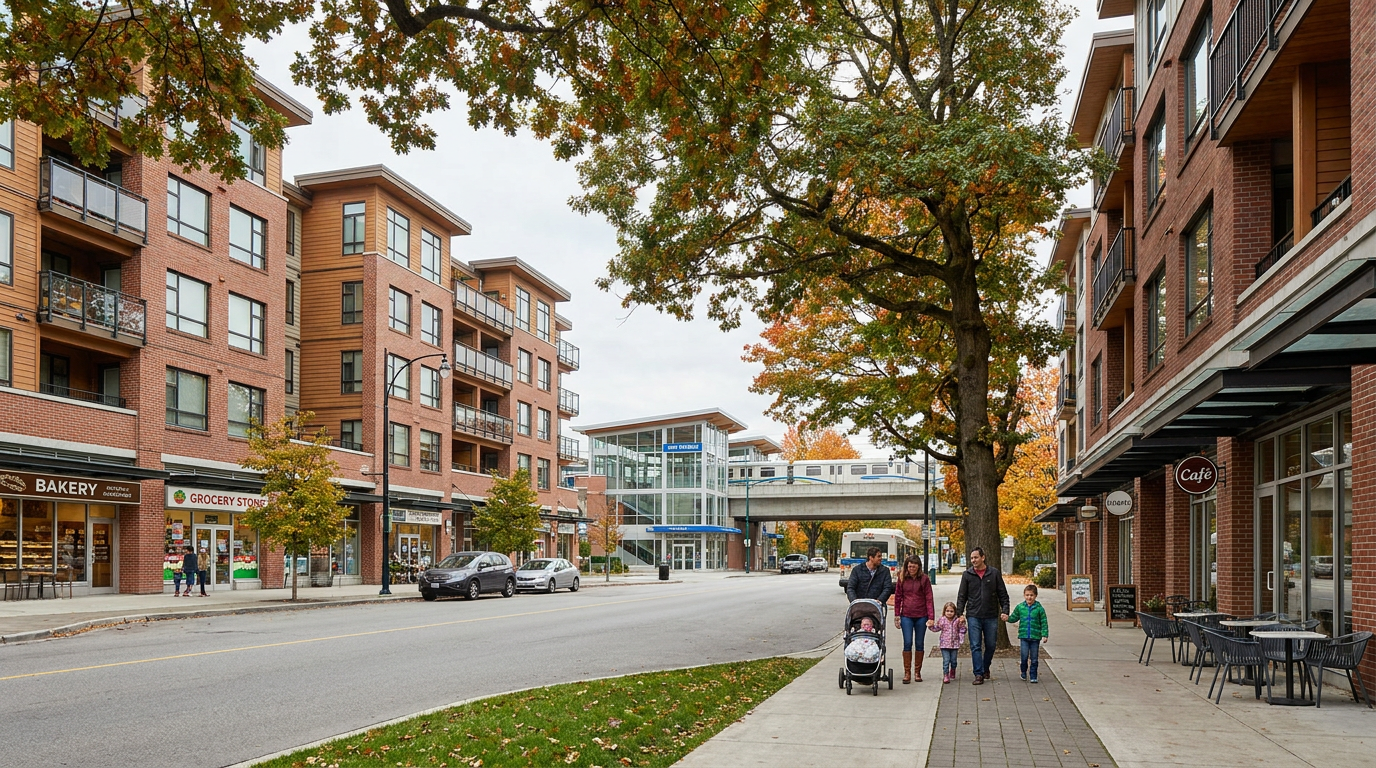
For many investors, the strongest thesis in 2026 is not chasing the newest building, but finding the right balance between affordability, location, and long-term income durability. This often points toward workforce housing, family-oriented rentals, and transit-accessible properties that serve households with limited ownership alternatives.
Regional Performance Will Matter More Than Ever
In 2026, market selection is inseparable from submarket selection. A broad city-level thesis may still be useful, but investors need to drill deeper into neighborhood supply pipelines, transit access, employment nodes, unit mix, and tenant demographics. The reason is simple. Conditions can vary materially within the same metropolitan area, especially when a city contains both high-supply downtown districts and lower-supply family-oriented suburban corridors.
Vancouver is a good example of how city headlines can oversimplify the reality on the ground. CMHC expects vacancy there to remain elevated as recently completed units from the past four years continue entering the market. That suggests caution for buyers targeting newly delivered premium stock in heavily supplied nodes. At the same time, not every Vancouver submarket is equally exposed, and well-located, moderately priced units may still benefit from durable demand in a high-cost ownership market.
Toronto presents a similar need for segmentation. Easing conditions may be visible in some newer product categories, particularly where large amounts of inventory have recently come online. Yet the metro area remains structurally undersupplied in many practical rental formats that serve working households and families. Investors who focus only on headline vacancy may miss the difference between temporary downtown lease-up softness and persistent demand in outer transit-connected communities.
Calgary and Edmonton require a different lens. CMHC’s outlook points to higher volatility in these markets, with vacancy needing to rise further before rents stabilize. These cities can still offer opportunity, especially given relative affordability and economic growth potential, but they often demand more attention to timing and local employment trends. Volatile markets can reward disciplined investors, though they also punish assumptions that ignore cyclical swings.
The broader lesson is that no investor should buy “Canada” as a rental thesis in 2026. The investable unit is not the nation and often not even the city. It is the submarket, the building, and the renter profile. Precision at that level is becoming the difference between average outcomes and outperformance.
Affordability Is Now a Core Investment Variable
Affordability has moved from a social concern to a central investment metric. In prior years, many investors viewed affordability mainly as a political or regulatory issue. In 2026, it is directly influencing occupancy, rent growth, concession pressure, turnover, and long-term pricing resilience. Assets that align with what renters can sustainably pay are in a stronger position than assets priced primarily around optimistic revenue targets.
This is why higher vacancy in expensive units does not automatically imply a weak rental market overall. Often it means the market is rejecting a particular price point rather than the concept of rental housing itself. If renters still need accommodation but shift toward lower-cost or better-value options, demand remains healthy in the right part of the market. Investors who understand local affordability thresholds gain a major advantage in underwriting and operations.
Affordability also supports tenant retention. In a market where rent growth is moderating, some landlords may choose to prioritize occupancy stability and lower turnover costs over pushing rents aggressively. That strategy can be especially effective in older stabilized buildings where the goal is durable cash flow rather than short-term headline rent maximization. Lower turnover often reduces make-ready expenses, leasing costs, and collection risk, all of which matter when revenue growth becomes less automatic.
There is a development-side tradeoff as well. Softer rent growth can improve affordability for tenants, but it can also reduce the feasibility of future projects when construction and financing costs remain elevated. This creates tension across the market. What is good for near-term tenant affordability may not be enough to support long-term production at current cost structures. Investors should keep that imbalance in mind because it can influence future supply constraints.
Where the Best Investment Opportunities May Be Emerging
The best opportunities in 2026 are likely to come from selective positioning rather than broad market chasing. Investors should think in terms of differentiated demand pools. A stabilized family-oriented building near transit and employment can have a very different risk profile from a downtown luxury lease-up asset, even if both are technically in the same rental market. Understanding those distinctions is how capital gets deployed intelligently.
Workforce housing remains one of the strongest areas of focus. These properties serve tenants who are priced out of ownership but still need quality housing near jobs, schools, and transportation. Because this demand base is broad and persistent, workforce assets often benefit from stronger occupancy resilience than premium product. They may not produce the flashiest short-term rent growth, but they can offer a more reliable income profile and a better defensive position in a slower market.
Transit-oriented rentals also stand out. Properties near rapid transit, bus corridors, and major employment nodes tend to maintain appeal across renter segments, especially in cities where commuting costs and travel time shape housing decisions. As affordability pressure remains high, transit connectivity can act as a substitute for centrality, allowing renters to trade distance for value without sacrificing convenience. That can support occupancy and retention even when the broader market softens.
Family-sized units deserve particular attention. CMHC’s observations that newer buildings and student-adjacent assets are seeing higher vacancies while family-sized units remain tighter point to a meaningful imbalance. In many cities, supply has been more concentrated in smaller, investor-oriented formats than in practical two- and three-bedroom rental units. Investors able to acquire or develop assets that meet family demand may find stronger long-term tenant stability and less direct competition.
There may also be selective acquisition opportunities in recently delivered buildings facing temporary lease-up pressure. This strategy is not for every investor because it requires patience, working capital, and confidence in the submarket’s eventual absorption. However, when a quality asset is discounted because near-term vacancy is elevated, the long-run return potential can improve materially. The key is distinguishing temporary operational pressure from structural oversupply.
How Investors Should Underwrite the 2026 Market
The underwriting model that worked in a rapid-growth rental cycle needs adjustment in 2026. Investors should place less emphasis on broad market rent acceleration and more emphasis on operating durability. That means testing occupancy assumptions more conservatively, evaluating concession risk in new-build and high-rent segments, and paying closer attention to tenant affordability metrics. If a pro forma only works under optimistic rent growth assumptions, it is likely too fragile for current conditions.
Operating costs also deserve renewed scrutiny. Elevated insurance, maintenance, utilities, taxes, and financing costs can erode the benefit of nominal rent gains. In a softer revenue environment, the spread between gross rental growth and net operating income growth becomes more important. Investors who focus only on top-line rent trends may underestimate pressure at the property level.
A disciplined 2026 underwriting approach should include several core questions.
- Is demand in this submarket broad-based, or concentrated in a narrow renter segment?
- How much competing supply has recently delivered, and how much is still under construction?
- Does the asset serve an affordability band with deep tenant demand?
- Are lease-up assumptions realistic given concessions in comparable buildings?
- How durable is the location in terms of transit, schools, employment, and daily convenience?
- What capex is required to maintain competitiveness relative to replacement-cost product?
These questions sound basic, but in a transitioning market, basics become decisive. Investors often underperform not because they miss major trends, but because they overlook small weaknesses in product-market fit. In 2026, the best assets are not necessarily the newest or most expensive. They are often the ones best aligned with how renters actually live, commute, and budget.

Misconceptions Investors Should Avoid
Several misconceptions continue to cloud rental market analysis in 2026. The first is the assumption that higher vacancy means rents are falling everywhere. As CMHC has shown, many landlords continue to raise rents on turnover, particularly where submarket demand remains strong. Vacancy softening may reduce pricing power at the margin, but it does not create identical outcomes across all assets.
The second misconception is that national averages are enough to guide investment strategy. They are not. A national vacancy figure can hide major divergence between new luxury buildings, older stabilized apartments, and family-oriented units. Investors who stop at headline data risk drawing the wrong conclusion about where real pressure or real opportunity actually sits.
The third is the belief that rental demand depends only on population growth. Population matters, but so do delayed homeownership, job location, household formation, and affordability constraints. Even with slower population growth, rental demand can remain durable if ownership remains inaccessible and households continue forming. This is one reason the rental market can soften at the high end while staying tight in more affordable segments.
A final misconception is that more supply automatically signals a weak market. Sometimes it simply means there is a temporary lease-up issue concentrated in recently completed buildings. Investors who can separate cyclical supply pressure from structural demand can often find the most attractive entry points when sentiment is cautious. The challenge is not to avoid all softness. It is to know which softness is temporary and which reflects deeper imbalance.
A Strategic Outlook for the Second Half of 2026 and Beyond
Looking ahead, the most likely path for the rental market is continued normalization with persistent divergence by product and location. The supply surge of the past year should continue to influence vacancy in newer and higher-priced stock, particularly in large urban markets with active development pipelines. At the same time, slower future rental construction may gradually reduce the risk of prolonged oversupply once current deliveries are absorbed. That creates a market where timing, not just asset type, becomes critical.
For long-term investors, this is not a moment to retreat from rental housing. It is a moment to refine strategy. Demand drivers remain intact, but they are increasingly centered on affordability, practicality, and accessibility rather than pure scarcity. Assets serving households priced out of ownership, located near transit and employment, and positioned below the most competitive premium rent bands may continue to offer the best blend of resilience and upside.
Developers and value-add investors should be particularly disciplined around feasibility. Elevated construction costs and softer rent growth can compress returns for new projects, especially if financing assumptions have not adjusted to current realities. In that sense, 2026 may favor acquisitions, repositionings, and carefully targeted missing-middle or build-to-rent strategies over large speculative luxury development in already well-supplied nodes.
The market is also likely to reward operational sophistication. Tenant retention, expense control, amenity relevance, and practical renovations will matter more in a market where revenue growth is no longer automatic. Investors who can manage assets proactively rather than passively are better positioned to protect net income and improve long-term value. In a selective market, operations become strategy.
Conclusion: Precision Is the New Advantage
The rental market in 2026 is not collapsing, and it is not booming indiscriminately either. It is maturing into a more balanced, more segmented, and more data-sensitive environment. Vacancy has risen, especially in newer and higher-rent buildings, yet strong demand persists in many affordability-driven and family-oriented segments. Landlords still have pricing power in selected submarkets, but broad assumptions are no longer enough.
For investors, this is an environment that favors clear thinking over momentum. The most compelling opportunities are likely to come from stabilized core assets in supply-constrained neighborhoods, workforce housing near transit and employment, family-sized rentals, and selective acquisitions where near-term lease-up pressure creates better entry pricing. The weakest positions are likely to be those built on blanket rent-growth assumptions, thin affordability margins, or excessive exposure to newly delivered premium inventory.
If there is one defining lesson from the 2026 rental market, it is that specificity now drives performance. Successful investors will focus less on whether the rental market is broadly strong or broadly soft, and more on who the tenant is, what the product offers, how the submarket is supplied, and where future competition is likely to come from. In a transitional year, precision is not just an advantage. It is the foundation of results.



No Comment! Be the first one.