



Occupancy tracking has become one of the most practical layers in modern smart property management. At its core, it answers a surprisingly valuable question: how is a building actually being used? For property owners, operators, developers, and even residents or tenants, that answer changes everything from lighting schedules to HVAC performance to cleaning priorities. Instead of running a building on fixed assumptions, occupancy tracking allows a property to respond to real conditions in real time.
Table Of Content
- What occupancy tracking actually means
- Why occupancy tracking matters in smart property management
- The sustainability connection: aligning energy use with real demand
- How occupancy tracking works in practice
- Common occupancy-tracking technologies explained simply
- Passive infrared sensors
- Ultrasonic sensors
- Microwave and radar-based sensors
- Camera-based analytics
- Wi-Fi and Bluetooth device counting
- Pressure, seat, and desk sensors
- Inference from existing systems
- Where occupancy data creates the most value
- Occupancy tracking as part of the smart property data stack
- Code, retrofit, and policy relevance in North America
- Common misconceptions about occupancy tracking
- Privacy, calibration, and trust: the issues that determine success
- What property owners and managers should ask before investing
- The future of occupancy tracking in smart buildings
- Final thoughts
That shift matters because buildings often waste energy in simple, invisible ways. Lights stay on in empty meeting rooms. Heating and cooling continue at full output in underused areas. Ventilation runs on static schedules even when occupancy is low. The result is higher operating cost, more wear on equipment, and unnecessary carbon emissions. Occupancy tracking helps correct that by linking building operation to demand rather than routine.
In the broader smart property landscape, occupancy tracking is not a standalone gadget or a niche technology. It is part of a larger data system that includes sensors, sub-metering, indoor environmental quality monitoring, analytics platforms, and automated controls. Together, these tools help managers see patterns that are difficult to detect with manual observation alone. They also create a more adaptive building, one that can improve comfort and efficiency at the same time.
This matters especially now, when sustainability goals are moving from marketing language into operational reality. In both the United States and Canada, building policy and retrofit strategies are increasingly focused on efficiency, emissions reduction, and smarter controls. Occupancy data supports all three. It can reduce unnecessary electricity use, lower heating and cooling demand, and support more flexible building performance that responds to pricing signals or grid needs.
In this guide, we will break occupancy tracking down into plain language. We will look at how it works, what technologies are involved, where it creates value, what tradeoffs property teams need to understand, and why it has become such an important piece of the smart property data stack. If you have heard the term but want a clearer picture of what it means in practice, this is where to start.
What occupancy tracking actually means
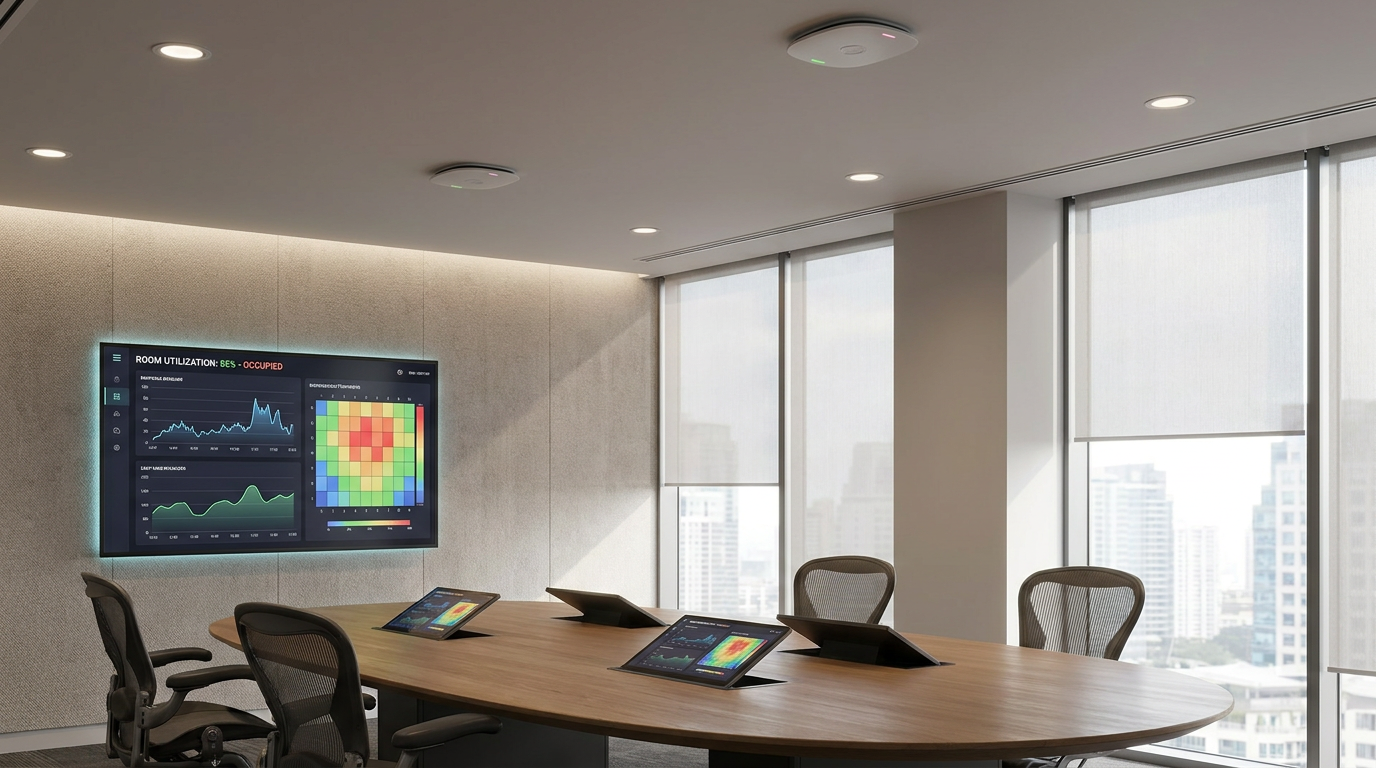
Occupancy tracking refers to the use of sensors, software, and control systems to detect whether a space is occupied, how many people are present, where activity is occurring, and when a room or zone is being used. The output is not just raw data. In a well-designed building, that information is connected to operational decisions. Lights can turn off automatically in empty rooms. Ventilation can increase when crowd levels rise. Cleaning teams can prioritize areas that saw the most use. Space planners can see which rooms are constantly booked and which sit mostly idle.
It is helpful to distinguish occupancy tracking from the simpler occupancy sensor many people know from restrooms or conference rooms. A basic occupancy sensor may only detect motion and switch lights on or off. A fuller occupancy tracking system can aggregate data across floors, zones, or buildings and connect it to analytics dashboards and automation logic. That broader approach is where the real intelligence starts to emerge.
In smart property management, the value is largely operational. Property teams are under pressure to lower cost, improve sustainability performance, maintain tenant comfort, and justify capital decisions. Occupancy data helps with each of those goals because it reveals actual use patterns. It turns assumptions into measurable signals. That may sound technical, but the logic is straightforward: if you know when and where people are present, you can operate the building with much more precision.
The U.S. Department of Energy has emphasized that occupancy sensing is part of a wider move toward building controls that are more responsive to real use rather than rigid schedules. That reflects a larger trend in building management. Operators no longer want a building that behaves the same way every day regardless of how many people are inside. They want a building that adapts.
Why occupancy tracking matters in smart property management
Most buildings are designed with schedules. Offices assume peak attendance during weekday business hours. Residential common spaces follow generalized usage windows. Schools expect classrooms to be occupied at certain times. But real use is messier than schedules. Hybrid work has changed office patterns. Amenity spaces may be full one evening and empty the next. Conference rooms may be booked but never actually used. Without occupancy data, building operations often continue as if every planned use is happening exactly as expected.
That mismatch creates inefficiency. When systems run based on assumptions, they frequently serve empty or lightly used spaces. Occupancy tracking closes that gap by showing live and historical demand. It helps property managers adjust setpoints, automate controls, and redesign services around actual usage. In effect, it gives a building situational awareness.
This also improves decision quality over time. A property manager reviewing occupancy data across several months can identify underused floors, overburdened meeting areas, traffic bottlenecks, or recurring ventilation stress in specific zones. A leasing team can better understand which amenities matter most to tenants. A facilities team can schedule cleaning or maintenance based on actual footfall instead of static timetables. The result is more efficient operation and a stronger business case for future improvements.
There is also a human side to this. Better occupancy intelligence can support comfort rather than undermine it. Rooms that get crowded can receive more ventilation. Areas with sporadic use do not need to be overheated or overcooled all day. Shared spaces can feel more responsive because the building reacts to how people use it. When implemented thoughtfully, occupancy tracking makes a property feel more aligned with everyday life.
The sustainability connection: aligning energy use with real demand
The strongest sustainability argument for occupancy tracking is simple: it helps a building use energy when people need it and avoid using energy when they do not. That sounds obvious, but in practice it can be hard to achieve without data. Buildings are complex systems, and many still rely on fixed schedules that were set years ago. Occupancy tracking gives operators a live demand signal they can use to fine-tune those systems.
Lighting is the clearest example. The U.S. Department of Energy notes that occupancy sensors can automatically turn lights on or off based on room use and that lighting energy savings can range from roughly 10 percent to 90 percent depending on the room type and use pattern. The biggest opportunities tend to appear in intermittently used spaces such as corridors, classrooms, conference rooms, break rooms, and restrooms. These are exactly the spaces where a schedule tends to overestimate actual use.
HVAC is equally important, even if the savings profile is more variable. DOE guidance states that high-performance commercial building control sequences can deliver, on average, about 30 percent annual HVAC energy savings when monitoring and control systems are correctly implemented. Occupancy data contributes to that outcome by helping heating, cooling, and ventilation systems serve real demand more accurately. Empty zones do not need full conditioning, and crowded rooms may need extra airflow sooner than a fixed schedule would provide.
From a carbon perspective, this matters because lighting and HVAC are major drivers of building energy use. Reducing waste directly lowers electricity and fuel consumption. It can also reduce peak demand, which is increasingly important as utilities and grid operators look for more flexible buildings. Occupancy-aware buildings are better positioned to participate in demand response strategies because they can adjust services more intelligently without creating obvious discomfort.
In Canada, this direction aligns with the broader policy push toward efficient and lower-emission buildings. The federal Canada Green Buildings Strategy is intended to help reduce emissions, support retrofits, and lower energy bills. Occupancy tracking fits naturally into that strategy because it improves operational efficiency without always requiring major structural changes. For many existing buildings, smarter controls can be one of the fastest paths to meaningful performance gains.
Occupancy tracking is not just about automation. It is about matching building performance to actual human demand, which is one of the most direct ways to cut waste without sacrificing comfort.
How occupancy tracking works in practice
At a practical level, occupancy tracking involves three layers. The first is detection, where sensors or existing building systems capture a signal related to presence or use. The second is interpretation, where software translates that signal into useful information such as occupied versus unoccupied, headcount estimates, dwell time, or zone activity. The third is action, where the system either informs operators through dashboards or directly triggers building controls such as lighting, ventilation, or scheduling adjustments.
Consider a meeting room in a smart office. A sensor detects motion or presence when people enter. That signal is sent to the building management system or a room analytics platform. The system records the room as occupied, turns lights on if needed, adjusts airflow, and later logs the duration of use. Across weeks or months, those records reveal whether the room is overused, underused, or frequently booked without actual attendance. What started as a simple sensing event becomes an operational insight.
In a residential property, the same principle can apply to shared amenity areas, parking access, corridors, or lobbies. Occupancy patterns can help optimize ventilation in fitness rooms, reduce lighting waste in storage areas, and support staffing decisions for concierge or cleaning teams. The technology does not need to be intrusive to be useful. Often, the most valuable systems track zones and patterns rather than individuals.
The strongest implementations do not treat occupancy as an isolated metric. They combine it with temperature, humidity, CO2 levels, energy meters, and control data to create a fuller picture of building performance. That is when occupancy tracking starts to function as part of a true intelligence layer rather than a single automation feature.
Common occupancy-tracking technologies explained simply
One reason occupancy tracking can seem confusing is that many different technologies fall under the same umbrella. No single method is perfect for every space. The right choice depends on layout, privacy expectations, accuracy needs, response speed, integration requirements, and budget. Understanding the main categories helps property teams ask better questions before they invest.
Passive infrared sensors
Passive infrared, often shortened to PIR, is one of the most common and affordable approaches. These sensors detect changes in infrared radiation associated with body heat and movement. They are widely used for lighting control in offices, corridors, restrooms, and small rooms. PIR sensors are effective in many applications, but they can miss very still occupants, which means they are better at motion detection than nuanced presence detection.
Ultrasonic sensors
Ultrasonic sensors emit high-frequency sound waves and measure how those waves reflect back. They can detect smaller movements than PIR sensors, which can make them useful in enclosed rooms where people may remain seated for long periods. However, they can also be more prone to false triggers if movement is detected outside the intended zone or if the space is acoustically complex.
Microwave and radar-based sensors
Microwave or radar sensors work by sending electromagnetic waves and reading changes in the return signal. These technologies can be highly sensitive and increasingly sophisticated, especially in newer smart building products. In some cases, they can detect presence more accurately than simpler motion-based sensors. Their performance depends heavily on calibration and placement, and they may cost more than basic alternatives.
Camera-based analytics
Camera-based systems use video feeds and computer vision to estimate occupancy, count people, or analyze movement patterns. They can provide rich data, especially in large or dynamic spaces such as lobbies, campuses, retail areas, or transportation hubs. At the same time, they raise the strongest privacy questions. The best implementations use privacy-preserving methods such as edge processing, anonymization, or counting without identity storage, but design choices matter enormously here.
Wi-Fi and Bluetooth device counting
Another approach is to estimate occupancy by counting mobile devices detected through Wi-Fi or Bluetooth signals. This can be useful for broad trend analysis and space utilization, especially in commercial environments. However, it is an indirect proxy. Not every person carries a device, some carry multiple devices, and detection settings can affect accuracy. It is often best used for pattern recognition rather than precise headcounts.
Pressure, seat, and desk sensors
Pressure or seat sensors are useful when the goal is to understand use of specific desks, chairs, parking spaces, or seating zones. They can offer high certainty in tightly defined applications, such as desk booking validation or occupancy status in meeting booths. Their limitation is scale. They are excellent for granular applications but less practical for broad whole-building coverage unless the use case justifies the cost.
Inference from existing systems
Some occupancy insights come from systems that were not originally installed as occupancy sensors. Access control logs, elevator traffic, badge data, HVAC patterns, and indoor air quality signals can all help infer building use. This approach can reduce hardware costs because it leverages systems already in place. The tradeoff is that inferred occupancy may be less immediate or less precise than direct sensing.
The practical lesson is that occupancy tracking is usually a design exercise, not just a product purchase. Good outcomes depend on fitting the sensing approach to the building and its goals.

Where occupancy data creates the most value
Lighting control is often the easiest starting point because the business case is clear and the technology is familiar. Occupancy sensors can prevent lights from operating in empty spaces and can reduce light output where full illumination is unnecessary. In intermittently used rooms, the savings can be substantial. The operational complexity is relatively low compared with deeper HVAC integration, which makes lighting a common first step in retrofits.
HVAC and ventilation are where occupancy tracking becomes more strategic. Demand-controlled ventilation, for example, adjusts fresh air delivery based on actual occupancy or a related signal such as CO2. This helps avoid overventilating lightly used spaces while preserving air quality where occupancy is high. In buildings with multiple zones, occupancy data can also support better scheduling, setback strategies, and thermal control logic. The result can be lower energy use and improved comfort, especially in spaces with variable attendance.
Cleaning and maintenance are another strong use case that receives less attention than energy. Instead of cleaning every room with the same frequency regardless of use, operators can prioritize based on traffic and dwell time. This can improve labor efficiency, reduce unnecessary service, and focus attention where occupants will notice it most. Over time, usage patterns can also inform maintenance planning by showing which areas or equipment zones experience the highest intensity of use.
Space utilization analytics may be the most important long-term application in some portfolios. Hybrid work has made many organizations rethink how much space they need and how it should be configured. Occupancy data can reveal which desks are truly used, which collaboration areas are crowded, and which layouts are not working. These insights support leasing, design, consolidation, and renovation decisions with real evidence rather than anecdote.
Tenant and occupant experience also benefits when occupancy data is used well. Room booking systems become more accurate when no-show meetings can be identified. Shared amenities feel better managed when crowding is visible and services adjust accordingly. Waiting areas, lobbies, and circulation zones can be monitored for traffic patterns that help reduce friction. A more responsive property often feels more premium, even when the underlying improvement is operational.
Occupancy tracking as part of the smart property data stack
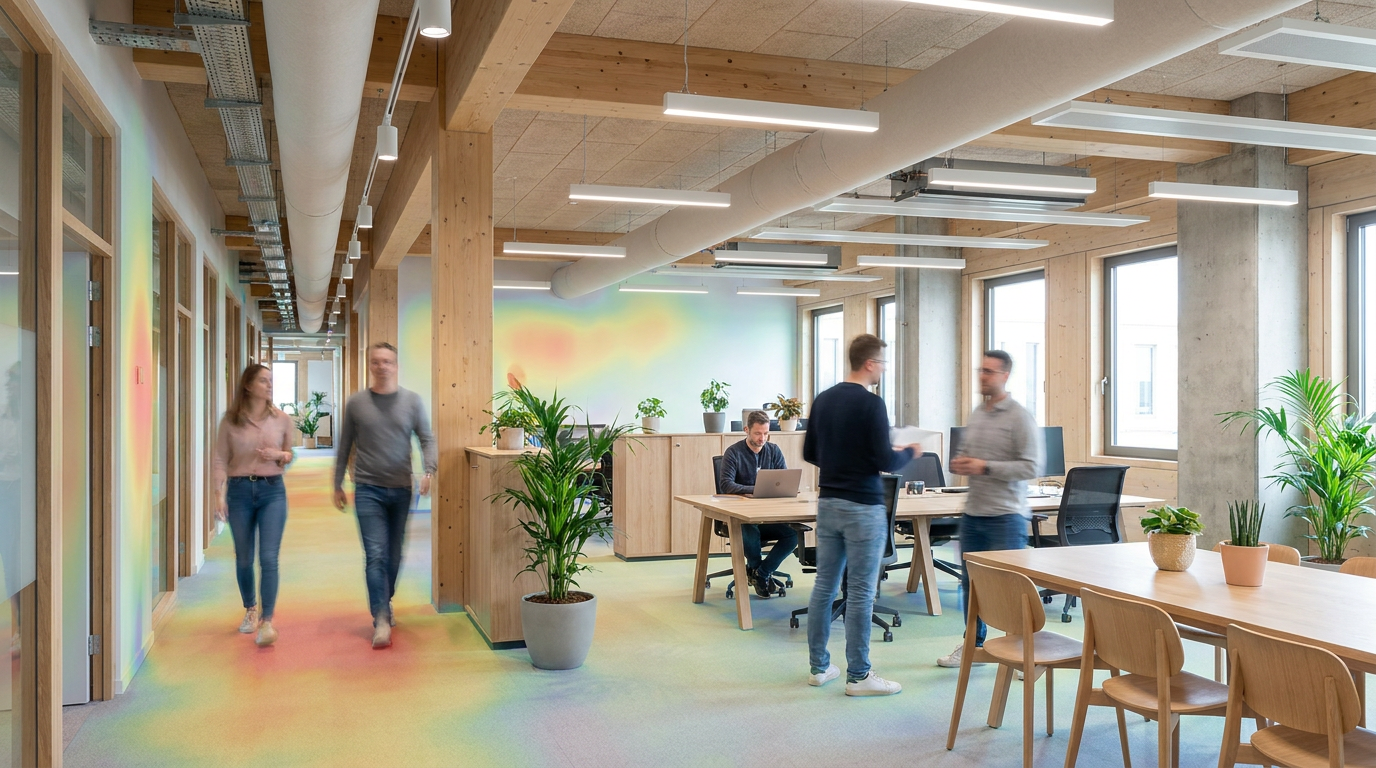
The most useful way to think about occupancy tracking is not as a standalone feature but as one layer in a broader smart property data stack. On its own, occupancy data tells you whether people are present and how spaces are used. Combined with other signals, it becomes far more powerful. Pair it with energy meters and you can see which spaces consume too much energy relative to use. Pair it with indoor environmental quality data and you can assess whether comfort and air quality are keeping pace with crowd levels. Pair it with maintenance data and you can optimize service intervals around real demand.
This is where analytics platforms and building automation systems matter. The sensor itself is only the starting point. The real value comes from how data is cleaned, contextualized, visualized, and connected to controls. Wireless sensor networks, sub-metering, and software analytics all help convert raw occupancy signals into decisions. The better that data infrastructure is designed, the easier it becomes to move from reactive management to predictive management.
For example, an operator might notice that one floor consistently shows high afternoon occupancy, rising CO2, and above-average cooling demand. That cluster of signals can lead to a ventilation adjustment, a zoning review, or a space planning change. Another area may show lights running long after occupancy falls, suggesting that control sequences need refinement. These are not abstract data exercises. They are actionable patterns hidden inside day-to-day building operations.
Occupancy data also supports newer approaches such as occupant-centric control and grid-interactive efficient buildings. Occupant-centric control aims to make buildings more responsive to how people actually experience space. Grid-interactive efficient buildings, a concept highlighted by DOE, use smart technologies and on-site resources to provide demand flexibility while balancing energy cost, grid services, and occupant needs. Occupancy intelligence helps both models because it adds a live human context to control decisions.
Code, retrofit, and policy relevance in North America
Occupancy tracking is not just a technology trend. It also connects to code requirements, retrofit economics, and public policy. In North America, occupancy sensors are often associated with code-driven lighting controls, particularly in areas with intermittent use. As codes evolve and building performance standards become more demanding, occupancy-based controls increasingly support compliance as well as operational savings.
In Canada, the National Energy Code of Canada for Buildings covers lighting, HVAC, and power systems. That makes occupancy-aware control strategies relevant not only for new construction but also for retrofit planning. Owners looking to modernize older assets can often justify occupancy-based upgrades as part of a broader package that improves efficiency, lowers operating costs, and supports future resilience.
The current policy direction adds momentum. Canada’s green building strategy and related efficiency initiatives are pushing more attention toward retrofits and smarter building operation. For many properties, especially existing assets that are not undergoing full redevelopment, controls and analytics offer a practical path to better performance. They are not always as visible as envelope upgrades or equipment replacement, but they can deliver meaningful gains at lower disruption levels.
In the United States, similar logic applies. Federal guidance and industry programs increasingly emphasize sensors, controls, and grid responsiveness as part of decarbonization strategy. Occupancy data fits that framework because it improves the precision of building systems. Precision matters because sustainability is no longer just about installing efficient equipment. It is about ensuring that equipment operates efficiently under real-world conditions.
Common misconceptions about occupancy tracking
One of the biggest misconceptions is that occupancy tracking automatically means surveillance. In reality, many systems are designed only to detect presence, motion, or approximate counts within a zone. They do not identify individuals. That said, privacy concerns are valid and should not be dismissed. The technology chosen, the granularity of data collected, where processing occurs, and how long data is stored all shape the privacy profile of the system.
Another misconception is that occupancy sensors are only useful for turning lights on and off. Lighting is important, but modern occupancy data is increasingly used for ventilation, HVAC optimization, fault detection, cleaning workflows, and space planning. That broader role is why occupancy tracking belongs in conversations about smart property data rather than only electrical controls.
There is also a tendency to assume that more sensors automatically produce better results. They do not. Poor placement, weak calibration, unnecessary complexity, and low-quality analytics can all reduce value. A badly designed system may generate false positives, where lights stay on in empty spaces, or false negatives, where occupants sit in the dark or ventilation responds too slowly. Trust is fragile. If people experience repeated errors, they quickly lose confidence in the system.
Finally, not every building will see the same savings. Occupancy-based HVAC strategies are highly context-dependent. Results vary based on building type, climate, baseline controls, occupancy variability, and the quality of implementation. That does not weaken the case for occupancy tracking. It simply means the technology should be evaluated as part of a specific operational strategy rather than treated as a universal shortcut.
Privacy, calibration, and trust: the issues that determine success
If occupancy tracking is going to succeed, it needs to be technically sound and socially acceptable. Privacy is central to that balance. The best systems follow a privacy-by-design approach, meaning they minimize unnecessary data collection from the start. In many cases, counting presence at the zone level is enough. There is no reason to collect personally identifying information if the operational goal is simply to adjust lighting or ventilation.
Transparency matters as much as technical design. Occupants should understand what is being measured, why it is being measured, how the data is used, and what protections are in place. Ambiguity breeds suspicion. Clear communication helps people distinguish between occupancy analytics and invasive monitoring, which are not the same thing.
Calibration and validation are equally important. Occupancy data can be noisy. Sensors may misread stillness as absence, detect motion outside the target area, or struggle in unusual layouts. That is why commissioning, post-installation testing, and periodic review are essential. DOE guidance on sensors and fault detection underscores this point. A system that is not checked and tuned can quietly drift away from reliable performance.
Trust grows when systems behave consistently and people see the benefit. If a workspace stays comfortable, lights respond naturally, and crowding is handled better, occupants are more likely to accept the technology. Good implementation feels almost invisible. The building simply works better.
What property owners and managers should ask before investing
Before adopting occupancy tracking, property teams should define the business problem they are trying to solve. Is the priority lighting savings, HVAC efficiency, ventilation quality, cleaning optimization, amenity planning, or long-term space utilization? Different goals may require different sensing methods, integration depth, and analytics tools. Starting with a clear use case helps avoid overbuying or buying the wrong type of system.
It is also important to ask how the data will connect to building systems. A sensor that detects occupancy but does not integrate with lighting controls, HVAC sequences, or a usable dashboard will deliver limited value. Integration planning should include data governance, cybersecurity, system compatibility, and responsibility for maintenance and troubleshooting.
Another key question is how success will be measured. Property managers should identify baseline energy use, comfort complaints, room utilization patterns, or cleaning costs before deployment so that improvements can be quantified later. Without a baseline, even a well-performing system may struggle to prove its value to owners or finance teams.
Finally, teams should think in phases. A pilot in selected rooms or zones can reveal technical issues and user responses before broader rollout. This is especially helpful in mixed-use or occupied buildings where one-size-fits-all deployment rarely works well. The goal is not just to install sensors. The goal is to create dependable operational intelligence.
The future of occupancy tracking in smart buildings
Occupancy tracking is moving toward more adaptive, less intrusive, and more integrated models. Sensor performance is improving, analytics are getting better at filtering noise, and privacy-preserving methods are becoming more important as adoption grows. Buildings are also becoming more software-defined, which means occupancy signals can be combined with many other streams to drive smarter control logic.
One major trend is the rise of occupant-centric control. Instead of treating comfort and efficiency as opposing goals, these systems try to optimize both by understanding how people actually use spaces. Another trend is the growth of grid-interactive efficient buildings, where occupancy data helps properties shift or reduce demand in ways that support the broader energy system. In both cases, occupancy information adds context that static schedules cannot provide.
As retrofit activity expands, especially under climate and efficiency policy pressure, occupancy tracking is likely to become more common in existing buildings, not just premium new developments. That is important because the largest sustainability gains often depend on improving the buildings that already exist. Occupancy-aware controls are one of the clearest examples of how data can unlock those gains.
The future is not about filling buildings with as many sensors as possible. It is about creating a more intelligent relationship between people, space, and energy. Occupancy tracking is valuable because it sits exactly at that intersection.
Final thoughts
Occupancy tracking may sound technical, but its value is remarkably practical. It helps buildings understand when spaces are used, where demand is concentrated, and how systems should respond. That insight supports lower energy waste, better comfort, improved cleaning and maintenance, more accurate space planning, and stronger sustainability performance.
The key is to see occupancy tracking for what it really is: a decision tool. On its own, a sensor does very little. Connected to analytics and controls, it becomes part of the intelligence layer that makes a property more responsive and efficient. In a market increasingly shaped by cost pressure, emissions targets, hybrid use patterns, and tenant expectations, that intelligence is no longer optional for many assets.
For property owners and managers, the opportunity is not just to automate a few rooms. It is to align building operations with reality. That is where occupancy tracking delivers its real value, and why it has become such an important part of smart property data.


No Comment! Be the first one.