



Future Energy Systems: Practical Steps to Sustainable Living
Future energy systems can sound abstract at first, as if they belong to utility boardrooms, research labs, or distant climate plans rather than ordinary households. In reality, many of the most important changes are already appearing in familiar places such as kitchens, garages, basements, and neighborhood streets. A smart thermostat that adjusts heating automatically, an electric vehicle charging overnight, a heat pump replacing an aging furnace, or a battery helping a home ride through an outage are all part of the same wider shift. The transition is not only about producing cleaner electricity. It is also about using energy more intelligently, more affordably, and with greater resilience in everyday life.
Table Of Content
- Why Future Energy Systems Matter Now
- Canada’s Clean Electricity Advantage and What It Means for Homes
- The Electrified Home Is the Heart of Future Energy Systems
- Heat Pumps: A Practical Cornerstone of Sustainable Living
- Smart Grids, Smart Meters, and Why Flexibility Matters
- Storage, Backup Power, and the Value of Resilience
- Rooftop Solar, Community Solar, and Shared Participation
- Electric Vehicles and Managed Charging as Energy Tools
- How Homeowners Can Take Practical First Steps
- What Investors and Property Owners Should Watch
- Common Misconceptions That Can Make the Transition Feel Harder Than It Is
- A Calm Path Forward
That practical perspective matters, especially in Canada and across North America, where the starting point is stronger than many people realize. According to Statistics Canada, renewable sources accounted for 63.9% of Canada’s total electricity generation in 2024, with total generation reaching 622.2 million megawatt-hours. The Canadian Centre for Energy Information also reports that 78% of Canada’s electricity comes from non greenhouse gas emitting sources such as solar, hydro, wind, and nuclear. Those figures do not mean the energy transition is complete, but they do show that cleaner power is already deeply embedded in the system. The next phase is less about starting from scratch and more about connecting homes, vehicles, buildings, and grids in smarter ways.
Future energy systems refer to the connected network of technologies and practices that generate, store, and manage electricity more cleanly, flexibly, and reliably than traditional one-way power grids. Rather than a single technology, a future energy system is a flexible mix of renewable generation such as hydro, wind, solar, and nuclear; electrification of heating and transportation through heat pumps and electric vehicles; battery and grid-scale storage; demand management tools like smart thermostats and time-of-use pricing; and digital coordination through smart meters and grid modernization. For homeowners and investors, this matters because sustainable living does not require a complete lifestyle overhaul or an all-at-once renovation. It usually means a series of practical decisions — better insulation, an efficient heat pump, a smart thermostat, or a well-timed EV charger — that gradually improve efficiency, lower emissions, reduce exposure to fuel price volatility, and strengthen a property’s long-term value.
This article takes a calm, approachable look at what future energy systems actually mean in practice. It explores why electricity is becoming more central to daily life, how homes can participate in cleaner and smarter grids, where resilience fits into the picture, and which steps make the most sense for people who want to move forward without being overwhelmed. The goal is not to push every reader toward the same set of choices. It is to show that practical, elegant progress is possible, and that sustainable living can be integrated into ordinary decisions about comfort, cost, and long term planning.
Why Future Energy Systems Matter Now
The energy conversation has shifted noticeably over the last few years. For a long time, many people thought of clean energy mainly in terms of large solar farms or wind turbines on distant landscapes. Those projects are still important, but the bigger story now is integration. Electricity demand is rising because more parts of modern life are becoming electrified, from transportation and heating to digital infrastructure and cooling during hotter summers. The International Energy Agency reported that global electricity demand grew by 4.3% in 2024, driven in part by electrification, extreme heat, cooling needs, and data centers.
This growth has two important implications. First, societies need more clean electricity generation and better transmission systems to move power where it is needed. Second, and just as importantly, they need far more flexibility in how electricity is managed from hour to hour. A future energy system is not simply a bigger version of the old grid. It is a more responsive network that can balance changing weather conditions, rising demand, and distributed energy resources such as rooftop solar, batteries, and electric vehicles.
That need for flexibility is especially relevant in Canada. The country already benefits from a relatively clean electricity mix, yet 2024 also offered a useful reminder that even low carbon systems need backup options and careful coordination. Hydroelectric generation fell because of drought conditions in Quebec and Manitoba, which meant other sources had to help fill the gap. This does not suggest a weakness in clean electricity so much as a truth about modern systems: reliability comes from diversity, storage, smart controls, and interconnection. A resilient energy future is not based on one perfect technology. It is built through layers of support.
For households, this broader transition can feel surprisingly familiar. The same technologies that help the grid become more flexible can often help homeowners become more comfortable and cost conscious. Better insulation reduces energy waste. Smart devices shift energy use to cheaper times of day. Electric heating and transport can take advantage of cleaner power. Home batteries can support backup power and load management. These are not futuristic concepts in the distant sense. They are increasingly practical tools for living well in a changing energy landscape.
Canada’s Clean Electricity Advantage and What It Means for Homes
One of the most helpful ways to make the future energy conversation feel less intimidating is to begin with where Canada already stands. With nearly two thirds of electricity generation coming from renewable sources in 2024 and roughly 78% coming from non emitting sources when nuclear is included, Canada has a comparatively strong foundation for electrification. This matters because when a home switches from oil or gas based equipment to electric alternatives, the environmental benefit depends partly on how clean the grid already is. In many Canadian provinces, that grid is low carbon enough to make electrification a meaningful emissions reducing step.
That point corrects a common misconception. Some people assume electrification only shifts emissions from the home to the power plant. In regions with carbon intensive electricity, that can complicate the picture. In much of Canada, however, the electricity mix is already relatively clean, which means switching heating and transportation toward electricity can significantly reduce household emissions over time. It can also improve indoor air quality and simplify maintenance, particularly when older combustion equipment is due for replacement anyway.
Another misconception is that clean energy means only wind and solar. In reality, future energy systems in Canada are likely to remain diversified. Hydroelectricity, nuclear power, wind, solar, storage, demand response, and upgraded transmission all have roles to play. This balanced mix is often less visible than a dramatic single technology story, but it is far more useful to homeowners because it points toward stability and practicality. A home does not need to generate all of its own power to benefit from the clean energy transition. It simply needs to interact with a cleaner, more intelligent system in ways that make sense for the property and the household budget.
For investors, this also changes the lens. Properties that are easier to electrify, weatherize, and integrate with smart energy tools may become more attractive over time. As policy support, utility pricing structures, and buyer expectations evolve, homes with efficient envelopes, electric heating, EV readiness, and flexible energy management could hold an advantage. The path to sustainable housing is becoming less niche and more mainstream, which often means long term value is tied increasingly to performance rather than appearance alone.
The Electrified Home Is the Heart of Future Energy Systems
When people picture future energy systems, it helps to imagine an electrified home rather than a giant technological leap. This home still looks and feels like home. It is comfortable, familiar, and livable. The difference is that more of its key functions are powered by efficient electric technologies that can respond to cleaner grid conditions and, in some cases, produce or store energy locally. In practical terms, that often means a combination of better insulation, electric heating, high performance appliances, smart controls, EV charging, and possibly rooftop solar or battery storage.
Electrification is appealing because it aligns efficiency with convenience. Electric technologies are often easier to automate and optimize than fossil fuel systems. They can respond to time of use electricity rates, utility demand signals, or homeowner preferences with minimal day to day effort. Over time, this creates a home that not only consumes less energy, but also uses it at better moments and in more strategic ways. That is the quiet strength of a future energy system. It improves outcomes without demanding constant attention.

A good example is the smart thermostat. On its own, it may seem like a small upgrade, but it reflects a larger principle. Smart thermostats can learn occupancy patterns, reduce unnecessary heating and cooling, and help households take advantage of lower priced electricity periods where such rates are available. More importantly, they introduce the home to the idea of responsive energy use. Instead of treating energy consumption as fixed and passive, they make it adaptive. That same logic extends to water heaters, EV chargers, appliances, and even batteries.
The electrified home also creates a more future ready relationship with the grid. As utilities modernize and add more sensors, advanced metering, automation, and storage, homes that can shift demand or coordinate energy use become valuable participants rather than passive endpoints. The U.S. Department of Energy describes grid modernization as involving advanced sensors, smart meters, automation, and batteries that improve reliability and flexibility. That may sound technical, but the household impact is straightforward: lower costs, better reliability, and more options for managing energy use intelligently.
Heat Pumps: A Practical Cornerstone of Sustainable Living
If one technology best captures the practical side of future energy systems for households, it may be the heat pump. Heat pumps move heat rather than generating it through combustion, which makes them highly efficient for both heating and cooling. They can replace oil heating, reduce reliance on natural gas, and serve as a central part of an all electric home. Because space heating is such a major energy use in Canadian homes, this one upgrade can significantly shape both costs and emissions.
There is still a persistent myth that heat pumps do not work well in cold climates. Modern cold climate models have substantially changed that picture. While proper sizing, installation quality, and home insulation remain important, today’s systems are designed to perform effectively in Canadian winters. In other words, the technology question is often less about whether heat pumps can work and more about ensuring the home is prepared to get the best results from them.
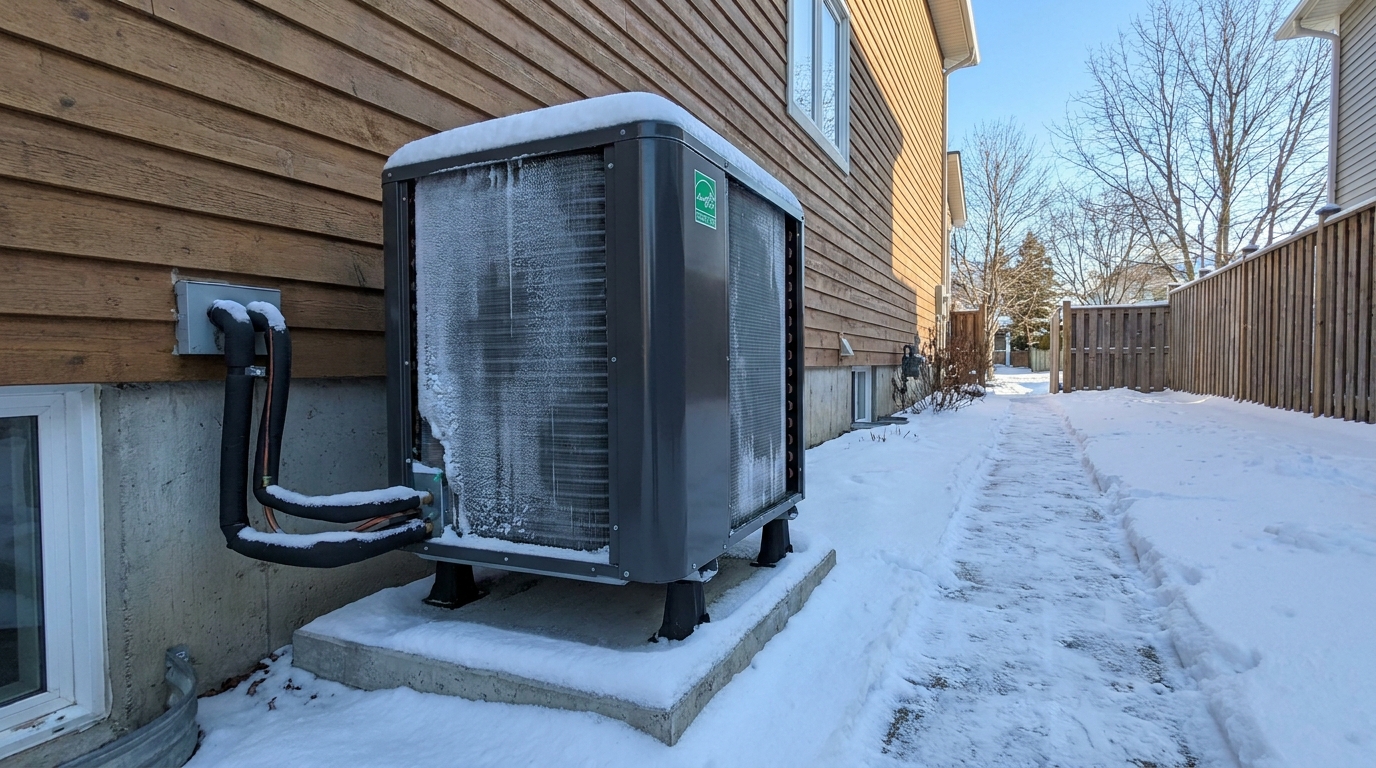
Affordability support is helping make this transition more accessible. Canada’s Oil to Heat Pump Affordability Program offers up to $10,000 to eligible low to median income households switching from heating oil to electric heat pumps, and by February 2025 the program had received 36,750 applications. That uptake says something important. The shift is not only theoretical or luxury driven. It is becoming a practical response to energy costs, equipment replacement cycles, and the desire for more efficient comfort.
For homeowners considering the change, the most balanced approach is to think in terms of timing. If an old oil furnace or aging cooling system is nearing the end of its life, that replacement window becomes an ideal moment to assess a heat pump. Pairing the installation with weatherization, air sealing, and insulation upgrades can improve performance and lower the required system size. This is often where sustainable living becomes most elegant: not by adding more technology than needed, but by making the building itself work better so each mechanical upgrade can do more with less.
For investors, heat pumps can also signal future resilience. Properties that rely on expensive or higher emission heating fuels may face greater operating costs and market pressure over time. Efficient electric heating can improve tenant comfort, simplify long term planning, and align properties more closely with emerging standards for lower carbon buildings. It is not a universal solution in every building context, but it is quickly becoming one of the clearest indicators of a home or property moving in step with future energy systems.
Smart Grids, Smart Meters, and Why Flexibility Matters
One of the least visible but most important parts of the energy transition is the modernization of the grid itself. Older electricity systems were designed around predictable one way flows of power from large central generators to passive customers. Future energy systems are more dynamic. They involve two way relationships in which homes, batteries, solar arrays, electric vehicles, and demand response tools all interact with utility networks. The goal is not simply to generate clean power, but to match supply and demand more intelligently in real time.
This matters because electricity demand is becoming less predictable and more weather sensitive. Heat waves increase cooling loads. Cold snaps create winter peaks. Transportation electrification adds evening charging demand. Data centers are also becoming a more significant source of electricity use, with the IEA reporting that they accounted for around 1.5% of global electricity consumption in 2024, with the United States representing the largest national share. As these pressures grow, grid flexibility becomes essential to maintaining reliability without unnecessary cost escalation.
Smart meters and time of use rates are part of the household side of this shift. They allow utilities and consumers to better understand when electricity is being used and how consumption patterns can be adjusted. For some households, this may mean running dishwashers overnight, preheating or precooling the home slightly before peak pricing periods, or charging an EV during cheaper off peak hours. These changes are modest on their own, but together they help reduce strain on the system and can lower utility bills.
Demand response takes the idea a step further. In a demand response arrangement, certain devices or systems reduce or shift electricity use during high demand periods, often with incentives involved. A thermostat may temporarily adjust temperature slightly, a water heater may delay heating, or an EV charger may pause and resume later. When done well, these shifts are barely noticeable in day to day comfort. Yet across thousands of homes, they become a powerful grid resource. This is one reason smart grid language is worth understanding. It is not just utility jargon. It can directly affect household affordability and reliability.
Future energy systems are not only about making electricity cleaner. They are about making energy use more coordinated, flexible, and resilient for the people who rely on it every day.
Storage, Backup Power, and the Value of Resilience
Resilience is increasingly central to the conversation about sustainable living. Extreme weather, drought, wildfire risk, heat events, and winter storms are changing how people think about home energy systems. Reliability used to mean simply having access to electricity from the grid. Today, it also means thinking about how homes and communities can cope when conditions are less stable than usual. This is where storage, backup strategies, and distributed energy resources begin to play a larger role.
Home battery storage is one of the clearest examples. A battery can store electricity from rooftop solar or from the grid during lower demand periods and then use it later during outages or expensive peak hours. Not every household needs a battery right away, and the economics vary by location, utility structure, and outage risk. Still, batteries are becoming more relevant because they bridge two goals at once: they improve resilience and increase flexibility. That combination makes them especially valuable in future energy systems built around variable renewable generation.
At a broader level, storage is expanding beyond individual homes. Canada’s 2025 progress report notes that Smart Renewables and Electrification Pathways Program projects had approved about 3,100 megawatts of renewable energy and 590 megawatts of energy storage capacity by November 2025. Those numbers point to an energy system that is steadily becoming more capable of balancing clean generation with changing demand. For ordinary households, the practical meaning is simple. Cleaner electricity works best when there is enough storage and flexibility behind it to keep service stable and costs manageable.
Resilience is also not limited to batteries. Sometimes the most cost effective resilience upgrade is a stronger building envelope. Better insulation, improved windows, and air sealing help homes maintain comfortable temperatures for longer during outages or extreme weather. In that sense, efficiency and resilience are closely related. A home that needs less energy in the first place is easier to heat, cool, and support during disruptions. This is one reason future energy systems should never be reduced to gadgets alone. The building itself remains one of the most powerful technologies in the mix.
Rooftop Solar, Community Solar, and Shared Participation
Rooftop solar remains one of the most recognizable symbols of renewable energy, and for good reason. It allows households to produce at least some of their own electricity, can lower grid purchases during sunny periods, and often pairs well with electrification strategies such as EV charging and heat pumps. In some markets, it also improves energy cost predictability over the long term. Yet rooftop solar is best viewed as one possible layer within a larger system rather than a universal requirement for sustainable living.
Not every roof is ideal for solar. Shade, orientation, structural considerations, ownership constraints, and local regulations can all affect whether rooftop installation makes sense. For readers who want a more approachable path, community solar offers another model. Community solar programs allow households to subscribe to a shared solar project and receive credits or savings without installing panels on their own property. This can be especially useful for renters, condo residents, or owners of homes that are not good candidates for rooftop systems.
The broader lesson here is reassuring. Participating in future energy systems does not depend on owning every technology yourself. The system is becoming more networked and more collaborative. A household might contribute through smart demand management rather than solar generation. Another might install rooftop panels but no battery. A third might join a community solar program and electrify heating later. Sustainable progress is not invalidated by partial steps. In fact, future energy systems work precisely because different participants contribute in different ways.
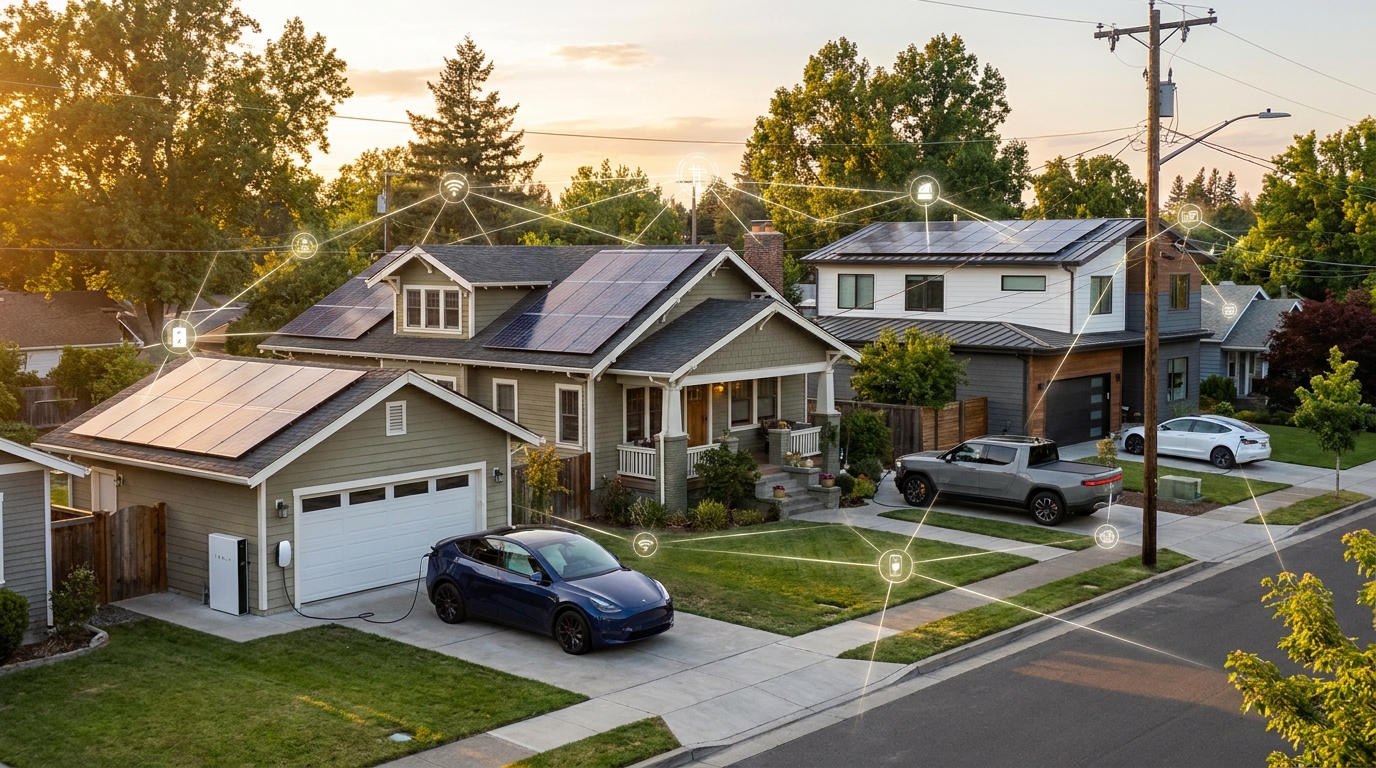
This also points toward an emerging concept called the virtual power plant. In a virtual power plant, many distributed devices such as batteries, thermostats, solar systems, or EV chargers are coordinated so they can collectively support the grid. Individually, each home contributes a small amount. Together, they can reduce peaks, improve reliability, and make better use of renewable energy. For homeowners, this can eventually translate into incentives, lower costs, and a more active role in the energy economy without requiring day to day technical expertise.
Electric Vehicles and Managed Charging as Energy Tools
Electric vehicles are often discussed mainly in terms of transportation, but in future energy systems they are also energy assets. An EV increases household electricity use, yet it can do so in a controllable way. Unlike many forms of demand, vehicle charging is often flexible in timing. Most cars sit parked for long periods, which means charging can be shifted to overnight or off peak hours in response to utility rates or grid conditions. This makes EV adoption an important part of the smart energy conversation rather than a separate trend.
Managed charging is the practical mechanism that turns EVs into helpful grid participants. Instead of plugging in and drawing power at the highest demand moment, a charger can schedule energy use for later when electricity is cheaper or cleaner. This is especially valuable as electricity demand rises more broadly. It allows transportation electrification to grow without placing unnecessary pressure on peak periods. For households, it also offers a straightforward way to control operating costs.
Looking ahead, vehicle to grid technology may deepen this relationship even further. In a vehicle to grid system, an EV battery could potentially send power back to the home or grid when needed. While this capability is still developing and will depend on policy, utility rules, hardware compatibility, and consumer interest, it reflects the larger direction of travel. The future energy system is increasingly one in which devices are multifunctional. A vehicle is not only mobility. It can also become part of a more flexible home energy strategy.
For property owners and developers, EV readiness is already worth considering. Even if a household is not ready to purchase an EV today, preparing electrical capacity and charging infrastructure can be a practical long term decision. It avoids more disruptive retrofits later and aligns the property with likely demand from future buyers or tenants. This is one of the quieter patterns shaping sustainable real estate. The most valuable properties may be the ones designed to adapt gracefully as energy expectations evolve.
How Homeowners Can Take Practical First Steps
The most useful message for many readers is that future energy systems do not require an all at once transformation. The smartest approach is often staged and strategic. Begin with what the home needs anyway, then use each improvement to support the next one. This might mean sealing air leaks before replacing heating equipment, or upgrading the electrical panel before adding a heat pump or EV charger. Small steps are not separate from the bigger transition. They are how the bigger transition becomes durable and affordable.
A practical sequence often begins with an energy assessment. Understanding where a home loses heat, which systems are nearing end of life, and how electricity is currently used can prevent expensive guesswork. From there, homeowners can prioritize measures that improve comfort and efficiency first. Weatherization, insulation, and smart controls typically make later electrification upgrades perform better. Once the building envelope improves, heating and cooling decisions become clearer and often more economical.
It can also help to think in categories rather than products. One category is reduce demand, which includes insulation, air sealing, and efficient appliances. Another is electrify wisely, which includes heat pumps, induction cooking where desired, and EV planning. A third is add flexibility, which includes smart thermostats, managed charging, batteries, or solar where suitable. A staged approach keeps each decision grounded in timing, budget, and real household needs instead of abstract pressure to do everything immediately.
-
Start by improving the building envelope so the home wastes less energy and remains more comfortable in all seasons.
-
Review heating and cooling equipment age, fuel type, and replacement timeline to identify the best moment for electrification.
-
Adopt simple smart energy tools such as programmable or smart thermostats and, where available, take advantage of time of use pricing.
-
Plan ahead for electric vehicle charging, panel capacity, and future electrical loads even if those upgrades are not immediate.
-
Explore local incentives, utility programs, and federal supports to reduce upfront cost and improve payback periods.
There is no single perfect checklist for every property, but there is a consistent principle. The best sustainable upgrades are the ones that fit the home, the climate, and the household’s timing. This is why the transition can feel far more manageable than headlines often suggest. It is less about adopting an ideology and more about making good building decisions in a world where cleaner electricity and smarter technology are increasingly available.
What Investors and Property Owners Should Watch
For investors, future energy systems create both a risk lens and an opportunity lens. On the risk side, buildings that depend heavily on inefficient equipment, expensive heating fuels, or weak envelopes may face rising operating costs and competitive pressure. They may also become less appealing to tenants and buyers who are more sensitive to utility bills, comfort, and resilience. On the opportunity side, properties that are easier to electrify and optimize may benefit from lower long term costs, stronger marketability, and better alignment with evolving building expectations.
It is also useful to watch the convergence of technology costs and policy support. Clean electricity planning, grid upgrades, storage deployment, and incentives for heat pumps or EVs are helping move future energy systems from niche adoption to wider normalization. This does not mean every green technology is automatically a wise investment. It means the context is changing in favor of efficient, flexible, lower carbon buildings. Investors who understand this shift early are often better positioned to allocate capital toward durable property improvements rather than cosmetic upgrades alone.
Another area worth monitoring is resilience. Properties in regions facing outage risk, extreme heat, wildfire smoke, flooding, or winter volatility may benefit increasingly from features such as better insulation, backup power options, efficient electric heating and cooling, and energy management systems. In the past, some of these features were seen as optional or premium. Going forward, they may increasingly be viewed as part of prudent asset management. Sustainable living and resilient property strategy are becoming more closely linked.
This does not require alarmism. In fact, the most grounded investment decisions often come from measured thinking. Future energy systems reward preparation, not panic. A property owner does not need to predict every technological change perfectly. It is enough to recognize that energy performance, electrification readiness, and flexibility are becoming more central to how homes and buildings function over time.
Common Misconceptions That Can Make the Transition Feel Harder Than It Is
One of the biggest barriers to progress is the belief that sustainable living must be all or nothing. In reality, most successful energy transitions happen incrementally. A household might begin with insulation and a smart thermostat, then add a heat pump at replacement time, and eventually prepare for an EV or solar installation. Each of these steps delivers value on its own. They do not need to arrive simultaneously to be meaningful.
Another misconception is that reliability and clean energy are in conflict. The better way to frame the issue is that reliability depends on system design, not on fossil fuels alone. Clean heavy systems still need flexibility, transmission, storage, and backup planning, just as fossil heavy systems need maintenance, fuel supply security, and outage management. Canada’s hydro variability in 2024 showed why flexibility matters, but it did not undermine the case for clean electricity. It simply reinforced the need for diversified, well coordinated systems.
There is also a tendency to think smart grid technologies are too technical for ordinary households to benefit from. Yet many of the most useful applications are simple from the user’s perspective. A charger that delays EV charging to overnight hours, a thermostat that avoids peak prices, or a battery that provides backup during an outage all translate technical infrastructure into familiar household benefits. The future energy system may be sophisticated in the background, but ideally it feels calm and intuitive in daily life.
-
Clean energy is not only solar and wind. It often includes hydro, nuclear, storage, demand response, and transmission improvements.
-
Heat pumps can work well in cold climates. The key is proper equipment selection, installation, and building envelope performance.
-
Electrification does not automatically increase emissions. In much of Canada, cleaner electricity means electric heating and transport can reduce household carbon impact.
-
Smart home energy tools are not just gadgets. They can lower costs and help homes interact more effectively with the grid.
Seen clearly, the transition becomes less intimidating. It is not a demand for perfection. It is an invitation to make buildings and communities work better with the energy realities that are already unfolding.
A Calm Path Forward
The future of energy is often described in sweeping terms, but its most meaningful effects are likely to arrive in quiet, practical ways. A home becomes easier to heat and cool. Utility bills become more manageable. Outage preparedness improves. A property is better positioned for changing technologies and market expectations. None of this requires dramatic reinvention. It comes through steady upgrades, smarter systems, and a cleaner electricity foundation that is already stronger than many people realize.
Canada’s energy landscape offers reason for cautious optimism. With a relatively low carbon electricity mix, expanding storage and renewable deployment, and growing support for electrification measures such as heat pumps, the building blocks are in place. At the same time, rising electricity demand, climate related stress on infrastructure, and the need for grid modernization remind us that thoughtful coordination matters. The future energy system is not simply greener. It must also be more flexible, more resilient, and more user friendly.
For homeowners, the next best step may be surprisingly modest. It could be an energy audit, a weatherization project, a smart thermostat, or planning for a future equipment replacement. For investors, it may mean paying closer attention to electrification readiness, efficiency, and resilience in property decisions. In both cases, sustainable living becomes most effective when it is approached as a practical design question rather than a moral test. What will make this home work better, cost less to operate, and adapt more gracefully over time?
That question is at the heart of future energy systems. They are not asking people to live with less comfort or more complexity. At their best, they offer a cleaner, smarter, and steadier way of living that fits naturally into ordinary housing choices. The transition is already underway. The real opportunity now is to meet it with calm attention, good information, and decisions that feel both achievable and lasting.


No Comment! Be the first one.