



Natural insulation is becoming a more relevant part of the conversation around better homes, not simply greener homes. For many homeowners, the appeal starts with sustainability, but the practical benefits are often what make the decision feel worthwhile. A well-chosen natural insulation product can help reduce heating and cooling costs, improve indoor comfort through changing seasons, and support a healthier material palette inside the home. In a time when energy prices, climate concerns, and indoor air quality all matter more than they once did, natural insulation deserves a closer look.
Table Of Content
- Why natural insulation matters in real homes
- What counts as natural insulation
- The main benefits of natural insulation
- Lower environmental impact
- Energy savings and better comfort
- Healthier material choices
- Comparing popular natural insulation materials
- Cellulose insulation
- Sheep’s wool insulation
- Cotton insulation
- Hemp insulation
- Straw and straw bale systems
- Cork insulation
- Performance is about more than the insulation itself
- How to choose the right natural insulation for your home
- Natural insulation in renovations versus new builds
- Common misconceptions to avoid
- Practical tips for making an eco-friendly insulation decision
- The bigger picture: sustainability without pressure
Natural insulation is a category of insulation made from renewable, recycled, or minimally processed materials rather than conventional synthetic products. It includes cellulose, sheep’s wool, cotton, straw, hemp, and cork, each with different strengths, installation methods, costs, and ideal uses. Cellulose is generally made from about 82 to 85 percent recycled paper, while cotton insulation is often around 85 percent recycled cotton, according to the U.S. Department of Energy. Both are typically treated with borates for fire and insect resistance. Rather than one product or performance standard, natural insulation is best understood as a set of tools that can be matched to a home’s climate, wall or roof assembly, and renovation priorities. The right choice depends less on whether a material is labeled natural and more on how well it fits the specific building assembly and performance requirements of the project.
These details matter because they show that eco-friendly choices are not limited to specialty projects. Many natural insulation products are already part of mainstream building conversations, especially when homeowners are looking for lower-impact materials that still fit real budgets and standard construction methods.
There is also a broader housing reason to pay attention. Natural Resources Canada emphasizes that insulation upgrades reduce heating and cooling costs and improve comfort, while also cautioning homeowners to look for documented, tested R-values rather than relying on vague performance claims. That is a useful reminder in any insulation discussion. Sustainable choices work best when they are grounded in evidence, installed correctly, and considered as part of the full building system.
This article explores the practical side of natural insulation. We will look at what these materials are, how they perform, where they work best, and what homeowners should know before choosing them. The goal is not to suggest that every natural product is perfect for every home. The goal is to make eco-friendly insulation feel clear, achievable, and worth considering when you want a house that is more comfortable, more efficient, and better aligned with long-term environmental goals.
Why natural insulation matters in real homes
Many people first encounter insulation as an abstract concept tied to energy codes or renovation estimates. In everyday life, though, insulation shows up in much more familiar ways. It affects whether a bedroom feels cold near an exterior wall in winter, whether an upstairs space overheats in summer, and whether the furnace or heat pump seems to run constantly. Good insulation supports a steadier indoor temperature, and that stability can make a home feel quieter, calmer, and easier to live in.
Natural insulation matters because it can deliver these practical benefits while also reducing environmental impact in meaningful ways. Many natural or bio-based products rely on renewable fibers, recycled content, or lower-energy manufacturing processes than some conventional alternatives. Natural Resources Canada highlights low embodied carbon as an important design consideration, which strengthens the case for materials that do more than save operational energy. In other words, the conversation is shifting from only asking how a material performs in use to also asking what it took to make that material in the first place.
There is a health dimension as well. Homeowners are increasingly attentive to what goes into the spaces they live in every day. While no insulation product should be chosen on marketing language alone, many people are drawn to natural insulation because it can support a lower-toxicity material strategy when selected carefully and installed properly. This interest often goes hand in hand with better ventilation, tighter air sealing, and more thoughtful moisture control, all of which contribute to a healthier indoor environment.
Another reason natural insulation deserves attention is flexibility. A common misconception is that these materials belong only in custom eco homes or rural experiments. In reality, some natural insulation products are highly practical for mainstream retrofits. The Department of Energy notes that cellulose can be used in new and existing homes, including dense-pack installation in existing walls and loose-fill applications in attics. That kind of versatility makes natural insulation much more relevant to the average homeowner than many people assume.
Natural insulation is not about chasing an idealized version of sustainability. It is about making a series of sound building decisions that improve daily comfort, reduce waste, and support better long-term performance. When framed that way, it becomes easier to evaluate these materials with confidence.
What counts as natural insulation
Natural insulation generally includes products made from plant fibers, animal fibers, recycled paper, or other minimally processed natural resources. The exact definition can vary between manufacturers and regions, but the most useful definition for homeowners is practical rather than philosophical. If a product is made largely from renewable or recycled bio-based inputs and is intended to reduce environmental impact while insulating effectively, it usually belongs in the conversation.
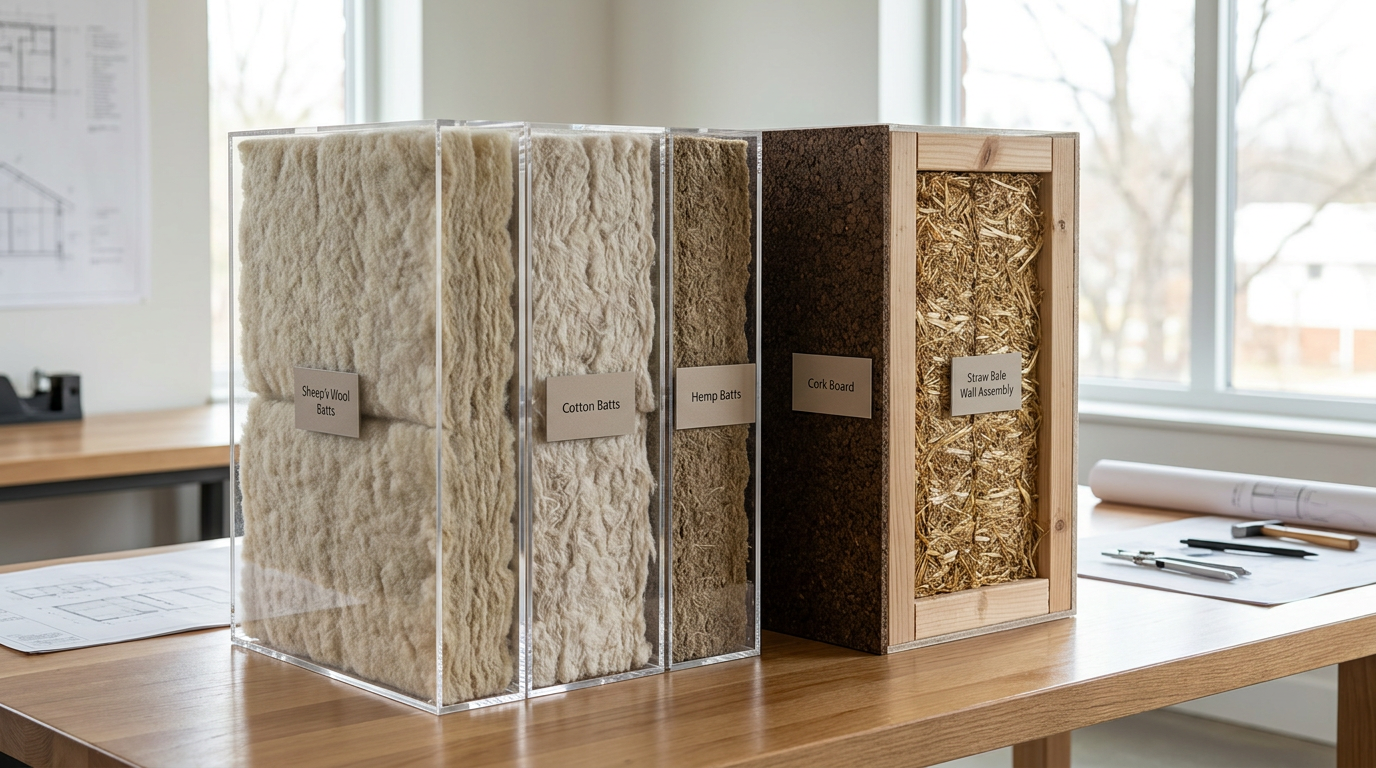
Cellulose is often the starting point because it is one of the most established options on the market. It is made primarily from recycled paper and treated for fire resistance, and it is widely used in both renovations and new construction. Cotton insulation usually uses recycled denim or other cotton fibers and is also treated for fire and pest resistance. Sheep’s wool batts offer a familiar batt format and are often chosen by homeowners who want a softer handling material with a strong natural profile.
Hemp insulation has gained interest because hemp grows quickly and can be used in various bio-based building products. Straw appears in more specialized assemblies, including straw bale walls, which have a long history in certain climates and remain part of ongoing housing research in Canada. Cork, usually available in rigid board form, is another notable option because it offers insulation value along with durability and useful applications in certain wall and floor assemblies.
What ties these materials together is not that they all behave the same way. In fact, they do not. Some are loose-fill, some are batts, some are rigid boards, and some are part of larger wall systems. Some work especially well in attics, while others are more suited to open wall cavities or exterior continuous insulation strategies. Understanding that difference is important because the best insulation choice depends less on labels like natural or synthetic and more on how well the product fits the job.
A good insulation decision also depends on verified performance. Natural Resources Canada advises using tested R-values with documentation, which is especially important in a market where some insulation claims can be confusing or exaggerated. Homeowners should treat natural insulation with the same rigor they would apply to any building product. Ask what the product is made of, how it is installed, what R-value it delivers in the intended assembly, and what moisture management details are required for it to perform well over time.
The main benefits of natural insulation
Lower environmental impact
The environmental appeal of natural insulation starts with materials. Products made from recycled paper, recycled cotton, renewable plant fibers, or responsibly sourced natural materials often carry a lower embodied carbon profile than more energy-intensive alternatives. This does not automatically make every natural product better in every context, but it does mean homeowners have an opportunity to reduce the environmental footprint of a renovation without giving up performance. In projects where the goal is both efficiency and lower impact, that can be a meaningful advantage.
Environmental benefits also extend beyond raw ingredients. Some natural insulation products can support local or regional material supply chains, especially in projects that use locally available agricultural or forestry resources. CMHC research has highlighted straw bale and other local-material housing approaches in regions such as Northern Ontario and Atlantic Canada, showing that interest in lower-impact, regionally grounded materials remains active. For communities and homeowners thinking about resilience, affordability, and local economies, that relevance matters.
Energy savings and better comfort
Insulation is ultimately a performance decision, and natural materials can absolutely be part of a high-performing home. Natural Resources Canada notes that insulation upgrades reduce heating and cooling costs and improve comfort. That may sound obvious, but it is worth emphasizing because homeowners often focus on material identity before they think about the daily experience of the house. Lower drafts, fewer temperature swings, and a more stable indoor environment can be just as important as reduced utility bills.
Walls alone can account for about 20 percent of heat loss in a home, according to Natural Resources Canada. That means choosing the right wall insulation strategy can have a noticeable impact, particularly in colder climates. When natural insulation is installed properly in walls, attics, or roofs as part of an airtight and moisture-aware assembly, it can support conventional levels of thermal performance. The idea that natural insulation is automatically inferior is one of the most persistent misconceptions in the category, and it does not hold up well when products are evaluated on real tested performance.
Healthier material choices
Many homeowners are attracted to natural insulation because they want a house that feels healthier as well as more efficient. This usually does not come down to one single material. Instead, it reflects a broader approach that includes lower-toxicity finishes, better ventilation, fewer unnecessary chemical exposures, and a stronger awareness of indoor air quality. Natural insulation can fit comfortably within that approach, especially when products are chosen from reputable manufacturers with clear ingredient and performance information.
At the same time, it is important to stay realistic. Natural does not mean untreated, maintenance-free, or immune to building science problems. Some products still rely on borate treatments for fire and insect resistance, and all insulation materials perform best when installed in assemblies that manage moisture well. The healthiest home is not simply the one with the most natural materials. It is the one where those materials are detailed carefully and supported by good ventilation, air sealing, and moisture control.
Comparing popular natural insulation materials
Cellulose insulation
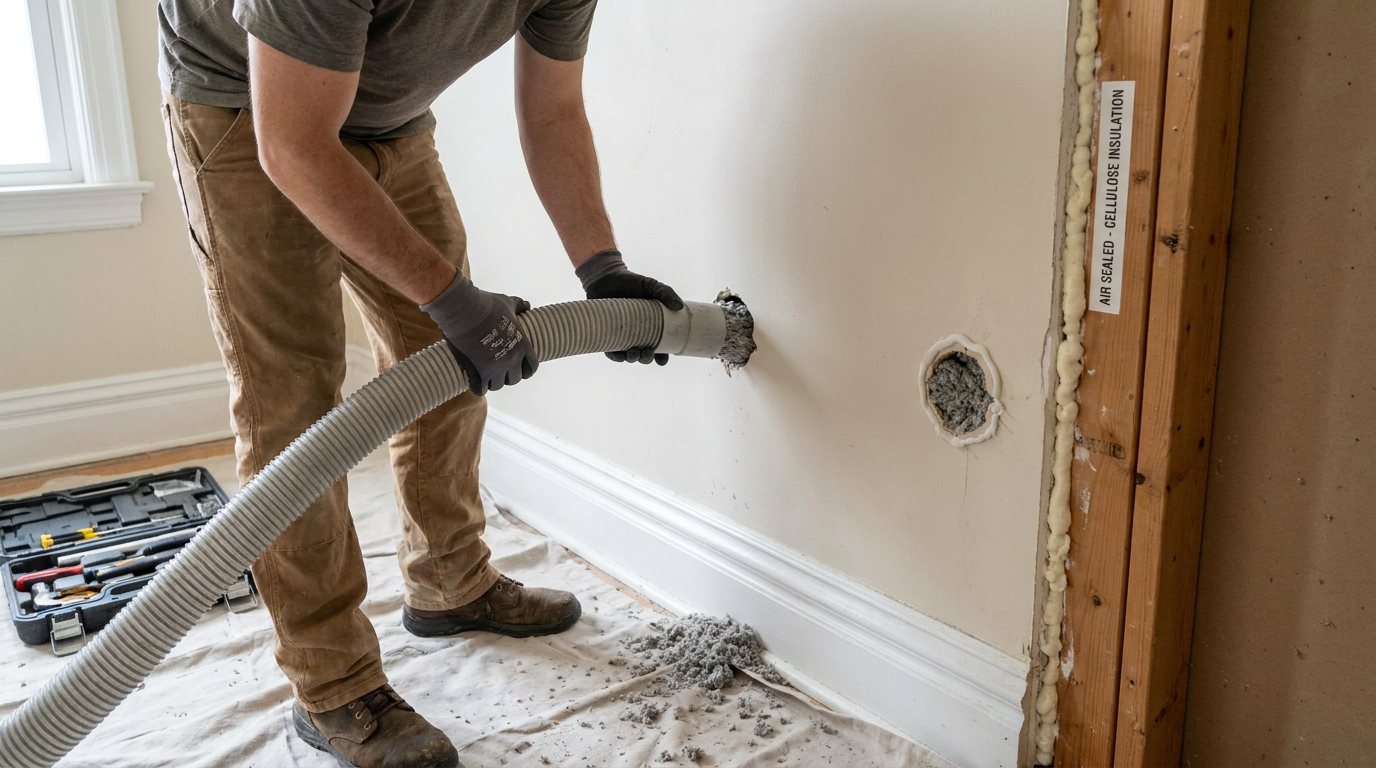
Cellulose is one of the most practical and accessible natural insulation options available today. Made primarily from recycled paper, it has long been used in both retrofit and new construction settings. The Department of Energy notes that cellulose can be installed in existing walls using dense-pack methods and in attics as loose-fill. This makes it especially valuable for homeowners who want an eco-friendly upgrade without opening every wall in the house.
Dense-pack cellulose works well because it can fill irregular cavities and reduce air movement within wall assemblies when installed at the proper density. The Department of Energy specifically notes that when installed correctly, it does not settle in the cavity. That point is important because concerns about settling often come up in insulation discussions. As with any blown product, performance depends heavily on installer skill, equipment, and the density achieved on site.
Cellulose is often a strong choice for attics, enclosed walls, and projects where recycled content is a top priority. It can also be cost-effective relative to some niche natural products, which helps make it one of the most realistic entry points for homeowners interested in sustainable materials. Its biggest strengths are practicality, availability, and a long track record in residential work.
Sheep’s wool insulation
Sheep’s wool insulation has a quiet appeal because it feels familiar, approachable, and naturally aligned with healthier building goals. It is commonly available in batt form, which makes it intuitive for standard stud wall applications. The Department of Energy notes that sheep’s wool batts for typical stud walls can achieve approximately R-13 in 2×4 walls and R-19 in 2×6 walls. That is a useful benchmark because it shows natural products can reach conventional insulation levels in common assemblies.
Wool is often appreciated for its handling qualities and its ability to fit gently into cavities without the dusty feel that some installers dislike in other materials. Homeowners also tend to be drawn to its natural origin and renewable profile. Still, wool should be evaluated as carefully as any other product. Ask about density, treatment, sourcing, and price, and make sure it fits the climate and assembly details of the project.
Because wool products are often priced above mainstream insulation materials, they are sometimes used selectively rather than throughout an entire house. A homeowner might choose them in a bedroom addition, a nursery, or a visible eco renovation where material values are especially important. That kind of targeted use can be a thoughtful compromise between aspiration and budget.
Cotton insulation
Cotton insulation is often made from recycled cotton fibers, including denim waste, and is usually treated with borates for fire and insect resistance. The Department of Energy notes that these products are often about 85 percent recycled cotton. This gives cotton a strong sustainability story, particularly for homeowners who value recycled content and want to divert materials from waste streams.
Like wool, cotton is commonly available in batt form and can be attractive in open wall or ceiling cavities during renovations. It is often chosen by homeowners who want a soft, low-irritant product for specific spaces. Installation quality still matters greatly, though. Batts need to be cut and fitted carefully around wiring, outlets, and framing irregularities to avoid gaps that reduce performance.
Cotton may not be as widely available as cellulose in every region, and pricing can vary significantly. For that reason, it is best considered one option within a broader natural insulation toolkit. If recycled content, ease of handling, and alignment with a lower-toxicity materials strategy are top priorities, cotton can be a strong contender.
Hemp insulation
Hemp insulation is part of a broader rise in bio-based construction materials. Hemp fibers can be processed into batt or panel products suitable for walls, roofs, and floors, depending on the manufacturer. Homeowners are often drawn to hemp because it is fast-growing, renewable, and associated with lower-impact agriculture. In design-forward sustainable building circles, it has become a symbol of where building materials may be heading.
That said, hemp insulation should be chosen for concrete reasons, not just branding appeal. Check the tested thermal values, density, fire treatment, moisture behavior, and installation requirements. In some regions, availability and lead times may still be less predictable than with older insulation categories. When those practical details line up, hemp can be an appealing material for projects that place equal importance on performance and embodied carbon.
Hemp often makes the most sense in thoughtfully planned renovations or new homes where the design team is already pursuing a bio-based material approach. It can complement timber construction, vapor-open wall assemblies, and low-carbon design goals, provided the building details are handled well.
Straw and straw bale systems
Straw insulation occupies a slightly different place in the category because it is often part of a larger wall system rather than a simple swap for conventional batt insulation. Straw bale construction has been studied and used in a range of climates, and CMHC has highlighted projects involving straw bale and local materials in Canada. These systems can offer excellent wall thickness, a compelling natural material story, and the possibility of regionally sourced inputs.
For most homeowners, though, straw is not the easiest starting point. It usually requires specialized design knowledge, careful detailing, and a builder who understands how to manage structure, moisture, finishes, and code compliance. In the right project, straw can be beautiful and deeply sustainable. In the wrong project, it can be unnecessarily complex.
The practical lesson is not that straw should be avoided. It is that natural insulation exists on a spectrum. Some products are highly retrofit-friendly and easy to integrate, while others are better suited to purpose-built homes with experienced teams. Straw belongs toward the more specialized end of that spectrum.
Cork insulation
Cork insulation is typically used in rigid board form and is valued for its durability, dimensional stability, and renewable source material. It can be useful in walls, floors, and some exterior applications, depending on the assembly. Designers often appreciate cork because it can combine thermal performance with acoustic benefits and a visually appealing material identity.
Cork tends to be more expensive than many mainstream insulation products, which means it is often selected strategically rather than universally. It may be used in targeted areas where moisture resilience, board format, or thermal break benefits are especially useful. For example, it can support designs that aim to reduce thermal bridging or add continuous insulation in a lower-impact way.
As with all rigid insulation choices, the real value of cork depends on where and how it is used. It should be part of an assembly strategy, not simply added as a premium material without a clear performance reason. When specified carefully, cork can bring both environmental and technical advantages.
Performance is about more than the insulation itself
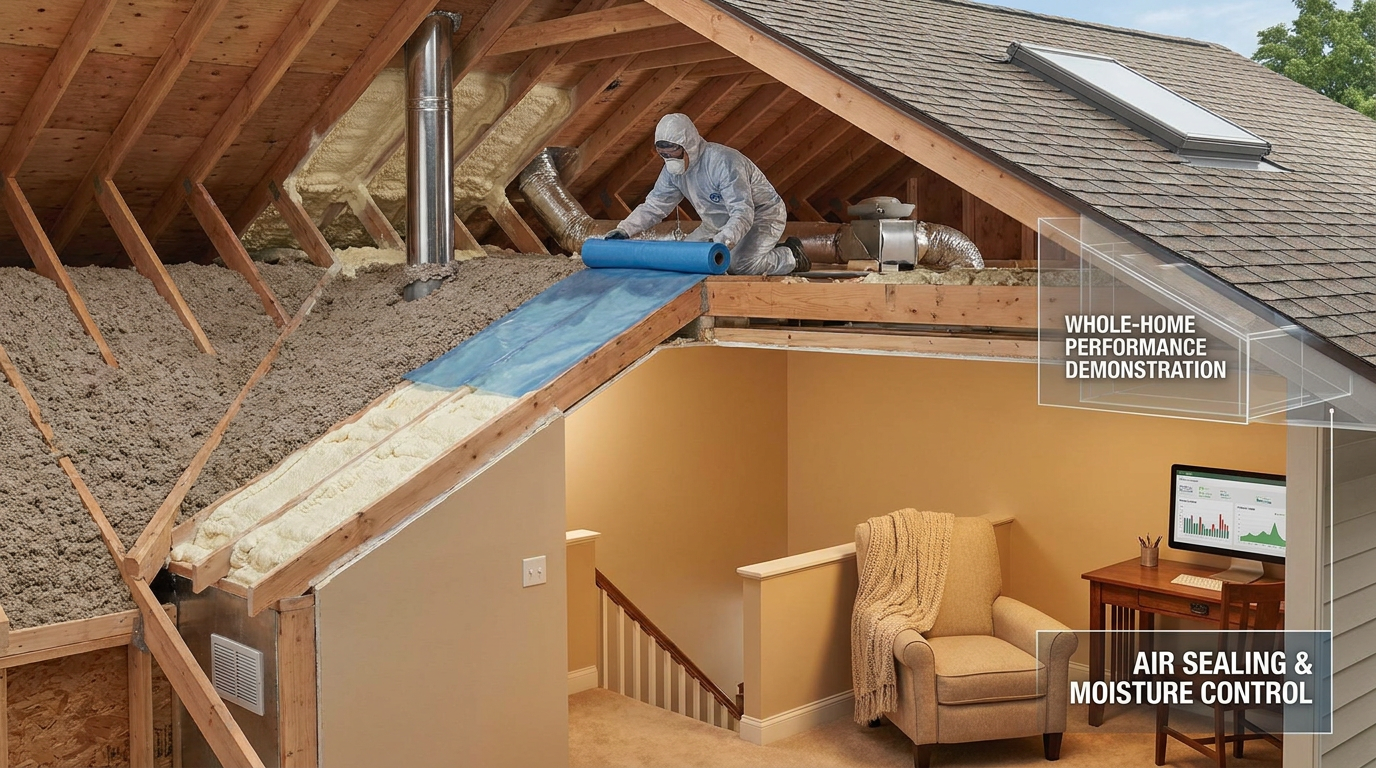
One of the most important points in any insulation discussion is that insulation does not work alone. The Department of Energy makes this clear by noting that insulation performs best when homes are properly air sealed, and moisture control is essential for comfort and mold resistance. This is especially important with natural insulation, because homeowners sometimes assume a greener material will compensate for weak building details. It will not.
Air sealing is often the first improvement that changes how a home feels. Small leaks around top plates, wiring penetrations, attic hatches, window perimeters, and rim joists can allow significant heat loss and unwanted drafts. If those leaks remain, even high-quality insulation will not deliver its full benefit. That is why many of the best retrofit projects treat insulation as one part of a whole-home performance strategy.
Moisture control is equally important. Bulk water leaks, high indoor humidity, condensation risks, and poorly detailed vapor control layers can undermine any insulation system over time. Natural materials are not uniquely vulnerable in every case, but they still need to be protected by sound design. Roof leaks, wet basements, poorly flashed walls, and blocked ventilation paths are building problems first and insulation problems second.
Thermal bridging also deserves attention. Studs, rafters, and other framing members interrupt insulation layers and conduct heat more readily than insulated cavities. In some projects, adding continuous exterior insulation can improve overall performance more effectively than simply increasing cavity insulation. This is one reason material selection should happen within the context of the entire assembly, especially in colder climates where enclosure performance is more demanding.
The best natural insulation choice is rarely the one with the most appealing label. It is the one that fits the assembly, the climate, the moisture conditions, and the installation plan with the least compromise.
How to choose the right natural insulation for your home
The most reliable starting point is to identify where the home is losing energy and where comfort problems are most noticeable. An attic with little insulation, drafty exterior walls, or an over-garage room that never feels right may offer a better return than replacing insulation in areas that already perform reasonably well. In many cases, a home energy assessment can help prioritize these opportunities in a more objective way.
Next, think about the type of project you are undertaking. If you are retrofitting an existing wall without removing drywall, dense-pack cellulose may be far more practical than batt-based natural products. If you are opening walls during a major renovation, wool, cotton, or hemp batts may become more viable. If you are designing a new build, you have even more freedom to choose assembly types that support cork boards, bio-based panels, or specialized systems like straw bale.
Climate should guide the conversation as well. Cold climates demand careful attention to total R-value, air tightness, and condensation control. Mixed and humid climates may place different demands on drying potential and vapor control. There is no universally correct insulation strategy, which is why local expertise matters so much. A product that performs beautifully in one wall assembly may be less appropriate in another, even if both homes are in the same city.
Budget is also part of good sustainability. A modest, well-executed insulation upgrade that improves comfort and cuts energy waste is often more meaningful than an expensive material choice installed in a limited area without addressing air leaks. Cellulose is a good example of this principle. It may not carry the boutique appeal of some other natural products, but it can offer strong environmental and practical value at a scale many homeowners can realistically afford.
Finally, ask for evidence. Look for tested R-values, clear product documentation, installation guidance, and contractors who understand how the chosen material fits within the wall, roof, or floor assembly. Natural Resources Canada’s caution about inflated or unclear performance claims is worth taking seriously. A calm, evidence-based process usually leads to better decisions than marketing-driven comparisons.
Natural insulation in renovations versus new builds
Renovation projects and new construction create very different opportunities for natural insulation. In renovations, the challenge is often access. You may want better wall insulation without removing finished surfaces, or improved attic performance without rebuilding the roof. In these situations, retrofit-friendly products tend to stand out. Cellulose is particularly useful because it can often be added with minimal disruption compared with more invasive approaches.
In a full-gut renovation, the field opens up. Once walls and ceilings are exposed, homeowners can compare batt products, blown products, and rigid boards more freely. This is often the point at which material values become more influential. If indoor air quality, low embodied carbon, and renewable resources are central priorities, natural insulation options become easier to integrate in a meaningful way.
New builds allow the greatest level of customization because the wall and roof assemblies can be designed around the insulation strategy from the start. This can include vapor-open assemblies, thicker walls, exterior continuous insulation, and low-carbon design targets that support bio-based materials. The benefit of this freedom is that the insulation choice becomes part of a larger performance vision rather than a retrofit workaround.
That said, new construction also brings discipline. Just because a home is new does not mean every natural insulation option is automatically suitable. Cost, builder familiarity, code requirements, and local supply chains all influence what is realistic. The strongest projects tend to combine ambition with restraint, choosing systems that the team can actually execute well.
Common misconceptions to avoid
One of the most common misconceptions is that natural insulation is always lower-performing than synthetic insulation. In practice, insulation performance depends on product type, thickness, installation quality, and moisture management. Some natural materials can meet conventional R-values in standard wall assemblies, as the Department of Energy’s wool batt examples make clear. The label natural tells you very little on its own about actual thermal performance.
Another misconception is that natural means worry-free. Bio-based and recycled materials still need proper detailing, moisture control, and in some cases treatment for fire or insect resistance. A well-designed assembly matters more than a romantic idea of the material. Homeowners should be wary of any sales pitch that treats natural insulation as inherently immune to mold, moisture, or installation errors.
A third misconception is that all insulation claims are directly comparable. They are not. Natural Resources Canada warns that some products in the broader insulation marketplace are promoted with unsupported or unclear claims, which is why documented R-values matter. Homeowners should ask for test data, assembly details, and code-compliant specifications rather than relying on attractive language alone.
Finally, many people still assume natural insulation is only for new homes. That may have been a more understandable assumption years ago, but it is no longer accurate. Cellulose in particular is a mainstream retrofit material, and several natural products are available in batt or panel formats that fit renovation work. The real question is not whether natural insulation belongs in retrofits. It is which natural product best fits the scope and constraints of the retrofit you are planning.
Practical tips for making an eco-friendly insulation decision
-
Start with the house, not the product. Look at comfort complaints, energy bills, and known weak spots such as attics, walls, and rim joists before choosing materials.
-
Combine insulation with air sealing. This is one of the most reliable ways to improve real-world performance and make the investment feel noticeable.
-
Ask for tested R-values and installation details. Verified performance is more useful than broad eco claims.
-
Consider embodied carbon alongside operating energy. A lower-impact material can strengthen the sustainability value of the project when installed appropriately.
-
Choose contractors who understand moisture control. Good detailing protects both the insulation and the home.
-
Be open to a hybrid strategy. Many successful projects use different insulation types in different parts of the home based on access, budget, and assembly needs.
A hybrid approach is often the most sensible path. A homeowner might use cellulose in existing walls and attics, cork board in a targeted floor application, and wool batts in a renovated bedroom addition. There is no rule that sustainability requires material purity. In fact, a mixed strategy can often deliver better performance and better value than insisting on a single product throughout the house.
It is also helpful to think long term. Insulation is not a decorative upgrade that gets revisited every few years. Once installed, it becomes part of the home’s basic performance profile for a very long time. That makes careful planning worthwhile. A slower, more informed decision can save money, reduce rework, and create a home that simply feels easier to heat, cool, and enjoy.
The bigger picture: sustainability without pressure
Natural insulation fits into a larger shift in housing toward choices that are both efficient and thoughtful. Homeowners are no longer only asking how to lower utility bills, though that remains important. They are also asking how to create homes that use better materials, support healthier living, and reduce environmental impact over time. Natural insulation responds well to that broader mindset because it offers a bridge between performance and purpose.
What makes this category especially encouraging is that it does not require perfection. You do not need to build an experimental house or commit to a fully bio-based structure to make progress. In many cases, one practical insulation upgrade can improve comfort, reduce waste, and move the home in a healthier direction. The work becomes even more meaningful when it is paired with air sealing, moisture control, and an honest understanding of what the house needs most.
There is something reassuring about sustainable choices that are grounded in common sense. Natural insulation can be one of those choices. It asks homeowners to pay attention to materials, but it also rewards them with everyday benefits that feel immediate and tangible. Warmer rooms, steadier temperatures, quieter interiors, and lower energy use are not abstract environmental ideals. They are qualities of a home that supports the people living in it.
For anyone considering a renovation or a new build, natural insulation is worth approaching with curiosity and clarity. Compare options carefully, ask for verified data, and think in terms of whole-home performance rather than isolated products. When chosen well, natural insulation can be a practical investment in comfort, resilience, and sustainability, all at once.

No Comment! Be the first one.