



Green certifications have become a familiar part of conversations about housing, construction, and climate conscious design. Even so, many homeowners and builders still feel uncertain about what these labels actually mean. Some assume certification is only for flagship office towers or expensive custom homes, while others imagine every standard is measuring the exact same thing. In reality, green certifications are much more practical and varied than that. They are simply structured, third-party systems that verify whether a building meets a defined set of performance or design benchmarks related to energy, health, operations, or environmental impact.
Table Of Content
- What Green Certifications Actually Are
- Why Green Certifications Matter
- Green Certification Is Not One Single Thing
- ENERGY STAR for New Homes: A Practical Entry Point for Homeowners
- R-2000: A Canadian Standard with a Long Practical Legacy
- LEED: The Broad Framework Many People Already Recognize
- Passive House: Extreme Efficiency Through Building Science
- WELL: When Health and Well-Being Are the Priority
- BOMA BEST: A Strong Option for Existing Buildings and Operations
- How the Certification Process Usually Works
- Common Misconceptions That Make Certification Feel Harder Than It Is
- How Green Certifications Connect to Bigger Building Trends
- How to Choose the Right Certification for Your Project
- Questions Homeowners and Builders Should Ask Early
- The Practical Case for Certification
- Conclusion: A Clearer Path Forward
That distinction matters because it makes sustainable building feel more approachable. A family building a new home may not need the same pathway as a developer planning a multi-unit residential project, and neither of them will necessarily need the same standard as an owner improving an existing office building. Some certifications focus mostly on energy efficiency. Others place more weight on indoor environmental quality, long-term building management, or occupant wellness. Once you understand that there is a menu of options rather than one single elite label, the subject becomes much easier to navigate.
For homeowners and builders alike, certifications can be useful not because they are trendy, but because they translate broad sustainability goals into specific building decisions. They turn ideas like comfort, efficiency, clean air, and lower carbon into measurable actions such as better insulation, tighter construction, tested ventilation, efficient heating equipment, lower-emission materials, and documented operating practices. They also add accountability through independent inspection or verification, which helps separate meaningful performance from marketing language.
This guide explains the most common green certifications in North America, with particular relevance for Canadian readers. It also clarifies what each system is designed to measure, why these standards matter, and how to think about certification as a realistic step rather than an all-or-nothing leap. If you have ever wondered whether green certification is worth pursuing, or whether it applies to a project like yours, the answer is very often yes. The key is understanding which standard matches your priorities.
What Green Certifications Actually Are
At their core, green certifications are third-party rating or verification systems. They set criteria for a building or home and then require some form of documentation, testing, review, or inspection to confirm those criteria have been met. This gives owners, buyers, and tenants a clearer way to assess performance. Instead of relying on claims that a building is simply eco-friendly or energy conscious, a certification provides a recognized framework with defined benchmarks.
That framework can apply at different stages of a building’s life. Some programs are centered on new construction and design. Others are better suited to existing buildings and operations. Some standards look heavily at projected performance during planning, while others emphasize measured results, commissioning, or ongoing operational data. This is one reason two certified buildings can be very different from one another while still being legitimately green within the scope of the certification they pursued.
It is also important to understand what certification does not mean. A certified building is not automatically net zero, carbon free, or perfect in every environmental category. Certification is usually about reaching a verified level within a specific system. A project might excel in energy efficiency but not be focused on wellness. Another might be strong in healthy materials and indoor air quality while still working toward deeper carbon reductions over time. Reading the scope of the standard is part of using certification wisely.
Green certification is best understood as a tool for clarity. It helps translate sustainability into verified steps, measured outcomes, and better long-term building decisions.
For many readers, that is the most reassuring starting point. Certification is not a purity test. It is a practical roadmap that helps a project improve in a transparent, documented way.
Why Green Certifications Matter
The value of certification goes beyond environmental credibility. In day-to-day life, the outcomes often show up as lower utility bills, more consistent indoor temperatures, better air quality, fewer drafts, and stronger long-term building performance. For homeowners, these are not abstract benefits. They are quality-of-life improvements that can make a house feel better to live in and less expensive to operate. For builders and developers, certifications can also create market differentiation and signal professionalism to buyers who want more confidence in what they are purchasing.
Certifications matter because they organize decision-making. Building sustainably can feel overwhelming when there are countless products, systems, and claims competing for attention. A certification framework helps teams prioritize. Instead of wondering where to begin, they can focus on the measures most likely to improve performance, such as envelope quality, ventilation, mechanical efficiency, or material selection. This structure often saves time and reduces guesswork.
They also matter because independent verification builds trust. If a home is tested for airtightness or reviewed by an energy advisor, that carries more weight than a general promise of efficiency. If an office building follows a recognized operational standard, tenants and investors can better understand what that means. In a market where sustainability language is increasingly common, verification helps distinguish meaningful effort from vague branding.
More broadly, certifications are evolving to reflect bigger issues in the built environment. Recent updates and newer standards increasingly connect building performance to decarbonization, resilience, equity, occupant health, and embodied carbon. That means green certification is no longer only about saving energy. It is becoming a more complete way to think about how buildings support climate goals and human well-being over time.
Green Certification Is Not One Single Thing
One of the most persistent misconceptions is that all green certifications are interchangeable. They are not. Each system has its own purpose, audience, and structure. Some are ideal for single-family homes. Others are designed for large commercial portfolios. Some focus on energy and airtightness. Others place heavier attention on wellness, operations, or carbon. Understanding these differences is the easiest way to make the subject feel manageable.
In practical terms, it helps to group certifications by their primary area of focus. A homeowner seeking an efficient and comfortable new home might look at ENERGY STAR for New Homes or R-2000. A builder creating a very high-performance envelope might explore Passive House. A developer planning a multi-unit residential or institutional project might pursue LEED. An owner focused on healthy interiors and occupant wellness may consider WELL. An operator of an existing commercial building in Canada may find BOMA BEST especially relevant.
This variety is good news. It means sustainable building standards are scalable and adaptable. A project does not need to fit a single idealized model in order to participate. It only needs a clear goal and the right framework.
ENERGY STAR for New Homes: A Practical Entry Point for Homeowners
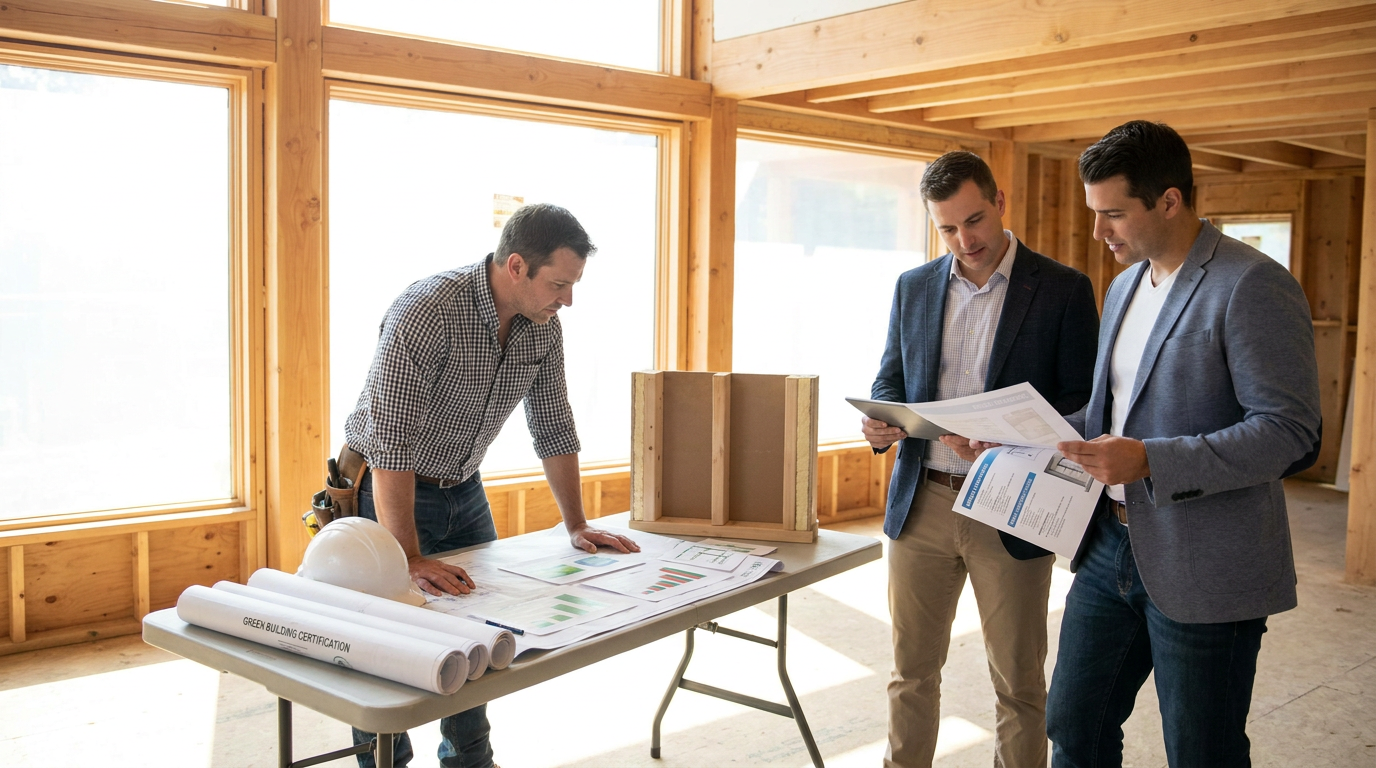
For many Canadian homeowners, ENERGY STAR for New Homes is one of the most approachable certification pathways. It is familiar, relatively easy to understand, and directly connected to everyday benefits like lower heating demand and more efficient water heating. According to Natural Resources Canada, ENERGY STAR certified homes are, on average, about 20 percent more energy efficient than homes built to local building codes, based on space and water heating. That is a meaningful improvement, especially in a climate where heating can represent a large share of household energy use.
Just as important, the standard depends on independent inspection and testing. This means the label is not self-declared. Builders must meet program requirements and have the home reviewed through a recognized process. For buyers, that adds confidence. For builders, it creates a repeatable benchmark that can be communicated clearly without relying on technical jargon.
ENERGY STAR for New Homes is useful because it translates sustainable design into practical components that most homeowners can understand. These often include better insulation, improved airtightness, high-performance windows, controlled ventilation, and efficient heating or hot water systems. None of these measures are exotic. They are simply thoughtful building choices assembled into a verified package.
There is also strong evidence of market adoption. NRCan has noted that over 60,000 Canadian families live in ENERGY STAR certified homes, and 4,016 new homes were awarded ENERGY STAR certification in 2023. Those numbers help dispel the idea that certification is a niche option. In many parts of Canada, it is already a mainstream path for better homebuilding.
R-2000: A Canadian Standard with a Long Practical Legacy
R-2000 is another important Canadian pathway, especially for readers who want a deeper understanding of energy-efficient residential building. NRCan describes R-2000 as a standard that promotes affordable energy-efficient building practices, clean-air features, and third-party verification by an energy advisor. That combination is worth noting because it reflects a balanced view of sustainability. The standard is not only about reducing energy use. It also addresses indoor air quality and quality assurance.
In many ways, R-2000 helps demystify what a high-performance home actually involves. It draws attention to the fundamentals of good building science, such as a strong building envelope, careful air sealing, appropriate insulation levels, efficient windows, and well-designed ventilation systems. For homeowners, these ideas can sound technical at first, but they show up in simple ways after move-in. Rooms feel more even in temperature. Drafts are reduced. Moisture risks are better managed. Indoor air can feel fresher and more controlled.
Because R-2000 includes third-party verification, it can also be a valuable signal of construction quality. A builder pursuing the standard is working within a clearly defined performance framework rather than just adding a few upgraded products. That tends to support better coordination across design, construction, testing, and final delivery.
For readers comparing pathways, R-2000 often represents a strong option for those who want a home that goes beyond baseline efficiency without necessarily jumping straight to the most rigorous ultra-low-energy standards. It is a practical middle ground that remains highly credible in Canada.
LEED: The Broad Framework Many People Already Recognize
LEED remains the most widely recognized green building rating system globally, and that visibility matters. Because it is so well known, LEED often acts as the reference point people have in mind when they first hear the term green certification. Developed as a structured framework for healthy, efficient, and cost-effective buildings, LEED is used across residential, commercial, institutional, and mixed-use projects. It is broad enough to address many parts of sustainability at once, which is one reason it has become a leading benchmark.
In Canada, LEED is far from a fringe standard. The Canada Green Building Council reported that Canada ranked second globally in 2024 for LEED-certified space, with 438 certified projects and about 10 million gross square meters of space. That scale is significant because it shows the system is embedded in mainstream building practice across the country. It is not reserved for a handful of showcase developments.
LEED can feel complex at first because it includes multiple categories and credit pathways. Depending on the project type and version, teams may work through areas such as energy, water, materials, site strategy, indoor environmental quality, transportation, and innovation. While this can appear daunting, the underlying principle is straightforward. A project earns recognition by meeting prerequisites and gathering points through documented sustainability measures. It is a staged and structured process rather than an undefined aspiration.
Recent updates have made LEED even more relevant to current climate priorities. LEED v5, launched in 2025, is being framed around decarbonization, resilience, equity, health, and ecosystems. That signals an important shift. The standard is evolving from a broad environmental checklist into a more explicit performance framework aligned with the realities of carbon reduction and long-term adaptation. For many larger projects, that makes LEED not only a recognized label, but a strategic planning tool.
Passive House: Extreme Efficiency Through Building Science
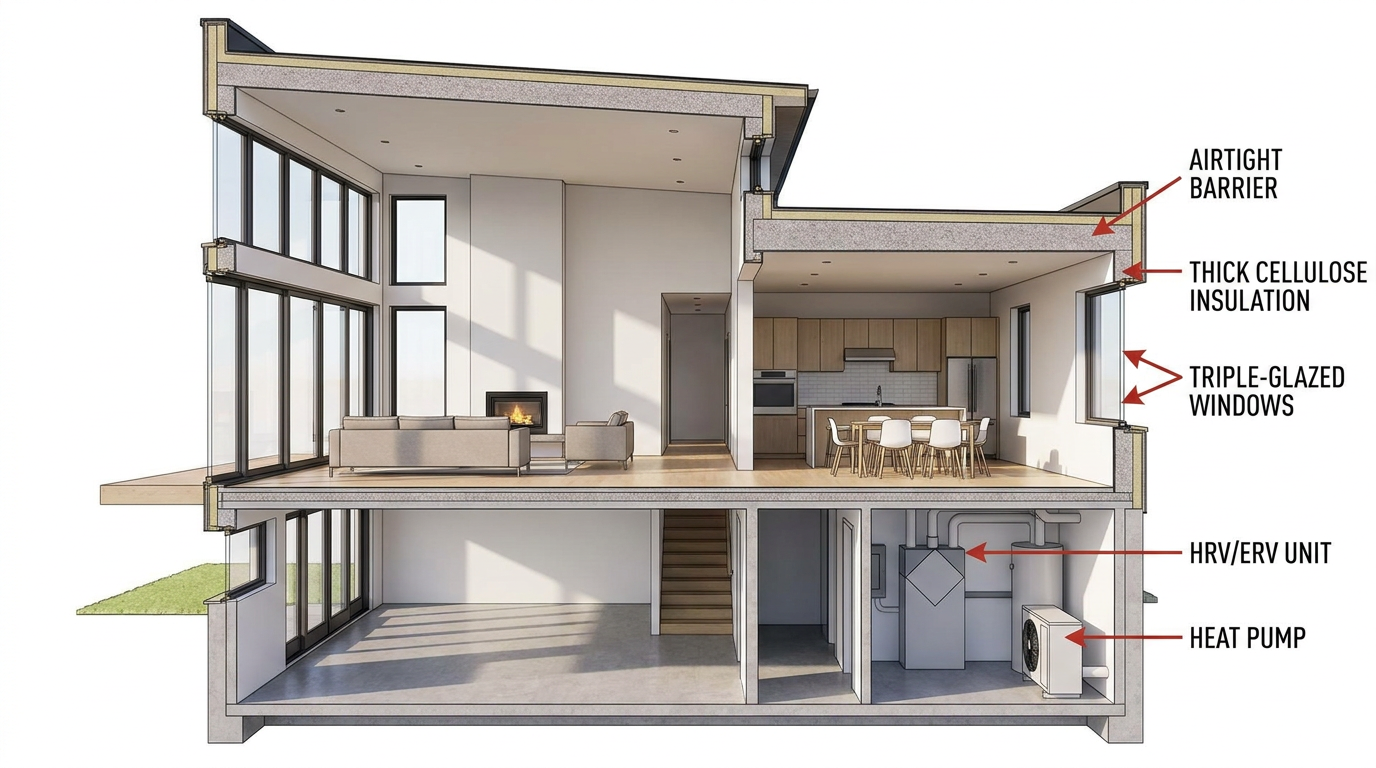
Passive House is often discussed with a certain mystique, but the core idea is actually very grounded. It is a rigorous standard centered on extreme energy efficiency, comfort, and envelope performance. Passive House projects typically rely on very high levels of insulation, exceptional airtightness, high-performance windows, and carefully designed ventilation with heat recovery. The goal is to reduce heating and cooling demand so significantly that the building remains comfortable with much less energy input than a conventional structure.
Passive House certification is often described as an internationally recognized quality assurance stamp, and that language is helpful. It reminds readers that the value is not just theoretical efficiency. It is verified performance supported by disciplined design and execution. In climates with cold winters or hot summers, the resulting comfort can be especially noticeable. Interiors tend to maintain more stable temperatures, and the building envelope plays a much larger role in creating that comfort.
That said, Passive House is not necessarily the first step for every project. It tends to demand a higher degree of technical coordination and early planning than some other pathways. For that reason, it may be most appealing to clients or builders who are strongly motivated by very low energy demand and long-term performance. Still, its principles influence many projects even when formal certification is not pursued. Better airtightness, smarter insulation strategy, and balanced ventilation are lessons that apply broadly.
It can also be useful to separate Passive House from the idea of luxury. While some Passive House buildings are architecturally ambitious, the standard itself is fundamentally about efficiency and comfort, not visual extravagance. In that sense, it reflects one of the most practical forms of sustainability: reducing energy demand through the building itself rather than depending only on mechanical systems.
WELL: When Health and Well-Being Are the Priority
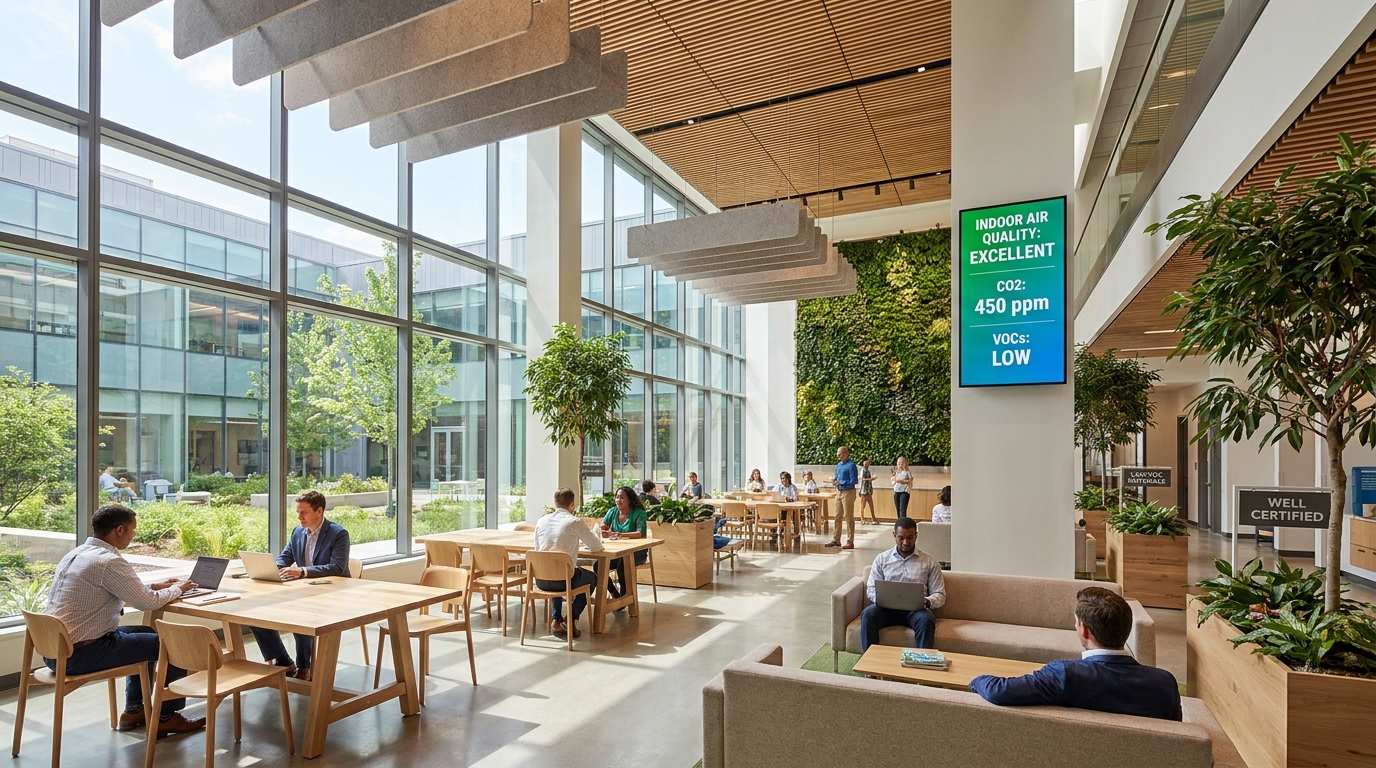
Not every green certification is centered primarily on energy. WELL stands out because it focuses on human health and well-being within buildings. It is an evidence-based healthy-building standard that addresses a wide range of factors, including air, water, nourishment, light, movement, thermal comfort, sound, materials, mind, community, and innovation. This broader lens reflects a growing understanding that a high-performing building should support the people inside it, not only reduce operating impacts.
For homeowners, WELL may feel more relevant in principle than in full certification form, since many of its applications are prominent in workplaces, institutions, and larger residential developments. Even so, the ideas behind it are highly valuable at every scale. Better indoor air quality, healthier material choices, acoustic comfort, access to daylight, and spaces that support mental well-being are increasingly important parts of sustainable design. They also resonate strongly with the post-pandemic attention to indoor environments.
WELL is useful in this guide because it broadens the conversation. It reminds us that sustainability is not only about kilowatt-hours and insulation values. It is also about how a building feels, functions, and supports everyday life. A home or office that is energy efficient but uncomfortable, poorly ventilated, or filled with problematic materials is not truly serving its occupants well.
As healthy-building standards continue to gain attention, WELL also illustrates an emerging trend across the industry. Certifications are becoming more holistic. Energy, carbon, and wellness are increasingly linked rather than treated as separate subjects.
BOMA BEST: A Strong Option for Existing Buildings and Operations
One of the most important things to understand about green certifications is that they are not only for new construction. Existing buildings represent a huge share of the built environment, which means operational performance matters deeply. This is where BOMA BEST becomes especially relevant in Canada. BOMA Canada describes it as a leading certification and management program for existing buildings in North America, making it a practical framework for owners and operators who want to improve real-world performance over time.
BOMA BEST is valuable because it acknowledges how sustainability actually unfolds in many properties. A building may not be newly designed, but it can still improve through better maintenance practices, energy management, waste reduction, water efficiency, indoor environmental strategies, and documented operational procedures. For commercial property owners, this can be one of the most realistic ways to create meaningful gains without waiting for a complete redevelopment.
The broader lesson is that sustainable building is not only about what gets built on day one. It is also about how a property is run, maintained, and upgraded over years or decades. Certifications that support operations are crucial because actual environmental impact often depends on those long-term patterns. Efficient design matters, but so does effective management.
For readers involved in commercial real estate, strata management, institutional facilities, or older multifamily assets, this is an encouraging point. There are credible certification pathways for improving what already exists. Sustainability does not require starting from scratch.
How the Certification Process Usually Works
Another reason green certification can feel intimidating is that people imagine it as a single high-stakes test. In practice, most certification systems are more structured and gradual than that. They typically involve prerequisites, documentation, design choices, inspections, testing, and third-party review. This means a project progresses through a series of clear steps rather than aiming at an undefined ideal.
For example, a residential certification may require energy modeling, site reviews, airtightness testing, or verification of insulation and mechanical systems. A larger rating system like LEED often includes documentation across multiple categories, with mandatory prerequisites and optional credits. Operational certifications may involve reporting, benchmarking, policy review, and proof of performance in areas such as energy, water, and waste. The specific path varies, but the logic is consistent. A project identifies its target, assembles evidence, and receives external validation.
This staged approach is helpful because it allows teams to start with a manageable goal. A builder may begin by targeting ENERGY STAR in one project and use the lessons learned to move toward R-2000 or LEED later. An owner of an existing building may begin with operational improvements and benchmarking before pursuing a higher level certification. A health-focused development may integrate WELL concepts alongside another core standard. Progress is often cumulative.
That is worth emphasizing for anyone who feels late to the conversation. Sustainable certification is rarely about being perfect from the beginning. It is more often about choosing a clear framework and improving with intention.
Common Misconceptions That Make Certification Feel Harder Than It Is
Several misconceptions keep green certifications feeling more exclusive than they really are. The first is the idea that certification is only for luxury projects. In fact, Canada has widely used residential pathways like ENERGY STAR for New Homes and R-2000 that are designed to support practical, high-performance housing. These standards focus on core building quality rather than spectacle.
The second misconception is that every certification means the same thing. As this guide has shown, one standard may focus on energy performance, another on health, and another on building operations. Comparing them without understanding their scope can create confusion. A building can be strong in one domain without claiming to solve every environmental issue at once.
A third misconception is that certified automatically means net zero or fully carbon free. Some certifications may support those goals, but many are designed to reward incremental, verified improvement. That is not a weakness. It is part of what makes them usable across ordinary projects and budgets. Verified progress is often more valuable than vague ambition.
The fourth misconception is that certifications only apply to new construction. Existing building pathways such as BOMA BEST and operational frameworks within broader systems show otherwise. Retrofits, management practices, and deep energy upgrades all play a role in sustainability. In many cities, improving existing stock is one of the most important climate actions available.
How Green Certifications Connect to Bigger Building Trends
The world of certification is changing alongside the broader sustainability conversation. Energy efficiency remains foundational, but the market is increasingly linking certifications to embodied carbon, operational carbon, resilience, health, and climate targets. This is especially visible in newer frameworks and updates such as LEED v5, which places stronger emphasis on decarbonization and long-term impact.
Canada’s growing zero-carbon market is another sign of this shift. The Canada Green Building Council announced in 2024 that 100 buildings had certified under the Zero Carbon Building Standards, with many more registered. That growth suggests the market is moving beyond traditional green labels toward more explicit carbon outcomes. For readers, the takeaway is not that every project must immediately pursue zero carbon certification. It is that certification systems are increasingly becoming performance tools aligned with future regulations, investor expectations, and climate goals.
Healthy-building standards are also gaining prominence. WELL’s growth reflects rising attention to indoor air quality, wellness, and occupant experience. At the same time, more systems are emphasizing measured building performance and ongoing data rather than design intent alone. This creates a more mature sustainability landscape, where actual outcomes matter as much as specifications on paper.
For homeowners and smaller builders, these trends are still relevant even if the certification pathway is simpler. Better airtightness, lower-emission materials, ventilation quality, and efficient systems all sit within this larger movement. What changes at larger scales often starts with the same building fundamentals.
How to Choose the Right Certification for Your Project
The best certification is not necessarily the most famous or the most rigorous. It is the one that matches your project type, budget, timeline, and goals. That decision becomes easier when you begin with a few honest questions. Are you mainly trying to lower energy bills and improve comfort in a new home? Are you aiming for broad sustainability recognition in a larger development? Is occupant health your primary concern? Are you operating an existing building and looking for a practical management framework?
In broad terms, the right fit often looks like this:
- ENERGY STAR for New Homes is a strong starting point for homeowners and production builders seeking practical verified efficiency.
- R-2000 suits those who want a more advanced Canadian residential standard with strong energy and clean-air emphasis.
- LEED works well for larger residential, commercial, institutional, and mixed-use projects that need a comprehensive sustainability framework.
- Passive House is ideal for teams pursuing very low energy demand, exceptional comfort, and envelope-driven performance.
- WELL is valuable when human health, wellness, and indoor environmental quality are central priorities.
- BOMA BEST is particularly relevant for existing commercial buildings and operational improvement in Canada.
It is also worth remembering that these pathways are not always mutually exclusive. A project may combine multiple frameworks or borrow principles from one while formally certifying under another. For example, a development might pursue LEED while incorporating WELL strategies, or a builder may apply Passive House principles while targeting a more accessible residential certification. The point is not to force a single identity onto a project. It is to use the standards as tools.
Questions Homeowners and Builders Should Ask Early
If you are considering certification, early planning makes a real difference. Asking the right questions at the beginning can prevent frustration later. Homeowners should ask whether their builder has experience with the target standard, what inspections or testing are required, and which design choices are most important to success. Builders should ask how certification goals will affect detailing, scheduling, consultant coordination, and documentation.
It is also wise to ask what the certification is expected to deliver in real terms. Will it improve energy performance, indoor air quality, resale confidence, tenant appeal, or operational discipline? A clear answer helps keep the process grounded. Certifications work best when they support practical outcomes people genuinely value, not when they become a branding exercise detached from the project’s needs.
Budget conversations should be candid but not defeatist. Some certification pathways add cost, but they may also reduce operating expenses, improve durability, or strengthen market positioning. The right conversation is not simply whether certification costs more. It is what that investment buys in terms of performance, confidence, and long-term value.
Finally, teams should ask about verification. Third-party review is one of the strongest advantages of green certification, so understanding how it will occur is part of evaluating the program itself. Testing, inspection, and documentation are not administrative burdens alone. They are what give the label meaning.
The Practical Case for Certification
For all the terminology surrounding green building, the practical case for certification is refreshingly simple. Better standards tend to produce better buildings. A home that is designed and verified for energy efficiency is likely to be more comfortable and less expensive to heat. A building that addresses ventilation, low-emission materials, and occupant wellness is likely to support healthier daily life. A property with strong operational management is more likely to improve steadily over time rather than drifting into inefficiency.
Certification also creates a common language. It helps homeowners talk with builders, developers speak with investors, and landlords communicate with tenants. That shared language is increasingly important as sustainability moves from a niche concern to a baseline expectation. Verified standards make those conversations clearer and more credible.
Perhaps most importantly, green certification turns sustainability into something actionable. It replaces the pressure to do everything perfectly with the opportunity to do specific things well. In that sense, it reflects a calm and realistic approach to better building. Start with the goal that matters most. Choose a framework that fits. Build, verify, learn, and improve from there.
Conclusion: A Clearer Path Forward
Green certifications are often presented as technical or exclusive, but they are best understood as practical tools for making housing and buildings perform better. Whether the focus is energy efficiency, healthy interiors, operational improvement, or long-term carbon reduction, these standards help translate good intentions into measurable outcomes. They also show that sustainability is not one uniform destination. It is a set of achievable pathways shaped by project type, budget, and priorities.
For homeowners, the most approachable options may be ENERGY STAR for New Homes or R-2000. For larger developments, LEED remains a highly recognized framework with growing relevance to decarbonization and resilience. For projects centered on health, WELL adds a valuable human lens. For those pursuing very low energy demand, Passive House offers a rigorous model grounded in comfort and building science. For existing commercial properties, BOMA BEST provides a practical route to better operations and performance.
The reassuring truth is that you do not need to begin with the most complex standard to make meaningful progress. Certification is usually a staged process built on documentation, verification, and improvement. That makes it far more accessible than many people assume. In a market where sustainability can sometimes feel abstract, green certifications offer something useful and concrete: a clearer, smarter way to build for the long term.



No Comment! Be the first one.