



Luxury real estate has always occupied a distinct place in the investment landscape. It attracts capital for reasons that go beyond shelter and income, combining wealth preservation, status, optionality, and long-term asset control in a way few other investments can match. For high-net-worth individuals, the appeal is clear, but success in this segment is rarely about simply purchasing an expensive home in a prestigious postal code. The most effective investors understand that prime property behaves differently from the broader market and that superior outcomes come from market knowledge, patience, structure, and negotiation discipline.
Table Of Content
- Why Luxury Real Estate Requires a Different Investment Framework
- The Market Context High-Net-Worth Investors Need to Understand
- Understanding Micro-Markets Is the Core Advantage
- How to Choose the Right Luxury Investment Strategy
- Capital Preservation Through Trophy Assets
- Income-Oriented Luxury Rentals
- Value Creation Through Repositioning
- Land Banking and Long-Term Optionality
- What to Look For in a High-Performing Luxury Asset
- Financing Strategy Still Matters at the Top End
- Policy, Tax, and Compliance Can Change the Economics
- Negotiation Opportunities in a More Selective Market
- How to Maximize Returns Without Taking Unnecessary Risk
- Common Mistakes High-Net-Worth Investors Should Avoid
- A Practical Due Diligence Checklist for Luxury Buyers
- The Outlook for Luxury Real Estate in Canada and North America
- Final Thoughts
Today’s luxury property environment in Canada and North America rewards that discipline more than ever. Market conditions are no longer defined by a broad upward surge across every region. Instead, investors are navigating a more selective cycle shaped by still-sensitive financing conditions, changing policy frameworks, uneven regional demand, and a clear divergence between trophy assets and ordinary high-priced inventory. That is especially relevant in a period when broad market headlines can obscure the fact that one neighbourhood may be softening while another remains tightly held and resilient.
For investors operating at the high-net-worth level, this creates both risk and opportunity. It is possible to overpay for prestige without securing real upside, but it is equally possible to acquire exceptional assets in moments of temporary market hesitation. The difference lies in understanding what truly drives luxury pricing, who the likely future buyer will be, how local constraints affect supply, and how tax and ownership rules can alter net returns. In this market, sophisticated decision making matters more than momentum.
This article provides a strategic guide to investing in high-net-worth real estate with a focus on Canada and North America. It explains how to evaluate luxury market trends, select the right property type, manage policy and tax considerations, assess financing conditions, and position assets for long-term appreciation and income. For investors seeking durable value rather than speculation, the path to success begins with seeing luxury real estate not as a symbol, but as a high-stakes asset class that demands precision.
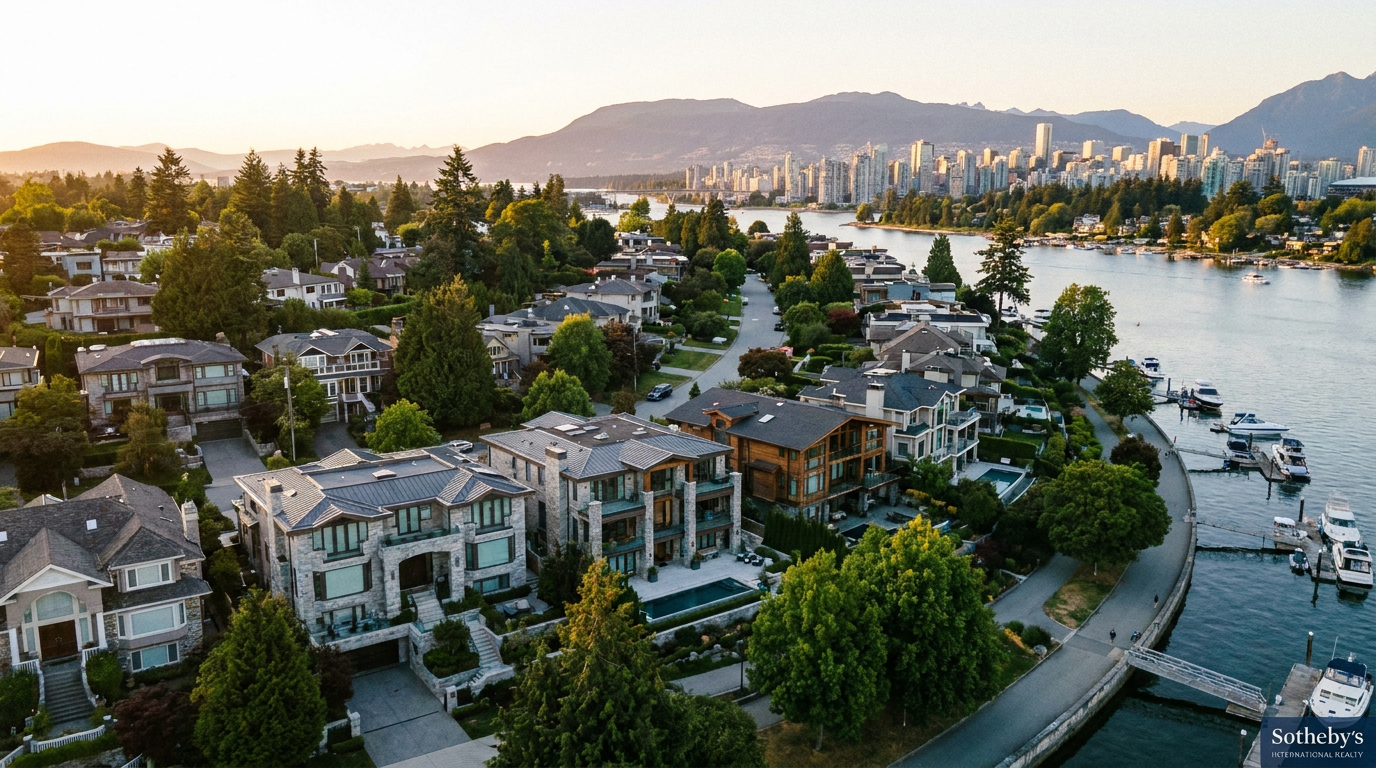
Why Luxury Real Estate Requires a Different Investment Framework
One of the most common misconceptions in high-end property investing is that luxury real estate simply mirrors the national housing market at a higher price point. In reality, prime and ultra-prime segments often follow their own logic. National affordability metrics, mortgage trends, and average resale conditions still matter, but the buyer profile, scarcity profile, and emotional premium in luxury property can produce very different outcomes from what occurs in mainstream housing. That means a disciplined investor must evaluate this segment on its own terms.
Luxury properties are influenced by a narrower and more selective buyer pool. Demand often depends on executive migration, global wealth flows, local business conditions, school districts, privacy considerations, and the desirability of specific streets rather than broad city averages. A waterfront residence, branded condominium, or estate in a tightly held enclave may retain value because there are simply very few substitutes. At the same time, an expensive but undifferentiated property in an oversupplied submarket can face extended selling periods and softer pricing, even when national headlines suggest stability.
This is why high-net-worth real estate should be approached with an asset-allocation mindset. An investor is not just buying a home, a building, or a parcel of land. They are buying scarcity, optionality, and future demand from a very specific type of buyer. The best opportunities often have a clear narrative behind them, such as land constraints, architectural uniqueness, turnkey quality, elite amenities, superior views, or access to a prestige district with enduring international recognition.
That distinction is becoming more important because North America has underperformed other luxury regions recently. Knight Frank’s 2026 PIRI 100 report found that global luxury residential prices rose 3.2% in 2025, while North America was the only region in negative territory. For investors, that does not automatically signal weakness across every luxury market. Instead, it reinforces a more useful lesson, which is that broad regional averages have become less informative than local asset selection.
The Market Context High-Net-Worth Investors Need to Understand
Any serious investment decision begins with macro context, even when the target is a micro-market. In Canada, the Bank of Canada policy rate stood at 2.25% as of June 10, 2026, following multiple cuts through late 2025 and early 2026. That shift has improved the financing backdrop compared with tighter periods, but borrowing costs and credit conditions still matter, particularly for leveraged investors, developers, and buyers using financing strategically rather than purely out of necessity.
Rate cuts alone, however, do not guarantee a broad luxury rebound. The Canadian housing backdrop has become more uneven. RBC reported that national affordability improved through 2025, reaching 52.4% in the fourth quarter, but those gains slowed and remained far from uniform. Vancouver, in particular, remained the least affordable major market at 88.2%, reminding investors that local market pressures can persist even when national conditions appear to improve.
CMHC has also pointed to a market marked by strong urban housing demand but varied regional supply conditions. Housing starts rose 6% in 2025, largely driven by rental apartment construction and more missing-middle development, while ownership supply weakened. That distinction matters for luxury investors because a market can be adding housing overall while still producing limited new high-quality ownership inventory in the most desirable segments. Scarcity at the top end can therefore persist, especially in locations constrained by zoning, geography, or redevelopment complexity.
There is also a deeper structural story supporting long-term conviction in selected markets. CMHC estimates that returning affordability to 2019 levels would require 430,000 to 480,000 new housing units per year over the next decade. That scale of required supply highlights just how significant the housing shortfall is in many parts of Canada. For luxury investors, the implication is not that every expensive property will appreciate, but that well-located, scarce, high-quality ownership assets may continue to benefit from structural undersupply even during cyclical slowdowns.
Luxury investing is less about predicting the entire market and more about identifying the few submarkets where scarcity, demand, and prestige remain durable.
Understanding Micro-Markets Is the Core Advantage
In luxury real estate, the city is often too broad a unit of analysis. Even neighbourhood-level data can be insufficient if pricing differs dramatically street by street, building by building, or waterfront by inland location. High-net-worth investors who outperform tend to build conviction at the micro-market level. They know which blocks command permanent premiums, which buildings have stronger resale depth, which school zones influence family demand, and which projects are considered irreplaceable in the eyes of future buyers.
This is particularly relevant in Canada’s current environment. Some luxury segments softened in 2025, while other locations remained more resilient. Sotheby’s Canada reporting has pointed to softer conditions in parts of Vancouver and some Ontario markets, while Calgary has remained better positioned for growth in luxury discussions. That divergence is exactly why broad assumptions can be dangerous. The best opportunity is not always the largest city or the most famous market. Often, the stronger risk-adjusted return comes from a market where wealth growth, migration, and local supply limitations are aligning more favorably.
When analyzing a micro-market, investors should study far more than recent sale prices. They should examine average days on market for comparable luxury listings, discount-to-list trends, absorption rates, development pipelines, zoning changes, buyer demographics, and the proportion of owner-occupiers versus secondary home buyers. In high-end real estate, transaction volume is often low, so individual sales can distort averages. Interpreting the market correctly requires context and local intelligence.
Off-market activity is another important signal. Many of the strongest luxury acquisitions never become public listings because sellers value discretion and buyers move through private networks. Investors who rely only on portal inventory may miss the best opportunities entirely. Relationships with elite brokers, private bankers, family offices, and legal advisors can therefore be as valuable as capital itself, because access often determines the quality of deals available.
How to Choose the Right Luxury Investment Strategy
There is no single blueprint for success in high-net-worth real estate. The right strategy depends on whether the investor prioritizes wealth preservation, cash flow, appreciation, portfolio diversification, family use, or intergenerational planning. What matters is selecting a property type and hold strategy that aligns with those objectives rather than assuming every luxury asset delivers the same return profile.
Capital Preservation Through Trophy Assets
Trophy assets are the most obvious form of luxury investment. These are exceptional homes and residences in globally recognized or locally irreplaceable locations. They may be waterfront estates, penthouses in best-in-class buildings, architectural landmarks, or legacy properties in elite neighbourhoods. Investors are often attracted to them for capital preservation, social utility, and long-term scarcity.
This strategy can work well when the asset is truly unique and the purchase price reflects a measured premium rather than emotional overpayment. The return profile may rely less on cash flow and more on long-term value retention, particularly in markets where comparable inventory is rare. However, trophy assets can also be among the most illiquid holdings in a portfolio. When the buyer pool is small, timing and patience matter greatly, and carrying costs can be substantial.
Income-Oriented Luxury Rentals
Not every high-end property is acquired purely for appreciation. In selected urban and lifestyle markets, luxury rentals can provide attractive income, especially where affluent tenants seek flexibility, turnkey design, concierge services, and prestigious locations without immediate ownership. Executive rentals, furnished premium units, and family homes in top school districts can all perform well if the tenant profile is deep and stable.
The key is to evaluate income with realism. Gross rent figures can look impressive, but net returns are shaped by property taxes, insurance, management, maintenance, vacancy, and fit-out costs. Investors should also consider how quickly the property can be re-leased if the market softens. In luxury rentals, quality and location remain critical, but operating discipline is what ultimately protects yield.

Value Creation Through Repositioning
Another strategy involves acquiring under-optimized luxury assets and repositioning them for a stronger buyer or tenant audience. This may include renovating dated properties in prestige neighbourhoods, modernizing layouts, upgrading amenities, improving energy performance, or redesigning interiors to meet current luxury expectations. In softer markets, sellers of outdated homes can be more negotiable, which gives disciplined investors an opening to create value through execution rather than market appreciation alone.
This approach can produce compelling returns, but only when the investor has a clear understanding of local buyer preferences and renovation economics. High-end upgrades are expensive and can easily exceed their resale value if they are overly customized or disconnected from market demand. The best repositioning projects enhance functionality, improve turnkey appeal, and align with what affluent buyers actively pay premiums for.
Land Banking and Long-Term Optionality
For investors with patience and a strong view on future growth corridors, land and redevelopment sites can offer substantial optionality. In high-net-worth contexts, this often involves estate-sized parcels, infill lots in established luxury districts, or properties with rezoning potential. The appeal lies in controlling a scarce asset today while preserving multiple future exit paths, including redevelopment, resale to a builder, or custom end-use.
That said, land banking is a strategy where discipline around policy, timing, and carrying costs is essential. Zoning approvals, construction expenses, entitlement risk, and municipal timelines can materially affect returns. Investors should treat development upside as a possibility to be underwritten conservatively, not a certainty to be priced in aggressively at acquisition.
What to Look For in a High-Performing Luxury Asset
Luxury buyers pay premiums for more than square footage. The strongest assets tend to combine tangible and intangible qualities that remain desirable across market cycles. That includes location within a specific prestige district, privacy, irreplaceable views, superior design, turnkey execution, and lifestyle amenities that save time or enhance convenience. Branded residences and amenity-rich buildings have gained importance because affluent buyers increasingly value a frictionless ownership experience.
Migration patterns are also influencing high-end demand. Markets that attract business leaders, entrepreneurs, remote executives, and globally mobile families can develop resilient luxury demand even if they are smaller or less internationally famous than legacy gateways. This is one reason why secondary and emerging luxury markets deserve attention. They may offer stronger upside when local economic momentum, quality-of-life appeal, and supply discipline align.
Asset quality should also be judged by exit depth. A property is only as strong as the future buyer pool willing to pay for it. Investors should ask whether the asset appeals to one narrow taste or to a broader affluent audience. An overly personalized estate may impress, but a more adaptable and professionally finished asset may resell faster and with less pricing friction. In luxury property, elegance and marketability are not always the same thing, and the latter matters greatly for investment performance.
The following factors usually support stronger long-term outcomes when acquired at the right basis:
- Scarce location with enduring prestige and barriers to new supply.
- Turnkey condition that appeals to affluent buyers who value convenience.
- Timeless design rather than trend-driven customization.
- Lifestyle utility including privacy, wellness amenities, concierge services, or proximity to elite schools and business districts.
- Clear future buyer profile supported by local demographics and wealth creation.
Financing Strategy Still Matters at the Top End
Many assume high-net-worth buyers are insulated from interest rates because they can buy in cash. In practice, sophisticated investors often use leverage selectively to preserve liquidity, optimize portfolio allocation, or fund value-add improvements. That means the cost and availability of financing remain highly relevant, even in luxury segments. The Bank of Canada’s move to a 2.25% policy rate improves flexibility compared with previous tighter conditions, but it does not eliminate the need for careful financing analysis.
Luxury financing also behaves differently from standard residential lending. Lenders may apply more scrutiny to unique properties, large estates, rural prestige holdings, or residences with highly customized features. Appraisal complexity can be higher, and liquidity assumptions can influence loan terms. For cross-border buyers or investors with multiple corporate structures, lending conditions may become even more nuanced.
The strategic question is not whether leverage is good or bad. It is whether the financing structure supports the investor’s broader objectives. Conservative leverage can improve return on equity and preserve optionality, but aggressive debt against an illiquid asset can increase vulnerability in a slower resale environment. In luxury real estate, prudent capital structure is often what separates elegant acquisitions from stressed ones.
Policy, Tax, and Compliance Can Change the Economics
One of the most underappreciated realities in Canadian luxury investing is how much policy and tax rules can affect outcomes. At the high end, investors often assume that enough capital can solve any transaction issue. That is not how the market works. Ownership structure, residency status, intended use, and compliance obligations can all materially change after-tax returns and carrying costs.
Canada’s Underused Housing Tax is a clear example. It is an annual 1% tax on vacant or underused housing that generally applies to foreign national owners. Depending on structure and use, this can alter the economics of holding a property primarily for occasional occupancy or future appreciation. The federal foreign buyer ban on residential real estate, introduced in 2023, also remains a major consideration for cross-border investors and must be understood before any acquisition planning begins.
These rules make early legal and tax advice essential. Investors should not treat planning as a post-offer administrative step. It should be built into the investment thesis from the outset. Cross-border families, non-resident owners, and investors using trusts, holding companies, or estate planning vehicles need coordinated advice covering acquisition, ownership, rental activity, disposition, and succession.
Beyond federal policy, local vacancy taxes, transfer taxes, property taxes, and insurance costs can significantly affect holding economics. In some luxury markets, these recurring costs are large enough to meaningfully change annual return assumptions. A premium property may appear attractive based on entry price and expected appreciation, but if ongoing carrying costs are heavy, the real net performance may be weaker than expected. Precision in underwriting is essential.
Negotiation Opportunities in a More Selective Market
When markets transition from broad momentum to selective performance, negotiation becomes a larger source of return. This is one of the most attractive features of the current luxury environment. Affordability has improved in some areas, but progress has slowed, and confidence remains uneven. In practical terms, that means certain sellers are more open to structured offers, timing concessions, conditional terms, or pricing adjustments than they would have been during stronger cycles.
Well-capitalized buyers can use this environment to their advantage, particularly in submarkets where listing inventory has accumulated or where sellers had anchored to peak-cycle pricing. The key is to differentiate between temporary softness and lasting impairment. A negotiable property in a superior micro-market can be an excellent acquisition. A deeply discounted asset in a compromised location may still be a poor investment if future demand remains thin.
Successful negotiation in luxury real estate is rarely about being the lowest bidder. It is about understanding seller motivations, transaction complexity, timing, and certainty. Privacy-sensitive owners may value discretion. Developers may value speed and clean terms. Estate sales may value reduced execution risk. Investors who can match their structure to a seller’s priorities often secure better outcomes than those focused only on headline price.

How to Maximize Returns Without Taking Unnecessary Risk
Maximizing return in luxury property is not the same as chasing the highest theoretical upside. In most cases, superior results come from controlling downside while positioning for multiple forms of value creation. That may include appreciation, rental income, redevelopment potential, tax efficiency, portfolio diversification, and personal utility. The best luxury investments often work well under more than one scenario.
A practical framework for return optimization starts with acquisition discipline. Buying well remains the most reliable source of future performance. Investors should avoid paying peak premiums for hype-driven locations or heavily customized properties with narrow resale appeal. They should focus instead on scarcity, quality, and realistic underwriting that includes all carrying costs and a conservative view of exit pricing.
Returns can also be improved through active ownership. This does not necessarily mean major redevelopment. It can include upgrading finishes to match current buyer expectations, professionalizing rental management, improving amenity appeal, optimizing tax structure, or refinancing when terms become more favorable. Small strategic decisions often compound over a multi-year hold.
Perhaps most importantly, investors should define success before acquiring the asset. Is the goal stable capital preservation in a global-calibre neighbourhood, opportunistic upside in a rising secondary luxury market, or tax-efficient family use with some appreciation potential? Clarity on the objective helps determine the right hold period, financing structure, and disposition strategy. Without that clarity, even a beautiful asset can become an inefficient investment.
Common Mistakes High-Net-Worth Investors Should Avoid
Luxury real estate can be compelling, but the risks are real and often underestimated because of the prestige associated with the asset class. One of the biggest mistakes is assuming that expensive means safe. High-end properties can be illiquid, operationally expensive, and highly sensitive to shifts in local sentiment. If the buyer pool is thin, even a strong asset may take time to sell in a softer cycle.
Another mistake is relying too heavily on national or citywide market narratives. The best luxury opportunities are often hidden inside markets that appear mixed at the surface level. Conversely, weak acquisitions can occur in famous cities if the asset lacks scarcity or if too much new competing inventory is emerging nearby. Investors need a sharper lens than average market commentary provides.
Tax and compliance complacency is another avoidable problem. Rules around foreign ownership, underused housing, reporting, and ownership structure can materially change outcomes. Failing to model these costs early can turn a seemingly attractive acquisition into a far less efficient holding. This is especially true for cross-border investors and families with complex wealth structures.
Finally, some investors over-improve properties based on personal taste rather than market logic. Luxury buyers want quality, but they do not always pay extra for highly specific customization. The smartest capital improvements are those that broaden appeal, reduce friction, and align with how affluent buyers actually live today. Strategy should always guide design.
A Practical Due Diligence Checklist for Luxury Buyers
Before completing any acquisition, high-net-worth investors should pressure-test the opportunity from several angles. A premium property deserves premium diligence. The following checklist provides a useful framework for evaluating whether the deal supports both return goals and downside protection.
- Market position: Is the property truly prime within its micro-market, or merely expensive relative to average housing?
- Supply profile: How much competing inventory exists now, and what new supply may enter over the next three to five years?
- Buyer depth: Who is the likely future buyer or tenant, and how broad is that pool?
- Carrying costs: Have property taxes, insurance, maintenance, management, and vacancy-related costs been fully modeled?
- Policy exposure: Do foreign ownership rules, vacancy taxes, or the Underused Housing Tax affect the economics?
- Financing resilience: Does the debt structure remain comfortable under slower leasing or delayed resale assumptions?
- Exit strategy: Is there a clear path to resale, refinance, redevelopment, or long-term hold?
The Outlook for Luxury Real Estate in Canada and North America
The near-term luxury outlook is best described as selective rather than uniformly bullish or bearish. North America’s weaker 2025 luxury performance relative to global peers shows that this segment is not immune to economic pressure, policy friction, or local market fatigue. At the same time, lower policy rates, structural supply constraints, and uneven confidence can create attractive entry points for investors who know where to look.
Canada is a particularly nuanced case. National affordability has improved but remains pressured, ownership supply has not kept pace evenly across markets, and policy rules continue to shape who can buy and how they hold. Some traditional luxury centres have faced softness, while markets such as Calgary have drawn more attention for relative momentum. This is precisely the kind of environment where disciplined investors can outperform less informed capital.
Looking ahead, the most resilient luxury opportunities are likely to be found in assets that combine scarcity with clear lifestyle demand. Turnkey residences, branded projects, amenity-rich developments, and homes in tightly held prestige neighbourhoods should remain attractive where local wealth creation and migration support them. Investors willing to study the details rather than follow broad narratives will be best positioned to capitalize.
Final Thoughts
Investing in high-net-worth real estate is ultimately an exercise in strategic clarity. Capital opens the door, but performance depends on judgment. In a market shaped by policy change, regional divergence, and selective demand, the old assumption that prime property inevitably rises is no longer sufficient. Success comes from understanding how luxury markets really function, where scarcity is genuine, and which assets have enduring appeal to future buyers.
For sophisticated investors, that is not a reason for caution alone. It is a reason for confidence grounded in better analysis. The current environment favors buyers who can assess micro-markets accurately, structure purchases intelligently, negotiate from strength, and hold assets with a clear long-term plan. In luxury real estate, the premium is not just in the property. It is in the quality of the decision behind it.
For those who approach the sector with discipline, patience, and a results-focused strategy, high-net-worth real estate can remain a powerful tool for wealth preservation, portfolio diversification, and long-term upside. The opportunity is still there. The difference today is that it belongs to investors who understand that in luxury markets, precision is the real advantage.



No Comment! Be the first one.